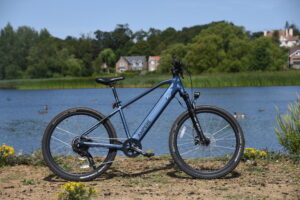
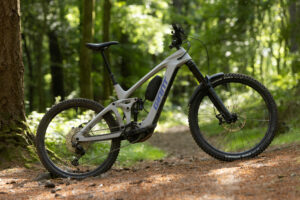
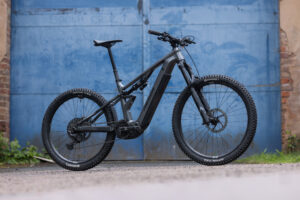
As an evolution of the PL model, the Amflow PX Carbon Pro gets a whole host of tweaks and refinements across the board – but it’s still more about promoting its potent Avinox M2S motor than hugely updating the formula. The result is a super adaptable bike that takes most of the effort out of actually riding it, but despite what’s now spot-on geometry and a jack-of-all-trades vibe, it still loses its composure when the going gets rough.
Amflow PX Carbon Pro – Technical Details
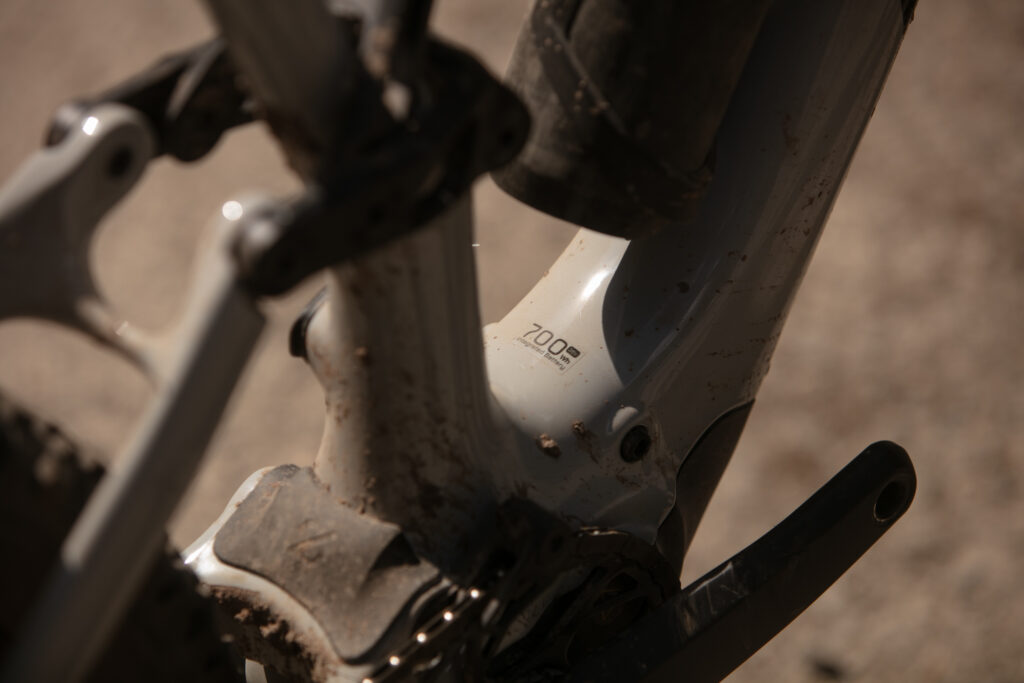
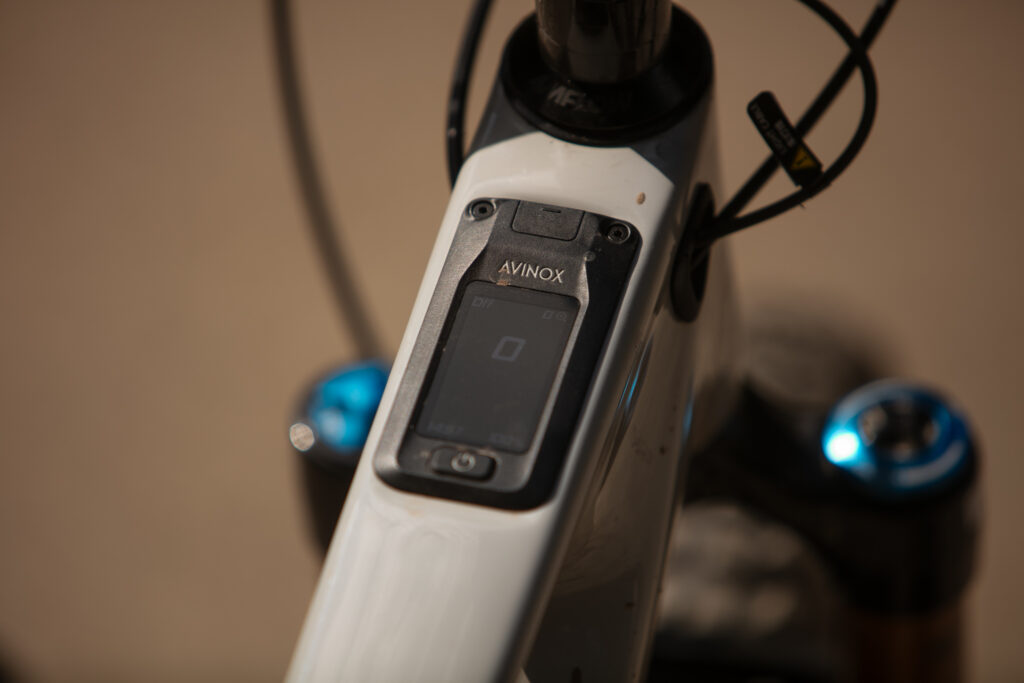
The biggest headline that looms over the PX Carbon Pro is its motor. It runs the Avinox M2S, which boasts a mighty 150Nm of torque and 1,500W of peak power. That’s complemented by a 700Wh battery that, although a little smaller than before, uses denser cells. Of course, that motor still has all the Avinox features, such as a touch-screen display, Bluetooth remotes and generally very impressive integration. There’s also an offline navigation feature.
Compared to Amflow’s old PL Carbon Pro, the PX’s geometry is just a little more modern in general. The head angle is a little slacker at 64.2 degrees, its effective seat tube angle is a touch steeper at 78 degrees, and its reach is 2mm longer, at 478mm (on the large frame I rode). The chainstay does change quite a bit, however. At its shortest it measures 438mm, and at its longest, it’s 451mm. So quite a difference from the 445mm chainstay of the PL.
As you might have guessed from the chainstay lengths, the geometry here is adjustable. The head angle can be adjusted 0.5 or one degree in either direction with the headset cups. The bottom bracket can be lowered from 349 to 345mm, and the chainstay can be set either long or short via a flip chip. The bike can run a full 29in wheel setup, too, if the 29in front/27.5in rear isn’t your jam.
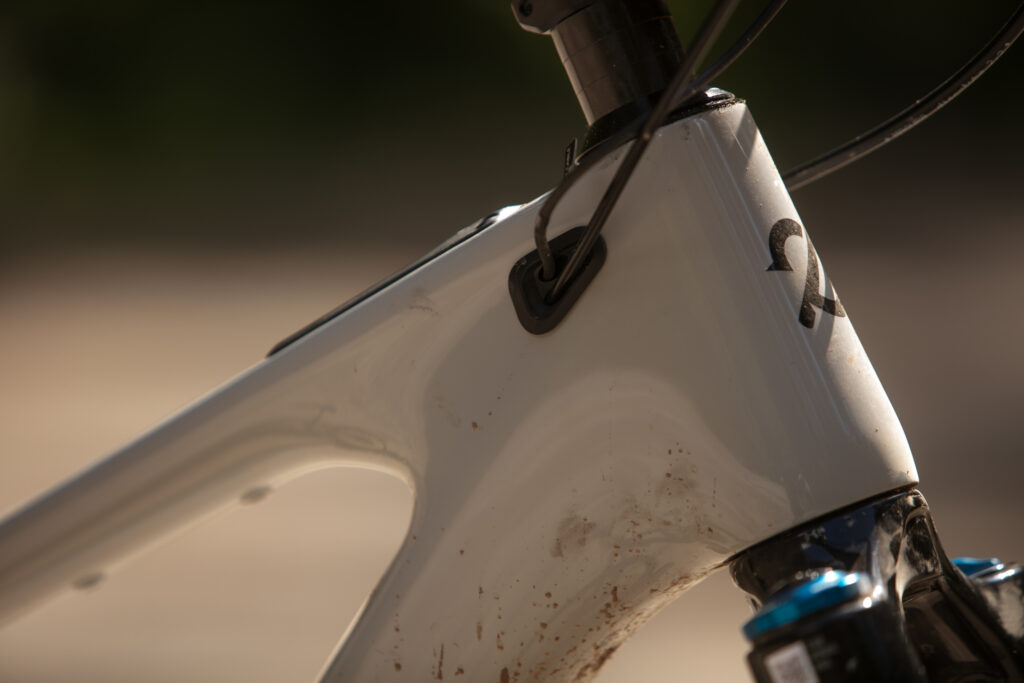
The PX Carbon Pro rustles up 150mm of rear suspension combined with 160mm at the front, and the Fox Factory bouncy bits are all bolted to a carbon frame, if you’ve not already guessed. That frame features internal cable routing, space in the front triangle for a bottle, and an accessory mount under the top tube.
Buy the Carbon Pro model and Amflow gives you an extended warranty on ‘key carbon fibre components and the drive system,’ free battery replacement, half-price crash replacements and professional maintenance.
Amflow PX Carbon Pro – Componentry
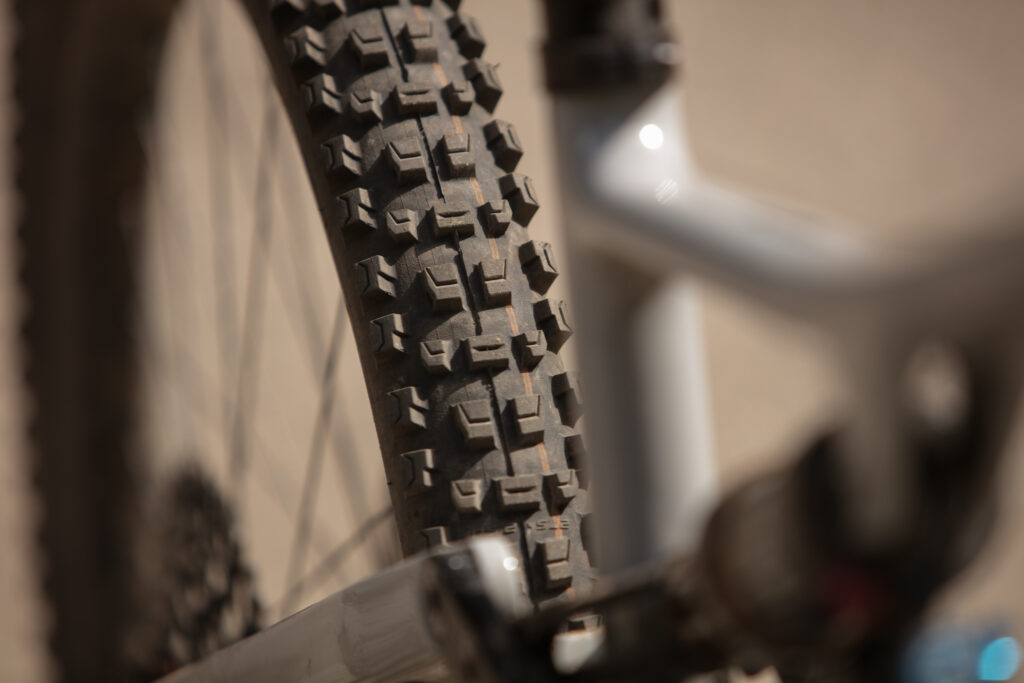
Amflow has usefully improved the PX Carbon Pro’s specification. Generally, you’re getting tonnes of good kit for the cash, but an important change from the PL is the move to burlier-cased tyres. This time, the brand has gone for Schwalbe’s Magic Mary up front and an Albert at the rear. Both use Schwalbe’s Radial design with gravity casings, which makes so much more sense for any e-mountain bike, as the more robust carcass adds much-needed support.
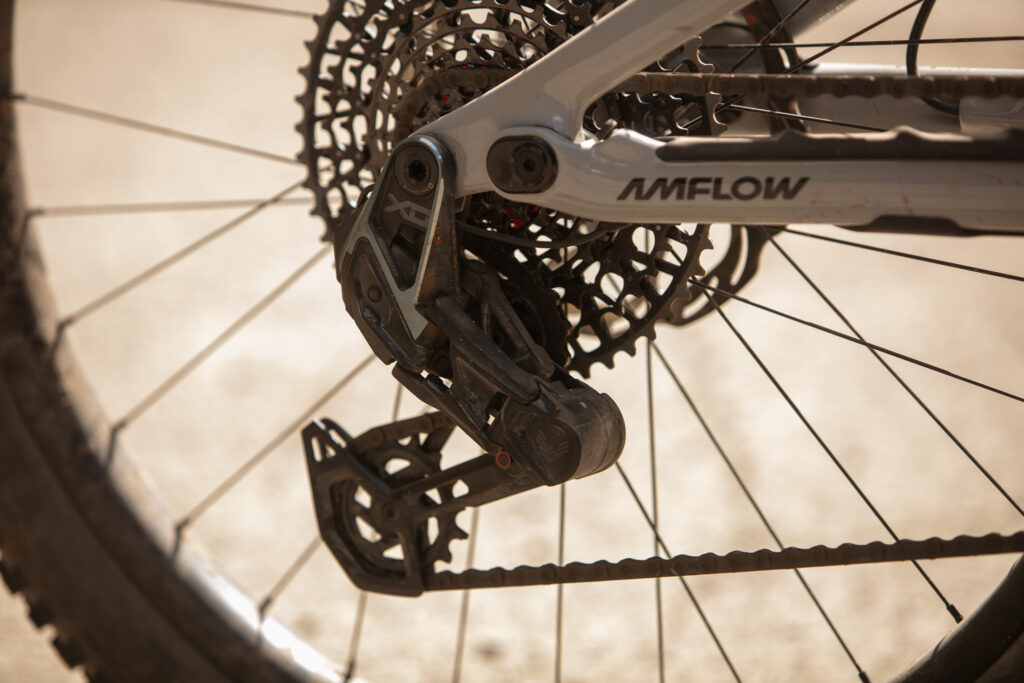
The fork is Fox’s newest Factory 36, and it’s paired with its Float X Factory shock. This Pro model runs SRAM XO T-Type shifting, powered by the bike’s battery. I’m a fan, as it’s one less thing to charge. The bike does need to be on, however, for you to fiddle with the gears during maintenance.
Apart from the Magura Gustav brakes – hooking to a pair of 200mm rotors with integrated speed sensor notches (love this) – everything else is Amflow, including the carbon rims, carbon bar and the stem that now features a four-bolt faceplate. That seems like a small detail, but the two-bolt interface on the PL could twist under load… not good.
This large frame weighs 22.25kg, rather than the 20.6kg stated on Amflow’s website. Though the brand doesn’t suggest which frame size the weight corresponds to.
Amflow PX Carbon Pro – Performance
We can’t talk about the new Amflow without touching on the Avinox M2S motor. It’s a beast, but very manageable. I’ve played with each of the power modes, but rarely found the need to dip into Turbo, and even less so, Boost.
All of the motor’s power modes, apart from Eco and Boost, knock out 130Nm, which I’ve found to be more than enough for the bulk of my riding. In fact, I was perfectly happy running the bike in Auto, which tapers the motor’s output depending on the effort you’re putting in. Calmly pedal the bike, and it won’t throw out its 130Nm of max power (in that mode), but smash on the pedals, and it throws its full 130Nm weight about.
Only in Boost does the motor deliver 150Nm of torque over 60 seconds, but frankly, I felt as if it was overkill, even on the steepest of ascents. Eco, then, feels very watered down as in this mode, it only puts out 50Nm of torque, which, practically, is a very stark difference between it and the higher power modes. Of course, this can all be tweaked to your preferences through the Avinox app or on the bike itself.
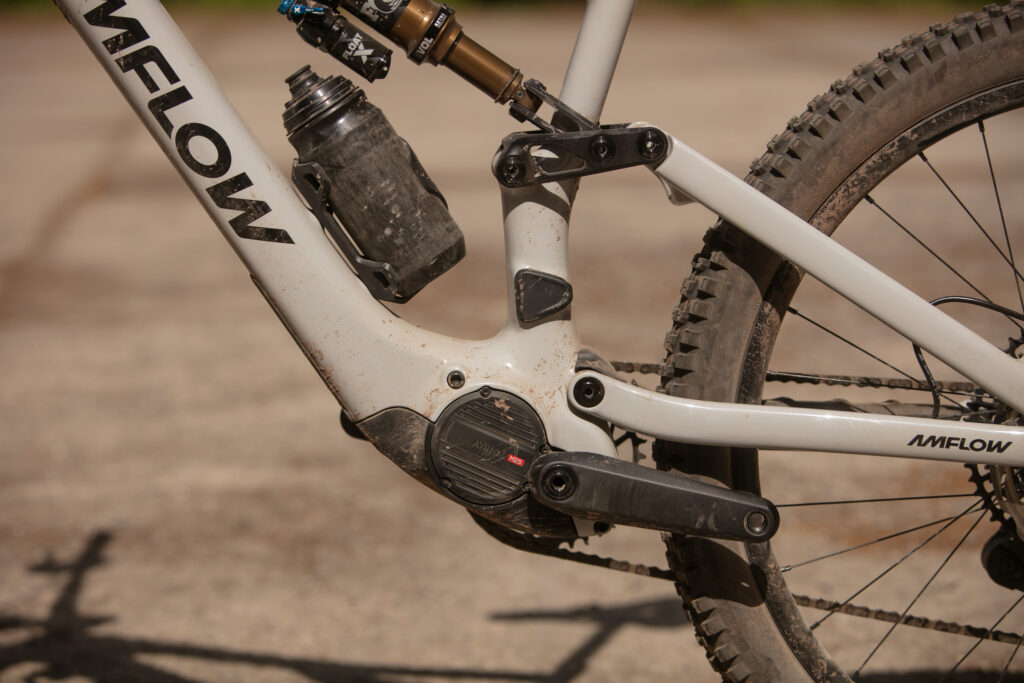
It is a natural-riding motor, despite having so much power. It just does everything faster while requiring absolutely minimal input and effort from the rider. Though I have found myself bouncing on the legally-mandated 15.5mph speed limiter’s cut-out quite frequently, which has taken a bit of adjustment. Just dial back the effort a little more, and you’ll be riding well below the point where the assistance shuts down… still at quite some pace.
Obviously, it removes effort when spinning up a hill, but it’s a mighty get-out-of-jail-free card on tricky descents too. Lose all momentum in a tight, naggery corner? Put in a quarter of a crank, and you’ve sailed up to a fairly high speed again.
Unsurprisingly, the PX Carbon Pro is a darned good climber. Even with the chainstay in its shorter setting, both wheels remain glued to the ground, while the rear solidly ekes out traction. The motor might do most of the heavy lifting, but it’s got good traction and stability to make use of.
As for range, I managed just over 29km in Auto mode from 80% charge.
With its geometry and its suspension figures, the PX Carbon Pro is a trail bike through and through, and trail riding is where it really shines. It’s most at home when tackling smoother flow trails, where the rear provides plenty of support to pop off lips and really push into corners.
It’s a manoeuvrable bit of kit too. It relishes tight corners and can hold an impressive amount of momentum. That’s with the chainstay in its shortest setting. With the chainstay stretched out to its maximum, there’s an air of predictability to the ride, and it’s calmer and more manageable at speed. Though it does lose a touch of that nimbleness and the overall fun factor.
In fact, its geometry in general is pretty spot on for a bike of its intention. It’s well-rounded, easy to get on with and comfortable enough to be thrown down a good breadth of trails. There’s good support from the front end when things get steep, and that can be boosted by turning the headset cups to a slacker head angle.
Tight, twisty, but not that technical tracks are where I really admired this. With the chainstay in its shorter setting, it’s flickable, taut and heaps of fun. It makes light work of zesty changes in direction while feeling balanced and super dynamic, thanks to its not-terribly-heavy nature. Of course, the mixed wheelset (standard for the PX) elevates all of this.
When the tracks get faster, more technical and more momentum-driven, however, the bike begins to lose its composure. For me, it became very location or trail-dependent on how much I would enjoy the PX.
When faced with swathes of roots or just chunkier sections, the PX tends to bog down and hang up on those rough edges. At first, I found it difficult to put this down to one aspect, as generally, the bike has the goods to ride the terrain I wanted to, but something in the rear end pulled on the reins.
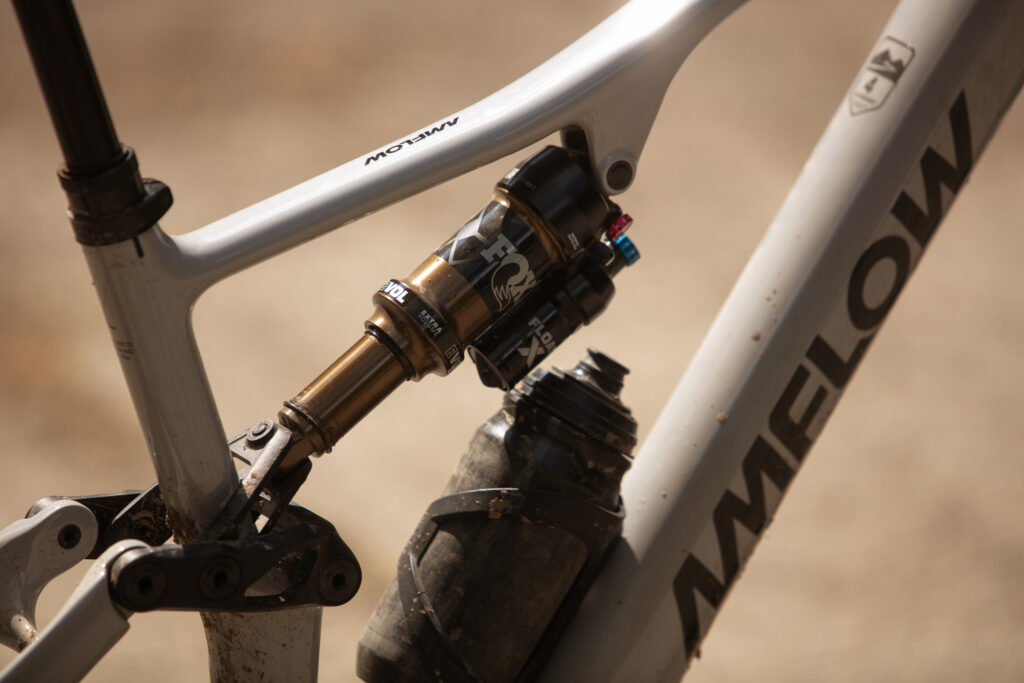
Although well supported and lively when not pushed through chunky stuff, the rear suspension struggles to freely use its travel enough to cope with successive impacts, even with very little rebound damping. Granted, winding off the rebound does improve things somewhat, but it results in a super springy and uncontrolled ride in the first half of the travel.
This is something that Ty experienced with the Amflow PL, too, and it’s something I’m going to put down to the shock tune – specifically, it has too much high-speed compression. Sadly, it’s not externally adjustable and only tweakable during a full strip-down service of the Fox Float X shock. But I reckon that having a tech take a look at the shock tune is a must when the time comes.
Best e-MTBs 2025 – top-performing e-mountain bikes for every situation
I found myself loving the bike on some tracks, and wondering why I’d felt that way on others. I could push the bike hard in flowy trails, but over more technically demanding ones – tracks I’m usually perfectly happy riding – I’d lose a fair bit of confidence.
The brakes don’t help. I’ve been rather underwhelmed by the Magura Gustavs, and that’s added to my lack of confidence on the bike. They don’t have the power I expected, so braking requires a good dose of forethought before committing to a last-minute drop of the anchor.
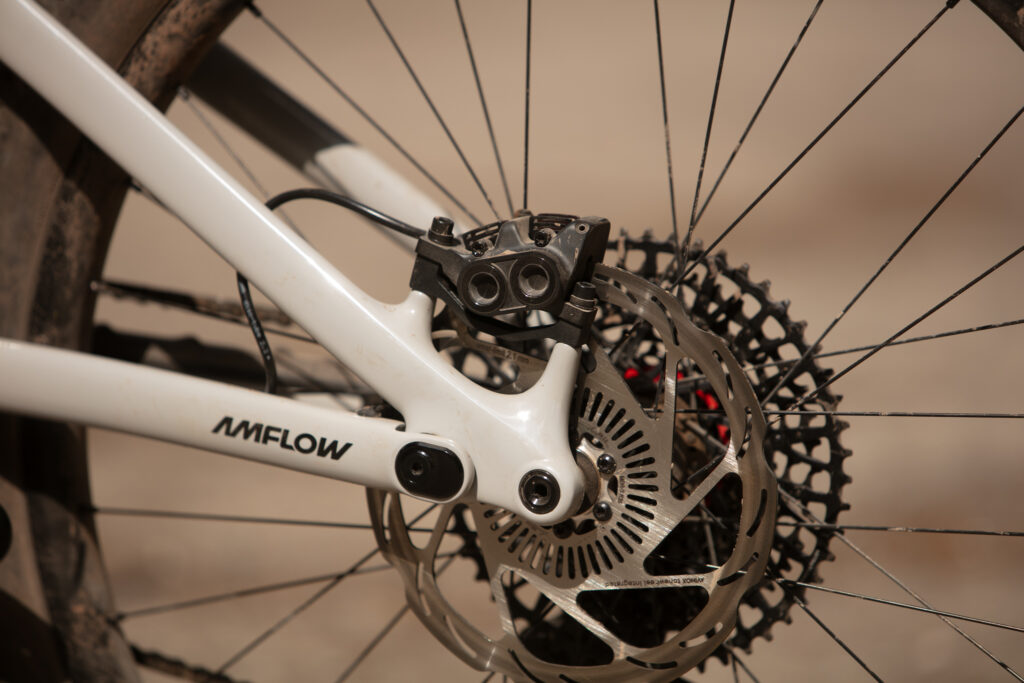
They are convenient, though. When I unboxed the bike, the brakes were set up in the typical Euro setting of the front brake on the left and the rear brake on the right. Thanks to their Easy Link feature, it took mere minutes to switch them to what UK riders consider normal, and without the need to bleed them afterwards.
Amflow PX Carbon Pro – Verdict
I won’t beat around the bush; £9k (okay, it’s actually £1 less than that) is a lot to spend on any bike, and with 60 brands now touting Avinox-equipped bikes, Amflow has an awful lot of competition.
A standout bike is Megamo’s Reason CRB 03. For £7,999, you get Fox Factory suspension in the shape of a burlier 38 fork. It does represent a downgrade elsewhere, as it utilises SRAM’s S1000 T-Type Eagle drivetrain and aluminium wheels from DT Swiss (the PX’s are carbon), but that’s not to say everywhere. You do get a Fox Factory Transfer dropper post and good Maxxis tyres with Double Down casings.
However, it’s a very different bike. In the same frame size, it’s much longer, so it’s not as dynamic and nimble, though its suspension platform is able to cope with repeated hits with more poise. I rode the gasp-inducingly pricey Megamo Reason CRB 01 not long ago, so check out my thoughts on what £11.5k gets you.
Many other Avinox M2S options are bigger, enduro-focused machines. One I really liked was Atherton’s S.170E.1. Sure, it’s heavier, made from aluminium, and you won’t be getting carbon rims, but at the same £8,999 price, you’re getting a bike that definitely handles chunk better, but without swallowing up smaller trail details.
Although the Amflow PX Carbon Pro does bring serious value in terms of the kit you get, you’ll need to consider the riding you do before dropping the cash. If your riding is typically on smooth, tight and corner-filled tracks, that’s where it really excels. If you like tackling tech, however, you’ll find the Amflow PX unfortunately begins to trip over itself.
Test Report
What does the manufacturer say about this product?:
Amflow says: “Slim and light, yet remarkably powerful. An ultra-light carbon fibre frame brings the bike down to 20.6kg [5] for confident, effortless control.”
Tell us some more about the technical aspects of this product:
Amflow lists: Avinox MS2 motor, Fox Factory 36 fork and Float X Factory shock, SRAM XO drivetrain, Magura Gustav brakes, Amflow finishing kit, Schwalbe tyres.
Any further comments on performance?:
Suspension performance on rough tracks leaves much to be desired.
How does the price compare to that of similar products in the market, including ones recently tested?:
It’s the same as an alloy-framed Atherton S.170E, though you can get a Megamo Reason for less.
List the components used to build up the bike:
Avinox MS2 motor, Fox Factory 36 forks and Float X Factory shock, SRAM XO drivetrain, Magura Gustav brakes, Amflow finishing kit, Schwalbe tyres.
Tell us what the bike is for and who it’s aimed at. What do the manufacturers say about it?:
Amflow doesn’t say who it’s for, but its geometry, suspension travel and specification suggests it’s for do-it-all trail riders.
Where does this model sit in the range? Tell us briefly about the cheaper options and the more expensive options:
This is the top of the range model.
Tell us about the build quality and finish of the frame:
Excellent
Tell us about the materials used in the frame:
It’s carbon fibre.
Tell us about the geometry of the frame:
438-451mm chainstay, 478mm reach (large), 64.2-degree head angle, 78-degree effective seat tube.
How was the bike in terms of sizing and angles? How did it compare to other bikes of the same stated size and intent?:
Spot on for a trail e-MTB.
How much suspension travel does the fork have?:
160mm
How much suspension travel does the rear end have?:
150mm
Was the bike comfortable to ride? Tell us how you felt about the ride quality:
It’s comfortable, but the rear suspension feels as if it has too much high-speed compression as standard.
Did the bike feel stiff in the right places? Did any part of the bike feel too stiff or too flexible?:
Good balance of stiffness and flex.
How did the bike transfer power? Did it feel efficient?:
Very efficient – Avinox MS2 is a powerhouse
How would you describe the steering? Was it lively, neutral or unresponsive?:
Lively
Tell us some more about the handling. How did the bike feel overall? Did it do particular things well or badly?:
Excellent in the corners but suffers over rough terrain.
Which components had the most effect (good or bad) on the bike’s performance? Would you recommend any changes?:
The brakes aren’t as powerful as I expected them to be.
Any comments on technical descending?:
The rear suspension holds this back.
Any comments on cornering?:
Very agile and fun.
Any comments on technical climbing?:
Well balanced geometry works well with the mega-powerful motor.
Any comments on climbing efficiency?:
Motor is powerful.
Any comments on agility?:
Agility is the bike’s profession.
Any comments on fork performance?:
Fox 36 Factory is among the best.
Any comments on rear suspension performance?:
Packs down and sucks confidence over rough terrain.
Any comments on the balance and performance of the suspension overall?:
The front works much better than the rear.
Any comments on brake performance?:
Good control but lacklustre power.
What kind of motor is it?:
Avinox MS2
What are the stated motor system specs? (Torque/power/maximum assistance speed):
150Nm torque, 1,500W peak power.
Tell us some more about the motor. How did it feel overall? Did it do particular things well or badly?:
Very good but perhaps too powerful.
How did the motor perform at low speed? (e.g. on steeper climbs or setting off with heavy loads):
No problems.
How did the motor perform at higher speed? Was it noisy? Did assistance cut out smoothly/abruptly at the 25km/h assistance limit?:
Cuts out abruptly and very quickly.
What type of battery is it? Is the manufacturer named?:
Avinox
Where is the battery on the bike? Is it removable?:
Not removable.
What are the stated battery specs? (Capacity/voltage):
700Wh
Tell us about charging the battery. What’s the charger like? How long does it take?:
A full charge takes four to five hours.
Tell us about the assistance levels. How many are there? Are they all useful?:
Five levels; Turbo and Boost are overkill.
What do the manufacturers say about the range of the bike?:
They don’t!
What was your experience of the operational range of the bike?:
Around 30km, but can likely reach more.
Did you enjoy using the product?
Yes, in certain scenarios
Would you consider buying the product? No
Would you recommend the product to a friend? No
Use this box to explain your overall score
The PX Carbon Pro is a fun bike, but there are more capable bikes around.
About the tester
Age: 33Height: cmWeight: kg
I usually ride: Santa Cruz BronsonMy best bike is:
I’ve been riding for: 10-20 yearsI ride: A few times a weekI would class myself as: Experienced
I regularly do the following types of riding: Mountain bike Enduro