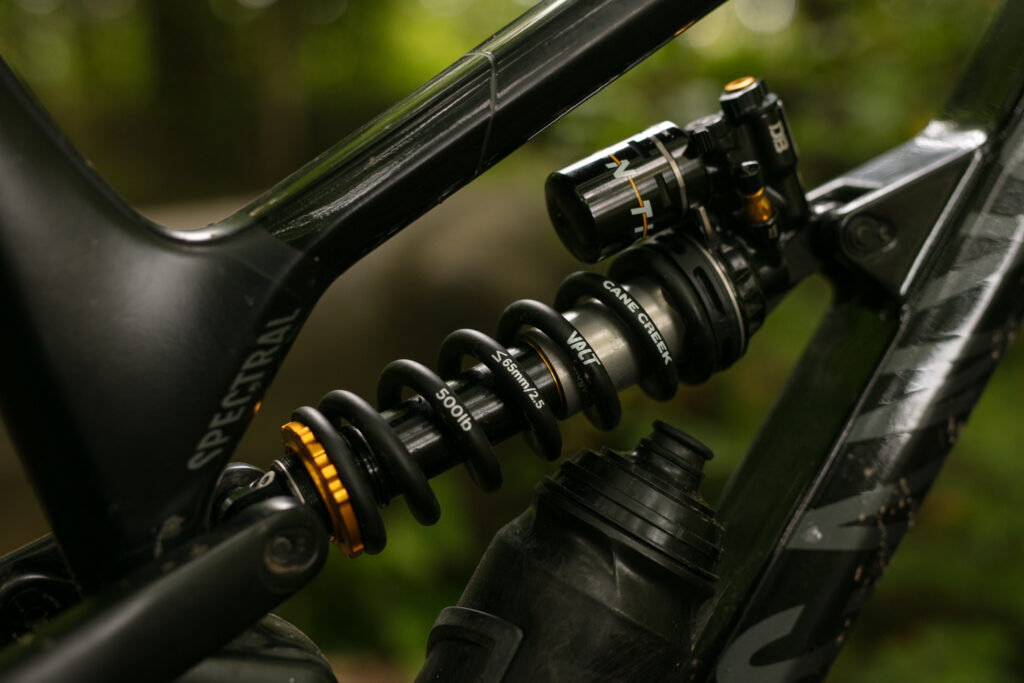

Air-sprung and coil suspension pose very different characteristics, and choosing one over the other comes with its own pros and cons. However, Cane Creek’s Tigon aims to combine the benefits of both air and coil as it brings progression adjustment to the coil shock game. Although weighty, and it’s missing an external high-speed rebound adjustment, the Tigon provides a wide range of clicks to get stuck into while making the installation of a coil shock possible on bikes where it’s not recommended. As such, it heightens the appeal of coil goodness to a wider audience.
- How to set up your mountain bike suspension – suspension set-up explained
- Ohlins RXF38 m.2 suspension fork review
- 9 tips to keep your suspension running sweeter for longer
Cane Creek Tigon – Technical details
The move to a coil shock can do great things for your bike’s ride. It’ll bring even greater small bump sensitivity thanks to a coil shock’s fewer seals and lower internal pressures, while a typically linear character (doesn’t get stiffer with the more it’s compressed, in layman’s) will help your bike absorb bumps without transmitting loads of feedback to the rider. They’re not a perfect performance upgrade, however, as they’re heavier, some bikes aren’t designed for that linear performance, and with some linkage designs, their comparatively narrower shafts are prone to breaking.
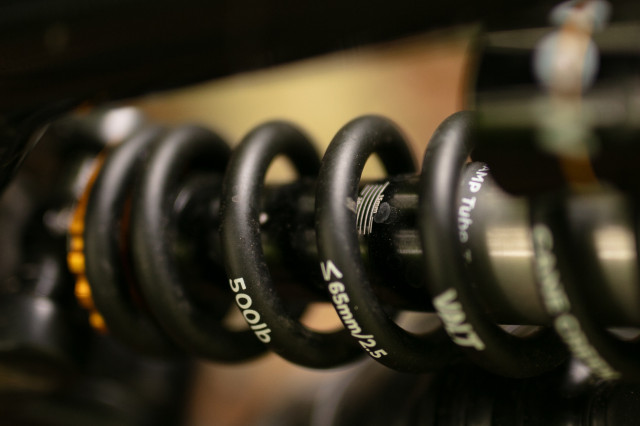
Cane Creek has attempted to combine the benefits of coil in air by… Combining coil and air, literally. From the outset, the Tigon is a coil shock, but inside that spring is a larger-than-usual shaft that houses the brand’s RAMP Tube Technology. The system utilises a ‘main’ coil spring to support body weight and sag, while delivering the small bump sensitivity that coil shocks are known for. But that RAMP tube is a small airspring that brings progression adjustment (the ability to increase the force required to compress the suspension as it compresses) to the party. The brand says that this tech can add up to 35% progression compared to a regular coil shock, and it’s adjustable via your bog standard shock pump.
That’s not all the RAMP tube brings, though. As it’s made with a larger damper shaft, it provides more bracing, thus Cane Creek says it’s a stronger shock altogether. Because of that, the Tigon can be fitted to bikes that use a clevis shock mount (such as the Specialized Levo or Stumpjumper), which typically put more stress on regular-style coil shocks.
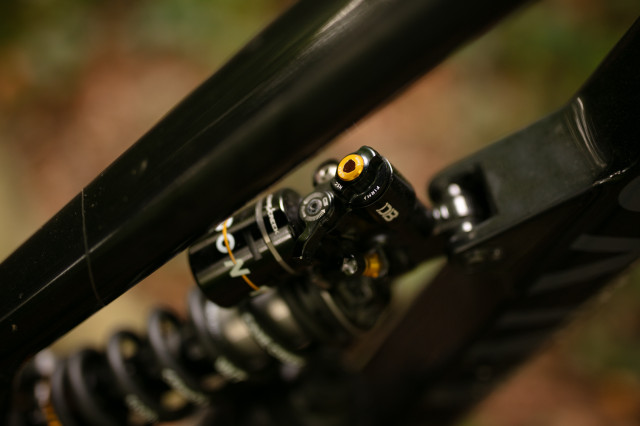
Elsewhere, it’s all the usual coil shock stuff. There are 12 clicks of low-speed and one turn of high-speed compression adjustments, and a 15-click low-speed rebound adjustment. Note, there’s no high-speed rebound. There is a climb switch, however, and the RAMP tube can be inflated up to 30psi.
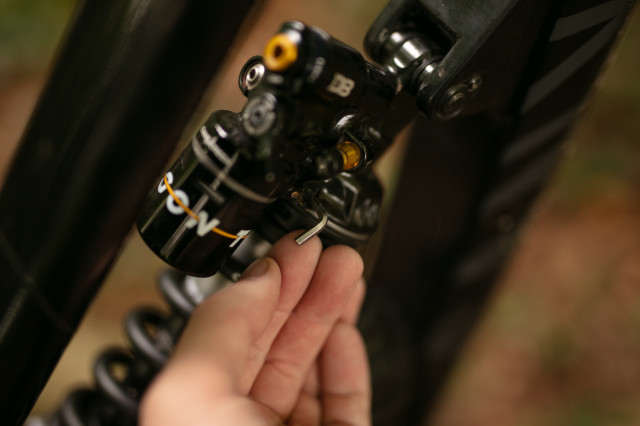
Apart from the climb switch, these are all tooled adjustments, but Cane Creek has been clever here. That’s because there’s a 3mm allen held magnetically in the shock, so you won’t need to hunt around for the correct allen, as it’s there, ready and waiting.
As for weight, with a 500lb, 65mm/2.5in Valt spring, the Tigon weighed 905g, which is certainly on the weightier side with Ohlins’ TTX22 m.2 weighing 856g, though Fox’s top of the line DHX2 weighs 973g with 500lb coils. RockShox Super Deluxe Coil comes in at a claimed 889g with a 350lb spring.
Cane Creek Tigon – Performance
While I have a bike that doesn’t use a Clevis mount, I’m a big fan of a progressive suspension platform. Saying that, the small bump sensitivity and general smoothness of a coil shock have always had me chopping and changing between air and coil shocks. But despite a bit of extra weight, the Tigon has been an excellent solution as it certainly balances the best of both worlds. But with that comes a story of compromise.
Thanks to the included allen key held in by a magnet, all of the shock’s adjustments are well within easy reach. Quick tweaks are simple, and quick as the allen makes quick adjustments just that. There’s little overall faff.
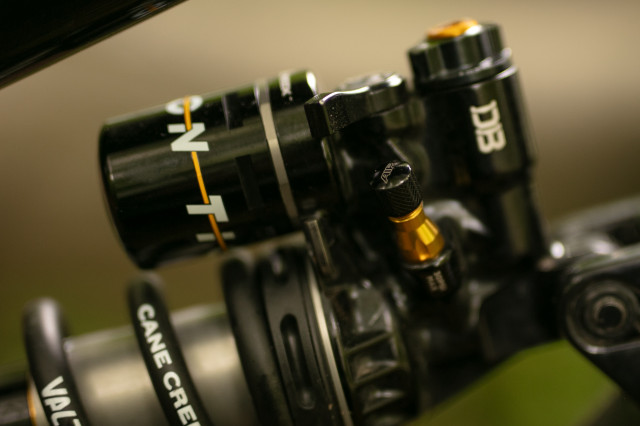
Some faff does come with the fact that the RAMP tube requires a shock pump for its adjustments, and while small shock pumps like Topeak’s Nano Shock Pump exist, you’ll definitely need one with a gauge, as the RAMP tube requires so little pressure. I imagine it’s unlikely you’ll carry one about with you, but it does unlock the shocks’ real potential. Keep a shock pump close by in a car, and you’ll quickly dial the shock’s pressure to your liking.
However, the RAMP tube is what makes the Tigon special. I mostly rode it at the full 30psi, where it effectively resists bottoming out and provides a solid platform to pump against, but without diminishing the shock’s ability to iron out small bumps and smooth out my bike’s ride. But when it came to bike park days, or heavier going natural trails, I could quickly release some pressure to achieve a performance that’ll do an even better job of smoothing out chunkier terrain. The RAMP tech effectively removes any need to switch between coil and air shocks, unless you’re looking to shed some grams.
The quality of the Tigon’s action is very good. There are more seals at higher pressures at play here, so the shock isn’t quite as friction-free as dedicated coil options, but it still provides decent small bump sensitivity. Then the shock’s ability to resist harsh bottom outs is somewhat adjustable, but generally, it staves them off rather well. Even when running without any pressure in the RAMP tube, the shock performed well and was not much unlike a regular coil shock. However, the Tigon does let out a bit of a clunk as it hits top-out. It’s not terribly noticeable when riding the bike, but it can be heard when lifting it.
Where the Tigon may not be as lusciously supple as dedicated coil offerings, even at full pressure, it’s not quite as progressive as dedicated air-sprung shocks. This is where the main compromises come in, but overall the Tigon manages to bring its own appeal as it’s certainly suppler than an air shock, and much more progressive than a coil.
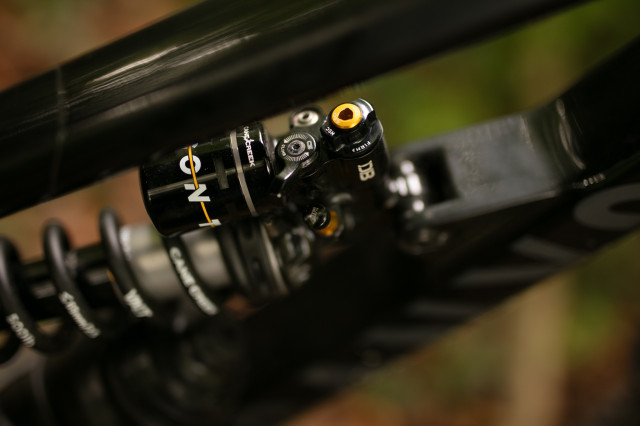
Moving on, the Tigon’s climb switch does an excellent job. It almost completely firms up the shock, which makes a serious difference when the bike’s pointed uphill. Again, coil shocks are super sensitive to bumps and pedalling input, so they can suck some watts, but being able to almost lock out the shock with the flick of the switch brings a noticeable gain in efficiency.
And the shock’s small bump sensitivity it’s very good, and very similar to other coil shocks on the market, but perhaps it’s not quite as luscious as other offerings. There’s more sealing involved, so it makes sense, but there’s something of a compromise here. Saying that, for a small cost of all-out smoothness, RAMP pays back in other areas..
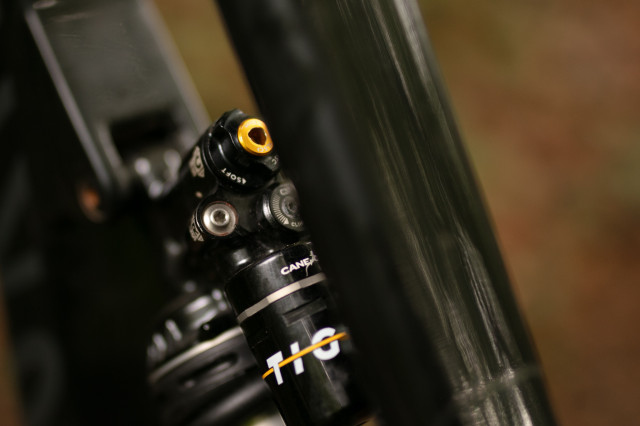
There’s plenty of other adjustments too, with the low and high speed compression dials and the low speed rebound adjustment providing a good heft of clicks. They all make tangible differences to the shock’s performance too, so even without the shock being tuned for my specific bike, I’ve easily managed to find a good setup. But as they’re wide, and the dials are unmarked, it does take some trial and error.
Though, as the shock’s missing an external high-speed rebound adjustment, that’ll leave some riders wanting. Granted, that contingent of riders will likely be slim, and mostly racers, but an extra adjustment would be another string to the Tigon’s bow. However, the compromise that missing adjustment brings, with the RAMP tube being what you get in return, makes the Tigon well worth considering, if you’re looking for that progression adjustment which really does weld the best of coil and air into one unit.
Cane Creek Tigon – Verdict
With a price tag of £750, the Tigon does require something of an investment, but its RAMP tech is something that you simply won’t find elsewhere, at least not at the moment, and it’s more affordable than a few other top-line shocks. Because of that, it brings a level of performance and adjustment that’s unique to only the Tigon, which does something to justify its price.
The aforementioned Fox DHX2 Factory dons all of the adjustment, and it’s a mighty competitive bit of kit. While its performance is excellent, it’s heavier and more expensive at £829. As is the Ohlins TTx22M.2 at £889. It gets the same number of adjustments as the Tigon, and its low-speed compression is a three-position affair, but it is a lighter shock.
The real competition comes in the form of RockShox’s Super Deluxe Coil Ultimate RC2T. It gets the same adjustments, but a hydraulic bottom-out adjust boosts bottom-out resistance. But note, this is not a progression adjustment. This shock will set you back £629.
Cane Creek’s Tigon shock brings something unique with its RAMP technology that’ll be appreciated by those who enjoy the characteristic small bump sensitivity typical of coil shocks, but seek the natural progression of their air-sprung counterparts. It also brings extra strength, opening up coil’s lusciousness to those with bikes that aren’t usually compatible with such shocks. There are some compromises, such as its weight and the fact that it forgoes an external high-speed rebound adjustment, but it does things that others simply don’t.
You might also like:
- High-pivot mountain bikes – everything you need to know
- Busting those suspension myths with Fox
- Ignore the naysayers, gravel suspension WILL make you faster! Here’s why I think it should be standard on all gravel bikes
Product purpose:
Build extra:
Main coil spring allows Tigon to offer incredible grip and ground-tracking sensitivity
RAMP Tube Technology allows riders to add 20-35% more progression than typical coil shocks (30psi max)
Significantly increased strength due to the bracing provided by RAMP Tube
Hand-built by riders in Western North Carolina
Product construction
Product performance
Product performance extra:
Product weight
Product weight extra:
product value
All the deals displayed on our review pages are pulled from a constantly updating database feed of the best affiliate deals available. The criteria for deciding on what are the best deals is who is offering the lowest, delivered price. In most cases we will be showing the very best deal available online, but sometimes you may be able to find an item cheaper. If you can please feel free to post a link in the comments box below. To find out more about affiliate links on road.cc click here.