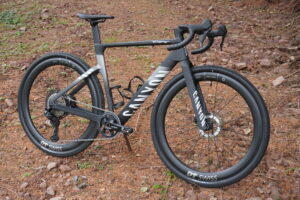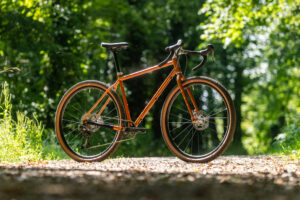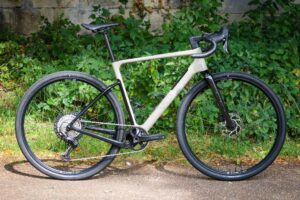

The Canyon Grizl:ON CF9 uses the lighter Bosch Performance SX motor unit, which delivers a high degree of adjustability, as well as versatile components and geometry. As a result, the Grizl:ON is an adaptable bike that can handle a range of terrain and riding styles. Thanks to its integrated battery, there are plenty of options for customisation and personalisation, making it more than just your average e-gravel bike.
The previous Canyon Grail:ON had a distinctive dual-layer handlebar and an impressive 500Wh battery that provided the range and power of a mountain bike. The new version, Grizl:ON, has undergone some changes including a slacker riding position, standard fitting of a RockShox Rudy suspension fork to all models, and integration of lights, racks, and bags. These changes make it more than just a bike for riding on gravel.
The Grizl:ON line-up is not extensive but includes models designed for different purposes. Unlike unassisted bikes, these models are not solely based on component value. All the models come with the same carbon frame and Bosch Performance SX motor with 400Wh battery. The lowest-priced model in the range is the CF7 (£4,799), which comes with a Shimano GRX 11-speed wire-cable groupset and DT Swiss alloy wheels. The CF Daily (£5,249) has mudguards and a rear rack as standard, a Shimano GRX 12-speed Di2 groupset, and Schwalbe G-One Overland 45mm, indicating the terrain it is meant for. The CF 9, pictured here costs £6,699, while the CF Trail (£7,649) features a Rock Shox Reverb AXS seatpost, SRAM X0 Eagle groupset and DT Swiss HGC1400 Spline wheelset.
Canyon Grizl:ON CF9 – Motor and battery
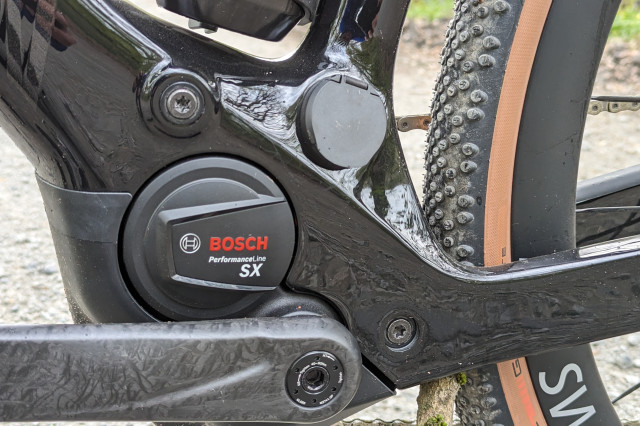
The Bosch Performance SX motor is the first lightweight motor system from Bosch, with a motor weight of just 2kg. Despite the lightweight design, the SX offers high key performance figures, including a maximum torque of 55Nm and a peak power of 600W. The motor is paired with the CompactTube 400Wh battery, which combines to give a total system weight of 4kg. While a remote is available, it doesn’t come fitted to the Grizl:ON and all functions are activated using only two buttons. One button turns the system on or off and the other adjusts the assistance level with a quick tap to increase power and a longer press to reduce it.
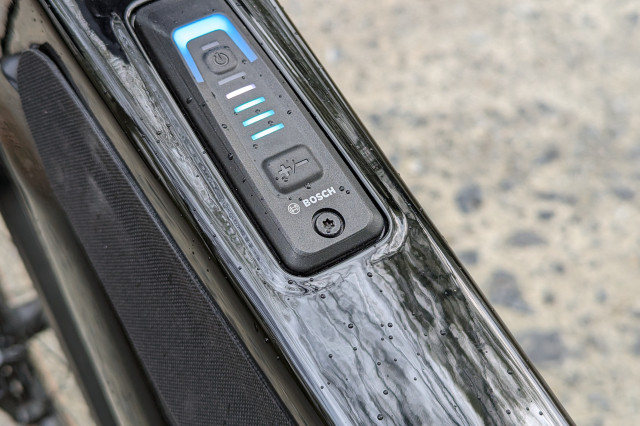
The LED display on the top tube indicates the active power motor through different colours. The remaining battery percentage is shown through five horizontal bars, each of which can display a colour to indicate half usage, effectively doubling the range indicators, which may help ease range anxiety.
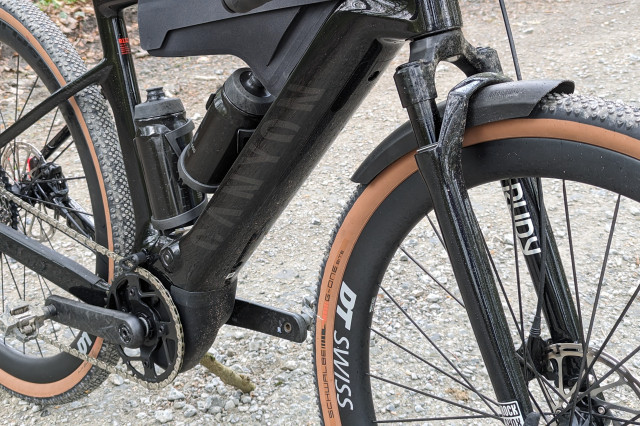
If the 400Wh battery capacity doesn’t sound like enough, you can purchase an additional 250Wh battery, which fits into one of the water bottle mounts, and there is space to fit this into all-size frames.
Canyon Grizl:ON CF9 – Range and customisation
The range of the Grizl:ON will depend completely on individual circumstances and preferences, but while the 400Wh battery isn’t the biggest, and smaller than the previous Grail:ON with Performance Line CX motor, the customisation that is available through the Bosch Flow app can help make the bike more suited for your individual needs.
Although the motor is as efficient as the Performance Line CX, limiting the highest power settings will extend battery life. Using the highest power settings during long and steep climbs will cause a sharp decrease in battery life, and I would see a single bar drop when hitting a longer, ~1km long hill hard in Turbo mode.
The SX motor has a significant advantage providing a smoother drivetrain when not under power, making it feasible to ride above the maximum 25km/h assistance level. Based on my experience, I estimate the range of the motor can vary depending on the terrain and mode of use. In hilly areas (using the full range of modes) I managed 60-70km without worry. With more efficient use or flatter terrain, distances of over 100km should be possible.
Canyon Grizl:ON CF9 – Specification
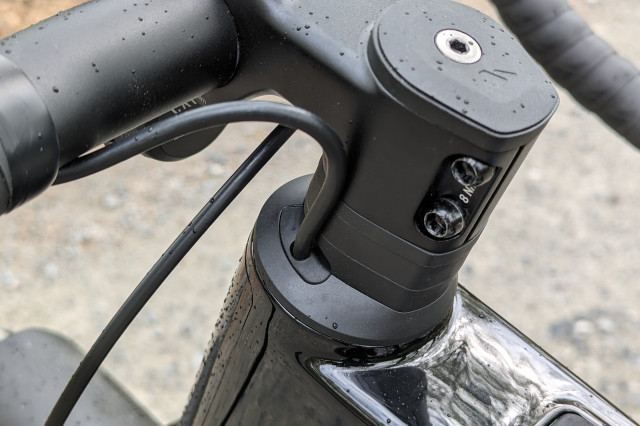
The Grizl:ON CF9 has a full carbon frameset, which includes internal headset cable routing. With wireless shifting there is at least no gear cable to change but the brake cable feeds through the headset top bearing. It will mean more time and expense to change when the time comes to change the top headset bearing, as the front brake will also need to be removed, refitted and rebled.
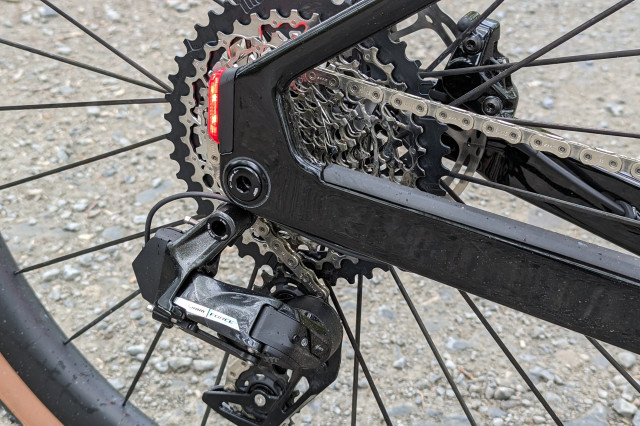
The groupset is a wireless SRAM Force XPLR AXS, featuring a 42T chainring and a 10-44T cassette, which suits road and off-road riding. The shifting is what we have come to expect from AXS: reliable, precise and smooth, even under power. The only downside is the crankarm length, which is 175mm on all sizes except XS and S. The Bosch Performance SX motor operates most efficiently at higher cadences, and a shorter crankarm would make it easier to achieve a higher cadence. Crankarm clearance is another factor for any rougher, technical climbs attempted, which is more achievable with the assistance available. The FSA CK-703 carbon crank arms have a long section from the edge to the threaded point, making impacts more likely.
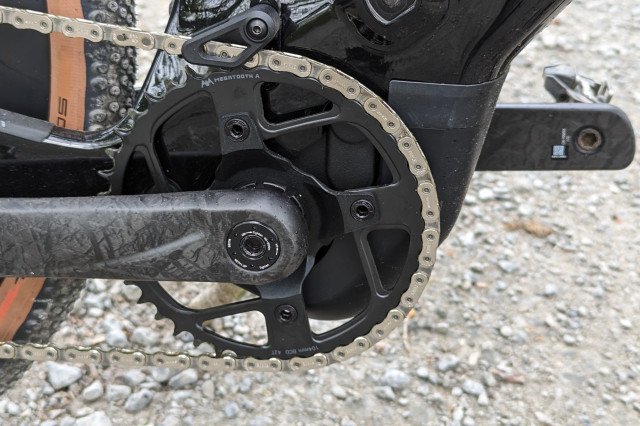
The bike weighs 16kg, including pedals, which is a reasonable weight for an assisted bike with this style of motor and battery capacity. However, it is about 6kg heavier than many unassisted bikes and this added weight is noticed. The SRAM Force AXS rear derailleur is connected to the main bike battery for power – a neat feature. The shifting requires only a small amount of power and won’t significantly affect the range but it does mean that the bike always needs to be switched on to shift. For riders who might be pushing the limits of the range or prefer to use unassisted riding, the standard SRAM AXS battery can be fitted instead.
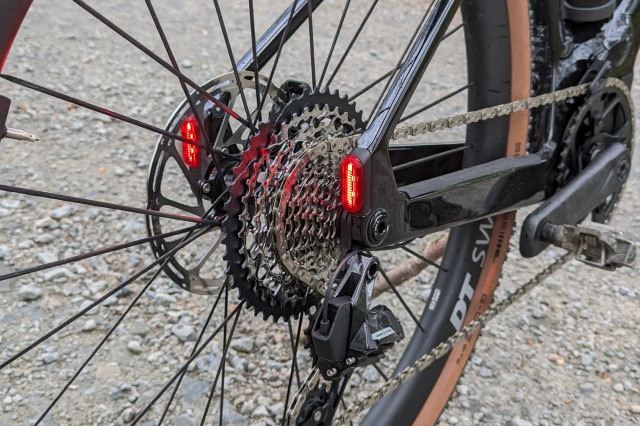
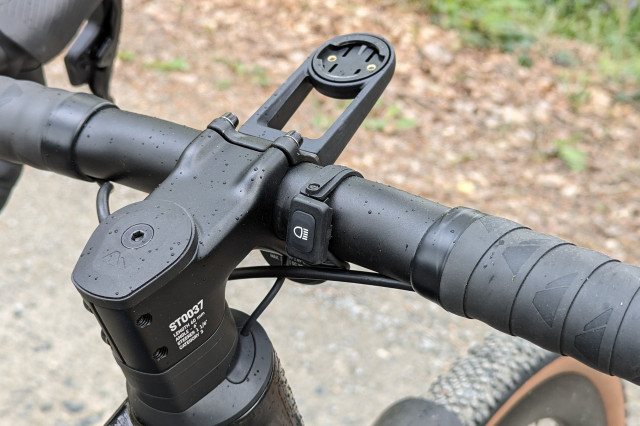
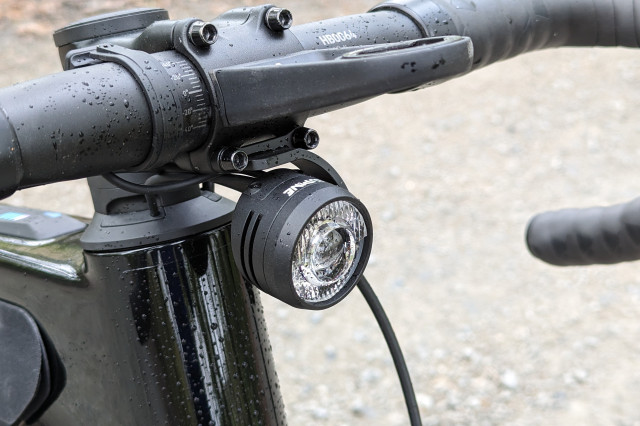
The Lupine collaboration ensures the front and rear lights are attached and connected. The front light is a Lupine Nano SL with a 1,000-lumen main beam and a 700-lumen dipped mode, which can be activated using a remote switch. The light is StVZO-approved for highway use to prevent it from dazzling other vehicles. The rear light consists of Lupine SightStays that are always on and constant.
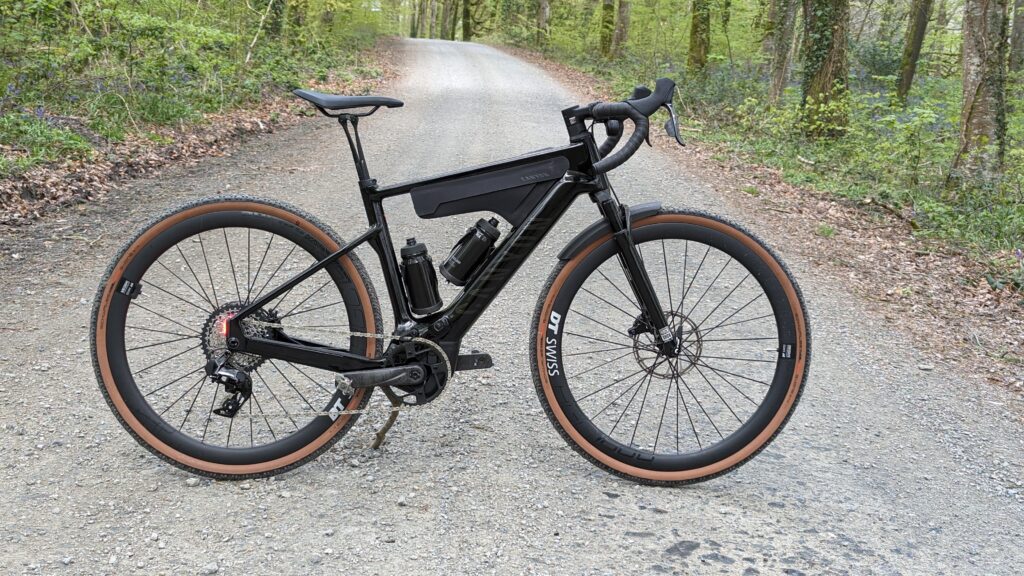
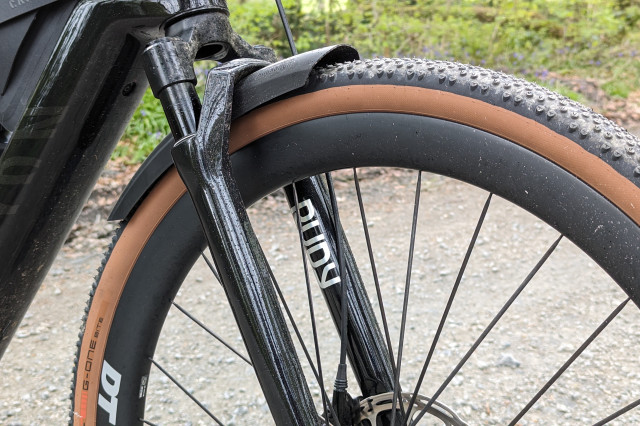
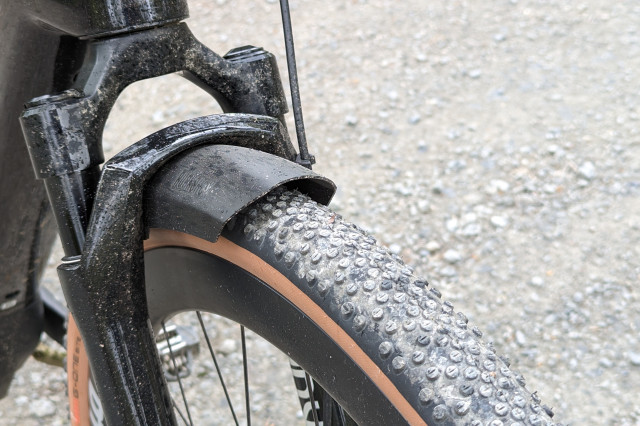
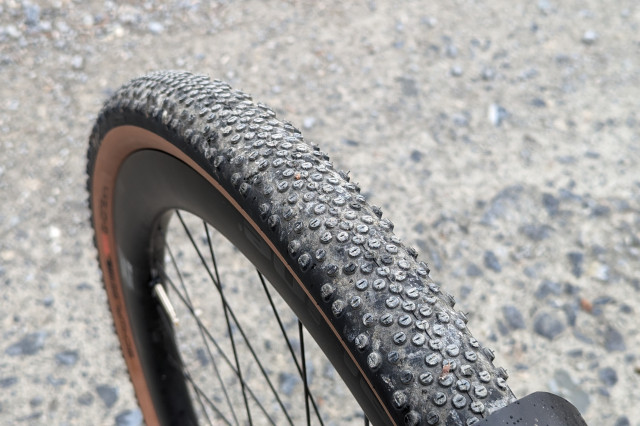
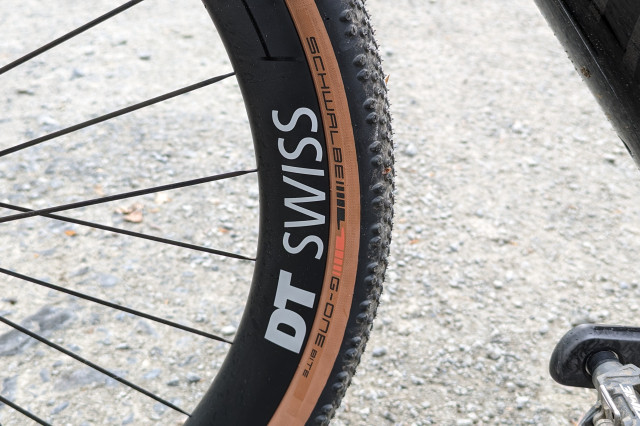
DT Swiss HGC1800 wheels are fitted, featuring a 42mm deep carbon rim, DT Swiss 370 hubs and 28-bladed spokes. While a carbon rim might sound extreme for many looking at the bike, the prime benefits will be the stiffest offered, and not any aerodynamic benefits, or weight reduction over alloy wheels, with a claimed weight for the wheelset being a modest 1,887g. Fitted to the wheels are Schwalbe G-One Bite 700x45mm, and there is still ample clearance remaining. Official tyre clearance figures are 50mm for both front and rear, when not using a mudguard, and 45mm should you choose to have one fitted, as our test bike has on the RockShox Rudy.
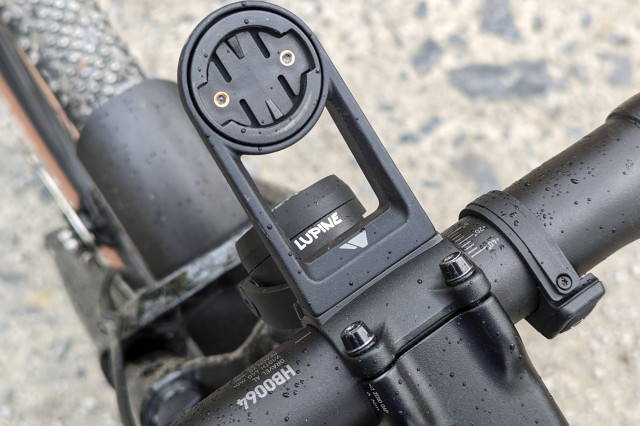
Completing the build are own brand aluminium cockpit components, the Canyon S14 VCLS 2.0 seatpost and a Fizik Argo Terra X5 saddle.
Our test bike was equipped with the Canyon LOAD Fidlock frame bag – an optional accessory that can be purchased for an additional £140. It comes in different sizes and has a magnetic Fidlock attachment for easy installation and removal. However, the bag was heavy and overbuilt, using a significant amount of frame space while providing very little usable interior space. While it would be suitable for carrying a few spares, if you want to go bikepacking or maximise the carrying potential, other bags are more suitable for this purpose.
Canyon Grizl:ON CF9 – Riding and performance
The Grizl:ON is a versatile bike suitable for all riders. Its comfortable and upright riding position, short 60mm stem on size medium, and a reasonable 403mm reach on the medium frame. The tall headtube and spacers provide a commanding position.
The tall front attaches to 44cm wide handlebars across all sizes except for XS, which has 42cm. This design promotes a confident riding position that feels natural. Although the front might appear too high for some riders, the Grizl:ON copes well, even on steeper climbs when used in lower power modes. The only area where the handling might feel awkward is on tighter corners, where the short reach could play a factor, feeling a little cramped.
The RockShox Rudy suspension fork is a standout feature on downhill sections of the Grizl:ON e-bike. The 40mm travel fork supplies a smooth and comfortable ride quality. One of the key benefits of motor assistance is that it eliminates the weight drawback typically associated with suspension forks. Another benefit of having a heavier bike is the lower centre of mass, which improves stability, particularly at higher speeds.
During seated climbing, using assistance means weight and movement are less of an issue. However, extra weight and potential speed mean stopping is important. The good news is that this bike comes with 180mm brake rotors fitted as standard on both the front and rear, which make a noticeable difference over a pair of 160mm rotors. The wheels have an effect downhill, too, with excellent stiffness and predictability on rougher tracks.
The bike possesses components that offer a sense of assurance. It goes beyond the usual gravel riding experience, catering to those inclined to push their limits. The CF Trail model, equipped with a dropper post and mountain bike groupset, is the ideal choice for those who wish to blur the boundaries between gravel and MTB riding even further.
The Grizl:ON may not have the most forward-thinking or extreme geometry, and its ride quality is heavily influenced by its components but it is a versatile all-rounder. Not all buyers may be interested in tackling rocky singletrack trails. Some may use it for commuting or a combination of road and off-road conditions. The Grizl:ON is well-suited for all of these situations, as well as what we commonly refer to as “gravel riding.”
Canyon Grizl:ON CF9 – Verdict
There are only a few other direct competitors in the e-gravel segment, with many brands choosing to have one bike that covers multiple areas, such as ‘road+’ or drop-bar touring options. One that is within e-gravel is the Ribble Gravel AL E, which features a hub-based MAHLE X35+ motor, a 250Wh battery,and prices starting from £2,999 for a flatbar version with SRAM NX, and up to £5,299 for the 11-speed Di2 model.
The Specialized Creo, on the other hand, starts from £4,000 with the E5 alloy frame model and has the Specialized 1.2 SL motor that can offer a maximum of 330w and 50Nm of assistance. Cairn, a British brand, has two models: the drop handlebar Adventure with Fazua motor for £3,500 and the flat bar Cairn BRAVe for a bargain price of £2,359. The latter is equipped with a more substantial Shimano Steps that is considerably more powerful, with 85Nm torque and a 630Wh battery. On a sliding scale of road to mountain bike, it is the closest of this group to the rugged side.
With these comparisons, does the Grizl:ON CF9 stack up and make it a good value option? This will depend on what individuals are looking for in their e-bike, and if elements such as the carbon frame and wheels are something you value. If having a bike that can easily and comfortably take on multiple roles than simply gravel riding, it can be a vehicle, a commuter, a tourer, and a fun bike to take off-road on a mixture of surfaces, it begins to become justifiable. The biggest competitor for the CF9 might come from within the same range, as the CF7 is £1,900 less, sharing the same frameset, fork and adaptability, with lighting also included.
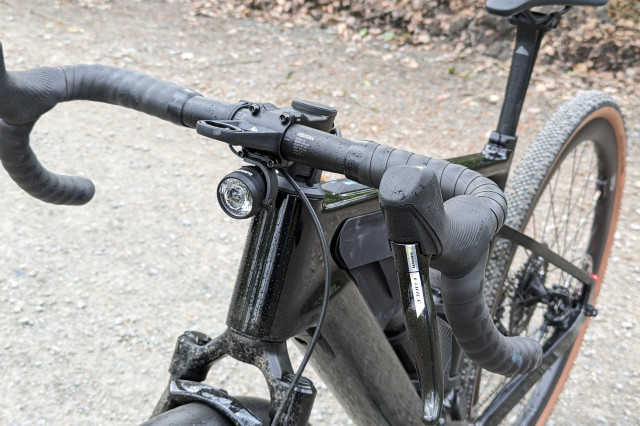
There are two ways to look at the relative lack of pure e-gravel bikes on the market compared to the huge growth in gravel as a discipline. The Grizl:ON expands on what Canyon had already set with the Grail:ON, tweaking the geometry, giving the option of different versions to make it a more versatile bike, and removing the awkward-looking handlebar.
The components on the build make it a fun and capable bike but whether it is value for money will depend on individual riders. Overall the build is excellent, with little to fault except the crankarm length. Canyon is not the only company continuing to specify long crankarms where they are not needed but it is even more important for e-bikes where cadence is vital for efficiency.
The Grizl:ON CF9 succeeds in creating a ride that can be fun, and capable for different terrain, but equally a workhorse, commuter and leisure bike, all in one. The Bosch Performance SX motor suits the style of riding, and is superior to other lightweight options if you have the extra budget.
- canyon.com
- The reader’s guide to Off-Road.cc’s review scoring system
You might also like:
- The best e-gravel bikes you can buy
- Bike check: Fabien Barel’s Canyon Strive:ON CFR LTD
- The widest gravel bike handlebars you can buy: broad bars for bikepackers
About the bike
Tell us what the bike is for, and who it’s aimed at. What do the manufacturers say about it? How does that compare to your own :
Unlock wild adventures with SRAM wireless shifting, light and strong DT Swiss carbon wheels and the latest compact assist Bosch SX motor technology and its natural support to take you way beyond the city limits.
Responsive, intuitive Bosch power
The new lightweight and compact Bosch SX motor packs the support you need to power your wanderlust. By rewarding dynamic and active riding, the system enhances your own efforts with natural and engaging responses. At only 4 kg for the motor and battery, the Grizl:ON is still down to party on the trail. 55 NM peak torque helps you punch up steep pitches, while the 400 Wh battery together with an optional 250 Wh PowerMore range extender (available separately) make big days out off-grid a reality.
Integrated theft protection plus smart navigation
Theft protection that works, smart route navigation, ride stats and fitness progress, Bosch ConnectModule and Flow App connectivity with your smartphone or Apple Watch makes it easy to get the best out of the Grizl:ON. That means peace of mind when you park up to grab a coffee and run those errands, or detailed turn-by-turn instructions when exploring new places. The full potential of the Grizl:ON, unlocked.
Canyon x Lupine – see and be seen: wherever, whenever
In collaboration with lighting experts Lupine, we’ve created a premium integrated lighting system all powered by the bike’s main Bosch battery. At the rear, the signature Canyon x Lupine SightStays are always on so you’re visible from all angles when flowing through traffic. Up front, the brilliant Lupine Nano SL shines light into the darkest places with an on-bar remote to control beam setting. And so you can always get home seen and safe, the battery reserves another 2 hours of light, even after the motor runs out of juice.
Click & Ride: modular storage in seconds
Adventure-ready and hugely versatile, we made it quick and easy to swap out the gear you need for the day’s ride thanks to the Grizl:ON’s simple, rapid Click & Ride System. The PowerMore Range Extender, extra storage from the LOAD FidLock Quickloader, an extra bottle, or pared back for shorter rides, it only takes seconds to swap parts out with no tools or straps required.
State the frame material and method of construction. List the components used to build up the bike.:
Canyon specification:
Frame:
Canyon Grizl:ON CF
Lightweight, strong carbon e-gravel frame. With a laid-back riding position for all-day comfort, and slackened angles for enhanced control.
Axle dimension: 12×142 mm
Material: Carbon (CF)
Suspension Fork:
Rockshox Rudy Ultimate 40 mm
Axle dimension: 12×100 mm
Travel: 40 mm
Fork steer tube diameter: 1 1/8″ – 1,5″
Tyre Clearance: 50 mm
Weight: 1.25 kg
Drivetrain:
Motor:
Bosch Performance Line SX Motor Road Mount
Battery:
Bosch Compact Tube 400WH
Rear Derailleur:
SRAM Force XPLR AXS, 12-speed
Weight: 307 g
Chainguard:
Canyon GP0455-01 Chainguide
Cassette:
SRAM Force XPLR XG-1271, 12-speed, 10-44
Number of sprockets: 12
Crank:
FSA CK-703
Chainring:
FSA 42T Spider Bosch
Chain:
SRAM Force D1 12s
Brakes:
Shift-/ Brake Lever
SRAM Force eTap AXS
Weight: 610 g
Brake Rotors:
SRAM Centerline Rounded
Size: 180 mm
Weight: 193 g
Wheels:
Front wheel:
DT Swiss HGC1800
Axle dimension: 12×100 mm
Rotor mount: Center Lock
Rim height: 42 mm
Inner width: 24 mm
Rim material: Carbon
Weight: 888 g
Rear Wheel:
DT Swiss HGC1800 XDR
Axle dimension: 12×142 mm
Rotor mount: Center Lock
Rim height: 42 mm
Inner width: 24 mm
Rim material: Carbon
Weight: 999 g
Tyres:
Schwalbe G-One Bite 45mm
Width: 45mm
Weight: 540 g
Thru Axle:
Canyon GP0433-01 Thru Axle
Axle dimension: 12×142 mm
Cockpit:
Canyon Stem ST0037
Fork steer tube diameter: 1 1/8″
Clamping diameter: 31,8 mm
Handlebar:
Canyon HB0064 Ergo
Robust aluminium handlebar with flared drops for enhanced off-road control.
Clamping diameter: 31,8 mm
Width: 440 mm
Handlebar Tape:
Canyon Ergospeed Gel
Grippy, durable bar tape with a premium, high-quality, comfortable feel.
Color: Black
Saddle:
Fizik Argo Terra X5
Gender: Unisex
Weight: 271 g
Seatpost:
Canyon S14 VCLS 2.0 CF
Material: Carbon
Setback: -2 mm / 10 mm
Technology: VCLS 2.0 | Fliphead
Weight: 220 g
Light:
Lupine C14 Tail Light R112 Set
Accessories:
Battery Charger
Bosch 4A
Frame & Fork
How much suspension travel does the fork have?:
Was the bike comfortable to ride? Tell us how you felt about the ride quality.:
How was the bike in terms of sizing and angles? How did it compare to other bikes of the same stated size and intent?:
Overall rating for frame
How much suspension travel does the rear end have?:
Did the bike feel stiff in the right places? Did any part of the bike feel too stiff or too flexible?:
Tell us about the build quality and finish of the frame:
Tell us about the geometry of the frame:
For a medium frame (178-184cm rider range) key figures include:
403mm reach
69.5 degrees head tube angle
156mm head tube length
74 degrees seat tube angle
Tell us about the materials used in the frame:
Riding
How did the bike transfer power? Did it feel efficient?:
How would you describe the steering? Was it lively, neutral or unresponsive?:
Tell us some more about the handling. How did the bike feel overall? Did it do particular things well or badly?:
Rate the bike for high speed descending
Rate the bike for technical descending:
Any comments on technical descending?:
Rate the bike for flat cornering:
Any comments on flat cornering?:
Rate the bike for technical climbing:
Any comments on technical climbing?:
Rate the bike for agility:
Any comments on agility?:
Suspension
Rate the fork for performance:
Any comments on fork performance?:
Rate the fork for durability:
Rate the fork for efficiency:
Rate the fork for value:
Drivetrain
Rate the drivetrain for performance:
Any comments on drivetrain performance?:
Rate the drivetrain for durability:
Rate the drivetrain for weight:
Tell us some more about the drivetrain. Anything you particularly did or didn’t like? Any components which didn’t work well to:
Rate the drivetrain for value:
Wheels & tyres
Rate the wheels for performance:
Rate the wheels for durability:
Any comments on wheel durability?:
Rate the wheels for weight:
Any comments on wheel weight?:
Rate the wheels for comfort:
Rate the wheels for value:
Tell us some more about the wheels.Did they work well in the conditions you encountered? Would you change the wheels? If so, wha:
Rate the tyres for performance:
Any comments on tyre performance?:
Rate the tyres for durability:
Rate the tyres for weight:
Rate the tyres for value:
Tell us some more about the tyres. Did they work well in the conditions you encountered? Would you change the tyres? If so, what:
Controls
Rate the controls for performance:
Rate the controls for durability:
Rate the controls for weight:
Any comments on controls weight?:
Rate the controls for comfort:
Any comments on controls comfort?:
Rate the controls for value:
Tell us some more about the controls. Any particularly good or bad components?:
Anything else you want to say about the componentry? Comment on any other components (good or bad):
Summary
Did you enjoy riding the bike?:
Would you consider buying the bike?:
Which components had the most effect (good or bad) on the bike’s performance? would you recommend any changes?:
Would you recommend the bike to a friend?:
Rate the bike overall for performance:
Rate the bike overall for value:
Use this box to explain your score:
All the deals displayed on our review pages are pulled from a constantly updating database feed of the best affiliate deals available. The criteria for deciding on what are the best deals is who is offering the lowest, delivered price. In most cases we will be showing the very best deal available online, but sometimes you may be able to find an item cheaper. If you can please feel free to post a link in the comments box below. To find out more about affiliate links on road.cc click here.