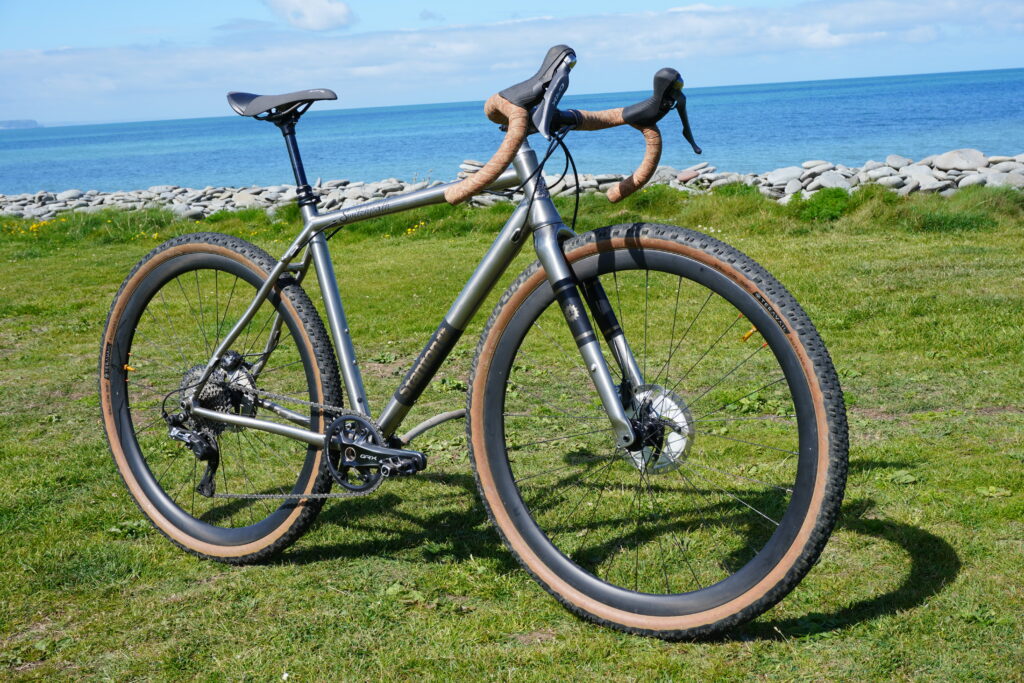

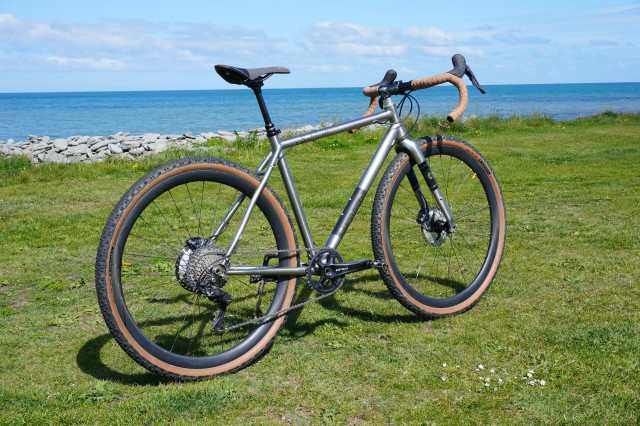
The Stanton Switchpath is the British brand’s take on the best gravel bike recipe and is available in frameset guise only. Stanton is known more for its hardcore mountain bikes and this titanium frame utilises a design philosophy that has evolved from mountain bikes. With generous tyre clearance, internal routing for a dropper seatpost and some beautiful finishing options, it has some really appealing features. It is far from perfect, however, with the titanium fork that feels harsh and geometry that won’t suit everyone.
- Gravel bike vs mountain bike: what are the differences?
- Ritchey Outback (frameset)
- Is titanium the ultimate material for off-road bike frames?
A brief look at how Stanton describes the Switchpath, and you can see the brand is not exactly fans of road bikes or road riding, with claims that the frameset has lots of traits that have come across from mountain bikes. The wide tyre clearance, with up to 47mm, fully internal dropper post routing and removable dropouts are features that all point towards a bike designed for more gravity-orientated riding.
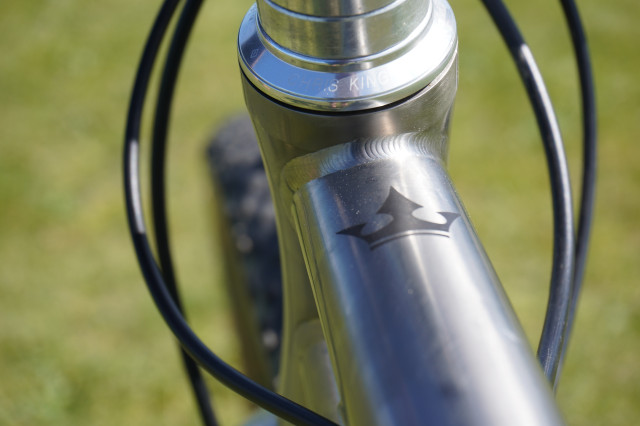
The frameset is available with a choice of fork material or frame only, and there are multiple finishing options including sandblasted decals, anodising or cerakote (pictured here) with the interior available in seven different colours, including gold.
There are no full build options, although our test bike was built to suit the style and purpose of the frameset.
Stanton Switchpath | Geometry and Handling
Our 51cm bike is the smallest offering in the four-size range with a suggested rider height range of 154-162cm and, while I fall slightly above the size limit, it highlights some potential problems. Standover is the biggest issue here. It may not affect all riders or all size bikes but I feel there simply isn’t enough. I measured this at 78cm with the 47mm tyres, which will reduce slightly if using a smaller tyre – that said, the bike is designed to accommodate a 47mm width tyre and the frame sizing and geometry should suit this.
The 70-degree head angle across all sizes is nothing too radical and this is echoed in other elements of the geometry, including the reach and stack figures that sit within a normal range for each size.
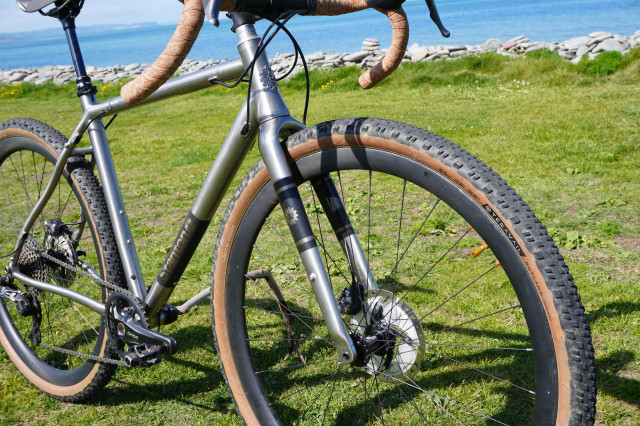
The 74-degree seat tube angle is a little steeper than some other frames, allowing an upright and efficient pedalling position. One interesting component choice on our build was the dropper seatpost complete wth 100mm of travel. Set in the lowest position on our small 51cm frame, the seatpost height from the centre of the bottom bracket to the top of the saddle measured 74cm, which is pretty high for the frame size.
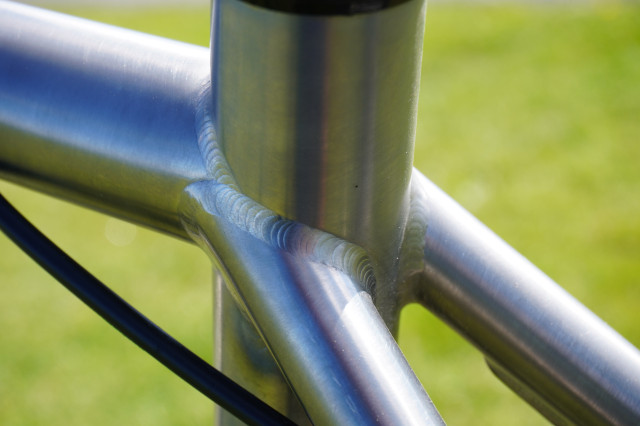
I found the reach of the frame spot on. The recommended range of 60-90mm provides some flexibility to suit your measurements but, overall, the reach made for a comfortable position combined with a slack enough head angle to enjoy downhill sections. Designed with an emphasis on enjoying more playful and aggressive riding, a longer front-centre, and design around a shorter stem would potentially make the downhills even more fun.
For general riding, the Switchpath was comfortable and this included longer rides with a mix of terrain and surfaces, paved roads included which proved absolutely fine.
Stanton Switchpath | Ride & Comfort
Titanium frames are often promoted as being more comfortable to ride than other metals and even carbon but comfort is not the Switchpath’s strong point – despite the generous 47mm tyres. The frameset is available with either a carbon fork or titanium (as tested) and I’m inclined to think the latter is repsonsible for the fairly harsh ride quality.
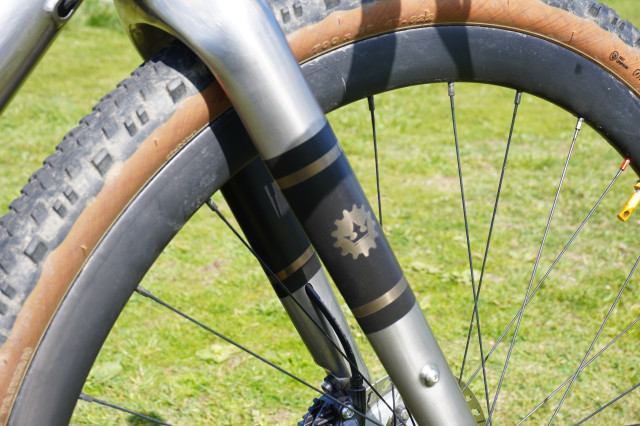
I ran the 700×47 Teravail Rutland tyres at quite low pressures – 20-25psi – but the front end was jarring on almost all surfaces, even on some roads. On smoother forest roads the tyres work well to reduce the smaller vibrations and as the speed picks up things improve. It was on lumpier tracks, or anything slower that it had the biggest impact. The fork is almost certainly the issue but the bars and carbon rims, plus generously padded bar tape helped improve comfort.
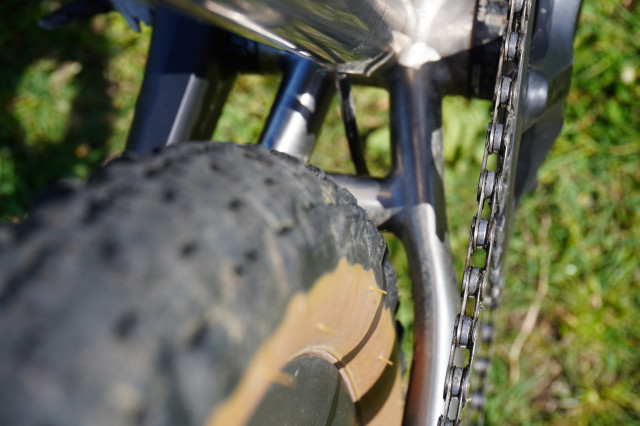
The geometry might be designed to encourage a more relaxed, or exuberant downhill riding style but the harsh front end hampers its ability. The biggest change to the front end and ride quality might come from adding a suspension fork, which is a viable option based on the fact that you can purchase the Switchpath without a fork.
Stanton Switchpath | Fixings
The Switchpath is noted as being bikepacking-compatible, although no specifics are given on what this relates to with the design or features.
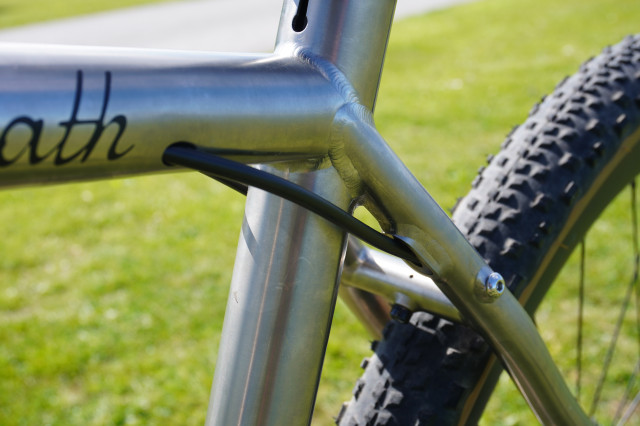
Fixing points are quite limited, with the standard two-bottle cage mounts within the frame and a third under the seat tube. The frameset also has pannier and mudguard mounts on the fork and rear triangle – something more commonly seen on bikes designed for road riding – which goes against Stanton’s ethos.
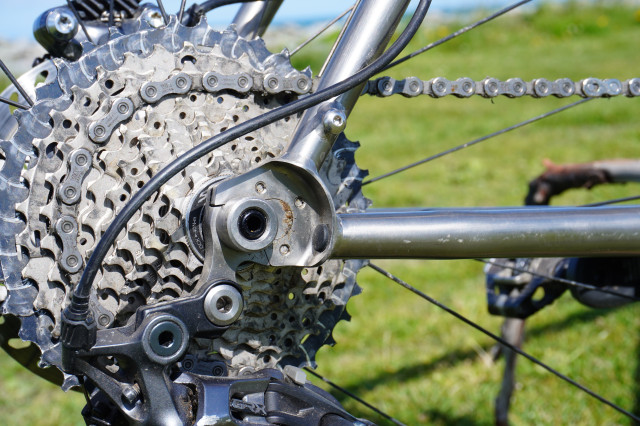
The fork is devoid of both two- and three-bolt bosses, and there’s no cage mount on the top tube. That said, one positive element of the limited standover height is the ability to fit a deeper frame bag with almost no affect on bottle access – a problem many smaller frames face.
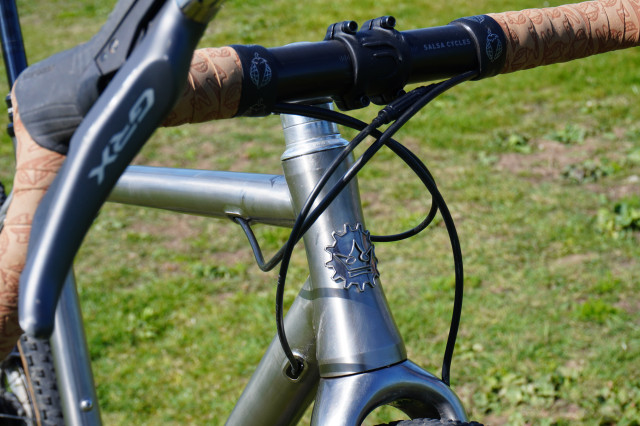
The gear cable and brake hose routing are semi-internal but full internal dropper seatpost routing is available. The frameset supports 1x or 2x drivetrains and the cable ports are removable with inserts to suit mechanical or electronic options.
Other models in the Stanton line-up of mountain bikes have removable dropouts, and this is something carried over to the Switchpath, which could future-proof the frame should wheel hub geometries change from 142x12mm, which is the common standard.
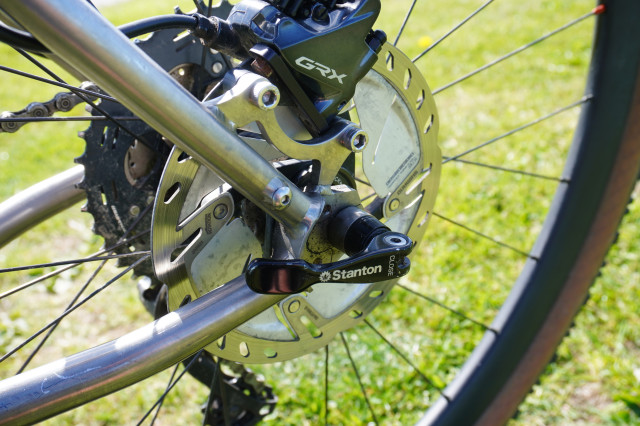
Not many other gravel, mountain or road bikes come with IS (International Standard) disc brake fittings and while this might seem like old tech to some, I really like the mount and would be happy to see it applied on more bikes. IS does have some downsides, and will require an adapter (provided) to fit all new brake calipers, but has the ability to fine tune the position of the calliper and prevent pad rub.
Stanton Switchpath | Comparisons and Verdict
The Switchpath is priced from £2,099. Choosing a carbon fork pushes the price to £2,429 and a titanium fork option starts at £2,649. If you spec it with all the bells and whistles, the cost spikes to £3,309 for the frame and fork. The frameset version tested, with titanium fork and cerakote decals will set you back £2,759.
Titanium gravel bike frames are not the most common around but there are a few to compare, including the Kinesis ATR V3 at £2,200 (including fork). The ATR is a bike that shares similar geometry, including 70-degree head angle. The Sonder Camino Ti is a degree slacker and starts at just £1,399 for the frameset. The J.Guillem Atalaya has less aggressive geometry with pricing now starting at €2,399 (£2,050) for a frameset, and full bikes from €4,199 (£3,590). Judged against these options and other titanium frame gravel bikes, the Switchpath does start to look a little expensive.
There are elements of the Switchpath design that work, and on some downhills, it rides well. The titanium fork is the biggest factor that prevents it from really excelling downhill and riding comfortably on the rougher stuff. The standover height will be an issue for some riders, too. With geometry figures that are similar to other titanium framed bikes, the only element that needs adjusting, perhaps, is a taller recommended height range.
You might also like:
- 13 of the best ways to attach gear to your mountain or gravel bike
-
The widest gravel bike handlebars you can buy: broad bars for bikepackers
About the bike
Tell us what the bike is for, and who it’s aimed at. What do the manufacturers say about it? How does that compare to your own :
You can sleep easy knowing we’ve drawn a line in the gravel and come down firmly on the side of the mountain fraternity. This is as close to the r*@d as we can cope with. It means you don’t have to compromise on the fun and can keep your shorts as loose as your riding. Just so we’re clear – this is not a green light for lycra.
State the frame material and method of construction. List the components used to build up the bike.:
Triple-butted it 3AL 2.5 V titanium
Frame & Fork
Was the bike comfortable to ride? Tell us how you felt about the ride quality.:
How was the bike in terms of sizing and angles? How did it compare to other bikes of the same stated size and intent?:
Did the bike feel stiff in the right places? Did any part of the bike feel too stiff or too flexible?:
Tell us about the build quality and finish of the frame:
Tell us about the geometry of the frame:
Seat tube Angle 74˚
Chainstay Length 440mm
Bottom Bracket Drop 70mm
51cm Frame:
Stack 555mm
Reach 381mm
Virtual Top Tube 540mm
54cm Frame:
Reach 384mm
Strack 575.5mm
Virtual Top Tube 550mm
55.5cm Frame:
Reach 390mm
Stack 590mm
Virtual Top Tube 560mm
57cm Frame:
Reach 397mm
Stack 602mm
Virtual Top Tube 570mm
Tell us about the materials used in the frame:
Riding
How did the bike transfer power? Did it feel efficient?:
How would you describe the steering? Was it lively, neutral or unresponsive?:
Tell us some more about the handling. How did the bike feel overall? Did it do particular things well or badly?:
Rate the bike for high speed descending
Rate the bike for technical descending:
Any comments on technical descending?:
Rate the bike for flat cornering:
Rate the bike for technical climbing:
Any comments on technical climbing?:
Rate the bike for climbing efficiency:
Any comments on climbing efficiency?:
Rate the bike for agility:
Summary
Did you enjoy riding the bike?:
Would you consider buying the bike?:
Would you recommend the bike to a friend?:
Rate the bike overall for performance:
Rate the bike overall for value:
Product purpose:
GRAVEL WITHOUT THE GRRR…
It’s ok, you’re amongst friends. This is uncharted territory for all of us. Does us making, and you considering, a gravel bike mean we’ve both crossed a line? Gone to the dark side, as dark as asphalt, and the photo-filter of choice is ‘grainy black and white’ for added macho vibes?
The way we see it, all this adventure-bike hype is just a way of more people finding the joy of leaving the tarmac and going where the hell they want, how they want – and that’s definitely our territory. We can’t help noticing this modern gravel geo plays to our heritage too. So, all in all, time we got involved.
The Switchpath is a gravel machine from the mountains, not the road.
You can sleep easy knowing we’ve drawn a line in the gravel and come down firmly on the side of the mountain fraternity. This is as close to the r*@d as we can cope with. It means you don’t have to compromise on the fun and can keep your shorts as loose as your riding. Just so we’re clear – this is not a green light for lycra.
Build extra:
Features
1. Triple-butted it 3AL 2.5 V titanium.
2. Full internal stealth routing for brakes and gearing.
3. Dropper post compatible with stealth routing.
4. Custom swappable dropouts (Sherpa/Slackline style).
5. Bikepacking compatible.
6. IS brake calliper mounts.
7. Up to 47mm tyres.
8. Carbon or unique Ti fork options.
Product construction
Product construction extra:
Product performance
Product durability
Product weight
Product comfort
Product comfort extra:
product value
All the deals displayed on our review pages are pulled from a constantly updating database feed of the best affiliate deals available. The criteria for deciding on what are the best deals is who is offering the lowest, delivered price. In most cases we will be showing the very best deal available online, but sometimes you may be able to find an item cheaper. If you can please feel free to post a link in the comments box below. To find out more about affiliate links on road.cc click here.