


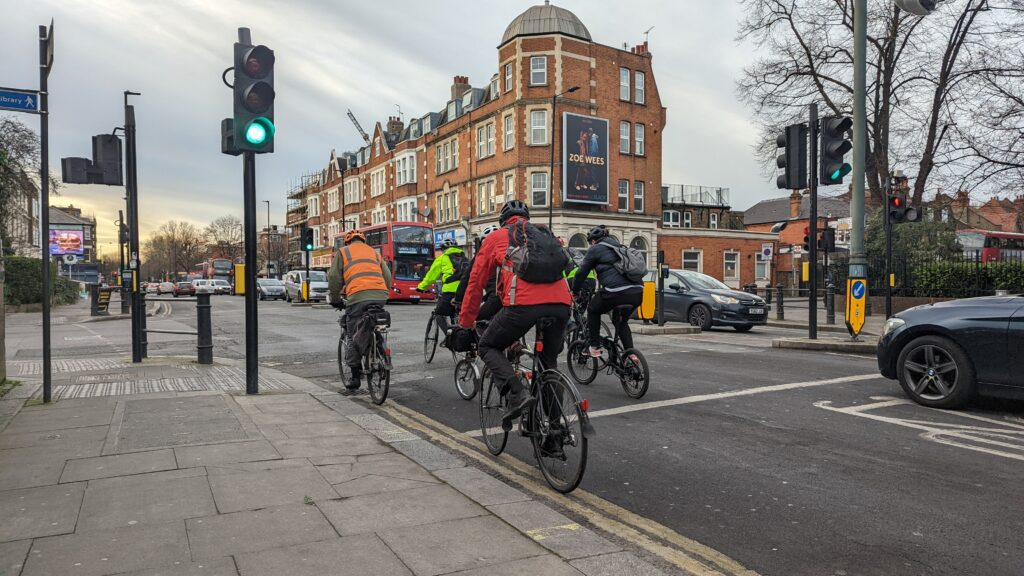

The increase in cycling in London since the pandemic has been demonstrated with the release of new data from Transport for London (TfL), suggesting that “investment in London’s cycle network is enabling more people to cycle”.
Figures come from TfL’s Travel in London report, showing “continued increases in the levels of walking and cycling” in the English capital.
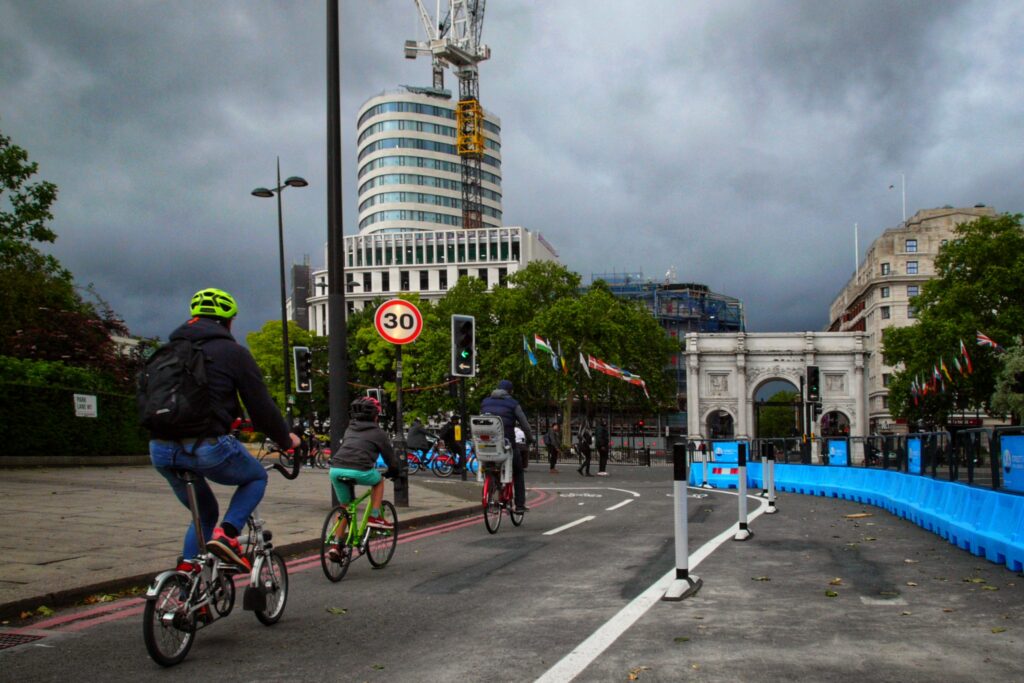
The estimated number of daily cycle journeys has increased in 2023 to hit 1.26 million journeys per day, up by 6.3 per cent from the estimated 1.19 million level recorded in 2022, and up by 20 per cent since 2019.
Concluding that the growth is at “a level not seen in the years leading up to the pandemic”, TfL suggests it shows “Londoners are continuing to make the most of cycling as a sustainable and affordable way of travelling around the capital” enabled by investment in active travel infrastructure.
The year-on-year level of growth was lowest in central London, 1.7 per cent compared with an 8.2 per cent increase in inner London and 5.5 per cent in outer London, an impact perhaps of increased hybrid working.
For the financial year 2022/23 the percentage of all journeys made in London where cycling was the mode of transport stood at 4.5 per cent, an increase on the pre-pandemic level of 3.6 per cent in 2019/20.
Furthermore, TfL says the proportion of Londoners who have cycled in the past year has increased, “including increases among people from Black, Asian other minority ethnic groups”.
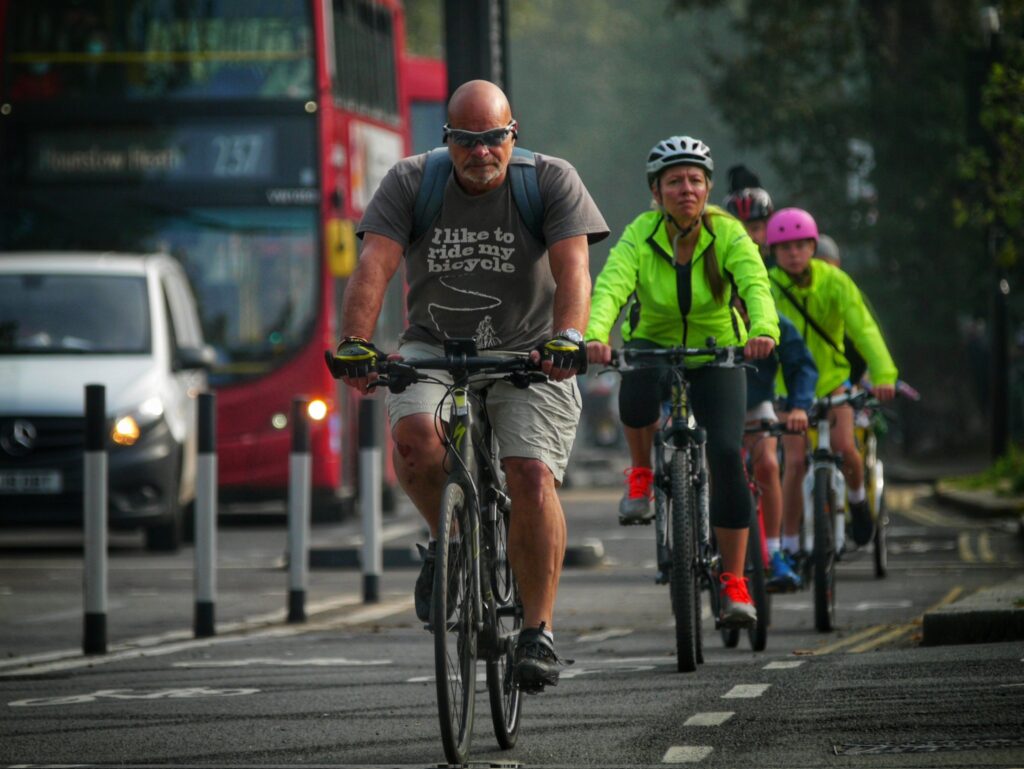
In the financial year 2022/23, 24 per cent of Londoners reported having cycled in the past year, up from 21 per cent in 2019/20. “This includes increases among all ethnic groups, including Black people (12 per cent in 2019/20 to 15 per cent in 2022/23) and Asian people (11 per cent in 2019/20 to 15 per cent in 2022/23),” TfL noted.
Citing the investment since the pandemic, TfL said the stats show the “benefits of investing in high-quality walking and cycling infrastructure”.
“I’m delighted to see the increase in cycling and walking journeys in London continue for yet another year,” London Walking and Cycling Commissioner Will Norman said.
“The mayor and I are committed to boosting this further. We will continue to expand the network of cycleways and make more junctions and crossings safer. We’re determined to build a cleaner, greener and more prosperous London for everyone, and investing in sustainable transport options is a vital part of that.”
Alex Williams, TfL’s Chief Customer and Strategy Officer added: “Walking and cycling are absolutely essential to a more sustainable future for London so it’s very encouraging to see this new data, which shows that there continues to be significant increases in the number of journeys cycled or on foot. We are extremely proud of our work on expanding the cycle network throughout London from 90km to 352km and are continuously increasing this number.
“We’re determined to ensure that the way people travel in London is healthy, sustainable and affordable, which is why we will keep working closely with boroughs to transform our roads and invest in our transport network, enabling even more people to choose to make their journeys by walking, cycling and using public transport.”



















14 thoughts on “London cycling journeys up 20% compared with before Covid pandemic”
Hmm, am increase in cycling
Hmm, am increase in cycling mostly among ethnic minorities and mostly in inner London since 2019. How much of the increase is delivery riders? It’d be interesting to see the stats for mopeds/scooters over the same period.
That’s not what I read from
That’s not what I read from the article.
The increase in the mentioned ethnic minority demographics (15%) is lower than of London as a whole (24%).
I’ll look forward to getting some more information, but I’m not surprised inner London has a higher increase than central and outer London. Inner London is going to be a much shorter and manageable commute by bike, while still being expensive by public transport. Outer London is going to vary a lot of course, but for commuting to central London a lot of journeys would be a lot longer.
And in my experience there are lots of delivery riders in outer London as well as inner London boroughs.
momove wrote:
I don’t think that’s what the percentages mean. I take them as saying (e.g.) that 11% of black respondents cycled in the pre-pandemic period, and now 15% of black respondents cycle.
I’d be quite surprised if that four-point increase was significantly caused by delivery riders (it’d be around 48,000 black people). I wouldn’t be surprised if a lot of it was due to (relatively, and mostly) good infrastructure making cycling seem like a normal way of getting about rather than a weird hobby for middle-aged white men. And anecdotally, the stolen Lime bike seems to have supplanted the illegal e-scooter in the affections of my local teenage criminals who are largely black. Don’t know if they were surveyed though.
Brauchsel wrote:
Sorry, I must have worded it poorly (or thought about it poorly!) – your point above is what I meant. I suppose 12% to 15% participation is a greater increase than 21% to 24%, but a lower starting point must be easier to increase. In any case, I’m in favour of an under represented group increasing participation.
Good point about infrastructure and where it is being built, and normalising bicycles as a mode of transport. That and the clacking Lime bikes.
Brauchsel wrote:
An additional consideration in the equation would be the ethnicity of delivery riders: I don’t know if my area (Peckham/East Dulwich/Camberwell/Brixton) is unusual but black people seem to be significantly underrepresented amongst delivery riders around here, with the vast majority being Eastern European, Middle Eastern or South American. So I would definitely agree with you that delivery workers have not had a significant impact on the rise in the number of black riders; I’ve definitely noticed an increase in the number of young black professionals commuting and also black people sport riding over the last couple of years.
I’m in the same sort of area
I’m in the same sort of area as you, and that does seem to be true. I suspect the split might be more due to nationality/immigration status than ethnicity, as most black people around here are (going by accent) British or at least long-established here. The Middle-Eastern/eastern Europeans are (again going by accent) not, and I’d guess that gig-economy work like that is what’s open to them.
Interestingly (or not), Royal Mail and DPD-type delivery van drivers round here are almost uniformly black, and a few years older than the teenagers/early-20s delivery cyclists.
As a more general comment, I
As a more general comment, I would say that the cycling population of London is much more diverse these days, even if still way short of being fully representative. I’ve been commuting by bike into London since 1996 (on and off) and there has been a noteable increase in both women and ethnic minority cyclists in recent years. The “it’s all middle class white men” stereotype is getting more and more outdated.
This is excellent news –
This is excellent news – build it, and they will come. Build infrastructure for the transport modes you want to have, not what you do have.
London is miles ahead of the rest of the country in this regard.
I take the greatest increase
I take the greatest increase being in Inner not Central or Outer London as being because much infra was previously built in Central London and growth in modal share is rippling outwards.
Outer London covers quite a
Outer London covers quite a lot of suburban (verging on rural) sprawly places where a lot of the building took place following the motoring boom of the 1920s and 1930s. Unsurprisingly, these places that were literally built for drivers are heavily populated by people who identify strongly as drivers.
It’s going to be a lot harder to get good infra built out in Metroland or leafy former-Kent, as there’s a vicious circle of car-centric roads – “need” to drive – only drivers live here – car-centric roads. It can be done, but it might need demographic change and a real economic war on motorists to make it happen.
Brauchsel wrote:
Actually, quite a lot of them were initially built with cycle lanes.
https://www.standard.co.uk/news/london/campaign-under-way-to-resurrect-londons-abandoned-1930s-dutchstyle-cycle-lanes-a3536766.html
The St Helier one is actually on my route to work, but is now a combination of some poorly surfaced, segregated-but-have-to-stop-at-every-junction cycle lanes; shared paths and car parking.
(Pedantry “cycle paths” or
(Pedantry “cycle paths” or “cycle tracks” rather than “lanes” I believe).
Hoorah for Carlton Reid!
The reality of these paths is interesting. They were opposed by the cycling groups of the time on the grounds that this was a measure to “get the cyclists off the roads”. And… they were right! Those heading the Ministry of Transport did indeed want cyclists out of the way to make room for the car.
Unfortunately as we know that would succeed spectacularly – without any need for cycle paths or specific regulation aimed at cyclists.
As of last week I am
As of last week I am contributing to cycling in London as I have a new commute which involves a 3.5km section in W London on the Uxbridge road. It’s pretty sketchy to be honest but no-one is moving very fast. Quite a variety of personal transport on display. I was overtaken this morning by a bloke in full motorbike kit who was standing on a motorised single wheel thing. A striking sight.
Presumably the stats account
Presumably the stats account for population growth of London, hybrid working patterns and so on, and aren’t just look this number we’ve manipulated, because we dont actually
really count every single cyclist in London, is bigger !!!