


- This topic has 37 replies, 18 voices, and was last updated 4 years, 7 months ago by
 David9694.
-
CreatorTopic
-
February 7, 2022 at 8:34 am #31952
brooksby
[quote]
New greenfield housing developments are locking residents into car dependency, making everyday journeys impossible without a vehicle, a new report has found. Meanwhile, pledges for walking, cycling and public transport are often left unfulfilled.
The group Transport for New Homes (TfNH) visited 20 new housing developments in England, finding that while those on urban brownfield sites generally lived up to sustainable transport pledges, greenfield sites were often far from shops and amenities, without public transport, cycling links or even pavements, and the homes themselves were seemingly designed around car parking.
[/quote]
-
CreatorTopic
-
AuthorReplies
-
 hawkinspeter
Rendel Harris wrote:300,000 empty homes in the UK at present – not holiday homes etc, just unused homes. I recently rode through a street near London’s Docklands, all new builds, all empty; a security guard told me they’d all been bought by a Malaysian syndicate who were just holding them as an investment and didn’t want the bother of tenants. Stopping that sort of thing would be a good start.
hawkinspeter
Rendel Harris wrote:300,000 empty homes in the UK at present – not holiday homes etc, just unused homes. I recently rode through a street near London’s Docklands, all new builds, all empty; a security guard told me they’d all been bought by a Malaysian syndicate who were just holding them as an investment and didn’t want the bother of tenants. Stopping that sort of thing would be a good start.That’s Capitalism for you – houses as a means of building capital rather than housing glorious workers.
 mdavidford
That does appear to include
That does appear to include empty properties that are unsafe or uninhabitable, and may be unviable to restore, though – can’t seem to find any kind of estimate on how many that accounts for.
You’d also need to consider where those homes are, and if they’re in suitable locations to provide for unmet demand.
That said, it probably still leaves a good chunk that could make a sizeable dent in the shortfall.
Rendel Harris
300,000 empty homes in the UK
300,000 empty homes in the UK at present – not holiday homes etc, just unused homes. I recently rode through a street near London’s Docklands, all new builds, all empty; a security guard told me they’d all been bought by a Malaysian syndicate who were just holding them as an investment and didn’t want the bother of tenants. Stopping that sort of thing would be a good start.
Bungle_52
I don’t agree that we should
I don’t agree that we should be building more new homes. There are many other ways to provide housing. Holiday homes is one area to be looked at. Many people, including myself, would love to move out of an area of high demand to live in a low employment area but prices are kept artificially high by holiday homes and second (or third) homes. There are many unoccupied houses which could be lived in and then there are large houses, often 4 bedrooms or more, which are occupied by one person. I admit that the shift in attitudes to make better use of these assets and thus reduce housing demand would be a challenge but in my opinion would be a better solution than building on prime agricltural land when we can only supply 40% of our food needs at present. We have seen what reliance on global markets can lead to with the chip shortages, PPE, vaccine manufacture and most recently the energy crisis. Food will be next.
The solution, of course, is to reduce population density but that is an even bigger challenge.
Dnnnnnn
As with politicians, we often
As with politicians, we often get the new housing developments we deserve. Many local authorities don’t want to plan properly for new development because designating anywhere (especially if it’s greenspace) for housing generates lots of opposition.
Fortunately, central government doesn’t allow local areas to prohibit development – but it’s often left to developers and speculators to take the lead, and given the dominance of large firms (who have the best consultants, surveyors and solicitors) and the greater attractiveness of ‘easy’ greenfield sites (especially in areas without good plans or which aren’t seeing enough building), they’re the ones which are often developed. Even if they’re not the most suitable locations, or the layouts aren’t particularly good.
Most people agree we should be building more homes. Unfortunately, far fewer agree with proposals to have them built near them.
lonpfrb
A few decades ago the good
A few decades ago the good people of Finland looked at their national health data and saw that the pattern was towards less activity and lower life expectancy. So they built a political consensus to do something about it, specifically for safe space beside new or some existing* roads where all forms of human centered transport could take place.* planning gain i.e. points for improving the public realm in planning applications.
Many years later it is common for people to do their local journeys on foot, wheels, skates or skis, depending on the season. This is especially great for the elderly who can safely travel in the winter, using 1-person sleds, without risk of falls in snow and ice conditions. Cycling and skiing both benefit from landscaping of the route to minimise slopes. So people of all abilities are enabled to enjoy their travel.
Building regulations are the key to ensure that the public realm is friendly to active travel. Anything less is just talk, however well intentioned…
Grahamd
hawkinspeter wrote:brooksby wrote:Fair enough.In the interests of full disclosure, I do tend to look at the nws on the Grauniad site first.
( I don’t think I’m an evil hate-filled commie, or anything like that, but YMMV).
To be fair, The Gradunai is going to have much better quality reporting on cars/bikes/environment than the BBC.
I think the Beano would have better reporting than the BBC.
 ktache
For example a Bike Blog with
For example a Bike Blog with contributors from this particular parish.
hawkinspeter
iandusud wrote:I read the BBC News article about this and was going to post about it but you’ve beaten me to it. Sadly this is so typical of our government. They say one thing and do completely the opposite. So depressing.With politicians and people in power, don’t listen to what they say, but watch what they do (e.g. holding parties whilst telling everyone else to not mingle)
 Simon E
HoarseMann wrote:
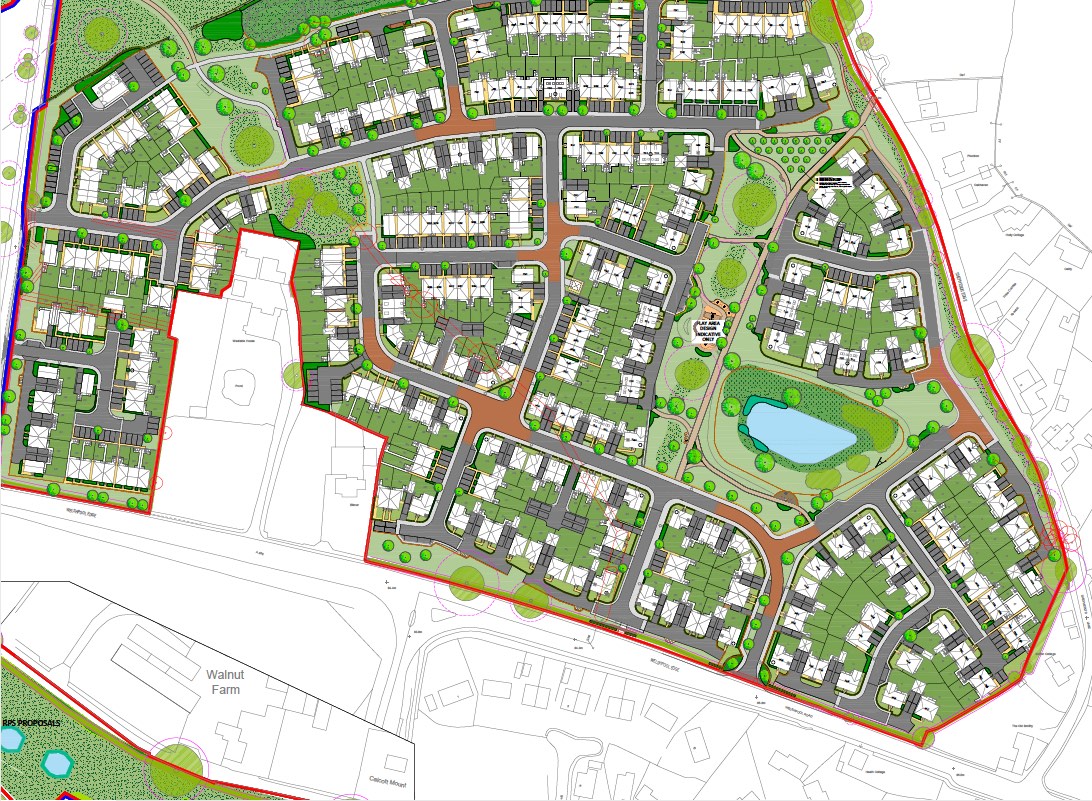
Re. shared parking – it’s the same in our estate, which is older but has similarly winding, narrow streets. It seems residents and their visitors insist on parking directly outside their property, almost always on the pavement, even when the road is wide enough.HoarseMann wrote:Parking courtyards should be banned. The new estate near me that has them, hardly used, yet cars parked all over the very narrow pavements.In this design they’ve got what looks to be a nicely direct cycle lane running through, devoid of pointless meanders and 90 degree turns. But it’s ultimately useless as a transport solution as it doesn’t connect to anything.
By the cycle lane do you mean the one that goes past the trees & pond (currently a footpath RoW)? That will surely be a dogsh*t alley.
I’d like to think that the streets will be tight and twisty enough to keep vehicle speeds low but IME that doesn’t stop lots of people driving like dicks, pressing too hard on the loud pedal then 4 seconds later doing the same with the brake to negotiate the next corner. Selfish idiots.
iandusud
I read the BBC News article
I read the BBC News article about this and was going to post about it but you’ve beaten me to it. Sadly this is so typical of our government. They say one thing and do completely the opposite. So depressing.
chrisonabike
In other news, bears locked
In other news, bears locked into wood-dependency by shortage of toilets.
Agree with most others. Sadly lots of these seem to be driven (around me) by “we just need chunks of money” (by council, sadly treating their capital as income) and either “maximum number of houses on plot” or “higher-value places so lets spread these out, father from the town / city” (by developer).
In the widest view it’s just a large part of “continuous growth-driven economics”.
I think the only difference in the case of brownfield sites is they’re generally already in places so they’re increasing the population density of a given place. That sometimes makes getting around without a car easier. Greenfield sites are neutral or decrease density. The provision of local facilities often doesn’t seem to merit much attention (15 minute neighbourhoods anyone?) and transport options other than car is about the last consideration.
On the wider point I recently came across Strong Towns (via NotJustBikes) and their theory that sprawling suburban development is not just a negative but actually an addictive pattern for authorities. We’re not so far gone in the UK but might be of interest.
HoarseMann
Parking courtyards should be
Parking courtyards should be banned. The new estate near me that has them, hardly used, yet cars parked all over the very narrow pavements.
In this design they’ve got what looks to be a nicely direct cycle lane running through, devoid of pointless meanders and 90 degree turns. But it’s ultimately useless as a transport solution as it doesn’t connect to anything.
Simon E
It’s the same story in
It’s the same story in Shrewsbury. Lots of new housing estates sprouting on the edge of town but little or no thought given for anyone wanting or needing to cycle or walk to/from them.
There is one planned very near our estate for 340 mixed houses. The main access from the busy arterial A-road (at the southern boundary) in a 40mph zone is far too narrow and there’s no slip road planned, as there is into our estate opposite. Based on the plan, I bet the pavements in the estate will be clogged with cars.
The existing pavement along the A-road to the nearby Co-Op is barely wide enough for 1 person to walk on.
There is currently very sparse public transport for the 3 miles to the town centre and, although it’s 1/2 mile from the P&R situated behind the Co-Op you are not supposed to access that facility on foot or by bike (because it’s so much cheaper than the ripoff Arriva buses that serve our estate). It’s pathetic but most of the Tory-run council doesn’t give a sh*t. If’ you’re not a car driver you are a nobody.
Awavey
Its competing goals or aims
Its competing goals or aims though isnt it ? developers ask architects to fit as many houses into the available land because that’s how they make profit from a site.Councils are only concerned with adequate provision of basic facilities, and incentivised by potential council tax receipts. Active travel considerations are well down the list of priorities, and tick boxed by councillors who think a bit of paint on a road is adequate. Actually developing a site that promotes alternatives to cars as its prime focus costs developers/councils money/profit.The only saving grace is the result of being this way means they provide very little space for the new home owners to even have cars, however that then leads to increased neighbour disputes and the kind of tragic outcome we saw last year.
-
AuthorReplies
- You must be logged in to reply to this topic.