


- This topic has 37 replies, 18 voices, and was last updated 4 years, 7 months ago by
 David9694.
-
CreatorTopic
-
February 7, 2022 at 8:34 am #31952
brooksby
[quote]
New greenfield housing developments are locking residents into car dependency, making everyday journeys impossible without a vehicle, a new report has found. Meanwhile, pledges for walking, cycling and public transport are often left unfulfilled.
The group Transport for New Homes (TfNH) visited 20 new housing developments in England, finding that while those on urban brownfield sites generally lived up to sustainable transport pledges, greenfield sites were often far from shops and amenities, without public transport, cycling links or even pavements, and the homes themselves were seemingly designed around car parking.
[/quote]
-
CreatorTopic
-
AuthorReplies
-
David9694
But drivers moan endlessly
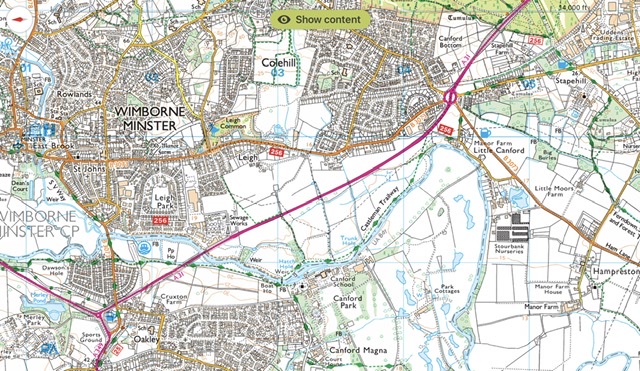
But drivers moan endlessly when something IS done to stop car dependency setting in from the start with new developments – the area east of Wimborne between the A31 bypass and the B3078 is all subject to development at the moment and this is the site of the major new cyclepath from a few months back – Daily Mail and all that. Drivers suddenly gain an appreciation of what these things cost.
New estates like since the 1970s tend to have a limited number of connections to existing roads – which may be a cost thing, but is also designed to limit through traffic. They seemed better at connecting things up in the olden days, even if now these need to be retrofitted with planters.
Bungle_52
I think we are about to find
I think we are about to find out.
 Simon E
Bungle_52 wrote:
North Wales is a hotspot for holiday homes, the worst in Wales. But it’s not just holiday properties, people relocating or retiring there from elsewhere, as they have done for many decades, also put significant pressure on house prices. And a “low employment area” still needs enough people of working age – council, health, utilities, retail to live and work there. People who haven’t lived in a properly rural / low pop density area really don’t know what it’s like.Bungle_52 wrote:Holiday homes is one area to be looked at. Many people, including myself, would love to move out of an area of high demand to live in a low employment area but prices are kept artificially high by holiday homes and second (or third) homes.https://www.bbc.co.uk/news/uk-wales-59387455
My beef is with the disproportionate number of 4/5 bedroom houses with big detached double garages. It’s probably a reflection of the affluence of a significant proportion of local people (lots of private schools, private/inherited wealth in Shropshire) and Shrewsbury has always been expensive to rent or buy due to its popularity and the restrictions created by its geography. Developers are building so many of these impressive-looking large houses that make more money while the council does very little to help provide more affordable places to live. My kids, one now in full time work, have no hope of finding somewhere they can afford.Bungle_52 wrote:There are many unoccupied houses which could be lived in and then there are large houses, often 4 bedrooms or more, which are occupied by one person.
It may or may not be next but it will really bite when it happens. Climate change is already playing havoc with reliability of supply in both fresh and processed lines; add in both Covid and Brexit related logistical and staffing issues (The Grocer) and we are uncomfortably close to disaster, empty shelves, hoarding and riots than many want to believe.Bungle_52 wrote:We have seen what reliance on global markets can lead to with the chip shortages, PPE, vaccine manufacture and most recently the energy crisis. Food will be next.Dnnnnnn
brooksby wrote:
brooksby wrote:In my village people do get very het up about ‘development’, while at the same time complaining that younger people have to leave.
And so the council finds it too difficult to put an adequate plan in place, and the area is judged to under-deliver against targets, so speculative development firms are able to force through big, poorly-designed developments in the wrong places. Which is where we started.As an aside, I rode through many lovely villages in the Chilterns and Aylesbury Vale today. Motor traffic and the lack of visible life apart, they could have been stuck in 1922, or even 1822. Except that there’s not a chance in hell that a blacksmith (etc.) could afford to live in Blacksmith’s Cottage (etc.) now. Progress…?
wycombewheeler
Bungle_52 wrote:It is a very difficult one where the basic premise is to put the needs of the many before the preferences of an asset rich few. As for where will the children stay. I believe there are things called hotels available in most locations specifically designed for short term stays away from home. As for areas of low employment these are ideal for housing the retired or those working from home. The important thing to remember is that the alternative is to concrete over vast swathes of countryside and be completely reliant on food imports. I’m sure many woud argue that that is a price worth paying for maintaining individual freedoms. It just happens I’m not one of them as I will be one of those starving to death when America and Russia decide that feeding their own populations has a higher priority than feeding the UK.I appreciate the premise about the need for housing for all to take priority over the preferences of the few, but it’s how you draft these rules. I don’t think the voters will support a proposal where granny gets forcibly removed from the home she has lived in for 40 years, where all her children grew up, and all new parents are told they can just stay in hotels whenever they want to visit their parents.
Concreting over vast swathes of the countryside is an exageration. Currently only 1.1% of land use in the UK is housing (with a surprising 4.8% as residential gardens) so the amount of housing could be increased by 50% without a significant impact on the amount of green space. extra 0.5% of land as housing, 1% as residential gardens. reducing agricultural land from 62.8% to 61.3%, a usage change which could be compensated by a shift towards less meat in diets, which is happening to some extent anyway. The number of homes in the country has not kept pace with rising population.
Before looking at people living in housing which the bereau considers too large for their needs we should be looking at vacant homes.
Any house which has been unoccuppied for more than 6 months without ongoing construction work should be considered available for compulsory purchase, at the price when it was last sold. (time extension for probate). Make these absent owners become landlords rather than speculators.
Similar action against developers holding on to land banks, which have been granted permission, but are being trickled into the market to maintain high prices.
The UK has not been self sufficient in food since 1850, the fact we now import a third of our food, is not because we have lost 1/3 of agricultural land. I don’t thnk we import significant quantities of food from either russia or america, but we definitely do import too much food. Food and energy sufficiency should be a priority as being at the whim of global markets and outher countires which may or may not be benign is reckless. Reducing food wastage would make more of a difference than this 2% reduction in agricultural land. Reducing food wastage would also have a significant benefit on CO2 emissions, water scarcity, balance of trade.
In my village people do get
In my village people do get very het up about ‘development’, while at the same time complaining that younger people have to leave.
A proposed development by the council, by way of a land trust (?) went nuclear because it was along a narrow lane and next to a lake (privately owned, rented out for fishing). Suddenly all the people who already lived along there were up in arms because they didn’t want more people living along there. I have no idea what is happening but there’s been no building there.
A large detached house in the middle of the village, in large gardens with wildlife and mature trees, was the old rectory, and was left abandoned for years before finally being sold off to a housing association. It was demolished, and the plot is now flats and houses (there’s a terrace of about eight houses, and a block of another eight or so flats), with the space in between them filled in with herringbone bricks and given entirely over to parking.
A single detached bungalow right in the middle of the village, on a corner, opposite a gun shop and a garage, has a planning application in at present to demolish and turn into a row of four terraced houses.
Two semi-detached houses had an extra house ‘extended’ onto the end so thet each became a mini terrace of three houses, with the garden turned over to parking.
Funny that there wasn’t the same fuss about these ‘infill’ developments in the middle of the village as there was about building on greenfield…
Erm, I did have a point to make, sorry…
It is a very difficult one
It is a very difficult one where the basic premise is to put the needs of the many before the preferences of an asset rich few. As for where will the children stay. I believe there are things called hotels available in most locations specifically designed for short term stays away from home. As for areas of low employment these are ideal for housing the retired or those working from home. The important thing to remember is that the alternative is to concrete over vast swathes of countryside and be completely reliant on food imports. I’m sure many woud argue that that is a price worth paying for maintaining individual freedoms. It just happens I’m not one of them as I will be one of those starving to death when America and Russia decide that feeding their own populations has a higher priority than feeding the UK.
 mdavidford
Bungle_52 wrote:..there are large houses, often 4 bedrooms or more,
mdavidford
Bungle_52 wrote:..there are large houses, often 4 bedrooms or more,This is quite a difficult one, how mnay of these 4 bedroom homes are occupied by old people whose children have left home? should they be obliged to leave their family home? What if the children (and grandchildren) want to visit?
Are we to draft legislation to prevent people buying large homes if they don’t have children? what if they are planning to start a family
Holiday homes are also difficult, as they are in areas with not much employment other than tourism, so there needs to be a balance between places for tourists to stay and enoigh housing for permanant residents. Although a family owning a home that they only ue for 3 weeks of the year and do not rent out the rest of the time helps neither.
chrisonabike
I checked their colour codes
I checked their colour codes and you are quite right! I stand corrected. And I shouldn’t ignore them either. However since Mr. Salmond appears to have won all of his legal actions I wouldn’t dream of bringing his name up.
mdavidford
Don’t you mean the dark
Don’t you mean the dark yellows? Surely the light yellows are the ones who play mostly in the Northern League?
Eton Rifle wrote:
Eton Rifle wrote:
Never going to happen. The London property is a genuinely “world beating” destination for money laundering. Not going to change under these Tory crooks.Rendel Harris wrote:300,000 empty homes in the UK at present – not holiday homes etc, just unused homes. I recently rode through a street near London’s Docklands, all new builds, all empty; a security guard told me they’d all been bought by a Malaysian syndicate who were just holding them as an investment and didn’t want the bother of tenants. Stopping that sort of thing would be a good start.
Yay! A crookery contest! Great TV!
It may seem that the blue team has the lead – they’ve some all-star players. However they’ve had more time in the driving seat recently to build up bonuses (with a brief assist by the light yellows). Also I seem to recall when the red team were last on top (although some people say they were more like maroon…) they were “intensely relaxed” about this kind of thing (to give the full quote “…as long as they pay their taxes” – which they didn’t do much about) and “light touch” on regulation. They also have (had) some talented members!
Oh – and all our recent (decades) governments have been increasingly reliant on the big accountants, “consultants” and legal firms who are doing a world-class job of serving the international rich and nasty.
Grahamd
mdavidford wrote:That does appear to include empty properties that are unsafe or uninhabitable, and may be unviable to restore, though – can’t seem to find any kind of estimate on how many that accounts for.You’d also need to consider where those homes are, and if they’re in suitable locations to provide for unmet demand.
That said, it probably still leaves a good chunk that could make a sizeable dent in the shortfall.
My brothers house had an empty property next to him for years. Initially it just needed new windows and minor repairs and the council were unwilling to do anything. About 15 years later it had deteriorated to such an extent that the council had to act …. and demolished it.
 Eton Rifle
Rendel Harris wrote:
Rendel Harris wrote:300,000 empty homes in the UK at present – not holiday homes etc, just unused homes. I recently rode through a street near London’s Docklands, all new builds, all empty; a security guard told me they’d all been bought by a Malaysian syndicate who were just holding them as an investment and didn’t want the bother of tenants. Stopping that sort of thing would be a good start.
Never going to happen. The London property is a genuinely “world beating” destination for money laundering. Not going to change under these Tory crooks.I’m not against the idea,
I’m not against the idea – though it wouldn’t make much difference. Although high-profile, there are relatively few of these properties and they’re fairly specific by location and type.
Under 1% of homes in London are considered long-term vacant (1%-2% for England as a whole), and most of those are vacant for under 2 years (and for a variety of reasons).
There really is a shortage of homes in places where people want to live. With the exception of the City of London (i.e. the ‘Square Mile’), the places with the highest (although still low) levels of long-term vacancy are the likes of Barrow, Blackpool, Hartlepool, Middlesborough, etc.
http://www.admiral.com/multicover-insurance/home-alone-2021#long-term -
AuthorReplies
- You must be logged in to reply to this topic.