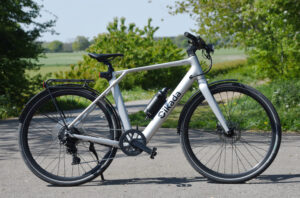
The Cikada Urban Adventure is an eyecatching entry into the mid-price lightweight hybrid market populated by the likes of Estarli and Tenways. You get a reasonably powerfully-specced rear hub motor, full commuter equipment and an in-frame battery. Whilst I had a couple of reservations about the design, overall it proved an impressive package in testing.
Cikada says the Urban Adventure is designed for, “urban-optimised riding and off-road cycling.” However, everything from its semi-slick commuting tyres to its lack of suspension means its main audience will realistically be commuters and leisure riders.
First impressions are of a well thought out and neat-looking frame. The smooth welds are emphasised by the silver paint job, cables are neatly routed through the frame and the seat stays join both the seat tube and top tube in a distinctive design reminiscent of the famous GT Zaskar mountain bike frames that were designed for strength and comfort. The bike has three frame sizes covering heights between 5ft 3in and 6ft 5in.
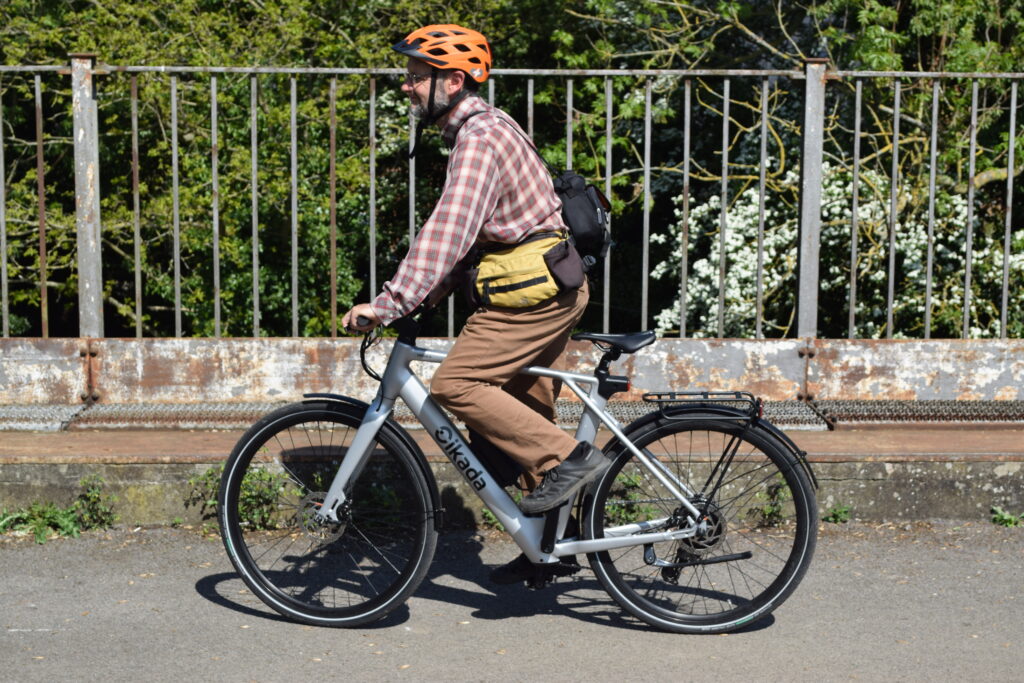
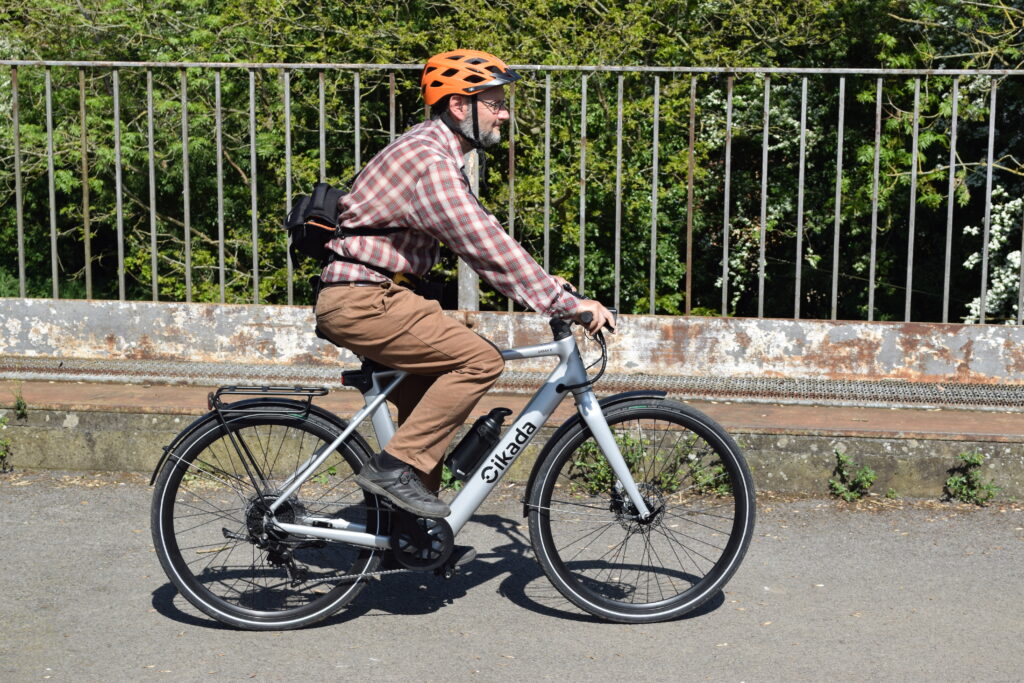
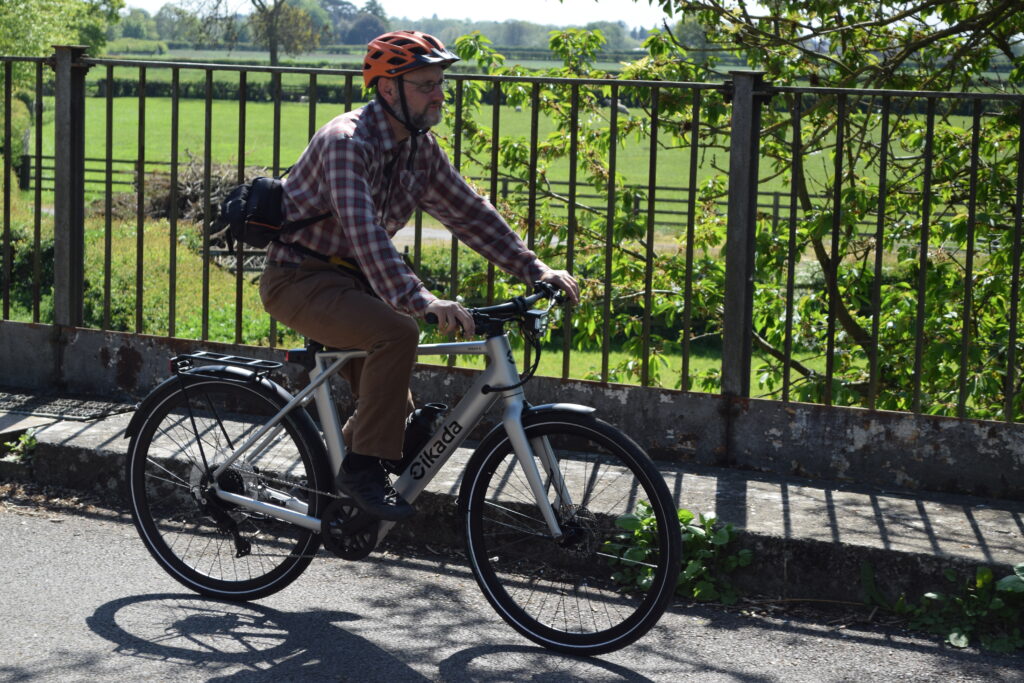
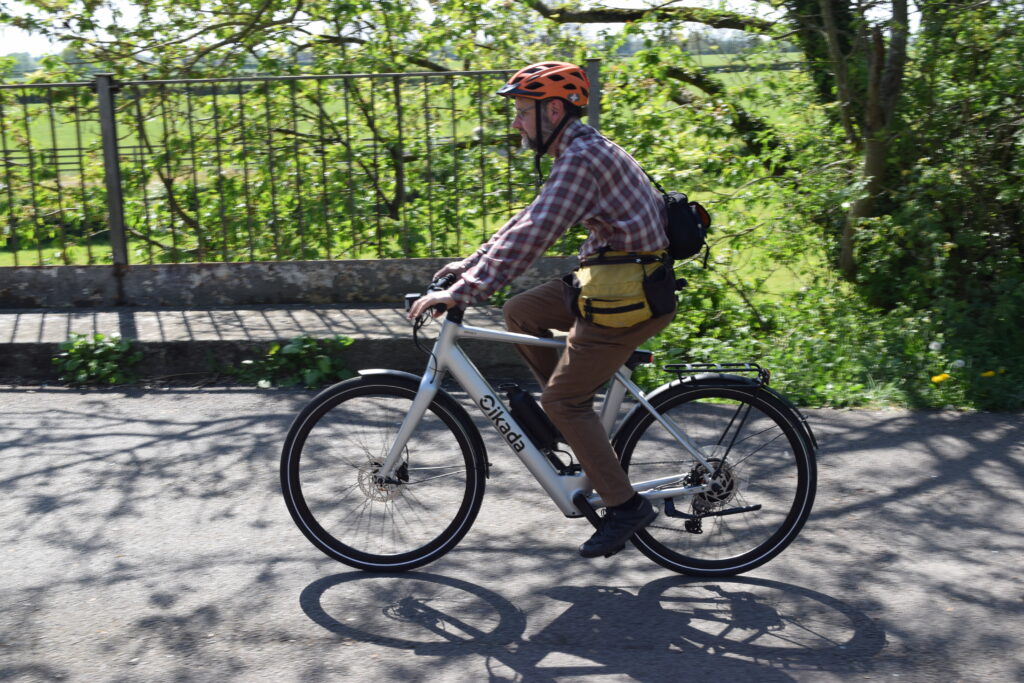
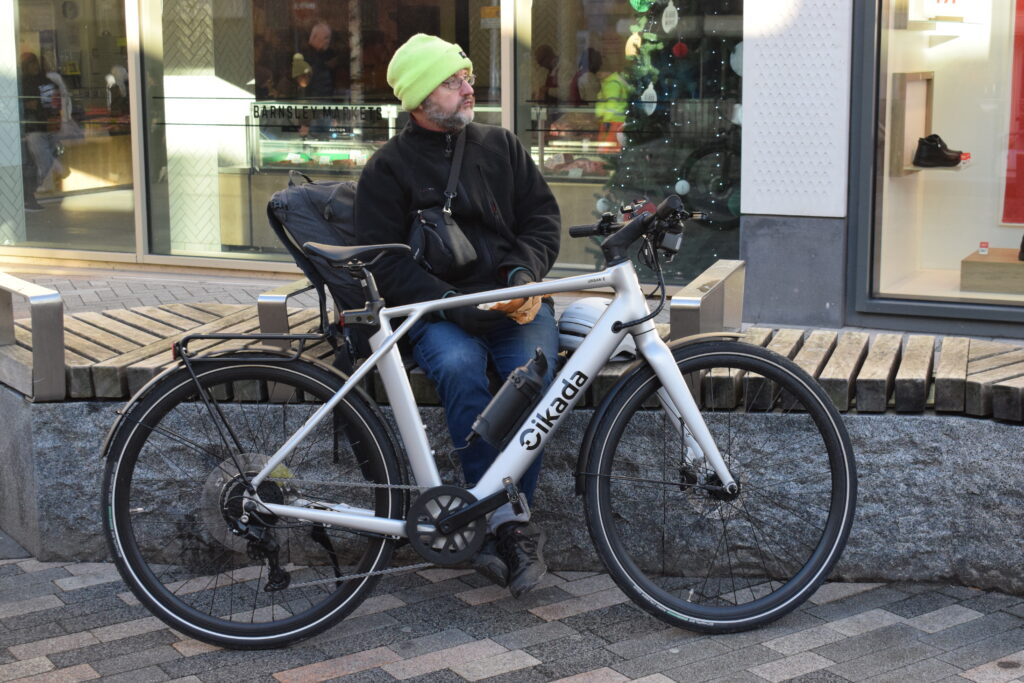
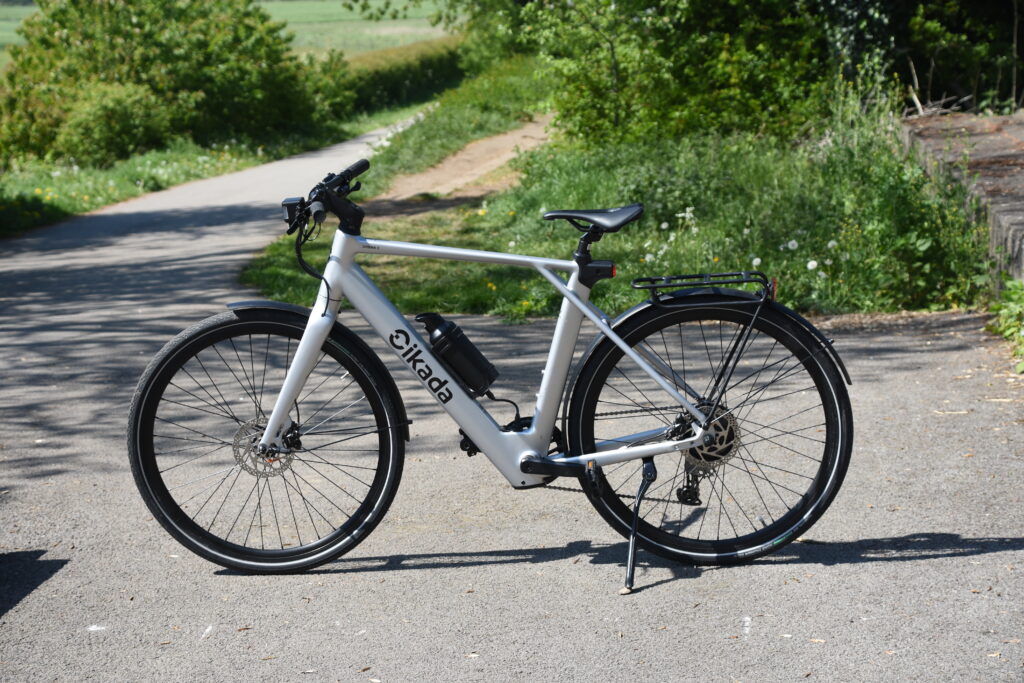
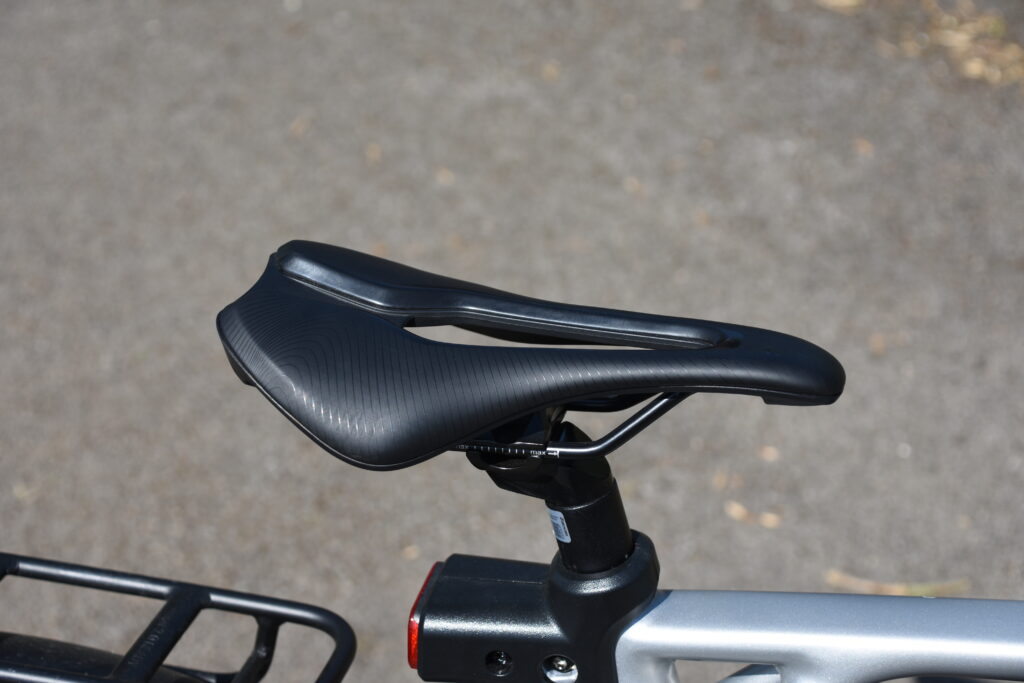
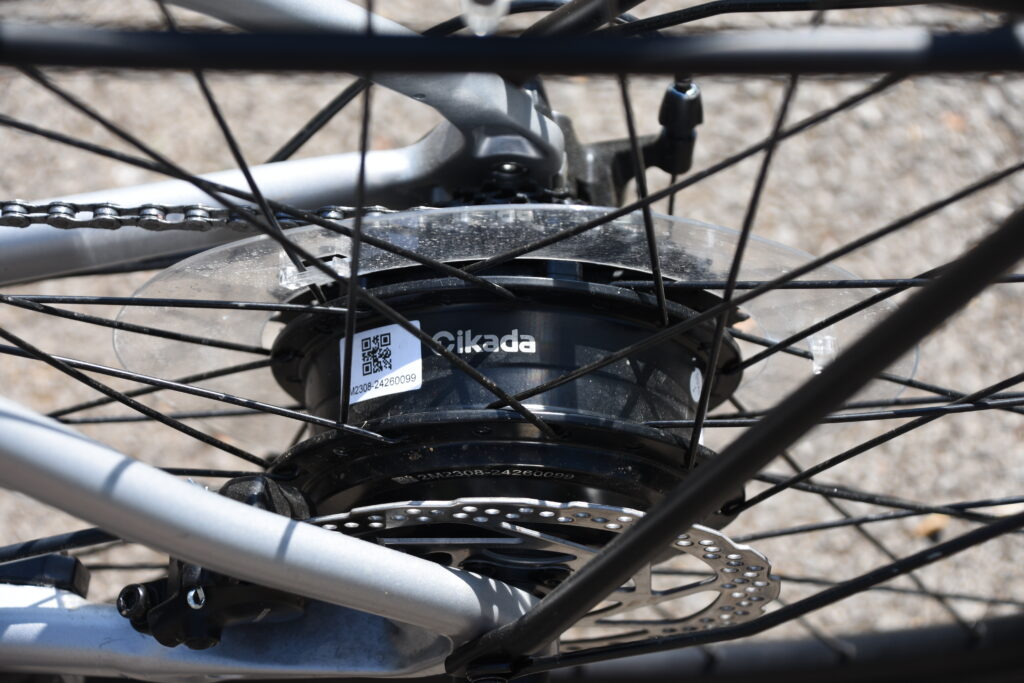
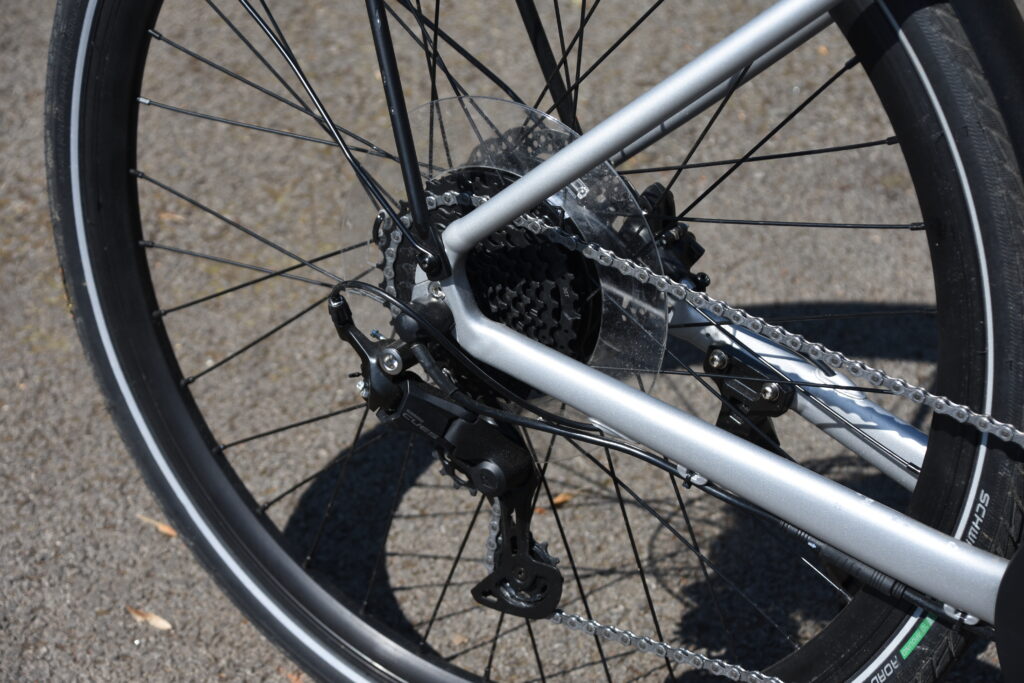
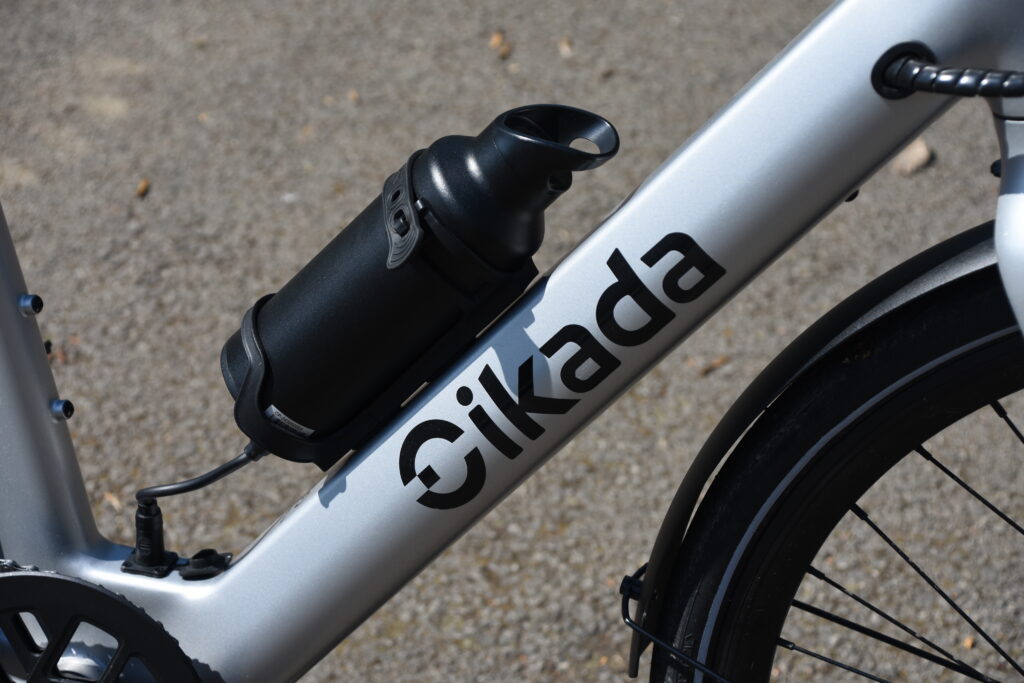
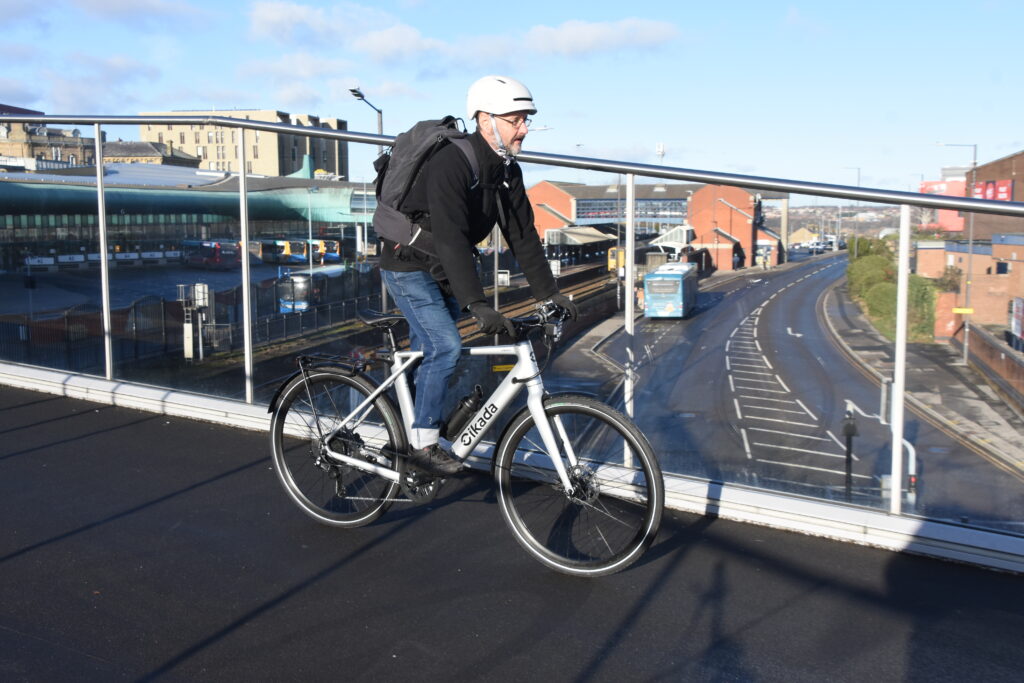
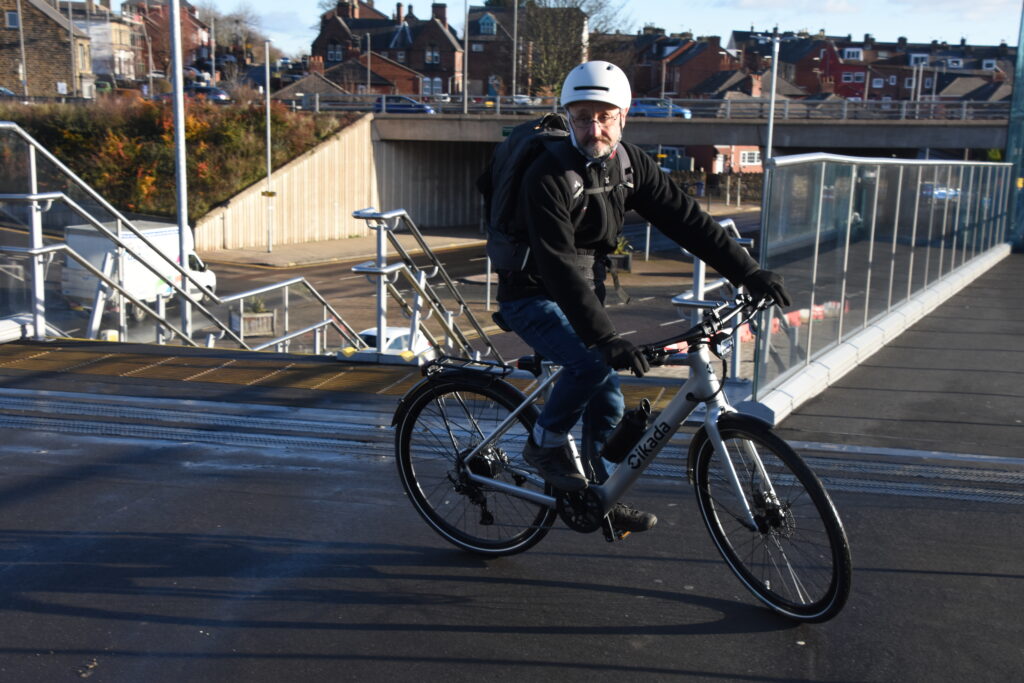
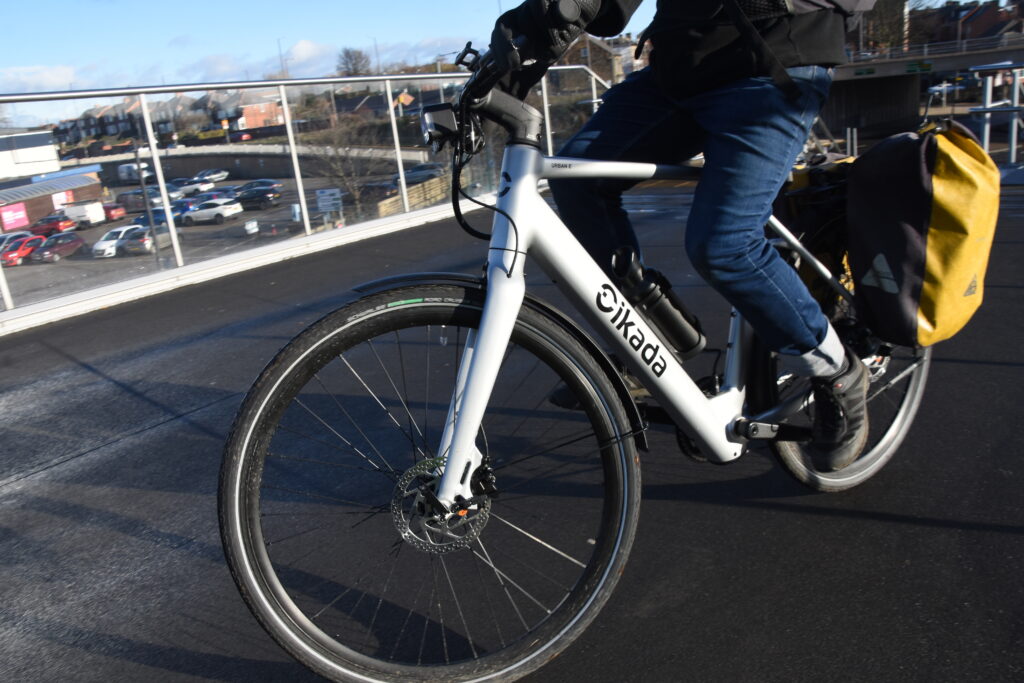
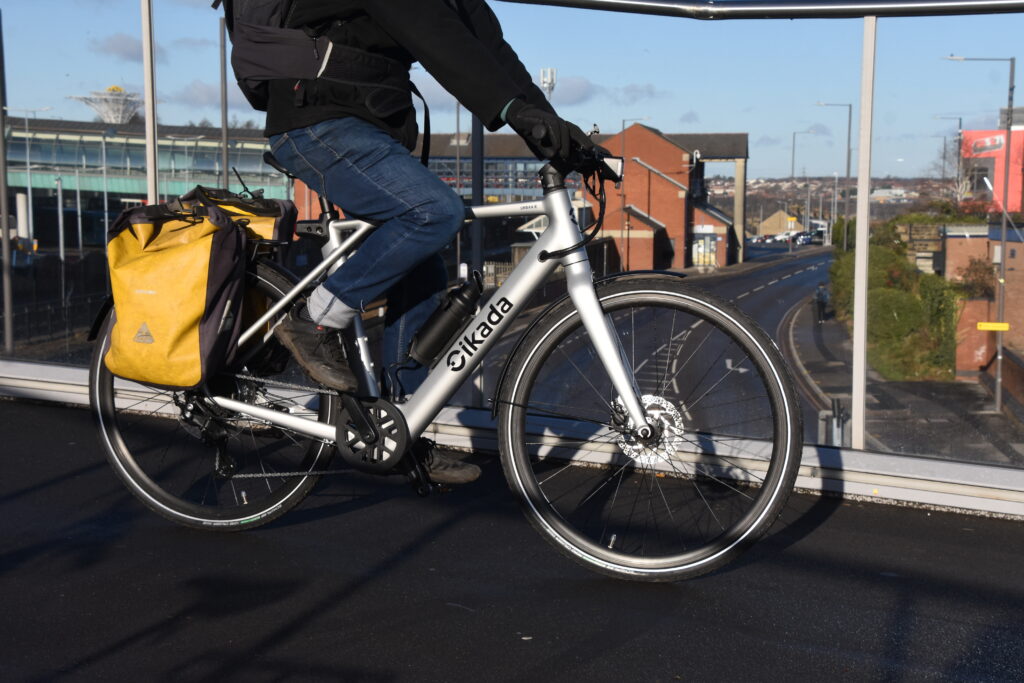
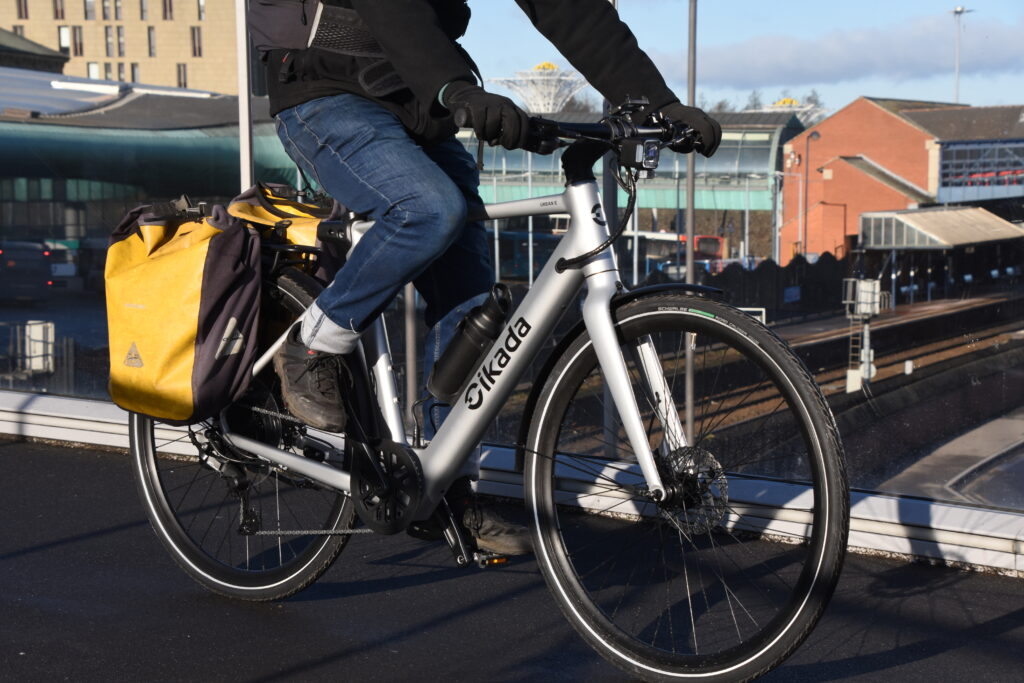
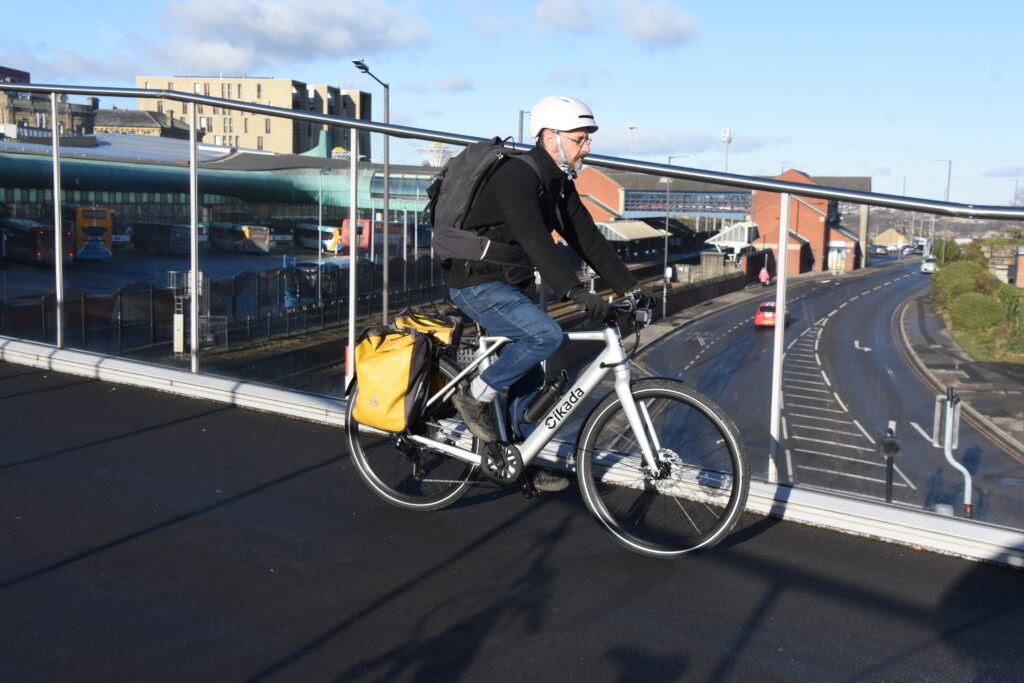
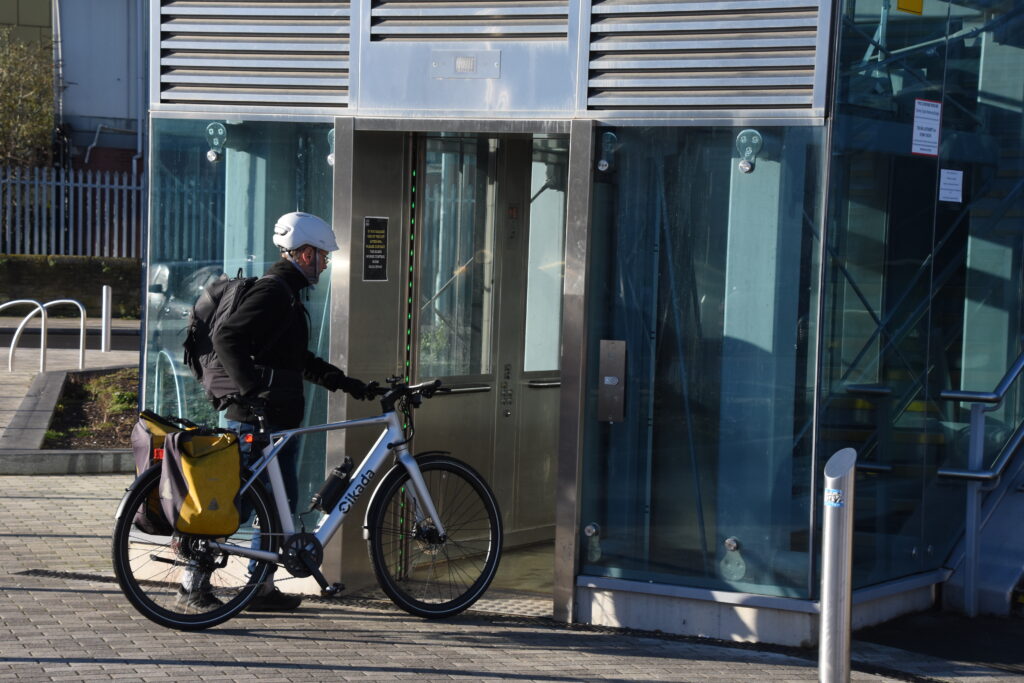
The spec is conventional but again well thought out. The own-brand Dynaforce rear hub motor looks to be a step-up in size from the likes of Mahle and the smaller Mivice units that dominate the lightweight rear hub market, but it is still pretty discreetly concealed behind the rear gear cluster and disc brake. While the torque sensing system is what you would expect on a bike of this quality and price, it’s disappointing that it is only single-sided (most are double sided or on the right), but more detail on that in a moment.
There’s not too much to say about the battery as it can’t be taken out of the frame (as I would normally do to check the tech details on it) though it claims to be made be Samsung – clearly a make recognised for quality, though it doesn’t appear to carry a UL safety rating as the battery on the Cikada Touring does.
My test bike also came with a 250Wh bottle battery range extender. Again, this is a familiar design, but here very nicely executed in a super strong alloy case and easily removable via the thick rubber strap on the bottle battery mount.
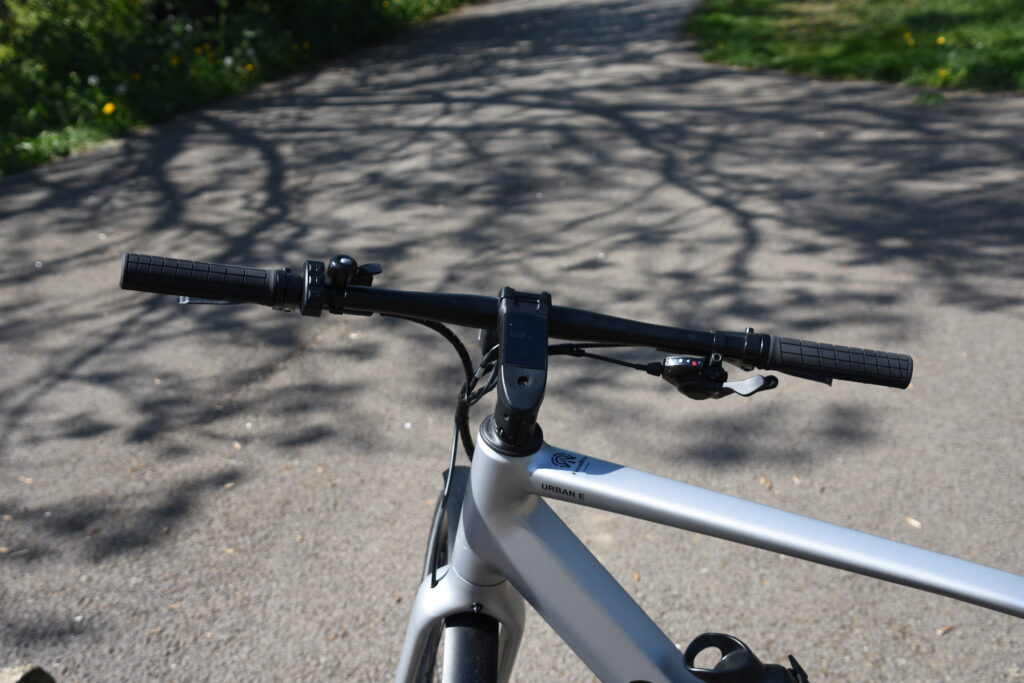
The display is integrated into the handlebar stem and certainly looks the part, in keeping with the sleek design of much of the rest of the bike.
The impressive quality continues through the rest of the componentry. There are Shimano hydraulic disc brakes and 9-speed Shimano Cues derailleur gearing – again, pretty much what you’d expect on a mid-tier e-bike that aims to provide a high quality ride and sound value.
It might seem odd to single the mudguards out for praise but they are solid alloy and proved immune to any kind of rattle during riding – a regular problem on many e-bikes I get to test.
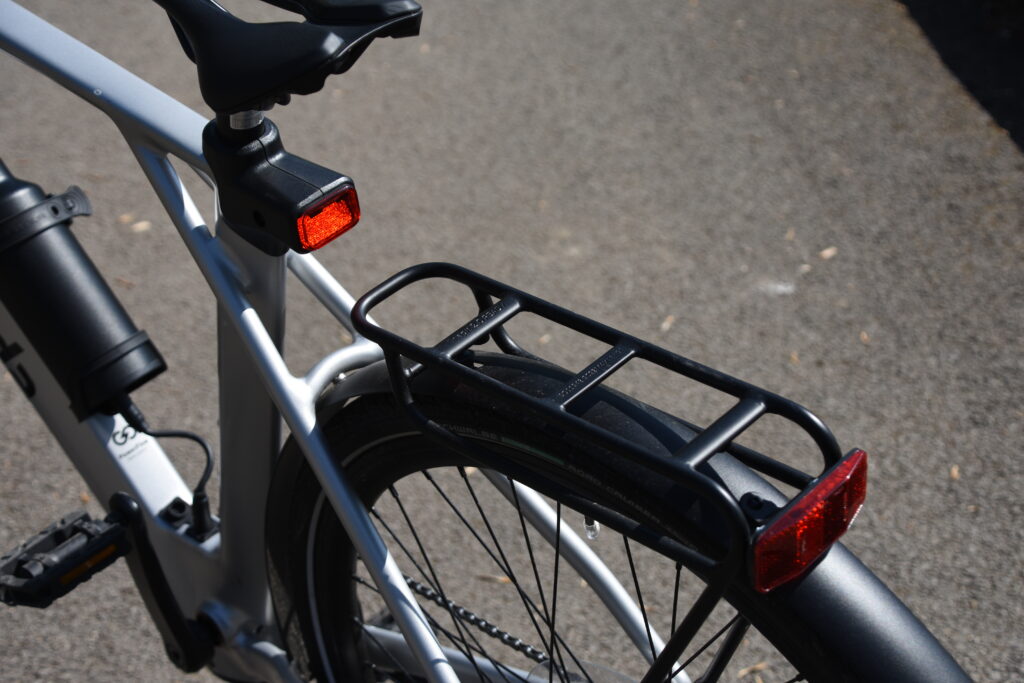
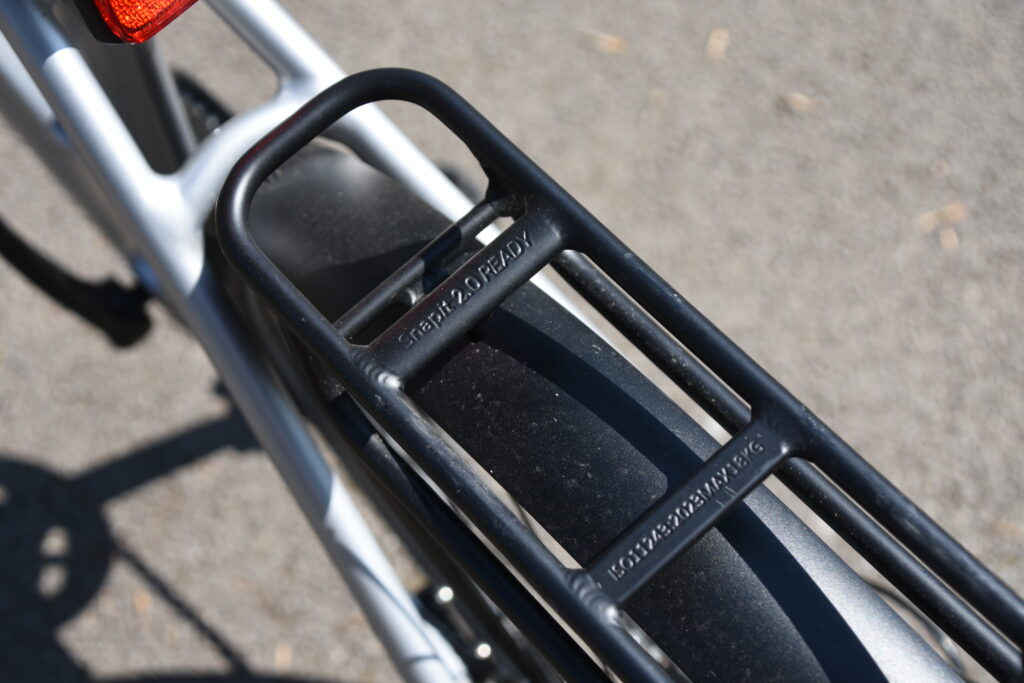
The 18kg rated rear rack features a proprietary Racktime mounting system. This is similar to the MIK system that is more popular in the UK but an MIK mounting plate can be fitted that would allow you to fit all manner of boxes and bags (though note it is not rated for child seats).
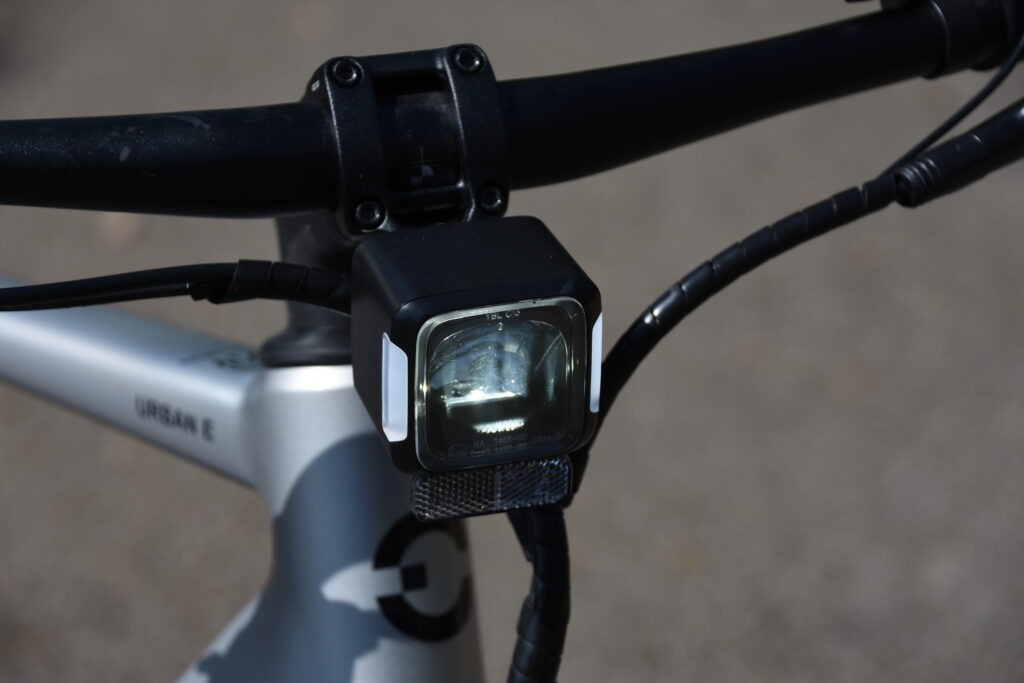
Front and rear lights are hardwired, though rather boxy looking and the rear one is inconveniently placed where it would be obscured if you chose to mount a load on top of the rear rack.
My scales showed a bike weight of 21.4kg (excluding the bottle battery). This is on the light side for a full size, fully-equipped e-bike with a small/medium capacity 360Wh battery, although the likes of Estarli and Tenways are a little lighter.
Hitting the road
Once underway, this is a lovely smooth system to use – the motor is quiet but the power very effective. The Dynaforce system (actually made by a company called Datalake) is not one I’d heard of before, but it’s a welcome addition to the rear hub motor fold. There are three power levels and they are nicely graduated.
I found there was more than enough power in level one for on the flat or up moderate inclines and it could even have been dialled down a bit, though this didn’t seem to be possible in the associated app.
I did one 20-mile ride on the very flat and blissfully quiet roads of rural East Yorkshire and used level one or no power all the time. I found I could ride just above the cut-out speed at around 16.5mph much of the time with the power blipping in and out to keep me there. There’s no obviously strong transition from electric assist to pedal power. I was more aware of the motor behaviour through the handy power meter on the display that shows when and to what extent the motor is kicking in – though sadly it doesn’t show the watts output of the motor as some displays do.
Talking of the display, it gives you most of the usual info you need and, importantly for me, as someone who likes to keep a close eye on the battery level when it is getting low, you can set it to show either estimated range, which is never totally reliable on any e-bike, or real time percentage capacity, which I find much more useful. Other than the power in watts – which is probably more important for e-bike nerds than everyday riders – the only thing missing from the attractive and useful display was the time.
By the time you get to assistance level three, there is appreciable power and the Urban Adventure performed very well up my usual ultra steep climb test. In fact it performed in line with some lower powered mid-drives without leaving me excessively out of breath. Due to the lack of readout, it was hard to tell if this was because of high power from the motor, the lower than average bottom gear, or both.
The Urban Adventure has a 42-tooth chainwheel and a largest rear sprocket of 36 teeth. For comparison, the competitor model the Tenways CGO600 Plus has a 48-tooth chainwheel and a smallest rear sprocket of 32 teeth which adds up to an appreciably lower gear on the Cikada. This was very helpful on steep climbs. I often find that many non-hardcore-offroad e-bikes I test are overgeared, but not the Cikada.
The one jarring note in terms of motor performance was the single side torque sensor. The fact Cikada had placed the torque sensor on the left side meant a delay of a second or so before the power kicked in when starting off. This was because, like most riders, I start by pressing on the right hand pedal. This also sometimes applied when resuming pedalling while on the go. Most significantly, this means it can be harder to get going on hill starts.
Having said this, my older brother also briefly tried the bike and didn’t particularly notice or think it an issue, so it may be one of those things that will depend on the rider.
My range tests over gently rolling territory suggested 40 miles plus from the 360Wh battery and maybe half that over extremely hilly terrain. This will increase proportionally when also using the optional 252Wh range extender battery. Adding that should make for a range more than ample for most people’s daily needs.
Once the battery icon turns red and is down to about 5 per cent capacity, the system cuts out under any appreciable load – but happily this is a pretty easy bike to ride without power and, even more happily, the lights still work below 5 per cent, so in the get-you-home-without-power stakes, it performs very well.
Just about everything else was super smooth and effective, from the powerful yet smoothly modulated brakes to the precise and quick changing gears. Despite the rather basic appearance of the lights they are really effective, even on unlit paths.
Value and competition
Cikada also offers a single speed version of this frame design – the Urban Cruise – which has a more upright, around town riding position and a belt drive, but is otherwise is similar in spec. At £1,999 it is slightly pricier than the Urban Adventure’s £1,959.
More directly competitive in terms of spec, and slightly undercutting the Urban Adventure in price, are the Estarli e28.9, which is notable for the myriad spec options on offer, and also the Tenways CGO600 Plus. The latter is lighter and a little racier, but as already noted it features a narrower gear range which means steep hills may require a bit more of an effort.
> Best e-bikes for under £2,000 (there’s even an e-cargo option)
Whilst Cikada in the UK is currently a direct to consumer brand, it is headed up here by someone with a deep knowledge of the industry and it seems clear the aim is to establish a dealer network.
You may not have heard of Cikada before but it has a strong manufacturing heritage in the Far East. It is part of Taiwanese based Dyaco International Inc, which since being founded in 1990 has become one of the world leaders in fitness goods. Three years ago the group diversified into e-bikes. Dyaco itself is based in the same area of Taiwan, as are the likes of Giant and Merida, so there is no doubt plenty of bike knowhow immediately to hand.
Warranty terms are clearly stated on Cikada’s UK website and are industry standard, with a two-year warranty on all the electronics (or up to 600 charges on the battery – whichever comes first).
The Urban Adventure is an encouraging start and we also have the Cikada Touring on test – a completely different beast and a review will appear in the near future. Overall, I enjoyed my time with this one. Motor performance, equipment and overall quality are good, even if a handful of design anomalies dissuade me from giving it 9/10. If you decide you can live with them, it’s a great e-bike for sporty leisure or commuting use.
Test Report
What does the manufacturer say about this product?:
Designed for the pure joy of urban-optimised riding and off-road cycling, the Urban A is ideal for riders who seek a more adventurous and adaptable e-bike. Combining the power of electric assistance with all-road versatility, the Urban Adventure is ready to cope with a variety of terrains, from city streets to gravel roads, forest trails and mountain paths.
Tell us some more about the technical aspects of this product:
Frame and fork: 6061 aluminium, medium, large, extra large size
Handlebar: Straight handlebar, width – 680mm, anodised black. Stem-integrated digital display.
Motor: DynaForce 250W rear hub motor
Battery: Samsung 21700 celled internal down tube battery (non-user removable) 360Wh; 4-6h charging time, optional range extender battery Samsung 18650 celled 250Wh
Drivetrain: KMC-Eglide-EPT chain
Seatpost: Aluminium
Brakes: Shimano MT120 hydraulic disc brakes, 160mm rotor
Gears: Shimano Cues 9-speed 11-36T,
Shifter: Shimano Cues trigger shifter
Saddle: Ergonomic sport saddle
Tyres: Schwalbe Road Cruiser KGuard, 42-622 green 50 EPI
Extras: Rear rack, hardwired front and rear lights, alloy mudguards, kickstand
Any further comments on quality?:
A very nicely finished e-bike
How does the price compare to that of similar products in the market, including ones recently tested?:
Competitive, though the most direct competitors undercut it slightly
List the components used to build up the bike:
See above
Tell us what the bike is for and who it’s aimed at. What do the manufacturers say about it?:
See above
Where does this model sit in the range? Tell us briefly about the cheaper options and the more expensive options:
In the middle (range is £1,799 to £2,999)
Tell us about the build quality and finish of the frame and fork:
Impressively smooth
Tell us about the materials used in the frame and fork:
Alu alloy
Tell us about the geometry of the frame and fork:
Sporty hybrid style
How was the bike in terms of height and reach? How did it compare to other bikes of the same stated size?:
The large frame was just right to give me a comfortable but sporty ride and I am 5ft 8in
Was the bike comfortable to ride? Tell us how you felt about the ride quality:
Yes – smooth and powerful. The power takes a little longer to kick in than expected but when it does it is very smooth and effective up the hills
Did the bike feel stiff in the right places? Did any part of the bike feel too stiff or too flexible?:
No, everything was just right
Was there any toe overlap with the front wheel? If so, was it a problem?:
No
How would you describe the steering? Was it lively, neutral or unresponsive?:
Nicely responsive
Tell us some more about the ride experience. How did the bike feel overall? Did it do particular things well or badly?:
Overall very positive
Which components had the most effect (good or bad) on the bike’s performance? Would you recommend any changes?:
Great rear hub motor but the torque sensing is left sided only – double sided would be better for hill starts
What kind of motor is it? :
Own brand Dynaforce geared rear hub motor
What are the stated motor system specs? (Torque/power/maximum assistance speed):
250W, 40Nm torque rating
Tell us some more about the motor. How did it feel overall? Did it do particular things well or badly?:
Effective hill climber
How did the motor perform at low speed? (e.g. on steeper climbs or setting off with heavy loads):
A little slow to kick in on starting off, but another test rider was not particularly worried by this
How did the motor perform at higher speed? Was it noisy? Did assistance cut out smoothly/abruptly at the 25km/h assistance limit?:
Quiet with a smooth transition to 15.5mph/25kmh+
What type of battery is it? Is the manufacturer named?:
Samsung 21700 celled internal down tube battery (non-user removable) 360Wh; 4-6h charging time, optional range extender battery Samsung 18650 celled 250Wh
Where is the battery on the bike? Is it removable?:
Downtube integrated, not removable by end-user. Bottle battery option is removable.
What are the stated battery specs? (Capacity/voltage):
36V, capacity as above
Tell us about charging the battery. What’s the charger like? How long does it take?:
2A, 42V charger with four hours to a virtually full charge
Tell us about the assistance levels. How many are there? Are they all useful?:
Three usefully graduated levels
What do the manufacturers say about the range of the bike?:
Approx 37 miles for the main 360Wh battery and 19 miles for the 250Wh range extender
What was your experience of the operational range of the bike?:
About as Cikada claim over easier terrain but quite a bit less if very hilly
Any comments on drivetrain performance?:
Smooth changing
Any issues with drivetrain durability?:
No
Any comments on brake performance?:
Smooth and progressive with plenty of stopping power
Any issues with brake durability?:
No
Any comments on controls performance?:
Easy and effective
Any issues with controls durability?:
No
Tell us some more about the controls. Any particularly good or bad components? How would the controls work for larger or smaller riders?:
Power level buttons easy to operate
Anything else you want to say about the componentry? Comment on any other components (good or bad):
There is an app which offers tracking, battery % status and even tyre pressure monitoring with compatible valve caps
Does the bike have a maximum luggage weight, or a maximum gross weight?:
18kg load for the rear rack, 120kg max rider weight
Did you enjoy using the product? Yes
Would you consider buying the product?
Yes – if they make some tweaks to the spec
Would you recommend the product to a friend? Yes
Use this box to explain your overall score
A fast, smooth, e-powered ride. If I hadn’t had a few gripes the score would have been even higher
About the tester
Age: 59Height: 172cmWeight: 70kg
I usually ride: E-bikes of any descriptionMy best bike is: Riese & Muller Homage
I’ve been riding for: Over 20 yearsI ride: Most daysI would class myself as: Experienced
I regularly do the following types of riding: Commuting, Touring, Fitness riding