



The Wahoo Trackr Radar is the cycling tech company’s entry into the radar rear light market. The radar works well, the tail light is bright and the unit uses USB-C charging. The mount is sturdy, but proprietary. Comparing it to the best-in-class Garmin Varia, it’s not quite as good, the battery doesn’t last as long and it costs £10 more.
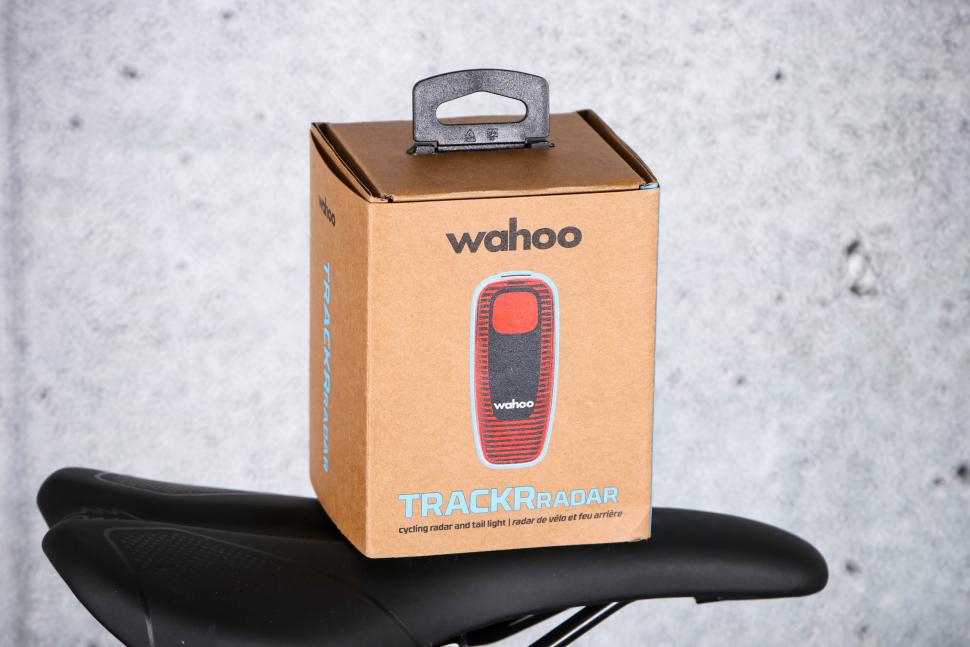
Radar rear lights have been around for 10 years now. Garmin’s first generation Varia was launched in 2015 and the current, third generation, was launched in 2020, and is widely regarded as the best-in-class radar. If you’re reading this review, I’m going to assume that is expressing an interest in buying a radar. You’ll want to know which one is best for your specific needs.
I haven’t used every single radar that is available on the market, but I have extensively used the Garmin Varia RTL515, the Magene L508, which I own, and the Trek CarBack.
Radar light?
Briefly, a radar rear light is both a rear light and a radar that detects objects approaching you from behind and alerts you of their presence either via your head unit or through a dedicated companion app on your phone, visually on-screen and audibly with an alert sound.
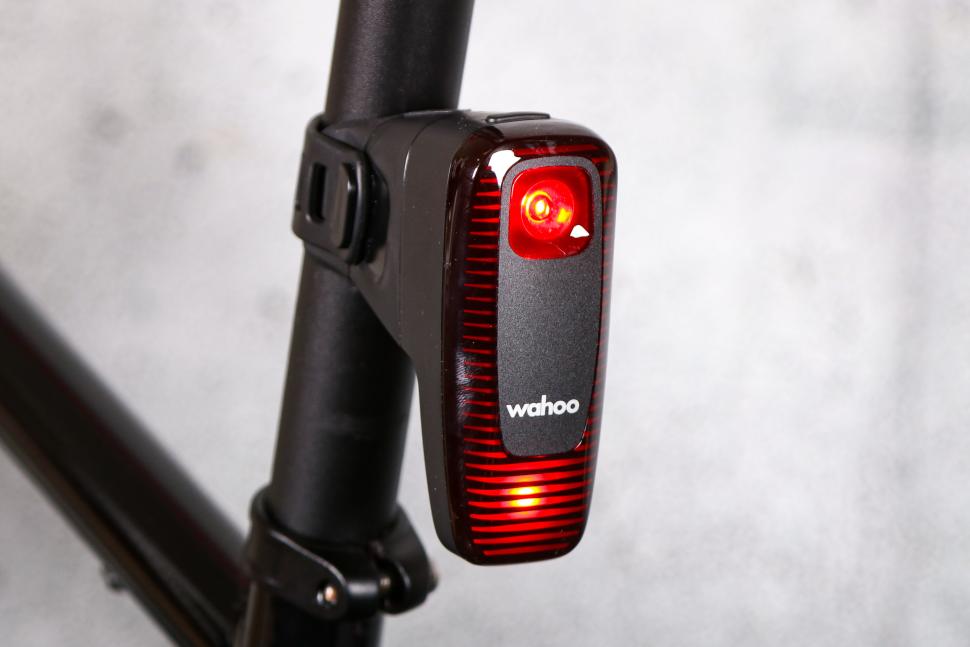
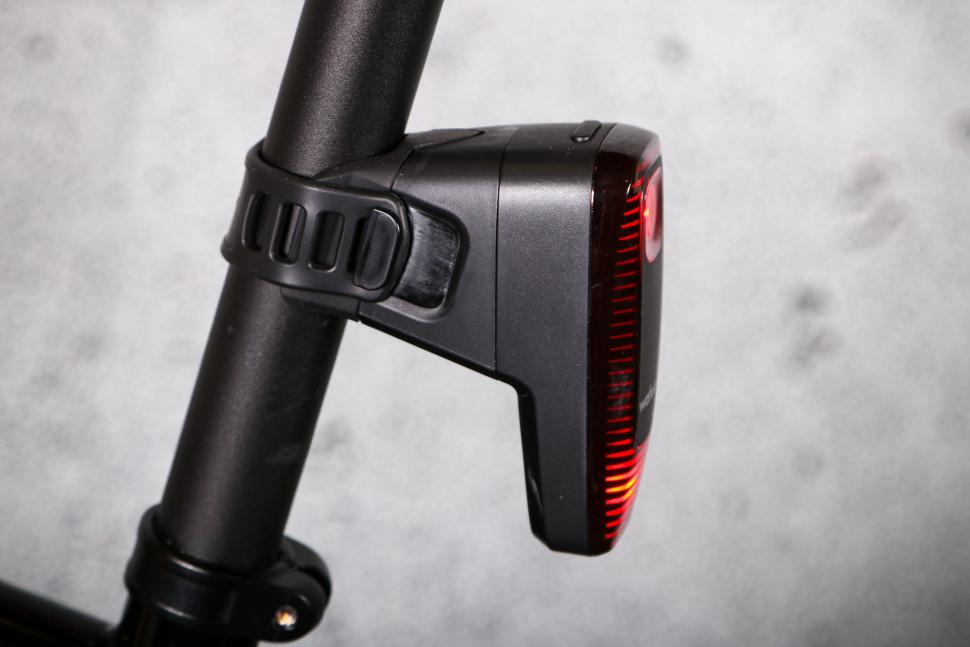
I use one all the time, and find it incredibly useful. A good one almost always alerts you to a car before you have seen or heard it.
Radar reliability
The radar spec for the Wahoo Trackr Radar says it detects objects up to 150m away with a 35° degree field of vision; the Garmin detects up to 140m with a 40° field.
Both are decent radars. Of the four radars I have experience of, the Wahoo works slightly better than the Magene and much better than the Trek – but the Garmin still has the edge.
I know this because I spent three long days on the road doing the PPP with Dave, and with Justin, a long-time Varia user. This meant there was ample opportunity to compare detection distances and battery performance.
There were no false negatives, by which I mean, a car approached but wasn’t detected. This is the kind of false you don’t want, so that’s good. Both radars detected all oncoming objects in plenty of time, but the Garmin was quite often 1-2 seconds earlier, especially on winding roads. Justin and I both use a Karoo head unit, so I think I’m fairly safe to say it’s the radar.
There were some false positives, by which I mean there was an alert, but nothing dangerous was approaching. I was riding in a little group, so most likely it detected one of the riders. The Wahoo did this more than the Garmin, though it didn’t happen often enough to be annoying. As a radar can’t tell the difference between a car and a bike, I can’t fault the radar for this.
In summary, the Garmin has the edge when it comes to detection, but the Wahoo is a close second and in reality, there was no instance where the Wahoo’s slightly later alert would have resulted in an unsafe situation – it was still plenty early enough.
Connection options
As I mentioned above, you can’t use the radar on its own, you need to either pair it with a head unit or… well, in Wahoo’s case, that’s it. Magene, Trek and Garmin all have companion phone apps that the radar can connect to, which means you don’t have to use a head unit. You don’t even have to mount the phone on your handlebar as you could just use the audio alert. If you’re somebody who listens to music or podcasts through headphones while you’re riding, this could be important.
I don’t typically, and almost always use a head unit anyway, so this wasn’t a problem for me. It’s entirely possible that Wahoo will launch a companion app for use while riding, but at the time of writing, there wasn’t one.
The actual connection to your head unit is via ANT+ and bluetooth, which means it pretty much connects to everything out there in terms of head units. I haven’t tried them all, but certainly on the Karoo, it was as easy as the other radars I’ve used, which is to say: very.
The radar does connect to the Wahoo app, which allows you to change certain settings, and also allows you to update the firmware. There’s been a firmware update twice in the few weeks I’ve been using the radar, and I think it’s great to see active development.
This could also mean things like battery life and detection distance parameters are improved over time.
In summary, the Garmin has the edge in terms of connection options. If you listen to podcasts or music while riding, this could be important to you.
Battery life and charging
I almost always use a rear light in its bright flash mode. Garmin’s High Flash mode’s claimed battery life is 16 hours, which I found to be about right when I reviewed it. Wahoo’s claimed battery life in High Flash mode is 15 hours, which I didn’t find to be accurate. Again, on the PPP ride, the battery life on High Flash was less than 10 hours, and it wasn’t even cold; in cold conditions you might get even less riding time out of it. Justin’s five-year-old Garmin lasted a couple of hours longer than this brand new Wahoo on each of the three days.
It is pretty difficult to give accurate numbers on real-world battery life for radar rear lights as it depends on the number of detections as well as the other usual variables like weather conditions, which is why I decided to lead with the head-to-head comparison above. If you are interested in claimed numbers, here they are: high steady (21 lumens): 10hrs, low steady (10 lumens): 15hrs, high flash (53 lumens): 15 hours and low flash (18 lumens): 20 hours.
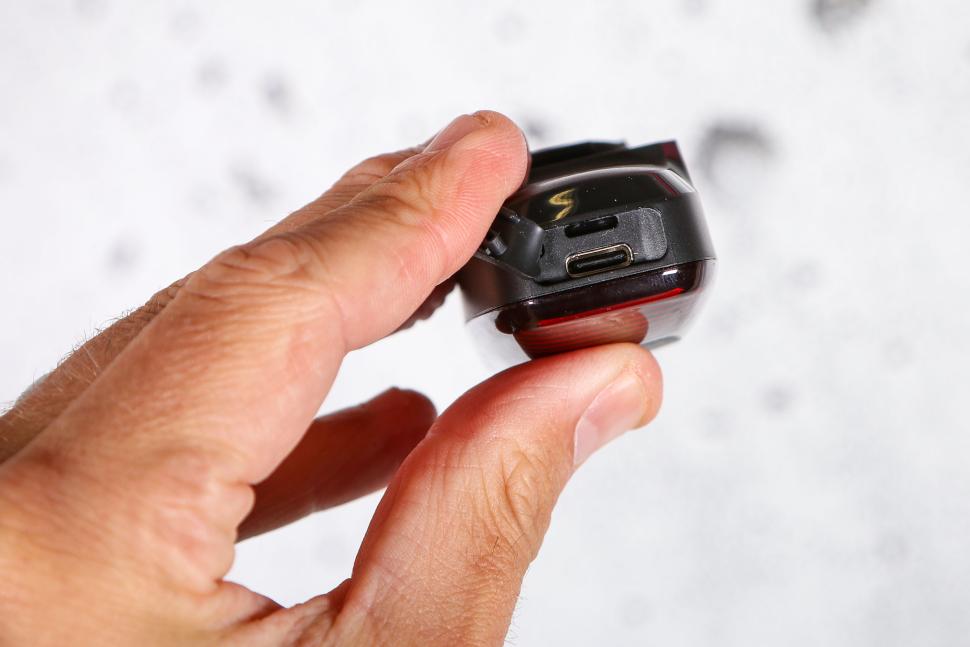
The Wahoo charges via USB-C; the Garmin is still on micro-USB. This means that the Wahoo charges faster, and a top-up from the power bank every time we stopped for a coffee or fish and chips or a tuna melt easily kept the Wahoo going, as even 20 minutes of charging tops up the battery a meaningful amount. This was audax, so there was no shortage of stops.
The Garmin lasts much longer, the Wahoo charges faster on USB-C. Up to you to decide which is more important here really.
The rear light
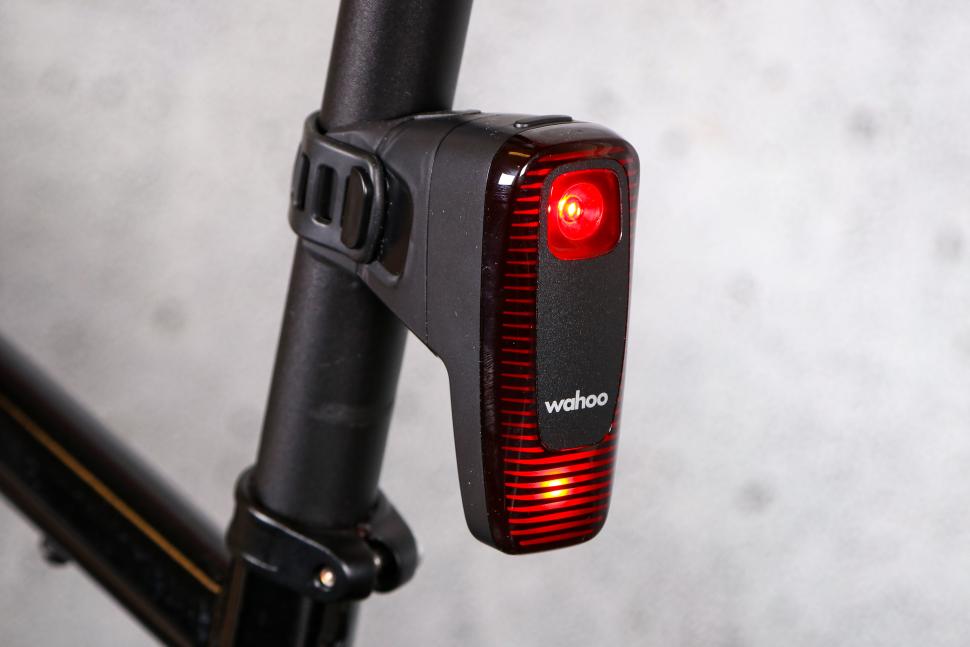
The Wahoo has two LEDs, which might have something to do with my battery life experience. You could also argue it makes the rear light more effective than the Garmin, which has only one LED. I’m not sure I buy that as I’ve always thought when riding behind some with a Varia that is one of the best rear lights out there. Let’s say the Wahoo is as good for the purposes of the comparison.
As you’ve connected the Wahoo to your head unit via ANT+, you can control which mode the light is in from your head unit. As I mentioned, not a big deal for me, as I always have it in the most visible mode: high flash. You can also see the charge level of the battery on your head unit.
The Wahoo does have a couple of rear light features that are interesting – and that you can set from the Wahoo app. ‘Quick alert’ gives a quick flash when a car first appears. Perhaps useful in steady mode, not so useful if you’re already in a flash mode. You can probably guess what ‘brake light’ does: it increases brightness when you’re braking.
The app also has a battery saver mode that you can enable: this reduces the brightness of the selected light mode to conserve battery life when nothing is detected. I didn’t use this for two reasons: the main one is that I don’t want to be less bright. There are always situations where you couldn’t trust a radar to detect a car, for example when a stationary car comes out of a junction, or a car joins a roundabout.
The second reason is that I wanted to test battery performance; Wahoo’s product instructions don’t specify that you should use battery saver to get maximum performance, and it felt more equal to compare with the Garmin which doesn’t have this feature to have it switched off. Anyway, you might get more battery life with battery saver on than I did, depending on traffic conditions.
In summary, you could say that the Wahoo has the edge here as it has two LEDs and a brake light mode. The Garmin has a quick alert equivalent, but no brake alert. I’m not convinced that a brake light feature is useful, so this is not a dealbreaker for me.
Mounting it to your bike
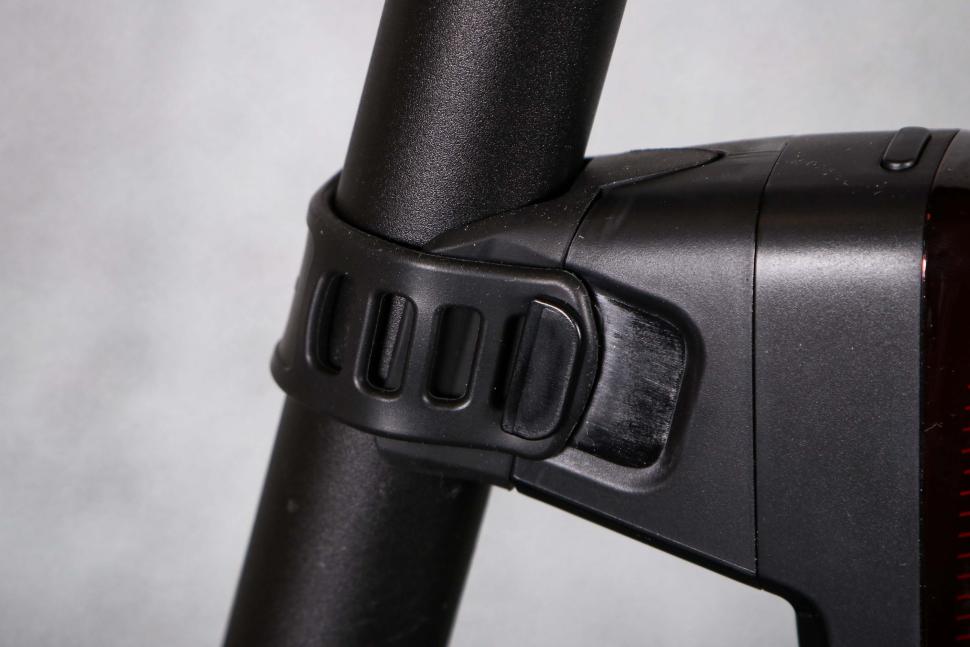
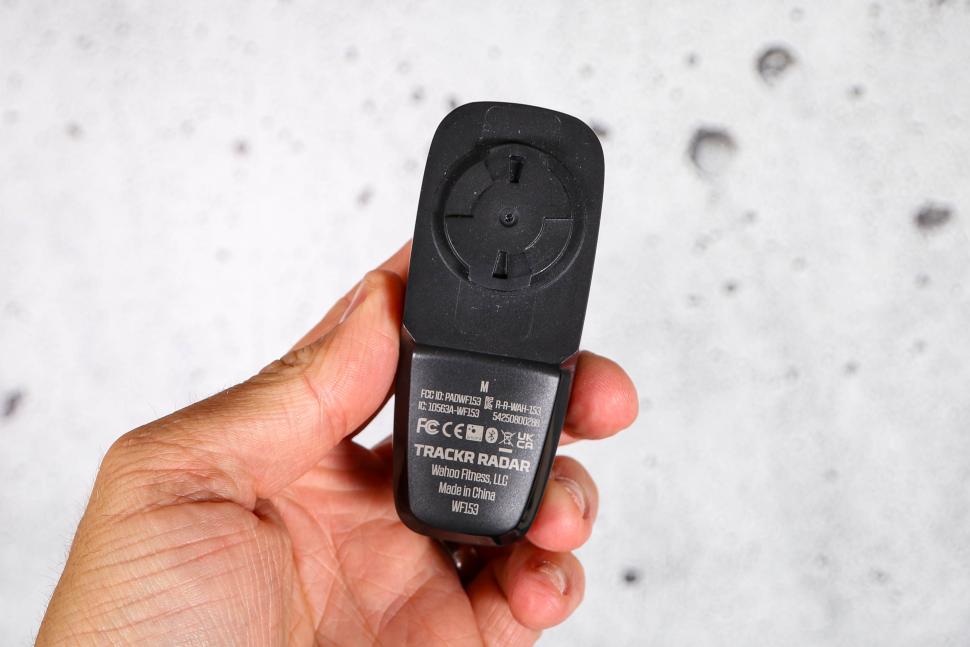
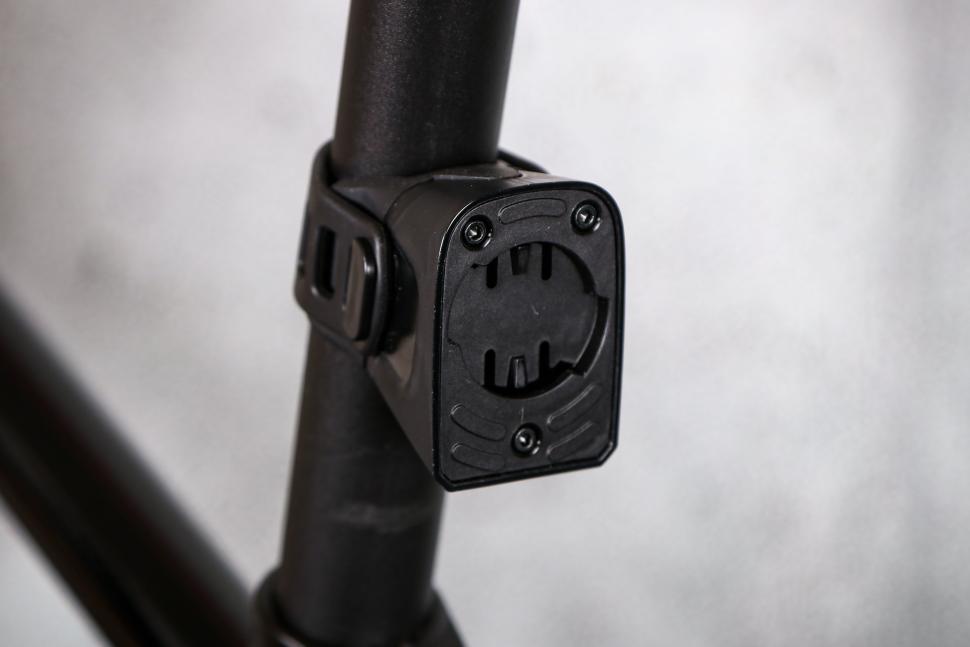
The Wahoo uses its own proprietary Elemnt-style quarter turn mount. It looks a lot like the Garmin-style mount, but isn’t quite and is rotated through 90 degrees. Which means you can’t use the plethora of aftermarket Garmin-style mounts out there. Bah.
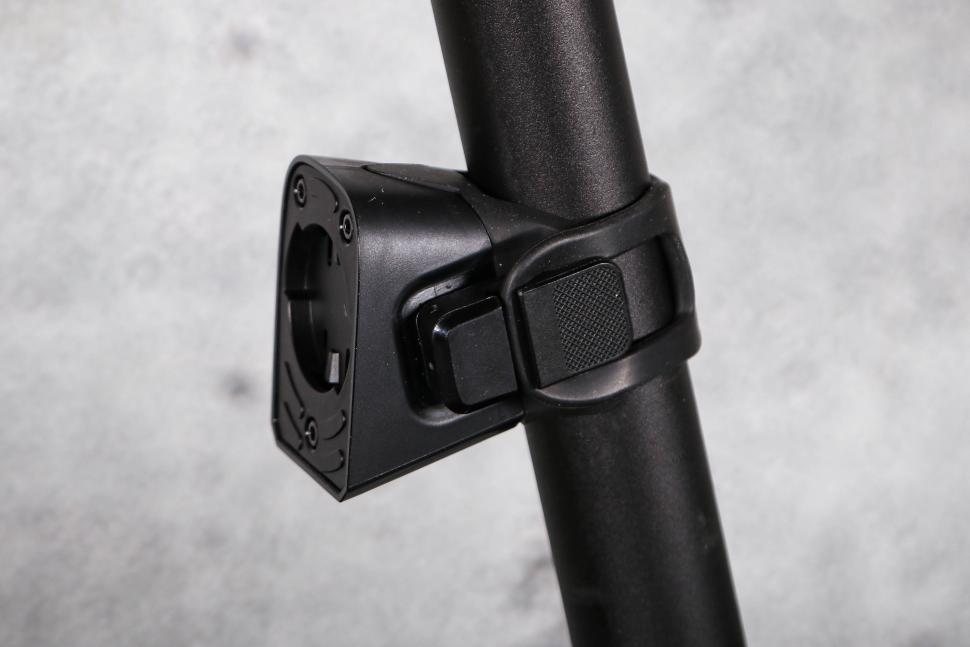
With the radar, you get the mount, a short and a longer strap and three rubber inserts to suit your seatpost. The bracket works well, looks well integrated with the light and holds the light steady. If anything, it’s a little over-engineered. It’s certainly a lot better than the Trek CarBack’s proprietary mount.
If you want to mount the radar anywhere other than your seatpost, then Wahoo recommends KOM Cycling radar accessories which ‘should include a replaceable Wahoo style quarter turn puck’. Or Wahoo could have just gone with the Garmin standard. Shrug.
In my opinion, Garmin wins here for compatibility, although Wahoo’s mount is sturdier.
Value
Wahoo’s Trackr Radar costs £179.99.
The market-leading Garmin Varia costs £169.99, Trek’s CarBack costs the same, but is hard to recommend.
The iGPSport SR30 Smart Radar Taillight costs £119.90 and while effective as a rear light, we didn’t feel the radar was effective enough.
Magene’s L508 currently costs £99.99, and is not quite as good as the Wahoo or the Garmin, but still much better than not having a radar rear light – and it is the one that I own.
Conclusion
I’ve enjoyed using the Wahoo Trackr Radar – it’s a really good unit and it works well, even if the battery life doesn’t live up to the claimed times.
But Garmin’s Varia detects just that little bit earlier, has more aftermarket mounting options, a longer battery life, can be used with a phone app and is £10 cheaper.
However, it does use the outdated micro-USB charging standard. And this is where the Wahoo Trackr Radar is objectively better. And it has a brake alert, which might be important to you.
Verdict
Decent radar rear light with quick USB-C charging, though it lacks a companion app for alerts
All the deals displayed on our review pages are pulled from a constantly updating database feed of the best affiliate deals available. The criteria for deciding on what are the best deals is who is offering the lowest, delivered price. In most cases we will be showing the very best deal available online, but sometimes you may be able to find an item cheaper. If you can please feel free to post a link in the comments box below. To find out more about affiliate links on road.cc click here.
road.cc test report
Make and model: Wahoo TRACKR RADAR
Size tested: One Size
Tell us what the light is for, and who it’s aimed at. What do the manufacturers say about it? How does that compare to your own feelings about it?
This is what Wahoo says:
Meet TRACKR RADAR, an all-in-one tail light and radar built to keep you aware, visible, and in control. With real-time vehicle detection, adaptive lighting, and seamless integration with ELEMNT bike computers and the Wahoo App, it enhances your ride without adding distractions. Its sleek, road-ready design, long-lasting battery, and versatile mounting system ensure confidence in every mile. Stay alert, see what’s coming, and ride with total focus.
Tell us some more about the technical aspects of the light?
Vehicle Detection: Alerts you to approaching cars up to 150m (164 yards) behind.
In-Ride Alerts: Real-time notifications on ELEMNT bike computers, compatible bike computers, and fitness watches.
Mode Memory: Saves your last-used light mode for convenience between rides.
Brake Light: Increases luminosity when braking to alert approaching traffic.
Quick Alert: A continuous flash pattern signals when a car enters the radar’s detection zone.
Battery Extender Mode: Reduces luminosity to conserve battery when no vehicles are detected.
ANT+ Smart Light Control: Manage the device hands-free via ELEMNT bike computers.
Wahoo App Control: Pair TRACKR RADAR, update firmware, and customize light modes effortlessly.
Compatible Devices: Connects with Wahoo ELEMNT bike computers and select other bike computers and fitness watches
Dual LED Design: Maximizes brightness and enhances visibility.
Versatile Mounting: Quick-connect strap and quarter-turn mount fit a wide range of bikes.
Weatherproof Build: IPX7-rated for water resistance up to 1 meter for 30 minutes.
Lightweight & Compact: Weighs just 99g (3.5oz).
It’s rated to IPX7 (just like the Garmin Varia), which means it’s genuinely waterproof – capable of being submerged in a metre of water for 30 minutes. Let’s face it, that should cover most circumstances unless you actually plan to ride underwater…
Battery life on High Flash is considerably less than the quoted 15hrs; on my test rides it’s been more like 10 hours and that’s not in cold conditions. More positively, plugging the battery in to a powerbank for 20 minutes while you’re having a coffee break does top up the charge level meaningfully, which means you should be able to keep it going all day.
The Trackr Radar works well and alerts you to cars before you can see them. That said, on test rides alongside a buddy who was using a Garmin Varia though, the Wahoo consistently detected cars 1-2 seconds later than the Garmin.
It costs £10 more than the Garmin Varia, which performs better in almost every aspect I care about: battery life, detection speed and reliability and mount options.
Tell us how the light performed overall when used for its designed purpose
It works well and the mount holds the light securely. The light itself works well too. In real life battery performance was a bit disappointing compared to quoted times.
Tell us what you particularly liked about the light
USB-C charging.
Tell us what you particularly disliked about the light
Why go with a proprietary, over-engineered mount?
How does the price compare to that of similar products in the market, including ones recently tested on road.cc?
It costs £10 more than the Garmin Varia, which is still best in class. The Magene L508, while not quite as good as the Varia, costs considerably less at £99.99
Did you enjoy using the light? Yes
Would you consider buying the light? Probably not – at this price I’d buy the Garmin.
Would you recommend the light to a friend? Only if they thought USB-C charging was the most important factor.
Use this box to explain your overall score
This is a decent radar rear light. Everything about it works well, though the obvious missing element is a companion app, which means you have to pair it with a head unit. Battery life is not what it’s claimed to be, which lowers the score a tad. For scoring, I can’t take into account that Garmin’s Varia is slightly better.
About the tester
Age: 44 Height: 1.78m Weight: 77kg
I usually ride: All of them! My best bike is: Ribble Endurance SL disc
I’ve been riding for: Over 20 years I ride: Most days I would class myself as: Expert
I regularly do the following types of riding: cyclo cross, commuting, touring, club rides, mtb, Zwift

7 thoughts on “Wahoo TRACKR RADAR”
Magicshine appear to have a
Magicshine appear to have a new radar unit, the SEEMEE R300 SMART RADAR TAILLIGHT at £120. It would be interesting to see how that compares.
I can’t help thinking that the first company to combine a rear light with a decent rear video camera AND a radar unit is going to clean up in this market.
The Garmin RTL715 already
The Garmin RTL715 already does radar light and video – ignore the moany reviews about image quality – its never failed to identify a numberplate for me, which is all that matters.
On the topic of the Wahoo the battery life test seems disappointing –
a) it should be longer.
b) I was under the impression it has a radar only mode which activates the light when a car approaches? Unlike the reviewer Im happy to have the option to have a light off unless there is a car around, as an occasional audaxer you can never have enough battery life.
Secret_squirrel wrote:
I’m not 100% but I think that option is only available if you have a Wahoo head unit.
You can have the lights toned down in brightness (which is in the radar settings in the Wahoo app) until there is a car approaching but you can’t have the light compltetely off. At least I can’t find that option when paired to my Edge 1050.
I wouldn’t touch cameras or
I wouldn’t touch cameras or radar from Magicshine.
I have the SeeMee DV (light + camera) and it’s terrible. There are huge gaps in the recordings between files, presumably as it writes the old file, before starting a new one. Set to supposedly 3 minute clips, it seems to work out as on average about 2 minutes of footage followed by 1 minute missed, although even that is inexplicably inconsistent. This obviously makes it completely useless for its intended purpose of being a dash cam, as there is a good chance it simply will not record an incident.
I tried swapping the cheapo included SD card to a fancy SanDisk one; regularly reformat the card (as advised by customer service); even got it replaced under warranty (after much arguing with the MagicShine support who refused to acknowledge the problem), all to no avail. I can only assume that it is simply a fundamental design flaw.
I haven’t tried their radar (and probably never will) but those who have report they are also crap (e.g. GP Lama).
As secret_squirrel says, if you want one device that does radar, light and video, the Garmin RTL715 already exists. It doesn’t get amazing reviews, but if you actually look at what is actually being said, it’s not terrible. The radar is the same as other Garmin Varia radars, which is widely considered the current best option. The camera might not be great, but it’s probably on par with what you would get from brands like Magicshine or Chili tech and, critically, it will actually record footage!
Agreed. The biggest
Agreed. The biggest complaint about the 715 is that Garmin skimped a few cents per unit on the sensor so its crappy quality and doesnt have very good stabilisation. All of which are true. But in practice dont seem to affect the ability to get a plate off the recording which is really all you care about.
Yes its cheeky and disappointing – especially for such an expensive product but its the only game in town if you want all those features in 1 unit.
IME if you want to get
IME if you want to get anywhere near the claimed battery life switch off the braking function.
I use low flash & with the brake light on I got just over 10 hours. I’m in the 2nd run of testing it at the minute & I’m currently on 17h with 22% left so I’m expecting I will get the claimed 20 hours & maybe a bit more.
Never used the RTL515 as I came from a 510 & IMHO the Wahoo is absolutely on a par with the Garmin & maybe even edges it due the USB C port.
Garmin will probably refresh the 515 this year & I guess will include USB C so it will be interesting to see how it compares to the Wahoo.
In summary I’ve no complaints with the unit at all. As GPLama says it just works.
ibr17xvii wrote:
Great nuance! Thank you!