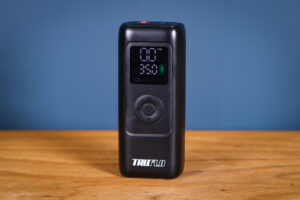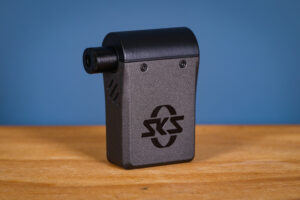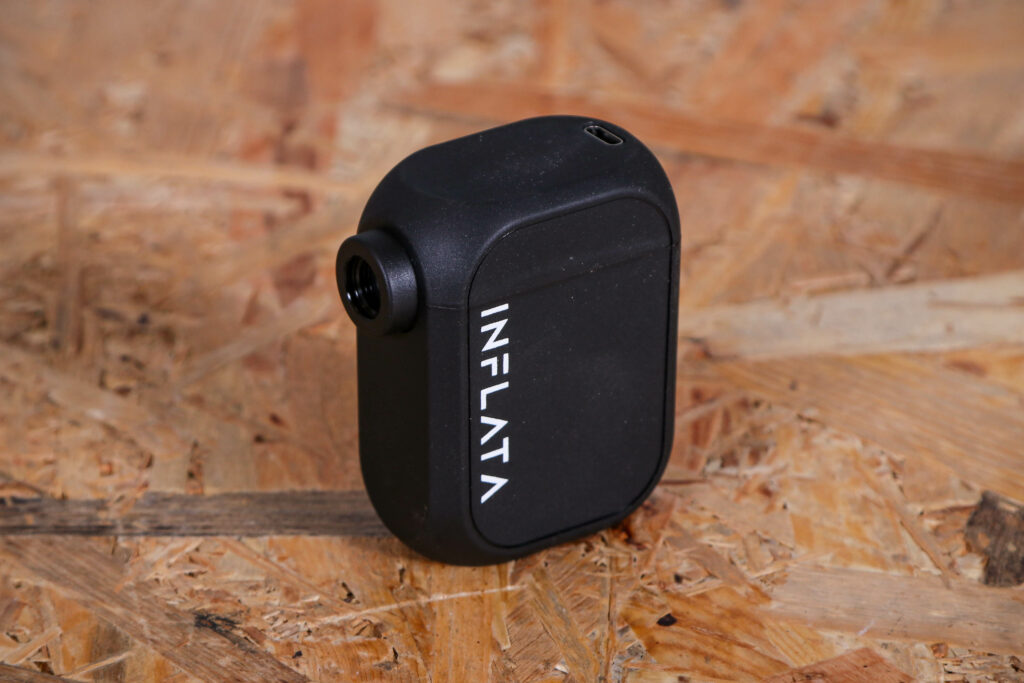

The Inflata Pro S battery-powered bicycle pump is very compact with solid performance and useful convenience features like a pressure gauge and auto-shutoff, making it a clear step up from CO2 cartridges, hand pumps and simpler electric mini pumps. However, in an increasingly crowded market of electric mini pumps, it doesn’t quite achieve class-leading status. Most notably, it offers less battery capacity than similarly priced competitors.
> Buy now: Inflata Pro S for €104.90 from Inflata
Electric mini-pumps have gone from being novelties to commonplace in a few short years, with everything from Temu specials to premium offerings like the Silca pumps (which famously weren’t compatible with Trump’s tariffs).
If you’re not familiar with this sort of device, it’s a very compact battery-powered pump designed to fit in your saddle pack or jersey pocket instead of a mini pump or CO2 cylinders. The first time you see one and learn that it can pump multiple tyres up under its own steam is an eye-opener. There’s already a wide range of such pumps on the market, ranging from ultra-compact ones which can manage just a couple of tyres and don’t have a pressure gauge, to larger ones which are arguably better suited to workshop use than for carrying.
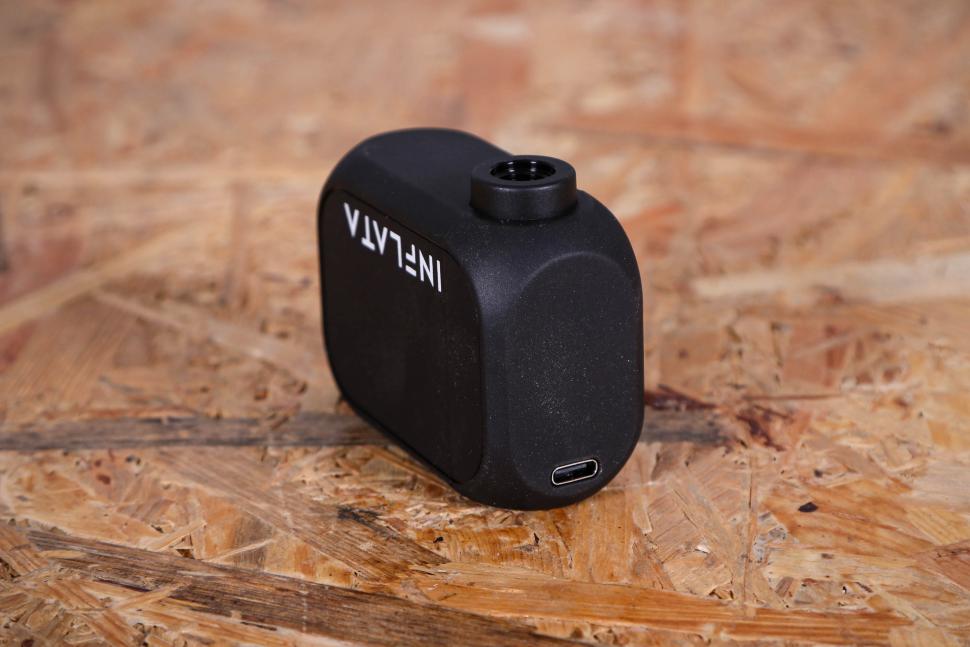
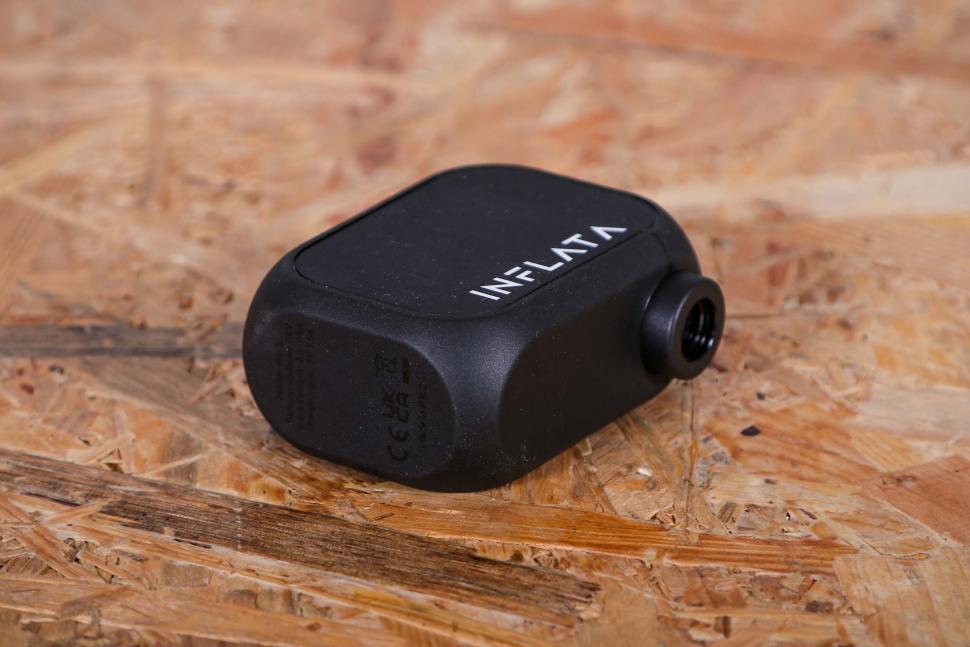
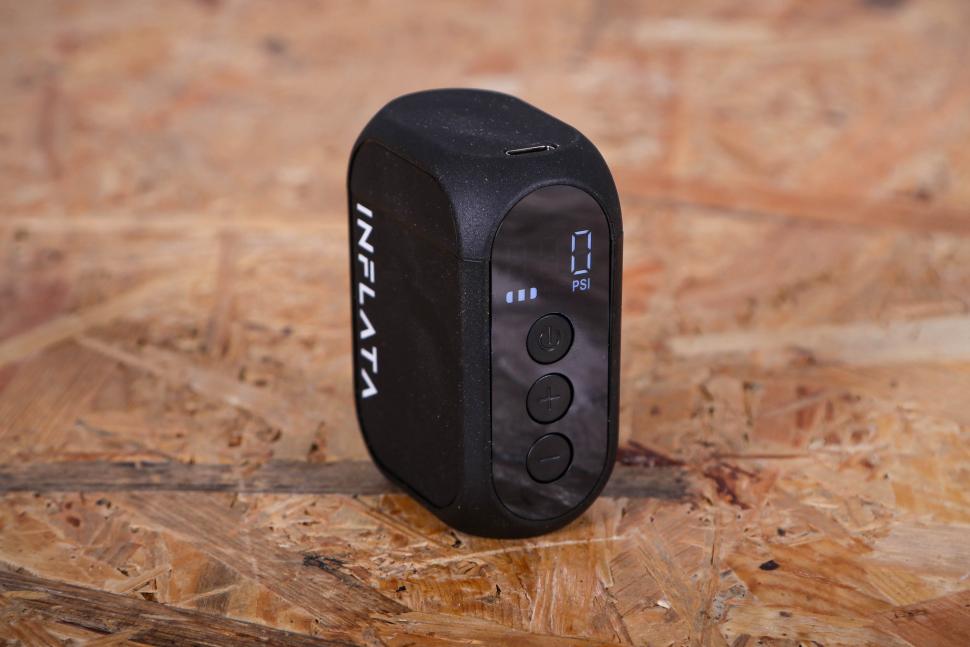
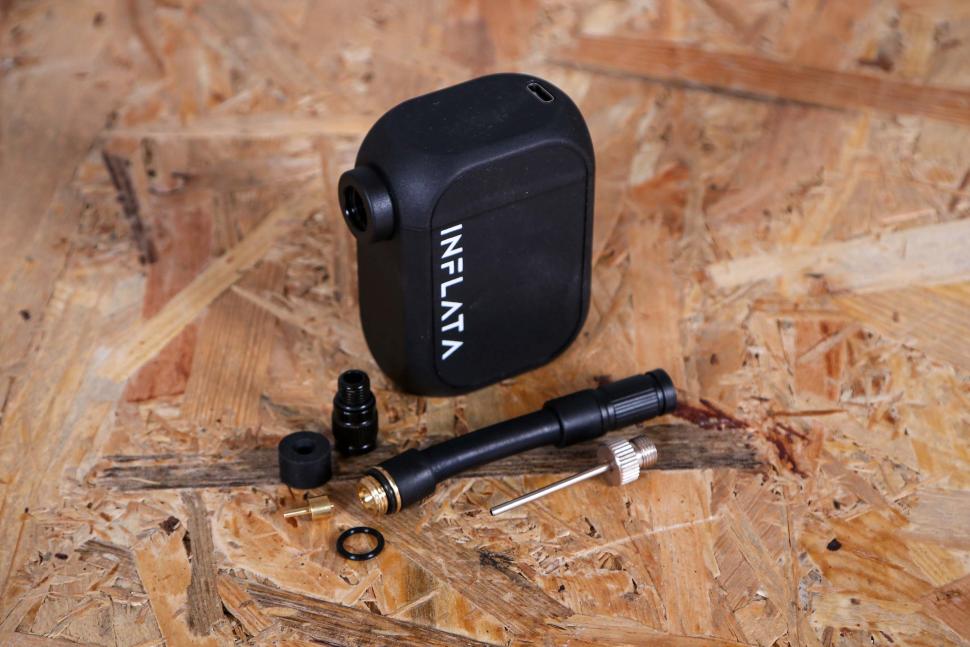
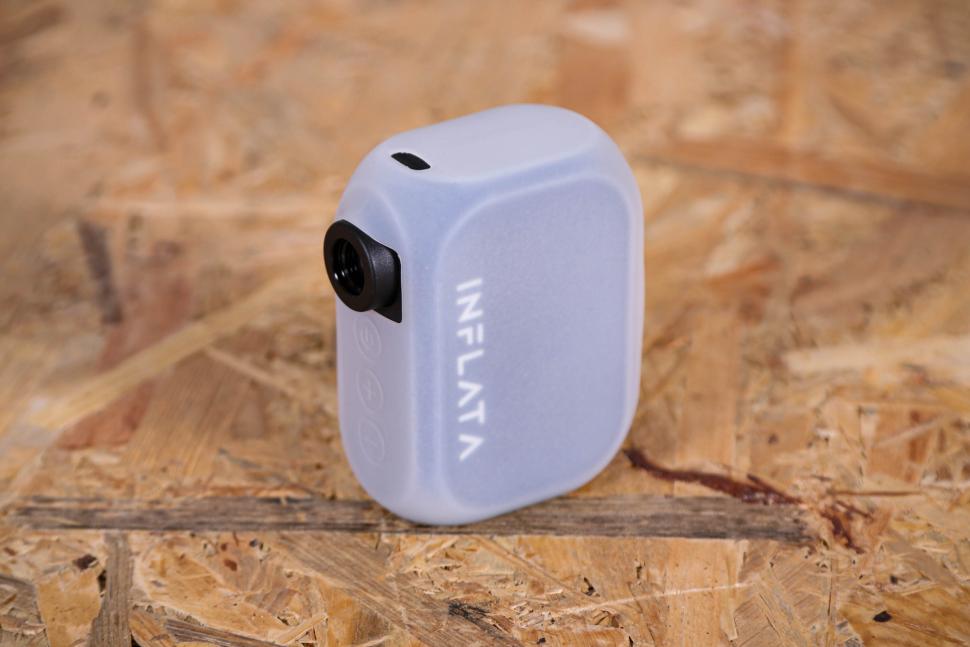
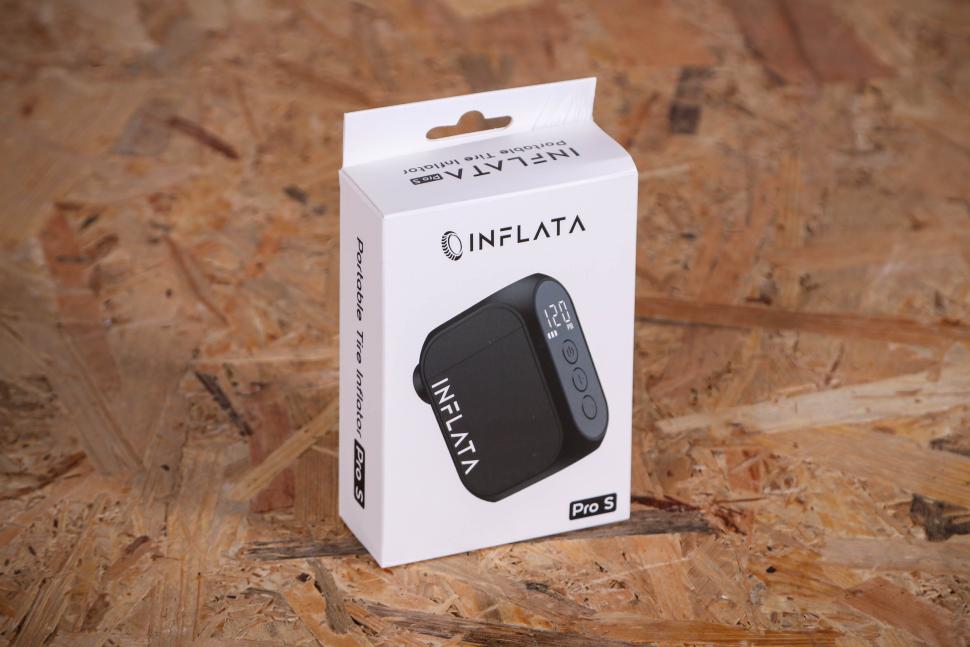

At first glance, the Inflata looks remarkably similar to many of its competitors. The LED display appears to be the same part that’s used across numerous brands and there’s an awful lot of commonality with other pumps in terms of hose, Schrader pin and general design. Most notably, it bears a striking resemblance to the Cycplus AS2 Pro, which Dave liked a lot, with similar capacity and inflation speeds.
The pump comes with an extension tube included (unlike the Muc-Off pump we tested recently), which is good news for protecting your valves from heat. These pumps get seriously warm in use, especially when going to higher pressures. However, the protective silicone case is an extra €5, which seems a bit steep for what amounts to a rubber sleeve.
So how does it actually perform? The Inflata managed to inflate 700×25 tyres to 80psi four and a bit times before running out of puff. That’s good enough for most purposes, though I wonder what tyres they think they could manage eight times, which is what’s claimed on the manufacturer’s website. On 30mm tyres to 60psi, I again got four full charges before it died partway through a fifth inflation.
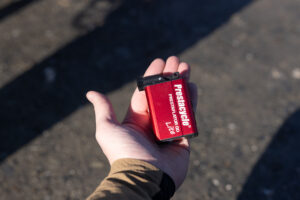
In the comments below our review of the Prestaflator Go, a reader suggested that we ought to use a standardised test to facilitate comparisons between pumps, and I think this is an excellent idea. Tom noted that the Prestaflator Go could inflate 40mm tyres to 37psi a whopping nine times on a single charge. The Inflata managed six inflations, so by this metric it is not a class leader, but no other pump we’ve tested of a similar size and weight can currently equal the Prestacycle product.
In reality, six gravel tyres or four higher-pressure road tyres is plenty for my needs, so I don’t really feel the need for the additional capacity offered by the Prestaflator. The form of the Inflata is a bit neater too, as the opening for the valve is much smaller.
In common with all pumps with a pressure gauge, you switch it on and use the +/- buttons to choose your desired pressure. You then attach it to the valve (either by pushing it into the pump itself, or screwing it on via the hose) and press the power button again, whereupon the pump runs until it reaches the pressure you chose. Hand one of these to someone who’s been pumping tyres with a mini pump and it will seem like quite some progress.
The Inflata is pretty quick, filling a tyre in well under a minute – although the later inflations on each battery charge did become slower. It sits between CO2 canisters and hand pumps in terms of speed then, and for anything other than a race, I’d say it was easily quick enough. It is a bit quicker than the Prestaflator Go.
I also tested the claimed maximum pressure of 120psi, which it achieved without drama. The flow rate is a lot slower than a CO2 canister or a workshop compressor, however, so this wouldn’t be a good choice to get a recalcitrant tubeless tyre mounted.
The pressure gauge and pre-set ability are major boosts in convenience. Mike recently tested the Muc-Off pump which lacks these and I’d agree with him that if I was buying a battery pump I would absolutely want it to include these functions (and that’s despite my CO2 inflator and pocket pump of choice both lacking either). When you get a puncture, it’s normally inconvenient and annoying, as well as leaving you at the mercy of your mates’ ‘hilarious’ observations. Less faff in these situations is definitely a good thing.
Unlike competitors such as the Cycplus AS2 Pro and the Prestaflator, the Inflata pump has a plastic body, but it feels solid and well made with no rattles, and it has survived unscathed in my saddle pack for the past couple of months. The pump claims IPX4 water resistance, but the instructions say it isn’t waterproof and should be kept in the included ziplock bag. This is a bit of a faff, though it’s the same story with all equivalent products I could find. This bag is the bit which is looking most battered from its time in my seatpack, although they are of course very easy and cheap to replace. It would be nice if someone could come up with something a bit slicker though.
Oddly, there’s no obvious air inlet. The only hole other than the valve connection is the USB-C port, so I assumed air comes in here… though sticking my finger over it didn’t seem to have any effect. What sorcery is this? How does the air get in?
The pump itself has a push-fit connector which can be set up for either Presta or Schrader valves. Inflata’s website claims, “switch between valves, hassle-free,” but I’d disagree with that assessment. As with most other similar products, doing so involves swapping over small rubber pieces and absolutely tiny brass valve-pushers, and I’d prefer not to be doing that beside the road. Happily, the little hose supplied is a bit simpler, giving a better threaded connection to a Schrader or, with the addition of a supplied screw-in adaptor, a Presta valve. I tended to use the hose most of the time.
Inflata and other manufacturers cite TPU inner tubes as the main reason for these hoses because the heat generated by the pump can supposedly melt the valve stems which are often plastic. I didn’t melt any tubes in my testing, but the good news here is that the extension hose is included in the package, unlike with some competitors.
The pump claims to charge in 30 minutes via USB-C. I tried charging with both a 90W charger and a standard low-power unit, and it took just under half an hour in both cases, so obviously the charging circuitry isn’t smart enough to accept higher power charging – but 30 minutes is quick enough I’d say.
Weight-wise, my scales showed 123g bare (Inflata claims 125g, so within a margin of error), or 161g with the hose and silicone case. For comparison, my usual CO2 setup (two 16g cylinders and valve) weighs 147g, so this is very much in the same ballpark, but with the key advantage of inflating four tyres instead of two. It’s also a little more compact in size.
It’s a crowded marketplace for these types of products now with the predictable division (in terms of pricing) between UK distributed product and what you can buy with minimal warranty online. Cheaper alternatives such as those from Flextail (and a million products on the usual Chinese websites) exist. The LED display looks to be the same as used by many others, but it’s impossible to know to what extent batteries and pump innards are also common. The battery capacity here is cited as 450mAh in the manual – seemingly less than a third of what’s in the Prestaflator, despite similar volume and weight. That would explain why the Prestaflator can pump up more tyres.
So the question is whether this can replace that CO2 in my saddle packs. I’ve seen it suggested that CO2 cartridges are environmentally unfriendly – and if discarded by the road under bridges (yes, yes I know) then I’d agree, but otherwise I’d guess they’re fairly recyclable – more easily than this with its lithium ion battery, I’d wager.
In any case, if I’m honest, I wouldn’t swap inflation tech because of green considerations; I’d be swayed by how many tyres I can fill against how much space and weight it takes, with an eye on how reliably it will work on a wet Tuesday night in Stoke. On these metrics, the Inflata makes a pretty compelling case for itself.
In terms of space, it’s broadly compatible with my two-cylinders-and-a-valve combo. Weight is similar or even less if you leave the accessories at home. But the key difference is that it will inflate four tyres instead of two – a significant upside. The more likely scenario isn’t four punctures in one ride (that would be genuinely unlucky), but rather a tubeless tyre with a hole that doesn’t seal reliably with sealant and requires several top-ups before it does. For that use-case I’d argue this is considerably better than CO2.
Before you lob out all your CO2 – one note of caution. Bike manufacturers are increasingly building storage into their bikes’ frames – most commonly in the downtube. With one such bike, I found there wasn’t really a satisfactory way to get the Inflata pump in there, because the sleeves provided with the bike to stop tools and tubes rattling around couldn’t accommodate the pump’s chunkier form.
> Best bike pumps 2025 — from hand to floor pumps, inflate your tyres with ease and precision
Against the competition, the Inflata sits firmly in the middle of the pack we’ve tested. It’s priced at €104.90 (with the silicone case included), which is about £90 at time of writing. There’s another €9.95 to ship it to the UK, though, and you should expect to pay VAT and possibly a processing fee on top of that because of Brexit. Unfortunately, this means it ends up more expensive than Dave’s current favourite, the Cycplus AS2 Pro which is available online at £99 and offers similar capacity and features. The recently-tested Muc-Off AirMach Mini is cheaper at £75, but lacks a pressure gauge entirely, making it considerably less convenient for roadside use and it seems poor value in comparison to the two above. For those wanting maximum capacity, the Prestacycle Prestaflator Go at £99 delivers significantly more battery life for just £10 more, though it’s also fractionally larger.
Verdict
A decent performer in the increasingly crowded electric mini-pump market
> Buy now: Inflata Pro S for €104.90 from Inflata
All the deals displayed on our review pages are pulled from a constantly updating database feed of the best affiliate deals available. The criteria for deciding on what are the best deals is who is offering the lowest, delivered price. In most cases we will be showing the very best deal available online, but sometimes you may be able to find an item cheaper. If you can please feel free to post a link in the comments box below. To find out more about affiliate links on road.cc click here.
road.cc test report
Make and model: Inflata Pro S
Size tested: One Size
Tell us what the product is for and who it’s aimed at. What do the manufacturers say about it? How does that compare to your own feelings about it?
Inflata says: “Inflata is the go-to solution for every unexpected flat or deflation. Portable & Lightweight: Weighing just 125 grams, it fits easily in your jersey pocket, saddlebag, or bike pack – always ready without adding extra weight.
“Equipped with a high-pressure motor to save time and provide precise inflation every time, supporting both BAR and PSI measurements.
“A single charge powers multiple uses, ensuring you’re never caught unprepared.”
Tell us some more about the technical aspects of the product?
IPX4 rated
1/2hr charge via USB C
450mAh battery
Adaptors for Schrader and Presta valves
Some of the competition uses metal casing whereas this is plastic, but it feels solid and well made.
It pumps up tyres quickly and accurately. Enough tyres for me, I’d say, although not as many as the Prestaflator.
Being honest, it’s hard (in a review timeframe) to gauge how long elements like the pump and the batteries will last. I didn’t see anything to give me particular concern, though.
It’s about in line with a number of competitors, and definitely lighter than 4x CO2 cartridges.
Similarly priced to several competitors with approximately comparable performance, although the lack of UK distribution means that you may face import costs, making it less competitive.
Tell us how the product performed overall when used for its designed purpose
I found the Inflata to be a great way to inflate tyres both out on the road and also just to top them off before leaving on a ride.
Tell us what you particularly liked about the product
The ability to set a pressure and then it stops when it reaches it is pretty convenient. Having four tyres’ worth of air rather than two with my previous setup.
Tell us what you particularly disliked about the product
Not a lot. It would be nice to find a nicer waterproofing solution than a ziplock bag, but that’s not a major issue.
How does the price compare to that of similar products in the market, including ones recently tested on road.cc?
It’s very similarly priced to competitors such as the Prestaflator Go, the Cycplus AS2 Pro and others, although that’s before you factor in shipping and import costs, which are likely to lead to a higher total.
Did you enjoy using the product? Yes
Would you consider buying the product? Yes
Would you recommend the product to a friend? Yes
Use this box to explain your overall score
This is a very similar device to the Cycplus AS2 Pro which we gave 4.5 stars last year. Since then the market has moved on quite a lot though and I think that as far as bang-for-your-buck goes there are now compelling alternatives – notably the Prestaflator Go. That said, this is a well-made and very compact pump and I enjoyed using it.
About the tester
Age: 47 Height: 188cm Weight: 83kg
I usually ride: On-one Bish Bash Bosh My best bike is: Rose X-Lite CRS
I’ve been riding for: Over 20 years I ride: Most days I would class myself as: Expert
I regularly do the following types of riding: road racing, time trialling, cyclo cross, commuting, touring, club rides, sportives, general fitness riding, fixed/singlespeed, mtb,