



The Garmin Varia Vue is a combined front light and camera, designed to capture footage for use in a subsequent incident report, prosecution or insurance claim. The hardware is excellent, with a high-quality feel and operation. Unfortunately the claim of ‘crystal clear video’ is not backed up by reality, and basically doesn’t work at night – making this a nicely packaged but overall disappointing product, especially at the premium price, unless you’re only wanting something for daytime use, want a combined light and camera, and value Garmin integration.
I’d like to preface this review by stating that I was very much looking forward to seeing what Garmin had to offer here. In the past I’ve challenged the value of its £350 Varia Radar + Light combo – and reading back, I can pretty much summarise my review of the Varia Vue here by posting my follow-up clarification after the Varia RCT715 comments thread blew up.





‘What I would hope comes through is that I have taken a lot of time to assess this product, and that my points are factually correct – eg mediocre resolution camera, mediocre light output, slow/buggy app UX, high price, etc. If you look at each of these individually and then at the [£460] pricetag, I think most people would be challenged to applaud Garmin for what they have built here. As in the review, the only way this is a product anyone other than its mother could love is if your particular niche case called for an all-in-one that was not masterful at any individual aspect of performance’
Apart from changing the price, that’s word for word – and it’s exactly how I feel about the Varia Vue. But I get ahead of myself. Back to the normal review format…
Build & quality
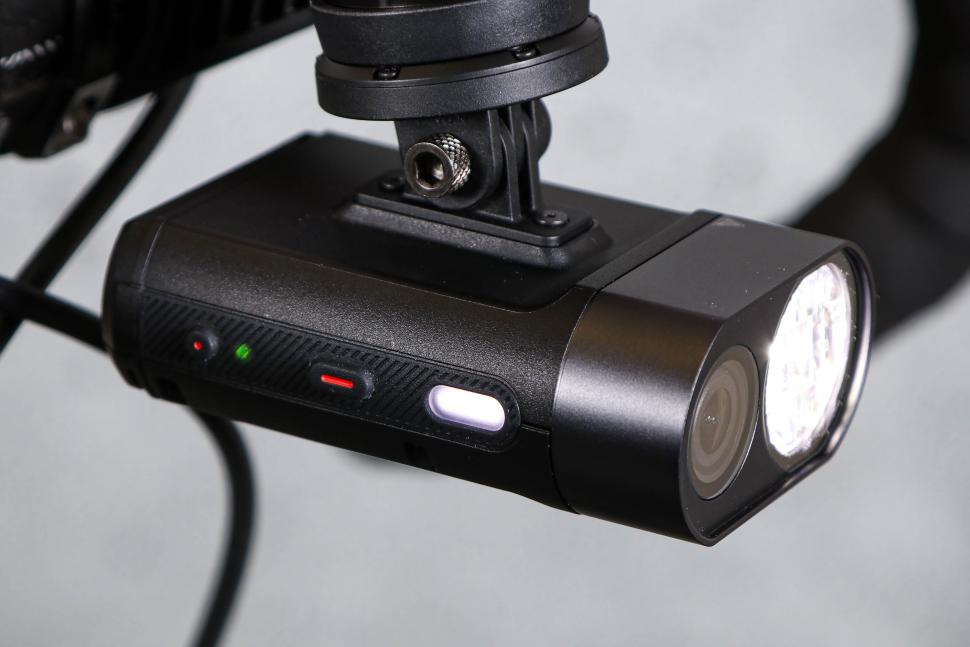
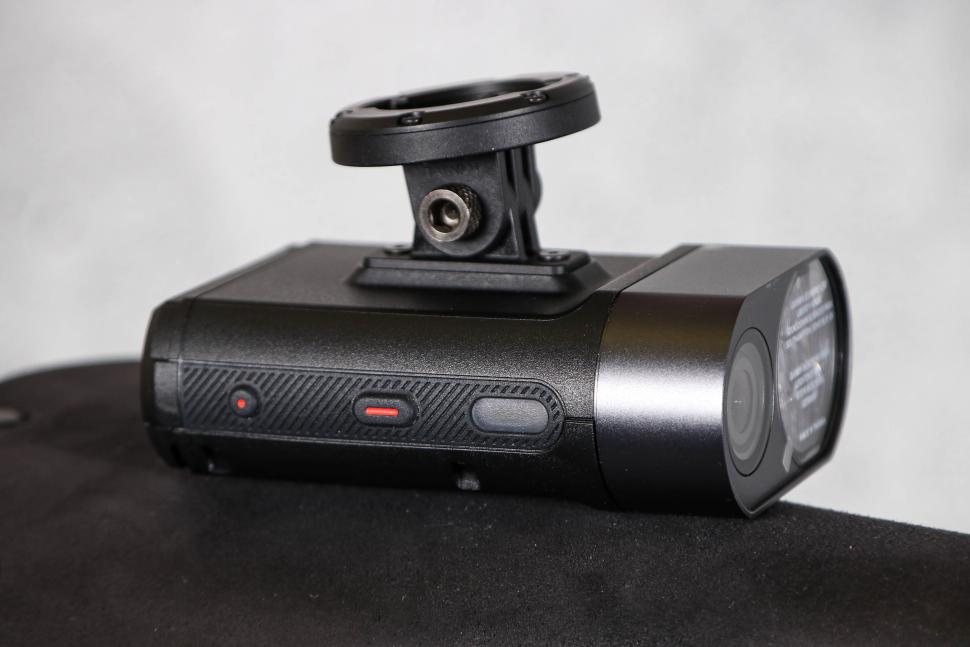
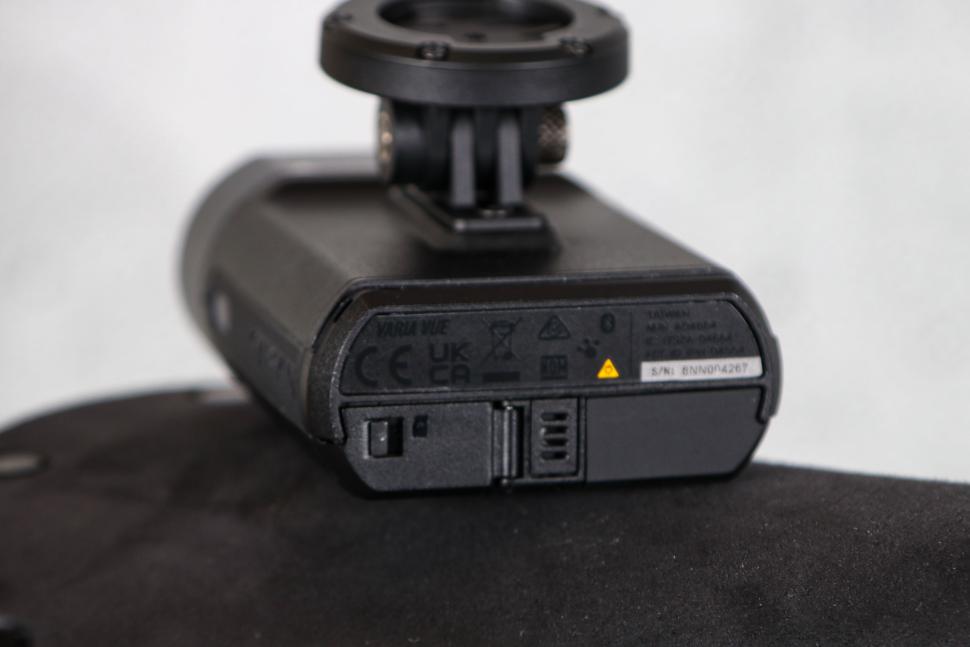
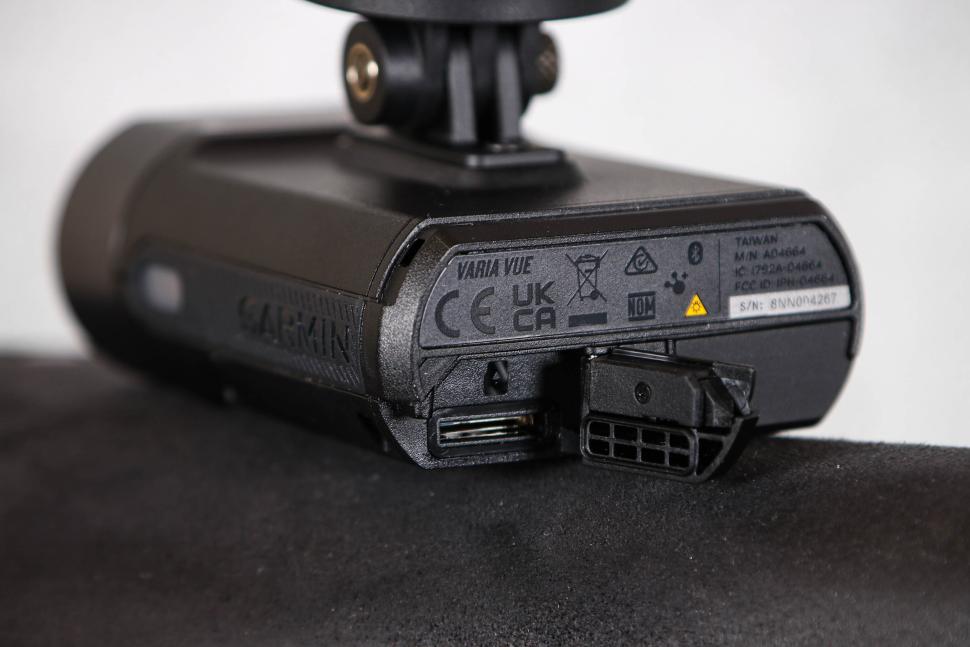
Garmin has – once again – delivered an exceptional hardware result. The Vue feels and looks every bit a premium product – the casing, screws, doors and latches all ooze quality. It’s IPX7 rated, meaning good for 1-metre-deep immersion for 30 minutes.
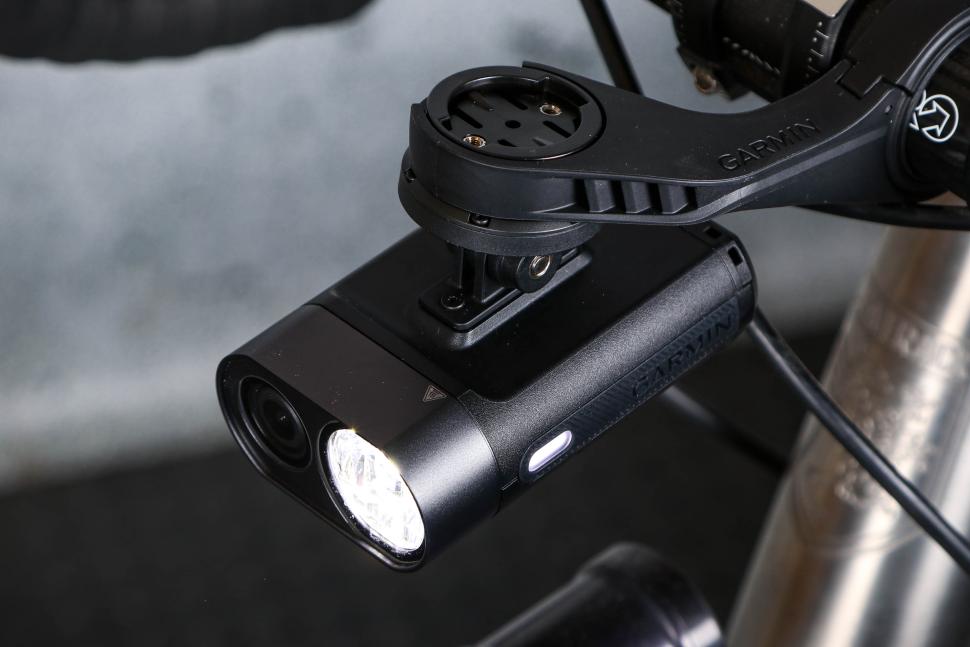
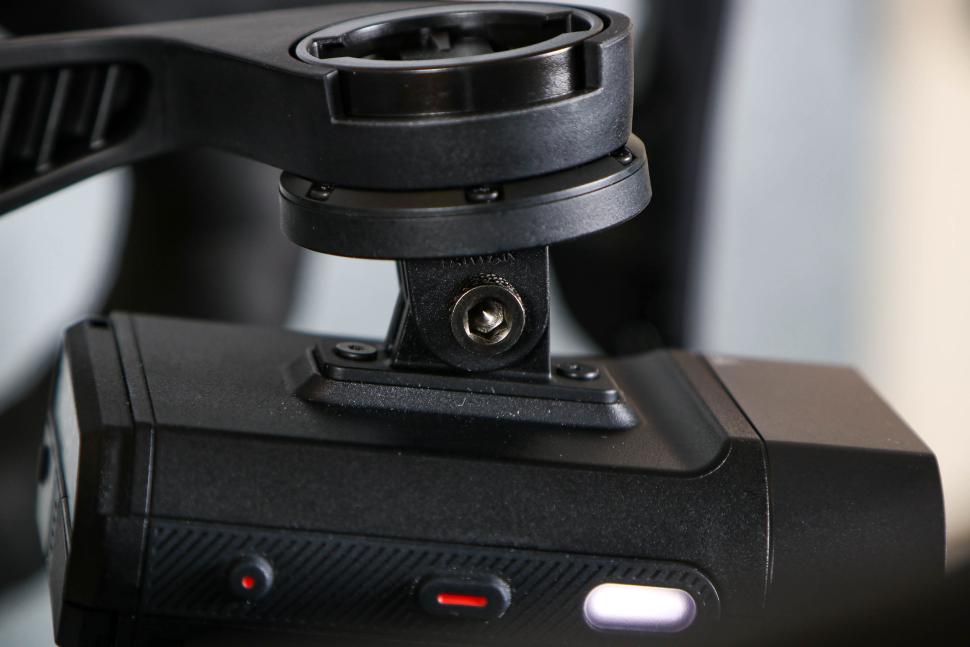
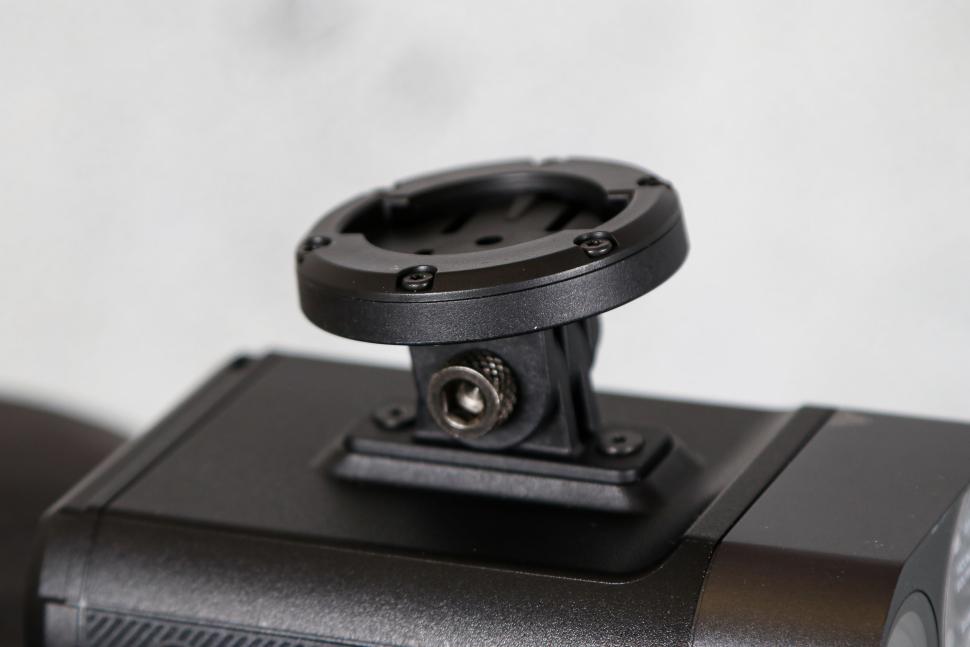
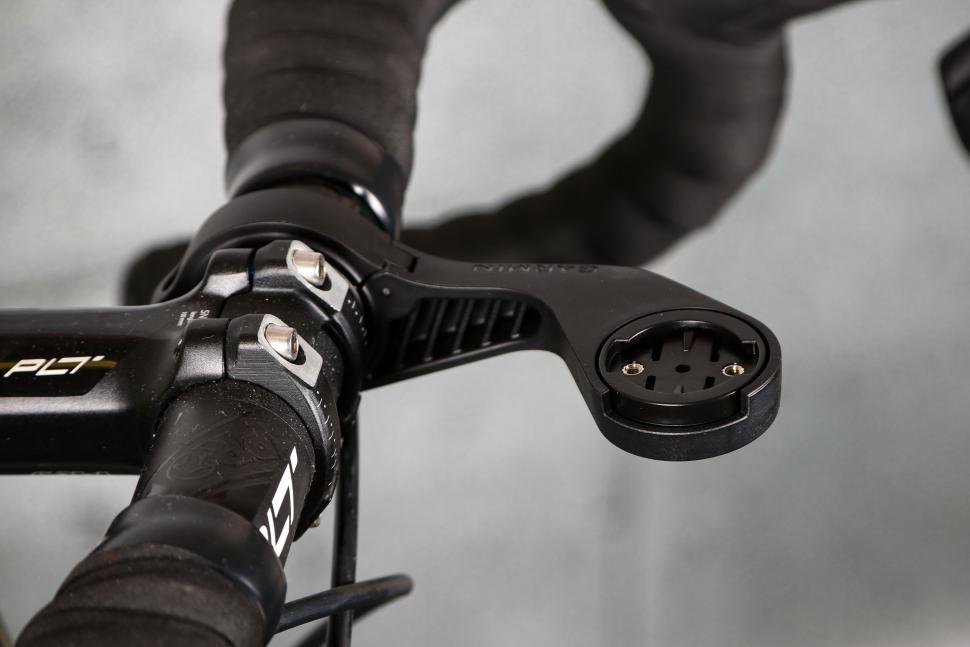
The out-front mount with its retained spacers and wide-opening hinge sets the bar for others to follow. There’s no 35mm bar option, mind, which is a disappointment as, increasingly, hybrid and commuter bikes are coming with 35mm bars.
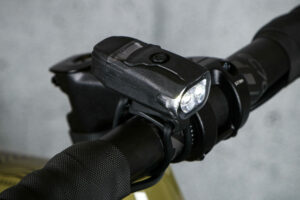
The top of the mount is a standard Garmin quarter-turn female to attach your head unit to, the bottom is a Garmin quarter-turn male that fits the GoPro-Garmin female adapter provided in the box.
The top of the Vue is a GoPro two-pronged mount – so will likely fit any GoPro-ready out-front mount you already use.
Disappointingly, you cannot invert the video to run the Vue upside down above a bar bag or similar. There’s a slight difference in the beam pattern when flipped but it’s not StVZO-standard-cutoff-sharp so inversion should be an option.
Charging
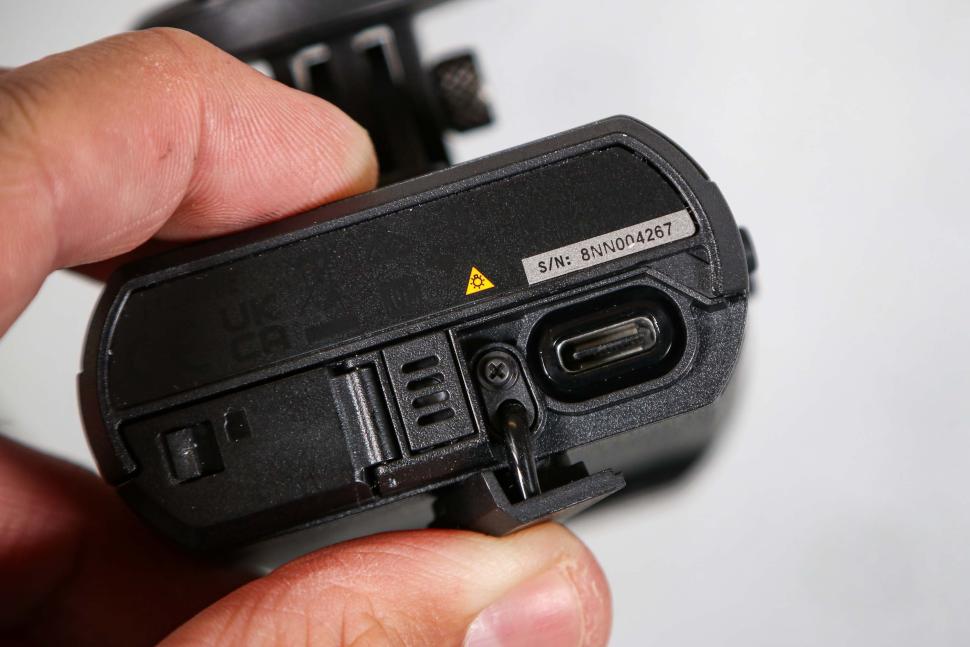
Charging is via USB-C out the back. With the right charger or battery pack you can get 17W of input from 9V or 15V USB-C chargers or 9W out of USB-A. On a fast charger, after an hour the battery icon showed full – but was still charging at 6W. After 90 minutes the Vue stopped charging, having gobbled up a measured 16,300mWh. Garmin says the battery is 1800mAh – and at 9V charging, the electrical maths perfectly align the claimed capacity with reality.
You don’t get any percentage reading of the battery, which is annoying as reading the bars on the app is hard, and the tiny side LED either flashes green for ‘good’ or red for ‘less than 60 minutes left’. So it’s hard to tell if you’re fully charged, or about to die.
Light
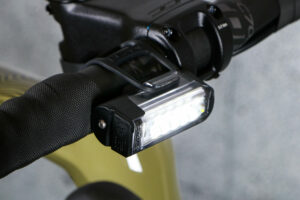
The light has a constant brightness max of 550 lumens, which is plenty for most riding at most speeds, even in complete darkness. The beam is well-shaped, and there are two large ports either side for visibility by others at intersections; 550 lumens aren’t going to set the road on fire, but with a decent beam (which the Vue has) it’s bright enough for dark, twisty lanes at a decent lick. I’d say the Vue light is comparable with major-brand lights we’ve reviewed here costing around the £50 mark.
Battery life exceeds the specification by a good amount. At 4K resolution (more on that claim later), image stabilisation on and the light on 550 lumens (full), the claimed run-time is 1:15hrs. After an hour it was showing bang on 50%, and at 1:15hrs it was still showing yellow (25%). At 1:30hrs the bar changed to red (15%), and the light dimmed to 140 lumens. It finally died at 1:49hrs – so a whopping 34 minutes past the predicted run-time. Swapping to lower light or camera modes, the ‘exceeded expectations’ comment applies. So chapeau Garmin on the hardware and power front.
A niche use case is to charge the light while riding – which does work. Running the camera at 4K plus EIS plus 550-lumen light draws 10W through the charge port with the battery at 100% – so if your dynamo hub (or more likely battery bank) can sustain that, you should be good for riding long periods in the dark. In daytime, the 600-lumen ‘Daytime Flash’ plus camera draws a meagre 4W. On battery-only, this mode has a spec run-time of five hours – long enough for most folks. For you audax types, topping up the Vue via a battery bank in bursts at cake or Hotel du Hedge stops is a viable option.
Integration’s what you need
The Vue offers integration with select Garmin head units, allowing you to control certain functions from your computer as opposed to your phone/app. This includes automatically adjusting the light brightness depending on your speed and time of day.
It also lets you form a ‘light network’ to power the light on and off along with your Garmin head unit, or when you start/stop an activity. Handy for coffee stops, not having to press three power buttons twice if you’re also running a Varia rear light/radar. It took some faffing, but eventually the network function worked reliably with my ageing Garmin 530 and the lights came on reliably at the desired setting (‘High Visibility’ – ie both flashing). I could also trigger photos and videos from the 530. This I see as a major feature that people who’ve bought into the Garmin ecosystem will like.
If your head unit detects a crash (‘incident’ in Garminspeak, with no clarity as to what that entails), it will save 15 seconds before and 75 seconds afterward of footage in a protected folder.
There’s an insanely expensive ‘Vault’ service, which for £9.99 per month (or the fabulously discounted £99.99 per year, up front) Garmin will save your footage. For a week. And you have to first download from the Vue and then upload it from the app yourself. I can see exactly zero people wanting to do this.
Varia app
It takes about 10 seconds for the Vue to pair with the Varia app, which lets you configure the Vue, adjust light and camera settings, and review and download footage. This is the same app disappointment it was with the Varia RTL715 – slow and clunky. It took over three *minutes* to download a 10-minute video. You’ll really be wanting to remove the micro SD card to save any video to your PC – especially for reviewing footage to get a licence plate – because you can’t zoom in on the footage taken in the app.
Camera footage
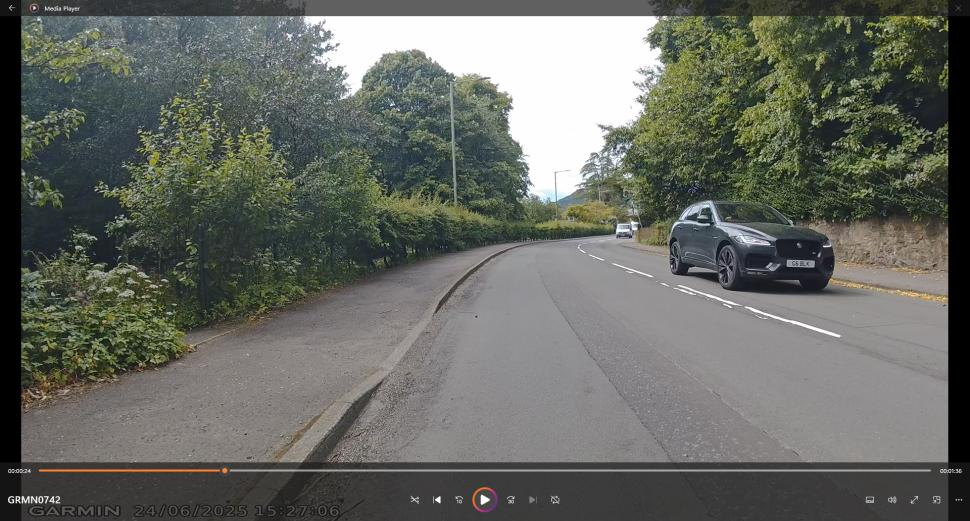
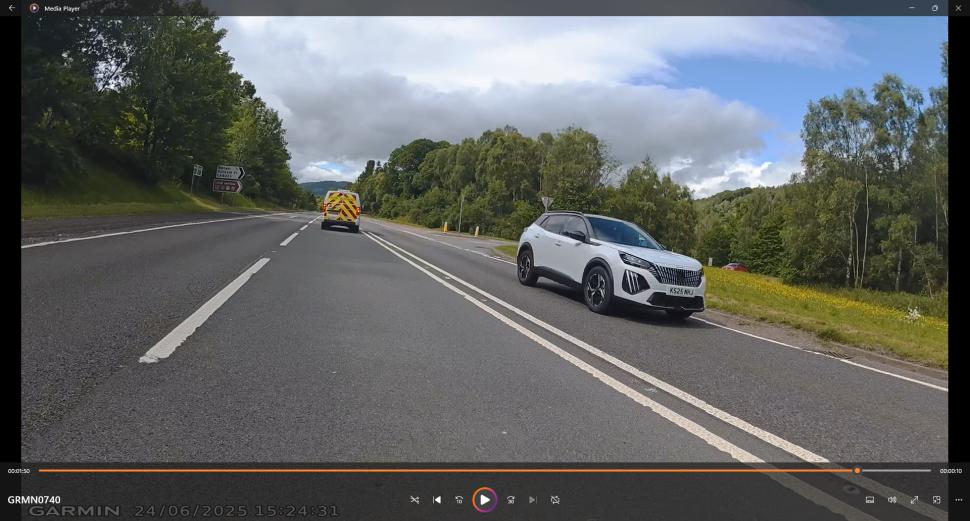
Ah, the footage. Let’s get this out from the start: technically it might be a ‘4K’ sensor – but if you’re expecting modern mobile phone camera or drone quality you’re in for disappointment. Basically: hey Garmin, 2015 called – they want their image quality back.
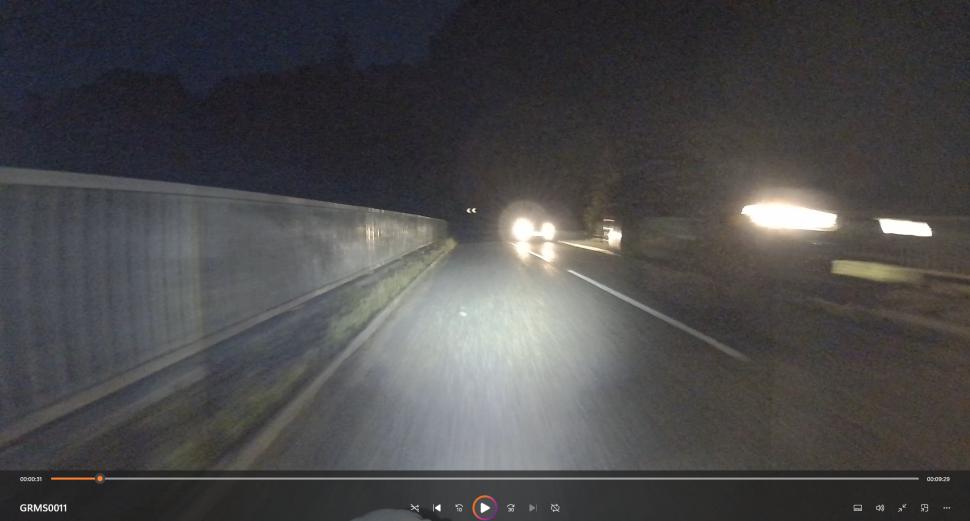
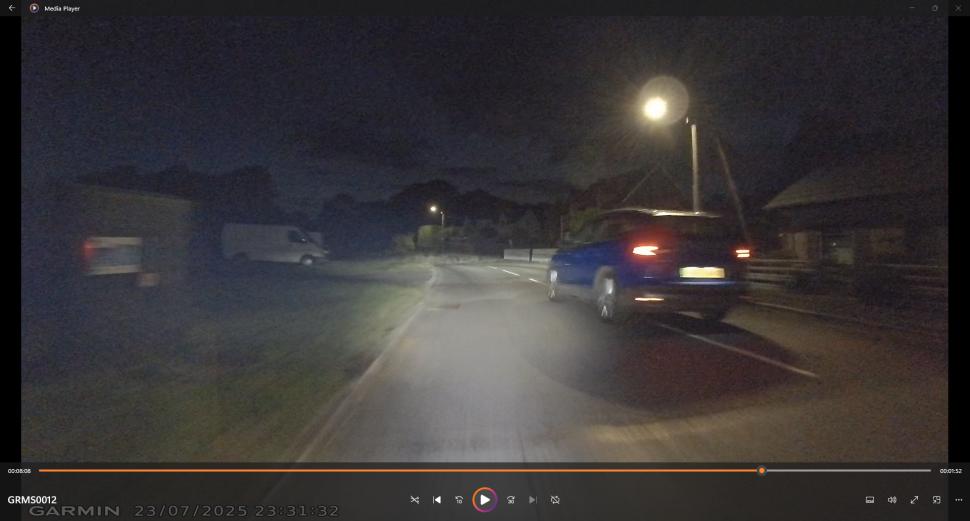
And if you turn on EIS (‘Electronic Image Stabilisation’) the resolution drops from ‘4K’ – ie 3,840 horizontal pixels – down to 2,688 or ‘3K’. That’s a 30% reduction – and it shows. But then even that lower resolution can look fine, if the camera is able to react quickly and handle light imbalances – especially as the night draws in. Here the Vue really disappoints, with the bloom from oncoming headlights combined with the reflection of its own light off number plates such as to render reading a number at night or in deepening dusk all but impossible.
Now, I appreciate that I am a sample size of n=1. But in my findings, all the dusk and night-time footage I captured was unusable for vehicle identification purposes. I’m caveating the bejesus out of that statement to get ahead of the Varia Vue owners who will no doubt post photos of their success capturing plates in darkness. I don’t doubt that in some circumstances, when everything aligns just so, a clear ID is possible. Just that I and a number of other reviewers across the Internets couldn’t get that lucky.
To be clear here, in decent light it worked OK – over two months of riding I couldn’t find an example where the Vue couldn’t identify plates in daylight. But £460 for a product that you can’t derive full value from for a decent part of the day or year is questionable. If you’re a UK commuter, half the year you’ll need another solution for visual traffic-enfringement-enforcement-grade image capture.
Which brings us to the competition. There’s only one really, and that’s the now-£319 Cycliq Fly12 Sport. The Fly12 maxes at 3K with EIS – the same as the Vue’s 3K setting. The comparisons between the Vue and the Fly12 Sport are much of a muchness – there are ups (price) and downs (no Garmin network, 400 lumens max) but they are roughly comparable where it counts most – image capture.
The one difference would be that a quick troll of reviews shows Fly12 Sport users getting readable results in the dark, some of the time. In Emma’s review, a screenshot shows a plate pretty clearly in darkness – something I couldn’t replicate. It could be that the dimmer Fly12 light actually helps it spot plates better in darkness, as there’s less reflected light to blow out the image. Or she got lucky. The findings of reviewers I trust – Ray Maker, aka DC Rainmaker, Des Yap, aka DesFit, and select others – concur that the Vue is a daylight-only device, if you actually want bulletproof vehicle identification.
Conclusion
So who is the Garmin Varia Vue for? The perfect Vue customer is someone who appreciates quality hardware and is happy to pay a premium for it, hates the idea of a separate light plus camera combo, and wants Garmin integration so there’s one button to push. But doesn’t need video evidence down to licence plate detail in the dark.
There’s no question, £460 is an astounding amount of cash for the brightness and image quality (or lack thereof) on offer, and the value of being fully integrated only goes so far. If the image capture was genuinely 4K (ie with stabilisation) and worked in the dark, I’d be giving this four stars. If Garmin delivered readable night-time images at the pricepoint of the Fly12 Sport, it’d be a knockout five stars. Alas, the perfect or even pretty fabulous all-in-one camera-plus-light eludes the cycling world once again.
Verdict
Very expensive and only captures plates in daylight – but the hardware, battery and Garmin integration are good
All the deals displayed on our review pages are pulled from a constantly updating database feed of the best affiliate deals available. The criteria for deciding on what are the best deals is who is offering the lowest, delivered price. In most cases we will be showing the very best deal available online, but sometimes you may be able to find an item cheaper. If you can please feel free to post a link in the comments box below. To find out more about affiliate links on road.cc click here.
road.cc test report
Make and model: Garmin Varia Vue
Size tested: One Size
Tell us what the light is for, and who it’s aimed at. What do the manufacturers say about it? How does that compare to your own feelings about it?
It’s for road cyclists wanting to capture evidence of shoddy driving, witohut needing a separate light.
Garmin says:
SEE IT AND SAVE IT
The Varia Vue headlight camera records crisp, clear video in 4K (requires memory card; not included1) and saves footage automatically if it detects an incident2, while a headlight with up to 600 lumens lights the way.
RECORDS IN 4K RESOLUTION FOR CLEAR VIDEO PLAYBACK
UP TO 7 HOURS OF BATTERY LIFE IN DAY FLASH MODE WITH CAMERA RECORDING
SUPERBRIGHT LIGHT UP TO 600 LUMENS
CUTOFF BEAM PRESERVES VISION OF ONCOMING TRAFFIC
COMPATIBLE WITH YOUR EDGE® FLUSH OUT-FRONT MOUNTS
AUTOMATICALLY SAVES VIDEO BEFORE, DURING AND AFTER AN EVENT
Tell us some more about the technical aspects of the light?
From Garmin:
Dimension 92 X 60 X 33 mm (3.6″ X 2.4″ X 1.3″)
Weight 200 g (7 oz)
Light modes High, medium, low, night flash and day flash
Lumens 550 high, 300 medium, 140 low, 400 night flash, 600 day flash
Water rating IPX7
Battery life 1080p30 recording: 1.5 hours high, 2.5 hours medium or night flash, 4.5 hours low, 7 hours day flash, 9 hours camera only
4K recording: 1.25 hours high, 2 hours medium or night flash, 3.5 hours low, 5 hours day flash, 6 hours camera only
ANT+® Yes (bike lights, camera control)
BLE Yes (bike lights, camera control)
Wi-Fi®
Visibility distance 1.6 km (1 mile)
Integrated camera
Smart headlight
Maps & memory
Accepts Data Cards Memory card sold separately; requires at least 8 GB microSD™ card (supports up to 512 GB), Class 10 or faster
Camera features
GPS speed and location info in video Yes (when paired to a compatible Garmin Edge, Garmin smartwatch or Varia App)
Camera Features
Camera modes Continuous, off, radar-activated (when paired with compatible Varia™ rearview radar)
Camera settings 4Kp30, 1440p30, 1080p30, 1080p60
Electronic Image Stabilisation (EIS)
Accelerometer Autolock footage upon incident detection
Camera control Garmin Edge® bike computers, selected Garmin smartwatches and Varia™ app
Varia™ app compatibility Light control, camera control and video transfer
Vault support for video storage
Security Information
Security updates until at least (YYYY-MM-DD) 2027-04-09
Very well built.
The Garmin user experience is not that great – the paper guide is reasonably confusing, and the app could be a lot better.
It’s a quality bit of kit. Shame it doesn’t accommodate 35mm bars though.
I didn’t fully immerse myself, but it’s rated for that.
Battery life exceeds expectations, by some margin.
The light is OK but nothing flash (sorry) and the camera is decidedly meh.
It’s a wee tank.
It’s not light, but OK for what you get and the quality.
If you value integration and ecosystem you’ll probably disagree here.
How does the price compare to that of similar products in the market, including ones recently tested on road.cc?
It’s hella expensive. I mean, really – £141 more than the £319 Cycliq Fly12 Sport?
Tell us how the light performed overall when used for its designed purpose
I wanted better resolution – that’s the whole point of the Vue, and it’s a letdown. As is the software/image management. Pretty much everything else – the mount, build quality and light – were nicely done.
Tell us what you particularly liked about the light
The integration with Garmin head units to turn them on-off with one buton. And the battery life. And the build.
Tell us what you particularly disliked about the light
The image quality. Come ON Garmin, it’s 2025.
Did you enjoy using the light? Yes
Would you consider buying the light? No
Would you recommend the light to a friend? Yes, with caveats. Many, many caveats.
Use this box to explain your overall score
In many ways it’s a great bit of kit, but it’s expensive (HOW MUCH?!) and the daytime image quality is, in my experience, a bit worse than the logical competitor. And it doesn’t capture vehicle details in the dark. Balancing all that out, I can’t give it more than 6.
About the tester
Age: 47 Height: 183cm Weight: 77kg
I usually ride: Sonder Camino Gravelaxe My best bike is: Nah bro that’s it
I’ve been riding for: Over 20 years I ride: A few times a week I would class myself as: Expert
I regularly do the following types of riding: cyclo cross, general fitness riding, mtb, G-R-A-V-E-L

19 thoughts on “Garmin Varia Vue”
I would very much like to
I would very much like to know , on all expensive light, camera, radar, reviews if the battery is replaceable. Even if that service is only offered by the manufacturer.
Seems the issue on night
Seems the issue on night usage hasn’t improved since the Garmin Virb camera. I used both the standard & Elite versions when I was commuting. Daytime use gave no problem identifying the registration plate of any vehicle, night time was totally different & basically useless, it was not possible to identify the vehicle make sometimes. I’ve since bought a Cyclic Fly 12 Sport. Camera is very good, light not so as it’s only 400 lumens so use a backup light for any late evening or early morning rides. However, I’ve never had any problems reading the registration plate so I my view, the Cyclic is the superior product.
I’ve got the fly 12 and find
I’ve got the fly 12 and find it impossible to read registration numbers at night. I’m otherwise happy with it, the ability to easily swap to mount above or below the bars is helpful to mount on several different bikes. The very expensive proprietary mounts less so…
Once you get past the 12month
Once you get past the 12month warrantee period, glue a 1/4 turn Garmin male connector to the top of the Fly 12.
This means you can use it anywhere there is a Garmin mount … you just have to remember that the camera is now technically upside down, and to reverse the software flip options.
I think the working theory is
I think the working theory is that Garmin has a massive overstock of the VIRb sensors so they’ve put them in both this and the RCT715.
it’s frustrating for the sake of a few more cents on a unit they could get a half decent sensor.
Why does combining two items
Why does combining two items that would separately cost about £100 each suddenly become £450 when merged? I struggle to see how the extra 5-10 seconds per ride of dealing with seperate items could every add up to the premium charged for these combined items.
768kb wrote:
If you know of a front facing camera with image stabilisation and a battery life of 6 hours recording continuously, for about £100, please share the details.
I haven’t used it, but on
I haven’t used it, but on paper the Chili Tech 4k camera comes pretty close – the battery life isn’t as long, but given how ubiquitous and affordable good quality Li-ion batteries are nowadays, you would be hard pressed to argue that battery capacity alone justifies the cost. https://www.chilli-tech.com/action-cameras/cameras-for-cyclists/4k-camera-for-cycling
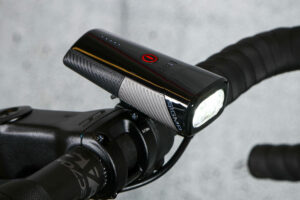
Even if you say £100 is ambitious, something like the Ghost XL Pro is £250 and claims to hit all the same key features: https://driftinnovation.com/collections/cameras-new/products/ghost-xl-pro (again, haven’t used it so can’t comment on the actual quality). That still leaves you with over £200 spare change on the price of this Garmin, which is enough to buy a light that is much nicer than the fairly mediocre one on the Garmin and you’d probably still have some change to spend on coffee/cake/beer (e.g. <£100 for an Exposure Sirius).
Neither have replacement
Neither have replacement batteries which is annoying. I expected drift would at least offer a replacement service but no. (You can probably guess my drift battery has just given up !)
To pick out VRPs you need 4k,
To pick out VRPs you need 4k, so “4K recording: 1.25 hours high” which is about where everything is at.
768kb wrote:
Well, that’s the thing, everything I’ve looked at or tried for a safety camera over the years, the battery life has been abysmal, and at the lower end of the market, so has the quality. I’ve been running the Varia Vue since launch in April and with the light in day flash mode, get 6 hours recording continuously at 4K with IS. Something I have not ever had on a GoPro or DJI costing £300+. Therefore I think that the camera & light combined are worth the asking price, particularly taking into account that it integrates seamlessly with Edge head units for saving clips synchronised front and rear (have also run the Varia RCT715 since launch 3 years ago).
As mentioned, it’s expensive, and not perfect (think dashcam quality rather than action cam), but this, paired with the Varia RCT715 and the Edge 1050 is the best solution yet for capturing close passes, etc on rides up to 6 hours. I’ve not yet failed to capture a plate on either for Op Snap submissions, notwithstanding Mike’s points about night time, although pretty much all my rides are in daylight.
I made a few observations about using it when road.cc announced it back in April, including configuration of Edge head unit to save the 2 minute clips on demand front & rear by holding down the right hand di2 hood button (another benefit with Garmin integration) here https://road.cc/content/tech-news/could-new-garmin-light-4k-camera-rival-cycliq-313449
768kb wrote:
No you don’t. The earlier Cycliqs were 1080p and did it fine. Poor 4k sensors are actually worse than HD sensors because they pick up more noise at night, possibly the flaw this Garmin suffers from.
To pick out VRPs you need 4k
To pick out VRPs you need 4k
It must be difficult to achieve such a state of absolute ignorance and to proudly display it without insight
So, basically the Garmin
So, basically the Garmin product is an excellent advert for not replacing my Cycliq Fly12 Sport?
Thanks for the review …
Thanks for the review … saved me some cash.
I’ve been hoping that this was going to be my way out of the Cyclic Fly circle … but alas, it doesn’t sound like it is to be.
It’s looking like the Fly12 is the much superior unit – even just the ability to mount the unit above *or* below the bar is an instant win.
Guess one day a *decent* replacement for the Fly will come …
I was looking for something
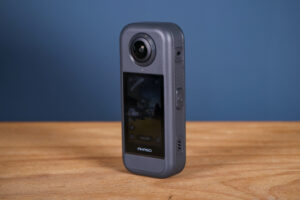
I was looking for something to do this sort of job and had been holding out hope that this would be the solution, but more or less as soon as Garmin released it I gave up and went for a GoPro, a powerbank, and a light.
It’s not perfect or without compromises, but the camera is better, the battery capacity is better and the light is better and in total it’s still cheaper than this.
Go Pros make poor safety cams
Go Pros make poor safety cams. Battery life is terrible for all but the shortest road journeys, menus are complex and setting up looping recording is a pain in the ass.
I’d only use one if I wanted dual use out of it.
Depends a bit on your use
Depends a bit on your use case/priorities.
I use one when commuting/riding to the shops etc. I get ~1.5 hours battery life which is “good enough” (journeys are ~20-30 minutes, so comfortably enough for a return journey). YMMV depending on model and settings. Haven’t set up loop recording – get about 5 hours of footage on the SD card I have, so just need to remember to clear it once a week or so.
Aside from those limitations, it’s been great – footage is very clear (not 100% hit rate on licence plates at night, but better than anything else I’ve tried or seen), and it’s highly reliable. No quirks or missing footage, unlike other cameras I’ve tried (*cough* Magicshine *cough*).
For the next 2 days Cycliq
For the next 2 days Cycliq have 15% off site wide making the gulf in price even bigger.
(today is 7th Aug 2025)