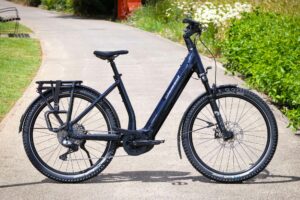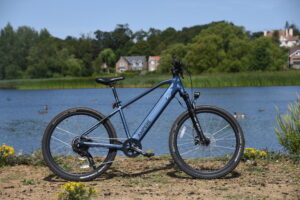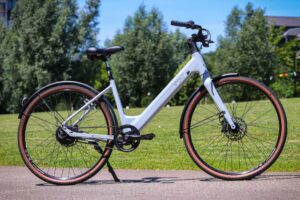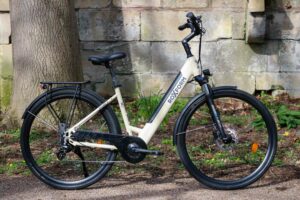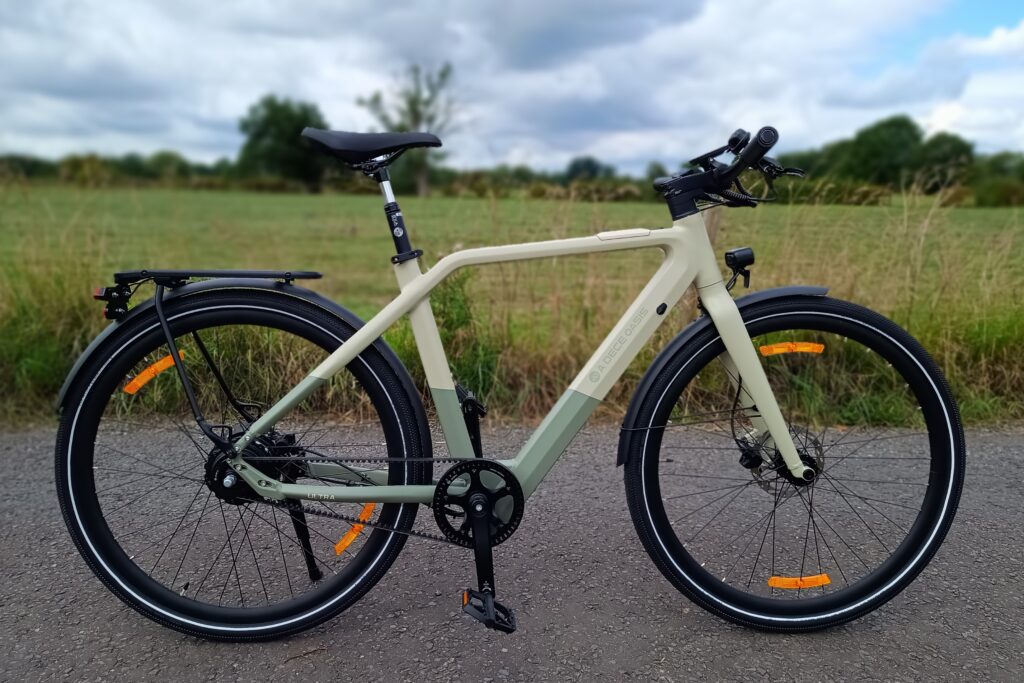

The ADO Air 30 Ultra is a bike that doesn’t perhaps quite live up to its promise, but it’s certainly got some attributes and, as you’d hope from a Chinese direct to consumer brand, its price is extremely competitive.
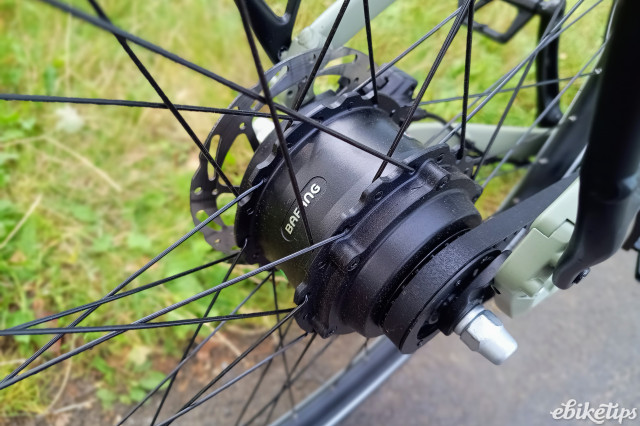
There are two versions of the ADO Air 30, both of which cost £1,799. The Pro features a Bafang hub motor with an integrated and automatic two-speed gearbox (I assume the same one I’ve previously tested on the Estarli e28.X). The Ultra model, tested here, ups that with a three-speed version, jointly developed by ADO and Bafang.
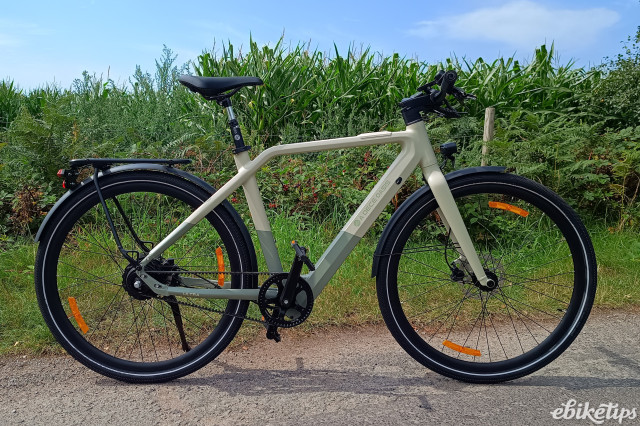
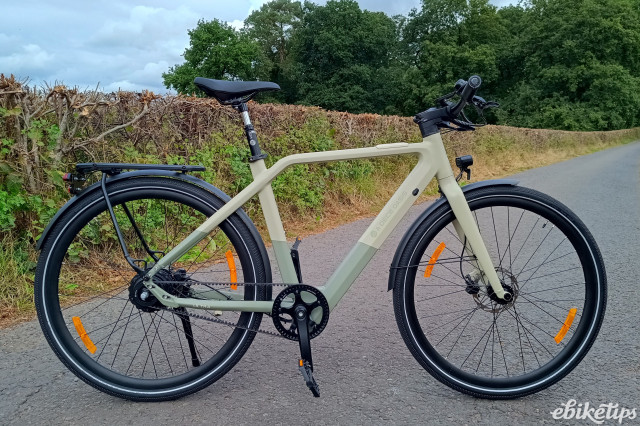
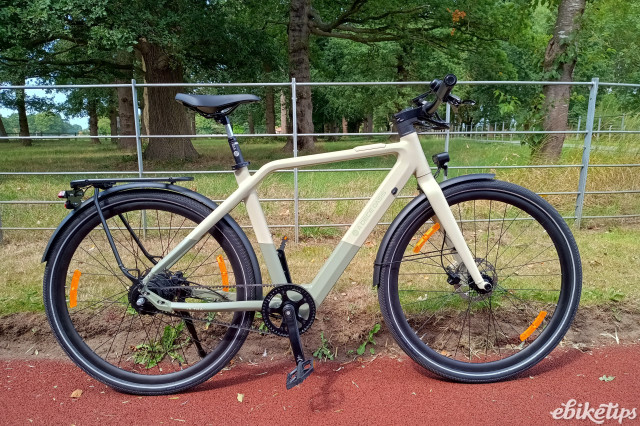
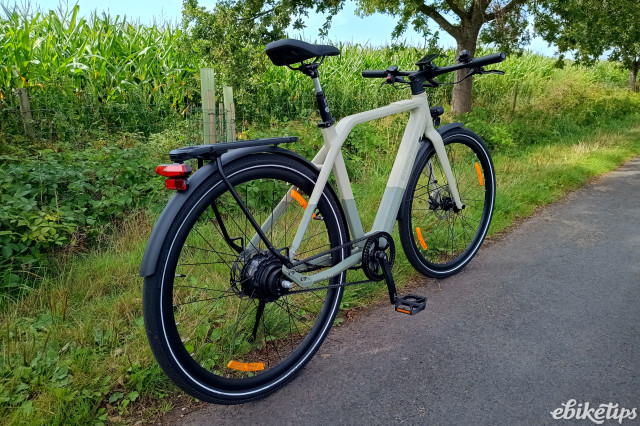
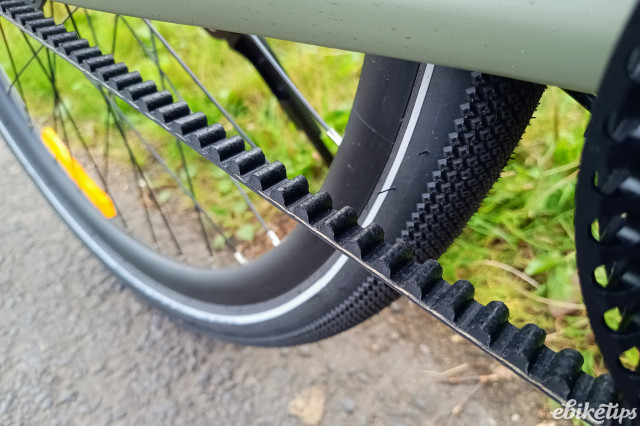
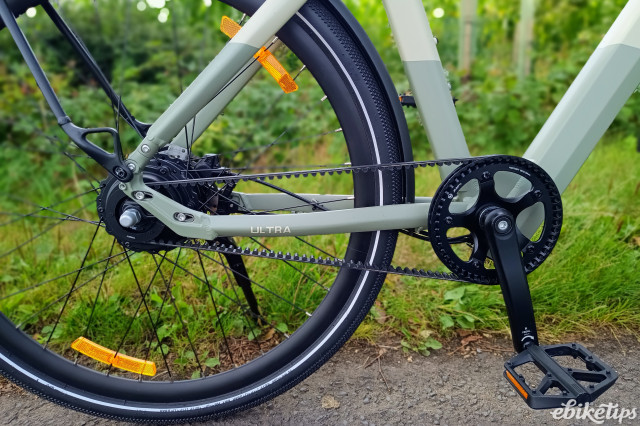
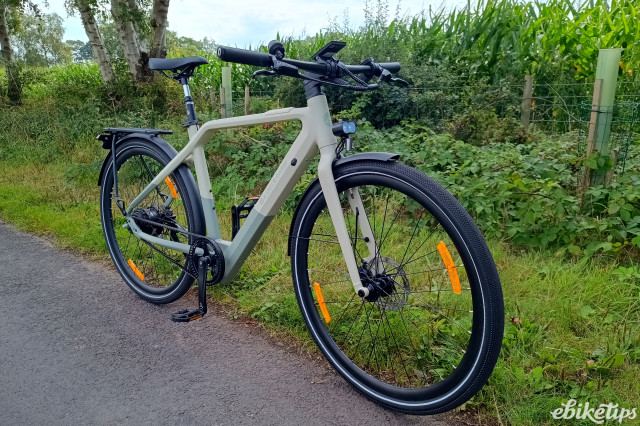
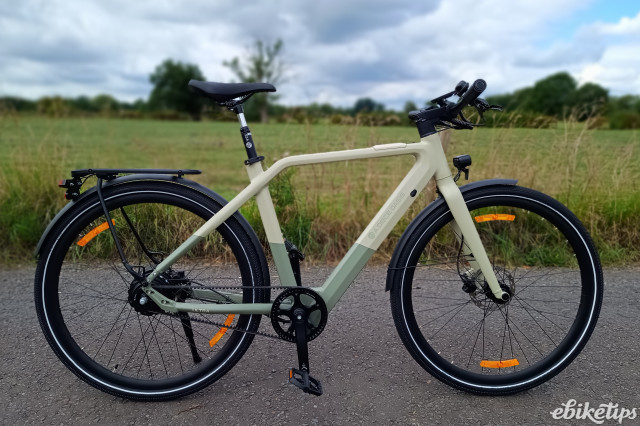
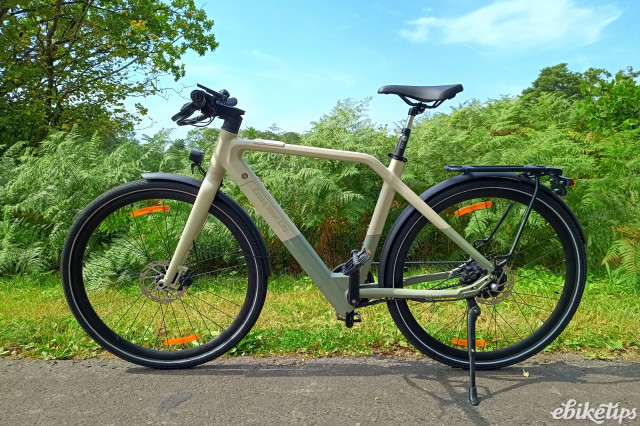
Having the gearing taken care of inside the hub means that the Air 30 can be fitted with a low maintenance belt drive, but beyond that it’s a pretty straightforward urban hybrid e-bike with a rack, mudguards, lights and a suspension seat post.
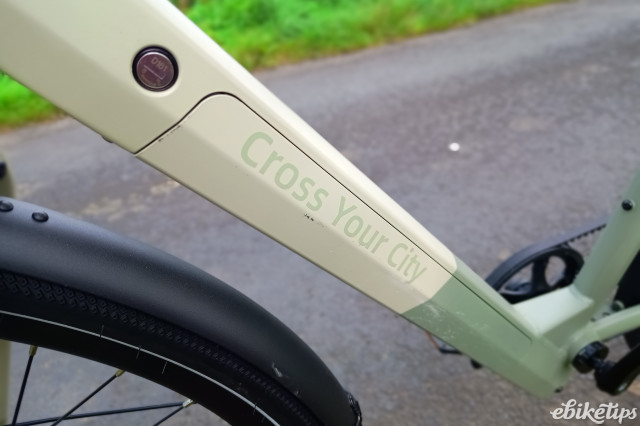
Presumably not for no reason is it called Air and ADO makes reference to the bike’s ‘featherweight frame’. It came in at 20kg on the ebiketips scales, which doesn’t come across as a particularly huge selling point, but also isn’t at all bad in the grander scheme of things.
The motor
As I said in my review of the Estarli, having lots of gears isn’t always as important as you might think on an e-bike. Provided your local terrain allows (a pretty significant asterisk), most of your riding will probably be done somewhere around 15.5mph, which is the point at which legal motor assistance will cut out.
Think of it this way: both you and your motor work to get you up to that speed, but you’re on your own beyond it. The upshot is that whatever gear best suits that sort of speed, you’re probably going to spend an awful lot of time in it.
This is why single-speed e-bikes are entirely viable for a lot of people. Their only downside is that the sole gear is often a bit big for setting off and won’t really help you when a hill gets steep enough that you and the motor can’t keep your speed high. That’s where the ADO Air 30’s dual and triple speed motor systems come in.
The central idea is to give you a gear that’s a little more appropriate for those slower speeds without burdening the bike with a load of additional ones that won’t really get much use. Both systems also shift automatically, so in terms of how you operate the bike, it’s no different to a single-speed.
There are obvious advantages to this setup – particularly in terms of ease of operation – but there are disadvantages too. Upward gear changes arrive without warning, so you’ll feel a bit of a clunk as your pedalling suddenly meets more resistance. When accelerating from stationary to cruising speed, this only happens once with the two-speed system, but twice with the three-speed. The jolts are however less marked and the first one’s out of the way almost as soon as you’re moving.
The gear changes are tied to the speed at which you are moving. While the two thresholds for the Ultra are 13km/h and 22km/h, that’s only for changing up to a larger gear. The system won’t change down again until you’ve dropped to a much lower speed – and only then if you also stop pedalling for a moment or two.
As you’d imagine, this aspect doesn’t work brilliantly when you’re riding uphill for the simple reason that you’re highly unlikely to want to cease pedalling. Once you’re familiar the system, you can try to find an opportune moment – a momentary easing of the gradient, for example – to take a beat and allow the bike to ‘automatically’ change down to the lower gear, but there are no guarantees it’ll actually happen unless you’re moving slowly enough for long enough.
I found I needed to be doing less than 15km/h for a downshift to take place and you don’t freewheel uphill for long at that speed. Even if it changed down okay, I’d then sometimes find that riding in the easier gear would tip me back over the 22km/h threshold… at which point the bike would change up again into the gear I didn’t want.
The reason I didn’t want that larger gear was my biggest issue with this bike. While the mechanical gearing is 50T at the front and 20T at the back, that corresponds to the middle of the three gears. The top gear – the one you’ll most likely be in for the majority of your riding – is larger.
The bike is set up to keep the rider’s pedalling cadence at around 60 revolutions per minute (rpm). I am also a road cyclist, so I probably pedal quicker than most, but this is towards the lower end of the comfortable range for even casual cyclists.
That’s 60 rpm at 25km/h as well. When the Air 30 Ultra changes up to its largest gear at 22km/h, you’ll actually be pedalling slower. And given that you need to drop down to 15km/h before it’ll allow you back into its middle gear, you can imagine how slowly your legs are turning by that point. This is far from ideal when you’re labouring up an incline. I don’t know who decided to set the bike up this way, but I’d love to have their knees.
As a counterpoint to this, my partner is only an occasional cyclist and she found the slow cadence much more agreeable when sauntering around a safe distance from any sharp gradients. This seems to be the bike’s forté: leisurely riding, most likely in a relatively flat urban area.
In this sort of environment, it’s a lovely performer. The torque sensor helps ensure smooth power delivery and the motor is punchy enough to ease you up shallow to moderate slopes. It’s only when the road’s steep enough to cause your speed to drop that you’ll encounter the aforementioned niggles.
The rest
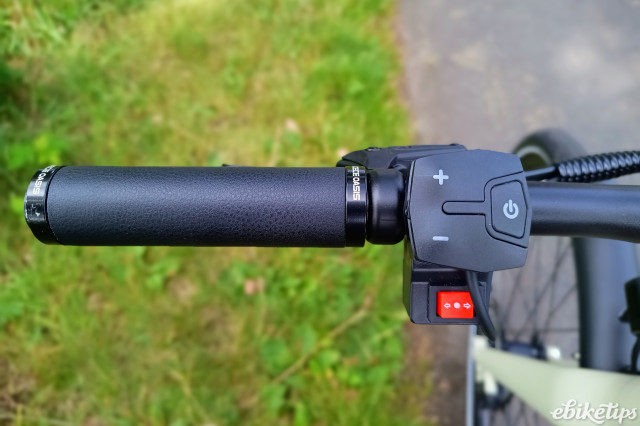
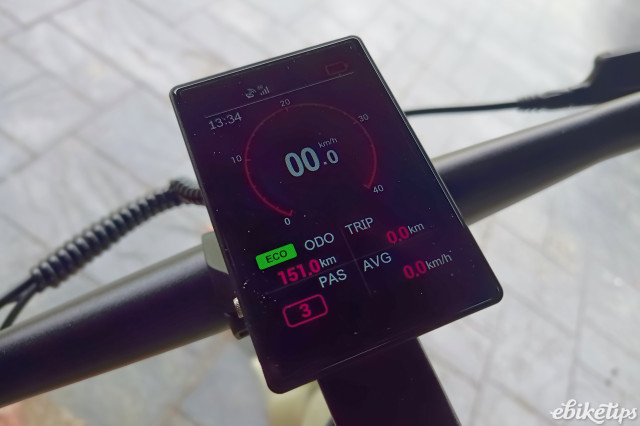
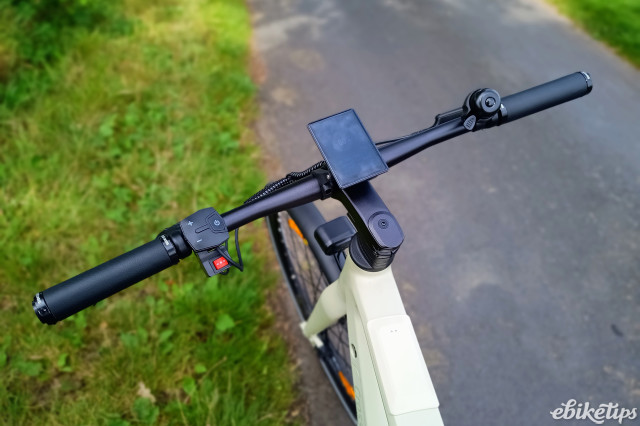
The display presents you with all the usual basic ride data and not too much more, which is surely correct for a low hassle just-get-on-and-ride sort of e-bike like this. There are three levels of assistance and the screen helpfully changes colour to let you know which one you’re in.
One pretty major gripe is the battery status element however, which is outright poor. There’s no range prediction or percentage reading here; just one of those battery icons that gradually shrinks and which forces you to judge by sight whether the battery’s half gone or two-thirds gone or whatever. Your judgement of this is largely irrelevant though because the damn thing goes down (and occasionally up) in big, unexpected jumps. You can drop from seemingly a third full to flashing empty in the blink of an eye. This doesn’t affect the actual range you get from the bike, of course, only your confidence in it.
I got about 50km out of the 360Wh battery the first time I charged it, but almost 10km of that involved riding around within a few hundred metres of my house waiting for it to finally run out. Flashing empty occurs quite early, it seems, but I wouldn’t be keen to rely on that because the Air 30 is a bit laborious to ride unassisted.
Software disappointments extend to the ADO app, which failed to recognise me as a registered user after I signed up for an account – although I’ll admit the one-star average review score on the Google app dissuaded me from investing too much time trying to resolve this.
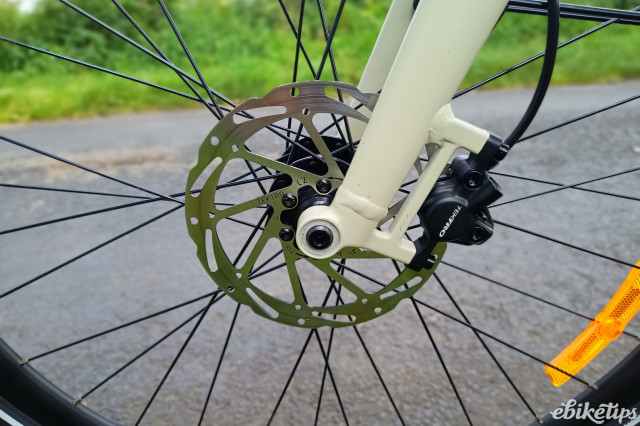
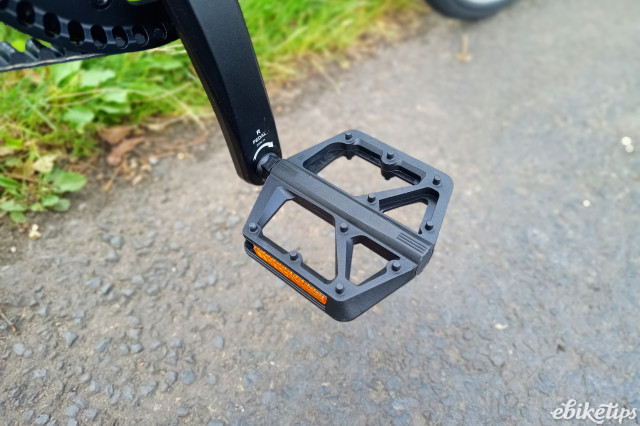
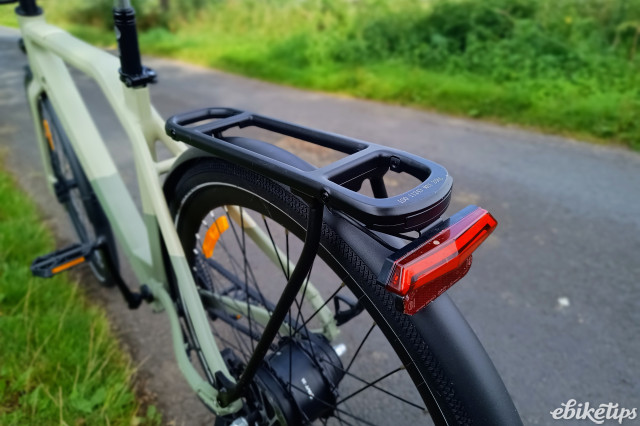
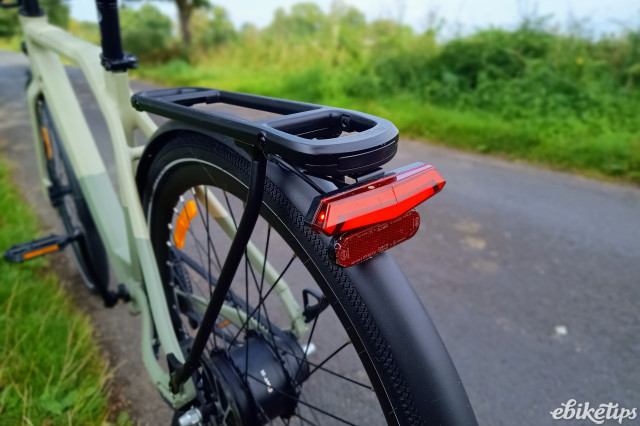
These are slightly tangential things though and the bike itself largely delivers. The battery is integrated and removable; the rack is robust; the mudguards are solid; the brakes work just fine; and the belt drive is of course a big tick if you’ve minimal appetite for cleaning and lubricating a chain.
> The pros and cons of belt drive e-bikes
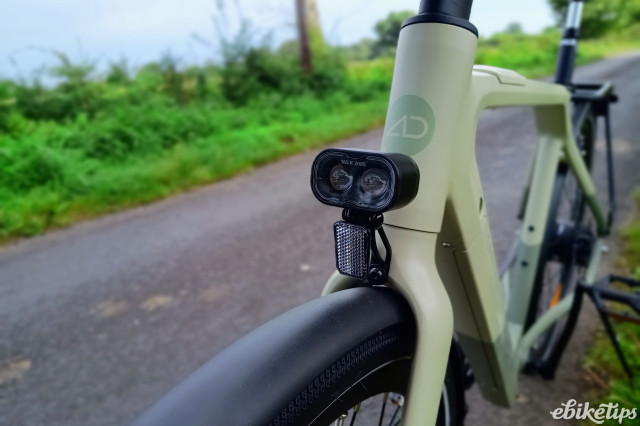
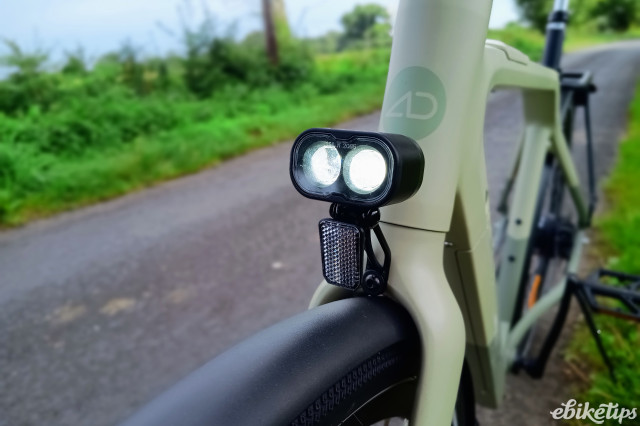
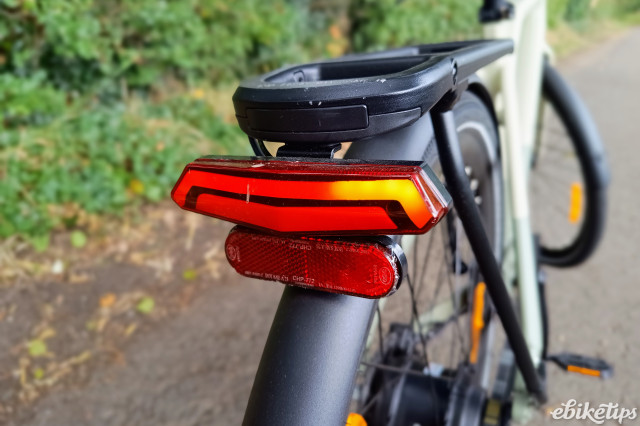
The lighting is enough that you’ll be seen by other road users and for some reason you also get rear indicators.
I wouldn’t especially trust road users behind me to spot them and interpret them correctly myself, but ADO clearly think some of their target market want such a feature.
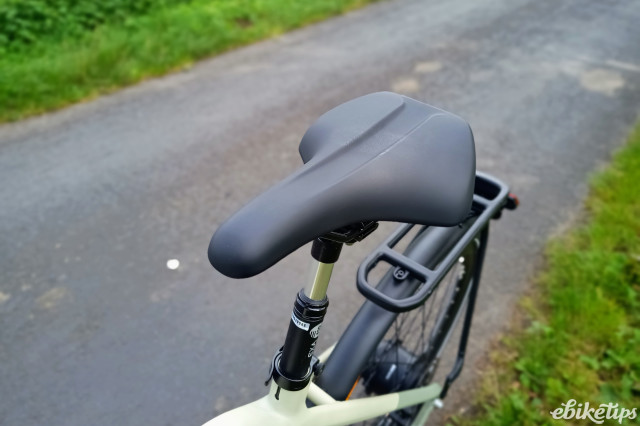
Elsewhere, the touch points seem decent quality. I got on perfectly well with the saddle and while I found the suspension seat post on the stiffer side even after softening it, I much prefer that to the opposite extreme.
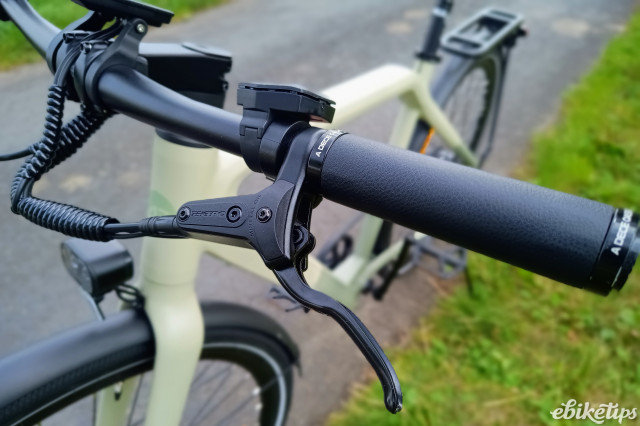
The grips are also nicely finished and offer the right amount of give, although personally I’d have liked a bit more of a sweep on the wide, flat handlebar which didn’t really to suit my natural hand position.
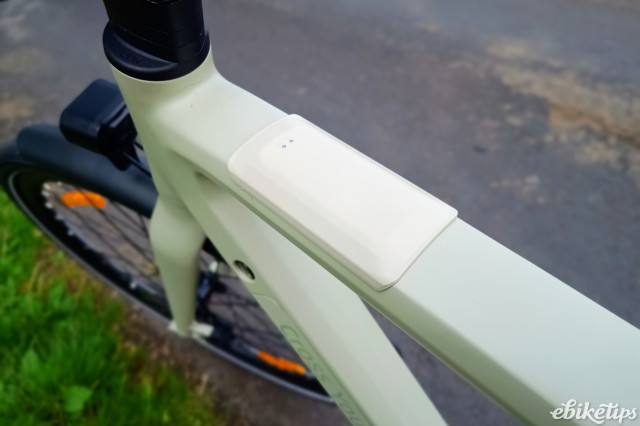
If you’re looking at the photos and wondering what the funny little raised oblong on the top of the crossbar is, it’s a GPS anti-theft module. Unfortunately, I didn’t test this due to the app issues.
Value
The dual-speed Estarli e28.X costs £1,895, but that’s without a rack or suspension seat post. Add those to your order and the price goes up to £2,185. The ADO Air 30 Ultra’s £1,799 therefore seems to compare very favourably – but then maybe those elements aren’t that important to you. Personally, I also much preferred the gearing on the Estarli and the brand does also bring the advantage of UK outlets and support.
Dutch brand Tenways produces several minimalist urban hybrids, albeit its belt drive models are all genuine single-speeds, which may or may not be a concern. The CGO009 is currently available for £1,999, while the CGO600 Pro looks like it would be £1,658 were you to add a rear rack. You might even consider the more basic CGO600 which is either £1,199 or just £999 depending on whether you go for the updated or ‘classic’ version. You won’t get the same mileage from the 250Wh battery though and nor will you be able to remove it for charging.
With the key disclaimer that the automatic gearing isn’t suited to hills, given the large gearing and quirky downshifts, the ADO Air 30 Ultra otherwise shapes up as an affordable, low maintenance urban e-bike for casual riding.
All the deals displayed on our review pages are pulled from a constantly updating database feed of the best affiliate deals available. The criteria for deciding on what are the best deals is who is offering the lowest, delivered price. In most cases we will be showing the very best deal available online, but sometimes you may be able to find an item cheaper. If you can please feel free to post a link in the comments box below. To find out more about affiliate links on road.cc click here.