



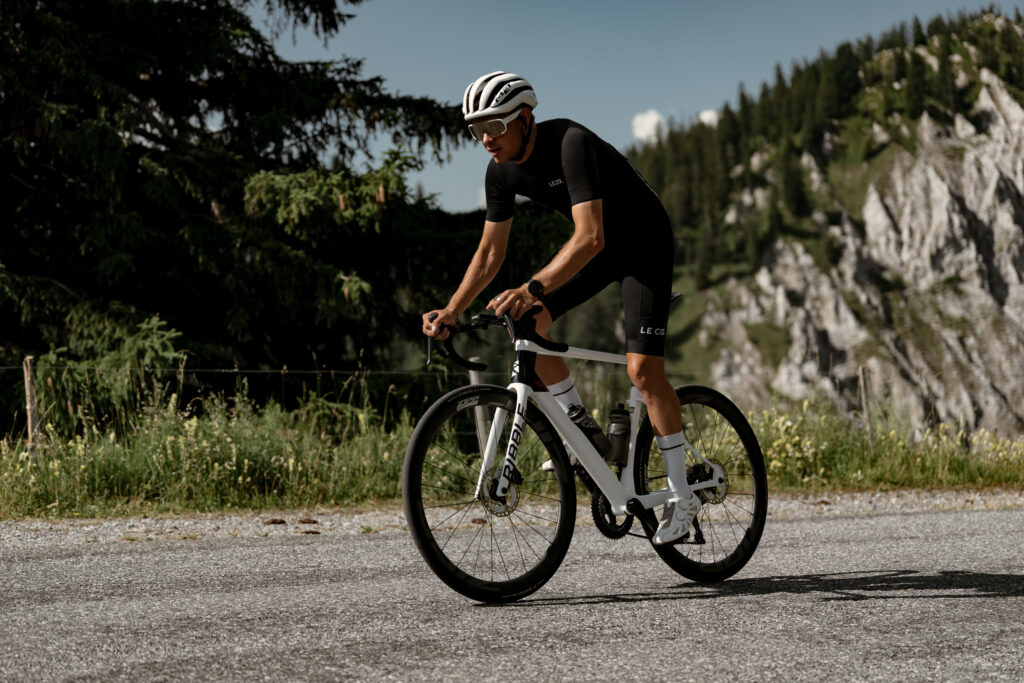
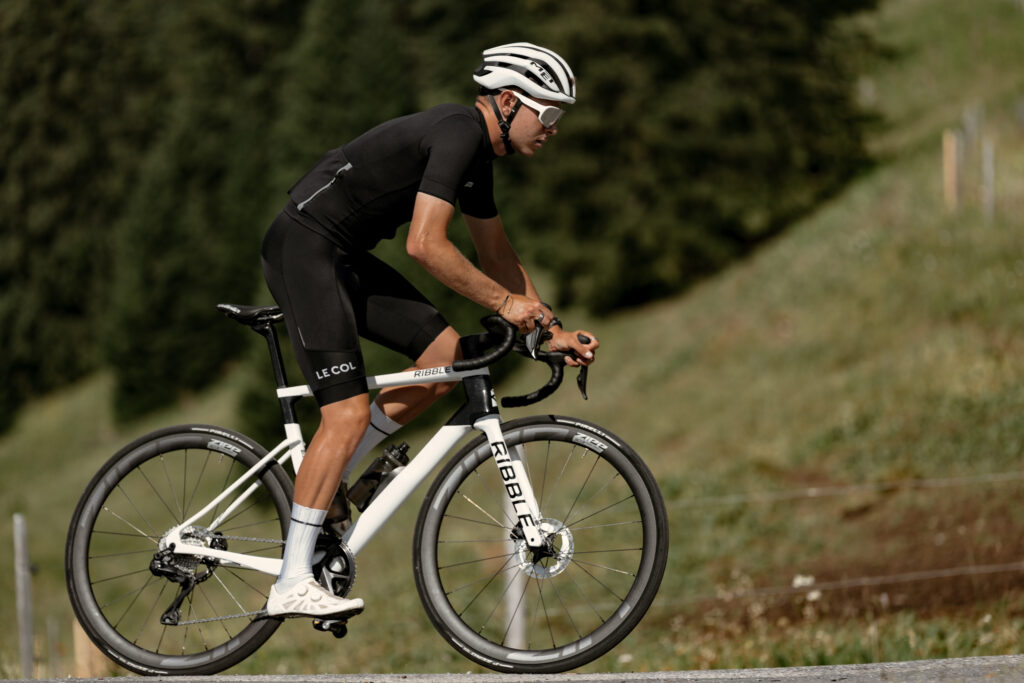
Ribble’s newest race bike – the ULTRA-RACE – launched back in May. But even before the official release, the bike had already proven its racing credentials with some impressive results, including first place in the Rutland CiCLE Classic in March.
We wanted to learn more about how to create a superfast bike, so in this exclusive interview, Ribble’s Head of Product Jamie Burrow dives into the detailed processes that made the ULTRA-RACE.
road.cc: When did the idea for the ULTRA-RACE first take shape?
Jamie Burrow: It was actually a good few years back. The time it takes to do these projects has gone up over the years – it used to be relatively quick but over recent years a few things have changed. The main change for us has been an obsession with getting it right.
Some projects can be quicker than others because not all projects need to go through the same level of testing. For example, a basic city bike could probably go from design to being on our website for sale in 12 months. But with projects that require an element of CFD [computational fluid dynamics] and wind tunnel testing, you’re easily looking at a couple of years. In the case of the ULTRA-RACE, we gave ourselves three years.
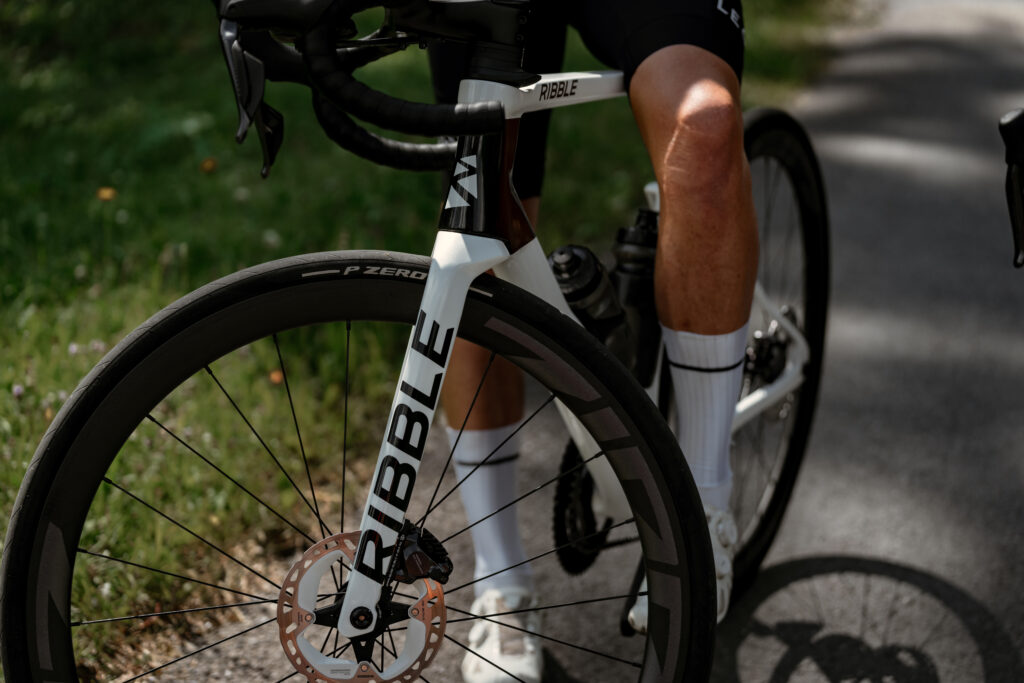
What are the first things you think about as a designer? Shapes or material?
I think it depends on the project. With ULTRA-RACE, we knew we wanted an all-round fast bike and, in that case, you have to start with the aero shapes and then think about materials. We spent three years designing our aero race bike – the ULTRA-AERO – and that went through a lot of different iterations, a lot of playing around with shapes. While that work was obviously for the ULTRA-AERO, much of that information could be used elsewhere.
With the ULTRA-RACE, and more recently our Grit range and CGR range, it’s been a case of maintaining aero shapes but reducing the overall volume of each tube – to reduce weight. The balance is to do this while losing as little as possible in terms of aero gains. It’s almost a case of: we know that works, let’s shrink it and see what the results are. We tinker with literally every tube on the bike.
In one respect, it’s relatively simple because we’re just making little changes. It does take some time because after every change we have to rerun the CFD on the computer to work out what it did. We generally know what’s going to happen, or we can identify a pattern, so it is pretty rare that we are surprised.
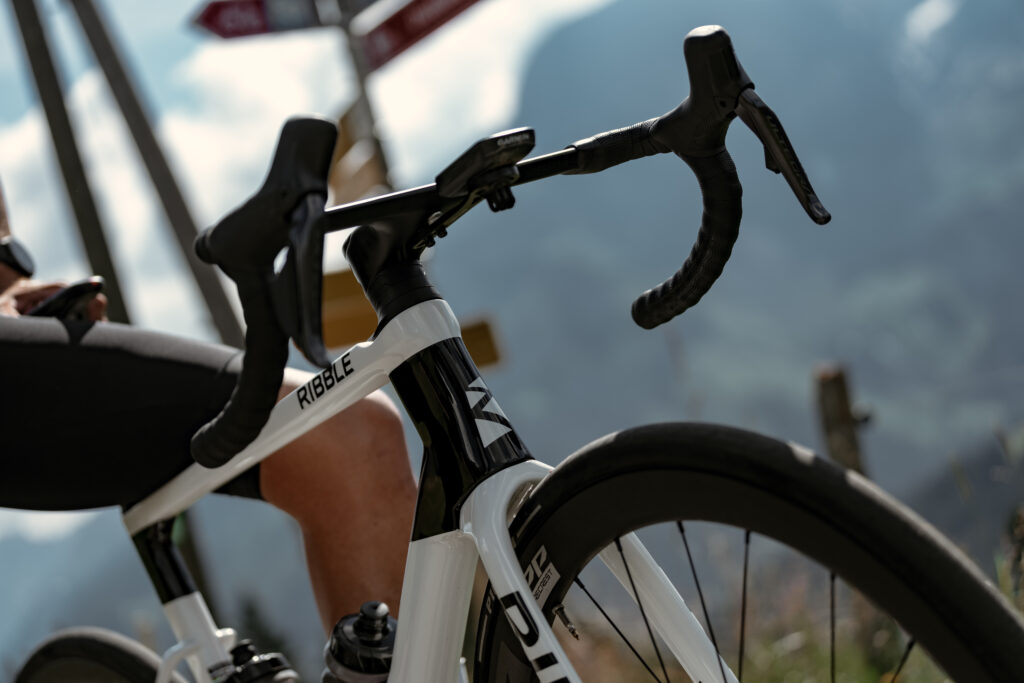
So CFD is the first stage of testing. Tell us a little more about that?
In the world of aerodynamics, CFD has been the biggest step forward in aiding development. It means we can model the profiles and run computer simulations giving us 95% confidence that what we’re making is correct without actually having to physically make anything. It’s a digital representation of what we’re doing. That means you can make tiny tweaks, you can move something by 0.5mm, and just try almost anything.
We work with Silverstone Sports Engineering hub – we’ve been working with them for years, going all the way back to the Endurance platform in 2016. In the early days, my body was 3D scanned and we can then put that 3D scan straight onto a bike – as we did with the ULTRA-RACE – for CFD testing.
Then, once we had that 3D model on the bike, it was easy to start testing things.
We always work on a 40-degree yaw sweep from positive to minus 20 degrees. You can get something that is positive in one position it might go completely in the other direction elsewhere.
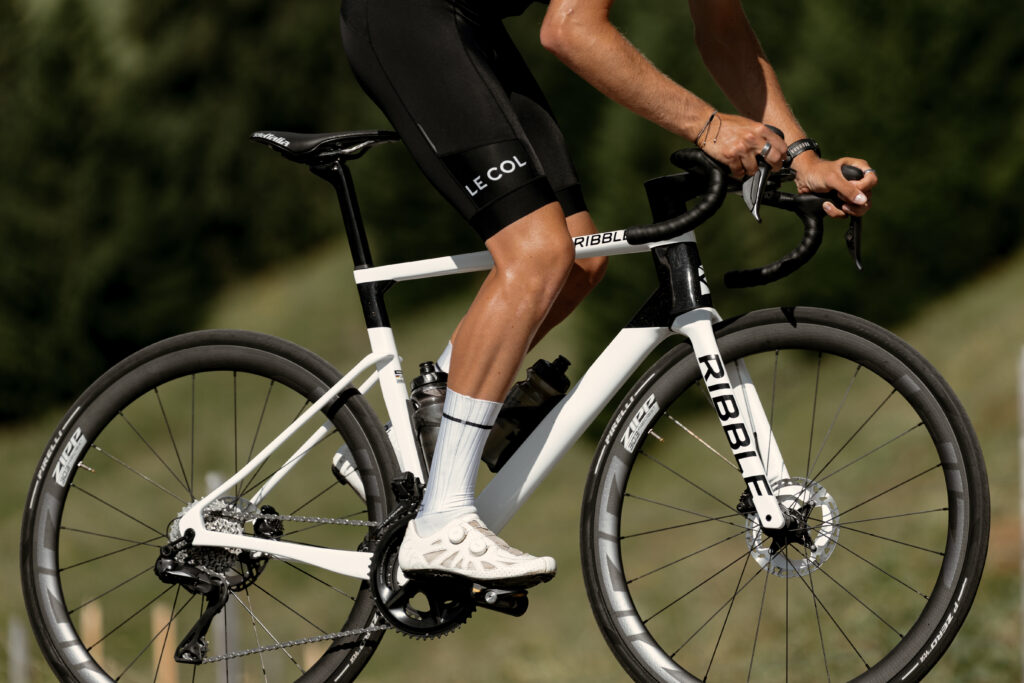
Once you are happy with the CFD results, what happens next?
For me, this is where it gets interesting and where our attention to detail really pays off. We start by 3D printing a full-size frame. We then turn it into a bike and take it into the wind tunnel. We also put a 3D-printed mannequin on the bike – we always test with a rider. Testing a frame or bike alone makes absolutely no sense because 80% of what you are trying to push through the air is yourself, so it’s how the rider affects the bike and what the airflow is doing around you that we want to understand.
A 3D-printed frame of course won’t take the weight of a person but it will take the weight of a mannequin. The only issue with the mannequin is that you have a fixed leg position, but that’s not the end of the world because, on one side the leg will up and one side the leg will be down, and you can still compare both sides with positive and negative yaw by swapping the legs around.
At that stage, with good CFD data and good wind tunnel data, we are almost at the stage of being able to approve the design and we still haven’t even needed to open a single mould at the factory. When you’ve opened a mould, you don’t really want to be making modifications. You can make slight tweaks but anything bigger requires throwing the mould away and starting over again.
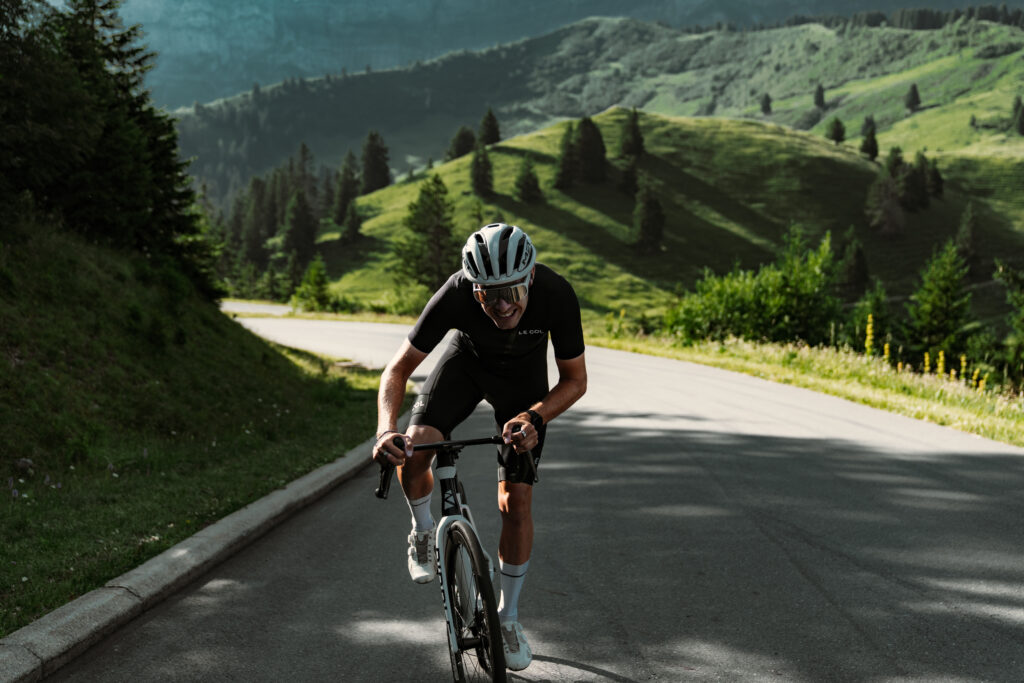
You’ve used a new type of carbon – M65 – in the ULTRA-RACE. Does choice of materials have any effect on design?
No. We work with our material suppliers to understand what is under development and we’re always asking, is there anything new we could try? For years, people have used pretty much the same two or three types of carbon, not just in cycling but in the more general sporting goods industry. But there are a lot more types of carbon out there, used in other sectors.
When it comes to utilising them, it’s mostly a case of trial and error. We know their properties on paper; choosing how we might use them in a bike frame is where it becomes key.
In the case of the M65, it’s got a really high tensile strength, which means you can use less of it for an equally strong or stronger product. Its tensile modulus – which is its measure of stiffness – is great but only when applied in certain sections of the frame. So M65 is used for areas that need stiffness for strength reasons or power output reasons, but we also need the elasticity that comes with different-value carbons – T700, T800 – elsewhere.
What kind of structural testing do bikes go through at the factory?
We start with laboratory machine testing. We’d normally start by working with the minimum requirements and then add material until we get to the point where we are satisfied. That’s phase one. If something is going to crack in the lab, then you’ve got issues, even though lab testing is more vigorous than real-world conditions.
A lot of time is spent in the lab getting that right and passing those tests 10 times out of 10 – not just a one-off. At that point, the road testing will start.
What can you actually do with the feedback from real-world road testing?
It’s really important to note that I still ride bikes, and we have engineers and designers in the business with a lot of experience. We also have our professional athletes, and we’re taking feedback on everything we do. However, it’s rare at this stage that something is wrong; it’s more a case of confirming everything feels good and the way we had envisioned. We’ve never done anything so whacky that it’s been a huge step into the unknown. Geometries aren’t ever radically changing, so you know the feel will be OK. There may be some finer details you can tweak slightly, but it is very unlikely there are going to be any huge surprises.
In terms of the accuracy of feedback, it’s all about using the right people. On this bike, I was the first person on it, then we had another one of our guys, who tests all our bikes.
He has a 20-mile each way commute, the roads are hard going and grippy up north and he has to ride whatever the weather. That’s so good, not just for ride feel testing but – being right up here in Lancashire – he’s riding in the rain a lot, which throws up lots of feedback on things like component choice and third-party parts as well. If he can do a winter on, say, budget wheels without replacing the hubs, then that’s a very positive result. That’s very important for us as a direct-to-customer brand.
When does the bike get signed off and put into production?
The ULTRA-RACE was probably signed off some time last summer. We always start with production of the medium size bike, because it’s easier to fit people to that size frame first. When we’re happy with the mediums, then will open the moulds on the other sizes. Until that point, if you’ve only opened a medium-sized mould, your costs are limited.
Then, at factory level, all the same structural tests need to be done at every size of frame, because you could have a massive difference between the lay-up required in key structural areas – such as a bottom bracket area or headtube area – on a XXS compared with an XL .
Then we’ll get full-size framesets sent over as the next testing phase and we make sure they build OK, ride OK and test OK. Once they are all confirmed, that’s when full production can go ahead.
Is it exciting seeing the production models arrive?
It’s quite weird because we’ve been working on this stuff for literally years. Although it is exciting to see the bike ready for sale, you do get to a point where you don’t see it as new any more.
Also, we’ve refreshed quite a lot of bikes at the same time – we’ve also launched two new gravel models, the ULTRA-GRIT and ALLGRIT, plus two new ALLROAD models and the CGR has been completely redesigned and relaunched. I started the design process on most of them at very similar times and when they suddenly come to fruition for launch one after the other, you don’t have any time to sit back and enjoy them and relax – it’s on to the next thing!
To find out more about the Ribble ULTRA-RACE, visit www.ribblecycles.co.uk














1 thought on “How to design a race-winning road bike — Ribble’s Head of Product Jamie Burrow reveals all about the new ULTRA-RACE”
As a mechanic I see inside a
As a mechanic I see inside a few Ribble bikes and sadly they arnt great .They all suffer faults from build to the actual frame themselves .Literally every one . I had one with custom paint that you could literally move around with your finger it was so soft .Under the bottle cages were waves of paint ,Overspray in bearing seats ,not faced at the bb where it was so thick it crumpled up .Way too many issues that must have been obvious to anyone building it