



Do you ever put your bike upside down? It’s a question that is sure to cause heated debate amongst cycling friends anytime a mechanical occurs and somebody flips their bike over to get a better look. Here in the office, we couldn’t agree if it’s just fine or social death.
So we did a poll on Twitter, and from 926 votes an impressive 67% of you said it’s just fine, you can’t see a problem with flipping the bike. Some of the accompanying comments were quite illuminating too.
Is putting your bicycle upside down to fix a mechanical okay ot a bad thing to do?
— road.cc (@roadcc) November 4, 2019
I did this once to pump up tyres in front of someone and they were horrified at me so much they put the bike back up & did it for me.
— Cycle Mummy (@CycleMummy) November 4, 2019
As long as you remember to remove your Garmin first, the sound of the screen breaking on top of a mechanical sucks!
— Matt Williams (@mattdwilliams) November 5, 2019
More cycle fraternity bullshit normally spouted by unfit 1ride a week lycra clad £4k carbon bike SKY team kit wearing Muppets (the same types I leave for dust on my £700 COMMUTER MTB much to their disgust) the same type that didn’t cycle before 2012 London when became cool.
— Guy Fartin (@Hunting4Dragons) November 5, 2019
Bad cycling etiquette or just common sense?
It’s clear that turning a bike upside down is an act of bicycle etiquette that divides opinion. The phrase it’s “not very pro” is often bandied about, so suggest it’s the sort of thing a pro would never do.
But the pros do it sometimes, as this photo shared by Richie Porte on Instagram shows Michael Matthews turning his Cervelo race bike upside down.
However, it’s clear from the accompanying comments that it is frowned upon by fellow pros and ex-pros. Robbie McEwan said: “Can’t be a pro….a pro NEVER turns his bike upside down.”
Rule #49 pic.twitter.com/Bxa9U9rosi
— Mike (@Eng32Mike) November 4, 2019
It’s inevitably not long before the “rules” get quoted here. Thumb through the Velominati rules and number 49 is “keep the rubber side down. “It astounds me whenever I see a bicycle helplessly turned upon its handlebars and saddle while the pilot optimistically leverages every muscle in their face to inspect the vehicle for evidence of its mysterious ailment,” it says.
Why would you not turn your bike upside down?
The only time you want to turn the bike upside down is to see to a mechanical issue. The most common reason for turning a bike over is to fix a flat tyre. Let’s face it, getting a wheel out of the bike can tricky, especially as you have to hold the bicycle frame in the air to avoid scratching the dropouts on the ground. Flipping the bike makes it much easier, you can get to the wheels and the bike is upright, not lying in a grass ditch.
Fettling gears and brakes can also be a bit easier too, especially if you’re indexing the gears and need to spin the drivetrain.
Reasons to avoid an upside-down bike
There are some valid reasons why you might not want to turn your bike over, other than the look you might incur from other cyclists.
The biggest problem with spinning your bike upside down when you have a mechanical is that it risks damaging/scuffing the saddle and hoods of your pride and joy. You’re also going to get dirt, mud or water on your main contact points when you get back on the bike.
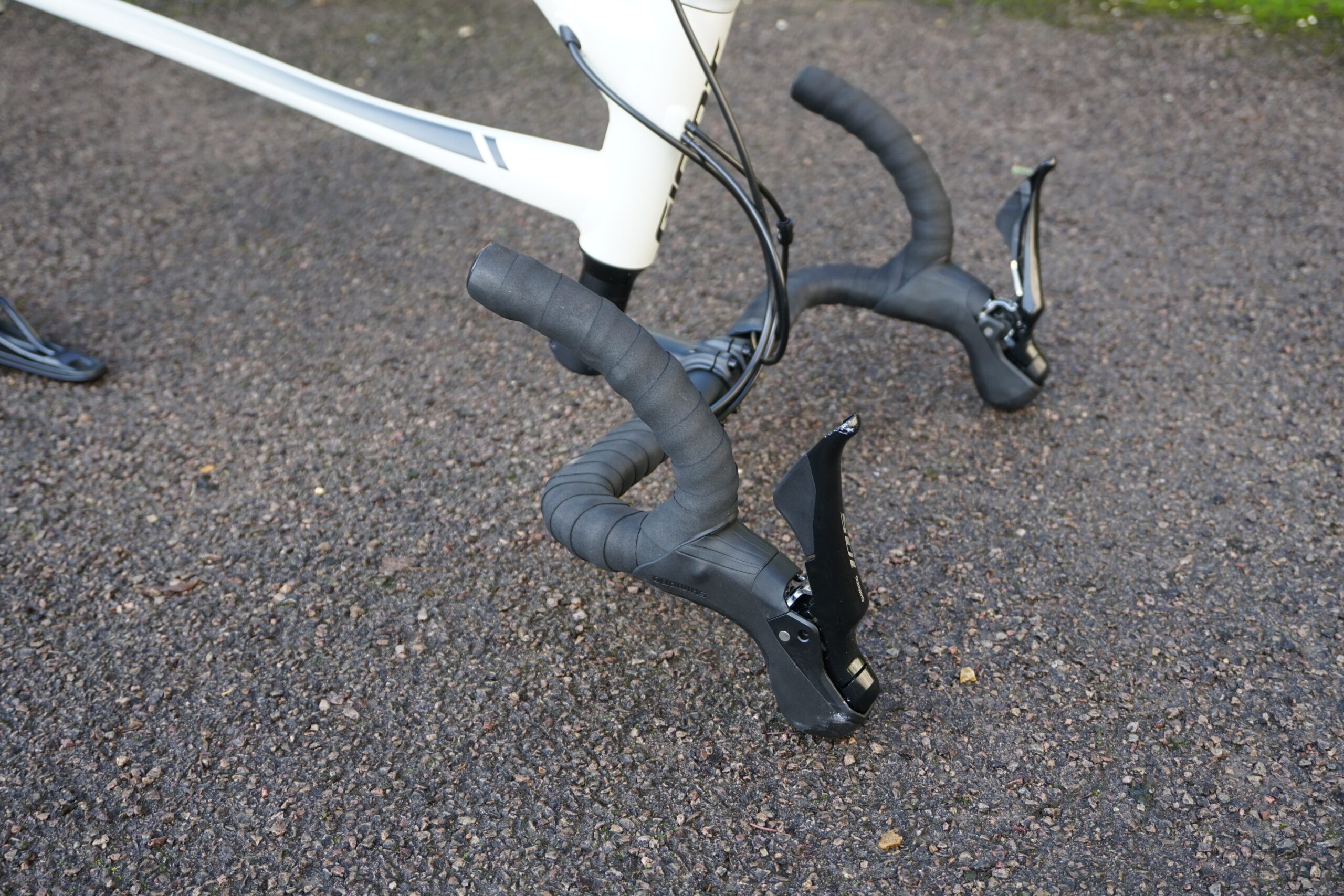
You’ll also have to pick up your water bottles as they’ll have dropped out of their cages and rolled down the hill. It the cages haven’t relinquished their grip on the bottles, they might not be leaking sticking energy drink all of your frame.
The other reason you don’t want to turn your bike upside down when you have a mechanical is that it rarely makes it easier to fix the problem that occurred in the first place. It can actually make it more difficult to diagnose or repair the problem.
More problems arise with the risk of getting covered in dirt from the tyres or grease from the chain when you turn the bike over.
What about hydraulic disc brakes? The disc brakes are a totally sealed unit with oil in the lever, caliper and hose, so in theory, the orientation of your bike shouldn’t make any difference to the brakes.
That said, we have seen people hang their bike up, or turn it upside down, only to then find the brake lever is all mushy. What is the likely cause is a small air bubble that was in the system has risen to the highest point, the caliper, and this has altered the feel at the brake lever.
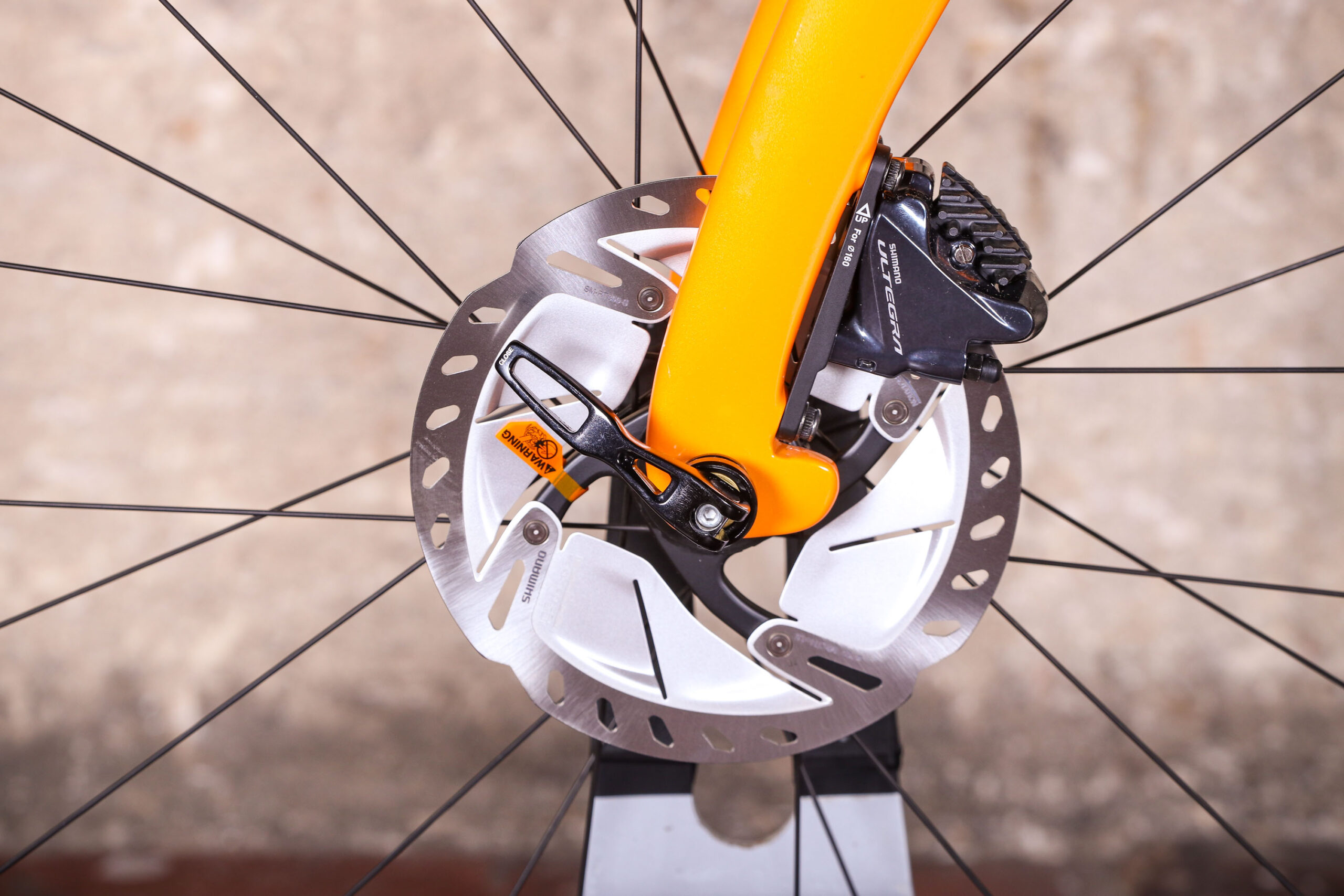
Shimano even recommends against turning the bicycle upside down. In a manual for its hydraulic disc brakes it says:
“The disc brake is not designed to work when the bicycle is upside down. If the bicycle is turned upside down or on its side, the brake may not work correctly, and a serious accident could occur. Before riding the bicycle, be sure to operate the brake lever a few times to check that the brakes operate normally. If the brakes do not operate normally, stop using the brakes and consult a dealer or an agency.”
In reality, you’ll probably be okay with a temporary upside down bike, but you don’t want to be storing it upside down.
What are the alternatives?
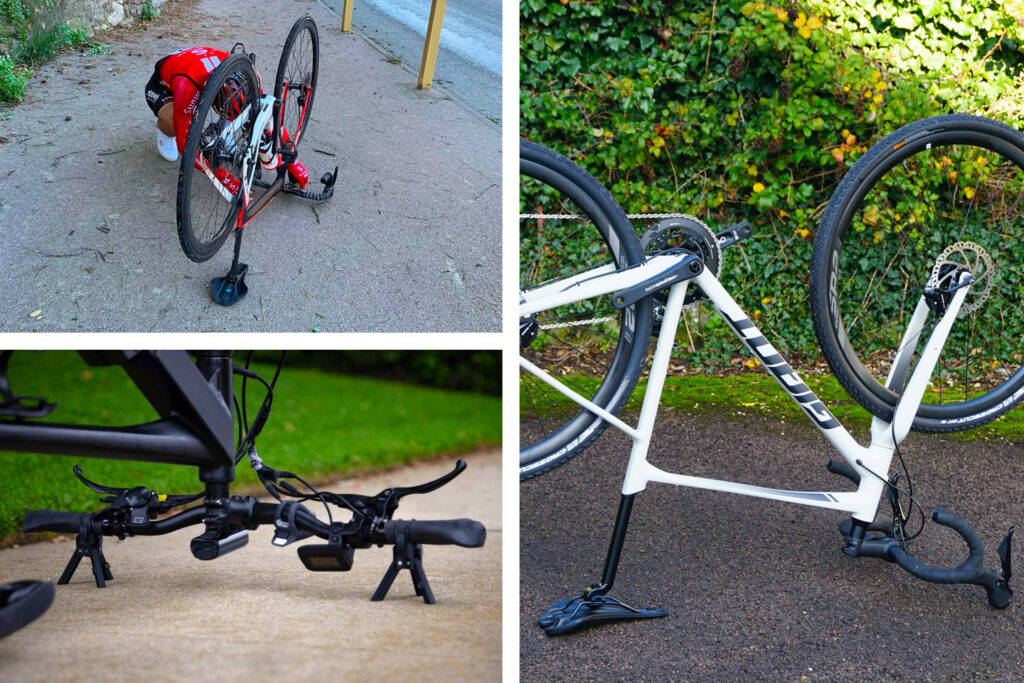
You could hang the saddle from a tree, hook the handlebars over a fence or gate, or get a friend to hold your bike for you. You can even try the method of hooking the saddle over your head which is better demonstrated by the picture below.
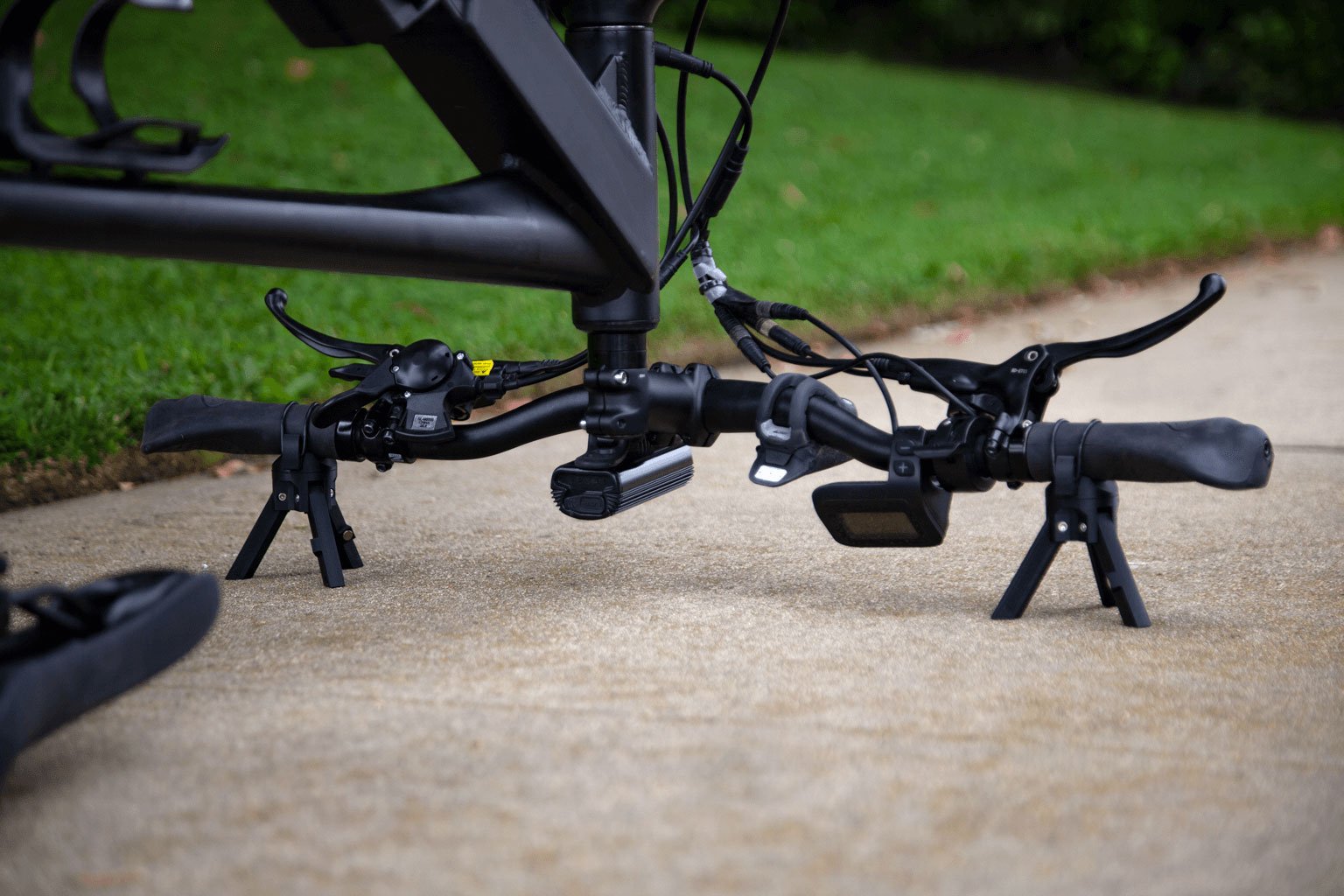
We’ve even had our attention drawn to a product designed specifically for this usage. The Handlebar Jack is a portable bike stand that clips to the handlebars and protects the grips and controls from the ground and makes it more stable. It’s something else to spend money on and carry with you though, so we’re not sure it’s really a solution.
Summary
It seems there’s really nothing wrong with putting your bike upside down then providing you’re careful, making it easier to sort a mechanical or flat tyre. It’s an interesting debate that clearly gets some people worked up though, and there are pros and cons for doing it. We’d love to know what you think so getting down into the comments section and let us know.







84 thoughts on “Is putting your bike upside down wrong? 67% of you say not, so why the controversy?”
Watch out if running deep
Watch out if running deep section wheels too. Did that when repairing a puncture and bike blew over too easily causing a bit of paint damage.
People can do whatever they
People can do whatever they want with their bicycle. If they wish to turn it upside down whilst fixing a puncture, so what? You don’t like it because it’s not ‘pro’ or ‘written in the ‘rules’; get over yourself.
Its not difficult to put a bike upside down without scratching hoods or saddle for a temporary repair, and if you slip your bottles out of the cages first if they leak or will fall out (cage not tight enough then, which is a different issue) then once again, a non-issue. Even this article is clutching at ‘potential’ problems like your bottles will roll away… really, how often as ANYONE seen this happen when someone puts their bike upside down?
And the speculative disc brakes not working after being put upside down can only mean they weren’t bled properly in the first place, which I suspect has another warning in the dealer manual…
If disc brakes were bled correctly in the first place it wouldn’t lead to so many forum posts about brake rub after hard braking downhill, etc. So a properly bled hydraulic brake will suffer no ill effects from temporarily being put upside down. Again, a non issue.
In my opinion a bigger issue is watching those determined not to put their bike upside down standing it on the rear derailleur with the rear wheel out, or hanging it over a metal field gate with the forks or stays rubbing against the metal gate – and this article claims you might scratch your hoods…
Lay the frame chainset side up in long grass, CAREFULLY or turn the bike upside down and place it carefully on a soft surface, or even more carefully on the tarmac. Or alternatively get a trusted mate to just hold it. It’s really a non-issue.
And remember, the OWNER of the bike can do whatever he/ she wants to do with THEIR bike and quite honestly if you are that judgemental you’ll end up riding by yourself ALL THE TIME.
PP
Multi-comment click bait
Multi-comment click bait battle!!!!
I’ll bite because I’m bored.
Never turn my bike upside down, why would I want to cover all my most intimate contact points (bars, saddle) in grit and muck, just out of laziness in not learning how to do everything with bike the right way up?
Worst case if windy or rear wheel is out I will lay bike on side (drivetrain up) and trying not to lay bar tape in puddle/mud/dog eggs.
Also another strike against hydraulics in my book, the fear of accidentally pulling lever whilst bike upside down/wheel out, and your lovely brakes never quite feeling the same again unless you’re a pro mechanic with countless hours brake-bleeding practice under your belt.
IanEdward wrote:
I very rarely turn my bike upside down – maybe if I have to remove the rear wheel and I’m nowhere near to a bike stand.
Pulling the lever on hydraulic brakes with the wheel out probably won’t do too much harm. It might move your pads too close together, but a tyre lever and an application of force/swearing will usually get them separated enough. I don’t see why you’d need to bleed the brake afterwards – that’s usually for much more drastic work (e.g. replacing a caliper).
IanEdward wrote:
I think your book needs a dose of reality. How often does one ‘accidentally’ pull a lever whilst leaving their bike upside down and fixing a puncture?
And why, if one did, would one’s ‘lovely brakes never quite feel the same again’?
And why would you need to be a ‘pro mechanic with countless hours of brake-bleeding practice under your belt’ to correct such an ‘accident’?
Im genuinely interested to hear your explanations because I think you are making up reasons to confirm your bias against hydraulic disc brakes, which is really rather silly.
PP
There’s no choice really is
There’s no choice really is there? If you’re out on a ride and get a puncture, how do you protect the dropouts and rear mech without flipping the bike over?
kil0ran wrote:
Last time the fairy visited me, a rear flat on a filthy wet evening on Bethnal Green Road, I turned the saddle 90 degrees and used it to hang the bike on some railings. Worked nicely.
I don’t care what the pros do
I don’t care what the pros do, they’re not paying for their own equipment.
I do whatever makes it
I do whatever makes it easiest to get at the bit that needs fixing. Bar tape is cheap and easy enough to replace if you feel you have to scrape it about on the ground and fill it with grit and muck, I invariably have a rain cover (AKA Tesco plastic bag) to protect the seat with me. Each to their own.
I used to respect Bling
I used to respect Bling Matthews and hoped he’d wear the rainbow bands one day, – but he’s dead to me now…
I’ve got security quick
I’ve got security quick release spindles on my main commuter (90’s vintage) that don’t allow the whels to come off unless the bike is upside down. They and the rest of the bike have worked . fine all that time so certainly no problem for old school bikes.
I was in the LBS the last
I was in the LBS the last week and the mechanic mentioned to one of the lads not to use the brake whilst wheeling the bike around upright. Upon further questioning by me, as I was rather alarmed, doing every day to get my bike in and out of the flat, he said mine were alright, but other manufactures brakes can suffer.
I tend not to turn the bike upside down, too much stuff on the handlebars and the nose of the saddle is a bit delicate. I tend to lay it down on the non-drive side if I need to remove the rear wheel.
I had a bad experience wheen a lad, with the bike upside down I really messed up the chain and hanger as I couldn’t visualise the way everything ran when it was upside down.
ktache wrote:
Mechanic at LBS sounds full of shite to me, just trying to tell one of the lads off for some made up reason. I’d have questioned him further as to which manufacturers brakes ‘can suffer’ and in what way by being used with the bike upright. How on earth do these brakes stop the bike when you are riding it upright then? Hefty dose of BS if you ask me.
PP
At home I use a stand, just a
At home I use a stand, just a cheap one I picked up in Aldi a few years ago. I’d be perfectly happy throwing down a rug and putting my bike upside down on that, but the stand is more secure against being knocked over and working off the floor is so much better for my poor old man spine. Plus it looks like I might actually know what I’m doing.
In the field, whatever works and whilst I’ll be careful not to scratch anything I have seen people cause more serious damage to important components by titting about with trying to keep their bike off the ground whilst removing bits.
When I get a puncture I
When I get a puncture I always turn the bike upside down. Wheel out sorted. Ok rubbers may get marked but it’s better than a scratch on the frame in my book
I’ll flip them to puncture
I’ll flip them to puncture repair but can’t remember last puncture and riding fatties mostly indicates punctures probable during nice days hence probably lay if windy, flip if still.
When I ride flat bar to work I always flip. Bullhorns prop bars up clearing clipin torch, computer, big fat comfortable seat another secure footing, just easier than normal which is lay against fence. Can’t pull flip though because of guard. Ndo flip on front clamps, over balance point, takes about a second after pannier removal and is quicker than finding rest of seat and a drop bar handle on a fence lay.
Air bubbles in the brake
Air bubbles in the brake fluid reservoir entering the hose is the only technical reason for keeping the rubber side down (same issue with lad wheeling bike around the shop). And that (perhaps obviously is only an issue with hydraulic brakes). The rest is ‘looking after your stuff’, and/or vanity, which is fine – each to their own.
Otherwise, a bit of a ‘non-article’ IMO. Must be a slow week…
flobble wrote:
So, as I mentioned earlier, it’s ONLY an issue for an incorrectly bled brake that has air bubbles in the reservoir. Remember, manufacturers put loads of potential court room statements into manuals etc to avoid prosecution – doesn’t mean it won’t work, just means that if someone does it, bubbles from an incorrectly bled brake get into the hose/ caliper and the lever reaches the bars with no braking and the operator has an accident they (or their NOK) can’t claim, or any compo is reduced because they ignored the manufacturers advice.
PP
I must apologise, when I said
I must apologise, when I said upright I meant standing the bike on the rear wheel and manouvering it around like that.
Oh I see, but still BS!!
PP
Oh I see, but still BS!!
PP
How do you clean underneath
How do you clean underneath unless the bike is upside down?
Kapelmuur wrote:
Lift it higher up.
quote]Im genuinely interested
OK it’s a fair cop, I exaggerate, but only after 20 years working on my own and other people’s hydraulic disc brakes, I tend to run all the bad experiences together.
So yes, the likelihood of pulling a lever whilst the bike is upside down AND there being air in the reservoir AND being unable to carry out a perfect bleed to correct it is all pretty unlikely, I’m just remembering the times when at least 1 or 2 of the three has happened (bikes hanging by rear wheels in trains, bikes being stored hanging from rear wheels, people pulling a lever when bike is upside down to check piston movement, etc. etc etc.)
I’m at a stage where I prefer my bikes as simple and ‘precaution free’ as possible so am immediately averse to anything that adds any complication to the mix. My garage time (when I’m lucky enough to get it) is turbo trainer time!
The important question is: Is
The important question is: Is it a boat?
reippuert wrote:
When the keel was above water and the spinnaker held below, we sat on the side during Gale and queried our skipper, ” what you going to do now smart arse? ” a jammed guy sheet sliced clean with a sharp edge.
Holy crap though, we were on true reach with full sail in Gale until downhaul sheered on a RL24 ‘Henry D’
Hence if query regards boats, best knot when upright, upside down isn’t recommended although I don’t know.
Stiff ship about scuffs, laying a bike would scratch paint.
I always bring a Park PRS-33
I always bring a Park PRS-33.2 Power Lift Shop Stand with me.
upside down every time.
upside down every time.
hoods can get scratched but I don’t particularly care…I’d more likely scratch the paint if I faffed about trying not to turn it upside down whilst fixing a puncture etc.
each to their own…that ‘Guy Fartin’ comes across as a massive bell-end though. Don’t know why road.cc decided to include troll tweets like that.
On the hydraulic brake issue,
On the hydraulic brake issue, how is it when taking the bike on trains with these terrible hook/hanger systems?
As the bike will hang for a considerable time with much shaking, is there a risk of hydraulic fluid getting out or bubbles accumulating that’s not fixed with a few pulls of the brake lever afterwards?
Quote:
No, the only air that might get into the system is if someone pulls a lever whilst the calliper is higher than the lever AND (see my semi-retraction above…) there happens to already be air in the reservoir. This has happened to me when e.g. inquisitive train guards pull the lever on your downhill bike on the way to a race, d’oh!
If this happens the best bet is to leave bike overnight with brake levers held down by rubber bands, hopefully bubble will sneak back into place.
The fact that this is a relatively well known fix suggests that there are a LOT of improperly bled brakes out there, my guess is that it’s harder to put reservoir cap/diaphragm back on without also introducing some air into reservoir. I’ve not bled a brake in a few years now so don’t know if newer levers/diaphragms are easier.
IanEdward wrote:
No, the only air that might get into the system is if someone pulls a lever whilst the calliper is higher than the lever AND (see my semi-retraction above…) there happens to already be air in the reservoir.
Thanks, that’s good to know.
Never; I take the following
Never; I take the following approach: the world is full of street/ lane furniture, such as gates, and chain fences, etc.
When I get a puncture, (the only reason why I might need to remove a wheel) I look for a convenient post, gate, etc. On which I can hang the rest of the bike.
This keeps the rear mech. and chain from coming into contact with yet more filth, in the case of a rear wheel puncture, whilst I change the inner tube.
Hell yes I do!
Hell yes I do!
That looks like a hydraulic
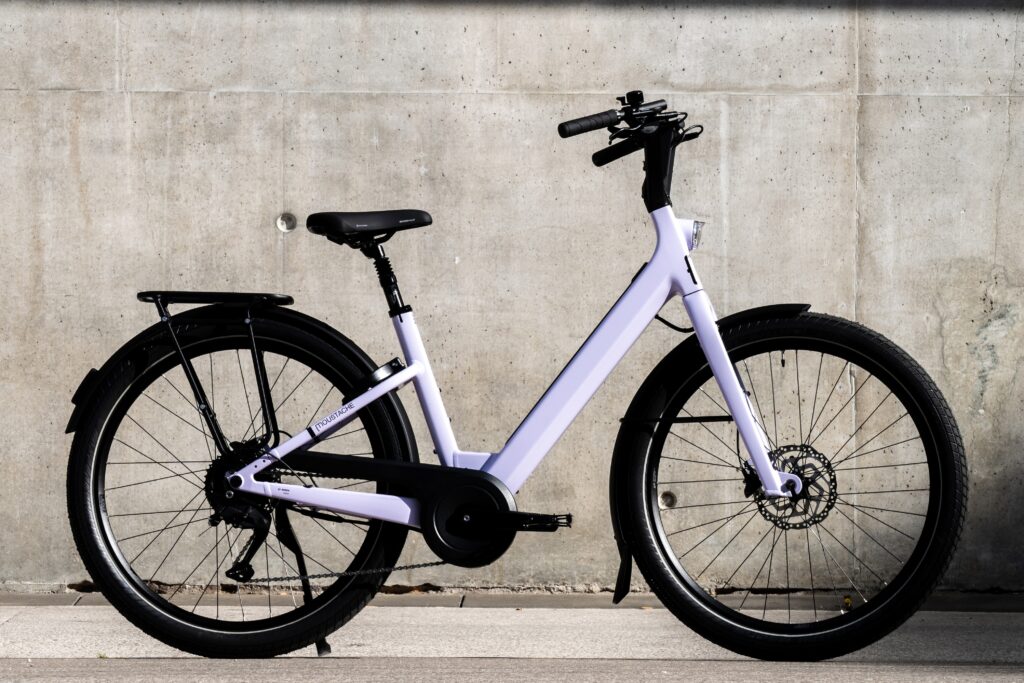
That looks like a hydraulic disc braked bike, in the picture of the article. I really wouldn’t turn one of those upside down.
This is scraping the
This is scraping the editorial barrel – even for Road cc standards… Have they posted this article for a bet to see how many numptees respond? Can’t wait for the ‘updated’ article in 6 months…
What a load of precious
What a load of precious ninnies spouting bollocks about never turning a bike upside-down.
The one point that has any validity is the air bubble in the hydraulics, granted, and the crunch of breaking Garmin is another, but really, what careless clot wouldn’t think of that?
“It looks unprofessional” – tripe, I say, utter utter tripe.
So what if it scratches the seat or bars? What matter is that?
Cauld Lubter wrote:
Heretic!
Cauld Lubter wrote:
Some of us like to look after our stuff. Scratch your bars up, bend the nose of your saddle; I don’t care, and I have no idea why anyone cares that I don’t want to damage my bike unnecessarily.
srchar wrote:
In that case turn bike upside wdown and place gently on floor. Voila, no damage.
Far more likely to damage bike whilst fettling with it when it can easily fall over.
Out of curioisity , how on earth do you hold bike off floor whilst fixing a puncture?
imajez wrote:
I usually rest it on a bidon. Couldn’t give a toss about those. Or hang it by the underside of the saddle on a nearby bit of street furniture or tree.
For about 35 years that’s how
For about 35 years that’s how I serviced my bikes was to flip it upside down when needed. About 7 years ago I decided to use a work stand instead, while the work stand is more convenient plus more stable, flipping it upside down works too. The problem with flipping it upside down is I had to put books under the handlebar so it wouldn’t easily tip over (I had the older bikes with the cables coming out of the top of the levers). I never scuffed a seat doing this so not sure what all the fuss about that is. I rarely flipped the bike on the road though to fix a bike the ground was just too unlevel to do that without the bike just falling over, though a sidewalk works great. Fixing a rear flat on the road isn’t that big of a deal, of course most older bikes had chain keeper knobs that were brazed onto the chainstay which made it a lot easier.
Mountain bikes are easy to flip upside down and have them stay in place on almost any surface.
This is how I remove the rear wheel when I can’t flip it upside down: https://www.youtube.com/watch?v=2pnbJ64zvME The only thing they don’t show you on this video is what to do with the bike once you get the wheel off, this should be obvious to all of you, but you lay the bike down on it’s side with the derailleur facing up.
froze wrote:
Books! Books are items of social and cultural importance, to be revered, nurtured and cared for, not mistreated. How do you stop them getting dirty, scratched, wet or greasy if you do that? What is wrong with using a couple of bits of 2×2 instead? Philistine!
(I agree with everything else you said, though 😉 )
arowland wrote:
Books! Books are items of social and cultural importance, to be revered, nurtured and cared for, not mistreated. How do you stop them getting dirty, scratched, wet or greasy if you do that? What is wrong with using a couple of bits of 2×2 instead? Philistine!
(I agree with everything else you said, though 😉 )
— frozeYou can use Dan Brown books though. They don’t count. And all those Lance Armstrong ones they’ve got down our local charity shop.
Strap a bike stand on your
Strap a bike stand on your back when you go out?
Rick_Rude wrote:
I am sure the last time this debate was had it was universally agreed that having your support crew drive behind you with a mechanic and a portable workshop was the best solution.
A couple of months back I was
A couple of months back I was finishing up my run in the park when I spied a baffled looking millennial peering at his bike. As I approached I could see the chain had jumped off the chainset, maybe as he’d gone over a bump or perhaps as he’d shifted down a bit too sharply. He was looking at his phone and I realised he was Googling a video of how to put a chain back on.
“Chain come off?” I asked.
He nodded and said, “Do you know how to fix it?”
“Yeah,” I answered, taking the bike from him, flipping it upside down, putting the chain back on the sprocket and cranking the pedal until the chain engaged the whole way round. “There you go. You’l know how to do it next time,” I said, flipping the bike back on its wheels again and passing it back to him.
Flipping an hydraulic brakes
Flipping an hydraulic brakes bike upside down is going to do naff all to the system. If you have an air bubble in the system, it doesn’t matter where is it, its going to make the brakes feel spongy.
A proper bled system doesn’t care which way up or down
Even properly-bled systems
Even properly-bled systems may have some air in the reservoir in the lever. If the bike is upside-down and the brake is operated, the air bubble may get past the piston and into the active part of the system, causing sponginess. If the brake lever isn’t operated, the air will remain in the reservoir. If you do turn a bike with hydraulic brakes upside-down, DON’T operate the brakes.
I was always told you should
I was always told you should never put your bike upside down whilst you are riding it.
Sriracha wrote:
Or vice versa?
hawkinspeter wrote:
Or vice versa?
— Sriracha
Sort of (is that Boatsie down under?). No, the reason is that it makes you break then bleed.
Sriracha wrote:
Don’t think MacAskill got the memo on that one….
couple of these on the bars..
couple of these on the bars…
As ‘Froze’ sort of mentions,
As ‘Froze’ sort of mentions, not turning bikes upside down started in the days when all brake cables came from the top of the levers, so resting the weight of your bike on the junction between solid lever housing and flexible steel cable would be likely to crush or kink the cable.
I’ve never turned bikes upside down because I got into the habit for the above reason and never got out of it. It just feels so wrong, but really that’s not rational is it? Unless you have a vintage bike with up-sprouting cables obviously.
bikeylikey wrote:
Exactly this. Back in the day, you would see plenty of 10-speeds with the cables exiting the top of the hoods at a nasty bent angle, because the riders had turned them upside down and bent the ends of the cable outers. Looked bad, and couldn’t be fixed in my experience.
bikeylikey wrote:
That makes perfect sense. I’d totally forgotten about the old brake cables, having not seen such a thing since about 1990! That’s where it comes from, it doesn’t matter any more. Can we move on to really important stuff, like why some cyclists don’t respond to a “good morning”? (How rude!)
bikeylikey wrote:
Well, I do. I’ve always had a big block of wood to pop under the handelbars when it’s upside down in the driveway getting its monthly chain wash (off the bike). Away from home… never seemed a big problem, really. Put it on a bit of grass, avoid pressing down on the front, cables never got kinked as far as I remember.
This question is a bit like
This question is a bit like asking a group of Norwegians do you store your firewood bark side up or down, it’s a good way to start a less than civil war…
For me it’s a moot issue. Since I recently sold my vintage road bike, I’m left with none I’ll be thinking about turning upside down anyway. Of my remaining bikes, 3 have Nexus hubs, and two of them have roller brakes (the Catrike has one as a drag brake), the Gazelle has a dynamo front hub as well. If there’s a flat on the road you find it and patch it with the wheel in situ or walk home because it’s a pita taking a wheel off. The other is a Tern GSD and you can stand it vertically on its rear rack.
Upside down on a grass verge
Upside down on a grass verge – no scratches: or at a pinch take off your gloves (because always wear gloves obvs) and place under the hoods to protect from the tarmac, and your waterproof under the saddle if you’re that worried about it.
(If the saddle gets ruined from standing upside down for a couple fo mins, what kind of surface are you standing it on – Sandpaper? Molten Lava?)
Laying it on it’s (non drive) side makes it harder IMO to remove wheels etc and scratches the whole side of your ‘bars / grips / tape and saddle. At least standing upside down it doesn’t slide about.
The “Safety Warning” from Shimano strikes me as the typical over eager safety guff all manufacturers put on all equipment (if you’ve ever read the safety warnings that come with most cycle helmets for example, it seems that most of them are not meant to be worn for racing or dangerous riding….basically when they are most needed!)
Who pulls the brakes when it’s upside down anyway? You can’t really adjust / fix brakes when the bike is upside down…they’re the wrong way round, out of reach……?
Crashboy wrote:
Or, rather than faff about positioning gloves under the hoods and my jacket under the saddle, which are both items I also like to look after and therefore wouldn’t use as a groundsheet, I can just leave the bike upright.
People only give a shit because it’s in The Rules. Not everyone who leaves their bike upright is doing it to make you feel inferior, you know.
srchar wrote:
What looks like a brown stick?
A brown stick.
With the many short branch trees in the hills. Maybe gloves on a couple of sticks, (are they sticks while still attached to a trunk?) Jacket worn around the far side and wolla.. An upright bike stand that could look posh and easier than back packing a stand. He my daft (tree be he, not 1,2 or yea) mate while I build deft drafting Duggy.
WAZZA
“You’ll also have to pick up
“You’ll also have to pick up your water bottles as they’ll have dropped out of their cages and rolled down the hill. It the cages haven’t relinquished their grip on the bottles, they might not be leaking sticking energy drink all of your frame.”
If those things happen, the bottle cages and bidons should be replaced. If a cage can’t hold a bidon simply by being turned upside down, it will have probably bounced out long before that anyway.
My bidons don’t leak either. I use the cleverly designed Camelback bidons who ironically considering their early marketing slogan ‘Unbottle yourself’ now make the best water bottles.
As for those folk scared
As for those folk scared about marking your precious saddle or hoods, here’s a simply tip.
After flipping bike over, very gently rest bike on ground and nothing will be marked.
Still not getting why I have
Still not getting why I have to flip my bike over at all.
srchar wrote:
Er, you don’t have to. But those who do get it may do so if they wish.
Sriracha wrote:
Still not getting why I have to flip my bike over at all.
— Sriracha Er, you don’t have to. But those who do get it may do so if they wish.— srchar
Indeed they can and I wouldn’t bat an eyelid, but that indifference doesn’t seem to be reciprocated by the non-precious/hipster/frat-boy types who throw caution to the wind fix a puncture wheels-up. So, it’s two things that I don’t get.
“Not Pro”?? We could all be
“Not Pro”?? We could all be more “pro” by having a mechanic and a coach follow us in the car. No need to flip the bike when there’s a boot full of tools, a bike stand and somewhere warm to sit while a professional bike mechanic puts your chain back on. Maybe even get a massage while you wait. Far more “pro”.
Perhaps the reason some pros have rules like this is to separate them from non-pros. No amount of pretense will change that. You can follow all the rules you like, there will always be some pros who don’t want to be associated with amateurs, and will invent a way to cement the differences.
Given that many people criticize cyclists for not following rules, it seems ridiculous that we apparently have a rule for bike repair etiquette!
Flip the bike if it makes it easier. Do it carefully. Remove the bidon first. It is your bike, after all. You are free!!
Upside down EVERY time. So
Upside down EVERY time. So much easier to take wheels off and no danger of chipping and scratching your paintwork on your forks etc. Laying it on the side is a bit naff, but each to their own. I’ve not damaged my saddle and hood rubber doesn’t mark that easy…and can be cheaply replaced if need be (I haven’t needed to in 9 years)
Pros get their bikes free, they couldn’t care less about damaging the paint…ignore them…
Exactly that – easier to get
Exactly that – easier to get the wheels on and off when the bike’s upside down…
OldRidgeback wrote:
Yeah but it’s easier to get the frame on and off if the bike’s the correct way up…
OldRidgeback wrote:
Nooo much easier to get the wheels off up the right way – and especially getting them back on, your weight makes sure that the wheel is properly into the dropout. Well, in my experience, anyway.
Sometimes put the bike upside down on the carpet inside if I need to do a bit of instant gear adjustment. Never outdoors though.
This isn’t a ‘pro’ thing it’s
This isn’t a ‘pro’ thing it’s traditional wisdom passed down from the days when brake cables exited the top of the levers. Resting the bike on these would cause damage whatever surface it’s on. I still find it offensive to see a bike like that and think it’s a bad habit to get into. You can easily damage something if you do it without thinking and by the time you’ve taken off your bottles, garmin, lights etc you could find a fence/gate to prop/hang it from.
Has anyone changed their mind
Has anyone changed their mind on this issue since this was first posted?
Steve K wrote:
I have.
I have decided as a matter of policy to simply ignore anyone who tries to tell me I shouldn’t be doing something innocuous that makes it easier for for me to complete the task at hand.
HERETICS!
HERETICS!
Here’s another reason:
Here’s another reason:
I was cycling with a friend last summer when her Di2 on her fancy new bike stopped working. It was a hilly area so we nursed it to a bike shop who tried to figure out what had gone wrong.
Turns out she had washed it upside down and water had got into the seat post and nerfed the battery. She looked sheepish and got the train home, then spent £100+ on a new Di2 battery.
Always a subject that flushes
Always a subject that flushes the gringos out of the undergrowth
I did turn my bike upside
I did turn my bike upside down once. Apart from everything falling out of bags, saddle and hood scuffs, everything was back to front, couldn’t work it out.
The reason you must never
The reason you must never turn your bike upside down is that dust, rust and gunk could fall down the seat tube and get into the bottom bracket bearing.
Oh no, wait a moment…
[Joking aside, the cure for that is to cut a collar out of an old margarine tub and slip it around the bearing inside the bottom bracket shell. And an empty yoghurt pot makes a good receptacle to stop you losing the cotter pins while you’re doing it!]
I say fook looking like a pro
I say fook looking like a pro. I’m not a pro and don’t have a team car loaded with mechanics and spares following my every move. Nor do I receive a new frame every year. It’s a damned sight easier to remove a rear wheel to fix a flat when the bike’s upside down. Never scratched or dinged a frame that way, but I do know a guy who bent a derailleur hanger while trying to do things the ‘pro’ way.
Oh Sheeesh! The things we
Oh Sheeesh! The things we clutch our pearls about. As long as your aren’t on it when it’s upside down, it’s all good.
Like previosly mentioned, just don’t set it on you computer or lights. But then, if your dumb enough to do that, lesson learned
I have a cargo bike so I just
I have a cargo bike so I just take my Feedback Sports Pro Elite with me.
At my BMX club we encourage
At my BMX club we encourage riders to park their bikes upside down.
OldRidgeback wrote:
Any reasoning behind that?
hawkinspeter wrote:
Important training for the bikes – they need to get used to being upside down during front and back flips. BMX’s are a bit flighty like that, they need to be coaxed upside down the first few times.