



Whereas you’ll see a huge number of different saddles and handlebars used in the Tour de France, there are comparatively few different types of pedals. The vast majority of riders in the pro peloton use either Shimano or Look pedals because those two brands sponsor most of the WorldTour teams.
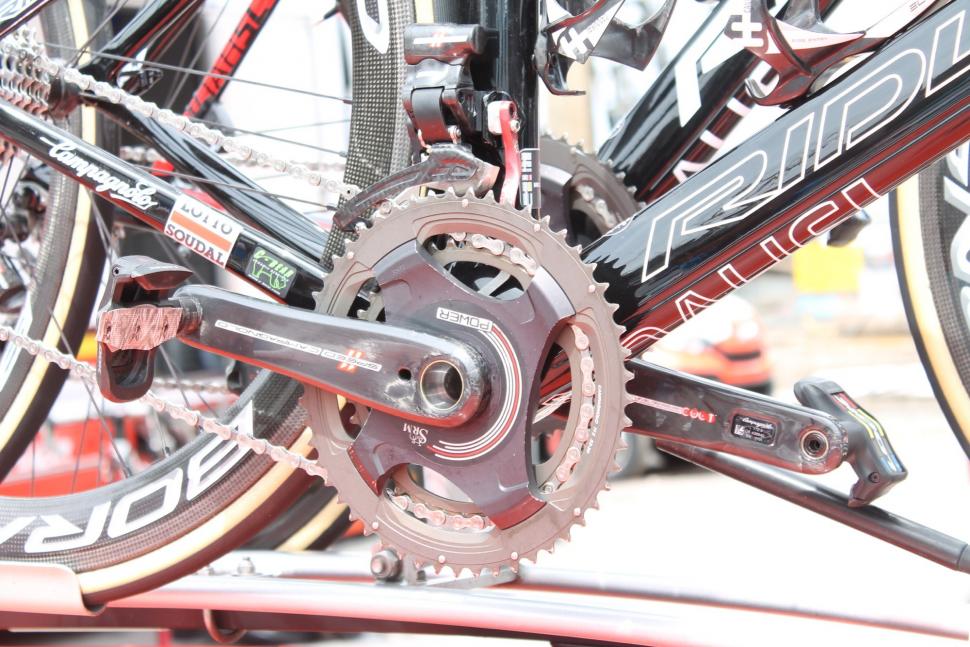
Plus, some teams like to have all of their riders on the same pedals so that a domestique can give a team leader his bike in the case of a mechanical emergency.
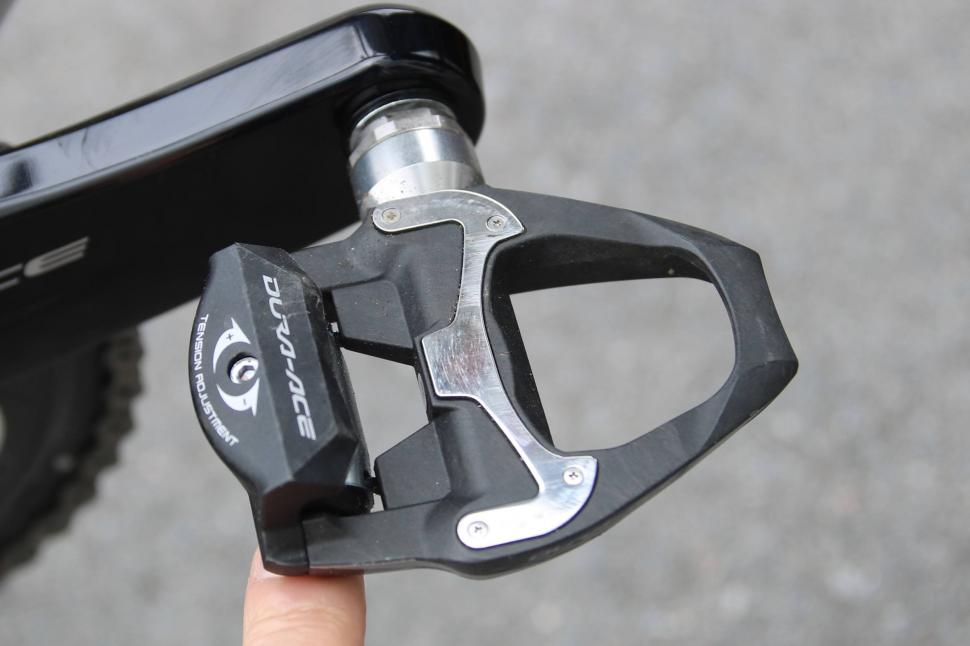
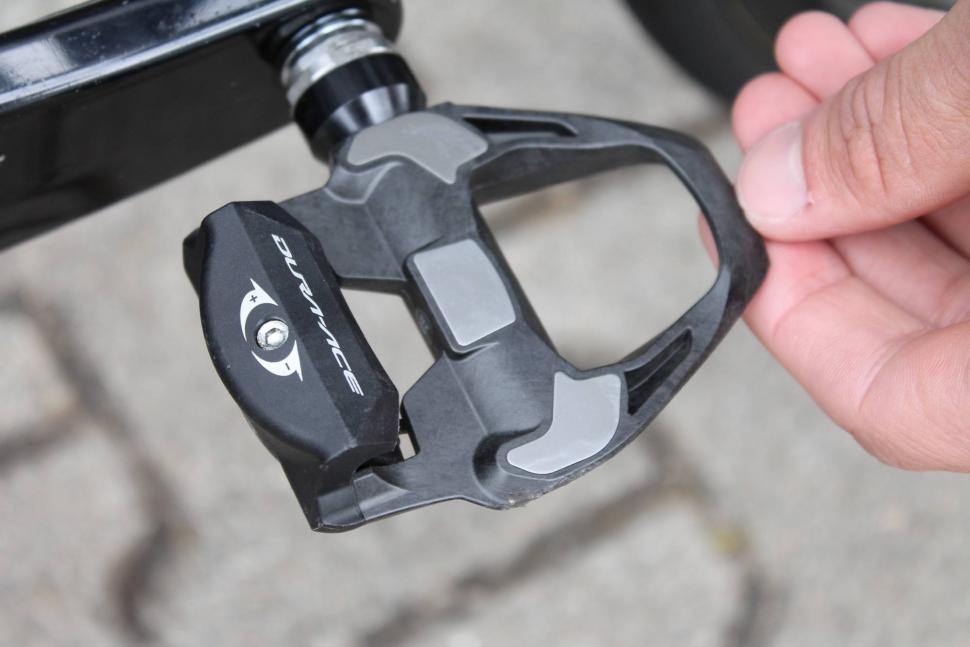
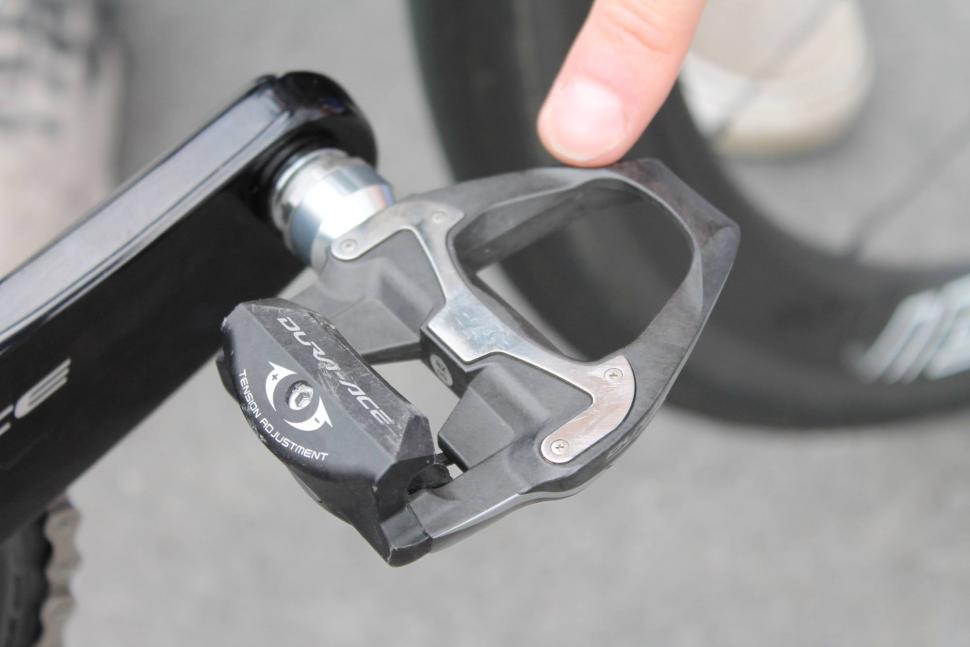
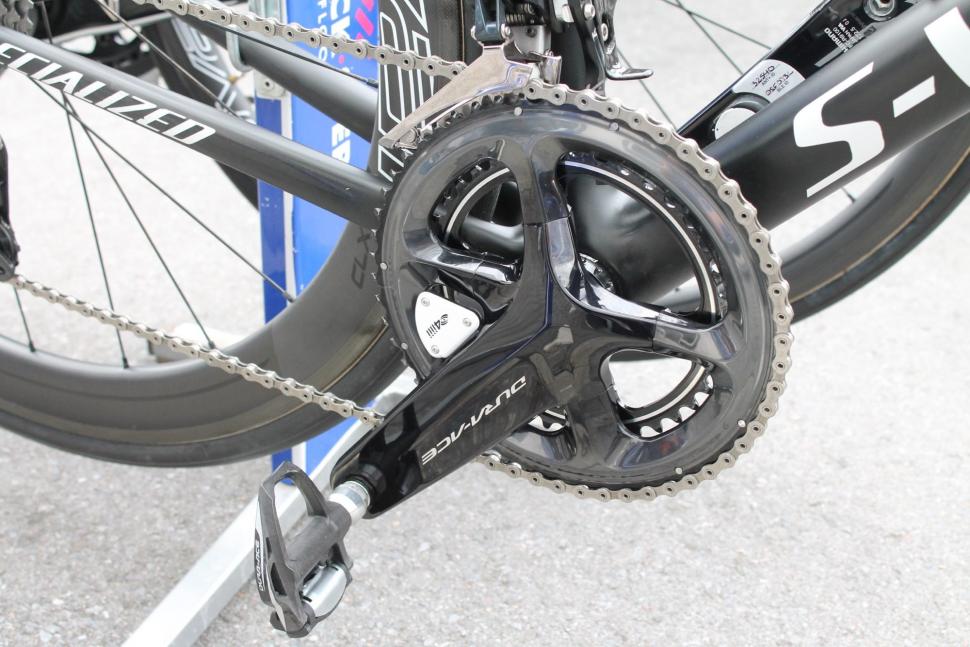
Race leader Chris Froome uses the new (well, still fairly new) Dura-Ace R9100 SPD-SL pedals. These pedals feature an injection-moulded carbon composite body with three small stainless steel plates across the centre to provide protection from wear.
The pedal platform is 66mm wide and provides plenty of stability.
We weighed Shimano’s top-level road pedals at 239g (for the pair; Shimano’s claimed weight is 228g) when we reviewed them recently. That’s not as low as some rivals but it’s still pretty light.
Read our review of Shimano Dura-Ace R9100 SPD-SL pedals here.
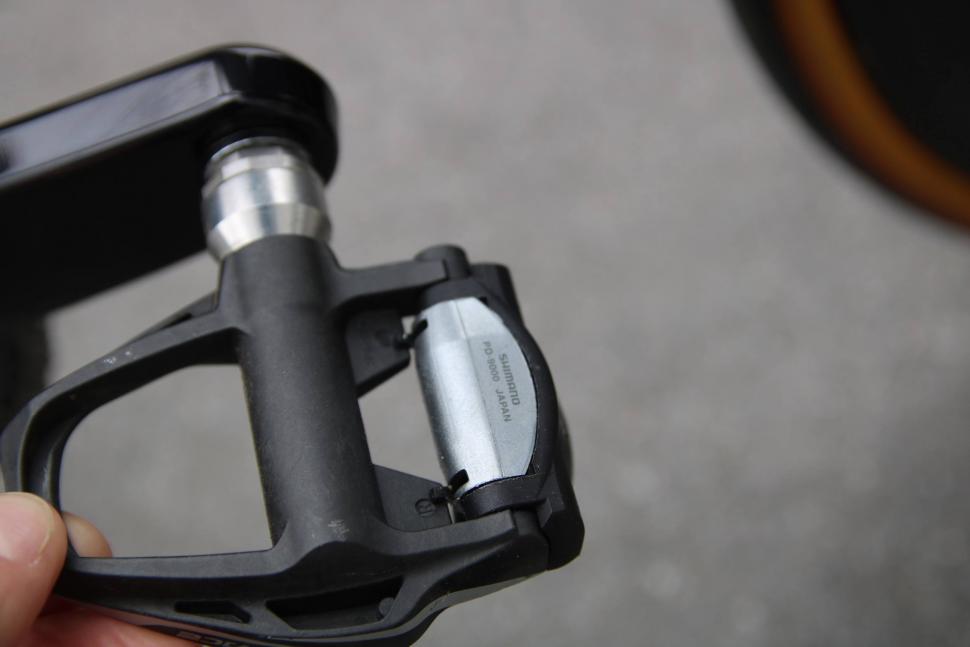
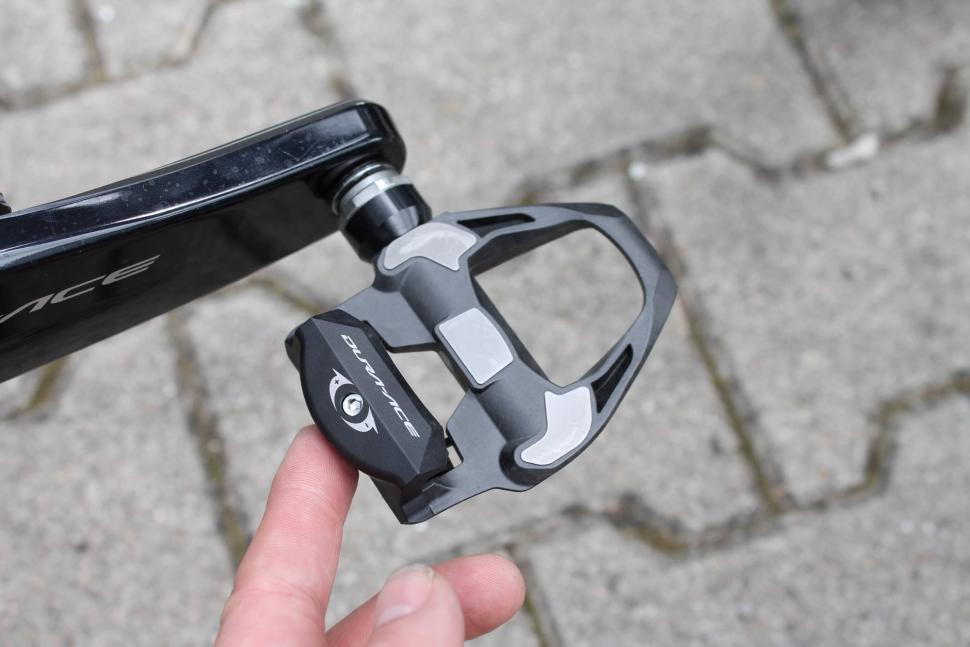
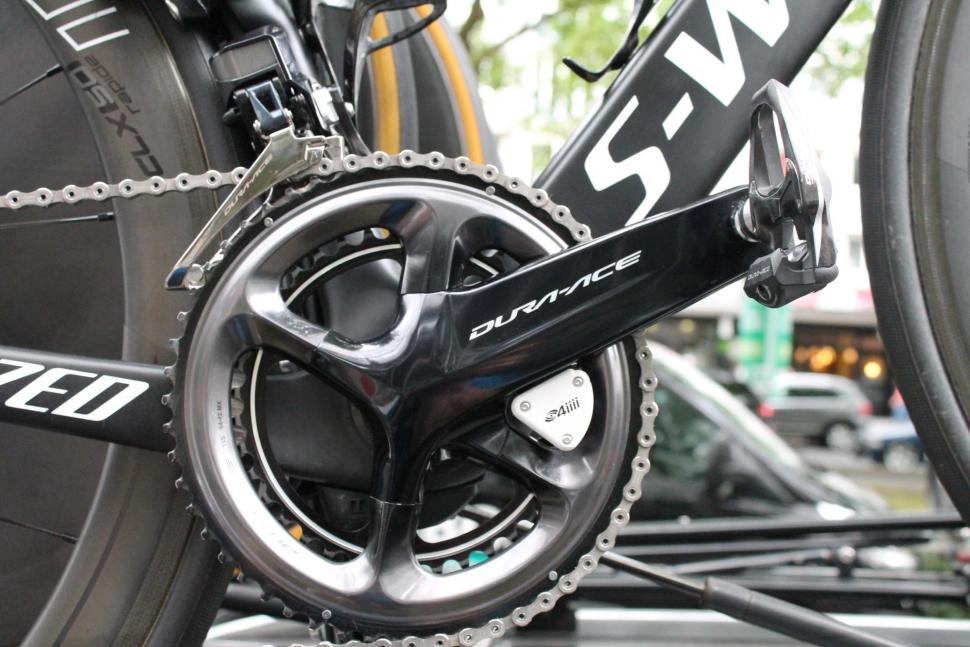
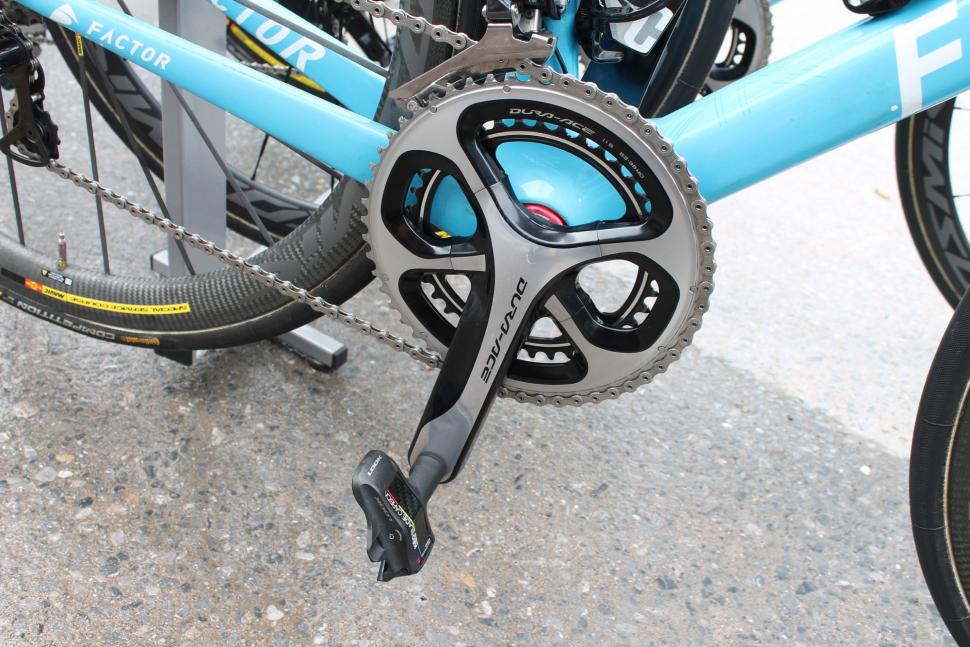
Many pros are still on 9000 Series Dura-Ace SPD-SL pedals, just a few grams heavier (a claimed 248g for the pair) and with a single stainless steel wear plate across the middle. In terms of performance, the difference is somewhere between negligible and non-existent. These are Philippe Gilbert’s pedals, for instance.
And these are Marcel Kittel’s.
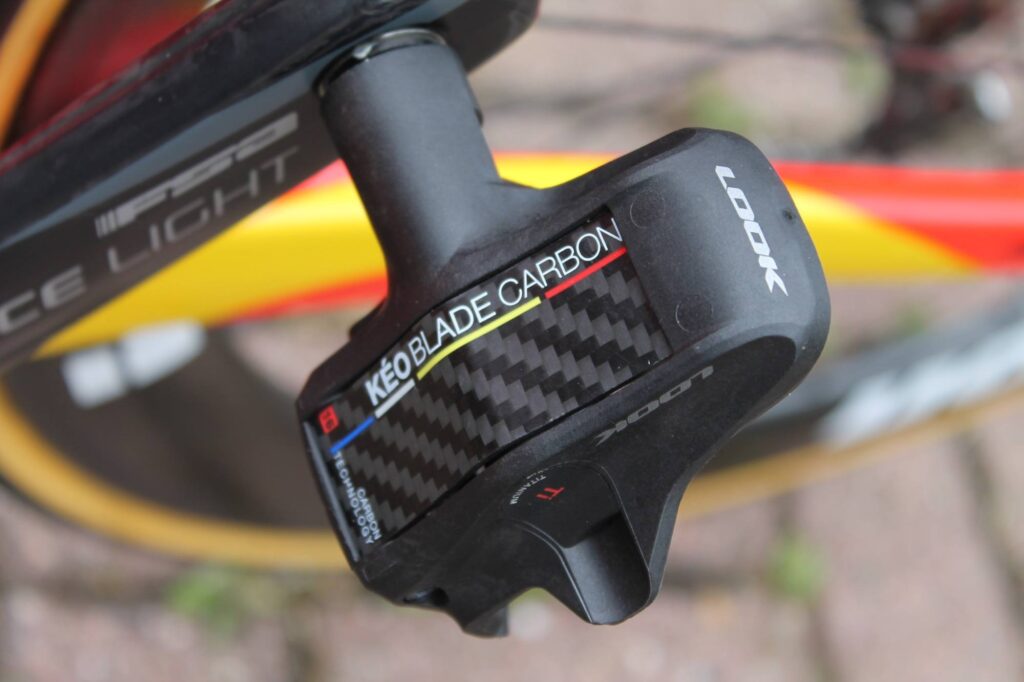
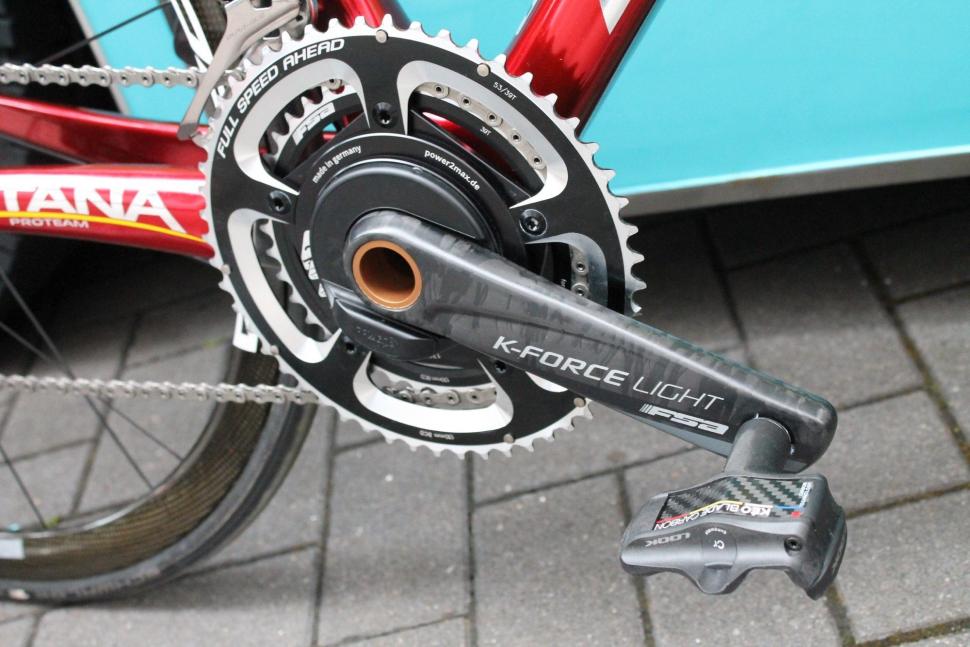
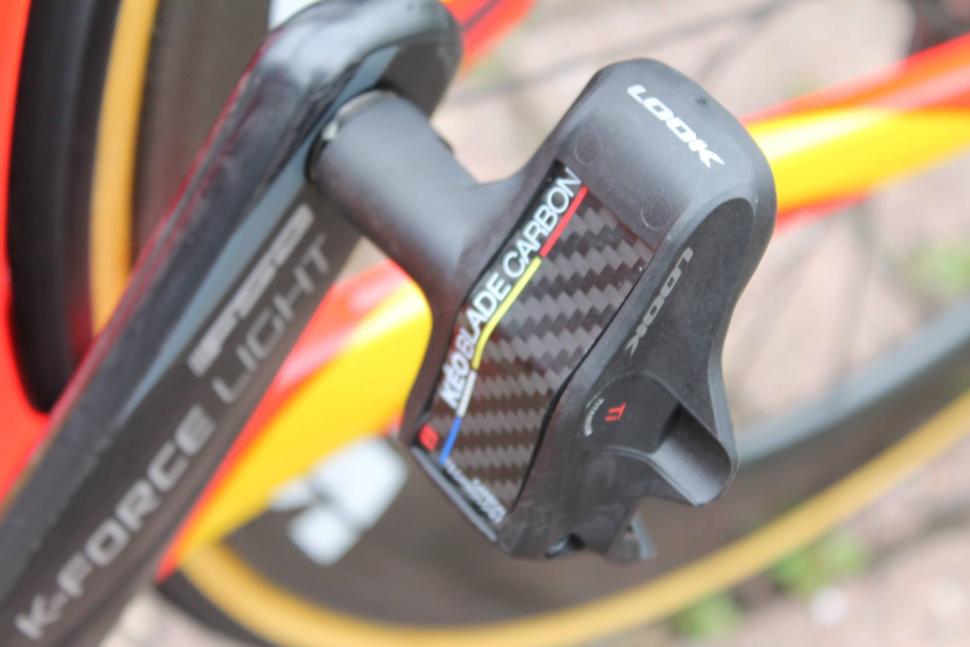
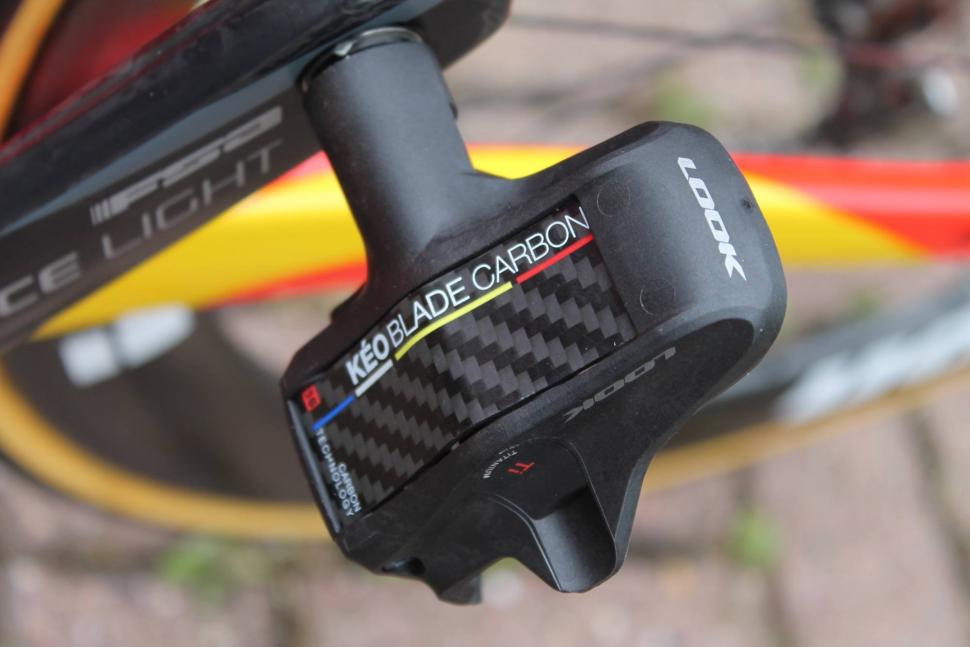
The most popular Look pedals in the peloton are the Kéo Blade Carbons. As you probably know, the tension that retains the cleat is provided by a carbon leaf spring, or — in dramatic marketing-speak — a blade. Unlike the Shimano pedals (above), there’s no tension adjustment although you do get to choose from three different carbon blades which require different amounts of force to release.
Find out about Look Kéo Blade Carbon pedals here.
Fabio Aru has the version with a cromoly axle (above). These have a claimed weight of 220g for the pair.
Tommy Voeckler, on the other hand, has the version with a titanium axle. Posh! These have a claimed weight of just 180g.
Andre Greipel uses Kéo Blade Carbon pedals too, a strip of Lizard Skins bar tape added across the central stainless steel plate to avoid the possibility of unwanted movement.
Check out 10 of the best clipless pedals here.
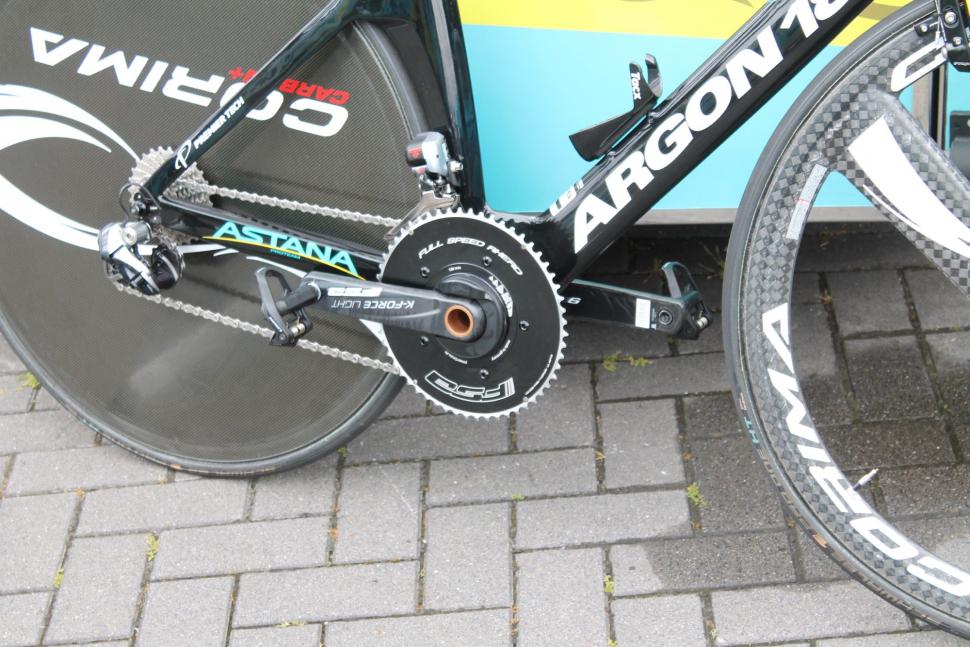
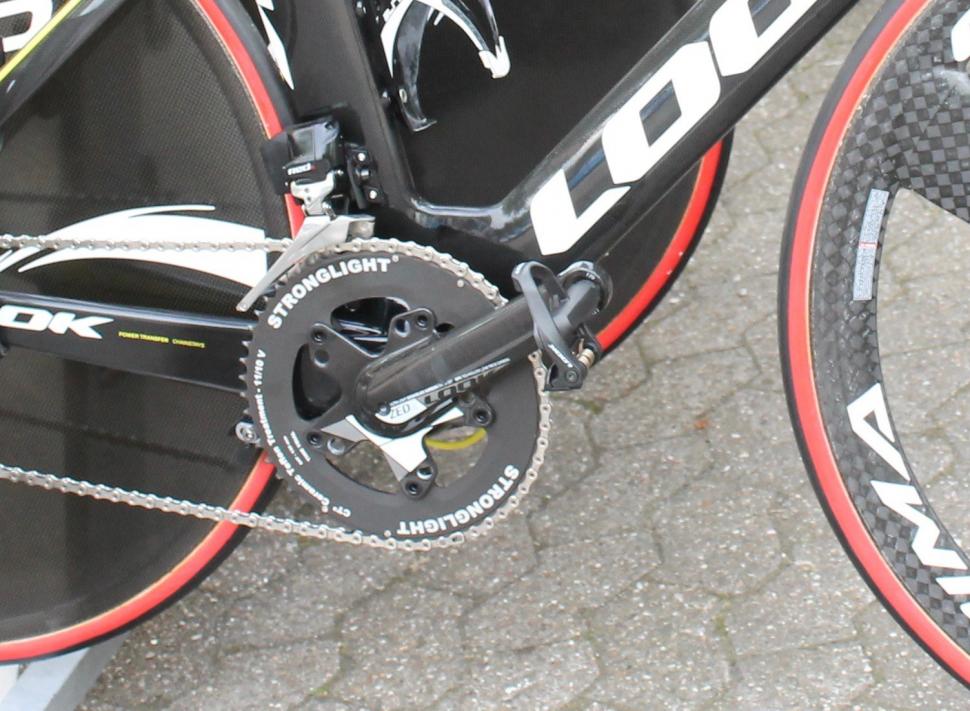
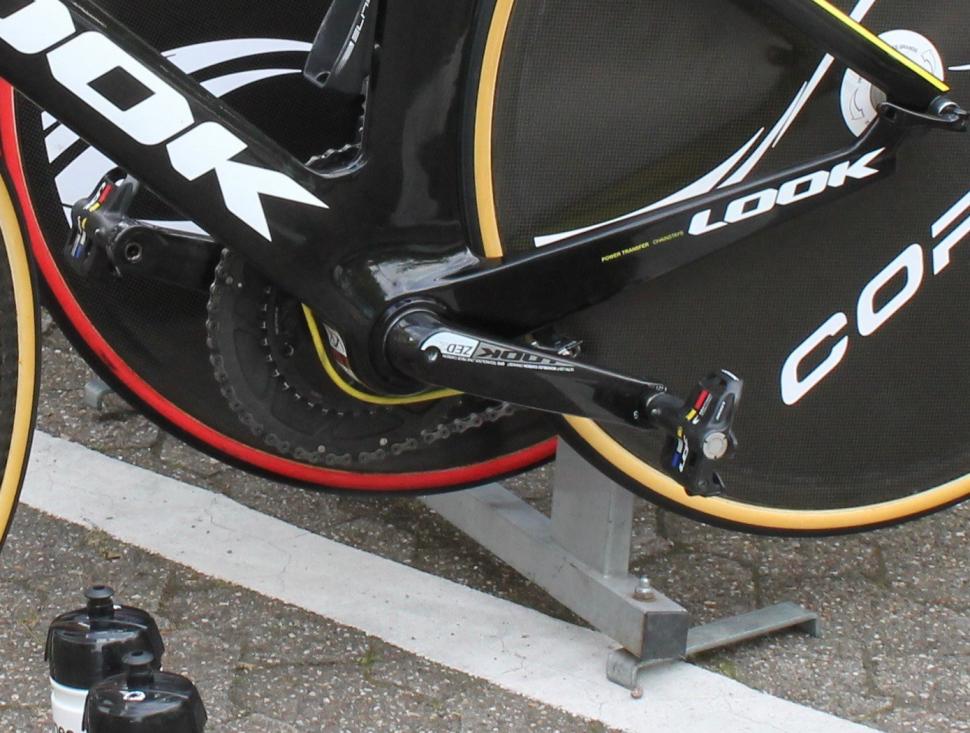
These look like much cheaper Look Kéo 2 Max pedals on Brice Feillu’s time trial bike, a traditional metal spring providing the tension. They have a claimed weight of 260g.
Dmitriy Gruzdev has them on his TT bike too, as do quite a few other Astana riders.
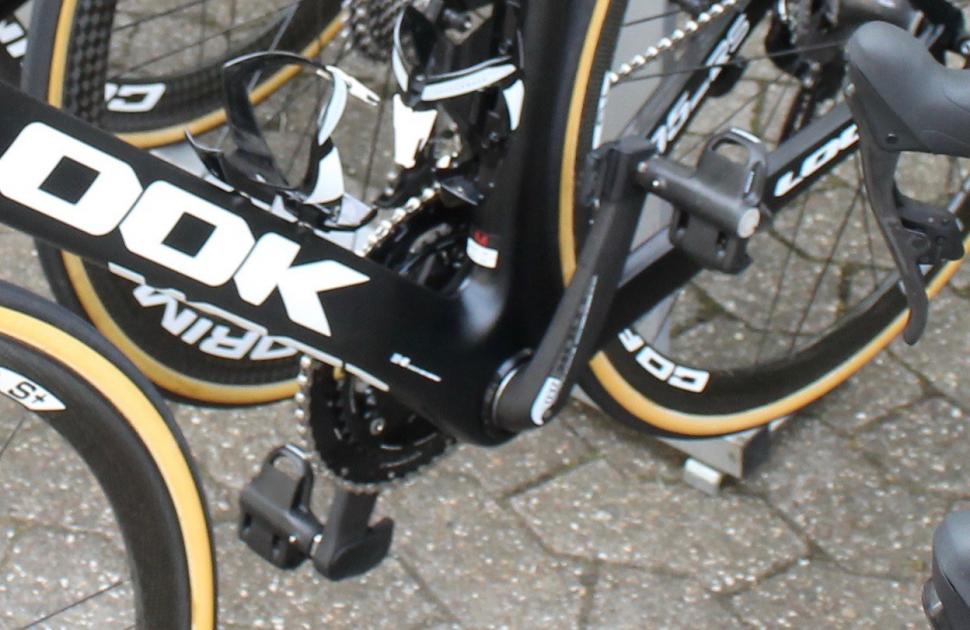
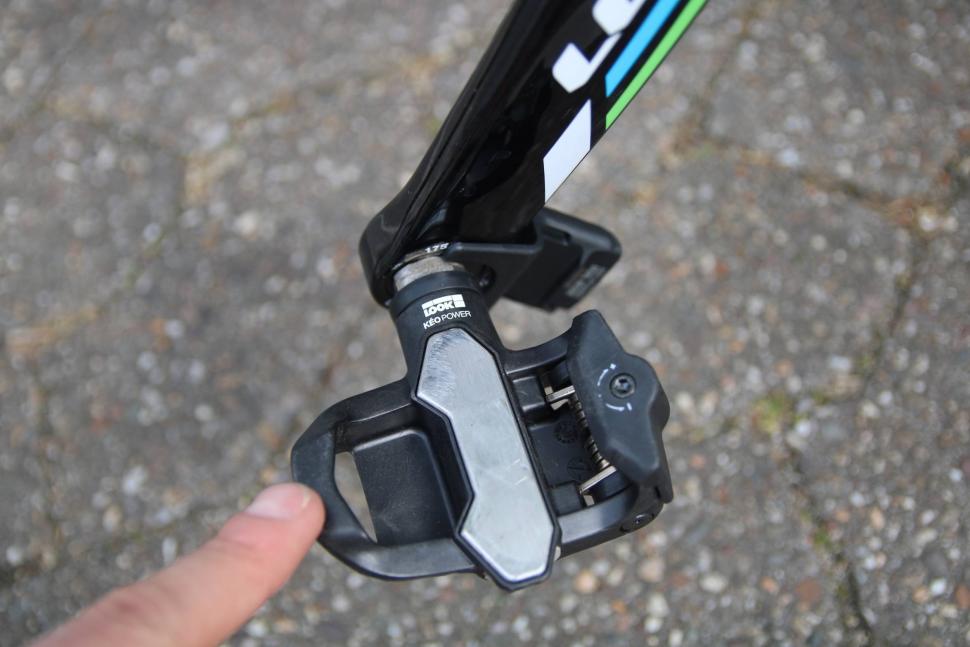
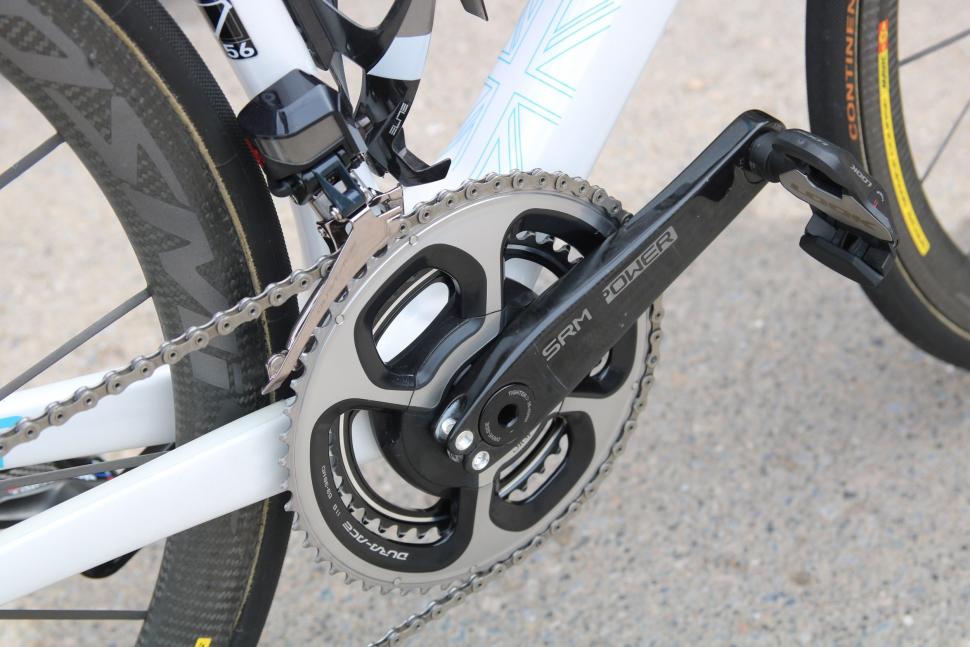
Fortuneo-Oscaro use Look Kéo Power Dual Mode pedals. Eight strain gauges in the axle of each pedal enable the system to calculate a rider’s power output. The data is sent to a head unit via Bluetooth or ANT+ from a small pod that sits next to the crank arm.
The Kéo Power Dual Mode Regular pedals used by the pros measure each leg independently although an Essential version is available that measures just the left leg.
Learn how to ride road clipless pedals here.
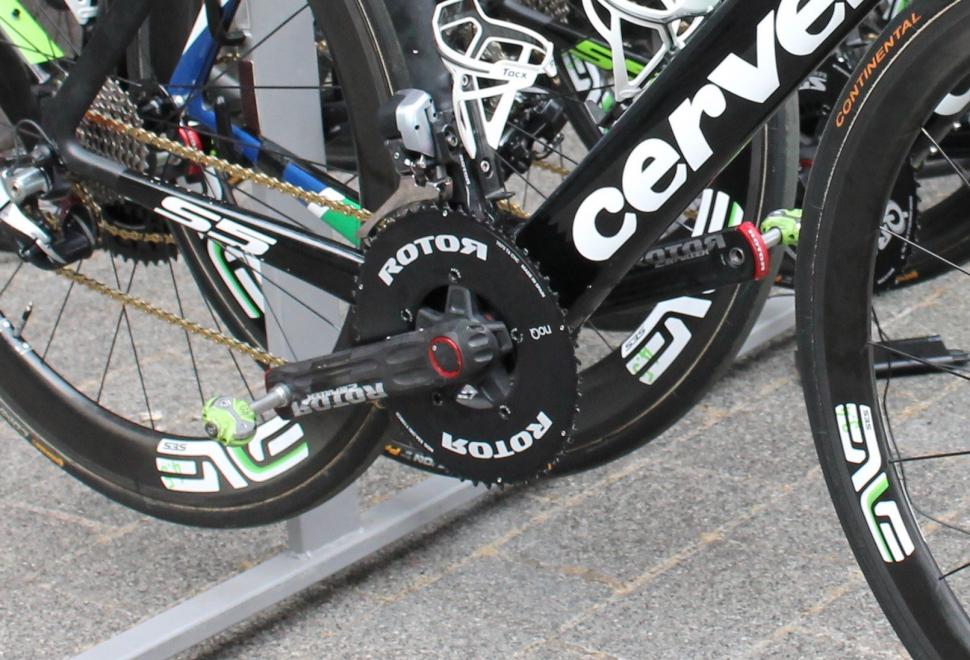
Reinardt Janse van Rensburg’s bike is fitted with Speedplay Zero pedals whereas all the other Dimension Data bikes we’ve seen at the Tour de France have Shimano.
Speedplays are different from other brands in that there’s no cleat retention mechanism on the pedal itself, the locking mechanism is in the cleat. The pedals can also be engaged on both sides.
Some people like Speedplays because of the amount of float (foot movement while remaining engaged) that they offer – up to 15°.
Check out all of our pedal reviews here.
Time? Where are Time pedals in this roundup? Well, we didn’t see any on our tour of the teams prior to the start of the Tour de France, although there could be Time users that we didn’t spot.






4 thoughts on “Tour Tech 2017: pedals of the peloton”
Good job it’s only a 3 week
Good job it’s only a 3 week tour or we’d be on to stem bolts
turboprannet wrote:
I want a full exposé of their nipples!
Next week on road.cc, rider’s
Next week on road.cc, rider’s toothbrushes of the pro peleton!
And the big question; why is
And the big question; why is bar tape being kept under wraps?