



Former British para-cycling champion Tom Staniford has completed one final ride with the legs that powered him through years of endurance sport, just weeks before he undergoes a voluntary double leg amputation.
Staniford, who has a very rare genetic condition, called MDP syndrome, that prevents fatty tissue from being stored underneath the skin, organised the ride as both a personal farewell and a fundraiser.
More than £11,600 has already been raised for four charities close to him, smashing the original £10,000 target, with donations still open.
“They’re going to cut my legs off,” he said. “I’d like one last ride with them before they do.”
Around 50 people joined him on Sunday morning for a gentle, pan-flat ride from Exeter Quay along the riverside path to the Double Locks pub. The pace was slow and social — “barely above walking speed”, as he put it — all were welcome, from experienced cyclists to children, older riders, and the unfit alike. There were no entry fees, just donations, and plenty of coffee and cake.
“I’ve used my legs so heavily over the years and had such great adventures and great fun with them,” Staniford told the BBC. “It seemed like a shame to just kind of let it go without something to mark the occasion, and I thought, might as well try and raise some money for charity at the same time.”
Staniford, who lives in Exeter, won the National Para-cycling Circuit Race Championship in 2011, becoming the youngest ever solo rider to have won the senior title, at 21. He also participated in the UCI Para-Cycling World Cup Series.
In 2013, he started racing for Trek Bikes UK and led the National Time Trial Series and the National Circuit Race Series, winning half of the races he entered, and with the exception of one race, never finished off the podium.
“I have a very rare genetic condition which is called MDP Syndrome,” he explained. “It basically means that a lot of my connective tissues, such as tendons and ligaments, are very tight, and that is vastly limiting my mobility and my ability to be active.
“Because I’m not putting weight on my feet and because I’m not using my feet, the bone density is dropping. Now the bones are starting to crumble, and that poses an increasingly large infection risk.
“To avoid that infection risk, and also to try and give me a bit of mobility and better quality of life, we’ve gone for the elective double leg amputation below the knee.”
The operation will be a complex one, with adjustments needed to account for his underlying condition. “We’re just going to do one leg first… We’ll see how that goes, and then hopefully in the weeks and months following that, we’ll do the left leg as well.”
Staniford has long been outspoken about disability and mobility, and sees cycling as something that’s shaped much of his life.
“From a young age, I’ve always enjoyed riding a bike — for pleasure, for visiting friends, for getting to school. As I got older, I really got more into endurance sport because I just enjoyed the adrenaline burst, and I like that methodical approach and effort to exercise.
“As my various medical conditions progressed, running became very painful on my feet. Fortunately, I discovered I can get the same adrenaline burst from cycling, and my body was capable of cycling because I was sitting on the saddle.”

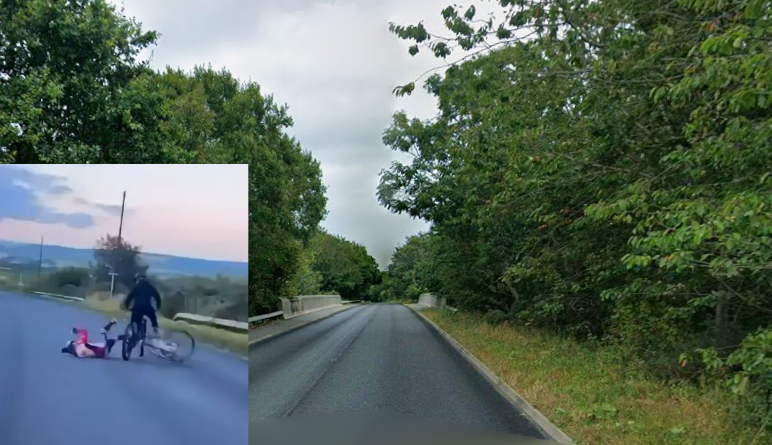
In 2005, he was seriously injured in a head-on collision with a car while on a training ride in rural Devon, and was left with life-threatening injuries including fractured eye sockets, brain bleeds, cranial trauma, broken teeth, broken collarbone, 4 broken ribs, a collapsed lung and a broken toe.
“I essentially went through the windshield of a car,” he said. “Because it was such a rural location, it was very difficult for the road ambulance to get there.
“We were so lucky we had the Devon Air Ambulance, who were able to come pick me off the road and take me to the Royal Devon and Exeter.”
The Devon Air Ambulance charity is one of four that will benefit from the ride’s fundraising, alongside Wheels for Wellbeing, Exeter UNESCO City of Literature, and the Devon and Exeter Institution.
He added: “Cycling’s always loved me back. Unfortunately, cars haven’t.”











9 thoughts on ““They’re going to cut my legs off, I’d like one last ride with them”: Former British para-cycling champion’s final ride for charity before voluntary double leg amputation”
Chapeaux. Chapfeckingeaux.
Chapeaux. Chapfeckingeaux.
Now, whoever is peeling onions, please do it somewhere else.
That’s going to be a heck of
That’s going to be a heck of an adjustment, isn’t it? Amazing to be so blase* / brave* (*delete as appropriate) about it.
Context!
Context!
And for many wallowing in self pity, don’t tell me you got problems you just have a shit attitude!
I remember seeing a
I remember seeing a documentary with Tom a few years ago. At that point they hadn’t even come up with a name for his condition. The complexity of doing endurance sport with no fat reserves and diabetes really puts us mortals fear of a “bonk” in context.
I note with interest on Wikipedia, the NHS hospital in Exeter is considered the world authority on MDP syndrome.
Good luck Tom, you are an inspiration.
For those not in the know, he
For those not in the know, he’s the new Wheels for Wellbeing communications manager.
https://wheelsforwellbeing.org.uk/goodbye-legs-ride/
And can I give a genlte reminder to the couple of comments about self pity etc. Someone can be feted as a hero without denigrating someone else.
We are not in a position to judge anyone, or know what the impacts of disability / challenges / problems they have; these are unpredictable and may be hidden. So please don’t ever make comments based on comparisons or assumptions, at least without a lot of knowledge and taking great care. It’s easy to make a mistake, so it’s better to avoid doing it.
(To be fair to enforcement officers, it is a complex, difficult area and they often do not have adequate training to understand the complexities, and may be paid as little as possible.)
So please don’t make such comments, even in jest or for joshing. We have enough problems with attitudes from enforcement officers who think they are Jesus (‘pick up your mobility aid and walk’ to a disabled cyclist who *can’t* walk), so can we stay away please.
I’m not looking for apologies, just asking for a little more thought in the future.
Examples of the type of problem this can cause are cancellation of Higher Rate Personal Independence Payment because “X can cycle; they can’t be seriously unfit”. A lot of people are frightened to tell the authorities that they cycle for this reason – but there are many people out there who can cycle tens of miles, but barely walk. An example condition that may be like this is fibromyalgia. Leukemia can be similar in that it can phase in and out of remission.
I wanted to say that Matt but
I wanted to say that Matt but I didn’t have the guts, thank you – very well put. Not everyone can cope with their disability as well as Tom has any more than everyone could be Tadej Pogacar. Tom is incredible and an inspiring example but expecting every disabled person to be like him is as ridiculous as that previous example. As someone who has suffered a life-threatening illness and continues to live with the lifelong (hidden) side-effects I know that saying, “Buck up, there’s always someone worse off than yourself” is no help at all and in fact just exacerbates the feeling of helplessness and being a burden that a disability or serious illness so often can bring. Thanks again for making this important point so eloquently.
The diversity amongst
The diversity amongst disabled creates havoc for Councils trying to do Equality Impact Assessments on, for example, floating bus stops.
They can either get hijacked by one group with one view, or at the other end take very large amounts of time and resources.
I don’t envy them that one !
Why should we all care? The
Why should we all care? The argument that stands out for me was on a bumper sticker I saw on someone’s car. Along with “please leave space for my wheelchair” etc. there was one saying “We’re not an exclusive club – we accept new members every day!”
Multiply that by the number of people you know – that should be plenty of motivation.
Plus it turns out that in many (most?) cases accessibility improvements actually benefit everyone. e.g. anybody can trip on stairs – and we’re all more likely to than just falling over on flat ground / a ramp and injuries are more severe.
A further note on here, the
A further note on here, the donations page is being kept open until the end of May.
https://www.justgiving.com/crowdfunding/goodbye-legs