


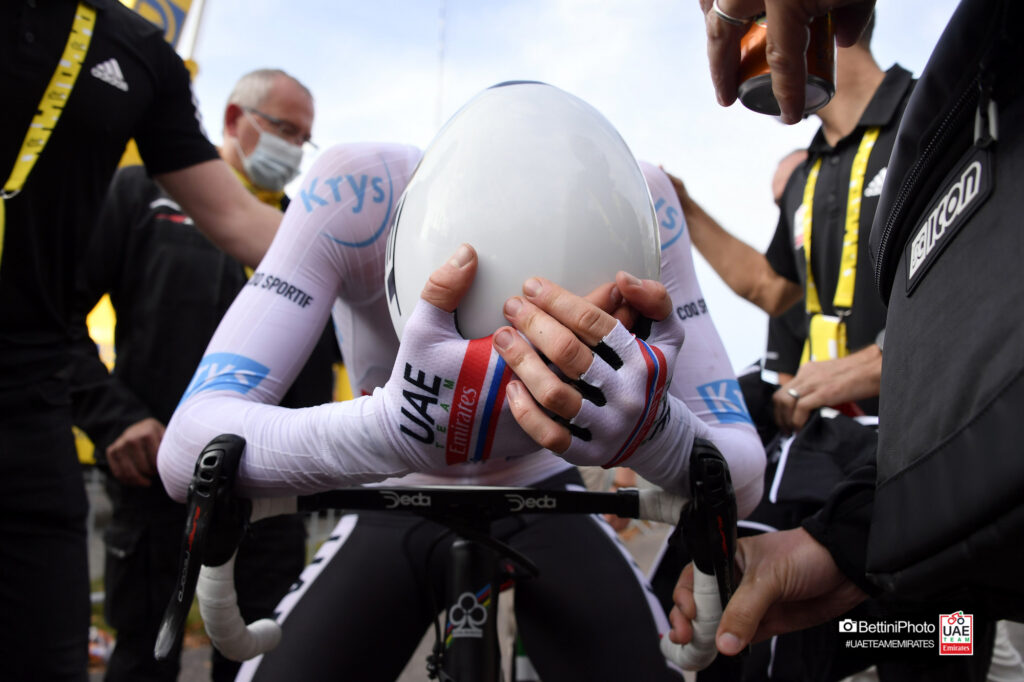

Mountain time trials in the Tour de France don’t happen very often, but when they do, they can be pivotal. Back in 2020, Tadej Pogacar snatched the overall victory from Primoz Roglic after trailing him by 57 seconds going into a time trial that finished on La Planche des Belles Filles on the race’s penultimate day. We predicted this year’s Stage 13 could be just as decisive, although this time, Pogacar extended his healthy lead by storming to victory.
Also, who can forget Geraint Thomas leading the 2023 Giro only to be overtaken by Primoz Roglic in the time trial ending on Monte Lussari, again on the race’s penultimate day?
Mountain time trials can decide races, and they present a technical challenge for the teams. Here’s why.
A horror story? Friday’s Stage 13 breakdown
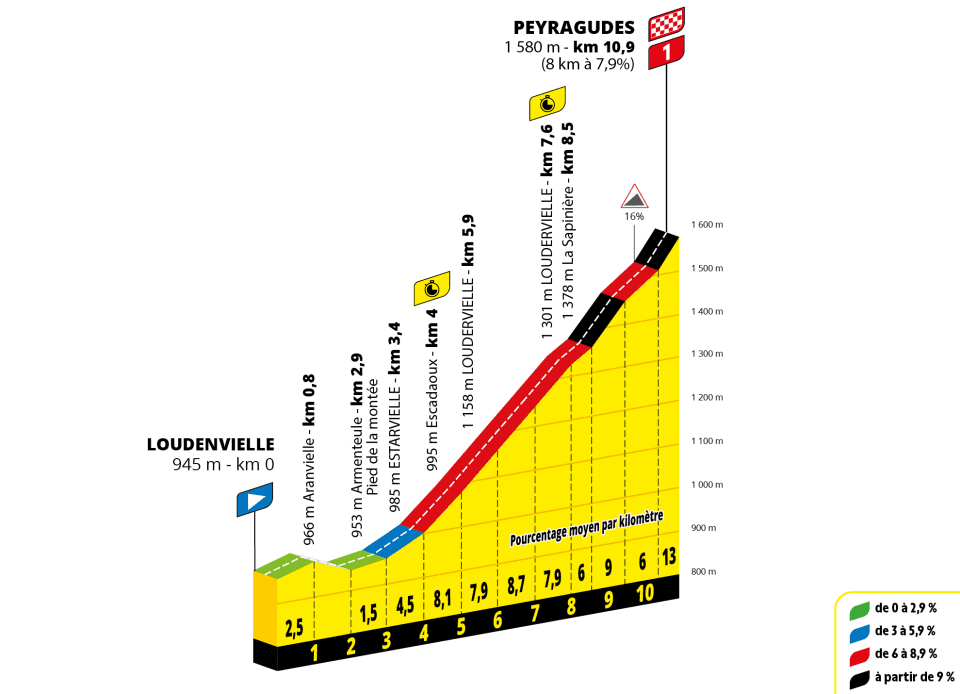
Starting from Loudenvielle, the riders have just 3.4 undulating lakeside kilometres before the road properly begins to climb. In all, the stage features 650m of climbing.
Peyragudes is an 8km category 1 ascent. The average gradient is listed at 7.9%, though two steep sections towards the top make this a punchy prospect.
The current Strava KOM is held by none other than Tadej Pogacar. His time of 20:53mins is shared with Brandon McNulty, who gives us some handy data to look at.
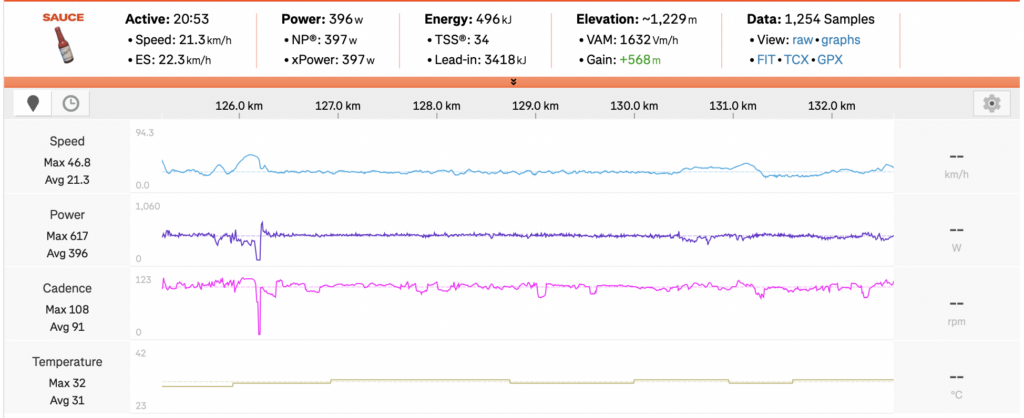
The riders averaged 21.7km/h, and McNulty averaged 396 watts. His weight is listed as 69kg, which gives a w/kg figure of 5.74. Given this time was set at the end of a 133km day on Stage 17 of the 2022 Tour de France, where riders would be carrying significantly more fatigue, we can expect a faster time to be set this year.
The speed of this climb suggests that the riders will be trying to finely balance their bike setups to be as aerodynamically optimised as possible, while keeping weight to a minimum – but how exactly will they play it?
Back on Stage 18 of the 2016 Tour de France, for instance, Chris Froome (Team Sky) rode his TT bike to victory on the short (17km) but mostly uphill time trial to Megève.
Afterwards, Froome said, “A big part of my success today was selecting the right equipment. When I saw the course, I thought I’d ride with the road bike but after the team analysed it, we opted for a full TT set-up. The Pinarello TT bike isn’t 9kg anymore.”
But the TT bike isn’t always the right option. Sometimes a lighter and more manoeuvrable – but less aero – road bike is more beneficial.
Both Pogacar’s UAE Team Emirates and Jonas Vingegaard’s Visma Lease a Bike were coy about their riders’ planned setups in the lead-up to this mountain TT. Spotted by BikeRadar, Pogacar had the option of a specially modified Colnago V5RS, complete with the TT extensions from his TT1 time trial bike.
On the day, however, the yellow jersey rolled down the start ramp on an unpainted Colnago Y1RS. As we will look at later, Pogacar isn’t afraid to make changes to his setup for a mountain TT.
However, it was more a case of what was missing. To go with the paintless finish, Pogacar went without bottles or cages.
He chose the Pro version of Enve’s SES 4.5 wheels, shod with Continental GP5000 TT TR tyres.
As a final finishing touch, his bike had no bar tape. He’d fit right in with the UK Hill Climb scene.
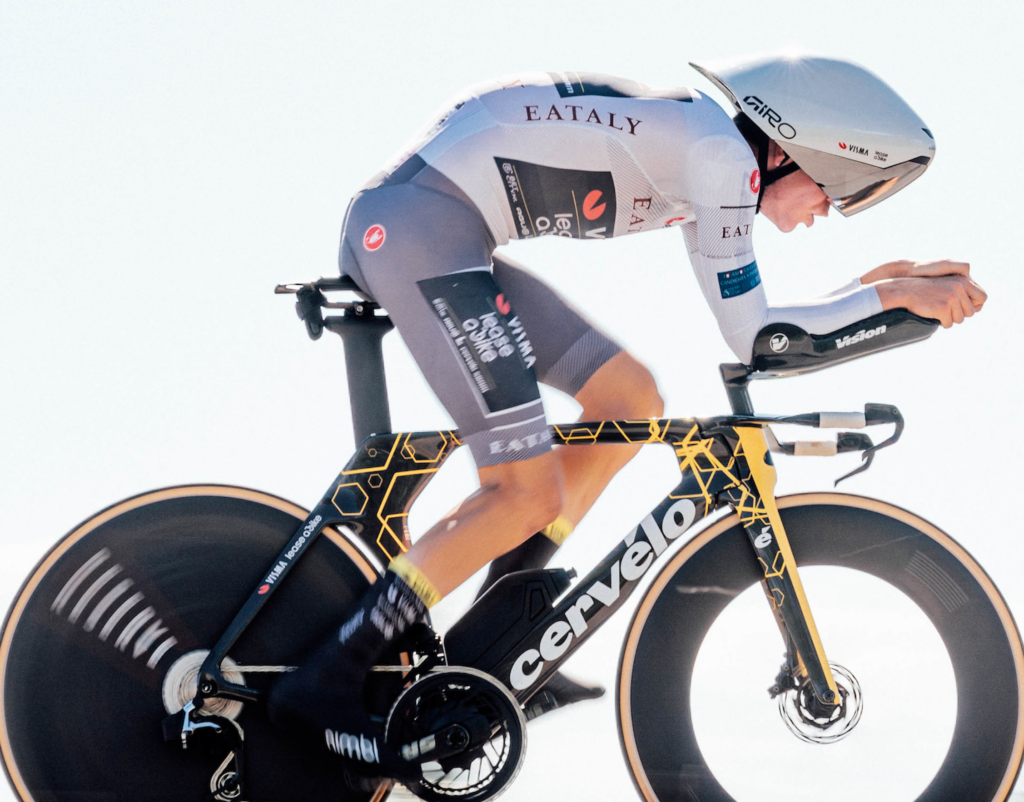
Vingegaard, meanwhile, used a stripped-down version of his Cervelo P5 time trial bike.
The bike was unpainted, save for the Cervelo decals. While this may seem like an extreme step, foregoing paint can easily save 200g.
Vingegaard used Reserve’s 34|37 climbing wheelset along with a 1x Sram Red AXS drivetrain.
He also opted for Giro’s huge Aerohead 2 with a modified visor which was jettisoned early into the climb.
There were other aero touches on display. Jayco AlUla’s Ben O’Connor used an unpainted Giant Propel complete with a Cadex rear disc wheel.
Ben Healy was one of the few riders who opted for a time trial helmet over the more popular aero road helmet choice.
Giro winner Simon Yates, meanwhile, fit a TT bottle to his otherwise standard Cervelo S5.
Pogacar’s 2020 setup: A case study
2020’s penultimate 36.2km stage presented a much longer flat section before the climb of La Planche des Belles Filles (6km @ 8.3%). Up against fellow Slovenian Primoz Roglic, Pogacar opted to change his bike at the bottom of the final climb. His two bikes could hardly have been more different.
Colnago K-One TT Bike
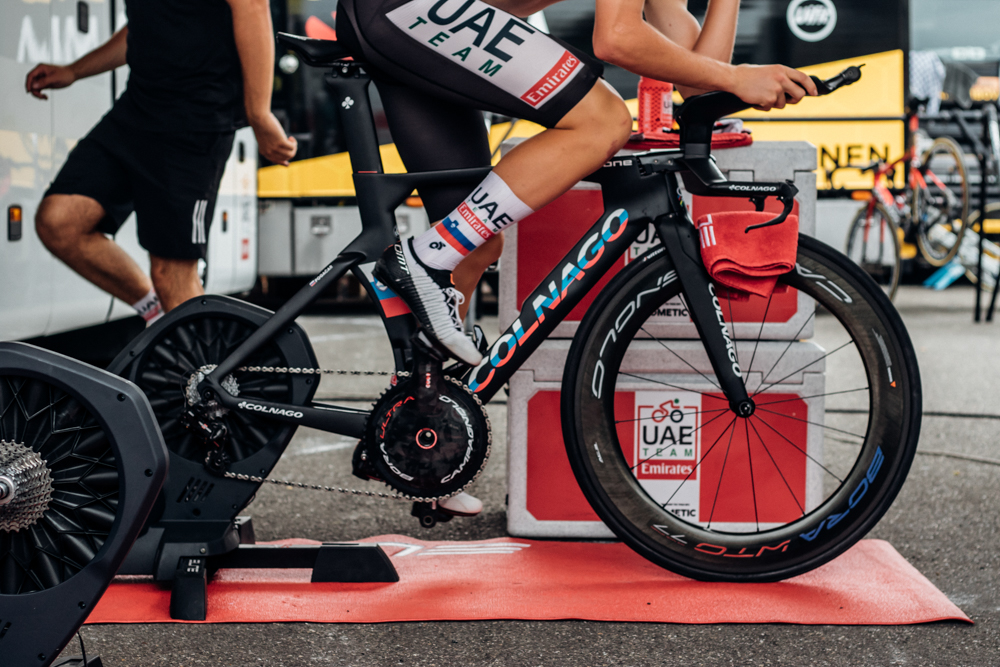
Pogacar started the day on what was his time trial bike at the time, Colnago’s K-One. This rim-brake design has since been replaced by the TT1, which we got a close look at in this year’s Grand Depart.
> Will this time trial bike help Pogacar win another Tour de France?
Pogacar’s setup included WattShop extensions mounted to the Colnago base bar. This was before many riders started having their bars custom-made for their positions.
At the time, Team UAE were sponsored by Campagnolo and Pogacar used the Bora Ultra WTO 77mm wheel up front, with the brand’s disc wheel at the back.
Campagnolo’s Bora Ultra TT came only in tubular form. The front wheel, though, was a tubeless-ready design which the UAE Team Emirates mechanics set up with a Vittoria Corsa Speed tyre.
His groupset was also supplied by Campagnolo, and the Slovenian, who was riding his first ever Tour, used the Bora Ultra crankset. This solid carbon unit was a 1x piece.
Colnago V3RS Hill Climb Edition

But Pogacar’s bike for the final climb was where some incredible tech changes had been made.
His V3RS rim brake bike was largely unpainted to keep weight down, but there were other, more surprising things to be found when looking at his Campagnolo Super Record EPS 12-speed groupset.
The UAE Team Emirates mechanics had fitted Pogacar’s bike with a 14-29T 12-speed cassette, giving him one-tooth jumps in the 18-25 section. This was paired with a 50/36T crankset.

Pogacar opted to forego data, removing his power meter and bike computer, which allowed him to ride the climb on feel alone.
At the end of 2025’s mountain TT, Pogacar’s lightweight, yet aero road bike setup, combined with his otherworldly power, proved to be the fastest on the day. His 23-minute time put another 36 seconds into Vingegaard.

















3 thoughts on “Tour de France mountain time trials: a technical headache”
Hostage to fortune and maybe
Hostage to fortune and maybe I’ll look a fool tomorrow but can’t imagine anything but pure climbing bikes being used on that course, the lead in is so brief aero won’t be a factor.
22kph+ AVG speed with the 2
22kph+ AVG speed with the 2 steeper sections near the end – where going into the red is not as much a factor as no solid state effort is required after. Surely drag reduction is the primary concern. Maybe just steep enough for the full TT rig but road aero bike all day for me
My approach would be to use a
My approach would be to use a TT bike throughout, but after 2 K change to a flatter course.