



While we often think about bike security through the lens of being out and about, using locks in public places and riding to the shops, the vast majority of your bicycle’s life will be spent sat at home between rides.
Therefore, nailing how you store your bike at home should probably be top of your priority list to keep it safe and secure. There’s a little bit more to it than just locking it away after every ride, so we’ve got some extra tips for storing your bike in a shed or garage.
Bicycle insurance: compare quotes and find yourself a great deal to get your bike covered
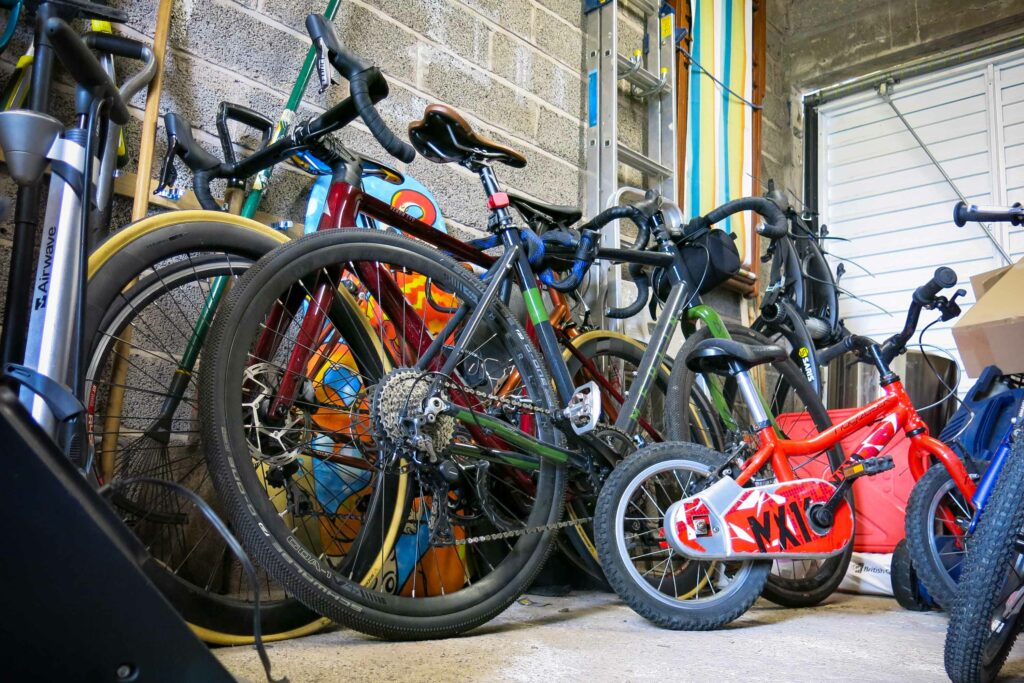
Where you store your bike will depend on personal circumstances. If you prefer to keep your bike in your house or flat, or have a space in a local bike hangar, then don’t fear, many of the suggestions will likely still be applicable. However, as sheds and garages are the most common place to store a bike, that’s the specific example we’re going to look at.
One suggestion that will apply regardless of your set-up is to check your privacy settings on Strava or any other ride-sharing platform. Strava especially has introduced loads of privacy-boosting features in recent years, such as allowing users to hide where their ride started or ended by editing the map visibility. You can find these options in the ‘privacy’ section of your account’s settings.
Likewise, you might want to make your profile private so you can control who follows you and views your activities.
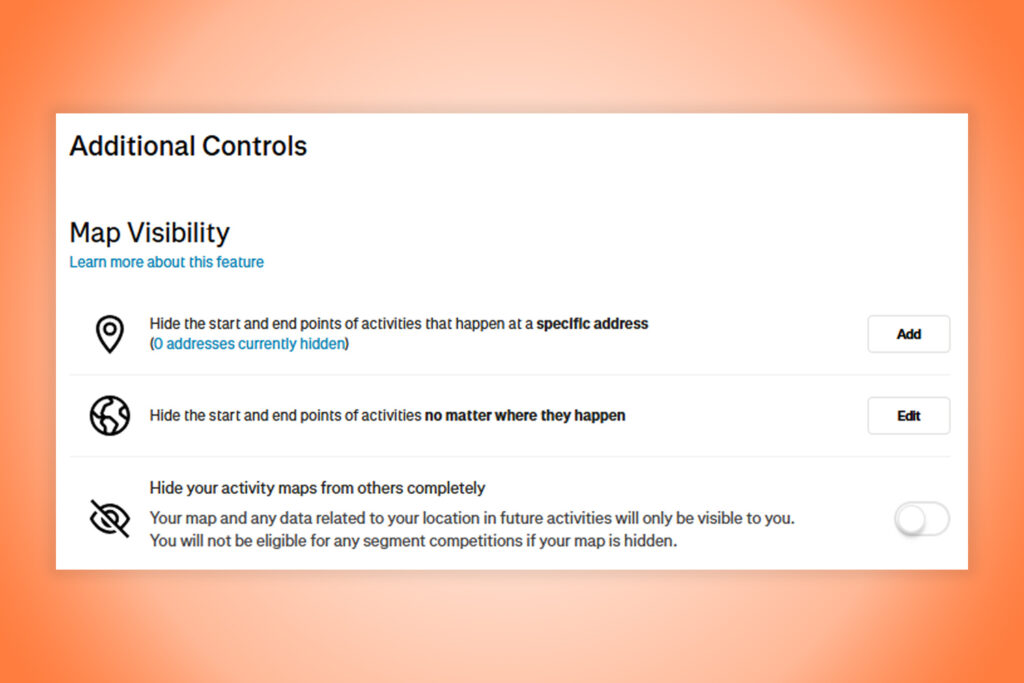
Unfortunately there are criminals out there using ride data to work out where there might be bikes to steal. If your profile’s public and you’re uploading GPS data of rides starting from your home, your activities are very quickly going to draw a map to an address where a cyclist lives. It’s sad we even have to recommend this, but check out Strava or your other apps’ privacy features.
Once you’ve decided your bike is going to live in the garage or shed there are plenty of other steps you can take to keep it safe. The better the quality of locks and general secureness of either location is going to be the starting point, but we’d still recommend keeping your bike out of sight, if possible, even if that just means covering it with a sheet so it’s not obviously visible to anyone looking in.
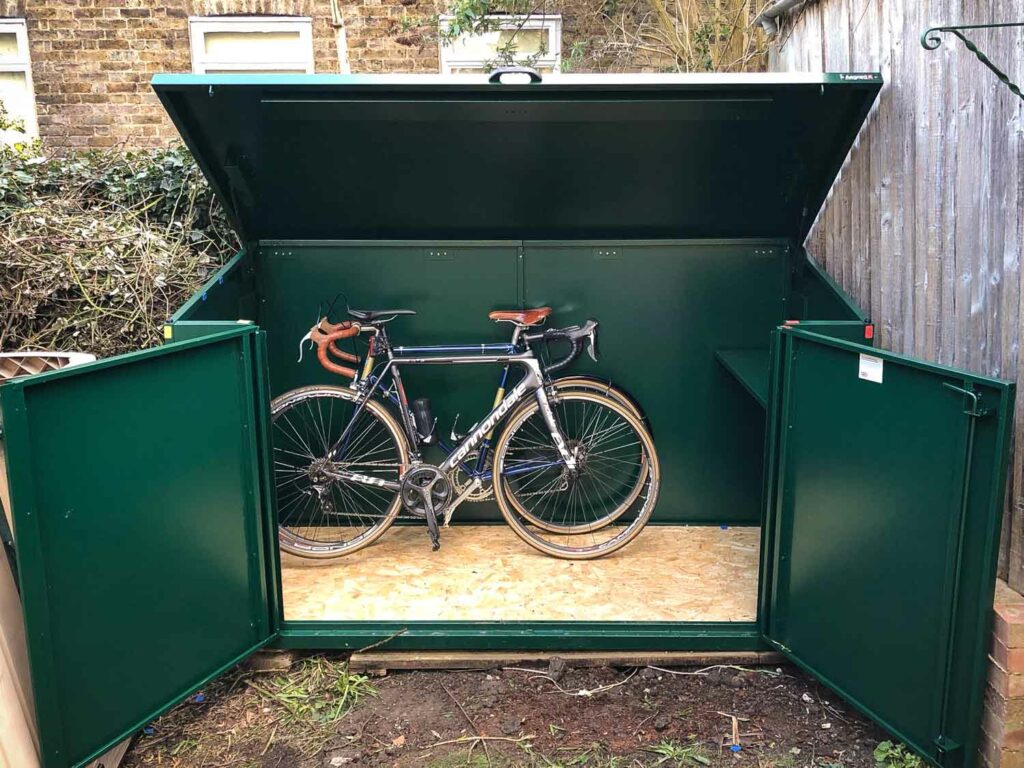
There are numerous bike-specific storage sheds out there, many of which will be designed with security in mind. These can be expensive though and in some cases, particularly if you’re building and installing your own large design for multiple bikes, you might want to double check what you can and can’t do, before you end up in the latest road.cc news story about tedious planning permission rows around bike sheds.
For most people, the humble garden shed or garage is going to be the place for your bike/s. Having a camera or Ring doorbell-style device would also ensure you’re able to keep an eye on things even if you’re at work, on holiday or away from home.
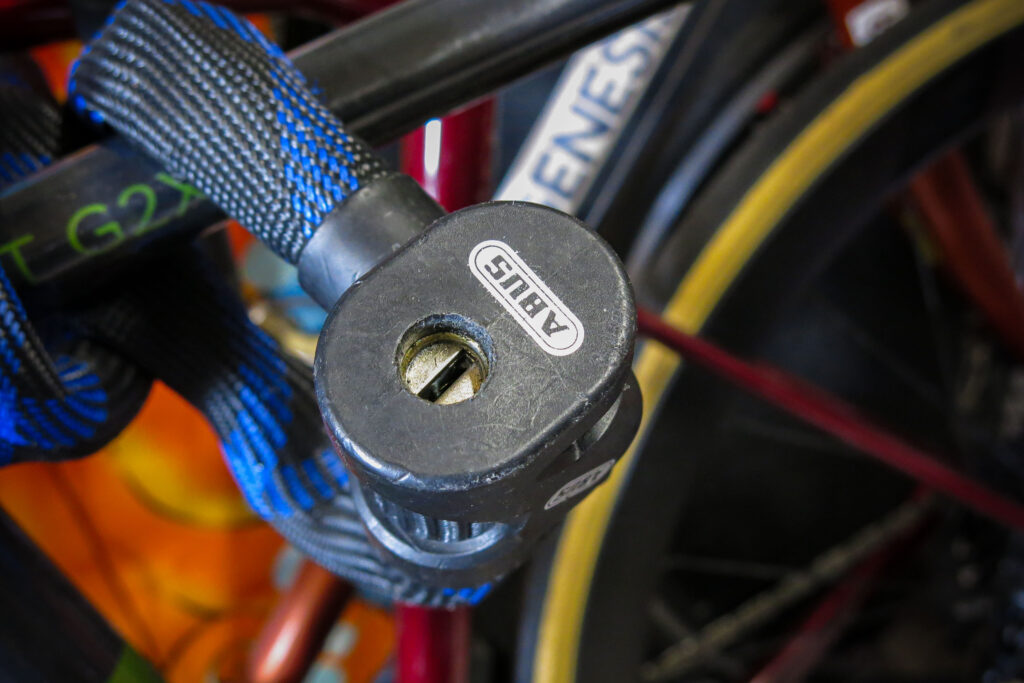
Using bike locks when your ride is already in a locked shed or garage may seem like overkill but adds an extra level of security and peace of mind. Sure, you probably don’t have a fully installed Sheffield stand at your home, but maybe you can lock your bike to something bigger, heavier and hard to budge. Securing the wheels to the frame, as you would want to do in public, will prevent an opportunistic thief nabbing those too. It’s an extra line of defence should someone get in in the first place.
For the ‘inconvenience’ of having to take an extra 30 seconds undoing those locks every time you go for a ride, we reckon it’s worth it. Similarly, if you use a GPS tracker or any other similar anti-theft device when locking your bike in public, that can stay in place for the garage or shed too, just in case the worst happens.
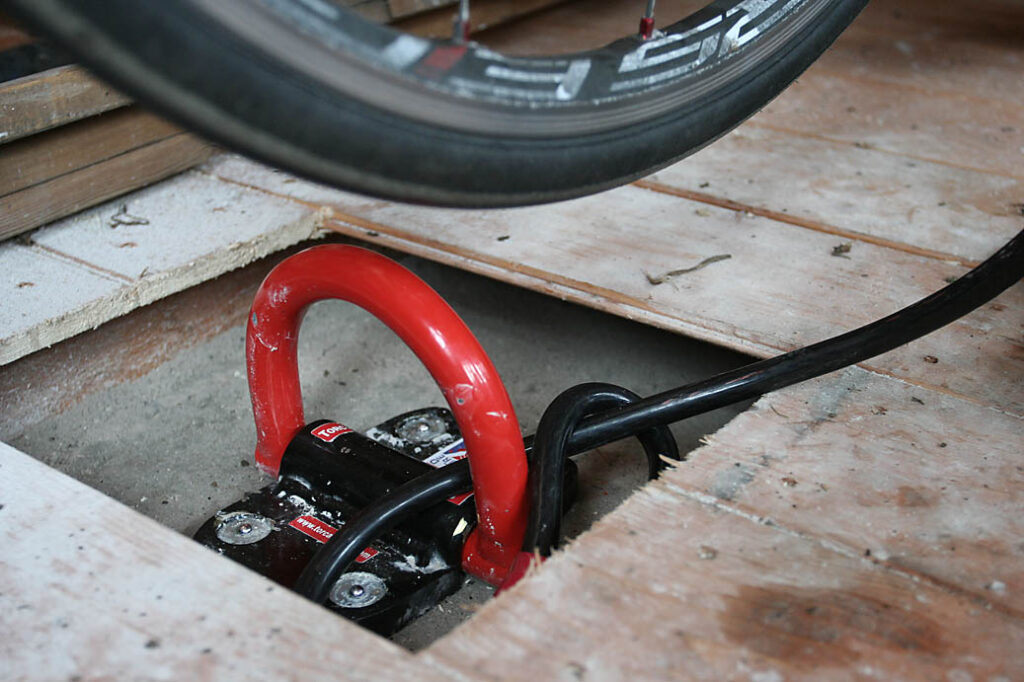
Naturally, a quick ask around the road.cc office found plenty of expertise in the field of keeping your bikes safe at home, Dave explaining his pro set-up…
“I’m lucky enough to have an enclosed rear garden away from the prying eyes of the local ne’er-do-wells, although in the past I did have bikes stolen from a standard and not-very-secure wooden shed.
“After that I added a ground anchor and a bar over the doors, but it never felt like it would put up that much of a fight. So when the shed reached end of life – you could have kicked it over at that point – and it was time for a new garden building, I opted for a more solid garden room that’s part bike shed, part office, and concentrated on making the bike side of it as impenetrable as possible.
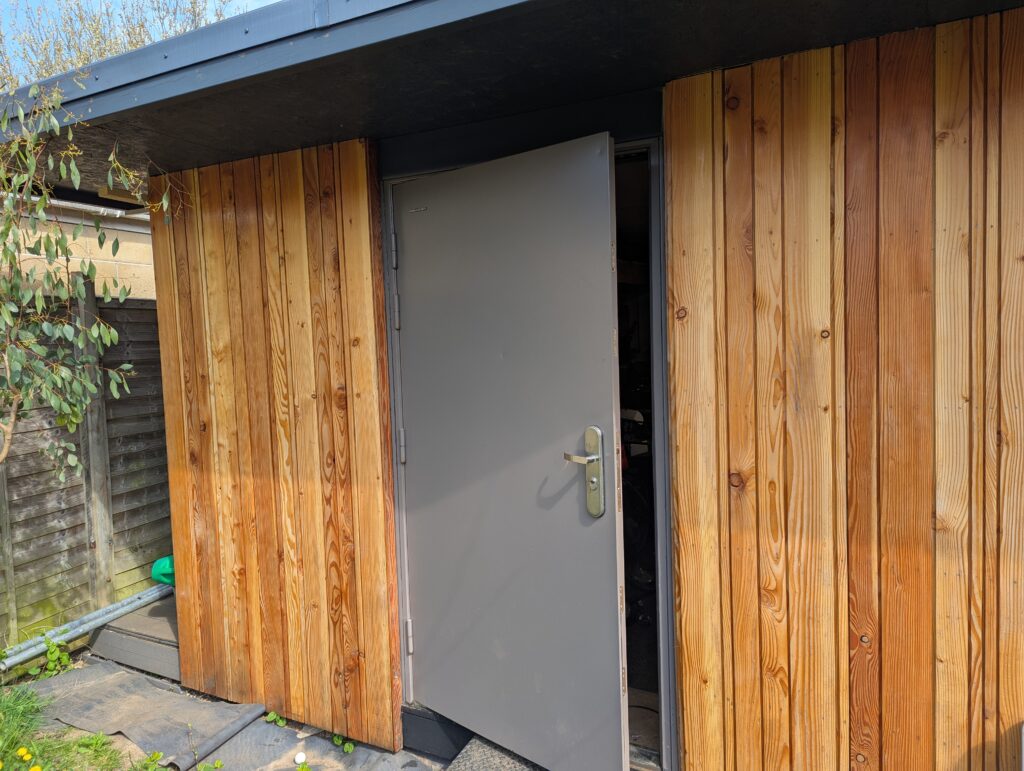
“There are no windows, and I fitted a solid steel security door with deadbolts on three sides. So long as I lock it – and I nearly always remember to do that – it’s about as secure as a shed can really be. I am considering adding a security light and a camera though.
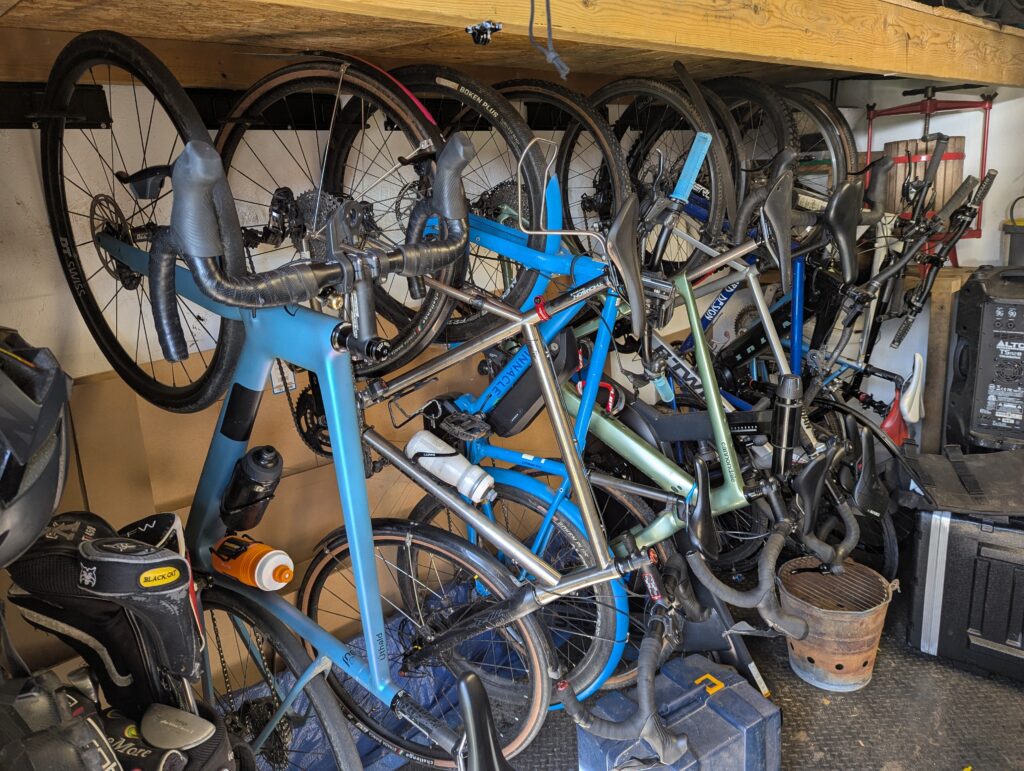
“Inside I’ve opted to hang the bikes, as it’s the most efficient use of what’s not a huge space, and a great way to find out if you’ve got any air in your brake lines… expensive articulated racks are available, but I’ve just got some two-bike hook units screwed into the wall. In theory there’s room for twelve bikes, but that’s not taking into account a bit of space for shoes and hats at one end, and some homebrew cider bubbling away at the other.”
Homebrew cider is an optional (but highly recommended) extra. Our resident ultra-cyclist Matt Page vouches for the ground anchor too and that “a big beefy chain and padlock” does the rest.
It’s also worth mentioning, while not strictly related to security, that if you are storing your bike in a shed or garage, and not in the warm and dry of your house, that during winter (and many other times of the year here in the UK) your bike-storing environment will probably be a very cold, and sometimes quite damp place for a bike to live.
Bicycle insurance: compare quotes and find yourself a great deal to get your bike covered
Just bear that in mind when it comes to cleaning and maintenance. Ensure your drivetrain is dry and lubricated after cleaning to avoid any rust appearing.
Got any more security tips for keeping your bike in a garage or shed? Let us know in the comments section…









10 thoughts on “How to properly secure your bike in a shed or garage”
Loosely related: readers may
Loosely related: readers may be pleased to know that Pragmasis are back up-and-running again under new ownership. I use Pragmasis chains to secure my bikes within the garage, and they make/made a range of other useful products too (ground anchors, shed reinforcements etc.). Under the old ownership, they also seemed like a really ethical and transparent company too (a major part of the reason why I chose them).
Obviously it’s early days for the new owners, although I understand the original founder/previous owner Steve Briggs is still involved in an advisory capacity, and I hope the new owners will be just as good (I don’t think Steve would have sold the brand to someone he didn’t trust to keep the company ethos alive).
https://securityforbikes.com/
I kind of fancied their 16mm
I kind of fancied their 16mm chain, according to them unboltcroppable, but it looked a bit wide to easily go through the spokes of the rohloffed rear, and being really heavy might have incurred shockingly high cost to return. LPL kind of liked their round lock.
Ordered a kryptonite fagadabadid 1510 chain from Evans, only 15mm, but a far more narrow profile, I also got to check it’s usefulness in store, with an option just to give it back to the shop if it didn’t fit. 5kg and only ever ridden it twice, once home and then once to work. Wanted to get it as I wanted the 14mm fagadabadid I had left at work as a more at home and out in town lock.
OnYerBike wrote:
Obviously it’s early days for the new owners, although I understand the original founder/previous owner Steve Briggs is still involved in an advisory capacity, and I hope the new owners will be just as good (I don’t think Steve would have sold the brand to someone he didn’t trust to keep the company ethos alive).
https://securityforbikes.com/— OnYerBike
Excellent news!
I dug a hole and stuck one of
I dug a hole and stuck one of these in it along with a couple of 20kg bags of concrete*, shed base on top. Used the interlocking plastic squares, so just missed out one square and the hoop sticks up through that.
* best to use multipurpose or high strength concrete, not postcrete or similar as that can be surprisingly weak.
Is that a ground anchor or a
Is that a ground anchor or a bollard?!
Most garden sheds get damp in
Most garden sheds get damp in Winter and have somecondensation caused by changes in weather during the rest of the year, so a dehumidifier might help slow down rust issues – chain and gear sets, even if the frame is all aluminium – especially if the bike cost several hundred pounds or more.
And never leave tools in
And never leave tools in there.
One of the sheds I had to leave my Getting to Work Bike in, rented room in house, I fitted a stronger clasp and a better padlock, but nothing silly, it also had a cars worth of alloys with tyres stacked in it, kryptoflex through the spokes gave me something to d-lock or chain to. Another I just chained the GtWB to the good bike, outbuilding with good door and padlock. More to annoy and trouble the scrote,
When I lived with the folks, their double garage with pa’s workshop at back, I locked my only bike at first to the handle of the BBQ’s big gas canister, and then drilled a hole in the stand of my pa’s Super 7 lathe, just enough for the D. I miss that workshop. He had jam jar lids screwed into the bottoms of shelves with the jars filled with assortments of washers, bolts and nuts. Pillar drill too. But for an engineer he loved getting cheap and awful tools from blackbush market.
If you are going to bother
If you are going to bother installing a ground anchor, a chain ( or D-lock) might be be preferable to the cable pictured.
ChrisA wrote:
I’m not a fan of the various cable locks as you can progressively cut through them as they’re made of much thinner cables. With a good chain or D-lock you’re going to need something like an angle grinder to cut through them.
I keep my eBikes in a metal
I keep my eBikes in a metal shed which experiences extremes of temperature in winter & summer. As Lithium batts prefer to stay in the range 10-40degC, as well as securing the bikes, also an idea to remove said batteries into house for safety/longevity (and also the eBikes will be pretty useless to chavs unless they’re prepared to buy replacement batts).