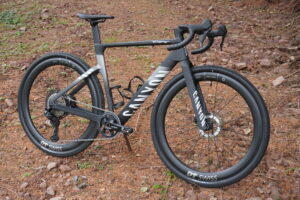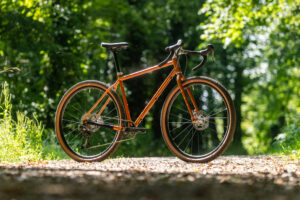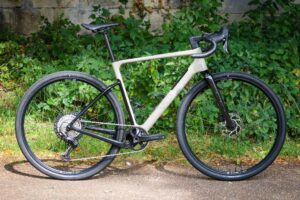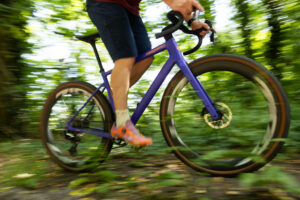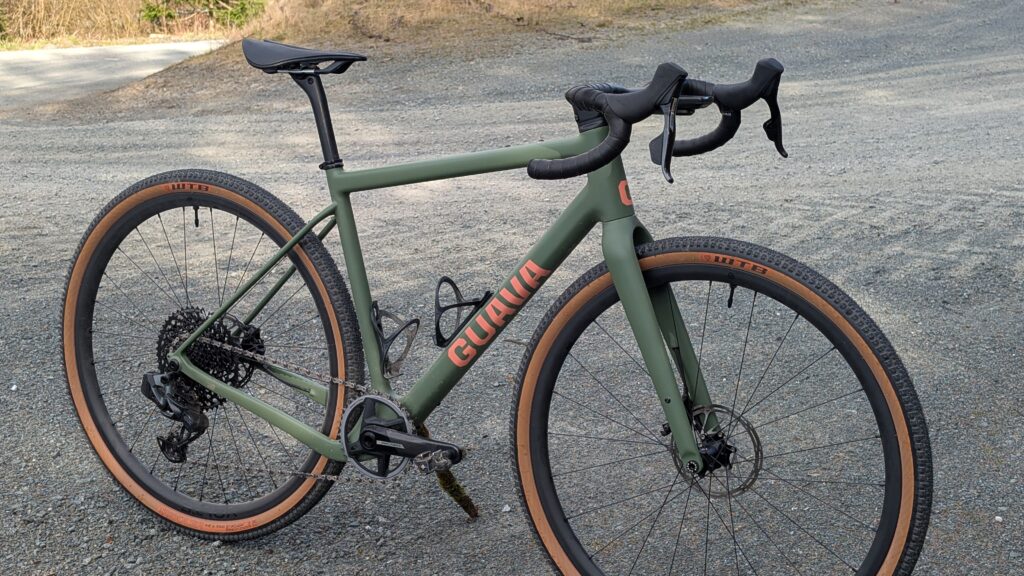

Guava is a Spanish company, and the Spot is its gravel bike designed for adventures, focusing on riding rather than racing. With an in-house paint option, the frame can be customised to suit your style, although its harsh ride detracts from its overall appeal.
- Best gravel bikes 2025 – drop-bar bikes for off-road riding
- Fara Cycling F/Gravel Apex XPLR AXS ´24 gravel bike review
- Trek Checkpoint SL 7 AXS Gen 3 gravel bike review
Guava Spot Force AXS Carbon gravel bike – Technical details
The Spot is currently the only model that Guava produces. There are four different price points, ranging from the £2,950 Shimano GRX mechanical version to the Force AXS model (pictured here), which is the most expensive at £4,950. All versions feature the same frame, with identical carbon construction and layup, regardless of price point.
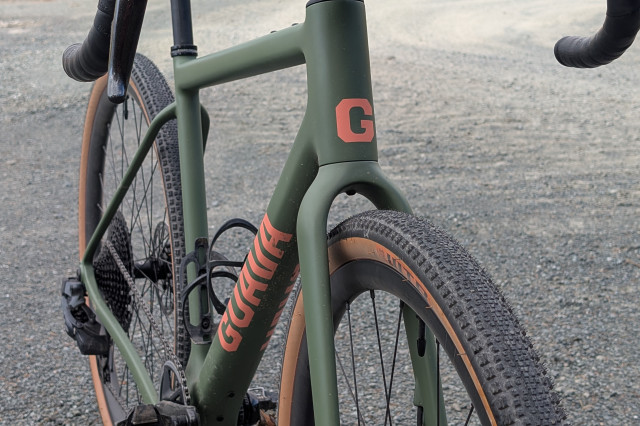
All Guava Spot models are built and painted to order with various frame and logo colours available – giving a total of 160 possible colour combinations.
The Spot comes in four sizes, with key geometry figures including a 70.5-degree head angle on Small and Medium frames, which steepens to 71.5-degrees on Large and XL. Seat tube angles are 73-degrees on all sizes except the Small. While the geometry is not particularly radical, it does suggest a relatively relaxed and short reach compared to some of the best gravel bikes.
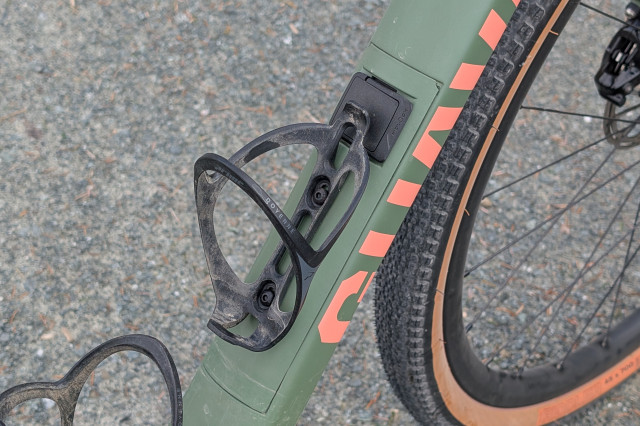
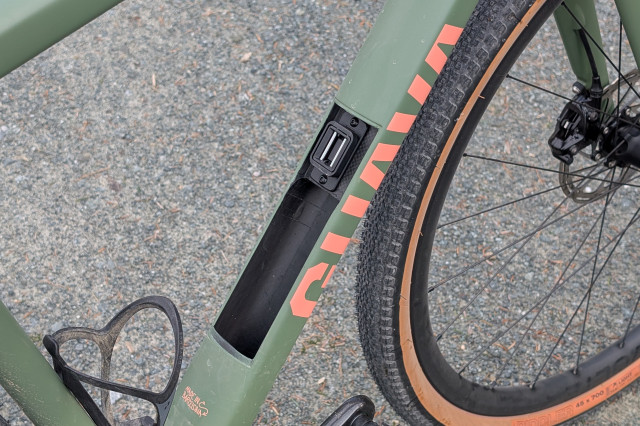
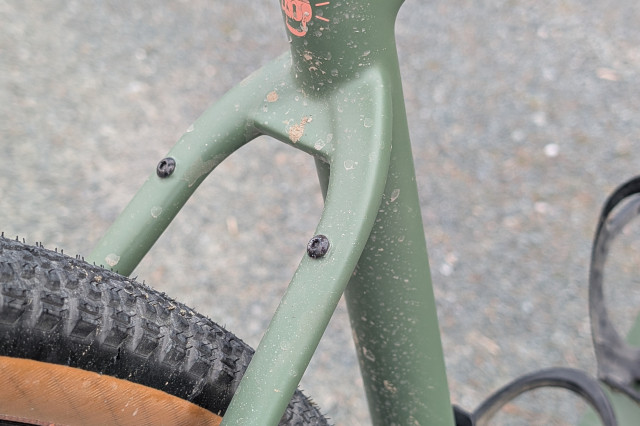
The frame features two bottle cage mounts inside the triangle, a third under the down tube, and a top-tube mount, providing ample carrying options. Additionally, the frame incorporates internal cable routing, mudguard mounts on both the fork and frame and an internal downtube storage compartment secured with a Fidlock magnetic system.
Tyre clearance is 45mm with a 700c wheel or 50mm for those opting for a 650b/27.5-inch setup.
The Medium pictured here weighed 8.96kg without pedals, which is just a little above the quoted weight of 8.8kg.
Guava Spot Force AXS Carbon gravel bike – Components
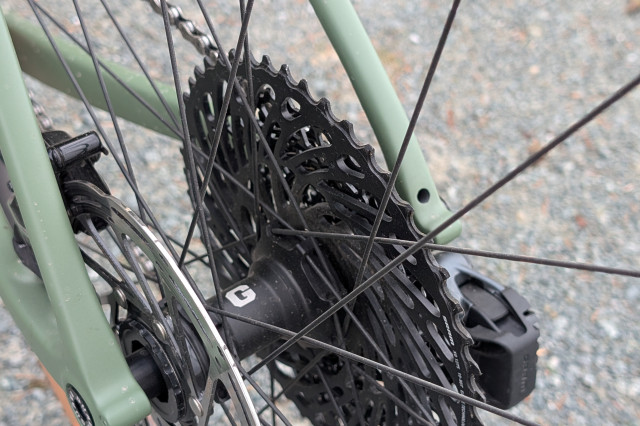
The Spot Force Carbon model features a mullet setup, combining Force AXS and GX wireless components. Riders can choose between a 38-, 40- or 42Tchainring, paired with a wide-ranging 10-50T SRAM NX cassette for versatile gearing. Currently, crankarm length isn’t customisable at the point of purchase, though this may change in the future. Hopefully, Guava will offer shorter options than the standard 170mm to better suit smaller riders or those interested in experimenting with shorter cranks.
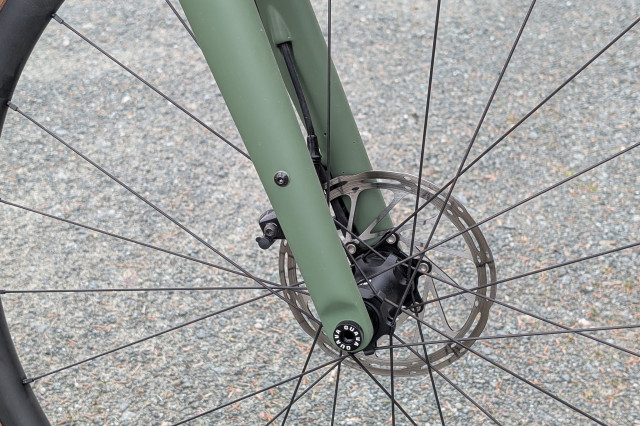
Braking is handled by SRAM Force calipers, with 160mm discs fitted front and rear on centre-lock hubs.
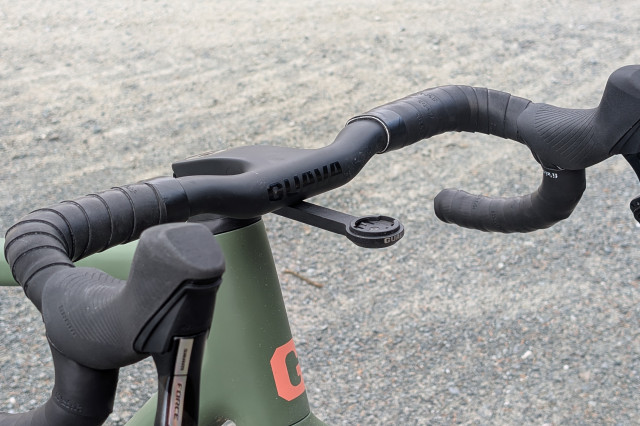
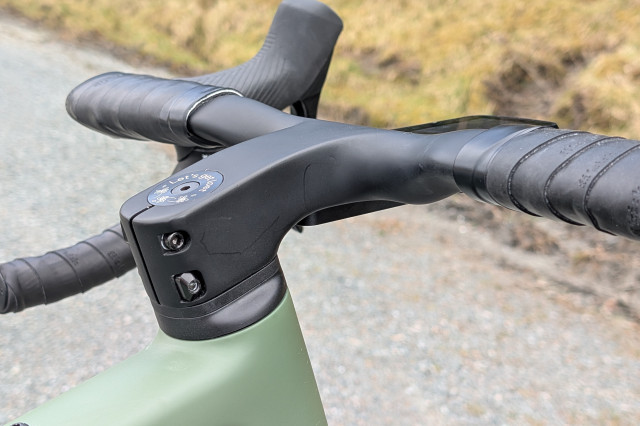
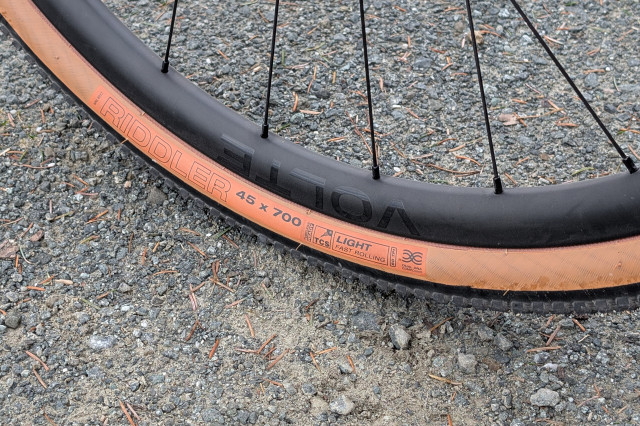
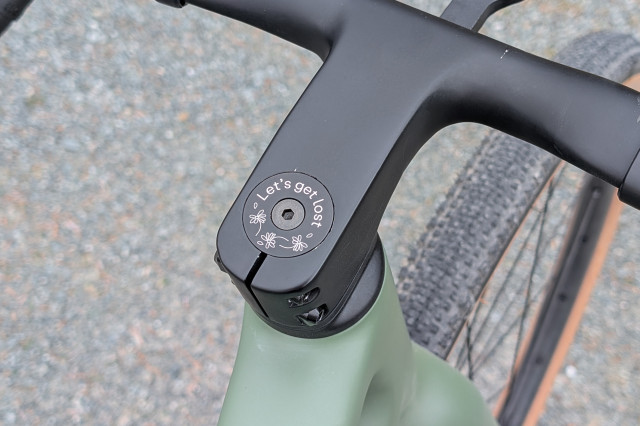
Guava also manufactures the one-piece integrated handlebar and stem as well as the Volte carbon wheels. The wheelset features 28mm deep carbon rims with a 25mm internal diameter fitted with 45mm WTB Riddler tubeless-ready tyres.
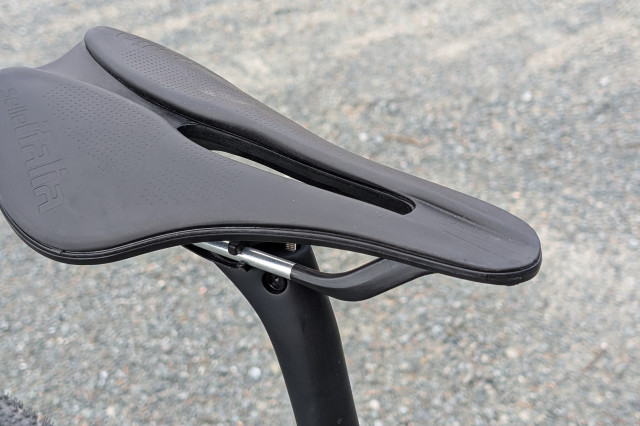
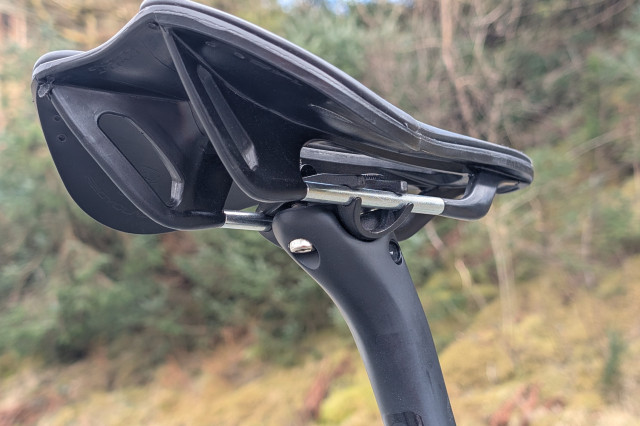
Guava’s in-house 27.2mm carbon seatpost is paired with a Selle Italia ModelX saddle.
Guava Spot Force AXS Carbon gravel bike – Performance
Before riding the bike, it’s worth mentioning its aesthetics. The Spot looks fantastic, with smooth tubing and clean lines. The matte-green paint finish with slightly pink decals works well. The clean lines are aided by internal cable routing, which is simplified by the wireless groupset, leaving only the brake cables routed internally. While brake cables rarely need replacing unless upgrading the brakes, a potential issue arises when the headset bearings require replacement, as this necessitates removing and re-routing the cables through the integrated handlebar.
Guava is clear that the Spot was not designed as a gravel race bike, and this is evident in its riding position, which feels short and upright. According to Guava’s size guide, I fall between the upper end of a Small frame and the lower end of a Medium. On the latter, it still feels short, even with the longer cockpit option. The upright position could be comfortable for those preferring a less stretched-out fit, but the build has limitations, particularly the one-piece handlebar.
Only two cockpit sizes are available, and you can select handlebar size at purchase (the website does not currently display the options). Small and Medium frames come with a 70mm stem and 485mm wide handlebars (centre-to-centre at the hoods), while Large and XL frames feature a 90mm stem and 505mm wide handlebars. Both have a shallow 110mm drop and 74mm reach. The bike includes an out-front computer mount compatible with Garmin and Wahoo, but lacks a GoPro mount underneath, which could have been useful for fitting a light or another device, as the handlebar lacks a straight, round-diameter section for standard bar mounts.
The Spot feels direct, with very little flex in the frame, wheelset or in the integrated handlebar. This translates to impressive acceleration and climbing that is a match for any other gravel bike I have ridden. It’s equally stiff in both planes, though, and it delivers a rough ride at the front. Despite being fitted with a 45mm WTB Riddler tyre and initially running at my usual high 20psi tyre pressures, the ride was very harsh. Subsequent rides, I dropped to the low 20psi, and while this helped with the smaller bumps, even on slightly rougher forest roads, it was uncomfortable and this did impact speed.
The fork is likely the culprit, although the stiff one-piece handlebar, carbon wheels and even the tyre could play a part. The rear is pushed close to the limits of tyre clearance with a 45mm tyre, but the fork does have more space, which leaves some possibility to fit a wider tyre and potentially increase comfort.
The integrated handlebar with the short 110mm drop keeps the riding position quite relaxed but, combined with a tall headtube, I did wish at times for a lower position. The handlebar shape gives more reach than the figure suggests, and, when matched with the SRAM Force shifter, which is also long, it helps elongate the position slightly.
Rear comfort is great with the bike in the standard specification, although I believe a big factor is the saddle. This is one area that I rarely comment on with reviews, as it is such a personal choice, but the Selle Italia ModelX is a saddle that I don’t feel has any place on a gravel bike. The short-nosed saddle has firm, almost solid rails that provide no flex at all, and this impacts comfort at the rear. The saddle also has a covering that feels sticky and holds onto Lycra. This might be brilliant for time-trialling or triathlon, where riders are often looking for ways to stay in an aerodynamic seated position but, for gravel riding in the UK where riders are likely to be in and out of the saddle frequently, I found it frustrating. The saddle also catches on Lycra shorts. Thankfully, saddles are simple and relatively cheap to swap.
There are more positive points about the Spot, however. The drivetrain and general build are good and suited to the intended style of rider, with a large range cassette that makes challenging terrain more possible.
Guava is developing the brand and is keen to push a more individual style with custom paint and increased build options in the future. The frame storage hatch could be a useful place, and Guava provides a small tool roll that might help in how to store items. The hatch is secured with a Fidlock magnet system and, while it wasn’t completely silent, it is much quieter than some other designs on the market. You will need to pack the space carefully to prevent goods from rattling inside the frame.
Guava Spot Force AXS Carbon gravel bike – Verdict
The Guava Spot is not aimed at racing but rather general riding. While elements of the bike feel perfect, the ride quality, particularly at the front, makes for an uncomfortable ride at times. There is scope to improve comfort and with reasonable pricing throughout the range and a customisable paint scheme, the Spot is still a worthwhile consideration for riders looking for a more relaxed position.
The Force AXS version costs £4,950, which is cheaper than many other brands with the same specifications. Among the direct-to-market alternatives, the Fara F/Gravel that Pat tested last year is £6,446 with similar specifications, including Apex AXS XPLR and carbon wheels. While testing, he came to a similar conclusion with front-end comfort being a factor.
The model below in the Guava Spot range has SRAM Rival AXS, and comes with a more typical two-piece stem and handlebar arrangement. If comfort were a major factor, this would give the option to fit a suspension stem – it’s almost £1,500 cheaper.
Guava has built a bike perfectly at home on smoother roads, tracks and adventures with a custom colour and some component options within the build to help make it a bike to match your requirements. It hasn’t quite hit the spot, though, with front-end comfort on the Force AXS model’s integrated handlebar perhaps being a factor. For riders who are looking for a more upright riding position, the custom options help it stand out from most of the other gravel bike options on the market.
You might also like:
- off.road.cc adventures: Elan Valley bikepacking bothy trip
- Five things that weren’t cool – until gravel happened
- Gravel bike suspension and dropper posts – do you need them?
About the bike
Tell us what the bike is for, and who it’s aimed at. What do the manufacturers say about it? How does that compare to your own :
The Guava Spot is a freedom machine – go wherever you want. Geared for steep climbs, fast and efficient for long rides, nimble and stable for descending. This bike is about enjoying. Up or down, short or long, fast or slow. The most fun money can buy.
State the frame material and method of construction. List the components used to build up the bike.:
Specifications
| Crankset | SRAM Force 1x AXS 40t |
| Rear derailleur | SRAM GX Eagle AXS |
| Cassette | SRAM GX Eagle 12sp 10-50 |
| Shifters | SRAM Force AXS |
| Seatpost | Guava carbon seat post 27.2mm 10mm layback |
| Handlebar | Guava Gravelbar integrated carbon fiber stem/handlebar |
| Saddle | Selle Italia ModelX |
| Wheels | Volte Level 28mm carbon, tubeless installed, 25mm internal width |
| Tires | WTB Riddler 45mm |
Technical Specs
Bike weight 8.8kg (size M without pedals)
3 bottle mounts
1 top tube feed bag mount
Front and rear rack and fender mounts
Flat mount hydraulic disc brakes
142/100 x 12mm through axle
27.2mm seat post
68mm BSA threaded bottom bracket
Headset spec IS 52 | IS 52
Tire clearance 700c x 45 / 650b x 50
Frame & Fork
Was the bike comfortable to ride? Tell us how you felt about the ride quality.:
How was the bike in terms of sizing and angles? How did it compare to other bikes of the same stated size and intent?:
Guava hasn’t designed the Spot for racing, so it might appeal to some riders who want a more relaxed position.
Overall rating for frame
Did the bike feel stiff in the right places? Did any part of the bike feel too stiff or too flexible?:
Tell us about the build quality and finish of the frame:
Tell us about the geometry of the frame:
Seat tube (C-T) – 495mm
TT (effective) – 552mm
Head tube – 150mm
Chainstay – 430mm
Wheelbase – 1030mm
Head tube angle – 70.5
Seat tube angle – 73
Stack – 579mm
Reach – 375mm
Fork height (A-C) – 405mm
Tyre clearance – 45mm
Recommended rider height – 166cm to 178cm
Recommended inseam – 77cm to 84cm
Tell us about the materials used in the frame:
Riding
How did the bike transfer power? Did it feel efficient?:
How would you describe the steering? Was it lively, neutral or unresponsive?:
Tell us some more about the handling. How did the bike feel overall? Did it do particular things well or badly?:
Rate the bike for sprinting:
Rate the bike for high speed descending
Rate the bike for technical descending:
Rate the bike for flat cornering:
Rate the bike for technical climbing:
Rate the bike for climbing efficiency:
Rate the bike for agility:
Drivetrain
Rate the drivetrain for performance:
Rate the drivetrain for durability:
Rate the drivetrain for weight:
Rate the drivetrain for value:
Wheels & tyres
Rate the wheels for performance:
Rate the wheels for durability:
Rate the wheels for weight:
Rate the wheels for comfort:
Rate the wheels for value:
Rate the tyres for performance:
Rate the tyres for durability:
Rate the tyres for weight:
Rate the tyres for value:
Tell us some more about the tyres. Did they work well in the conditions you encountered? Would you change the tyres? If so, what:
Controls
Rate the controls for performance:
Rate the controls for durability:
Any comments on controls weight?:
Rate the controls for comfort:
Rate the controls for value:
Tell us some more about the controls. Any particularly good or bad components?:
Anything else you want to say about the componentry? Comment on any other components (good or bad):
Summary
Did you enjoy riding the bike?:
Would you consider buying the bike?:
Which components had the most effect (good or bad) on the bike’s performance? would you recommend any changes?:
The drivetrain, with mullet components, makes it great for steeper climbs.
Would you recommend the bike to a friend?:
Rate the bike overall for performance:
Rate the bike overall for value:
Use this box to explain your score:
All the deals displayed on our review pages are pulled from a constantly updating database feed of the best affiliate deals available. The criteria for deciding on what are the best deals is who is offering the lowest, delivered price. In most cases we will be showing the very best deal available online, but sometimes you may be able to find an item cheaper. If you can please feel free to post a link in the comments box below. To find out more about affiliate links on road.cc click here.