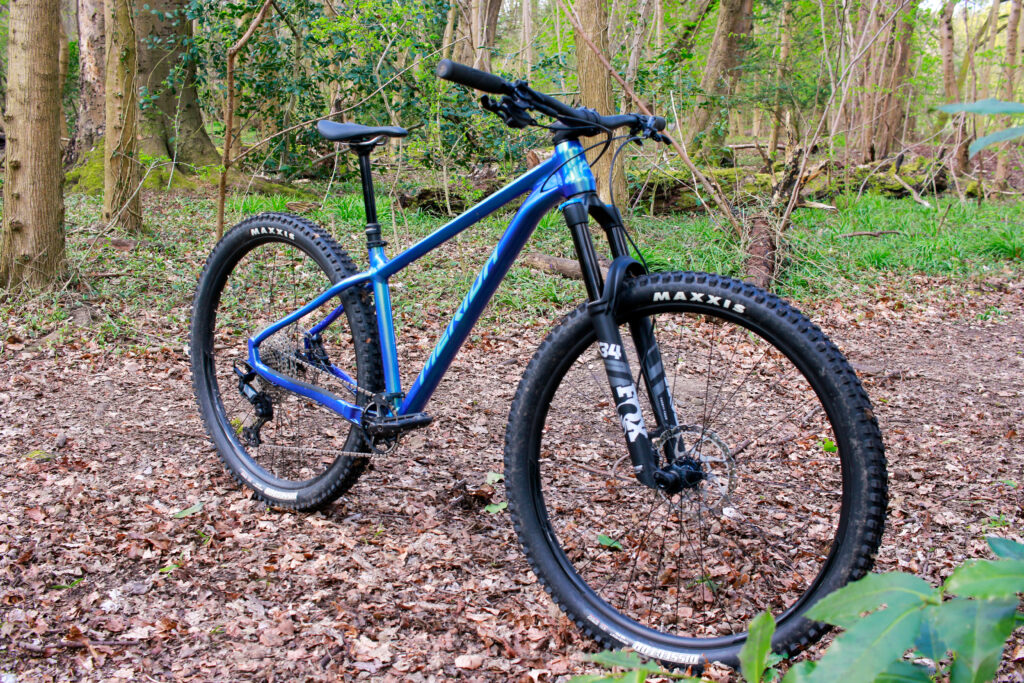

Merida Big.Trail 700 is, as the name suggests, Merida’s trail-orientated hardtail mountain bike. It features a blend of cross-country and enduro-style geometry and, although the bike’s capabilities are the most pronounced when the trails start to slope down, it’s one that delivers on most fronts with an option to upsize.
- Best hardtail mountain bikes 2023 – great hardtails for every budget
- The ultimate guide to frame materials: what’s best for bikes
- Best mountain bikes 2023 – top options from cross-country to Enduro
Merida Big.Trail 700 – Technical details
Merida has built the Big.Trail 700 “by request from riders to add an even more capable trail bike to the line-up” and the company has decided to keep things simple. All of the Big.Trail hardtail mountain bike models are built with a sleek aluminium frame that comes with 29-inch wheels and a 140mm fork.
The Big.Trail family consists of five models and the 700 pictured here comes in a beautiful blue colourway and is equipped with Fox 43 Float Performance fork, dropper post and a mix of Shimano SLX and XT shifting components (XT shifter, SLX mech). The SLX brakes use a four-piston caliper up front and a two-piston unit at the rear.
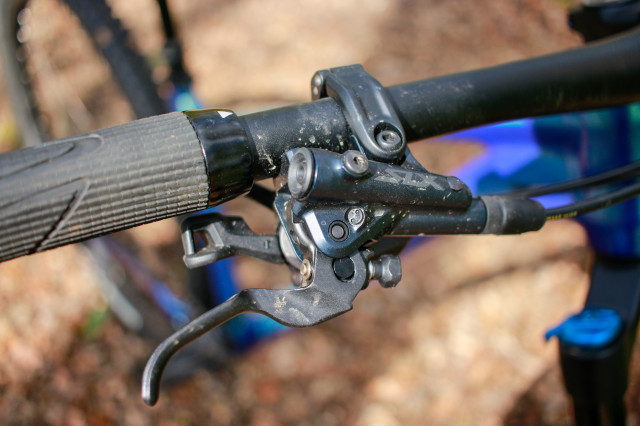
The gearing and brakes performed well for my needs with the drivetrain offering crisp shifting and powerful braking. The 10-51T cassette paired with a 32T chainring was plenty for spinning up hills and the Shimano SLX four-piston brakes and 180mm rotors offered precise stopping power after proper bedding in. Having an easily adjustable Shimano drivetrain also meant that the initial set-up of the cockpit was easy as adjusting the lever reach and position required a simple Allen key.
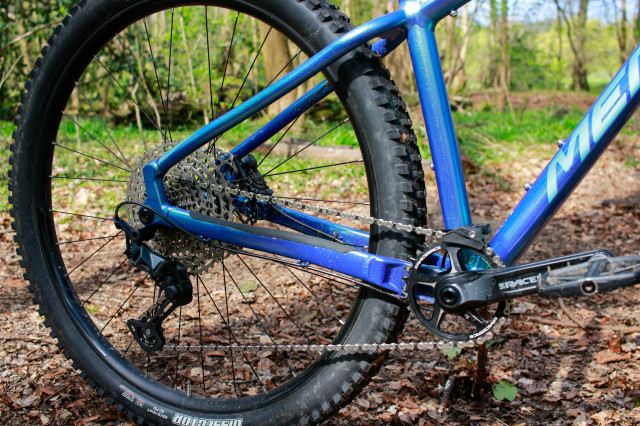
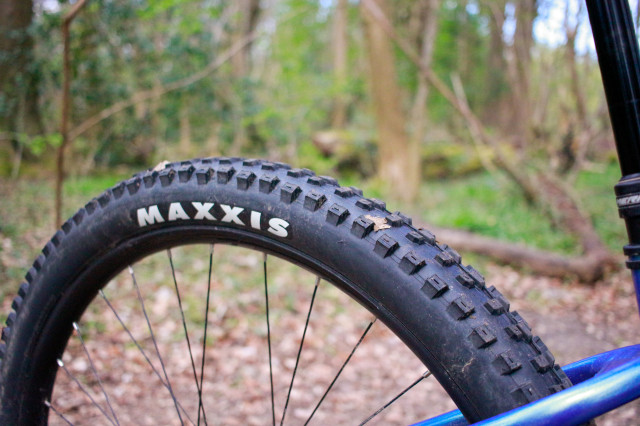
The frame has clearance for 2.6in tyres at the front and 2.5in at the rear, and the Big.Trail 700 comes equipped with 29 x2.4in Maxxis Dissector tyres out of the box. These are wrapped on Merida’s aluminium Merida Expert TR (tubeless-ready) rims with 29mm inner width, laced to Shimano SLX hubs.
The tyres performed well in all conditions and, even though I did not set them up tubeless, they are tubeless ready which allowed for somewhat lower pressures and increased traction. The Dissector’s tread pattern is not the most aggressive out there so swapping the front to something even grippier would enhance the bike’s performance in the UK’s usually damp conditions. Larger brake rotors would help here, too.
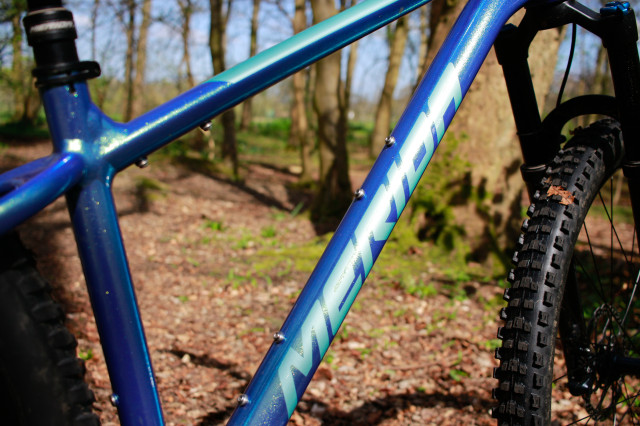
Merida has built this bike with a modern trail bike geometry and a hint of enduro, giving it a 65.5-degree head angle, and steep 75.5-degree seat tube angle. The reach for a size M bike is 435mm, paired with a 641mm stack – making it quite a tall bike if you do decide to upsize. However, the seat tube has been kept short to allow a lower standover: it’s 723mm for size M and because of this, it’s quite easy to size up on this bike, but more on that later.
In the front triangle, you get two bottle cage mounts and there is an additional spot for a tool caddy under the down tube. You get a little multitool box under the saddle and there are also mounts for mudguards or rack if you wish to take the bike for a longer trek. You also get a thru-axle tool that neatly hides in 4 and 6mm Allen key heads.
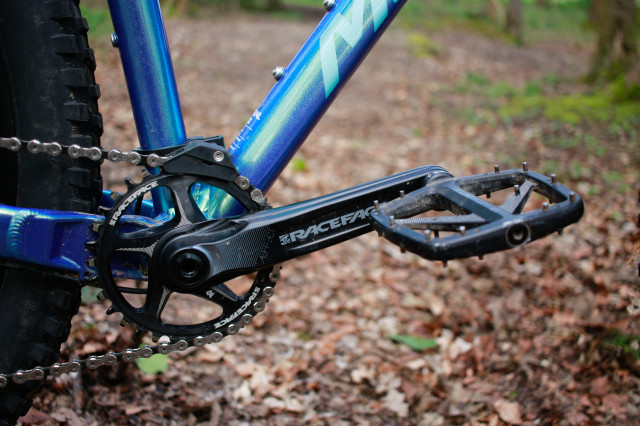
In terms of the finishing kit, you get Merida Expert EC grips and an on-brand saddle – I would prefer something a little softer on the grips but I got along well with the Merida Expert saddle. The handlebars were definitely wide at 780mm, but once I got used to them (and not bashing my hands on the trailside trees), it served me well, too. The length of the crankarms – 175mm for the size M – was definitely something I would’ve preferred to change to 165mm, considering the overall size of the bike.
Merida Big.Trail 700 – Performance
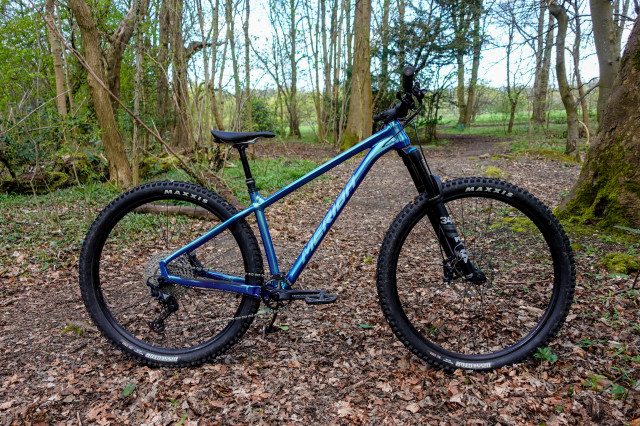
The Big.Trail 700 seemed like a bike built for me – it’s simple as a hardtail but promises to offer something a little more than a cross-country mountain bike. Jumping on it was a leap into something new for me, but well worth it for the new trail lines that it opened up – especially when they were pointing down.
That said, the Big.Trail is stiff enough to not feel sluggish on the flats and up hills – but once the trail started to slope downwards, the Big.Trail’s technical talent comes to the fore. Merida has decided to equip the Big.Trail with a relatively steep 75.5-degree seat angle that placed me well on top of the bottom bracket when climbing but the 65.5-degree head angle ensured that the bike felt well planted on downhills. I felt that the steady ride feel was helped by the dropped bottom bracket – and although it’s not the lowest at 66.5mm, it aids the weight distribution.
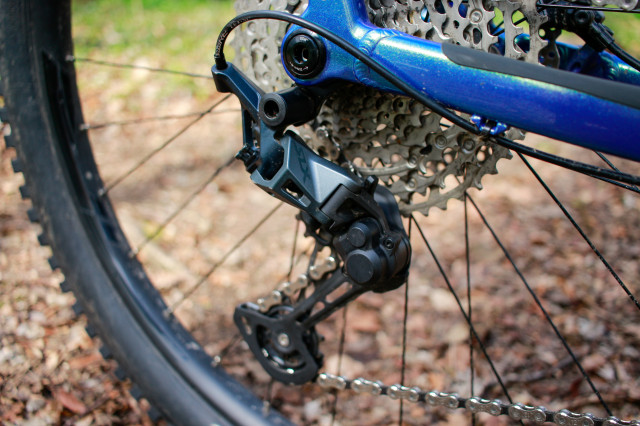
The steering of this bike is really neutral and, although it is not as playful as a pure cross-country mountain bike, the shorter chainstays help keep the bike dynamic in the corners. The bike is still comparatively tall in terms of the stack (if you upsize) and the 1,172mm wheelbase is shorter than the Ribble HT AL pro but, then again, the Merida has other benefits – and the long reach of the bike is much more telling of its ride characteristics. The front of the bike for me – due to its taller nature, wasn’t as easy to weigh down as on a smaller bike, but it wasn’t detrimental to the handling.
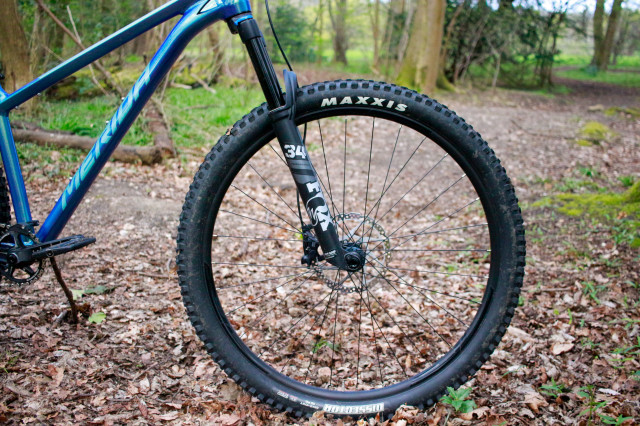
In terms of suspension, you get 140mm of travel at the front, and this was definitely enough for the riding this bike enjoys. The Fox 34 Float Performance is not the most advanced fork out there, but it does the job of dampening the trail jitter and bigger bumps effectively and is easy to set up.
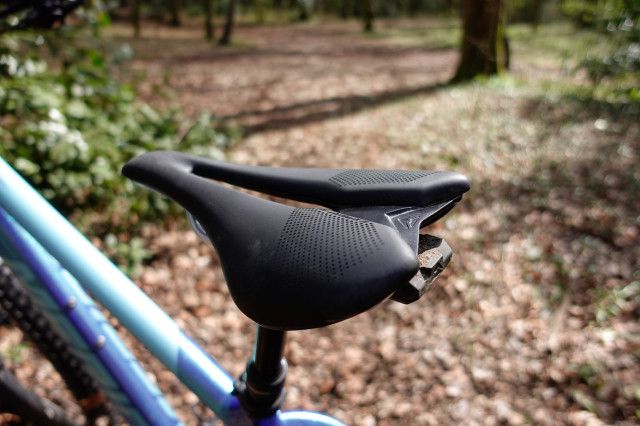
And talking of weight distribution, the Big.Trail comes with a dropper seat post and that 150mm drop made those very steep sections even easier. The seat tube itself on the Big.Trail 700 is only 410mm long, which paired with the dropper meant that the saddle can be dropped low and out of the way when the weight is shifted to the back of the bike – although for my size, I could do with an even lower saddle height at some sections.
I’ve touched a few things that could have possibly felt different if I had tested a different bike: this was the first time I was riding a larger-than-usual size. I was testing a size M frame and it was the first time I’ve ridden such a “big bike” (for reference, I am 5’4″ tall). But by sizing up from my normal small frame, and because of the frame geometry – namely the shorter seat tube and longer head tube – I was able to feel comfortable and not too stretched out at all.
The Big.Trail is not the most progressive in terms of geometry but, by upsizing, you do get a slightly more modern geometry, meaning a longer reach and slacker angles. The larger frame size also allows the planted and stable ride feel.
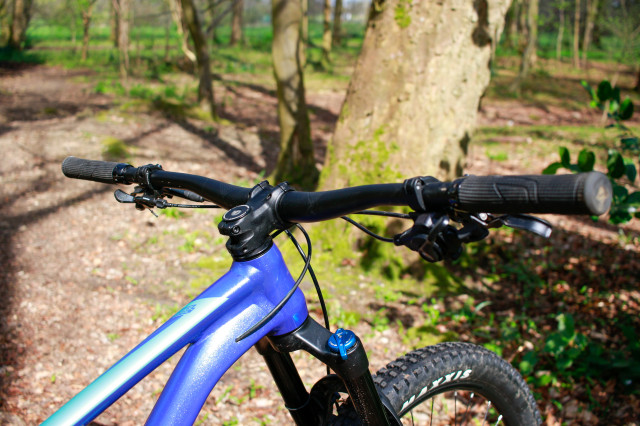
I did feel that for my riding style, I could have well been on the smaller S frame as well. That could have perhaps given me a little more power in moving the bike around, because yes, the Big.Trail is a lot of bike to move around. After riding the Medium as a smaller rider I’ve concluded that sticking to my ‘regular’ size would perhaps offer the best performance as I appreciate a playful and nippy bike. That said, the flexible sizing of the Big.Trail is one of its major selling points and allows you to pick a size that suits your riding style the best.
And what made the Big.Trail an exciting bike for me was the way I could grow with it. It was more aggressive than the bikes I usually ride and it definitely helped me through some really technical and tricky trails.
Merida Big.Trail 700 – Verdict
The Big.Trail 700 is the top of the Big.Trail range and the overall package is great value with thoughtful components that are not immediately outdated or need upgrading.
Retailing for £2,200, the Big.Trail is well specced for the money and very competitive against its main rivals. Comparing it to Ragley Mmmbop 1.0 (£2,000), or Vitus Sentier 29 VRX (£1,900), the differences in componentry and geometry are minor and both come in at slightly lower prices. Then we have Stif Squatch AM Kit at £2,099 – but despite similar geometry goals and target market, the Stif comes with a steel frame.
The Big.Trail is most capable of going downhill but it won’t make you frustrated on a flat or uphill section, either. Overall, it’s a bike that acan naturally upskill a rider as you grow with confidence.
You might also like:
- Women’s bike vs unisex bike – understanding the differences
- Team ORCC ’23 | EP.02 pt 1 – Suspension setup for enduro
- 27.5 vs. 29-inch wheels – understanding the differences
About the bike
Tell us what the bike is for, and who it’s aimed at. What do the manufacturers say about it? How does that compare to your own :
State the frame material and method of construction. List the components used to build up the bike.:
Durable double butted aluminium frame
140 mm Fox 34 trail fork
Modern trail bike geometry with long reach, slack head angle, steep seat angle and extremely low standover height
29er wheels specced with 2.4″ trail tyres and clearance for 2.5″
Powerful Shimano SLX 4 piston front / 2 piston rear brakes1x12 Shimano SLX drivetrain
Frame & Fork
How much suspension travel does the fork have?:
Was the bike comfortable to ride? Tell us how you felt about the ride quality.:
How was the bike in terms of sizing and angles? How did it compare to other bikes of the same stated size and intent?:
Overall rating for frame
How much suspension travel does the rear end have?:
Did the bike feel stiff in the right places? Did any part of the bike feel too stiff or too flexible?:
Tell us about the geometry of the frame:
Tell us about the materials used in the frame:
Riding
How did the bike transfer power? Did it feel efficient?:
How would you describe the steering? Was it lively, neutral or unresponsive?:
Tell us some more about the handling. How did the bike feel overall? Did it do particular things well or badly?:
Any comments on sprinting?:
Rate the bike for high speed descending
Rate the bike for technical descending:
Rate the bike for flat cornering:
Any comments on flat cornering?:
Rate the bike for technical climbing:
Any comments on technical climbing?:
Rate the bike for climbing efficiency:
Rate the bike for agility:
Suspension
Rate the fork for performance:
Rate the fork for durability:
Rate the fork for efficiency:
Rate the fork for value:
Tell us some more about the fork. Anything you particularly did or didn’t like? Any features which didn’t work well together?:
Rate the balance and performance of the suspension overall:
Drivetrain
Rate the drivetrain for performance:
Rate the drivetrain for durability:
Rate the drivetrain for weight:
Rate the drivetrain for value:
Wheels & tyres
Rate the wheels for performance:
Rate the wheels for durability:
Rate the wheels for weight:
Any comments on wheel weight?:
Rate the wheels for comfort:
Rate the wheels for value:
Tell us some more about the wheels.Did they work well in the conditions you encountered? Would you change the wheels? If so, wha:
Rate the tyres for performance:
Rate the tyres for durability:
Rate the tyres for weight:
Any comments on tyre weight?:
Rate the tyres for value:
Any comments on tyre value?:
Tell us some more about the tyres. Did they work well in the conditions you encountered? Would you change the tyres? If so, what:
Controls
Rate the controls for performance:
Rate the controls for durability:
Rate the controls for weight:
Rate the controls for comfort:
Any comments on controls comfort?:
Rate the controls for value:
Summary
Did you enjoy riding the bike?:
Would you consider buying the bike?:
Which components had the most effect (good or bad) on the bike’s performance? would you recommend any changes?:
Would you recommend the bike to a friend?:
Rate the bike overall for performance:
Rate the bike overall for value:
Use this box to explain your score:
All the deals displayed on our review pages are pulled from a constantly updating database feed of the best affiliate deals available. The criteria for deciding on what are the best deals is who is offering the lowest, delivered price. In most cases we will be showing the very best deal available online, but sometimes you may be able to find an item cheaper. If you can please feel free to post a link in the comments box below. To find out more about affiliate links on road.cc click here.