Spoiler alert! Those watt and torque ratings for e-bike motors that are bandied about all over the place (and I am as guilty as the next e-bike journalist here) are not as simple as they seem. Whilst UK and EU law says ‘the maximum continuous rated power output of the motor shall not exceed 250 watts’ you will often see peak power ratings at several times this on fully legal motors. This is naturally confusing – torque ratings are also widely quoted to further muddy the technical waters. Here we take a look at these terms in a bit more detail to clarify the picture.
First off, don’t just consider the biggest numbers in terms of watts or torque when sizing up e-bikes. It’s important to remember that there are many more factors at play that determine how an e-bike performs. Higher numbers don’t always equate to better performance. Watts and newton meters aren’t the be all and end all – just a useful guide.
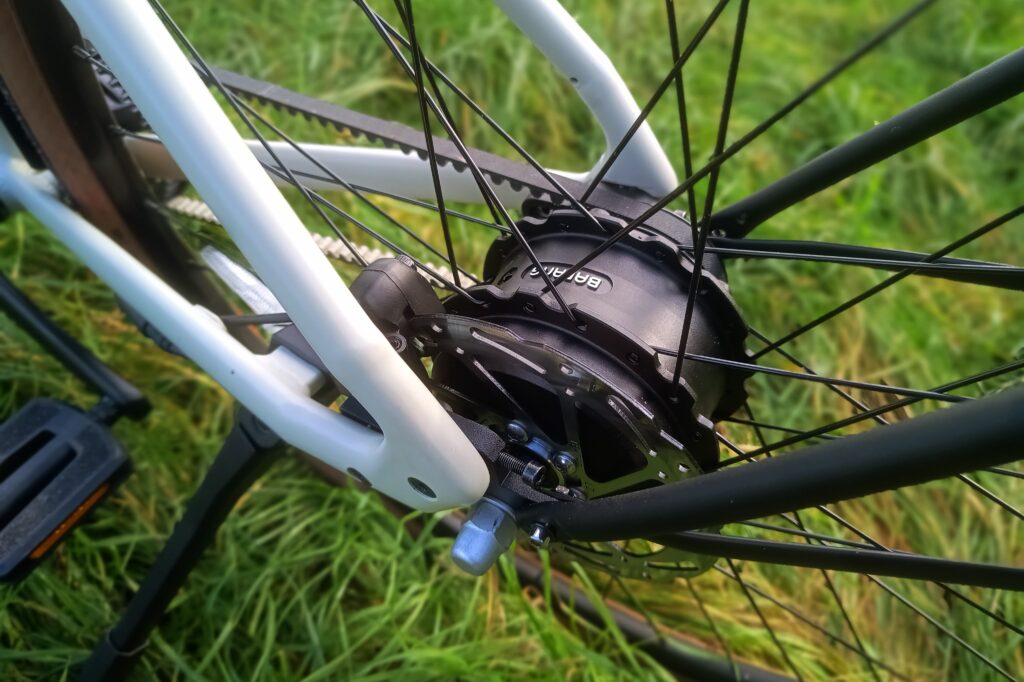
Just as important is whether you have a hub motor or mid-drive. On paper these might have some similar stats, but whilst both will be rated at the legal 250W of continuous power output, they can function very differently – as we’ve explained in a separate article on that specific subject. Mid-drives leverage a bike’s gearing system and so often punch above their weight at slow speeds compared to hub motors.
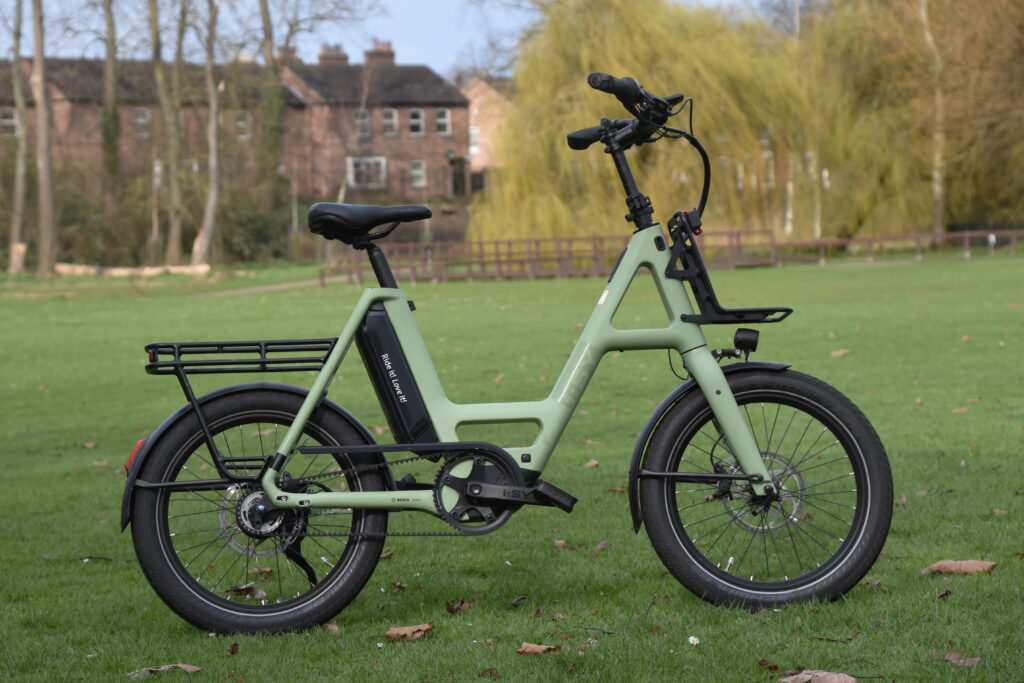
Bike design is also a big factor. For example, small wheeled e-bikes will accelerate faster than bigger wheeled ones, all other things being equal (including motor outputs).
> Hub motor v mid motor? What’s the difference?
Equally critical to how much power can be delivered to the motor is the motor controller that is wired between the battery and the motor, which acts as the ‘brains’ of the system. One function of the controller is to limit how much current can pass between battery and motor and so they determine peak power. Whilst some e-bike motor manufacturers, like Bosch, insist on providing the whole system, from battery through to display and therefore specify the controller, many e-bike motor manufacturers do not. This means identical motors can be paired with differently rated controllers by different brands, meaning one motor may draw more peak watts than another.
What do the current rules really mean? – Watts, torque and power
Watts – continuous and peak
A watt is a measure of energy in its many forms, whether electrical energy, as consumed by an e-bike motor, or mechanical energy, which is what it has become by the time it has been transferred to the chain wheel (for mid-drives) or wheel (for hub drives).
E-bike motor manufacturers will often give two watt ratings: the continuous (legally prescribed) rating and the peak rating (not a legal standard and one that varies enormously between different e-bike models).
We asked Bosch to give us their interpretation of these two ratings and they responded: “Rated continuous output describes the mechanical power that your drive unit can provide
continuously without the components overheating or being damaged. Under EU law, the mechanical rated continuous output is limited to 250W – this applies to all e-bikes and e-bike motors.”
As a general rule, the bigger the physical size of a motor (and specifically the size and volume of copper wire windings) the more continuous power it can handle. So, as a very crude measure the 250W law limits the size of motors.
Bosch says that European standard DIN EN 15194:2017 defines the test procedure to measure continuous rated power and that, “this states that the continuous rated power shall not exceed 250W after reaching thermal equilibrium.” In layman’s terms, this appears to say that if your motor doesn’t eventually start to overheat if it runs at more than 250W, then it is illegal.
Continuous rated power isn’t however all that helpful in the sense that this is simply not how e-bike motors operate in practice. They don’t just output 250W whilst you ride and it’s obvious to anyone who’s been on an e-bike that power changes according to the demands you place on the motor (known technically as ‘the load’).
Moreover, if e-bike motors never exceeded 250W output then virtually no-one would buy them as their hill climbing ability would be severely limited. A fit rider of a non-electric bike can generate a fair bit more power than this (in short bursts at least). For context, 750W is roughly what an elite athlete might be capable of producing for 30 seconds to a minute. (This is roughly what a horse can consistently generate – hence 1 horsepower is around 746W.)
Much more helpful for buyers looking to compare e-bike performance between models is the peak power rating that you will often see quoted in e-bike spec lists. Of this, Bosch said: “Maximum mechanical power (also called peak power) describes the maximum power that the motor can call up for a short time under optimal conditions (e.g. sufficiently charged battery), for example on climbs.”
It should be noted that e-bike law says nothing about maximum power and there is no accepted standard for how long it can be applied. In fact, peak power tends to be limited by the constraints of the 250W rating – which in practice tends to result in peak power up to about 750W. Anything more would require you to bike around with a huge, heavy motor and similarly burdensome battery or risk damaging a motor too small to handle that power. Bosch quotes 600W peak power for many of its mid-drives.
Despite the fact there is no legal limit to peak power, it tends to be self-limiting within the e-bike’s design. Good quality e-bikes are built with thermal cutouts that monitor motor (and often battery and controller) temperature and simply cut the power if the detected temperatures start to get too high. Circumstances have to be pretty extreme for this to happen. In years of e-bike testing, I have only once had an instance where I suspected this happended, riding a bike with a small hub motor and a single gear up a very long steep hill in hot weather. Turning the bike off and waiting a few minutes meant I could resume my ride.
Torque – great for getting going…
Torque is a measure of the force being exerted as it turns a lever around a pivot – in this case a chainwheel or a wheel (depending on whether you have a mid-drive or a hub motor). It is measured in newton-metres (Nm). The bigger the number, the greater the torque.
Lots of Nm are particularly useful to move off from a standing start or to climb a very steep hill and doubly so with heavy e-bikes like cargo bikes or with a heavy rider. Higher torque is also useful if you have to do a lot of stop-start riding, for example in busy towns. As with peak power, there is no legal maximum, just limits imposed by physics within the envelope of the 250W legal prescription.
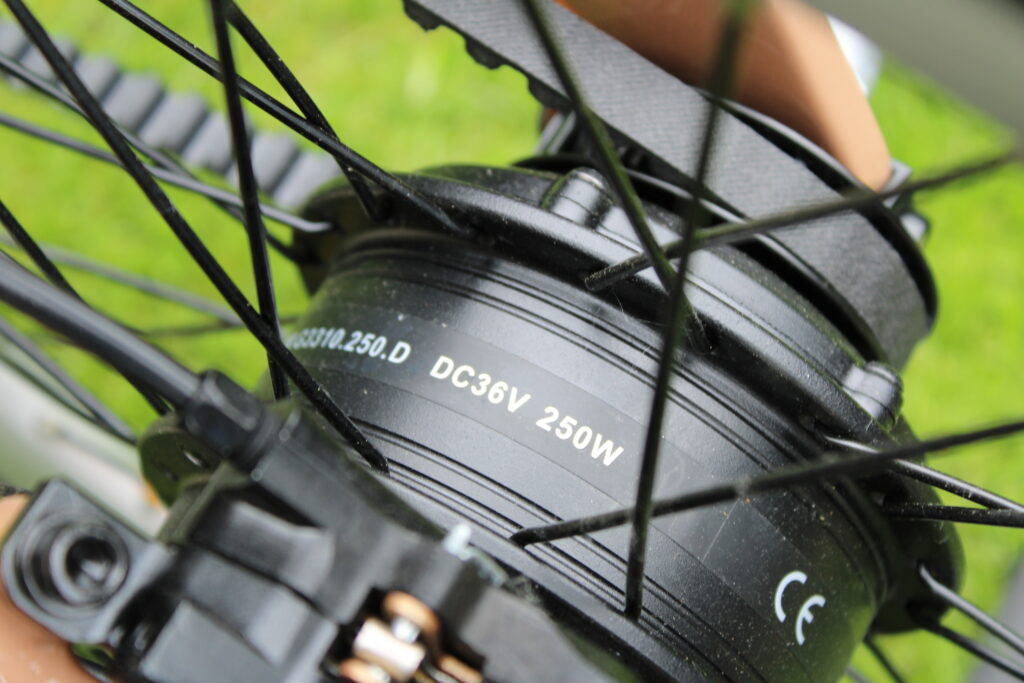
A major point to note is that you cannot directly compare the torque rating of a hub motor with the torque rating of a mid-drive as you are not comparing apples with apples. The first is usually measured at the wheel axle, whilst the latter may well be measured around the pedal crank (and indeed manufacturers very rarely specify where the measurement was taken). Moreover, even if you do want to look at the torque a mid-drive motor delivers to the rear axle, there will be different measurements for each of the gear ratios on the e-bike.
Note that torque is not the same as power and is actually inversely proportional to speed. As your e-bike gets faster, the less torque the motor produces. Think of it as the amount of low-speed instaneous power your e-bike can generate to get you going or to climb a mega-steep hill. The more amps a motor can draw, the more torque it will produce, hence bigger, beefier motors with thicker wiring and more generously specced controllers will deliver more torque than smaller ones of a similar design.
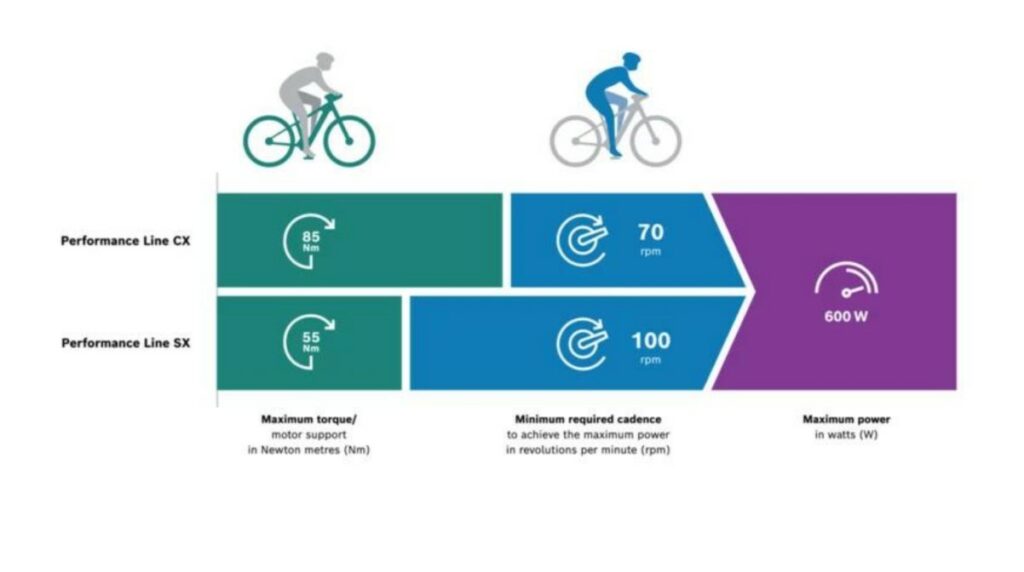
Bosch sent us this helpful diagram to show how peak power can be the same for their most performance-orientated motor, the CX, and their lightest motor, the SX, while the torque is significantly different. The SX only achieves peak power at higher cadences, but speed x torque = power.
Some examples
Whilst all legal e-bikes carry the 250W continuous rating, their peak, as we have noted, can be much much higher. Both the relatively heavy Bosch Performance Line CX mid-drive and its lighter SX cousin claim 600W peak power, but relative torque figures of 85Nm and 55Nm translate to superior performance under difficult conditions, such as extreme mountain biking, for the CX variant. By contrast, the SX will deliver plenty of power on rides where you can keep a high cadence most of the time, such as road or gravel rides.
The boundaries of peak power are really being pushed by the new DJI Avinox mid-drive which claims to be able to sustain 1,000W output and 120Nm torque for 30 seconds.
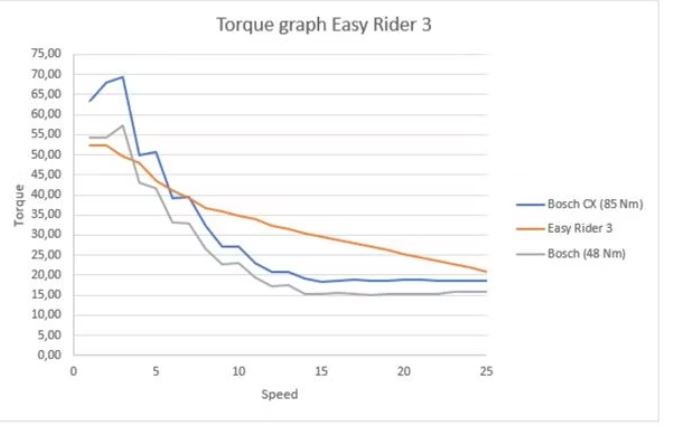
Whilst torque figures for mid-drives often peak at low speeds, torque for hub drives will often be higher than mid-drives at higher speeds (perhaps one reason speed pedelec manufacturer Stromer has opted for hub motors) – witness this helpful graph for a Van Raam trike:
Nevertheless, don’t take all manufacturer claims at face value. As just one example of many, Dave recently raised an eyebrow at the 100Nm torque rating of the mid-motor employed in the Engwe LE20.
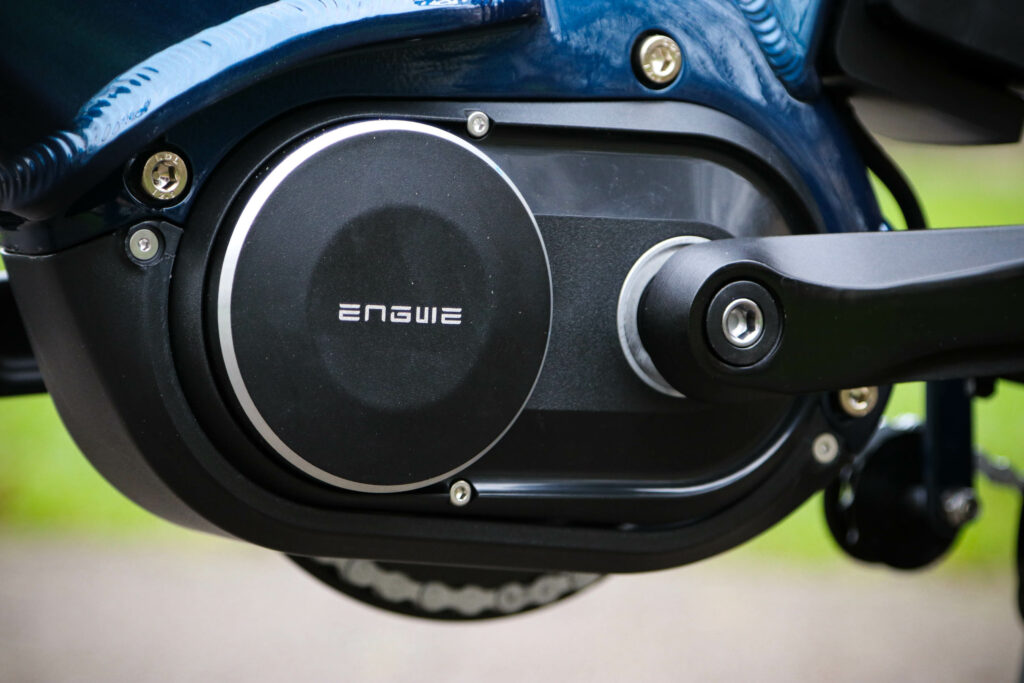
“That makes it more powerful on paper than the 85Nm Bosch Cargo Line motor, which it objectively is not in real life,” he wrote. “Don’t get me wrong, it’s not a bad motor. But in terms of power it’s more in the Bosch Active Line Plus ballpark, a motor that’s rated at 50Nm – so I guess temper your expectations accordingly on that front and things will be fine.”
The moral here is perhaps to rely on real world reviews from experienced testers like those here at ebiketips…