



UCI President Pat McQuaid has confirmed what many suspected that last year’s “clarification” of the UCI’s Technical Regulations for Bicycles was an attempt to put a spoke in the wheels of Britain’s then all conquering track cycling team. Speaking at the World Track Championships in Copenhagen yesterday Mr McQuaid told the Telegraph that:
"Teams have been flouting the Olympic charter."
"The bikes used should be freely available in the market place at a reasonable price. It should not be about the bike, it should be about the rider. We want a level playing field.
"It has become apparent to the UCI that it’s become a little bit out of control. Some teams are riding prototypes costing between €50,000 and €100,000, €200,000. That is working against the Olympic charter, against UCI rules and it’s against the spirit of fair play.
"I’ve written to all the federations in the last week or so, telling them that any bikes they use from now on must be within the rules as they are laid out. I’m particularly concerned with this going forward to London 2012."
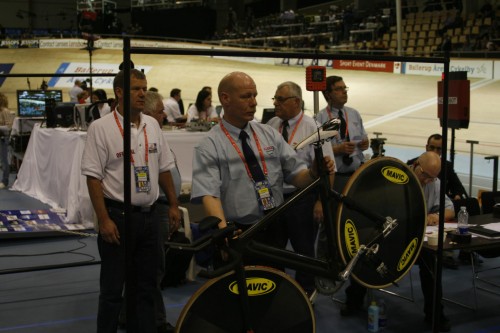
When pressed he confirmed that the new interpretation of the rules was designed primarily to punish Great Britain, Australia, and Germany – currently the three most dominant nations in the sport, whose cycling federations also invest the most money in track cycling.
As reported here on road.cc last year’s re-interpretation of their own rules by the UCI caused consternation amongst the major bike manufacturers with accusations that a multi-billion pound industry was being put in jeopardy for the sake of internal politics at the UCI with the R&D departments of the major cycling manufacturers supplying the pro peloton, caught in the cross fire.
Speaking to road.cc last summer, Tyler Pilger, Road Product Manager for Trek said: "I think the main issue revolves around who the UCI’s true constituents are – the National Federations (definitely not the average license holder). National cycling federations get a majority of their funding from their nation’s overall sports federation which is mainly focused on the Olympics.
"Some national federations have put significant resources into track cycling in recent years and updating the technologies their athletes have access to. Other National federations have cried foul and so the Aero topic has come to the UCI’s attention.”
Setting aside the stifling of innovation, the problem for the pro teams and the big manufacturers is the rule outlawing the use of prototypes – many if not all teams ride bikes that are one or two seasons away from the shops. On this basis it is quite possible that the UCI could declare machines that were legal in last year’s races illegal this time around. Most observers of the way the UCI works believe that the organisation will work out some accommodation with the manufacturers leaving them to carry on with business as usual.
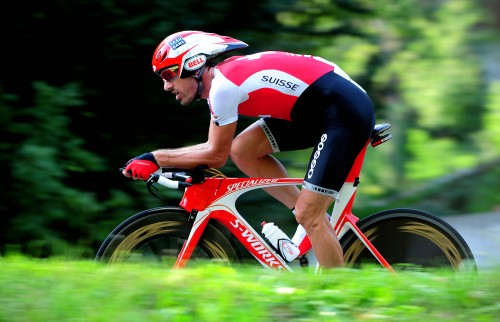
The new interpretation of the rules came in to force at the start of the year and so far not much appears to have changed, although tellingly perhaps, after intervention by the UCI Specialized is not currently supplying its two ProTour teams: Team Saxo Bank, and Astana with their latest Shiv time trial bike even though last October the UCI allowed it to be piloted to victory by Fabian Cancellara at their Time Trial World Championships. Farcically, Specialized’s replacement bike, the Transition was also at first declared illegal under the new 2010 interpretation of the rules before some hasty modifications rendered it UCI compliant.
One unintended consequences of the furore surrounding the UCI’s re-interpretation of its rules was the foundation of GOCEM – the Global Organisation of Cycling Equipment Manufacturers initially representing manufacturers supplying all the ProTour and UCI Wild Card teams, so that bike and equipment companies could respond with one voice to any future rule changes and give their input before they happened a move “welcomed” by the UCI.
So where does this leave British Cycling? up to now both officially and unofficially BC have struck a diplomatic tone on the issue saying that they will of course be abiding by the rules and would find ways of working within the new interpretation. However with 2012 in the offing there would appear to be a hardening of tone. Speaking in Copenhagen, British Cycling Peformance Director, Dave Brailsford pointed out that other nations were free to invest in their track cycling squads too, he also questioned the UCI’s definition of “freely available” and “reasonable price” both of which the UCI has resolutely declined to give specific definitions of.
All the way around the UCI would seem to be playing “tech reg poker”, in theory they could summarily ban Team GB’s track bike and various pro team machines as well. Of course it is not as simple as that. The bike manufacturers, and very possibly their lawyers, would have something to say were the latter to happen. And while Pat McQuaid’s UCI constituency may be national cycling federations who get their funding from their national Olympic committees he has just been elected to the board of the International Olympic Committee which has its own agenda.
History, including the recent Winter Olympics, demonstrates that with a Games in the offing one of the IOC’s overriding concerns is that the host nation does well in the medals table, and what sport offers Britain its best chance of concerted medal success in 2012? Oh yes, that would be cycling.
















24 thoughts on “UCI President admits 2010 tech rule “clarification” all about stopping Team GB”
If the UCI really wants to
If the UCI really wants to get serious about unfair competitive advantage they should ban training that’s totally unfair and track world champs and the like should be decided by a random ballot of the competing nation’s eligible citizens who could be plucked from couch, bar, or bed, and plonked on a bike and made to race around a velodrome in Copenhagen, Sydney or wherever as part of their patriotic duty. Then we’d have a level playing field and we’d get a true reflection of every nation’s ability on the bicycle.
Anything else is just tinkering around the edges IMHO.
If the UCI are serious about
If the UCI are serious about making the best rider the winner then why do they allow any aero ad ons? surely the way forward would be to force everyone to use the same kit?
The UCI can write a standard specify the gearing, the frame tube sizes etc.
The current approach is a mess, either allow innovation or ban it.
The UCI are like the FIA with
The UCI are like the FIA with F1. They lack the intelligence to understand the full impact of their rule changes and try to hold back innovation.
Most ‘national’ teams now have major sponsors who will foot the bill for the technological advances that are needed to keep track and road cycling interesting to the general public and moving forward.
Most sensible people know they can’t buy the bike that Lance or Sir Chris or Vicky etc ride and it would make no difference to the performance of most of them if they could.
The UCI should concentrate on cleaning up our sport and getting rid of the drug cheats and leave the riders and teams to do the real work.
Seems to me the UCI has a
Seems to me the UCI has a point. Why should some riders have an unfair advantage because their country has deeper pockets? Not exactly the Olympic ideal is it? I realise this is probably hopelessly naive and I have no idea how to unravel the mess given all the real world complications but as far as the general principle goes I agree with them.
Martin Thomas wrote:Seems to
Me too. We have to keep, above anything, the Olympic ideal. And it should include only the bike; how about that special aero clothing that costs thousands of pounds/dollars?
LondonCalling wrote:Me too.
Sssh! Nobody’s told Pat McQuaid that it was the skin suits which made all the difference, not the bikes.
Quote:Seems to me the UCI has
Sorry Martin but that is rather naive. The Olympic ideal of level playing fields and doing it for the honour disappeared when athletics went professional and every other sport followed suit.
The Olympics are now about who can spend the most money with very little actually going to the sports men and women. What could you do with £9 Billion or whatever the cost of 2012 is going to be? Forget the infrastructure and legacy projects, you could hold an Olympics without all that and the inevitable hangers-on.
If you stifle innovation and technological advances and the sport fails to move on and capture larger audiences then the big name sponsors will move on and the developments will end.
jova54 wrote:Sorry Martin but
Told you I was naive 🙂 I still think it’s worth trying to keep it fair though. AFAIK they manage it in other sports – the boats used by the rowers and sailors have to be identical, the bobsleighs, luges etc have to be exactly the same (don’t they? not sure actually). It would be messy and difficult to level the playing field but not impossible.
I think there’d still be plenty of innovation and investment in cycling if the IOC insisted on standardising equipment used in the Olympics. There’s a lot more big name sponsorship interest in events like the Tour de France after all.
When it comes to the Olympics
When it comes to the Olympics big countries inevitably have an advantage over smaller ones because they’ve got bigger populations to choose from in the first place. With regard to the track those countries that are presumably bleating weren’t doing so when they were ruling the roost – trouble is some of them got their performance advantages via other means – which country’s men’s pursuiters and most of their other top riders didn’t make it to Sydney because of “illness”?
Better that advantage is gained through technical means which may well be passed on as a benefit to more ordinary cyclists, that applies to road and track – as these rules do and as far as I can see they are a threat to the continued development of the types of bikes that you and I ride.
tony_farrelly wrote:When it
Surely it’s countries with high participation levels in any sport that have an unfair advantage? Perhaps the IOC should specify a cap on the number of running tracks, velodromes and other sports facilities per 1,000 people so that poor countries can compete (but remain poor, as they get paid 45p/day to make the rich people’s running shoes).
The whole story behind the UCI’s faintly fanatical yet apparently disorganised approach to bicycle technology is embarassing for the sport and makes life complicated for manufacturers. I really don’t understand their motivation.
I think that the interesting
I think that the interesting thing in these comments is that no one is supporting the UCI’s approach.
Sailing is an interesting comparison – at the Olympics all of the boats are ‘one design’ and supplied to competitiors at the event but other events more than make up for this restriction in technical development.
The other events are largely due to the lack of a universal, all powerful, governing body as we have in cycling (and F1).
Cycling needs an Americas Cup type event where designers can push the boundaries of cycling speed with minimum restricitions. These developments then work their way in to the marketplace and eventually in to the ‘one design’ categories…. purity at the olympics and massive budgets/leaps forward on the cutting edge…
Roadkill wrote:I think that
I was! (er, for what it’s worth like…)
I think rally teams once got
I think rally teams once got round a similar bit of legislation by selling souped up cars to the public at a huge loss- let’s hope team GB will do the same with their superbikes.
This is nothing more than a
This is nothing more than a willy waggling contest between the UCI and the bike trade.
The UCI believe that without the racers and races (who they govern) there would be no racing bikes. The bike trade think that without ([i]their brand of[/i] ) bikes there would be no racers, teams or races. They both have their own interests at heart.
Take a closer look at what’s been happening at the BC since the run-up to Beijing and where they are now with regard to equipment and suppliers. Don’t be too surprised if by the time 2012 comes around, you see the GB squad on branded bikes sourced from outside the UK.
The BC track bike design is hardly ‘revolutionary’ and in truth, it never was. All the ‘secret squirrel’ stuff was all about hyping up the team to the mainstream media and to gain a perceived psychological edge over other nations.
More importantly, it justified the money being pumped into the BC. In those respects, they’ve been highly successful.
However, compare the GB bike with the stuff that’s being ridden by the likes of France, China, Poland, Belarus, Canada etc, etc, etc, which, by the way, [u]is[/u] commercially available [u]and[/u] within the UCI regs. It wouldn’t have gone down too well with the UK mainstream media and UK Lottery if all GB’s medals had been won on French or Chinese-made bikes, would it?
This latest spat between the UCI and outside commercial interests (if its not the TV people, it’s the bike trade . . . yawn) will play nicely into the hands of the BC. They’ve got a ready-made scapegoat in the form of the UCI’s ‘Dr. Evil’ tech committee baddies to serve up to the red-tops. So, they might just get the bikes they wanted to ride all along.
At the same time, the bike trade will be happy too. They’ll (hopefully) have a whole pile of medals to claim as their achievement. Because after all, the riders wouldn’t have done it without [i]their[/i] bikes, would they . . . ?
The rule is fair enough, but
The rule is fair enough, but they have to come up with something less hand-wavy than “freely available” and “reasonable price”.
I imagine that BC’s partnership with Pinarello, who are developing their new track bikes, will enable them to comply with this rule.
Those were the Homologation
Those were the Homologation Specials, like the RS200, Audi Quattro Sport, Lancia Delta Integrale etc of the early 1980s. I think they had to build 5000 examples for sale to the public that matched the profile of the real thing then they could modify anything inside the envelope.
The problem with governing bodies is they think that only they know how to run their sport when most of them are ‘placemen/women’ out of touch with what goes on in the real world.
jova54 wrote:
The problem
Got any specific examples you like to call upon?
Or are your comments based on your personal experience of organising sporting events, regulations and membership on a worldwide scale?
The first homologation
The first homologation special rally car was the Lancia Stratos, introduced in the early 70s. Power came from the 2.4litre v6 developed for the Ferrari Dino, also part of the Fiat Group. Under the rules of the time, Lancia had to build at least 500 and the car was sold to the public in a slightly softer state of tune. The rally specials of the 80s were ‘silhouettes’ and in reality had nothing to do with the road cars of the time, other than vaguely resembling them from the outside and using a few of the same nuts and bolts in their construction. The 80s cars were eventually banned because they were too fast. The Stratos at least was similar in road and racing rally forms as it used the same basic components. The answer to all this may lie in the bicycle firms following the same route taken by Lancia with the Stratos and Porsche with its 917 racer, both of which were able to qualify as production racers because they were built in sufficient numbers to qualify.
The difference here Old
The difference here Old Ridgeback is that there is no reason apart from cost for you not to have exactly the same bike as used in the Tour de France or for the bike makers to make them in sufficient number or indeed to keep tweaking and improving their performance and then producing the bikes in sufficient numbers.
The only fly in the ointment is that these rules apply beyond the track the UCI which wants to hold back technical development in the name of sporting purity – when it would be much better spending it’s time concentrating on keeping the engines legal rather than fretting about the chassis and bodywork. The bike industry already produces the bikes the pros ride at the top level in fairly decent numbers – it’s just that racing is often part of the development process so this year’s pro peloton bike will be in the shops next year or the year after… but it will be in the shops
The irony is that if manufacturers were simply allowed to get on with it a level playing field would fairly quickly be established anyway – the laws of physics and aerodynamics being immutable a level playing field more or less exists now anyway.
Except of course if the new rules on running pre and production prototypes are enforced if that happens THEN the UCI risk achieving exactly the opposite of what they intended – the richest teams and the biggest manufacturers will be able to test their bikes out of competition, and in non UCI races, those with less expansive R&D budgets won’t. Last year Trek were able to launch the new 6 Series Madone at the Tour de France and have it in the shops at the same time, and win the race. I can think of only two bike manufacturers who could hope to match that kind of muscle… that doesn’t sound like a level playing field to me.
This is all rather daft in my
This is all rather daft in my opinion. The UCI is looking at banning prototype bikes because they want a ‘level playing field’, and a £50k prototype is more expensive and less available than a £10k production bike. So, that’s forty grand. Or possibly £190k if you believe that any of the bikes being ridden cost £200k. they don’t.
All this for an advantage over a 4km pursuit of what? a tenth of a second? a hundredth? I guess it depends on the technology and how much it differs from ‘production’ bikes. So I guess at the very highest level, say in the pursuit final between Australia and Team GB which was decided by hundredths of a second, it could make a difference between gold and silver.
But why is the final between Australia and Team GB? not because we’ve got the most naturally talented track cycling athletes, but because we’ve poured millions upon millions of pounds into our track cycling setup over the last two decades. Built a world class velodrome and probably the finest training facilities in the world. Given riders salaried contracts to allow them to live and train full time with their team mates. Brought in world leading sport scientists, analysts, psychologists, nutritionists to hone their training and diet to perfection. That’s a massive commitment, it cost a lot of money and it has brought results. Any national squad that was given the resources that the track cycling team has had at their disposal should be able to do a similar job in the same time.
That’s where the playing field is most uneven. To bleat about some special bike is completely missing the point in my opinion. What is this Olympic ideal? How does it square with the fact that one country has ten, a hundred times more to spend on developing a team than another? it’s irrelevant that some of his money is spent on the bike. It’s small beer, it really is.
If you really wanted to level the playing field you’d have to give each country a budget: spend it however you want, that’s all you’ve got for everything: athletes, training, equipment, faciities. And it’s have to be a very small budget so it didn’t exclude any poorer nations. Will that happen? no. So what we get instead is, as neilwheel rightly points out, a dick swinging contest between the powers that be and the rich countries. which proves nothing and solves nothing.
Excellent post cactuscat – I
Excellent post cactuscat – I think you’ve changed my mind with your eloquence. But where does that leave us? Do we just allow people to pour mountains of money into sport and shrug nostalgically about the Olympic ideal? Perhaps that’s our only option… That seems a bit sad, but perhaps that’s just more naivety on my part.
Until “UCI” demand all
Until “UCI” demand all support staff carry the “national passport” and bikes are built in the participant’s country they will never achieve their lofty dreams!
“Sailing equipment” is given to the “sailors”, “rowing hulls” given to the “rowers” so why not “bikes” !
Grobler was the force behind Redgrave, Pinsent and others, he was German at the start of his connection!
An aussie shook up the Brit swim team, so it is obvious that there are ways to defeat the “Olympic Ideal”!
Dream on Pat concentrate on the “passport” and leave the trimmings to sort themselves out since some athletes will get out of bed and still have a “bad hair day”!
How long before our world
How long before our world class velodromes are deemed an unfair advantage.
antonio wrote:How long before
Maybe we should all get some practice in down at Palmer Park just in case 🙂