


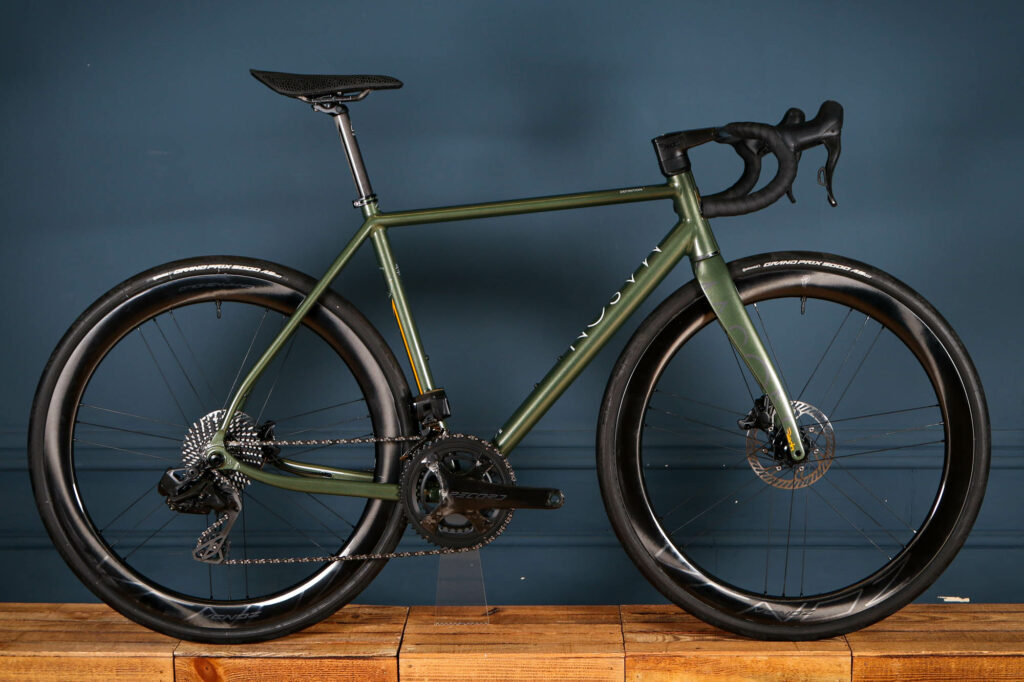
The Mason Definition Integrale Campagnolo is the sportier offshoot of its highly regarded aluminium ‘all-roadie’ grand tourer and WOW is it ever good. Hand on heart, this is one of the best bikes I’ve ever ridden from a non-racing standpoint. Everything has been designed and created to give the best ride experience, whether that be from a performance, comfort or aesthetic point of view – and yeah… I’m struggling to even come up with words for just how good this bike is.
Mason Definition Integrale Campagnolo: The ride
When Mason launched a little over ten years ago, the Definition was one half of its line-up alongside the Resolution. The main difference was the latter used steel tubing, and the Definition was created from aluminium.
Both bikes were quite simply stunning to ride (and have remained so – as you can see from our latest reviews, linked below). They were right at the forefront, embracing disc brakes and wider tyres on road bikes before anyone else. They were the original allroad machines, if you like, but without sacrificing the performance required to make a road bike exciting.
Both bikes have seen subtle tweaks over the last decade, reacting to the latest trends, like even wider tyres, thru-axles, wireless electronic groupsets and internal routing. The Integrale takes things a little further though. It’s a Definition with a bit of an attitude. Its shoulders are back, and its chest is out!
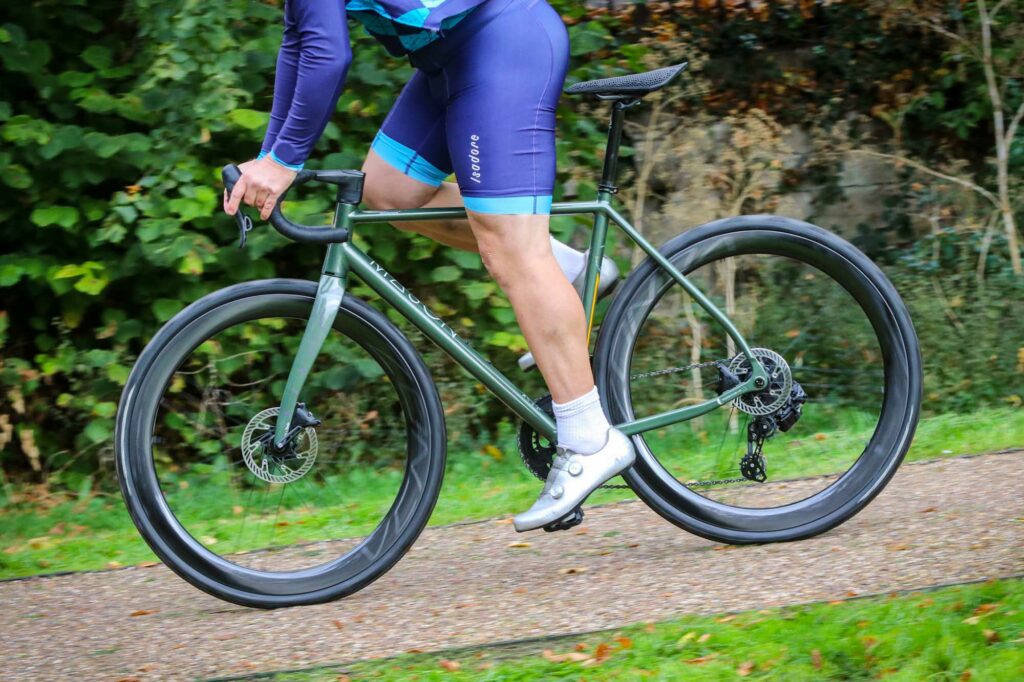
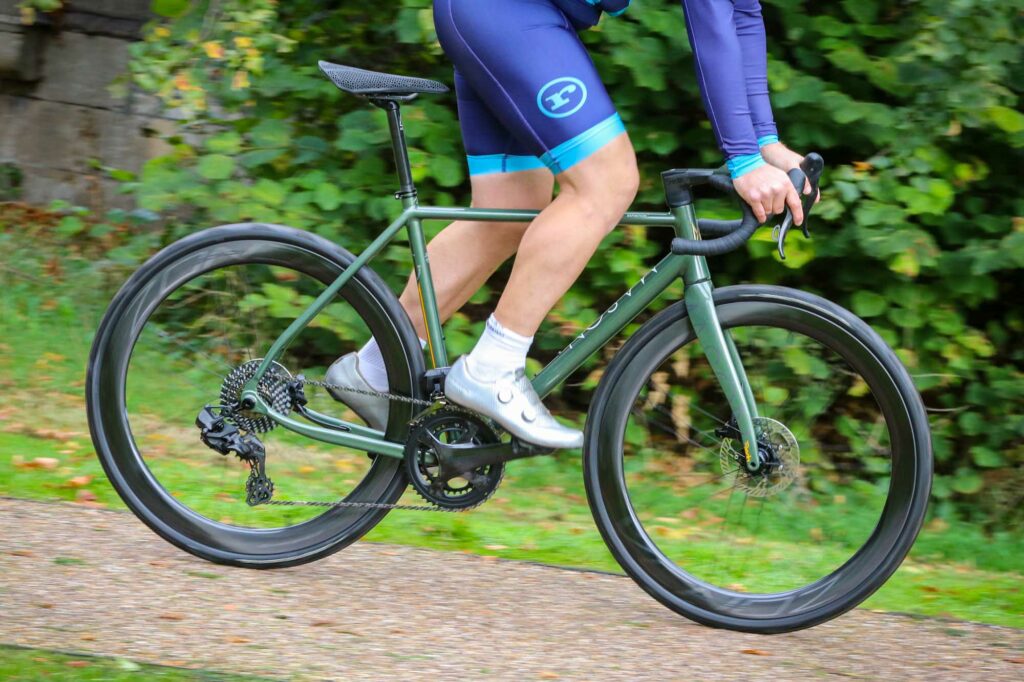
I’ll touch on the geometry and stuff in a bit, but in Dom Mason’s words, “The Integrale really focuses on the sportier personality of the Definition and it’s now probably the raciest Mason in the range.”
When I rode the original Definition and the 2.0 model, I was impressed with how something designed as an endurance style, all-rounder road bike could still feel so fast and handle so sharply, and after riding the Integrale it turns out the dial wasn’t even turned up to the max.
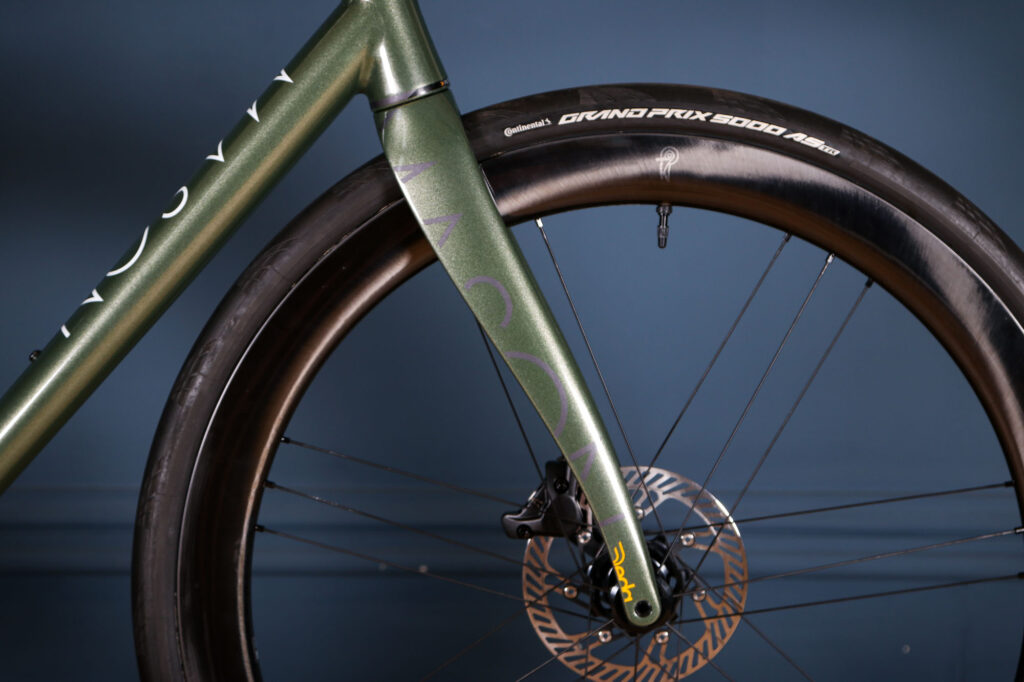
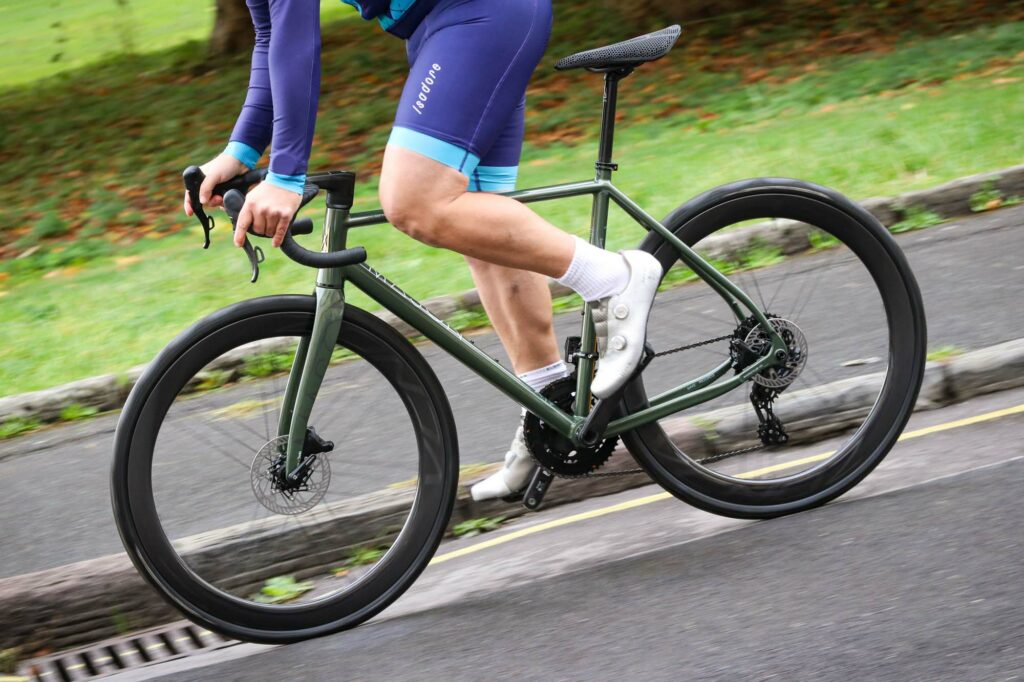
The key difference on this Integrale over the standard Definition is a reduced crown height (the height from the thru-axle position to the base of the fork steerer). This reduces the stack height, creating a slightly more aggressive ride position.
It’s a drop of around 12mm on this 54cm, which makes a noticeable difference to how the bike feels against a Definition. Thankfully things haven’t gone too extreme. The Integrale hasn’t become an arse in the air, nose on the floor race machine, but it certainly feels more purposeful.
The Integrale has poise. By that I mean even with a 71.5 degree head angle – which is slack by race bike standards – the handling still manages to feel quick and direct. Not as crisp as a race machine in the tightest of technical high-speed corners, but it still goes wherever you point it and if necessary it changes line with the tiniest bit of input.
It’s incredibly well balanced and composed and while I might have had to scrub off an extra couple of miles an hour compared to a race bike on the tightest corners of my test descent, the confident feedback and feel of the Integrale meant that the speed I could carry and exit with is bang on with minimal losses – we’re talking efficiency here over pure speed.
We’ve got to bear in mind here what the Integrale is all about. It’s not about racing, it’s about covering miles as quickly as possible, so all of these high-speed shenanigans are a bonus, not what the Mason is designed for.
In fact, even though it can descend like a demon, it’s an incredibly easy bike to ride. Even with the speed of the handling, there’s a theme of neutrality running through the front end.
It’s not a twitchy bike, or ever a handful. If you’re using the Integrale as a long-distance tourer, or you just want to get the miles in and enjoy the scenery, you can almost switch off and roll those pedals over without a care in the world.
Wet, greasy roads? No problem – which is why I’d recommend the Integrale as a year-round machine. The fact that it can take full mudguards is a huge bonus too.
Any bike I have ridden designed by Dom Mason has had a beautiful ride quality, and I’m including his days with Kinesis, pre-Mason. Even a Kinesis T2 frameset I owned years ago rode beautifully and that was an aluminium frame that cost a few hundred quid. Then there was the original Kinesis Aithein – a full-on race machine from back in the days when aluminium race bikes could rattle your fillings out – that had a ride quality which would allow me to cover a hundred miles on it and finish feeling fresh and unbattered.
So, it’s going to come as no surprise that the Definition Integrale follows the same path. The ride feel and quality here is second to none, with the speccing and design of the tubing shapes managing to blend the properties of aluminium with the ride characteristics of a steel or titanium frame. It really is something special.
The Integrale completely isolates you from a crap road surface. Sure, you can feel the bumps and undulations, but there’s no unnecessary jarring or buzzing, rattling or being shaken about. The trick is isolating that without removing the feedback and the info you want as a rider – something Mason has managed to achieve here.
This is probably the thing I loved the most about riding the Integrale. I got so much information from the tyres, up through the bike to my contact points, I could almost have ridden it blindfolded. It’s stunning. There is so much detail being fed through, and it means the Mason is what I regard as a true rider’s bike.
Yes, a lot of this can come down to component choice, like tyres, saddle etc, but all that feedback has to come through the frame and fork and to design those to pass on that information without sacrificing things like stiffness is a real skill.
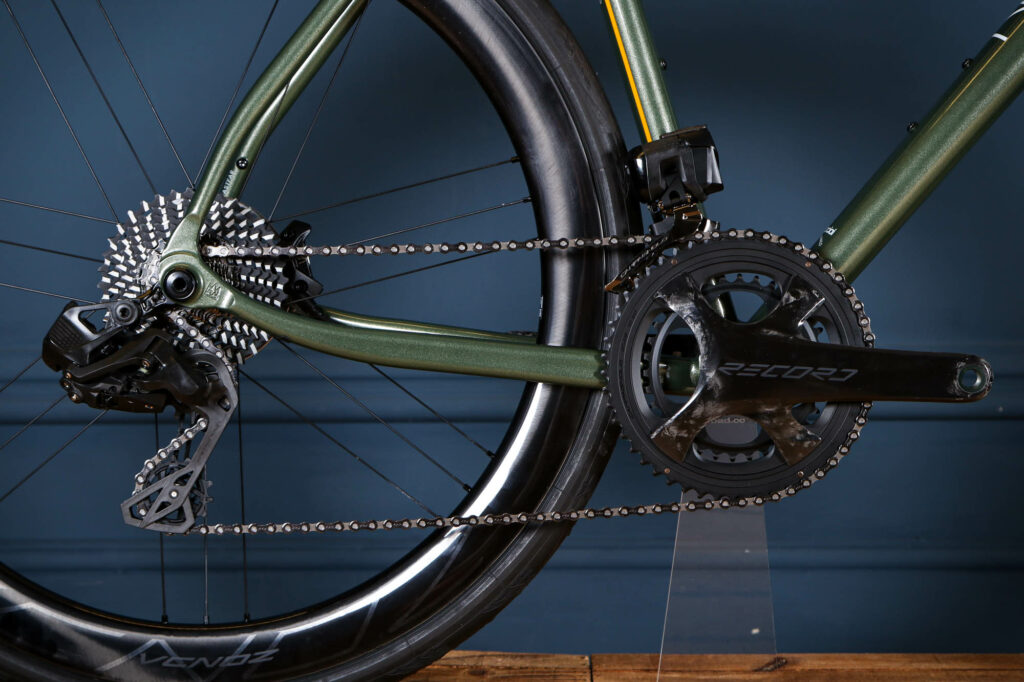
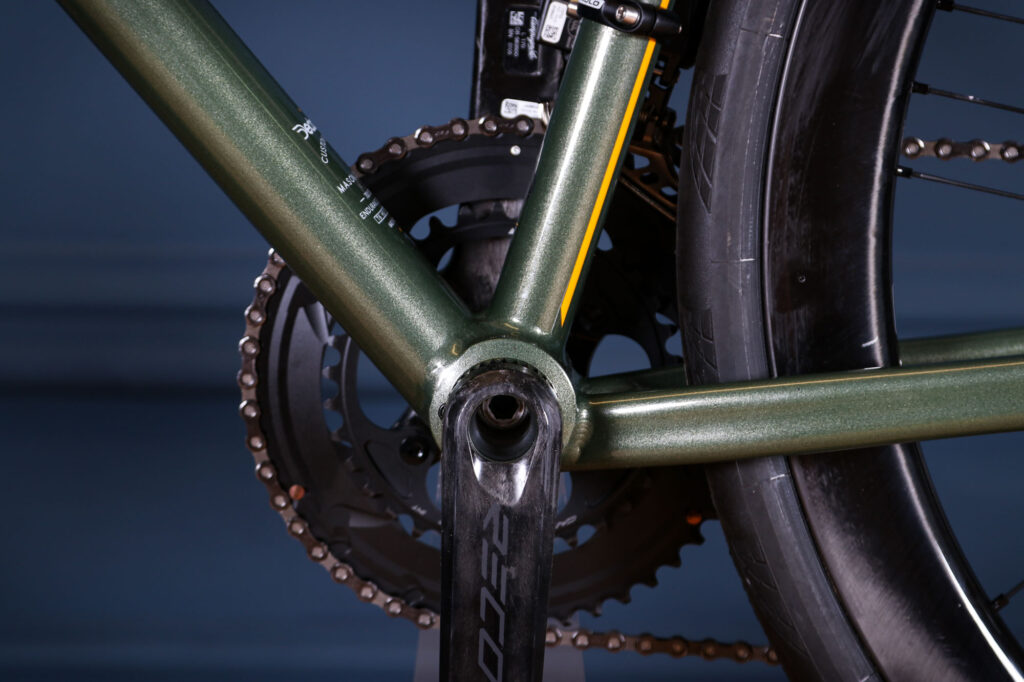
With that seamless segue into stiffness, it’s impressive just how tight this frame is. On the Integrale Mason has used its THRU-BB design which has an oversized diameter for the central section (stepping down on the outside faces to accept a standard BSA threaded bottom bracket). This not only gives internal space for hoses, wires or cables to pass through, but also creates a larger surface area for the junction of down tube, seat tube and chainstays.
Hard efforts out of the saddle don’t highlight any unnecessary flex around the bottom half of the frame and the full carbon fork keeps the front end in check under heavy braking and hard cornering.
Overall, from a ride point of view, the Definition Integrale is faultless. The geometry, ride quality and performance all come together as a whole, and unless you are a racer looking for the ultimate speed machine then the Mason covers every aspect of what I want from a road bike.
Mason Definition Integrale Campagnolo: Frame and fork
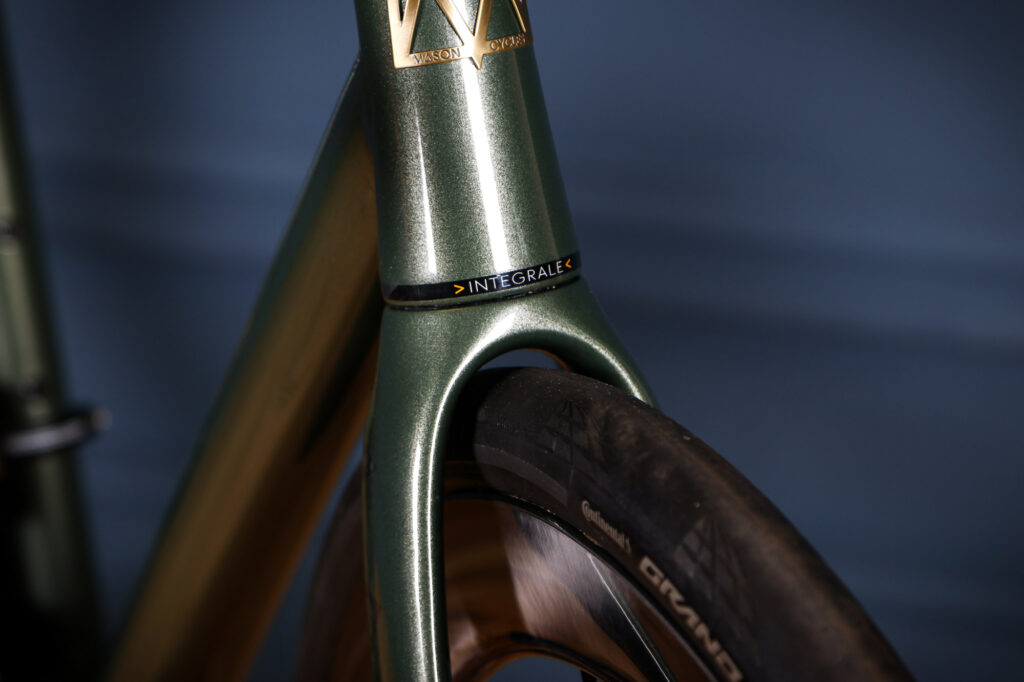
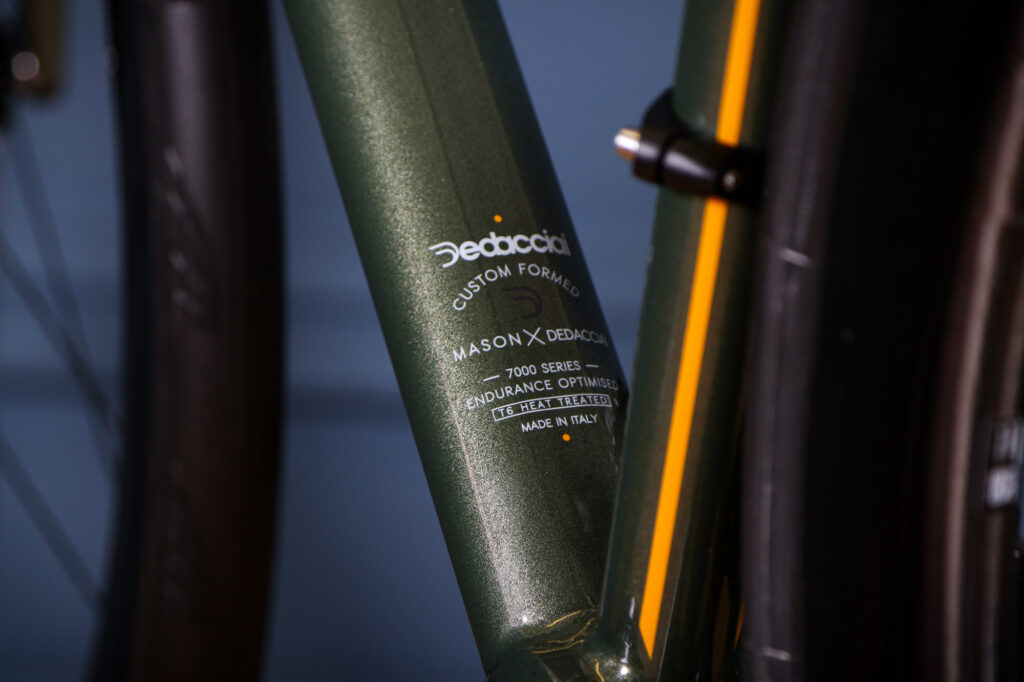
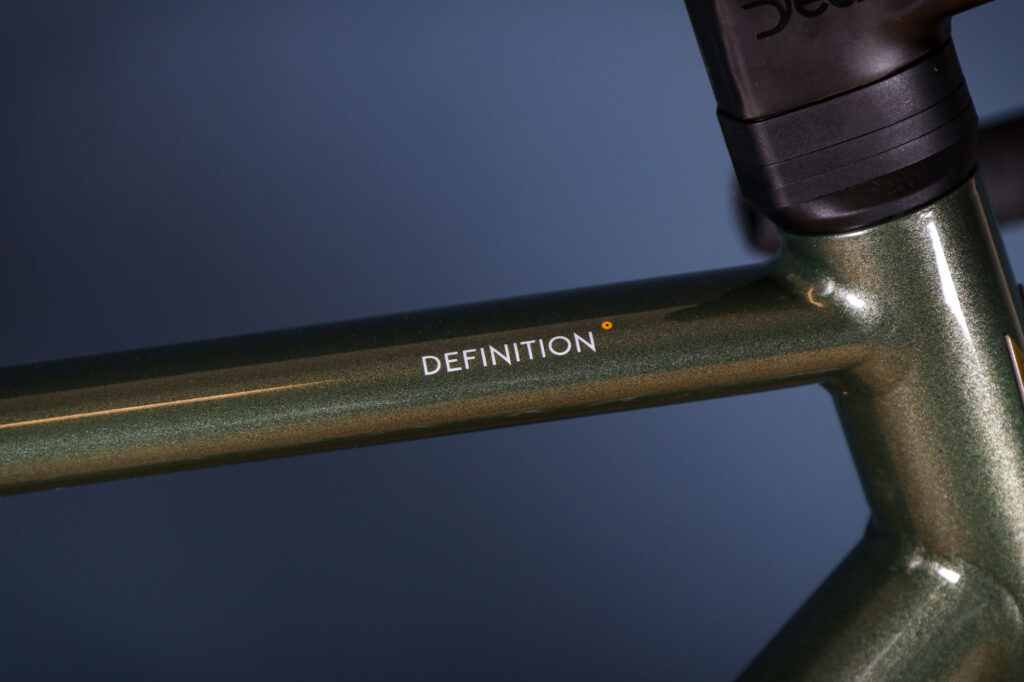
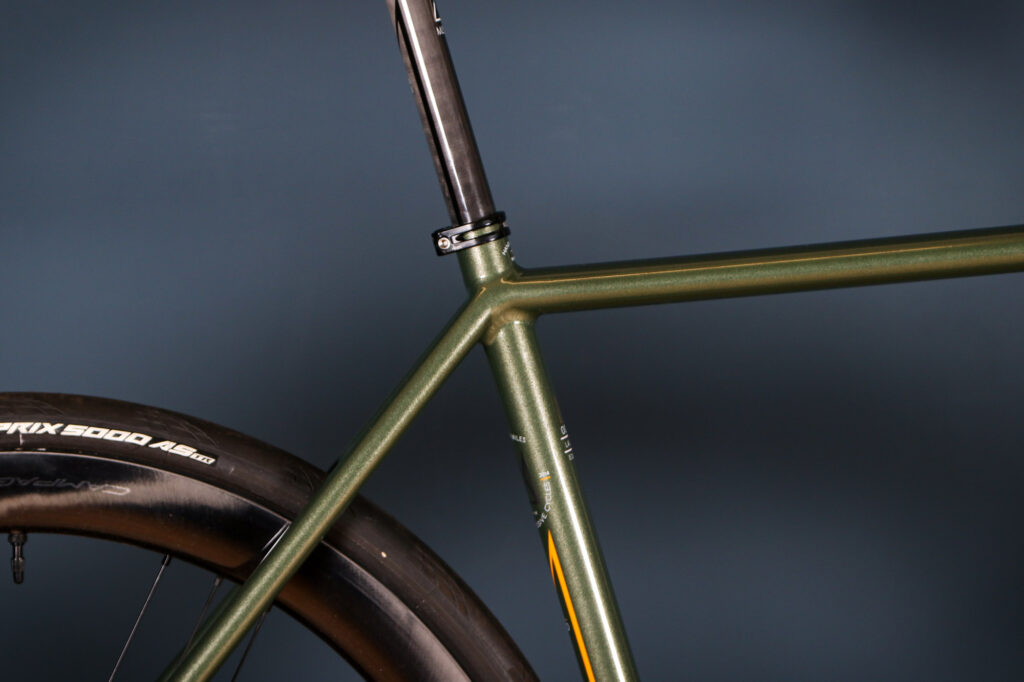
While some brands take an off-the-shelf tubeset and build a frameset to their own geometry, Mason has taken things a step further, custom specifying each and every tube form with Italian tubing manufacturer Dedaccia to achieve Dom’s exact ride quality and performance characteristics.
As you can see from the section above, it’s definitely been beneficial and worth the extra work.
Based around Dedaccia’s 7000 series aluminium tubing and heat-treated to a T6 standard, the Integrale’s frame is hand built in Italy in small batches. Every Mason frame and fork design passes EN testing, which involves being pulled, pushed, dropped and twisted over 100,000 cycles without any signs of damage. Passing the standard isn’t law, so it’s not something Mason has to do.
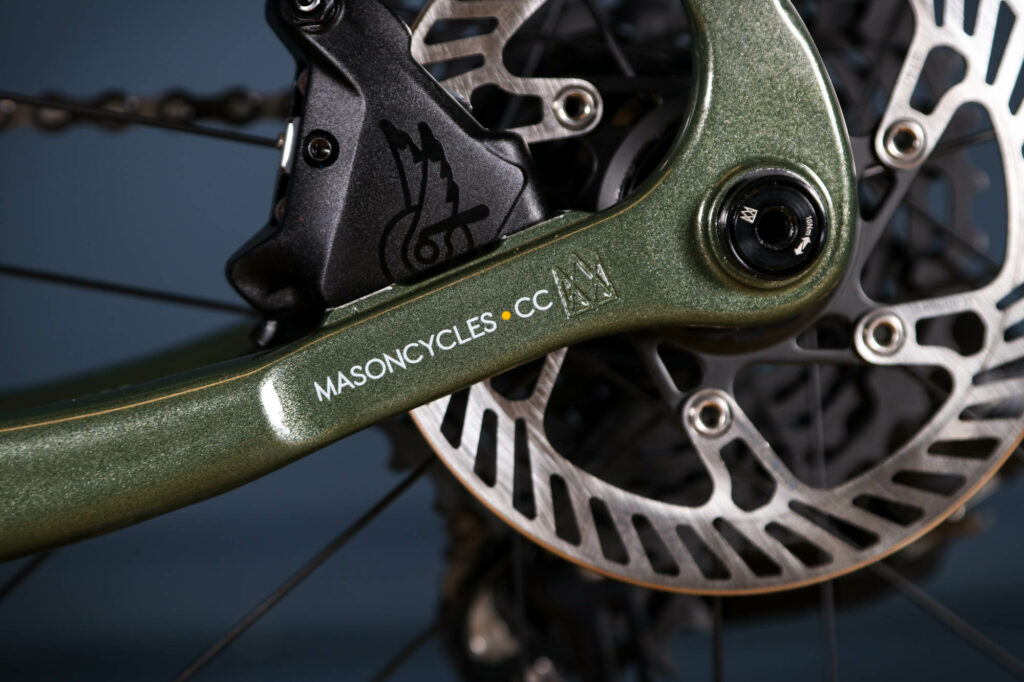
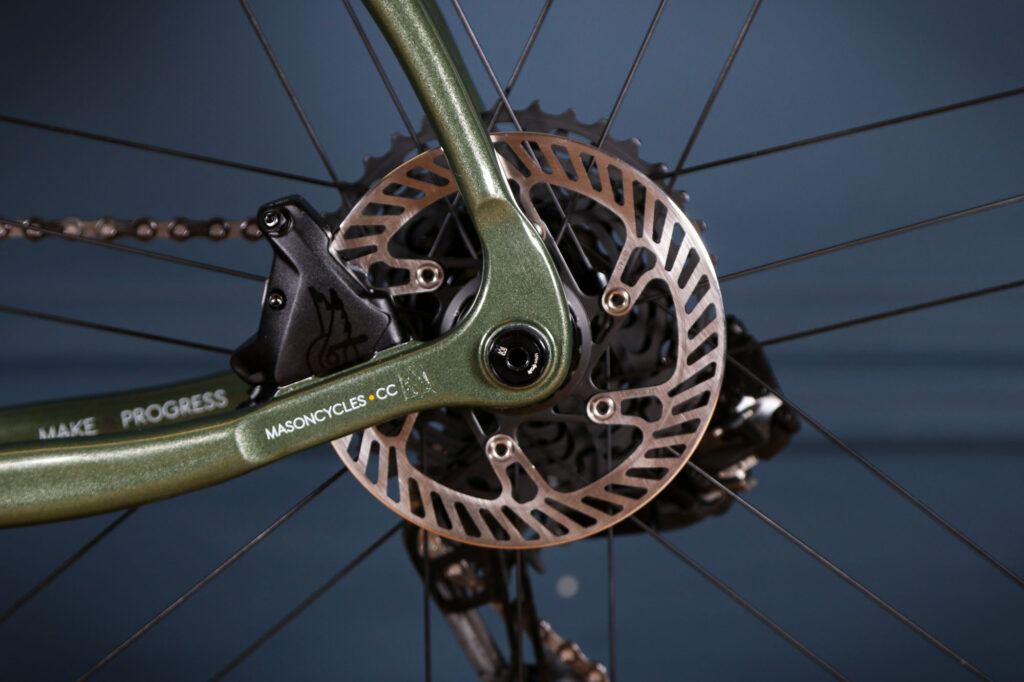
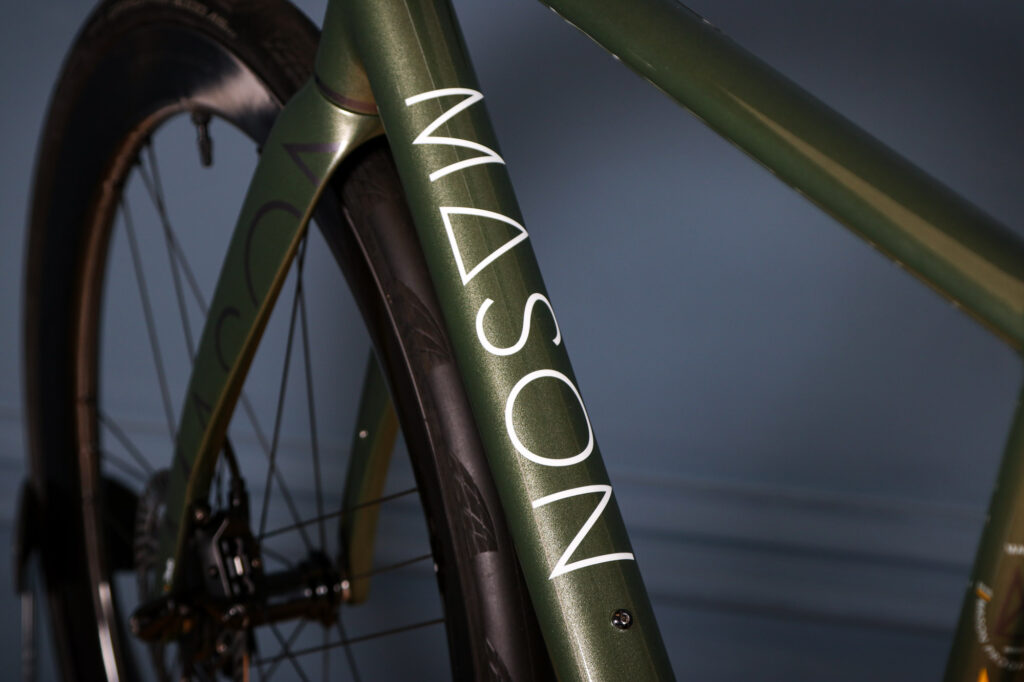
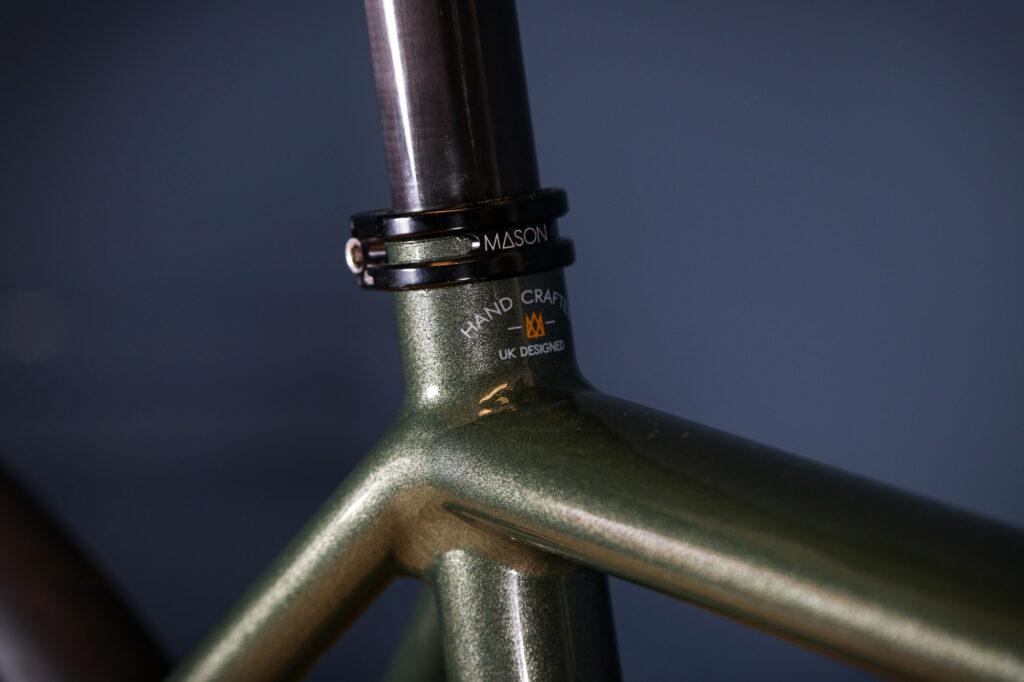
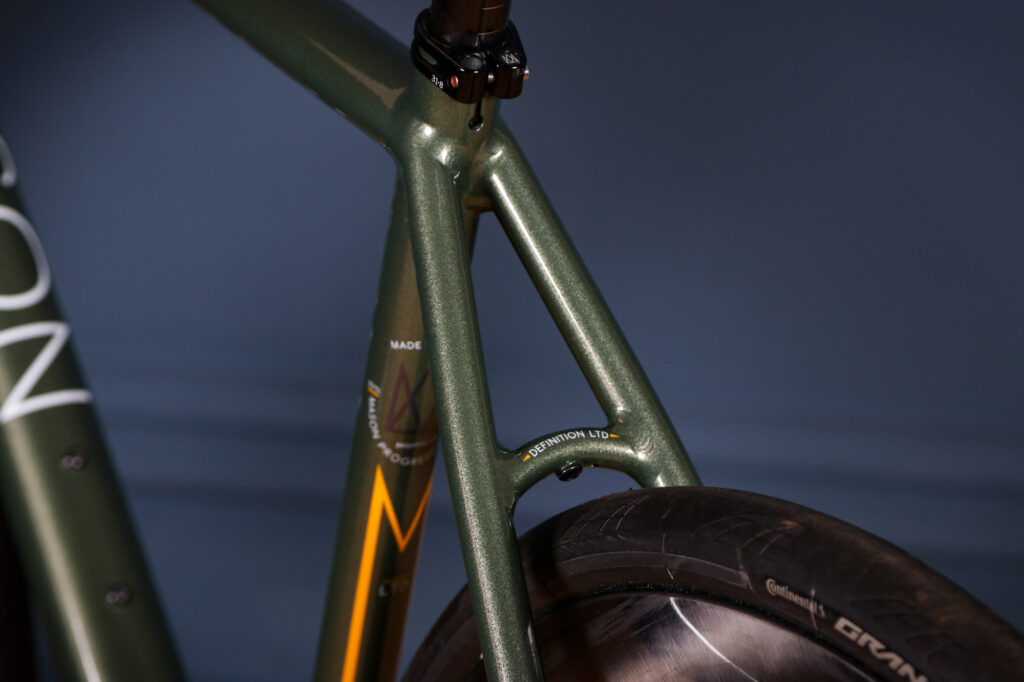
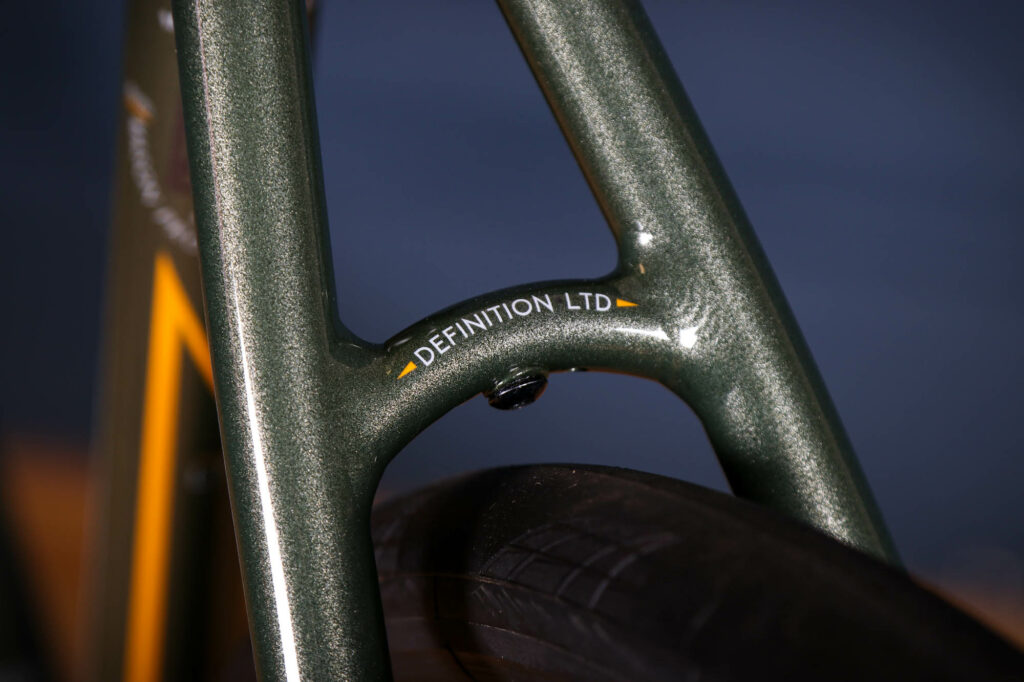
When it comes to the finish, the quality of the welding is excellent, and I remember Dom telling me in the past that what you see is the finished weld pass. There is no filling or sanding of anything to make things look smooth purely for aesthetics.
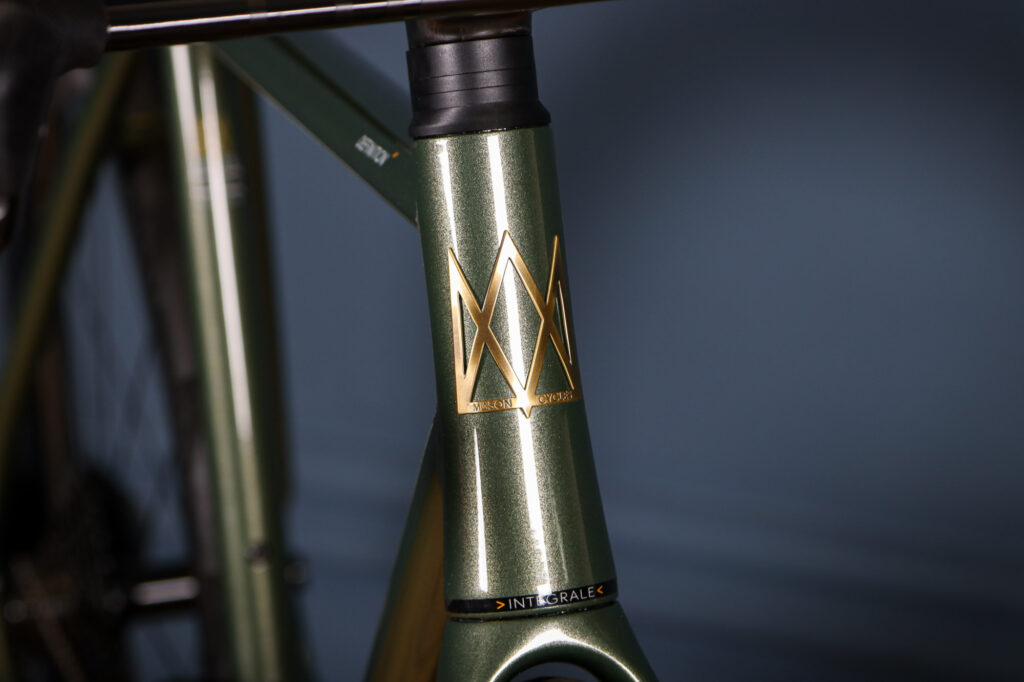
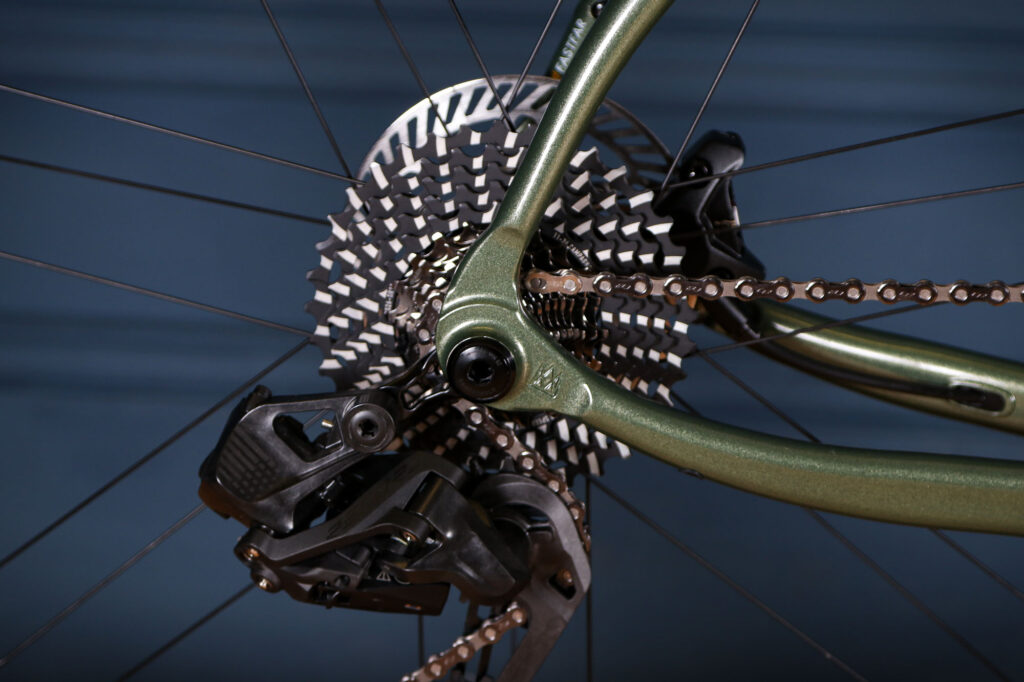
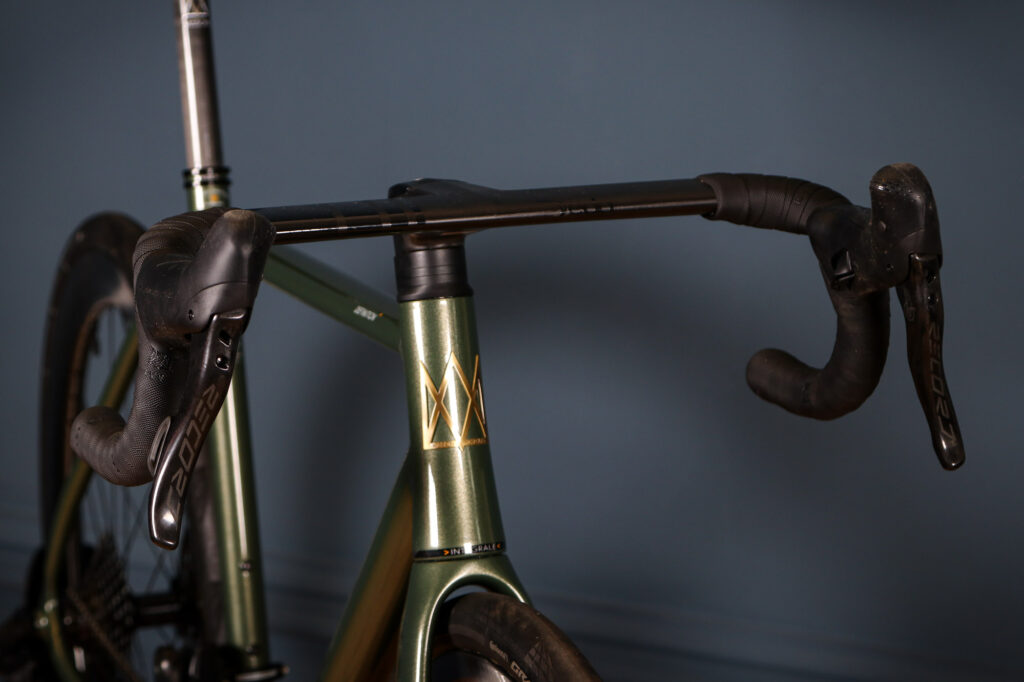
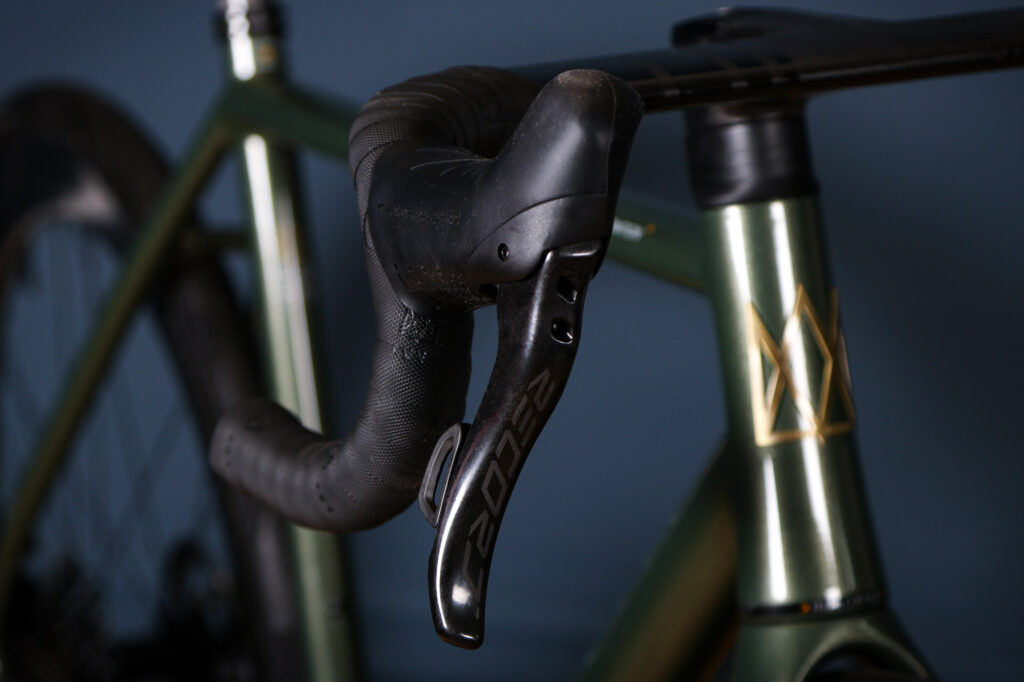
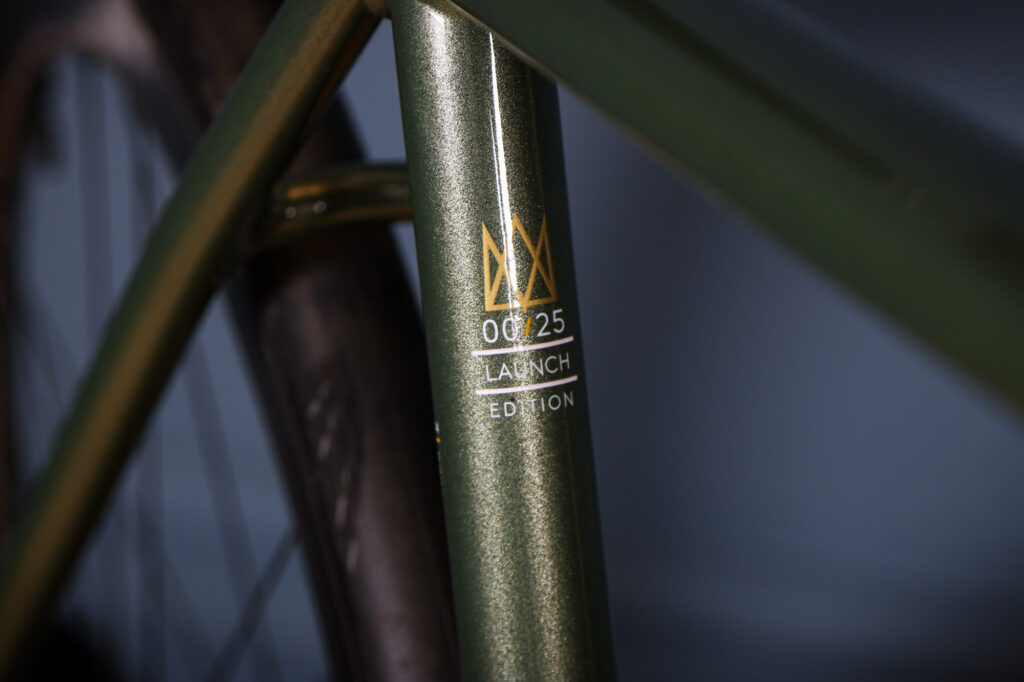
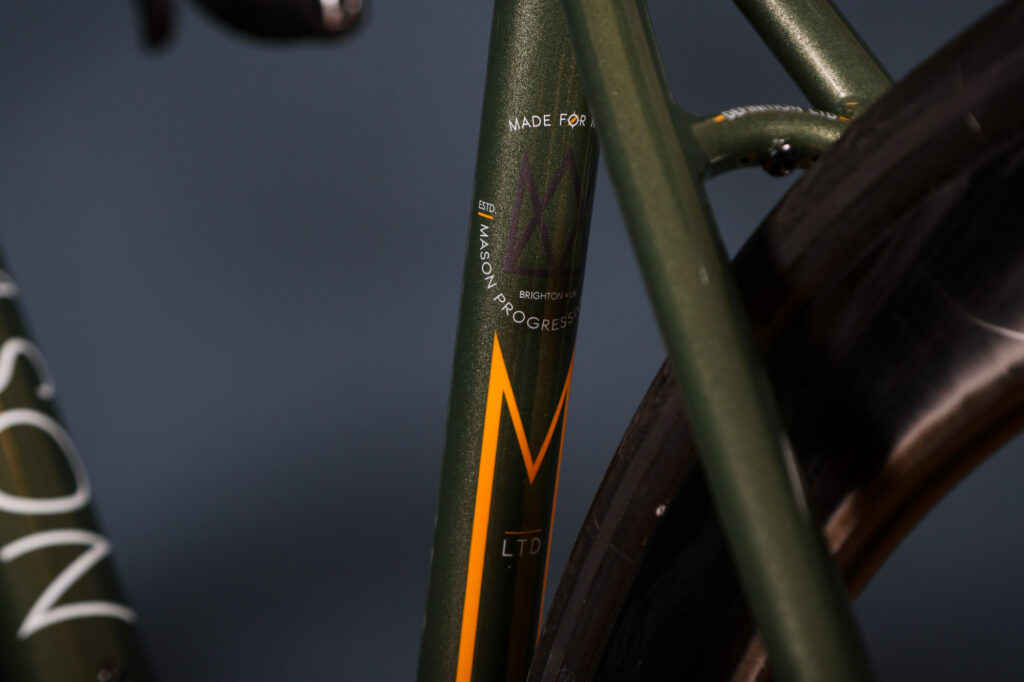
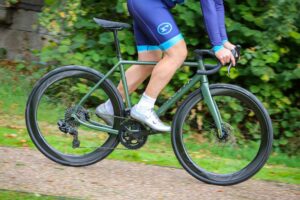
Once welded, the frames are treated to inhibit corrosion before being painted to what again can only be described as a very high standard. The Integrale is available in two colours: ProcessWhite or this PrismGreen, which looks stunning and would definitely be my choice.
From a warranty point of view, Mason offers five years to the original owner on the frame.
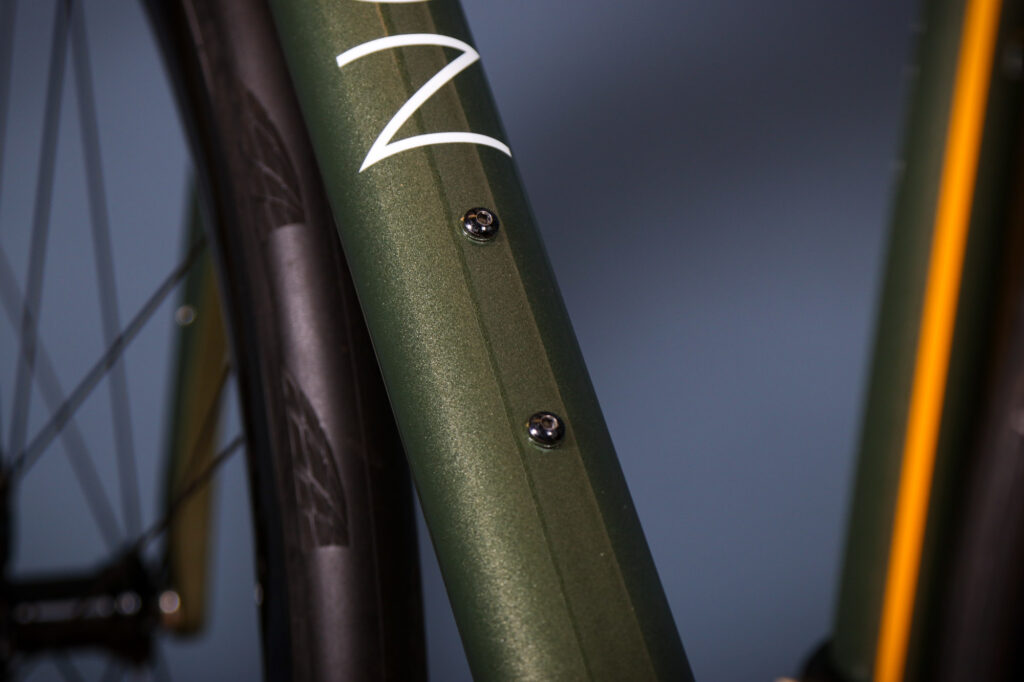
When the Definition and Resolution were first launched, from what I can remember, Mason was one of the first brands to use what it calls Multiport – different entry port plates depending on whether it was a brake hose or gear cable being directed into the frame, with blanking covers if you were running an electronic groupset.
We see them everywhere now, and the standard Definition still uses them as the brake hoses and/or gear cables run traditionally from the handlebar to the down tube before they are directed into the down tube.
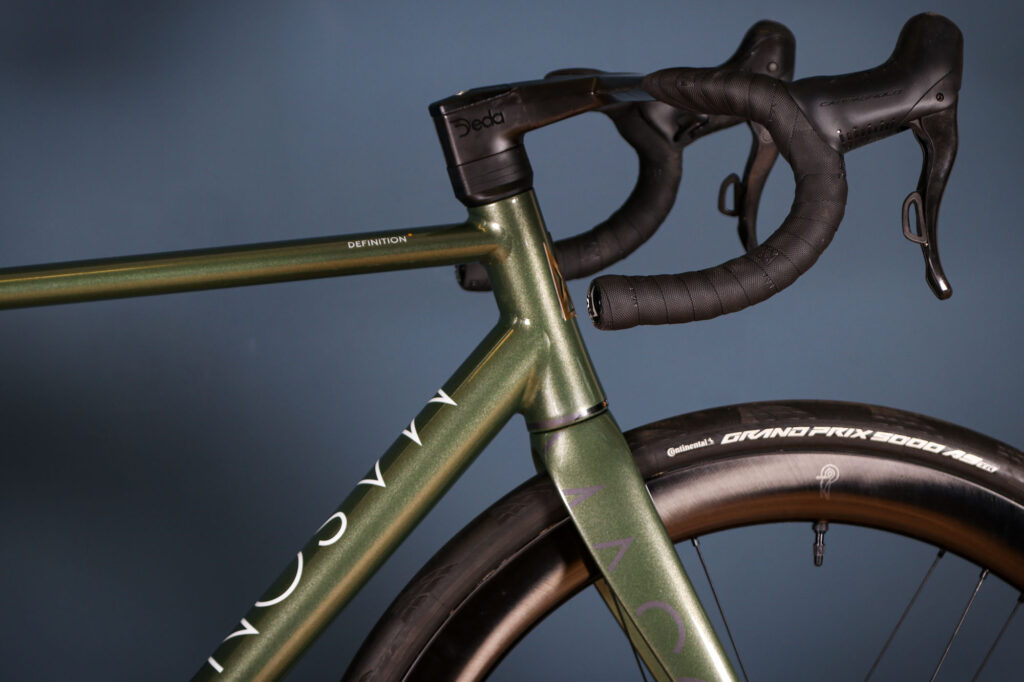
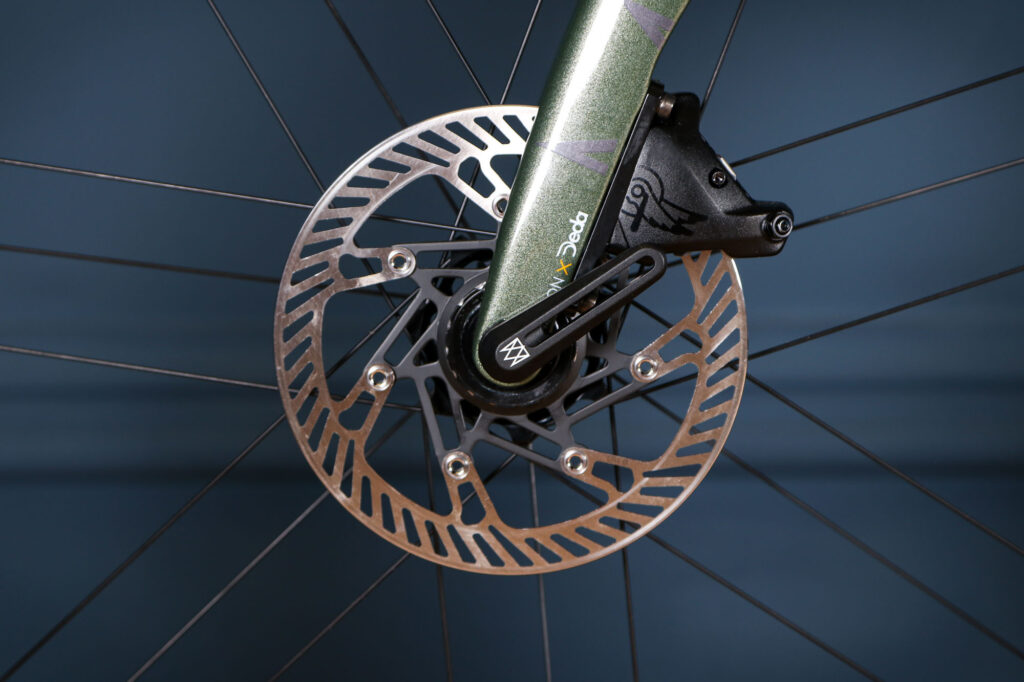
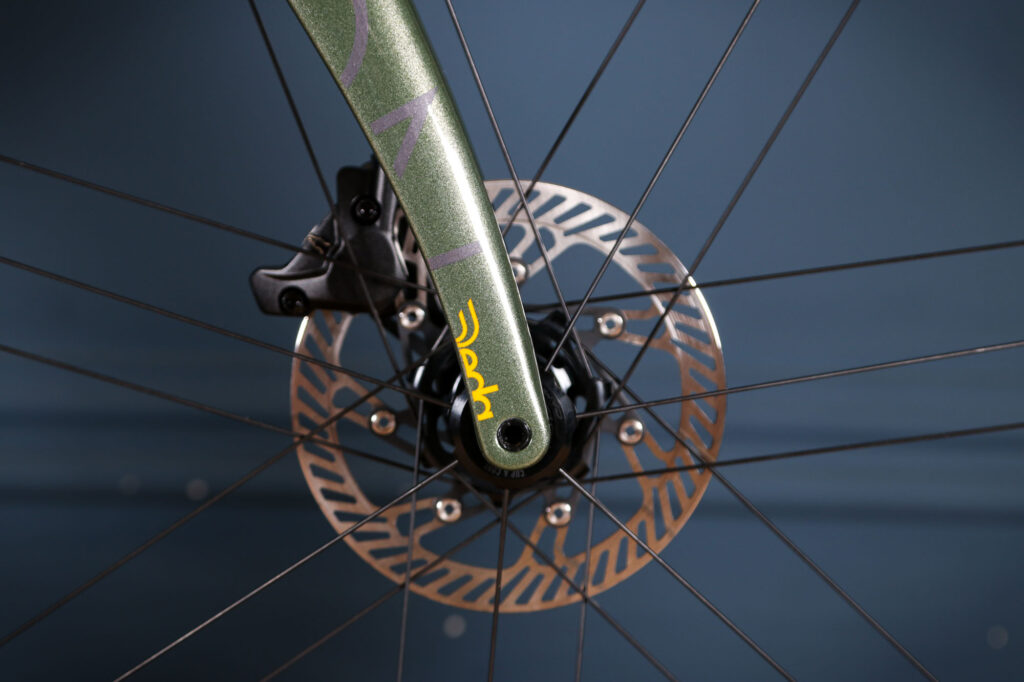
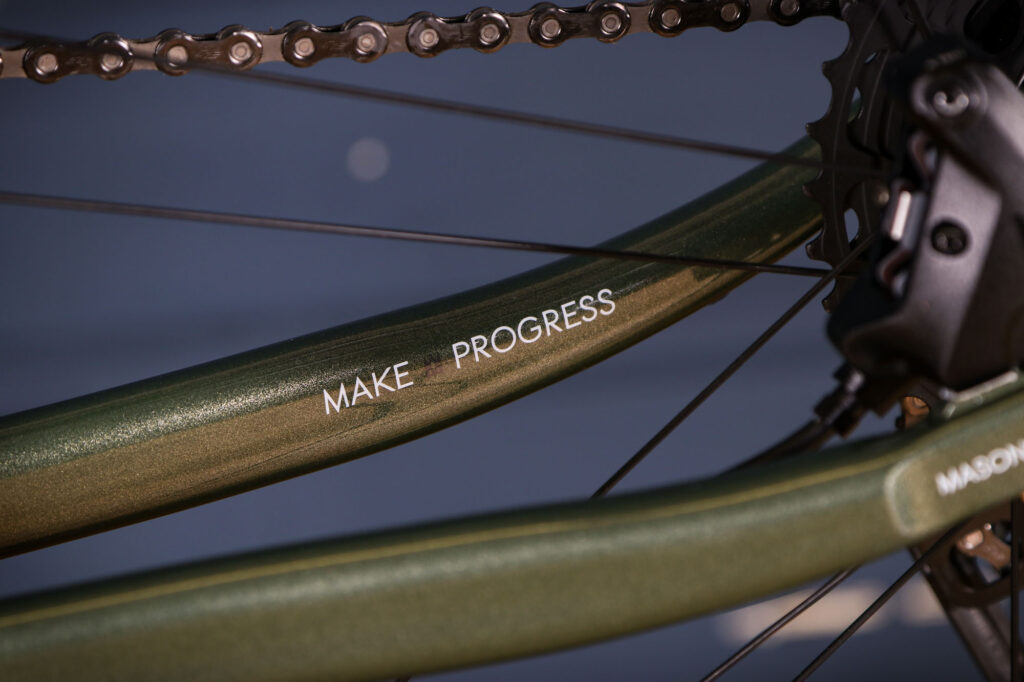
The Integrale has gone all futuristic though, running everything internally from the front of the bike to the back. It’s not just the frame either. Mason worked with Deda to create the AR carbon fork to allow for full internal integration of the brake hoses and a dynamo cable while using a tapered steerer.
Unlike some bikes on the market, which require a specific stem to run the hoses through, this Mason/Deda collaboration works with any stem and handlebar set up.
With all of this in mind, it does mean that the Integrale is designed for the wireless design of electronic groupsets only.
Keeping things practical, the Integrale can accept up to 36mm tyres, will take full ‘proper’ mudguards and, as I mentioned above, has internal routing for a dynamo to front and rear lights. With guards fitted, your maximum tyre size drops to around 32mm, which is still plenty wide enough in my opinion.
There are twin bottle cage mounting points, UDH (universal derailleur hangar) ready dropouts and that threaded bottom bracket design.
What is impressive for such a small brand is that the Integrale is available in eight sizes, ranging from a 48cm model up to 62cm with corresponding top tubes of 521mm up to 593.5mm.
This 54cm model has a 552mm top tube and a head tube of 155mm. Pair that with the lower fork crown height of 367mm and you get a stack figure of 553mm, while the reach measures 387mm, and the seat tube sits at 73.5 degrees.
The wheelbase is 1,009mm – long enough to bring some stability without sacrificing a bit of nimbleness in the bends and the 420mm chainstays give clearance for those full mudguards and wide tyres.
Different sized frames also get different sized seat tubes and seat posts. Up to 58cm, you’ll get a 31.8mm seat tube, which accepts a 27.2mm diameter seat post, while the larger frames use a 31.6mm seat post slotted into a 34.9mm seat tube.
Mason Definition Integrale Campagnolo: Finishing kit and pricing
Mason offers the Integrale as a frameset for £1,550, which includes frame, fork headset and thru-axles. A 54cm frameset weighs a claimed 2.4kg.
Shimano builds kick off at £3,700 with 105 Di2, alloy Deda finishing kit, Mason carbon seatpost and Hunt 4 Season wheels. At the ordering stage, you can upgrade components and groupsets to create a build specific to you.
SRAM builds start at £3,400, while Campagnolo options start at £4,300 with a choice of Record or Super Record in 1x or 2x 13-speed groupsets.
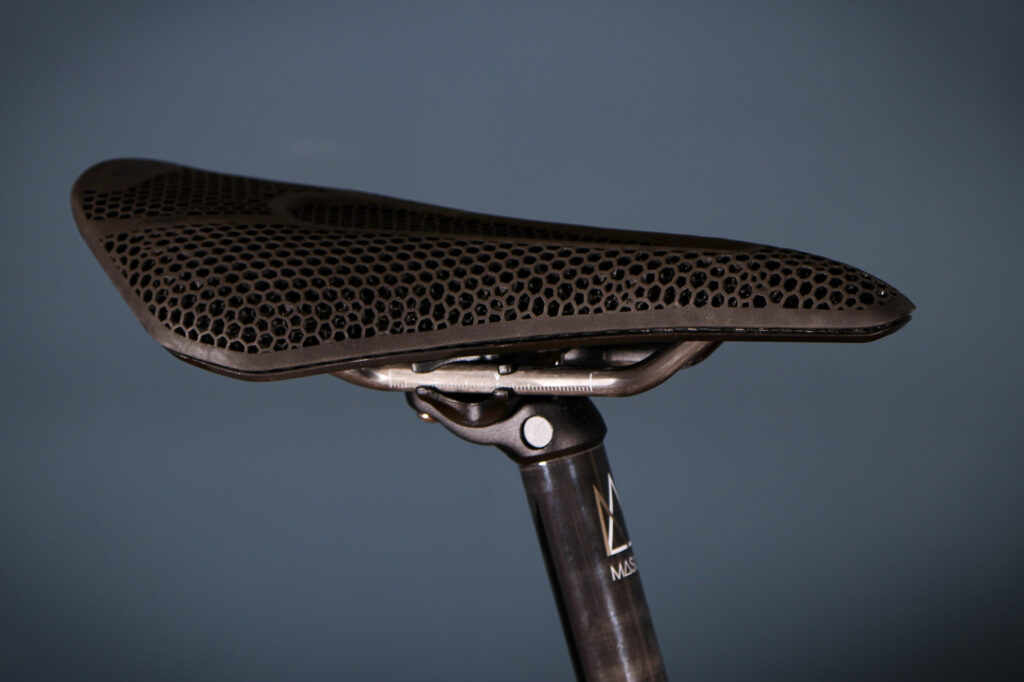
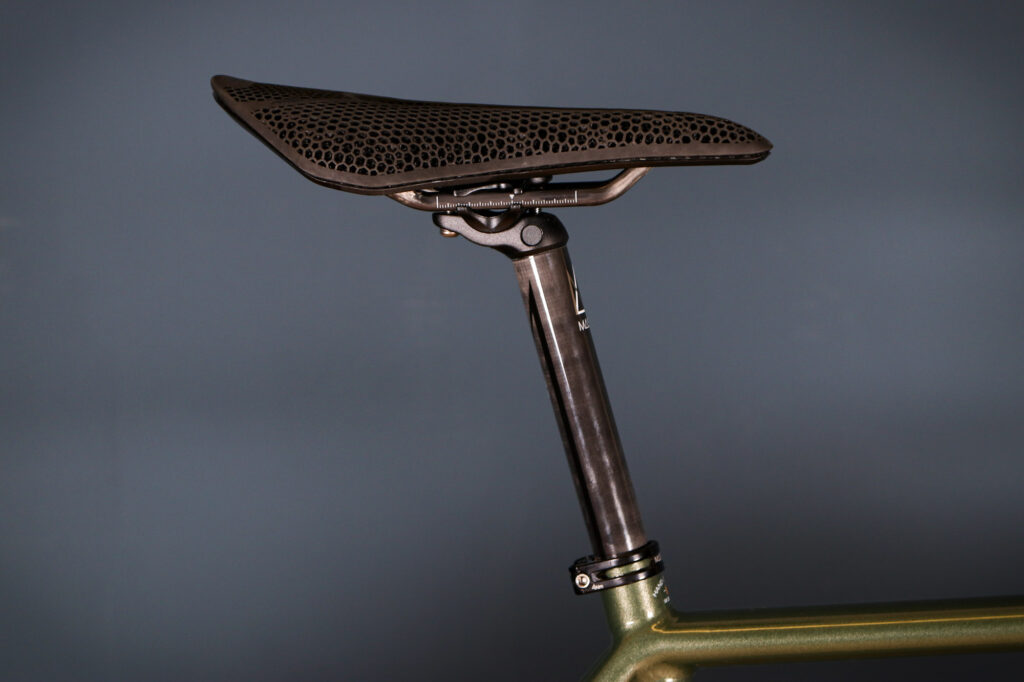
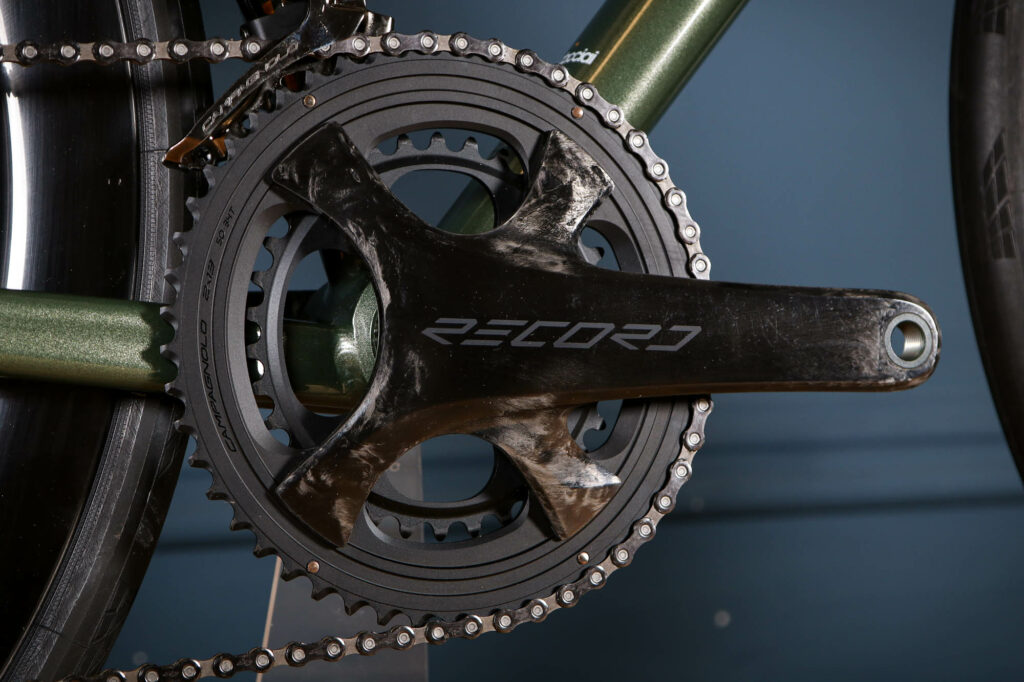
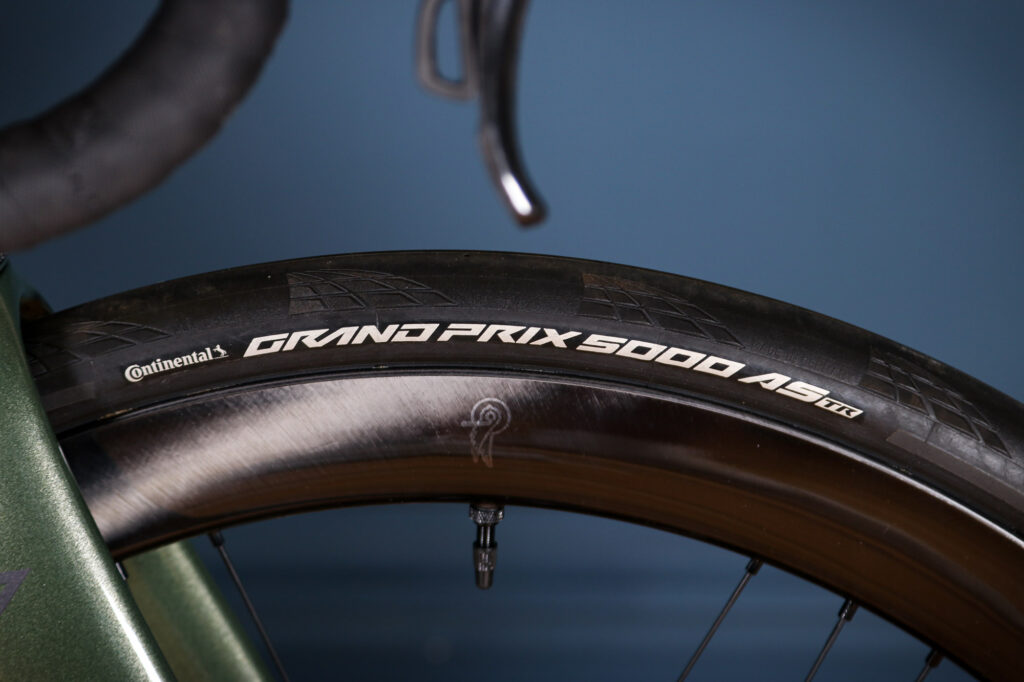
Our build here comes with a Record 2x groupset, Continental’s GP5000 AS TR tyres, Fizik’s Vento Argo Adaptive R1 saddle and Deda’s Alanera all in one carbon cockpit. With a set of Hunt’s SUB50 Limitless Aero carbon wheels this would cost £6,260. I have a set of Campagnolo’s brand-new Zonda wheels fitted though, which aren’t in the drop-down menu on Mason’s site.
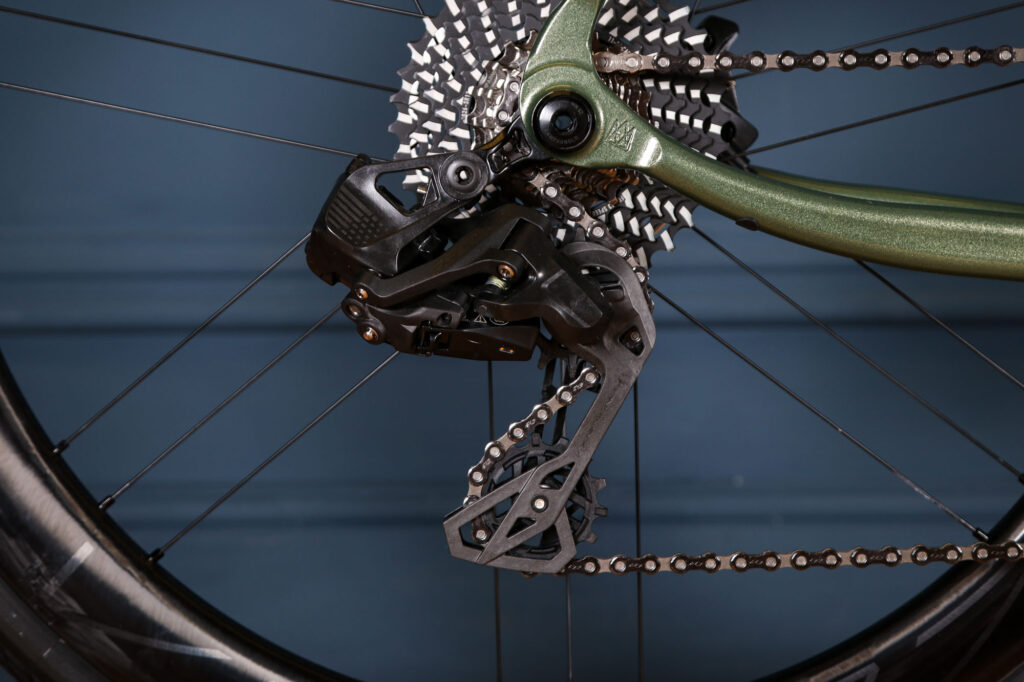
This is my first time using Campagnolo’s new Record groupset, so I’m going to write up a separate review with full details on how it performs. In a nutshell though, I generally like it, but I have a few reservations.
Back when I used to build my own bikes, I was a Campag fan. That was when it had a full catalogue of groupsets for all kinds of budgets. I’d use something cheap and cheerful like Xenon for the winter commuter with Centaur on the daily ride, and Chorus on the best race bike. (I could never afford Record!)
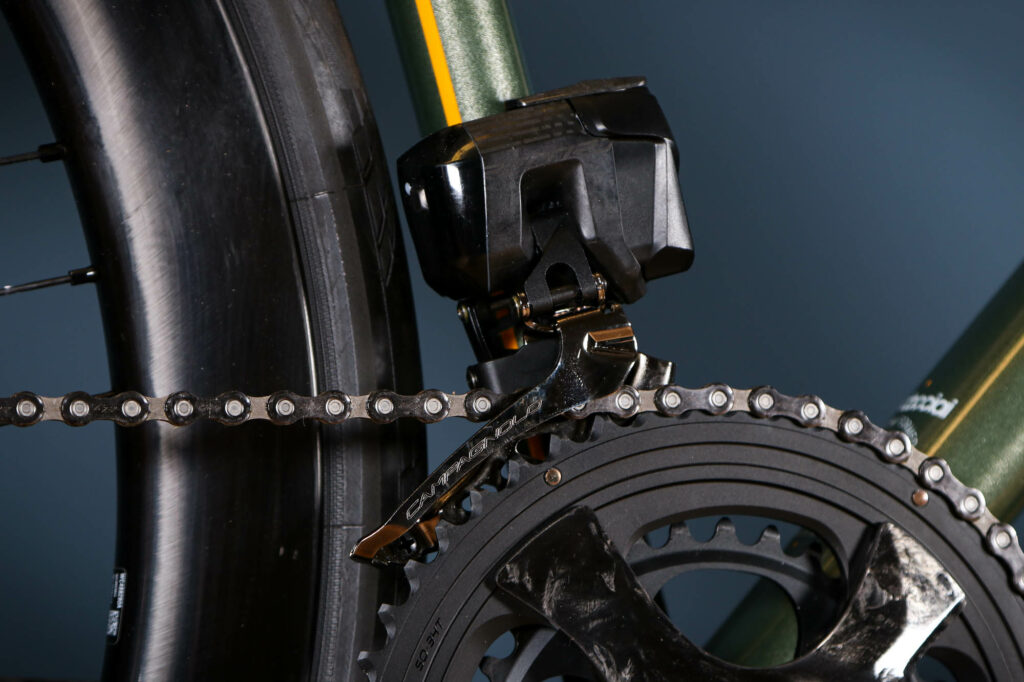
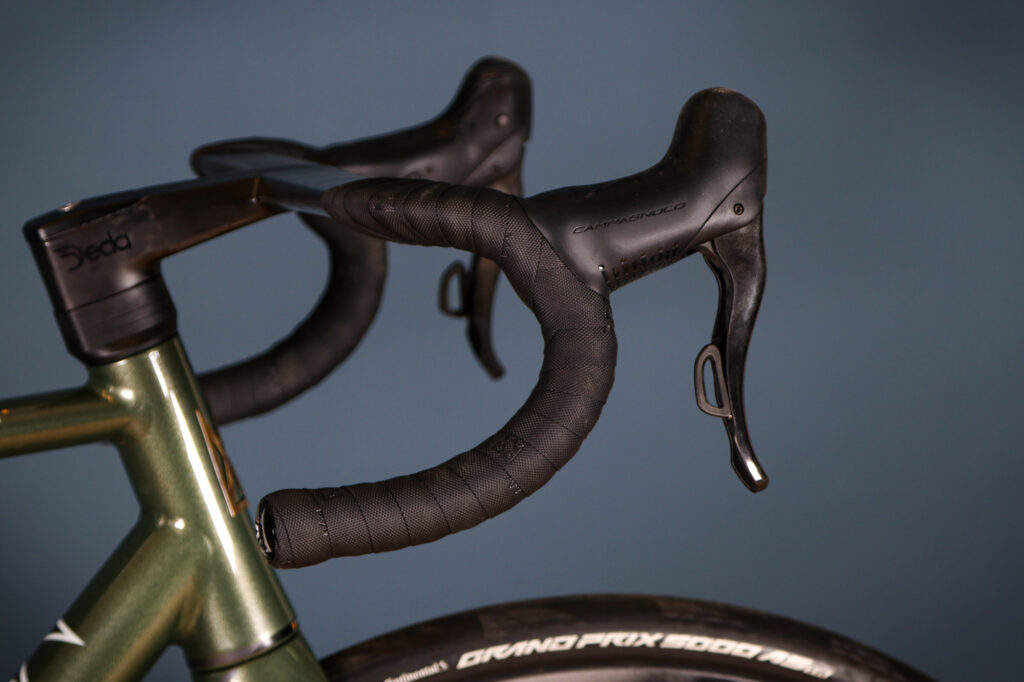
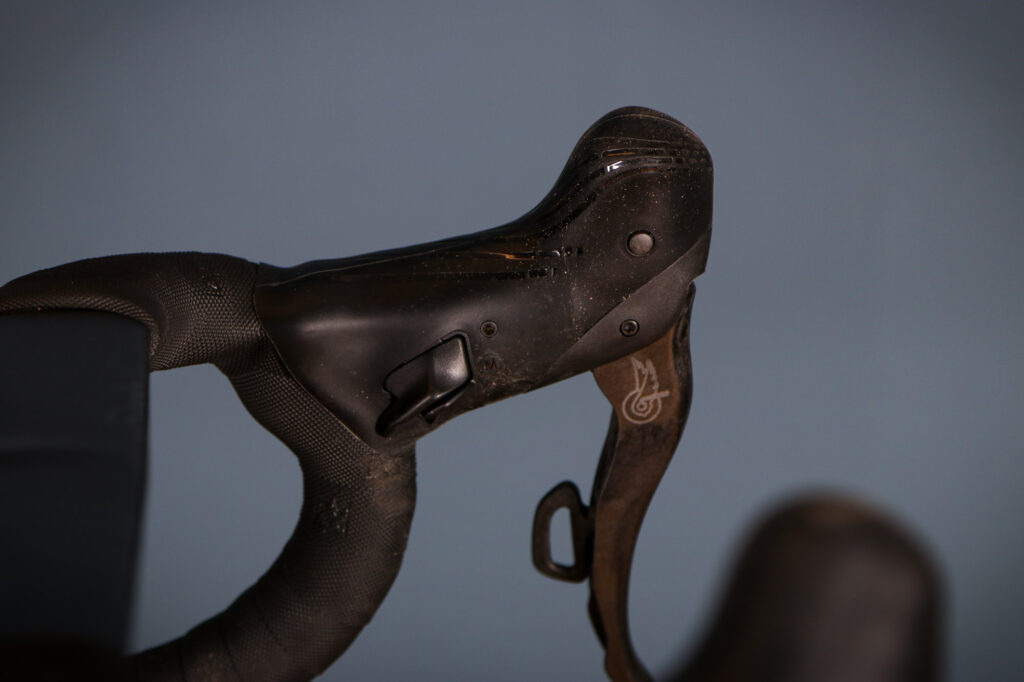
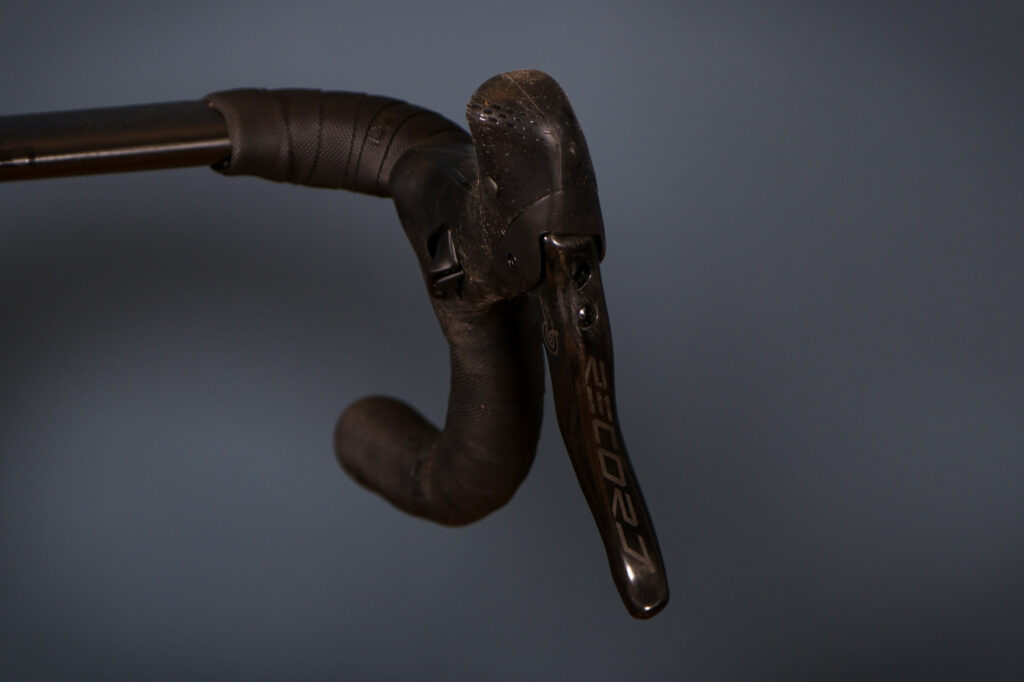
The main reason was the ergonomics of the hoods and thankfully, even on these electronic, wireless units, Campagnolo has maintained that shape. They fit my hands beautifully and give a stable, comfortable platform to rest against when braking hard or riding on poor road surfaces.
I also loved the pronounced movement of selecting the next gear at the shifter. There was a saying at the time that, “Shimano wears out, while Campagnolo wears in,” and it was so true. Compared to Shimano’s groupsets of the time, Campagnolo had a ‘clunkier’ feel, but I don’t mean that in a derogatory way. I really liked that mechanical clunk as the chain dropped to a smaller sprocket. The gear shifts were every bit as precise as the competitors, but there was more feedback and feeling through the Campag shifters.
On its earlier electronic setups, Campagnolo managed to maintain that kind of feel and thankfully it remains here too.
One of my only criticisms of Dura Ace Di2 is that it has almost become so light and so much less tactile that I don’t really feel involved in the gear changing process any more. Don’t get me wrong, in terms of speed and precision you can’t fault it, and if you’re a racer – which, let’s be honest, is who Dura Ace is designed for – that’s what you want.
This Record has a light feel at the buttons, but you still get that reassuring clunk as the rear mech shifts the chain. It’s only like that going down the cassette though, from larger to smaller sprockets. On the way back up it’s as light as any other high-end groupset on the market.
My quibble is with the thumb shifters. These used to be large affairs, easy to reach without moving your hands around on the hoods. This new design has made them tiny little buttons.
It may be the fact that I have shortish fingers – I’m certainly no natural piano player – but with my hands tucked into the hoods I can’t reach the button with my thumb without moving my hand back.
The saving grace is that Campagnolo has included extra buttons on the insides of the hoods which have been set up to work SRAM style – i.e. the button on one shifter moves the chain up the cassette, while the other shifter button moves the chain back down.
This makes shifting much quicker and easier at the rear and means I only need to move my hand position when moving the front mech – something that I don’t need to do very often. #humblebrag
This build uses an 11-36T 13-speed cassette paired with a 34/50T chainset which gives a great combination of gearing for the type of riding the Integrale is designed for.
On the braking front, Mason has specced the AFS rotors in 160mm front and 140mm rear, which offers way more stopping power than you’ll need.
There is quite a progressive feel at the lever which feels different to Shimano’s and SRAM’s setups, but not in a poorer or better way – just different. I did find the Campag setup great for modulation though, especially at lower braking pressures.
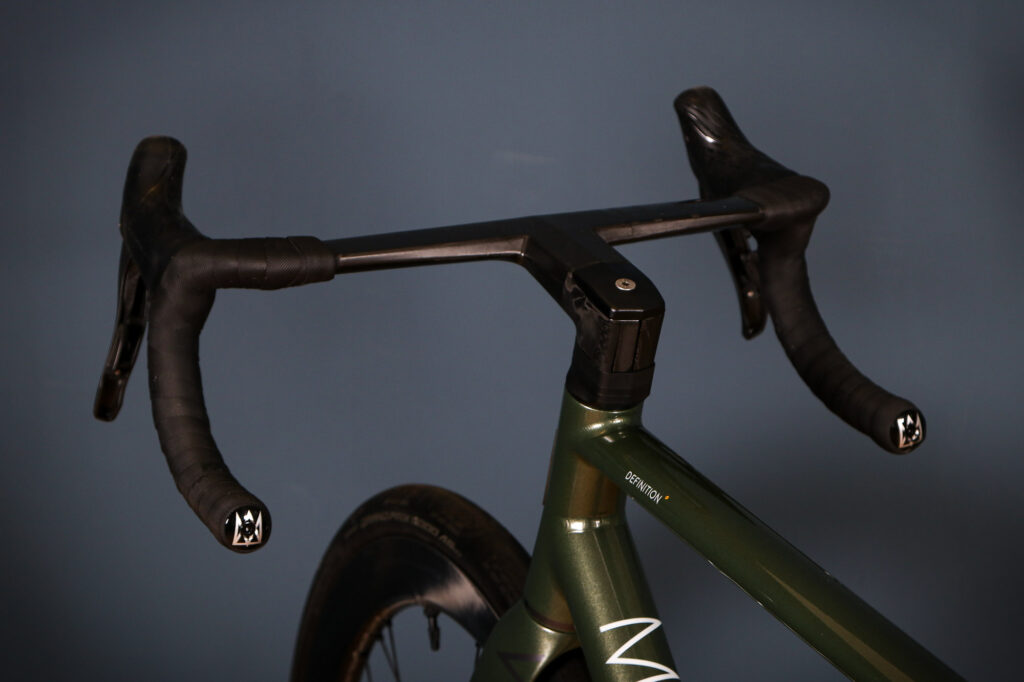
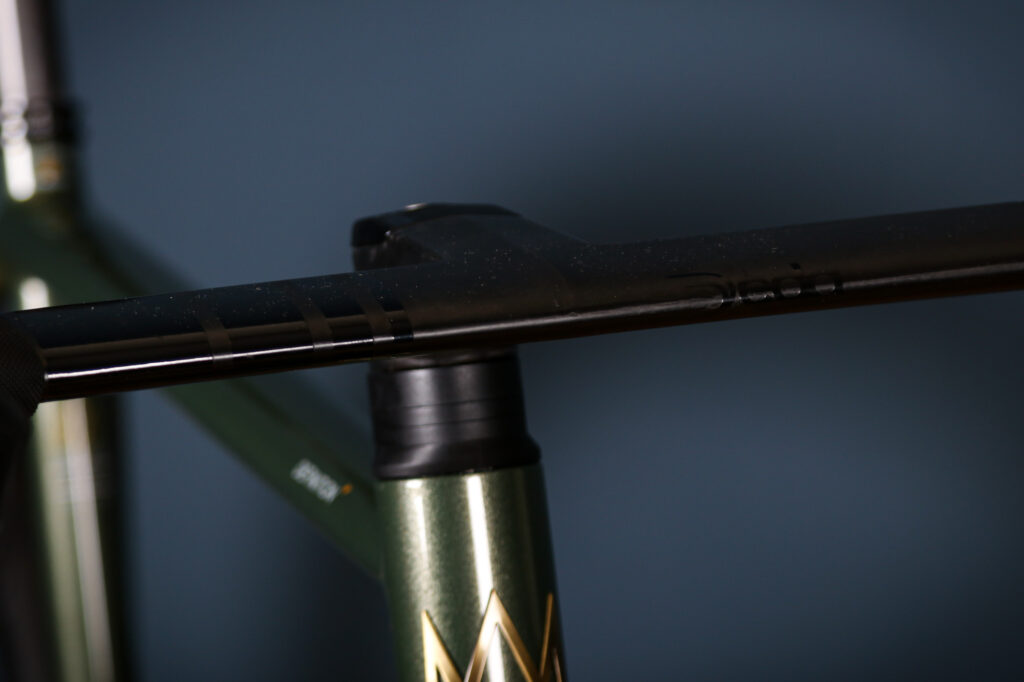
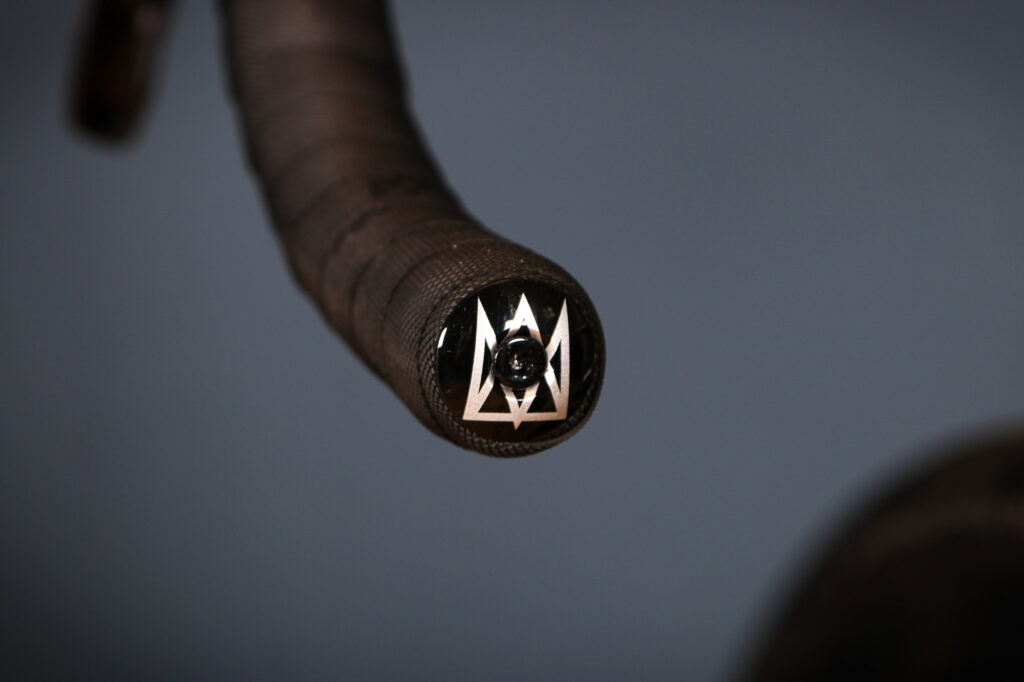
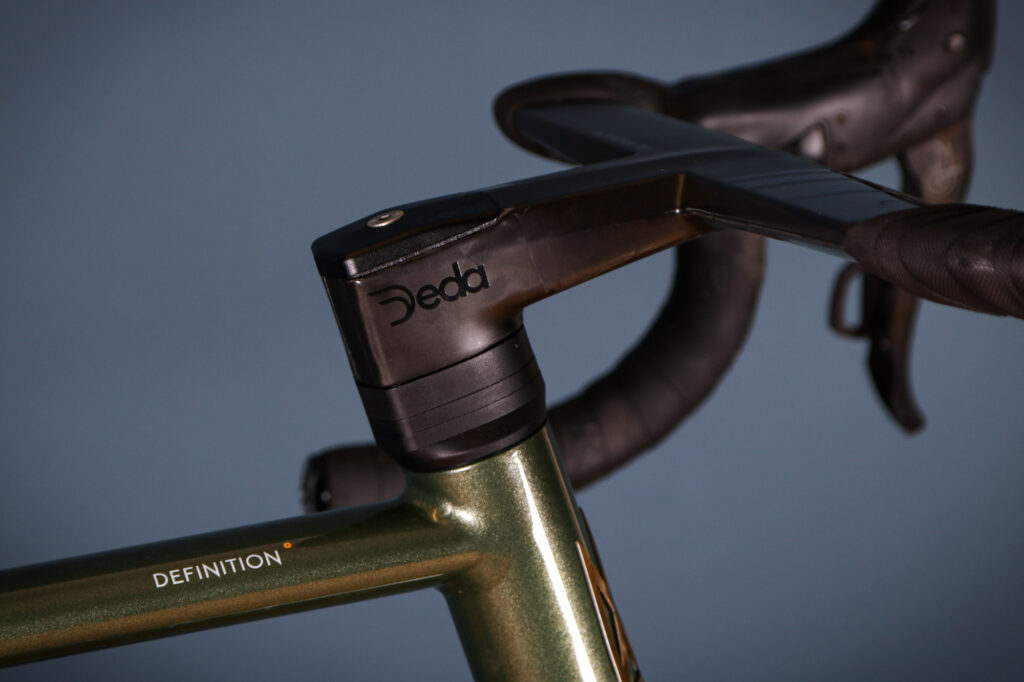
For the cockpit, we have Deda’s Alanera RS integrated handlebar/stem which is a pleasure to use. I reviewed one of these years ago and absolutely loved it. Its carbon construction means it’s stiff overall, but with enough compliance to take the sting out of things over poor surfaces. A highlight is that the ends of the bar are recessed from the central section which means that when you butt your bar tape up to it, you get a smooth transition between the two.
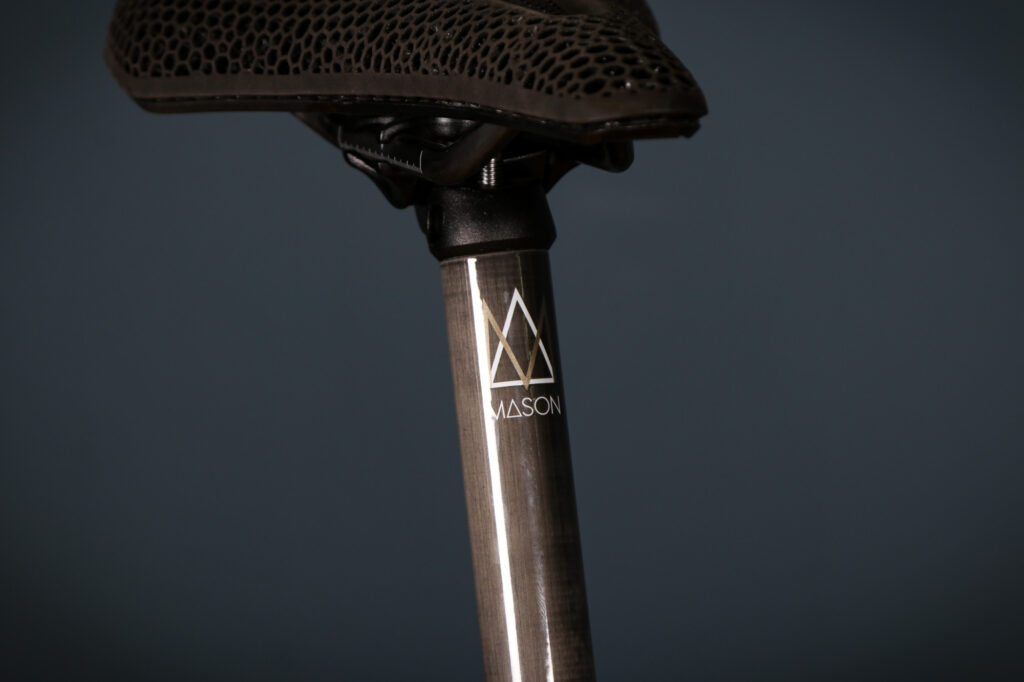
The seatpost is Mason’s own Penta, which is easy to adjust and set up just right, and atop it that Fizik Vento Argo Adaptive R1 saddle, which is 3D printed. It’s a comfortable seat and provides loads of support without being too firm.
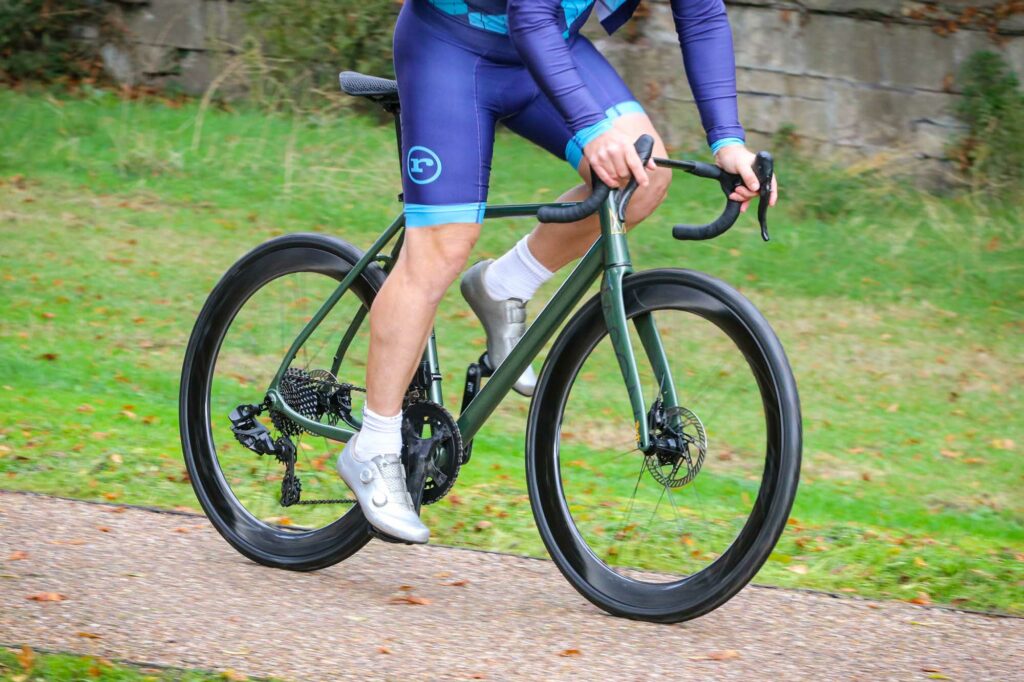
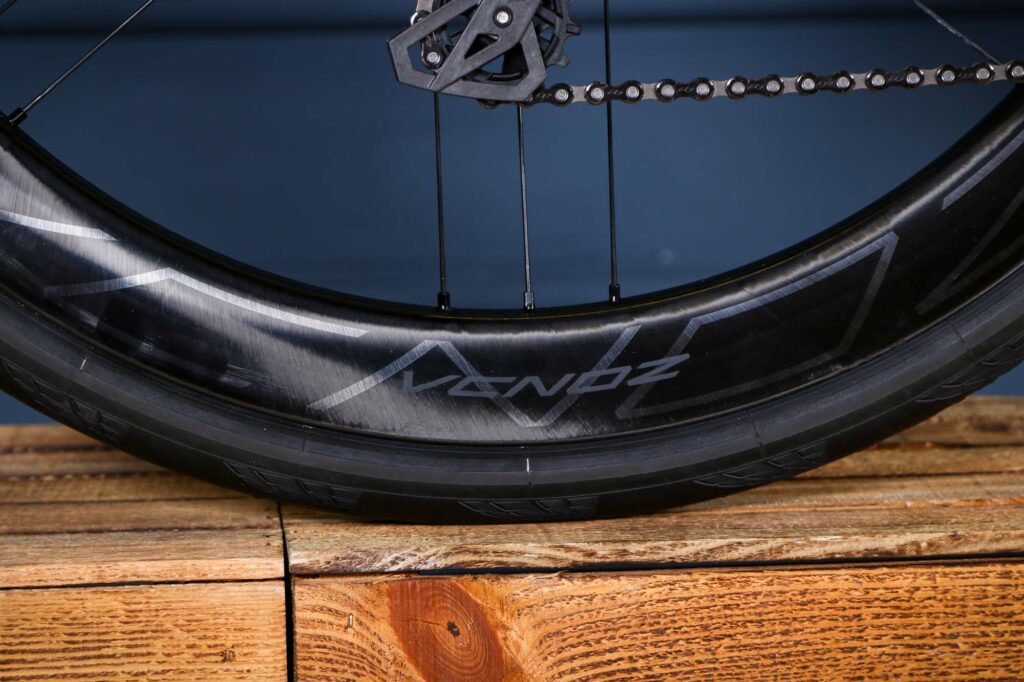
The new Zonda wheels were launched back in July and have a high modulus carbon rim which is 50mm deep and 25mm wide internally with a hooked rim. Campag has designed them as allroad wheels for road, gravel and everything in between, which is why they have been designed to support tyre widths between 29mm and 40mm.
I think they look awesome with their high-gloss finish and eye-catching G3 spoke pattern. They didn’t disappoint out on the road either. I had no issues with trueness and with a weight of 1,550g they feel responsive pretty much anywhere.
Mason deserves praise too for speccing the Continental GP5000 AS TR tyres, as these are absolutely brilliant in terms of performance and durability. The Black Chilli compound is super tacky, giving loads of grip in the corners, and they roll exceptionally well.
Mason Definition Intergrale Campagnolo: Conclusion
While I’d always want a lightweight race bike in my shed, for everything else I can’t see why I’d want anything more than this Definition Integrale. I can ride it flat out and have a lot of fun, I could cover huge distances in comfort, and I could use it for the commute year-round during the week. And, when I’m not riding it, I could sit there and stare at it, marvelling at the awesome paintjob and the brilliant build quality.
From my point of view (groupset quibbles aside) there is nothing I’d change about the Mason. It’s faultless in its design and execution. I haven’t ridden a Definition in nine years, yet it’s still my reference point on what is achievable with aluminium alloy tubing. Riding this Integrale version has raised that bar again.
Yes, you can argue that the price is high for an aluminium bike, with many brands relegating the material to the lower end of their catalogues. But when you look at the attention to detail and finish quality, it’s hard to argue with.
Mason isn’t on its own either. Standert offers high end aluminium and steel frames for similar money with its scandium Kreissage RS costing around £1,700 for the frameset. It’s not a perfect comparison as the Standert is a race bike, but when I reviewed it, I was blown away by neither the level of finish nor the ride quality. I felt the same when I rode its Kieswerk aluminium gravel bike too.
Condor has launched a limited edition of its Italia RC called the Integrato with fully integrated hose and cable routing. Condor makes some lovely bikes, although I’ve yet to ride this one.
It’s a race machine made in Italy from Condor’s 7000 series aluminium tubing and has room for 35mm tyres, but lacks a bit of the versatility of the Definition Integrale. Condor is asking £1,499.99 for the frameset, while a 105 Di2 build with Condor’s own wheels costs £3,365.85.
Overall, the Definition Integrale is a masterpiece, the pinnacle of what can be achieved with aluminium alloy tubing and a bit of engineering wizardry.
Test Report
What does the manufacturer say about this product?:
The latest evolution of our unique MASON Definition, tailored to optimise speedy handling and clean cable-free lines, with configurable Campagnolo build options.
Tell us some more about the technical aspects of this product:
MASON x Deda AR tapered carbon fork, designed with Deda Elementi to bring full integration of hoses within a tapered head tube. Clearance for up to 35mm tyres, mudguard mounts, internal routing for hose and dynamo cable
Progressive geometry, keeping the handling confident, direct and comfortable across all sizes, in tune with rider height and build
8 sizes for precise fit: 48 to 62cm
Optimised for electronic shifting only
MASON-designed UDH-ready dropouts
Fully compatible with full-length mudguards
Select from: Campagnolo Record or Super Record, either 1×13 or 2×13 options.
Lower crown height and stack height than Definition3, giving a sportier position with a fast, attacking feel
Custom Dedacciai aluminium frame, refined and reworked for performance riding
2 new finishes: ProcessWhite and PrismGreen
Carbon MASON Penta microadjust seatpost and MASON Macro seatclamp
MASON ‘ThruBB’ internally routed bottom bracket shell
Refined internal routing for seamless flow of cables and hoses through chainstays
Max tyre clearance: 700C x 36mm [approx. 700C x 32mm with mudguards] – dependent on wheel/tyre combination
Any further comments on quality?:
Stunning quality throughout.
How does the price compare to that of similar products in the market, including ones recently tested?:
Other small bike brands that are building bikes/frames from aluminium are charging similar prices to Mason, like Standert and Condor.
List the components used to build up the bike:
Groupset: Record Wireless Road 2×13 Speed
Seatpost: Mason Penta Carbon
Handlebar: Deda Alanera carbon one-piece
Road Saddle: Fizik Vento Argo Adaptive R1
Wheelset: Campagnolo Zonda
Tyres: Continental GP5000 AS TR, 35mm
Tell us what the bike is for and who it’s aimed at. What do the manufacturers say about it?:
Mason says: “The aluminium MASON Definition is our Fast Far bicycle for multi-surface road riding. Improved and updated to keep it ahead of the pack, the new Definition Integrale offers an alternative to the Definition3, with shortened chainstays, a new fork, and fully integrated routing that conceals cables and hoses within the cockpit of your bicycle.”
Where does this model sit in the range? Tell us briefly about the cheaper options and the more expensive options:
The Definition Integrale is available as a frameset, or with Shimano, SRAM or Campagnolo builds. All of which you can spec specifically to your needs. Prices start around £3,700 for a full bike.
Tell us about the build quality and finish of the frame and fork:
Exceptional build quality and finished to an excellent standard.
Tell us about the materials used in the frame and fork:
The frame is created from Dedaccia’s 7000 series aluminium alloy, custom drawn to Mason’s specs, while the fork is full carbon fibre and a collaboration between Mason and Deda.
Tell us about the geometry of the frame and fork:
The geometry is pretty much endurance base with a wheelbase length that is long enough for stability and versatility, while still being reactive enough to give a nippy ride.
How was the bike in terms of stack and reach? How did it compare to other bikes of the same stated size?:
The stack and reach figures are well within the parameters that I’d expect for this kind of bike.
Was the bike comfortable to ride? Tell us how you felt about the ride quality:
Extremely comfortable. The tubing design, as in the profiles and wall thicknesses used create an impressively forgiving ride quality without sacrificing performance or feedback.
Did the bike feel stiff in the right places? Did any part of the bike feel too stiff or too flexible?:
Yes. There is loads of stiffness throughout the frame and fork.
Was there any toe overlap with the front wheel? If so, was it a problem?:
No.
How would you describe the steering? Was it lively, neutral or unresponsive?:
A lively-neutral.
Tell us some more about the handling. How did the bike feel overall? Did it do particular things well or badly?:
This is an easy to control bike, but that doesn’t mean that experienced riders will find it slow to handle. It’s still quick enough in the corners and thanks to so much feedback you can really push this bike on the descents.
Which components had the most effect (good or bad) on the bike’s performance? Would you recommend any changes?:
Continental’s excellent GP5000 tyres offer great grip and low rolling resistance, while the Zonda wheels bring a small amount of aero gains.
Any issues with drivetrain durability?:
No.
Tell us some more about the drivetrain. Anything you particularly did or didn’t like? Any components which didn’t work well together?:
Personally, I’m not a huge fan of the smaller thumb shifting buttons compared to previous Campagnolo groupsets, but that is mitigated by the inclusion of the extra buttons added to the inside of the hoods for quick shifting.
Aside from that though, the shifting speed and precision is great, plus it is a very good looking groupset.
Any issues with wheel durability?:
No.
Tell us some more about the wheels. Did they work well in the conditions you encountered? Would you change the wheels? If so, what for?:
The latest version of the Campagnolo Zondas are very good. The weight is about average for a deep section carbon rim, but the ride comfort is great and the high gloss finish gives a look of class to any build.
Any comments on tyre durability? How much did the tyres wear during testing?:
I’ve found that GP5000s wear very well.
Tell us some more about the tyres. Did they work well in the conditions you encountered? Would you change the tyres? If so, what for?:
Brilliant tyres which offer loads of grip, low rolling resistance and a supple ride feel regardless of pressure.
Any issues with brake durability?:
No.
Tell us some more about the brakes. Did they work well in the conditions you encountered? Would you change anything? If so, why?:
A different feel to Shimano and SRAM, but plenty of power and plenty of feel at the brake lever means great modulation.
Any issues with controls durability?:
No.
Tell us some more about the controls. Any particularly good or bad components? How would the controls work for larger or smaller riders?:
The Deda cockpit balances compliance with stiffness and I found the profile of it to be very comfortable. The same can be said for the Fizik saddle too.
Did you enjoy using the product? Yes.
Would you consider buying the product? Yes
Would you recommend the product to a friend? Yes.
Use this box to explain your overall score
The ride quality of the Integrale is exceptional, and not just for an aluminium bike but for any material. Mason has absolutely nailed it, along with everything else, including performance and the quality of the finish.

1 thought on “Mason Definition Integrale Campagnolo review – a masterpiece”
That’s hilarious. The thick end of £6.5k for an aluminium frame on a bike that weighs almost 8.5kg. They’re having a larf.
The hardest of hard no’s from me.