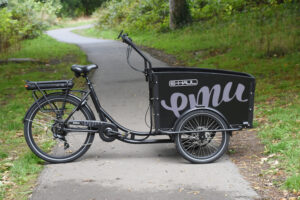


Want to carry loads by e-bike in the easiest way possible and at a reasonable price? Meet the Emu E-Haul Cargo Electric Trike, a ‘front- loader’ with a very generously sized load box and a truly competitive price tag.
I’ve always loved front loaders. It’s so easy to sling whatever you want to carry – animate or inanimate – into a big box and use electric assistance to move your cargo around. But this design usually comes with a very steep price tag. The price of the E-haul therefore caught my eye.
E-cargo bikes under £3,000 are not unheard of, but as far as I am aware there are no front loaders available under this price mark. They tend to feature mid-drives with price tags from around £4,000. Front loader specialist Riese & Muller offers an array of such models well above this price level.
> Can you get a good quality electric cargo bike for under £3,000?
Making the price tag even more remarkable is the fact the Emu E-Haul is a trike, which of course means more materials, manufacturing and transport costs over a simpler two-wheeler.
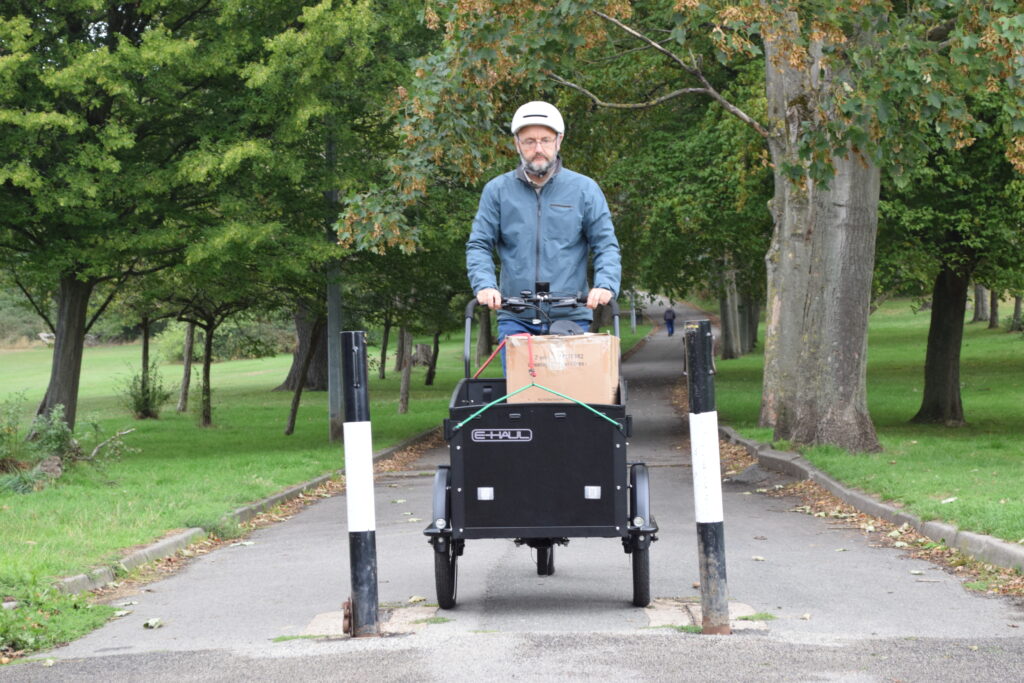
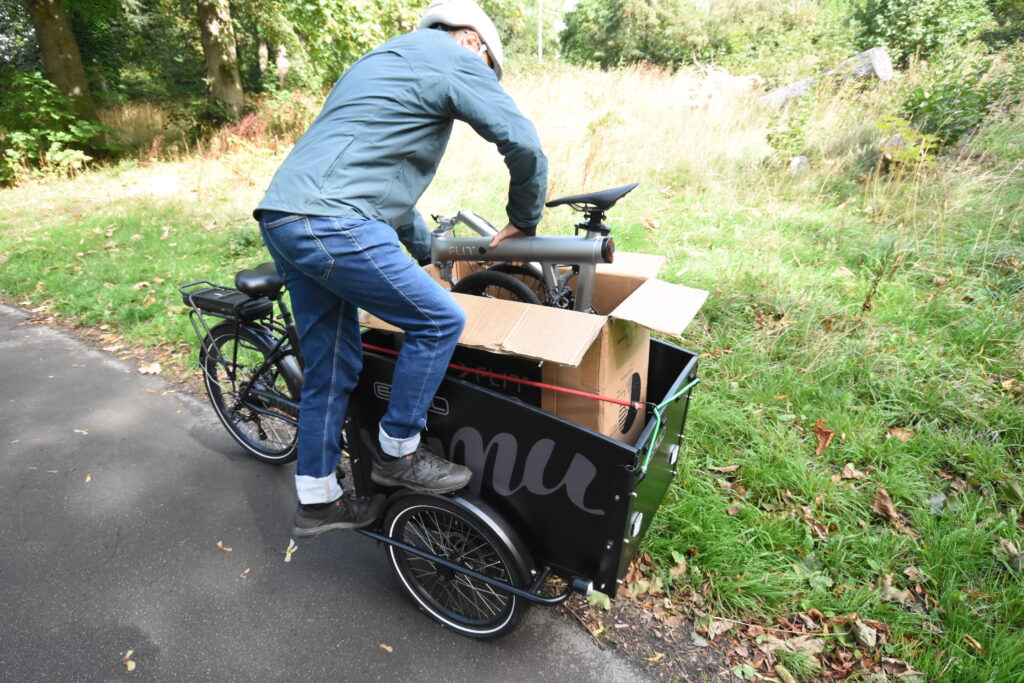
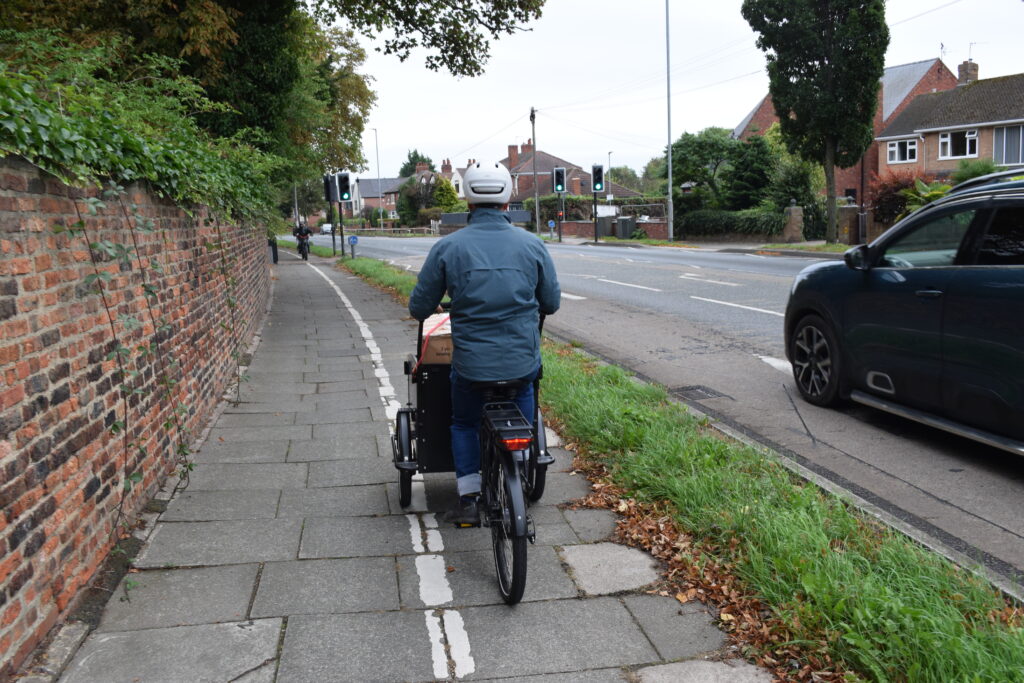
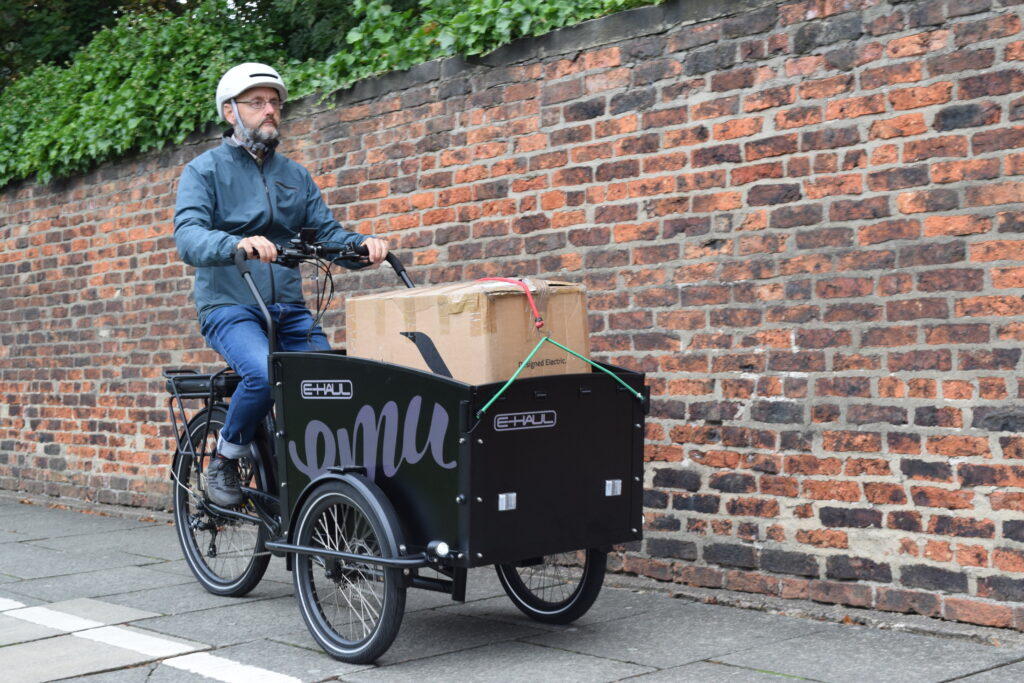
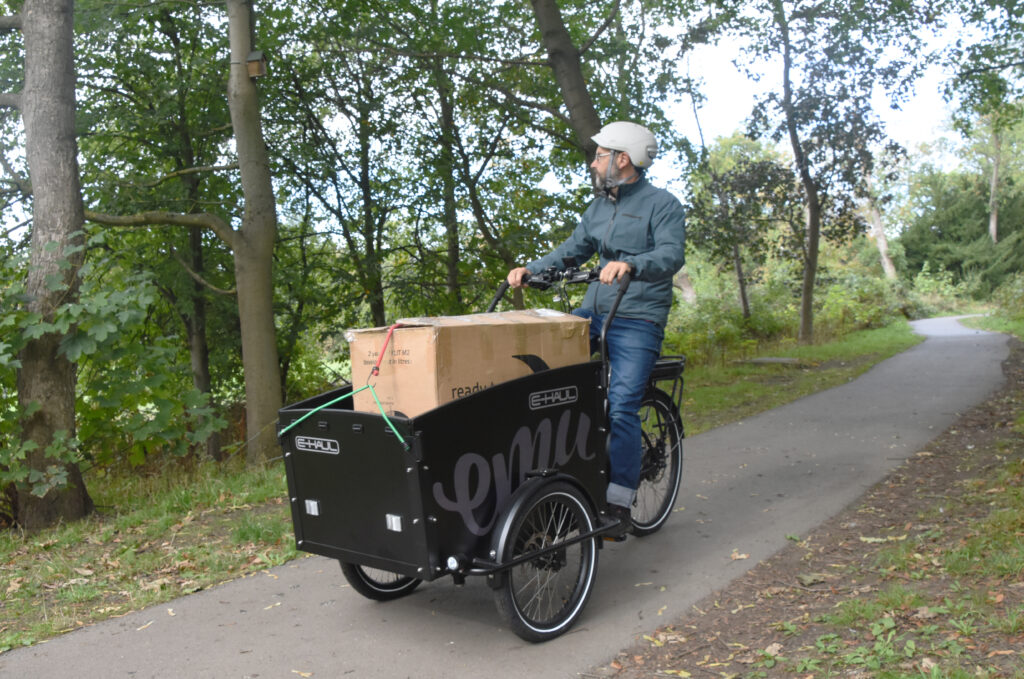
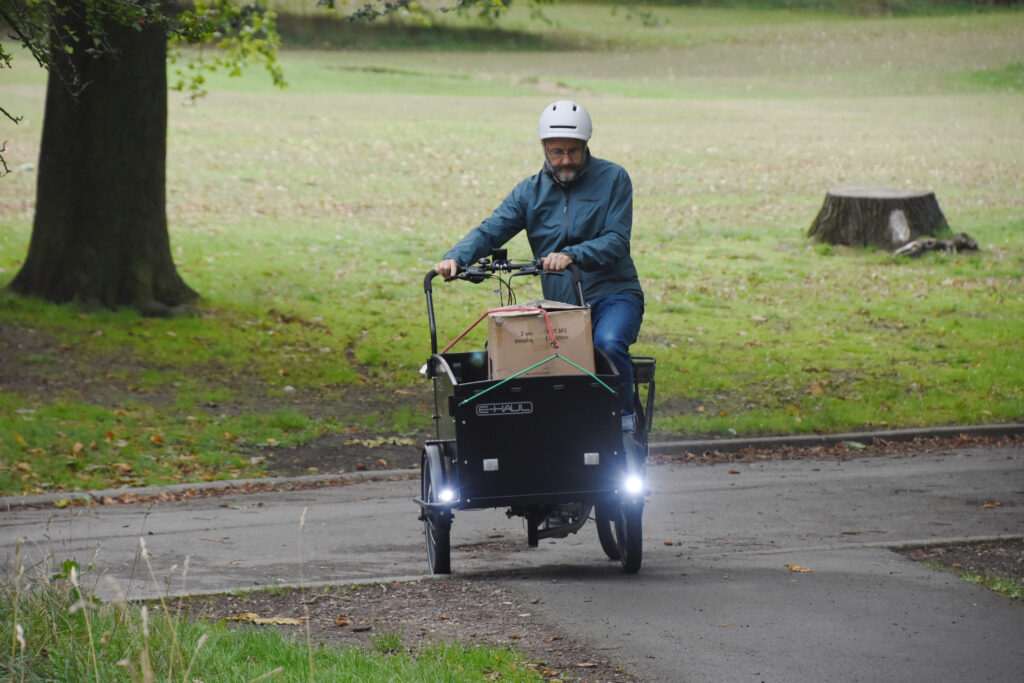
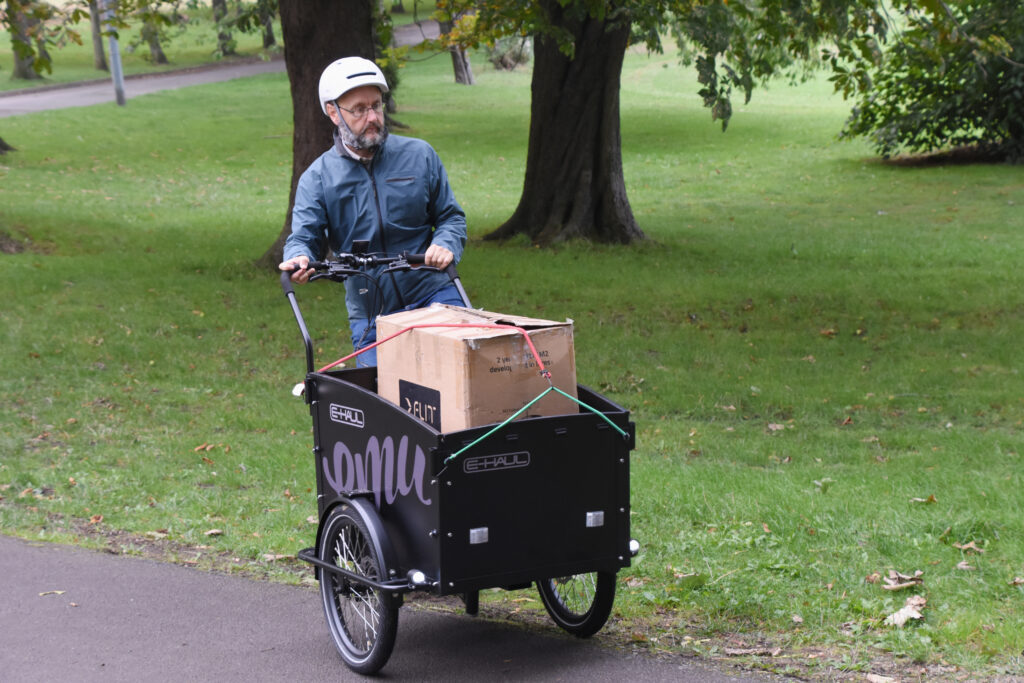
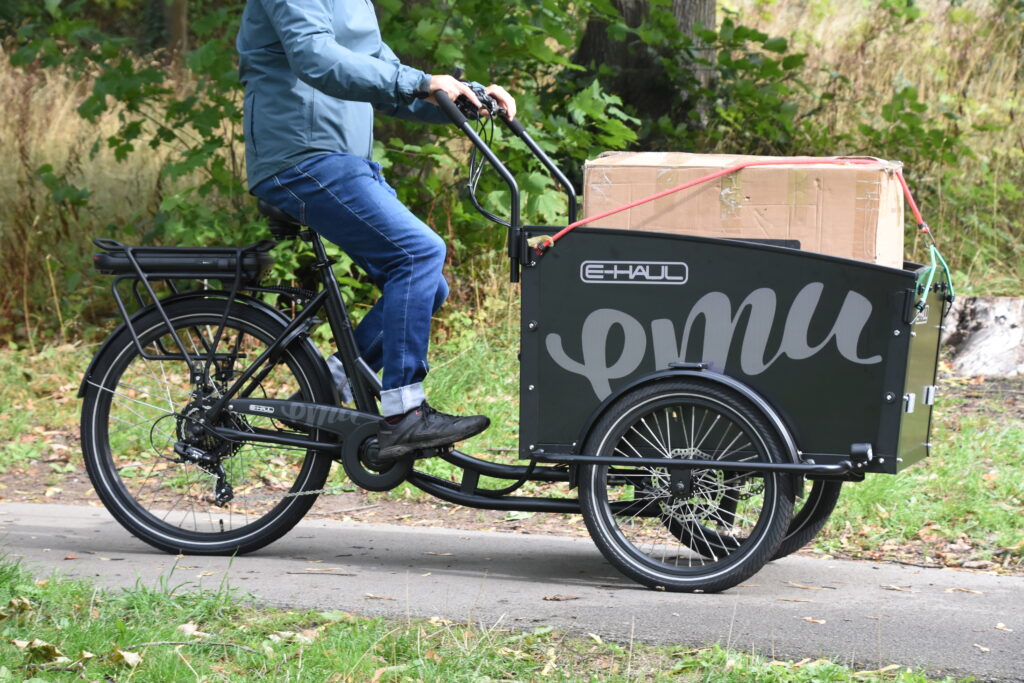
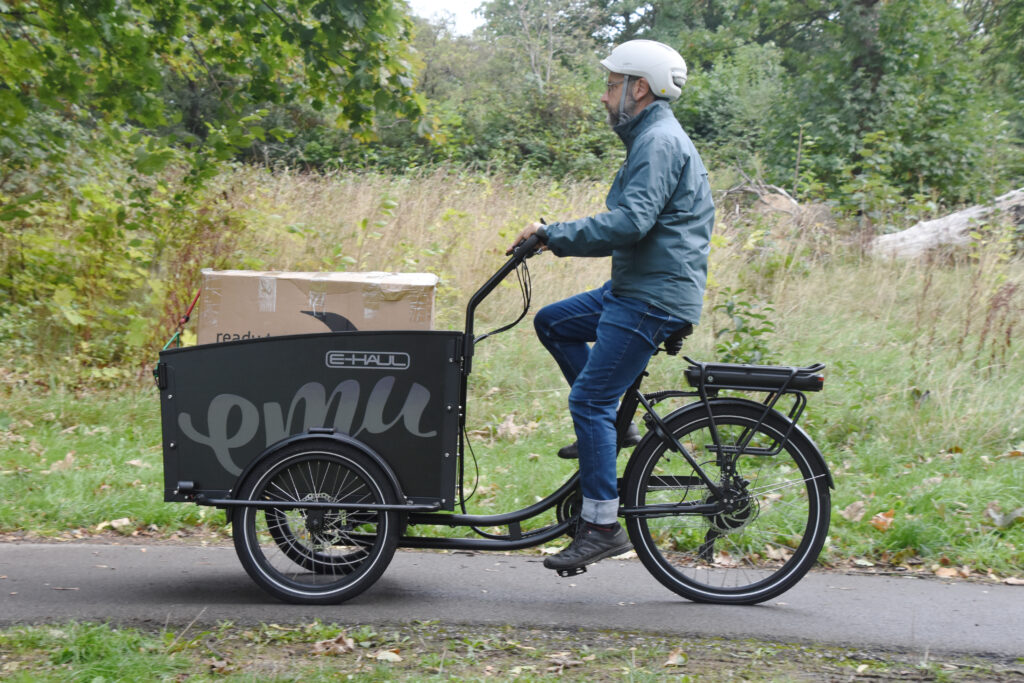
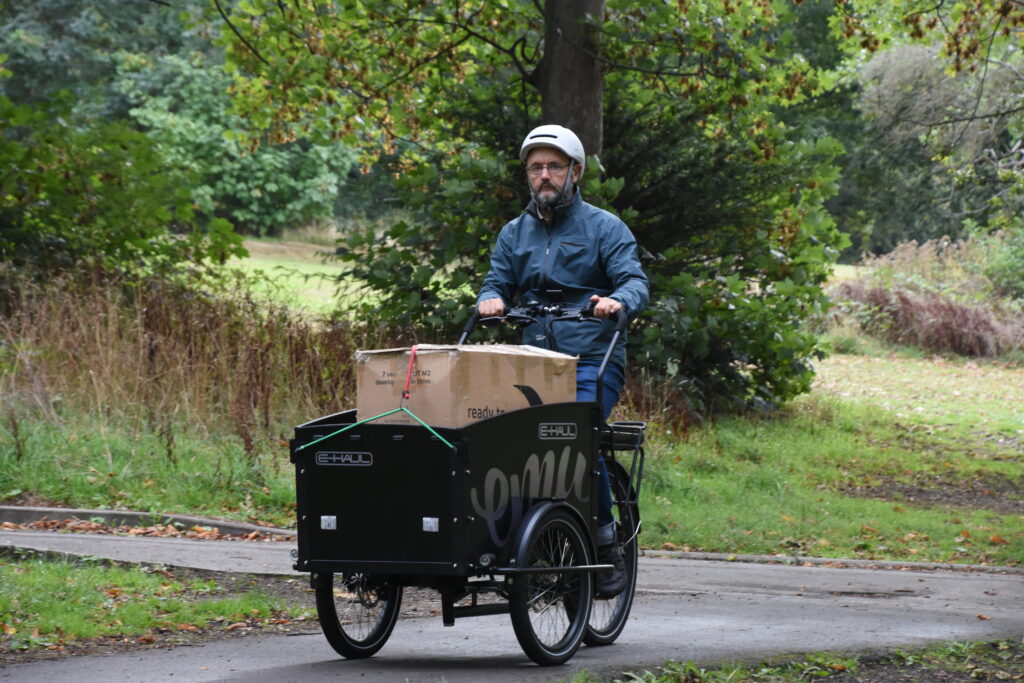
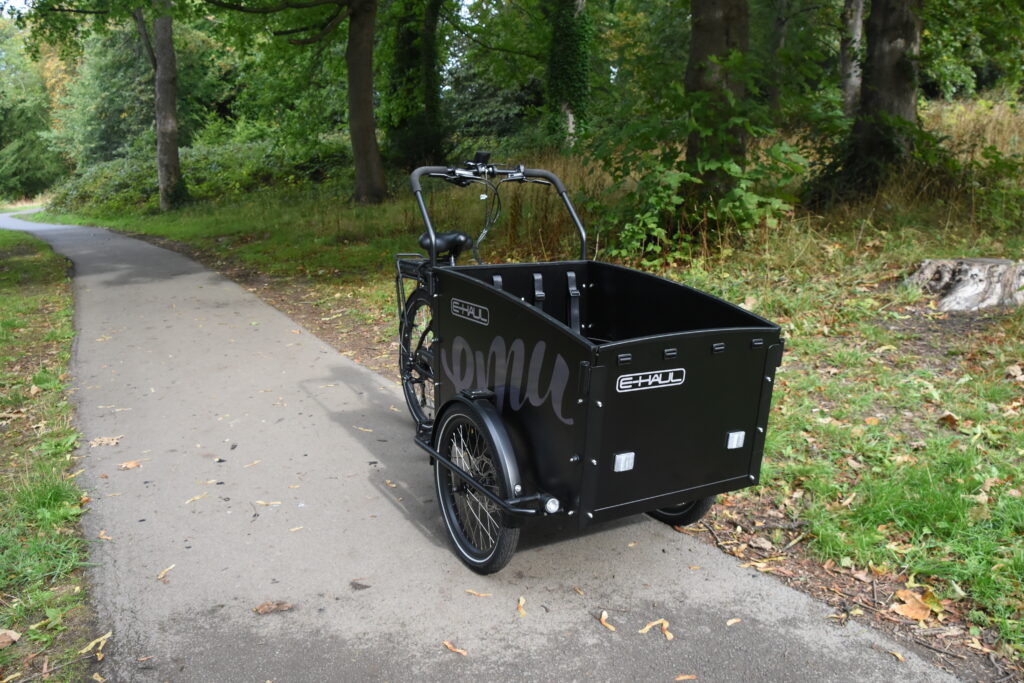
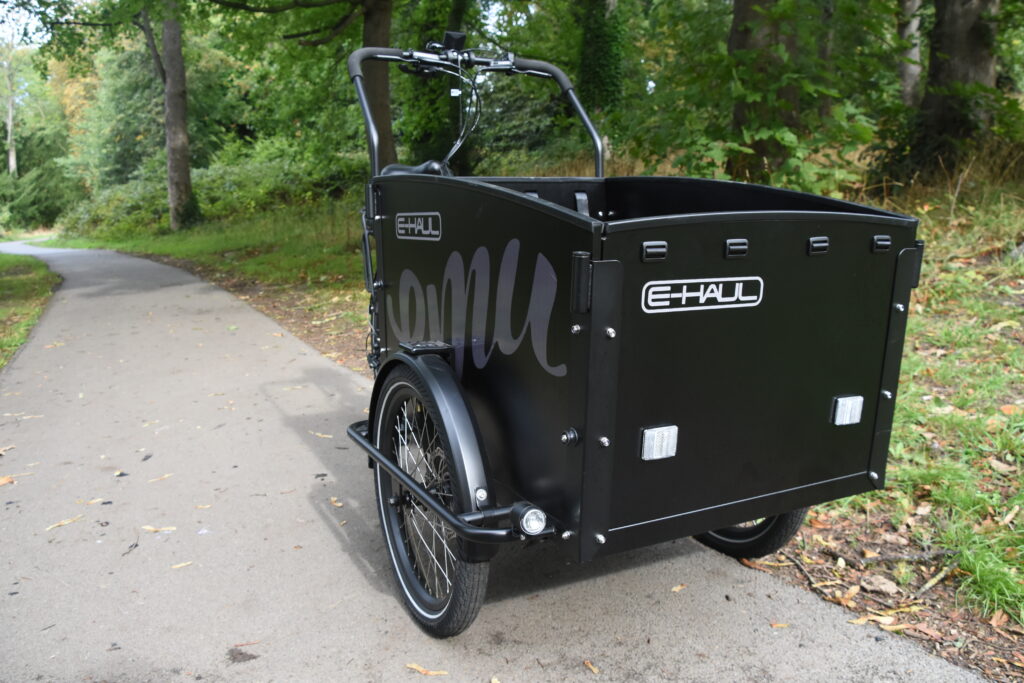
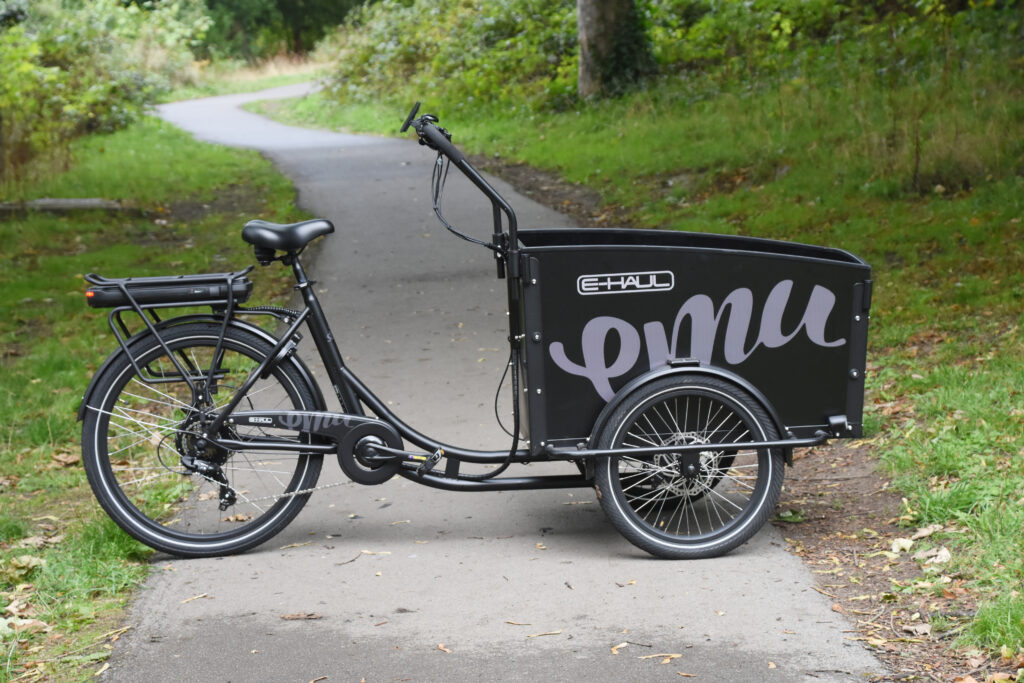
If you’re wondering why Emu adopted the name of an antipodean bird, it’s because, “This large flightless bird can travel a great distance without difficulty.” It is however a UK-based brand, founded in 2014 with a keen eye on value for money models and owned by the parent company of the long-established specialist e-bike retailer, E-Bikes Direct.
Enough of the background though. Let’s check out what you actually get for your money and see how it coped with some real world testing.
Emu E-Haul – design and spec
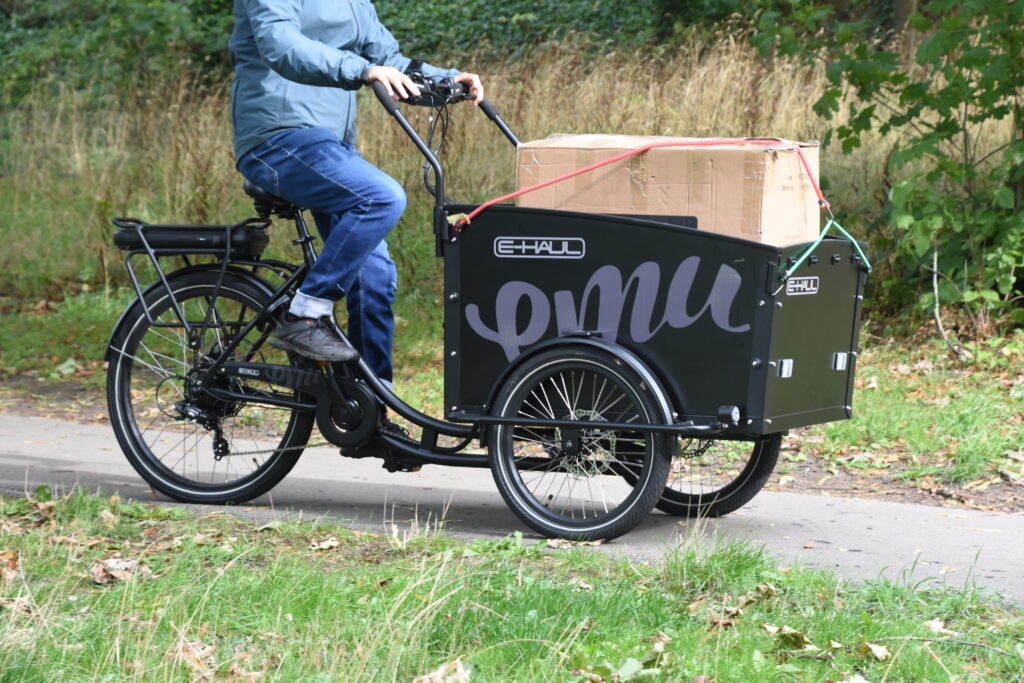
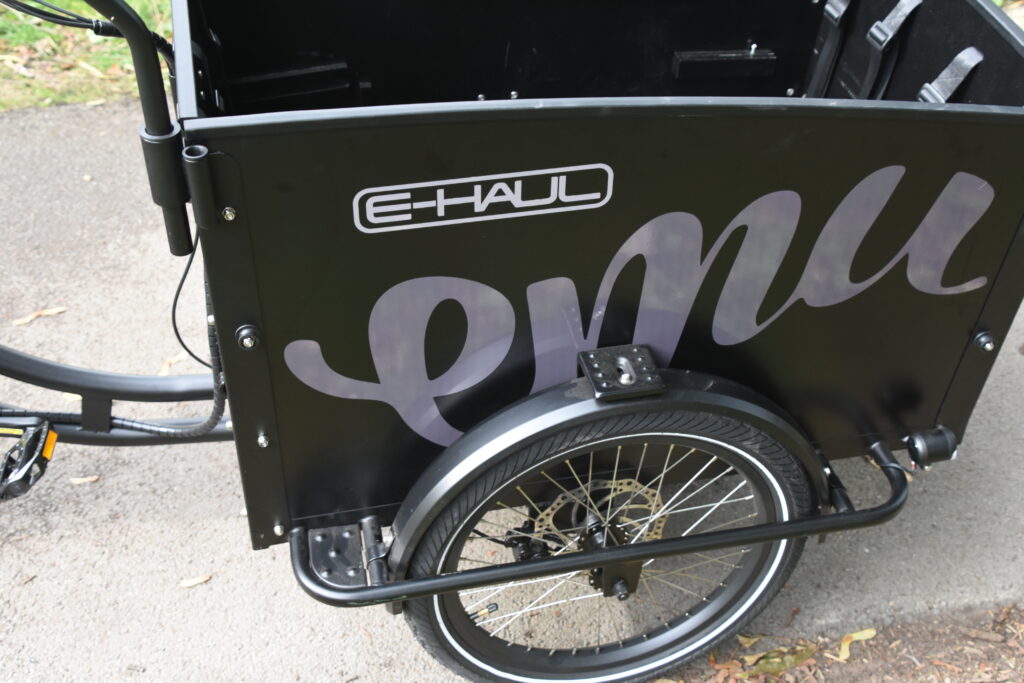
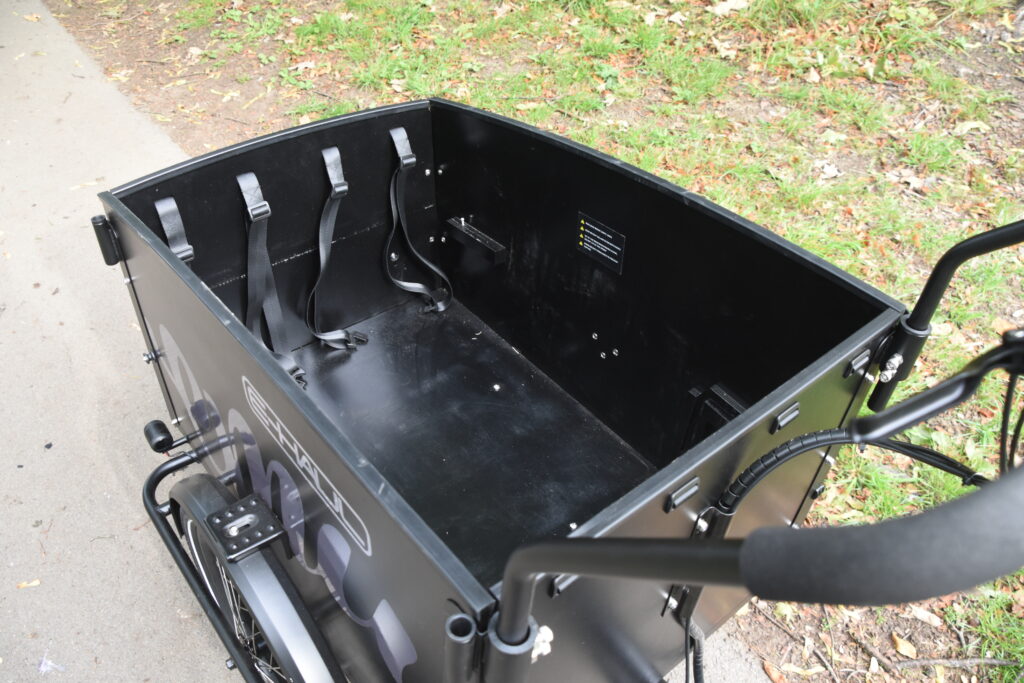
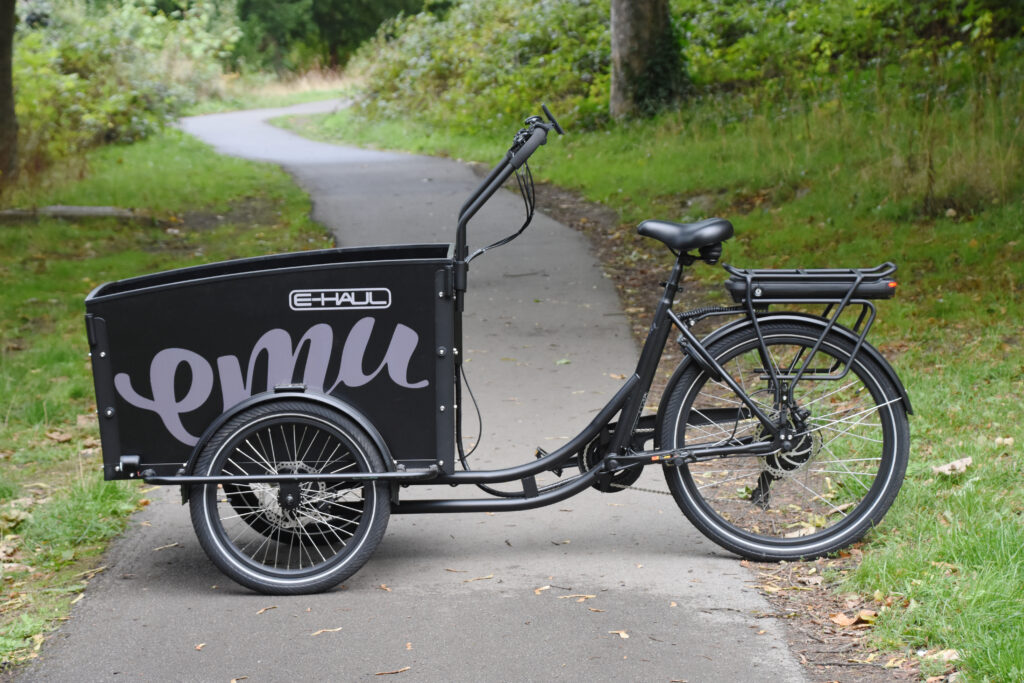
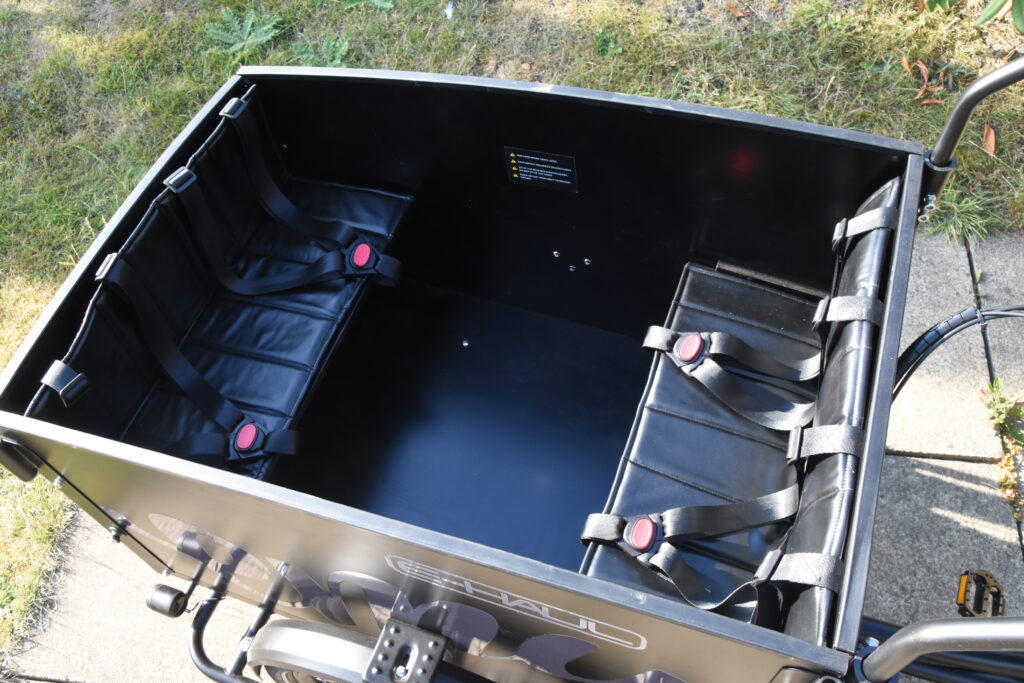
The large front carrying box of the Emu E-Haul takes centre stage as it’s what gives the bike its impressive carrying capacity (it measures 915mm long, 595mm wide and 485mm high).
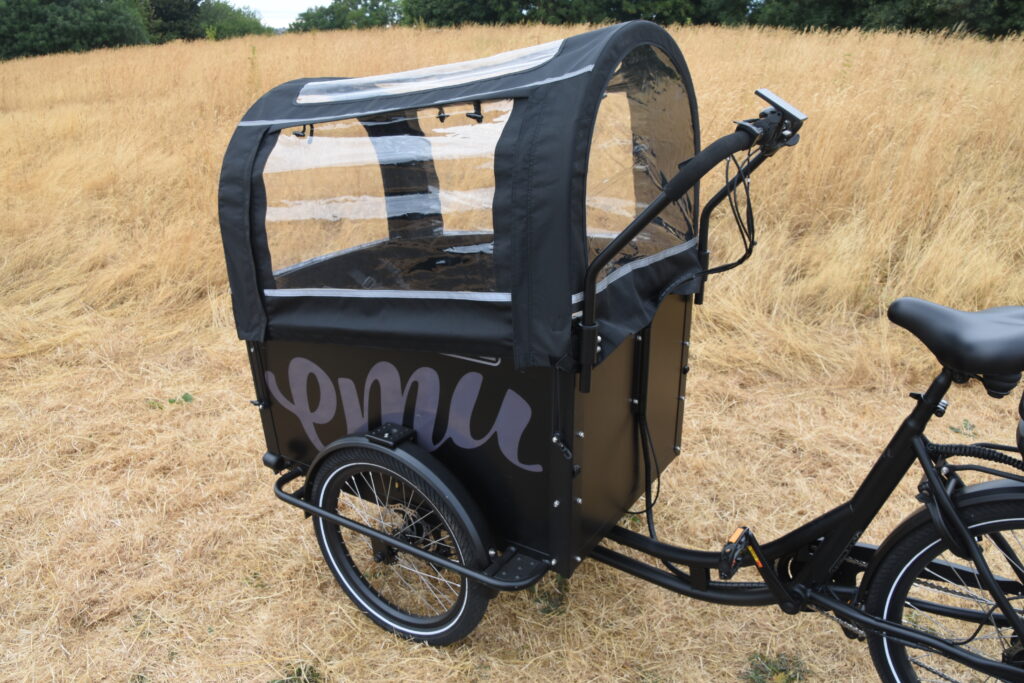
It’s rated to a very generous 80kg and as standard it comes with removable bench seats and four child seatbelts plus a raincover which stretches over two steel hoops. The raincover seemed fiddly to get on and off and felt a tight stretch at first, but with practice I developed the knack of pulling the fabric in the right areas to make it fit.
I used the bike for cargo rather than kiddy carrying, so if I used the E-Haul long term I would probably have ended up just leaving the cover off (it does restrict your view of the road ahead a little) and instead bungeed a tarpaulin over the load whenever it got rainy. I’d also want to drill some drainage holes in the bottom of the box just in case rain did get in. The box itself looks pretty well made (the material looks to be plywood or similar) and it is effectively bolted to a square steel frame underneath.
For child carrying duties, the raincover may be more useful. The E-Haul will take four little ones up to the maximum 80kg, and there are even a couple of small steps welded into the side of the frame so that they can more easily climb aboard. The box lacks a door, which is a feature of a few other front loading designs.
You’ll need to take care that heavier children get in first and seat themselves in the rear seats to prevent any possibility of the bike tipping forwards. There are notes to this effect on the bike itself.
Overall the box is great for quick and easy loading and unloading onto a very stable three wheeled platform – though it’s a pity it doesn’t easily convert into a flatbed for taking extra wide loads such as white goods or smaller items of furniture.
The parking brakes on both front and rear hydraulic disc brakes are a real boon when loading up too and combined with a rear wheel lock there is virtually zero chance of the E-Haul rolling off.
Weight is the downside of all this capacious, stable, load hauling ability and the E-Haul comes in at around 58kg – the heaviest e-bike I’ve ever tested. That’s thanks not just to the size of the bike but to the fact it has a steel frame (and sturdy steel mudguards) which is presumably a cost cutting exercise. However, once bikes get beyond the weight where you can easily pick them up, extra kilos don’t really matter that much other than by adding to the weight the motor system has to power and so reducing the range.
Size may be more of an issue than weight and most users will need a secure garage or shed to store the E-Haul in – though I was surprised and pleased to see plenty of cargo bikes stored in public view at the front of people’s houses on a recent visit to Oxford.
If you need to get the bike up and down even a single big step, you will struggle, but in general manoeuvrability may not be the issue you think it is – though we will get to that in more detail shortly. Okay, tadpole designs don’t generally have the wonderful sharp turning circle of a delta trike design, but the only problems I found in practice related to the width of the bike – i.e. overly restrictive access barriers on traffic-free trails – though it coped with less restrictive chicane type controls quite easily.
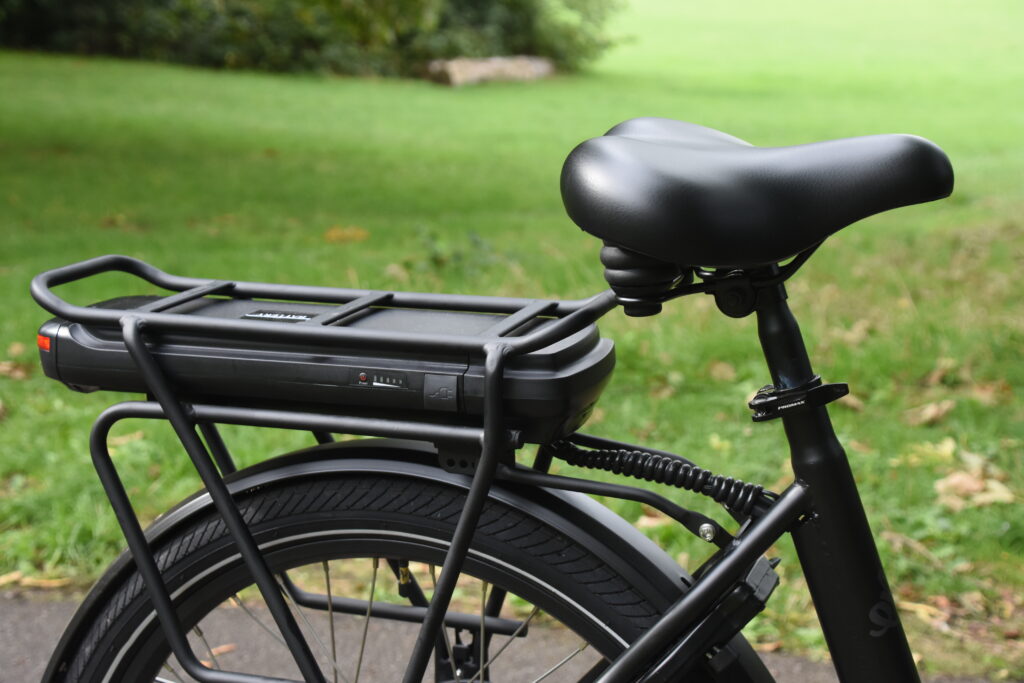
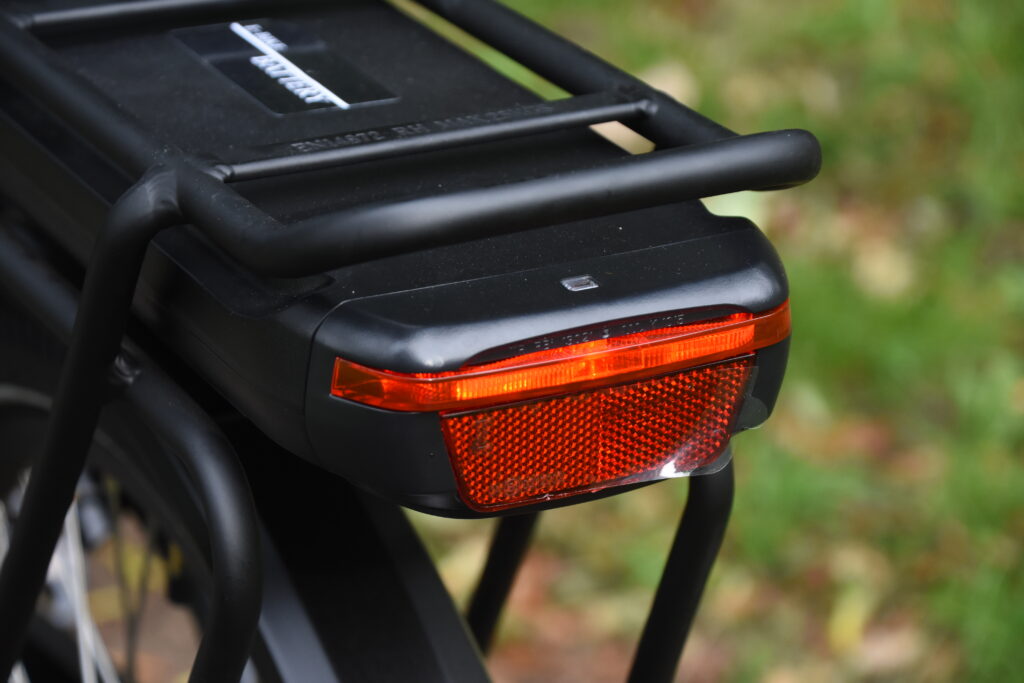
The step-through frame means it’s easy to get on and off quickly and there is even a rear rack for yet more carrying capacity. This doubles as the housing for the 504Wh capacity battery.
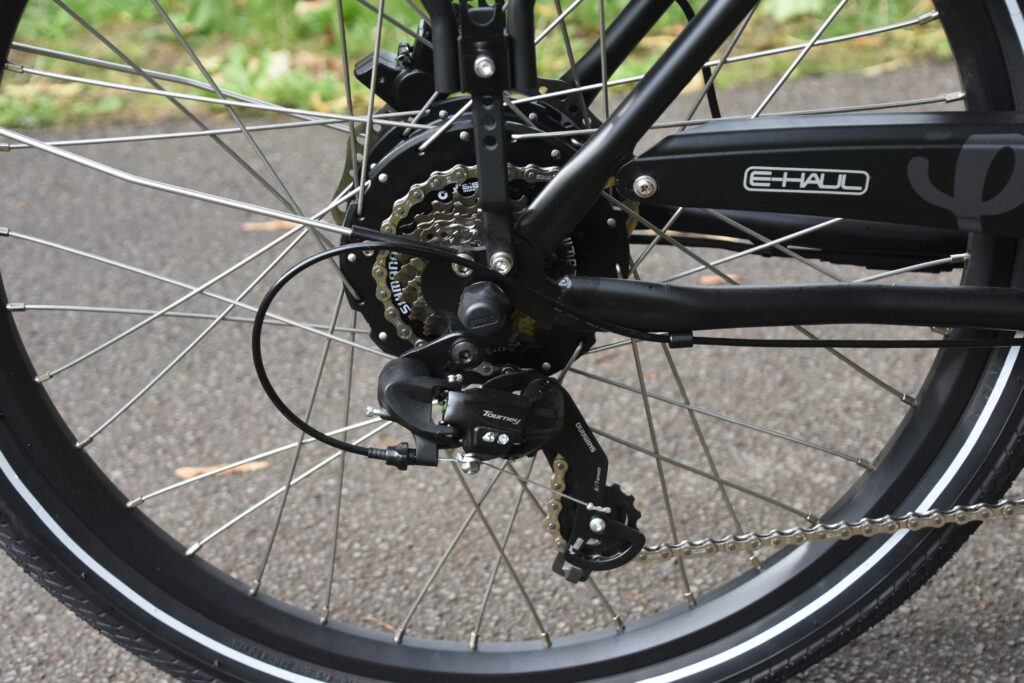
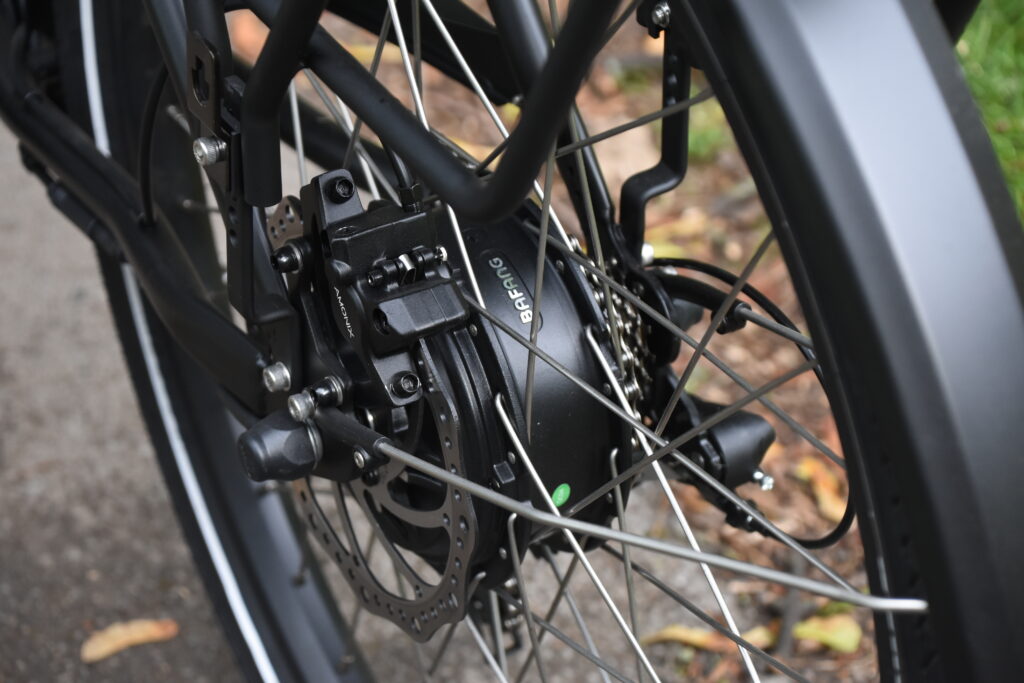
I haven’t yet touched on the electric assist system, which looks pretty basic on paper – a Bafang rear hub drive with cadence sensing rather than torque sensing. You’d think a very powerful mid-drive would be the go-to option for such a heavy cargo carrying bike, but I was surprised at how capable a very heavy bike powered by a relatively modest drive system proved to be.
Emu E-Haul – riding technique and performance
Riding the Emu E-haul was totally different to riding any other e-bike I’ve tried. First of all, it’s a trike, so you don’t lean to balance it. Just imagine you are driving a car and point it where you want it to go.
At first, this feels hard, but once you get the knack it feels pretty natural… just like learning to ride a regular bike – though not as nerve-wracking, as obviously you can’t really topple over on a trike.
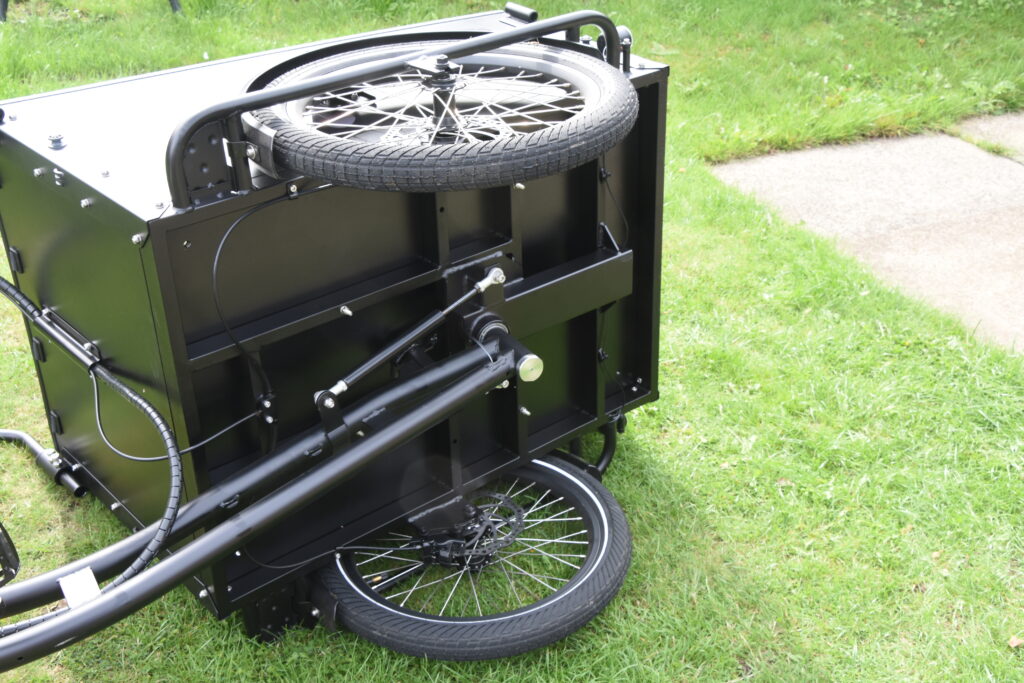
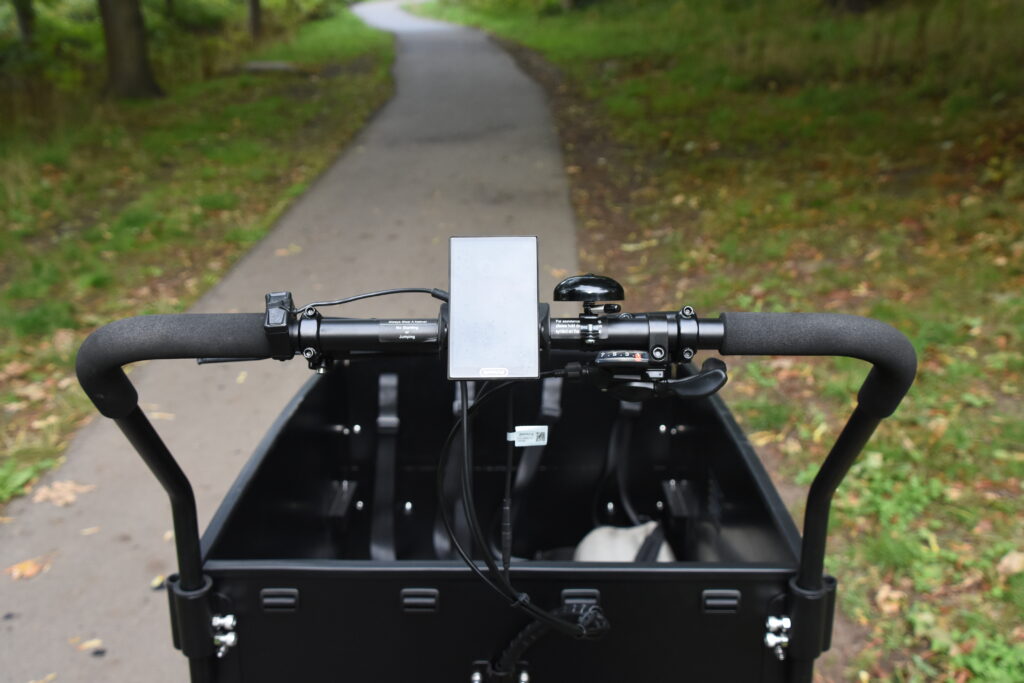
The second unusual element is the steering, which is controlled via a ‘steering bar’ that rotates the whole of the front half of the bike. This requires a bit more arm power than steering a two-wheeler, which is done mainly by balance.
On tight turns, the E-Haul requires your body to stay upright and push your arms (or arm if it is the tightest turn possible) out to the side. Again, once you get the knack it’s easy peasy, though it feels strange at first.
It’s a big turning circle. You should manage a 360-degree turn on a two car width road, but on a single car width path, or on all but the most generous of traffic-free trails, you’ll need to hop off and pick up the very light rear end and pivot the trike around on itself. I only needed to do this when manoeuvring the E-Haul at home, into a shed, and never out on the road.
Do be careful on corners at speed, especially ones with an outward camber. Delta trikes can be a bit ‘tippy’ so it’s definitely something to be aware of. Once you know to keep to 10-12mph or so on bends and to keep your body upright, it shouldn’t be an issue.
With the riding technique pointers out of the way, how did the motor actually perform, especially with a heavy load? Certainly much better than expectations.
I did wonder at the choice of a relatively small hub motor on such a heavy load carrying bike when I saw the spec sheet. However, after loading around 70kg into the capacious box, I found it surprisingly good up moderate hills. Even on steep 10% inclines, the motor complemented a fair amount of pedal power to get rider and load to the top without any dramas.
If you regularly tackle big loads in very hilly country, you’d be better advised looking for something with a powerful mid-motor with low gearing, but the Emu E-Haul shouldn’t be fazed by the terrain of the average British town or city.
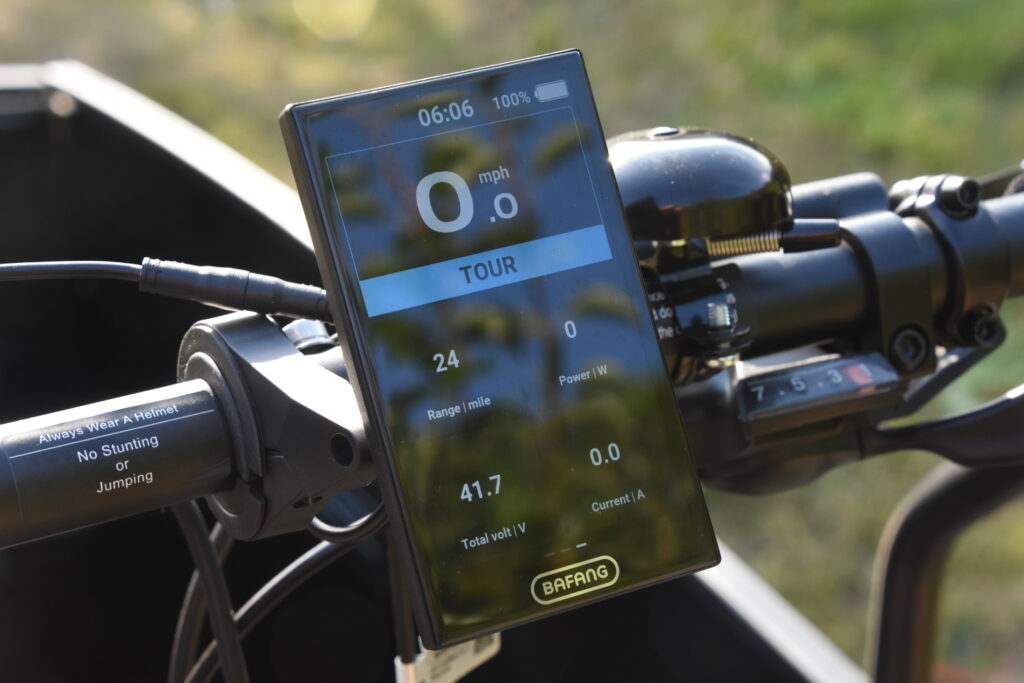
The excellent central 4in TFT LCD display – colourful and very legible – showed that peak power topped out at a very respectable 700 or so watts (the most powerful Bosch mid-drives top out at around 750W).
All the other aspects of the bike performed well too, given everything on the bike has been specced to a pretty low price point. The power delivery was about as smooth as you will get for a budget system and the lowest of the seven derailleur gears meant the bike didn’t struggle starting off or within the limits of the aforementioned gradients. I was particularly impressed with the walk assist which I found helped with low speed manoeuvres through narrow gaps.
Whilst the five power levels were a bit crude, delivering escalating maximum assisted speeds (with only the top level getting you up to 15.5mph) they actually suited this particular bike quite well as you generally want to build speed up gradually. If it helps keep the price down, I think it’s an acceptable compromise on this particular bike.
The range of 15-25 miles from the 504Wh battery would be very disappointing on most e-bikes, but I wasn’t surprised at all given the combination of challenging terrain, heavy loads, large bike weight and the hub motor setup (mid-motors are generally more efficient on this type of bike).
Yes, it would have been nice to have seen a much bigger battery, as on the likes of Engwe and Fiido’s latest load haulers, but I suspect that the E-Haul would mainly be used for short haul hops across town and so for many range anxiety won’t be an issue.
The battery itself removes quickly and easily for charging away from the bike and a fullish charge from empty should take around 5-6 hours.
The Samonix hydraulic disc brakes, although not the most modulated, provided plenty of power for emergency stops, even with a full load on board (though as noted already, with heavy loads on this design of bike, a slower and steadier riding style compared to the average e-bike riding technique is definitely the way to go).
All the other aspects of the E-Haul’s performance were similarly pretty good. Gear changing was smooth, the tyres reasonably comfortable given the bike’s lack of suspension elsewhere (I would be tempted to fill the inner tubes with slime sealant as mending a puncture with a full load on board would be a pain) and the hardwired twin front lights were particularly effective. You get a hardwired rear light too.
The competition
As I’ve already noted, front loaders are rare and generally very pricey and three wheeled versions even rarer.
The Raleigh Stride 3 has a mid-drive and looks high quality and capable and sells at a bargain price, but as Raleigh (along with parent company Accell) are now insolvent, availability is limited and warranty claims may run into problems down the line.
Christiania is an iconic brand in its native Denmark and known for quality that will last through tough everyday use. Cargo bike specialist London Green Cycles offers both hub drive and mid-drive models, starting from £3,570 and £4,940 respectively.
Beyond that, if you want an electric load hauler at a much lower price point and are happy with a longtail, it’s hard to beat the £1,899 price of the Engwe LE20 – though as Dave highlighted in our review, a lack of carrying accessories means you may need to be creative with carrying solutions). It is however currently out of stock.
Decathlon’s E-Three is a similar sort of rear hub longtail for £2,499. Fiido has some affordable options too.
Estarli’s Longtail L20 is a mid-motor option that can just about be had for under £3,000 in its most basic spec. Cube also stands out as offering longtail, rear loading and front loading high quality designs.
Overall
Measured against any comparable design, the Emu E-Haul represents excellent value for those wanting to transport several toddlers or sizable loads. You could probably carry as much or even more volume with the E-Haul as you could with a small car and at a fraction of the running costs. The caveats to that are that distances will be pretty short and the terrain limited to only moderately hilly.
You might find yourself replacing things like brakes pads, chain and derailleur more often than with lighter and pricier e-cargo bikes, but as a budget model these should represent modest upkeep costs.
You might want to try a test ride at an Emu dealer to make sure you can get on with the riding technique and could live with the size and weight of the bike, but if you can, you will have a machine with a lot going for it.
Test Report
What does the manufacturer say about this product?:
The EMU E-Haul is a powerful and family-friendly cargo solution, designed to transport children or goods safely and comfortably.
Tell us some more about the technical aspects of this product:
The EMU E-Haul is a ‘tadpole’ trike design (tadpole = two wheels at the front) with a large carrying box between the front wheels. To steer, the box assembly and front wheels are all turned together.
Any further comments on quality?:
Reasonable quality for the price
Any further comments on performance?:
Can carry a large amount effectively for a budget design
How does the price compare to that of similar products in the market, including ones recently tested?:
The Emu E-Haul undercuts many front loading e-cargo bike designs by a significant amount
List the components used to build up the bike:
Frame, handlebar and mudguards: Steel
Motor: Bafang rear hub
Battery: 504Wh key removable battery, 2 amp charger
Display: Bafang 4″ TFT LCD
Brakes: Samonix Hydraulic Discs
Gears: Shimano 7 Speed
Tyres: Kenda, Front 20″ & Rear 26″
Other components included as standard: Front and rear hardwired lights, wheel lock, removable bench seats with child seatbelts and raincover
Tell us what the bike is for and who it’s aimed at. What do the manufacturers say about it?:
For either kiddie or cargo carrying. The front box is rated for four small children or cargo with an overall weight rating of 80kg, it will carry more than many other e-cargo bike designs.
Where does this model sit in the range? Tell us briefly about the cheaper options and the more expensive options:
Emu also produces a longtail e-cargo bike starting at £1,699, so the E-Haul is their priciest e-bike by some way. There are also three electric hybrid models starting from £899.
Tell us about the build quality and finish of the frame and fork:
Good standard for a budget model
Tell us about the materials used in the frame and fork:
Steel
Tell us about the geometry of the frame and fork:
Sit up riding position with unique trike skills needed for the unusual layout
How was the bike in terms of height and reach? How did it compare to other bikes of the same stated size?:
One size step-over frame of a medium size.
Was the bike comfortable to ride? Tell us how you felt about the ride quality:
Yes, very comfortable but riding it is an acquired skill – it’s a very big trike with a big turning circle
Did the bike feel stiff in the right places? Did any part of the bike feel too stiff or too flexible?:
Yes – stiffness about right
Was there any toe overlap with the front wheel? If so, was it a problem?:
N/A
How would you describe the steering? Was it lively, neutral or unresponsive?:
Needs quite a bit of rider input and judgement – as you would expect with this design
Tell us some more about the ride experience. How did the bike feel overall? Did it do particular things well or badly?:
Comfortable and safe feeling though it is best to keep speeds moderate, especially with a heavy load onboard
Which components had the most effect (good or bad) on the bike’s performance? Would you recommend any changes?:
Great carrying capacity from the front box. Good performance from the motor system, though a high power setup with a bigger battery would be a good option for those living in very hilly areas.
What kind of motor is it? :
Bafang rear hub motor
What are the stated motor system specs? (Torque/power/maximum assistance speed):
250W, 15.5mph. Torque not stated
Tell us some more about the motor. How did it feel overall? Did it do particular things well or badly?:
A good all rounder – decent pickup and okay hillclimbing, especially given the heavy weight of bike and payload
How did the motor perform at low speed? (e.g. on steeper climbs or setting off with heavy loads):
Well
How did the motor perform at higher speed? Was it noisy? Did assistance cut out smoothly/abruptly at the 25km/h assistance limit?:
Power levels regulate the top speed but it works quite well with this design of bike
What type of battery is it? Is the manufacturer named?:
Lithium ion. Manufacturer Joycube.
Where is the battery on the bike? Is it removable?:
Rear rack battery, key removable
What are the stated battery specs? (Capacity/voltage):
36V 14Ah 504Wh
Tell us about charging the battery. What’s the charger like? How long does it take?:
2A charger = approx 5-7hrs from empty to full
Tell us about the assistance levels. How many are there? Are they all useful?:
Five levels regulating the speed. Upper levels are more useful than the lower ones.
Walk assist is also very useful for slow speed manoeuvring.
What do the manufacturers say about the range of the bike?:
Not stated
What was your experience of the operational range of the bike?:
Up to 20 miles with a full load in moderately hilly country.
Any comments on drivetrain performance?:
Fairly low gearing suits the bike
Any issues with drivetrain durability?:
No
Tell us some more about the drivetrain. Anything you particularly did or didn’t like? Any components which didn’t work well together?:
Good performance for budget components
Tell us some more about the wheels. Did they work well in the conditions you encountered?:
All good
Tell us some more about the tyres. Did they work well in the conditions you encountered? Would you change the tyres? If so what for?:
Good comfort and traction. No problems with punctures.
Any comments on brake performance?:
Could do with more modulation but very powerful.
Any issues with brake durability?:
No
Tell us some more about the brakes. Did they work well in the conditions you encountered? Would you change anything? If so, why?:
As above.
Any comments on controls performance?:
All good
Any issues with controls durability?:
No
Any comments on controls comfort?:
All good
Tell us some more about the controls. Any particularly good or bad components? How would the controls work for larger or smaller riders?:
All good for my medium size
Does the bike have a maximum luggage weight, or a maximum gross weight?:
Could do with more modulation but very powerful
Anything else you want to say about the capacity of the bike?:
Extremely easy to load and unload
Did you enjoy using the product? Yes
Would you consider buying the product? Yes
Would you recommend the product to a friend? Yes
Use this box to explain your overall score
Very practical large load / multiple child carrier at a competitive price
About the tester
Age: 60Height: 172cmWeight: 70kg
I usually ride: E-bikes of any descriptionMy best bike is: Riese & Muller Homage
I’ve been riding for: Over 20 yearsI ride: Most daysI would class myself as: Experienced
I regularly do the following types of riding: Commuting, Touring, Fitness riding