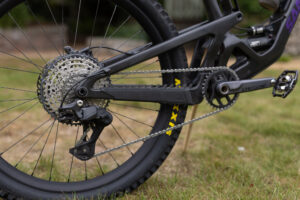


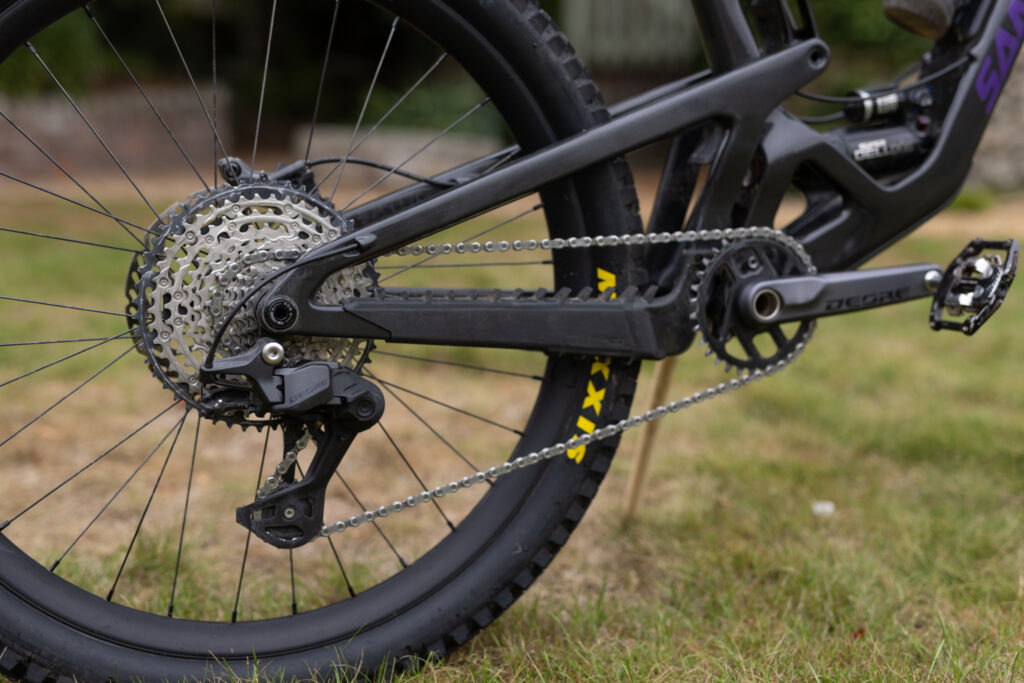

Deore M7200, Shimano’s latest revision to its Deore drivetrain, brings slick looks in a more compact and risk-averse package. With excellent ergonomics, prompt shifting, and very useful cross-compatibility, the brand’s move to ditch the clutch feels like a serious step backwards.
Shimano Deore M7200 drivetrain – Technical details
Shimano says that Deore M7200 is for those who prioritise simplicity, and those who don’t want to be riding with batteries. But as a new offering from the brand, it benefits from the classic trickle-down tech, so don’t be surprised if you see the odd thing from the pricier options here.
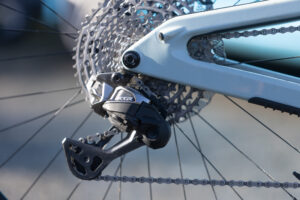
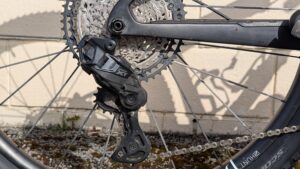
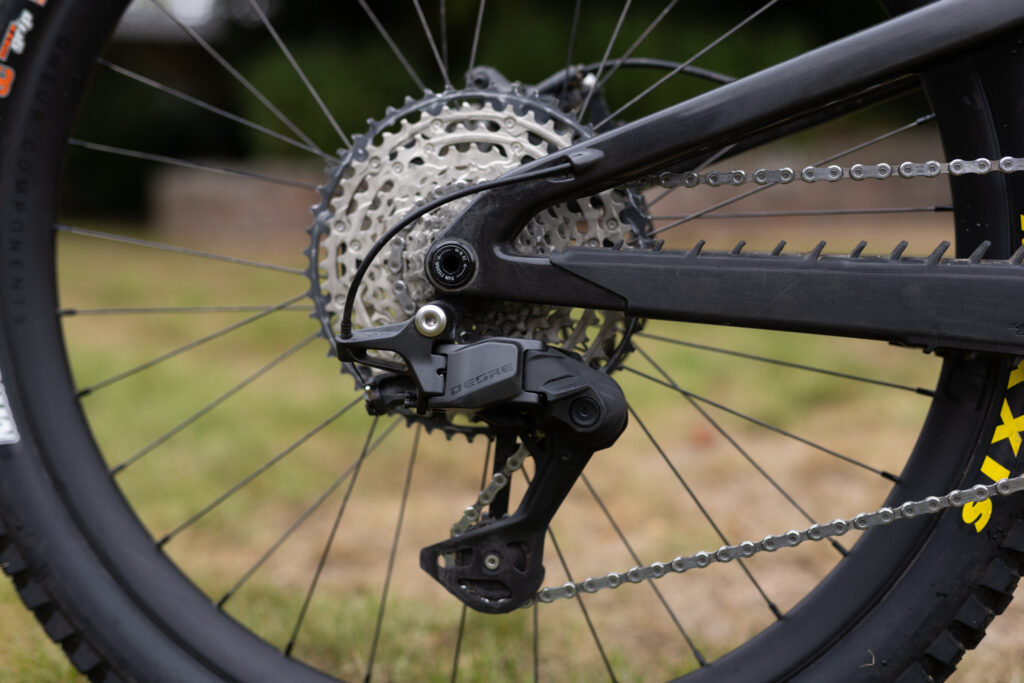
To start with the derailleur, that’s where you’ll find the most obvious of changes compared to the older models. Shimano says that it’s been rejigged to provide solid shifting under load, and it borrows the low-profile design that you’ll find on the XT and XTR versions, so it sits a little closer under the bike, with less material hanging out to the side. Notably, this means that it’s better hidden against trailside obstacles.
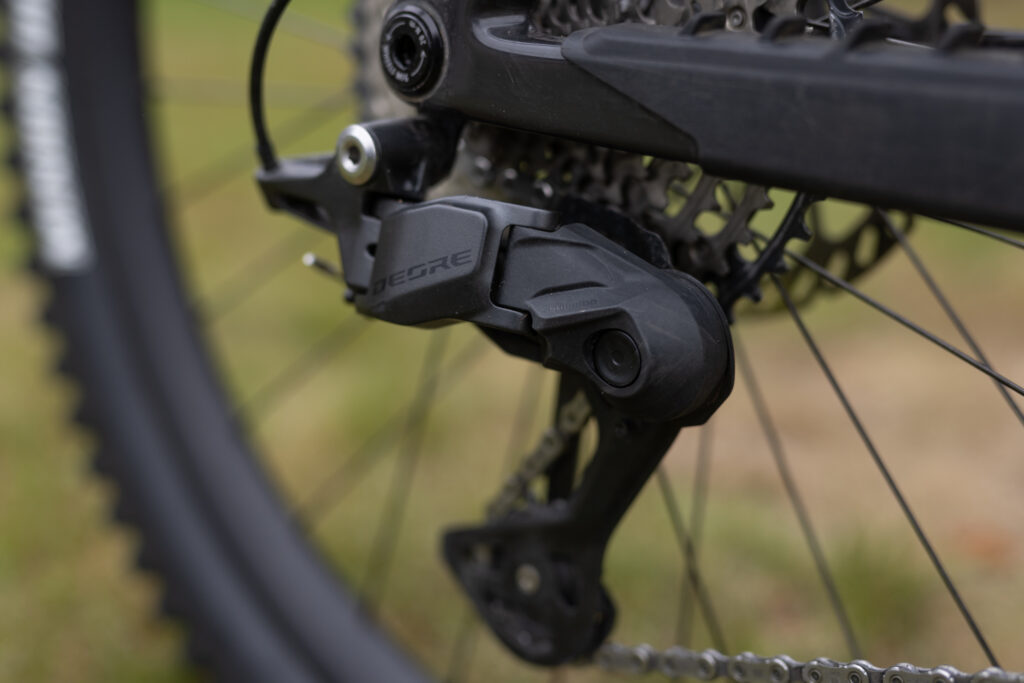
In another bid to keep riders rolling, the mech uses solid pulleys, making it impossible for stuff to get lodged inside them, and like the wireless options, Deore M7200 uses a ‘wide link’ architecture that apparently makes the derailleur more robust. Though, perhaps the biggest change is that Shimano has ditched the clutch mechanism in favour of a dual sprung system.
Apparently, this increases spring force by 70%, so it provides better chain tension owing to a tighter chain wrap, which results in improved chain retention. Additionally, Shimano says that this system doesn’t require any maintenance, which is always a big plus.
Unlike Shimano’s key rival, the brand still stays loyal to the humble mech hanger. That’s because it believes that it’s a vital component that helps absorb impacts before the drivetrain gets damaged. Then, if it does, all it would need is a new hanger.
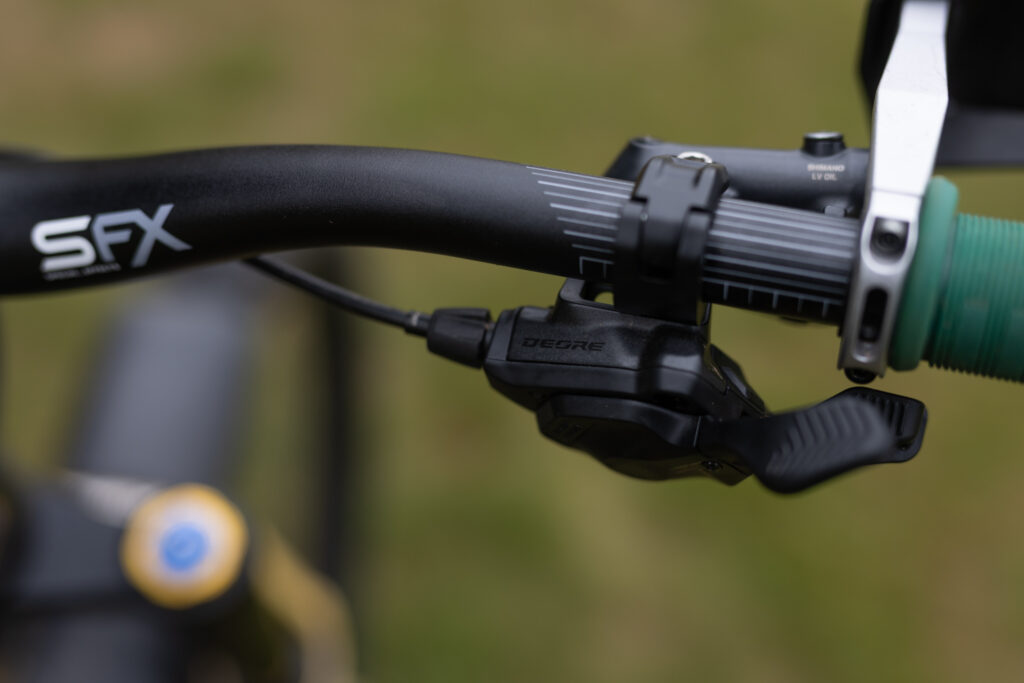
Shimano has brought three derailleur options to the market. One with Hyperglide+ tech and 12-speed compatibility, whereas the other uses Linkglide and is compatible with 11-speed systems. On top of that, there’s also an updated RD-M6200 with Hyperglide for 12-speed designs that carries the traditional layout, so it gets the clutch system of old.
Moving on to the shifter, it benefits from refined ergonomics thanks to a shorter lever throw, and its shape has been tweaked to provide better cable management, says the brand.
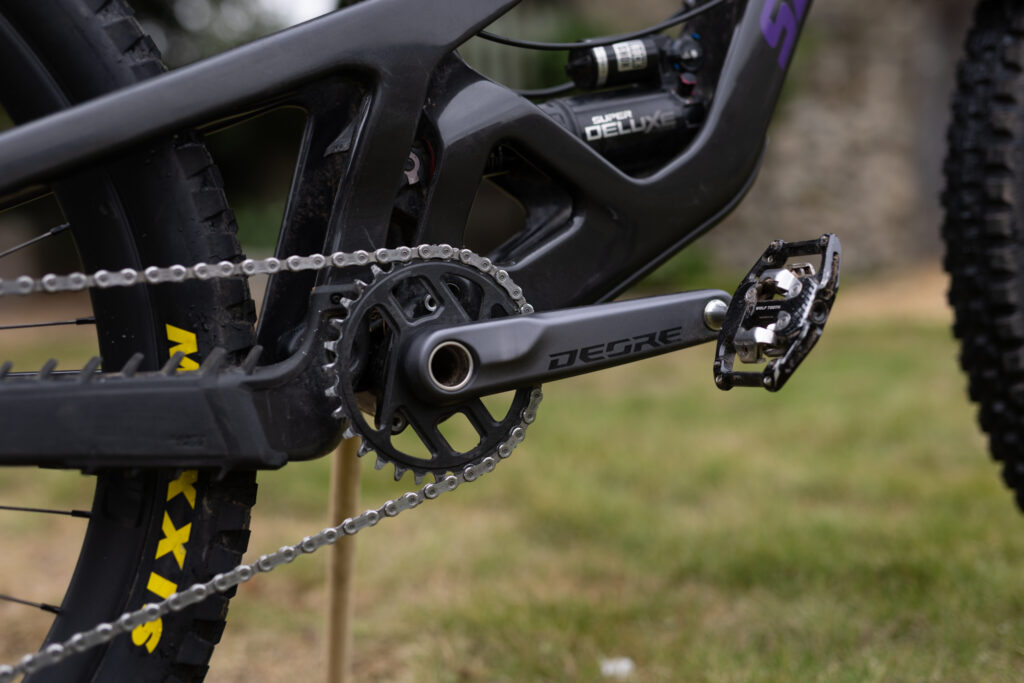
Then the crank uses a two-piece design with a 176mm Q-factor and a 24mm spindle. Its chainring benefits from ‘Dynamic Chain Engagement’ tech, which is said to improve chain retention further. The crank is available in 165, 170 and 175mm lengths and comes with 30t or 32t chainrings. However, it’s compatible with chainrings from the rest of Shimano’s range.
Promising smooth shifting under load is an option of two cassettes. The Deore CS-M7200 boasts a combination of steel and aluminium cogs with a 10-51t setup, whereas the CS-M6200 uses a fully steel construction to save a bit of cost while boosting durability.
Shimano Deore M7200 drivetrain – Performance
Generally, I’ve been really pleased with the performance that the latest iteration of the Deore drivetrain provides, but one thing stands out as a real negative. I’ll get onto that a little later. But starting with the good stuff, installation is as expected from a regular cable-operated drivetrain. Bolt everything together, set the B-tension and limit screws, and the cable tension, and everything’s rosy.
If you’re used to Shimano’s mechanical drivetrains, Deore M7200 will be super familiar to you. While differently shaped compared to previous generations, the shifter provides excellent ergonomics as always; it’s just more refined. Each paddle requires less effort to engage a shift, thanks to the shorter lever throw. This makes the whole drivetrain feel a lot faster and more intuitive.
And a feature I really like on the shifter is that the little screw-plug that you remove to thread a cable through is gone. Now, it’s a neat sliding door that’ll never be lost in the workshop.
Shifting between gears is reasonably smooth and certainly prompt. Again, the short lever throw adds to the whole shifting formula where less effort to click a paddle makes for less time between the click and the derailleur’s movement. Between gears, Deore M7200 is swift and impressively smooth for a lower-budget offering.
The same goes as I’ve ridden with the setup more. After a good few hundred kilometres, the performance has stayed pretty much as solid as it was when fresh. It has required the odd tweak at the barrel adjuster, as expected, but even deeper into the test, I’ve been very happy with what Deore provides.
As there has been something of a focus from Shimano to bring better shifting under load, Deore M7200 delivers. Generally, there’s not all that much difference between shifting while hard on the pedals and when not. As a result, power transfer is very consistent as the derailleur moves the chain over the cassette.
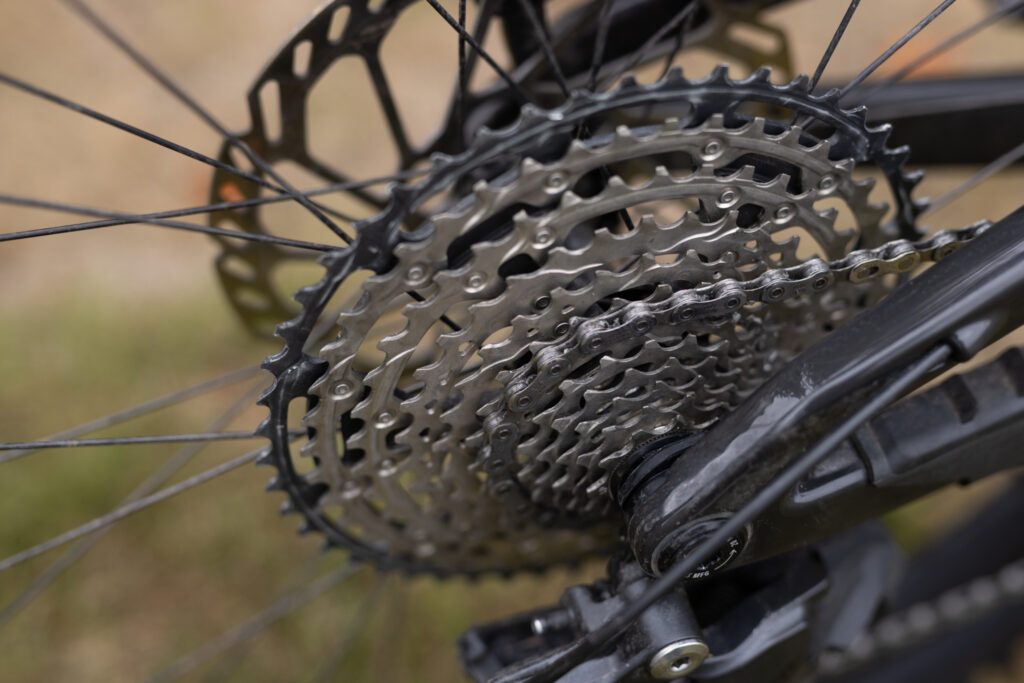
However, the slicker shifting under load doesn’t translate across the whole cassette. I’ve found that in the larger, or easier, gears, Deore M7200 can get a little grumbly and crunchy. It’s not necessarily slower, but it audibly puts up more of a fuss when shifting around the larger gears under heavy pedalling. This isn’t something I’ve managed to tune out with cable tension, either. But it does do the job with very little in the way of a drop in power transfer.
Though, to move on to what I’m not too happy with, and I’m going to sound super harsh here, Shimano’s decision to move away from the tried-and-tested clutch system isn’t cool. The system’s chain retention is nothing short of excellent, even unaided by a chain guide, but boy, it’s noisy.
While shifting is mostly noise-free, unless under load and in the larger gears, the mech likes to slap around. When rolling over square-edged hits, landing drops, and even milder but more sudden impacts, the derailleur cage extends and then springs back to its original stance. As that happens, it lets out an almighty clunk. When riding my usual trails, which are infested with roots, to say the least, Deore M7200 can make for quite a noisy time.
It also means that there’s a bit more faff when removing the rear wheel. Gone is the little lever that loosens the movement of the derailleur cage, so whipping out the rear wheel for any reason makes for more of a wrestling match.
It doesn’t hinder the drivetrain’s performance all that much; it’s just distracting, and a harsh sound that doesn’t really need to be there. I do like the fact that this system requires no maintenance, and I have seen some destroyed clutches in my time, but I’d rather tend to a clutch every once in a while than cope with the noise.
As for the crankset, there’s nothing really to write home about. It’s solid, and it does the job perfectly fine. It may not be as light or as pretty as spendier options, but there’s really little to moan about here. That said, the number of crank lengths on offer is comparatively slim, though the most popular choices are covered.
Shimano Deore M7200 drivetrain – Verdict
Coming in at £354.97 for the lot, Deore M7200 is certainly a more affordable option, which makes the whole package rather attractive in its own right. For example, SRAM Eagle 90 comes in at £655. Although that would be my drivetrain of choice, as it’s quieter and requires less tinkering during setup, the saving to be made with Deore is considerable. Deore is a little heavier, though.
If you’re happy to do away with the T-Type tech, SRAM’s S100 system may be a better choice. It uses a lot of the technologies found on the older Eagle drivetrains but brings it all down to a lower cost of around £275. There’s a greater range of chainring sizes and crank lengths to choose from, too.
Putting the excess noise aside, Shimano Deore M7200 is a very valid drivetrain upgrade for those who don’t want to spend an awful lot of cash, despite being a little pricier than the outgoing system. Its shifting is slick, and it’s consistent as it racks up the kilometres. Its ergonomics have been neatly refined, and there are a few neat touches that make it easier to live with, but if it’s a quiet drivetrain you’re after, Deore M7200 isn’t it.
Test Report
What does the manufacturer say about this product?:
Shimano says, “One of the most iconic product names in mountain biking is leveling up, raising the bar for what riders can expect from an affordable component line. The new DEORE groupset features nearly all the same functionality, durability, and reliability as our more celebrated XTR and XT lines, but at a more approachable price.”
Tell us some more about the technical aspects of this product:
Dual spring construction, solid pulley design, updated cage, hyperglide+, crankset is a two-piece design wit 24mm spindle, CS M7200 cassette uses steel and aluminium cogs.
Any further comments on quality?:
No complainst on the quality front.
Any further comments on performance?:
Solid shifting but dual spring mechanism isn’t as quiet as a clutch.
How does the price compare to that of similar products in the market, including ones recently tested?:
More expensive than SRAM S100 but far cheaper than Eagle 90.
Did you enjoy using the product? Yes
Would you consider buying the product? Yes
Would you recommend the product to a friend? Yes
Use this box to explain your overall score
Shimano’s latest Deore drivetrain brings slick shifting to an affordable price, despite it being pricier than previous models. It packs excellent ergonomics and top-notch chain retention but at the expense of noise.
About the tester
Age: 34
I usually ride: Santa Cruz Bronson
I’ve been riding for: 10-20 yearsI ride: A few times a weekI would class myself as: Experienced
I regularly do the following types of riding: Mountain bike Enduro