


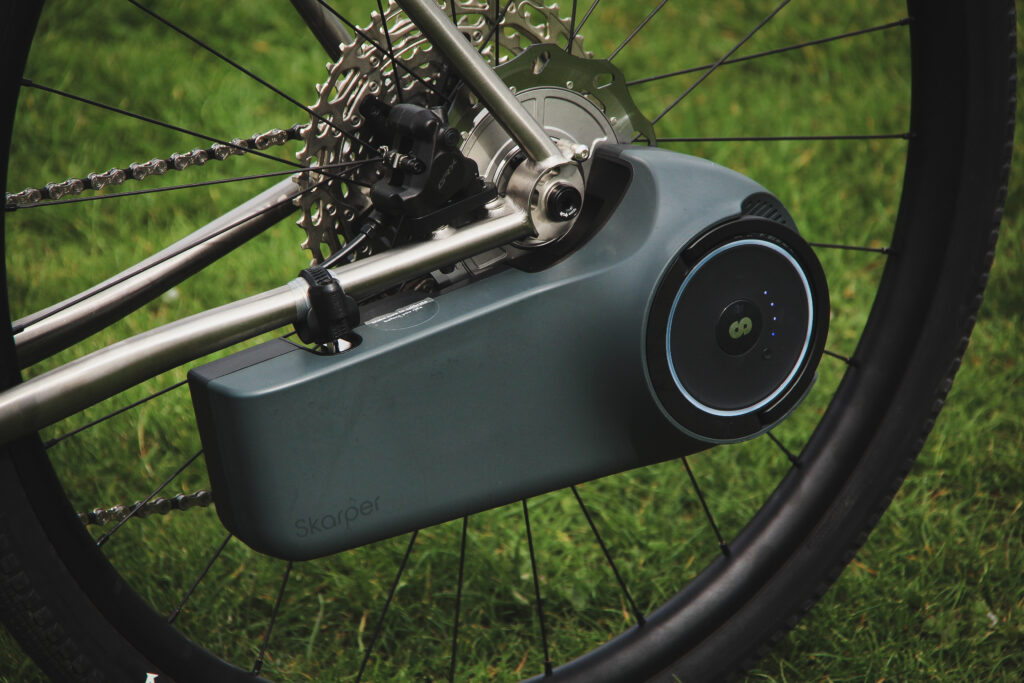

The Skarper eBike Drive System is the easiest aftermarket motor to fit that I’ve yet encountered, and it can be demounted in seconds, leaving only about half a kilo of extra weight on your bike. It’s survived some off-road abuse and doesn’t negatively affect handling, other than adding some weight. If you have a bike you want to ride unassisted some of the time, it’s a great choice.
Skarper eBike Drive System – fitting
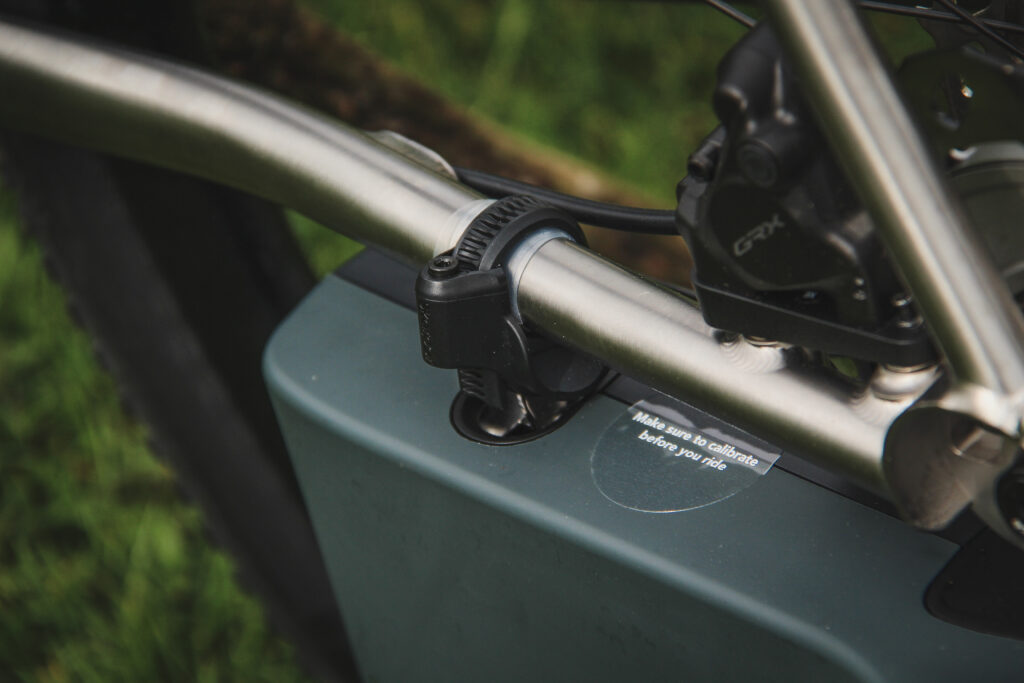
One of the big benefits of the Skarper system is just how easy it is to fit. You need to replace the disc brake on your bike with the Skarper disc that contains the drive mechanism, and you need to add a second mounting point to your chainstay with a simple band, and that’s it.
Once those two things are in place, it takes literally seconds to take the drive unit on and off, and the only other thing you have to do is strap the cadence sensor on the non-drive-side crank and you’re good to go.
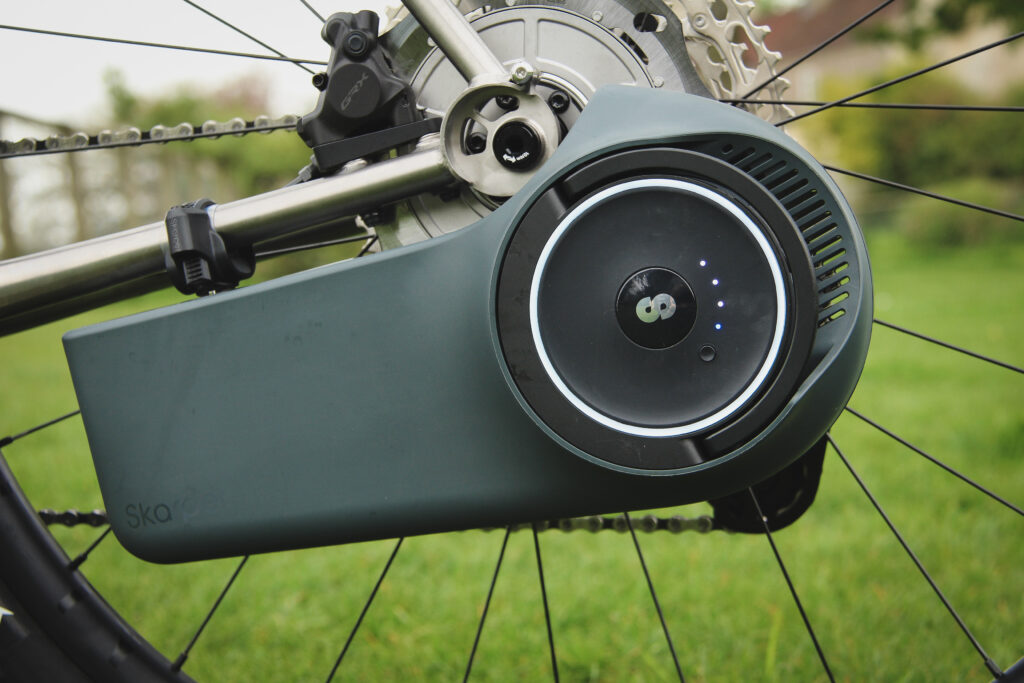
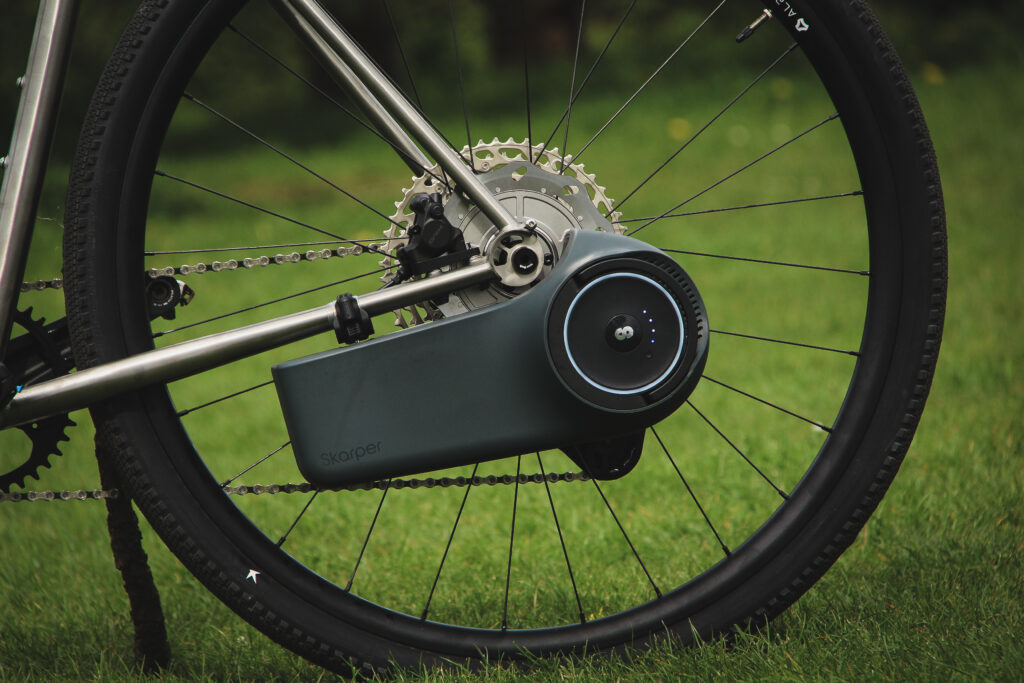
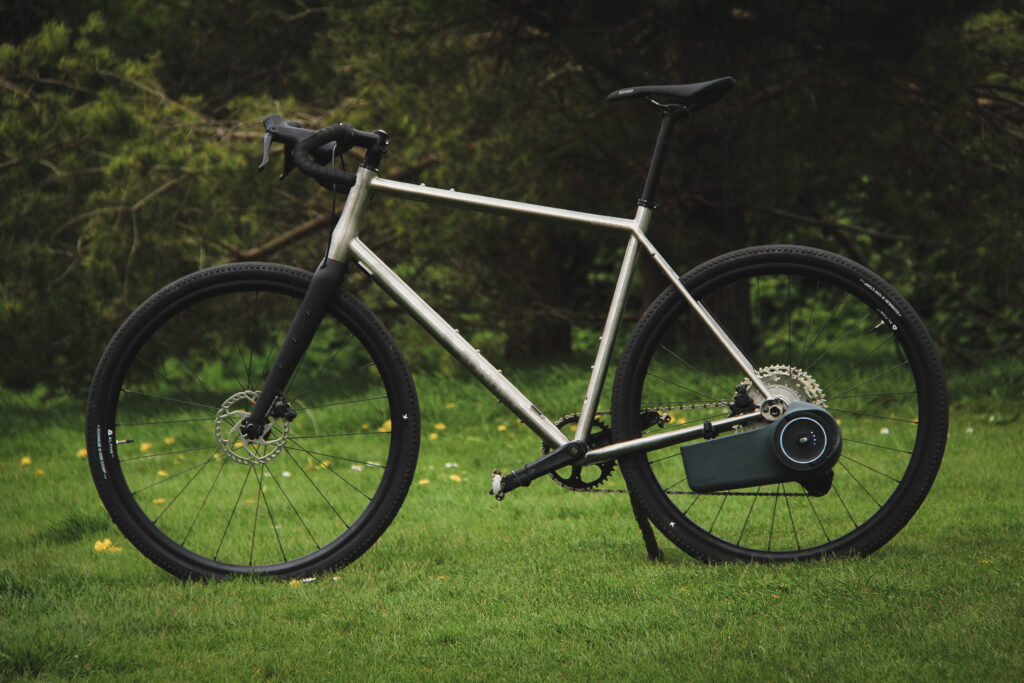
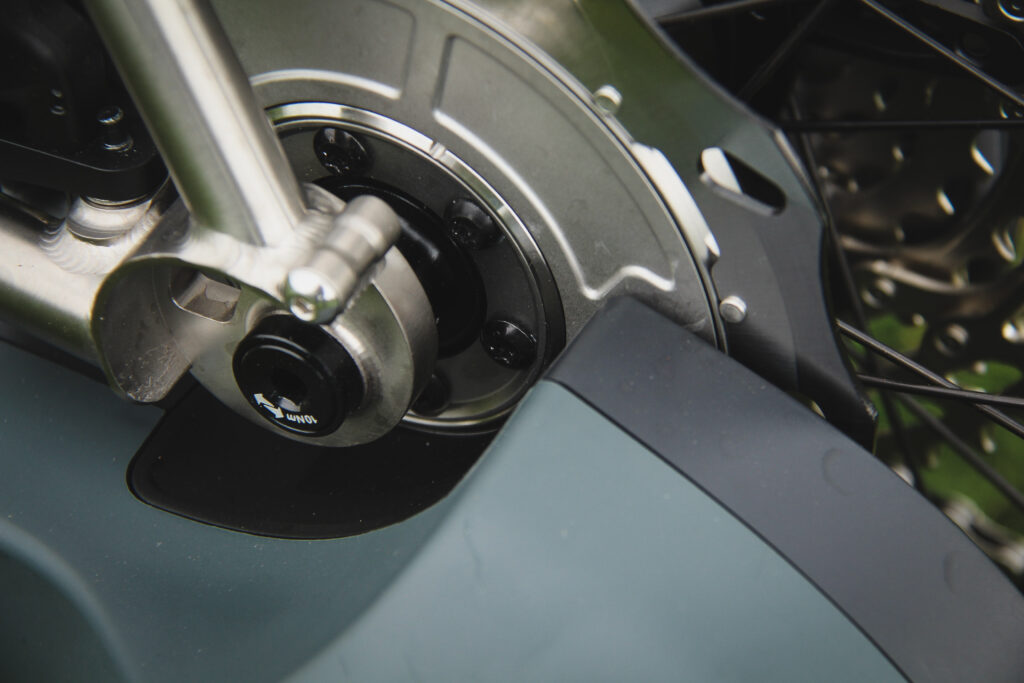
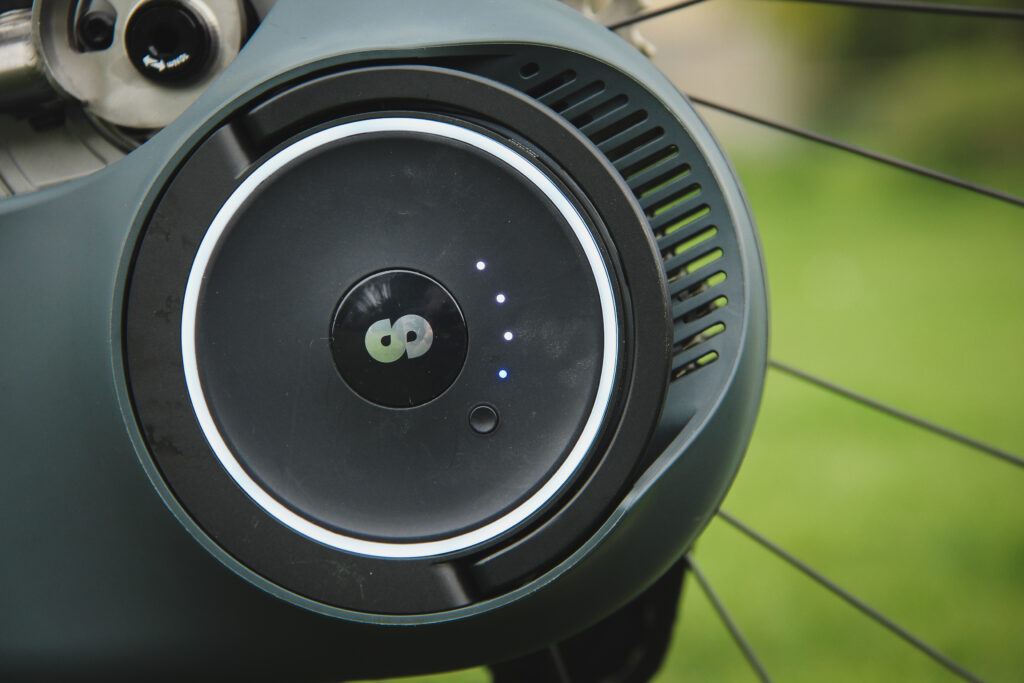
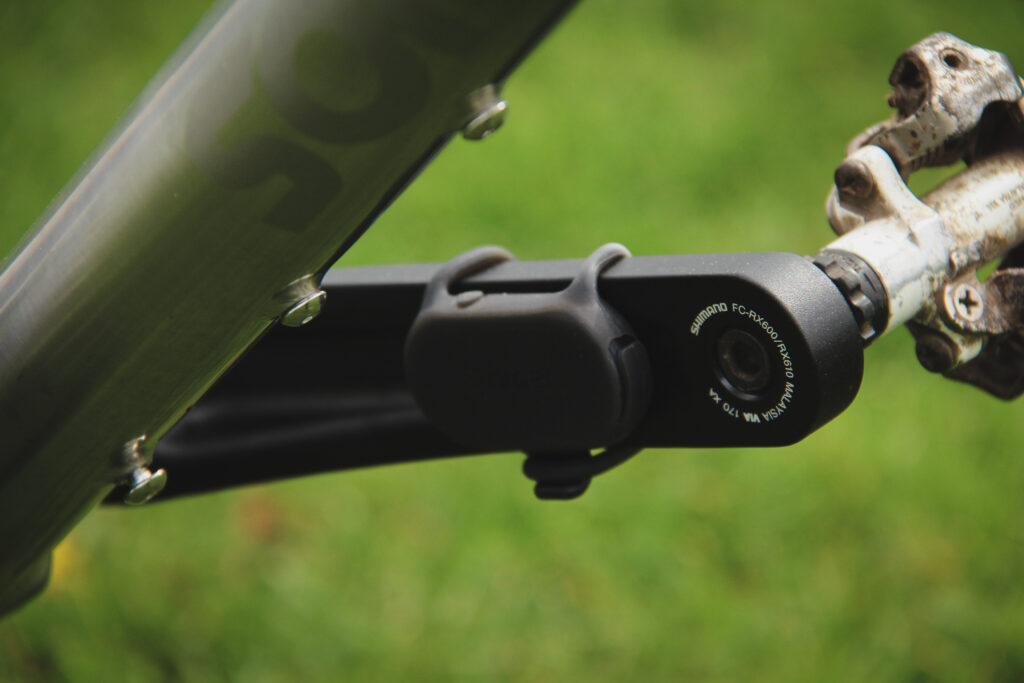
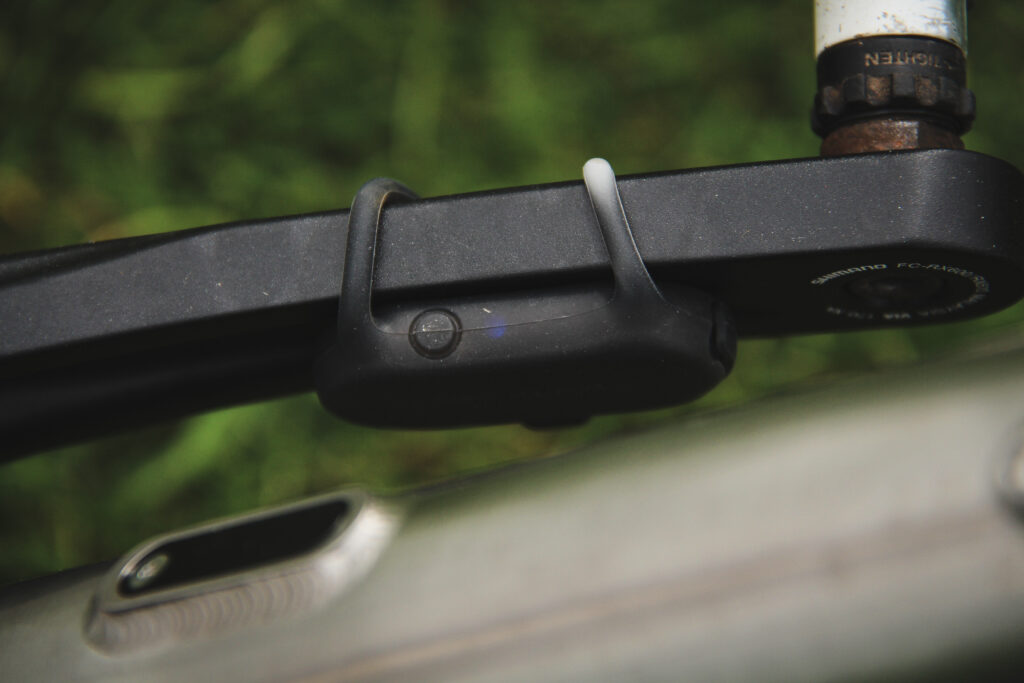
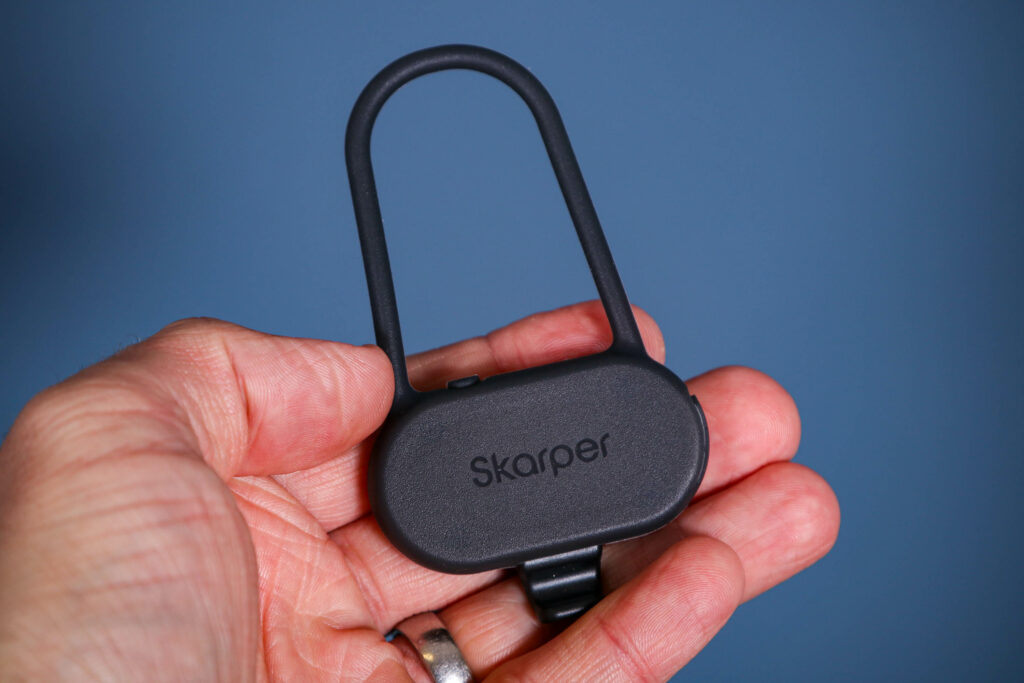
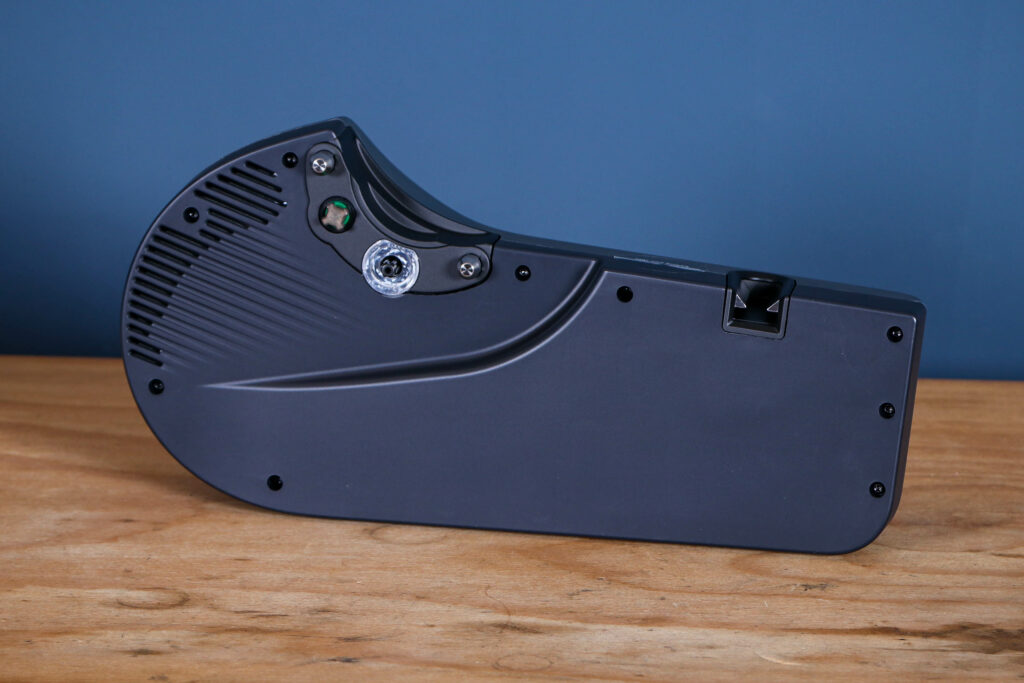
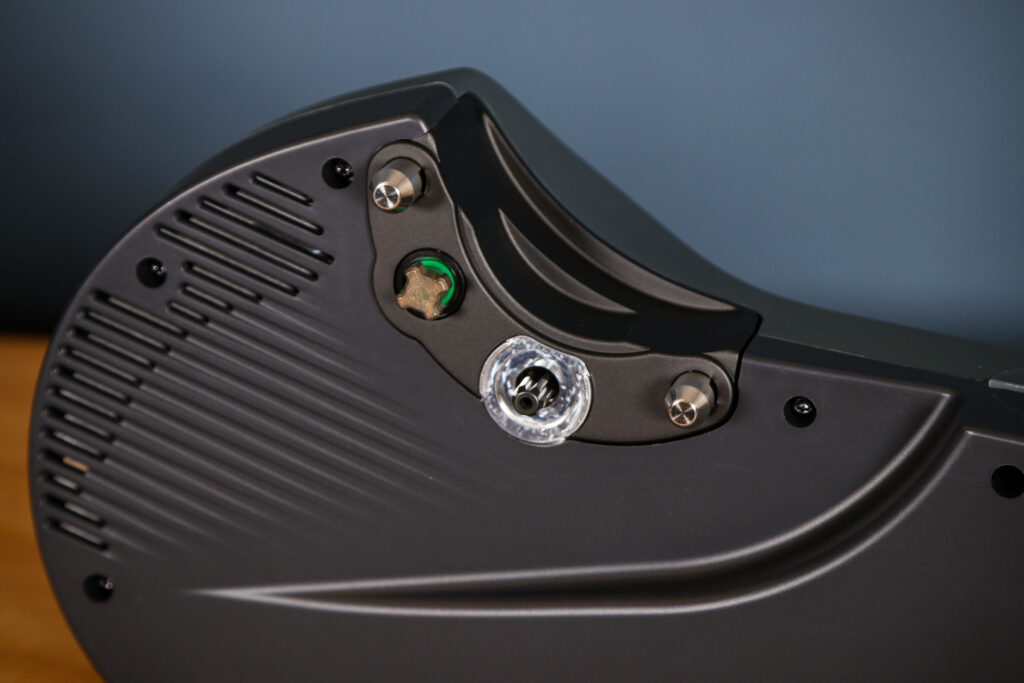
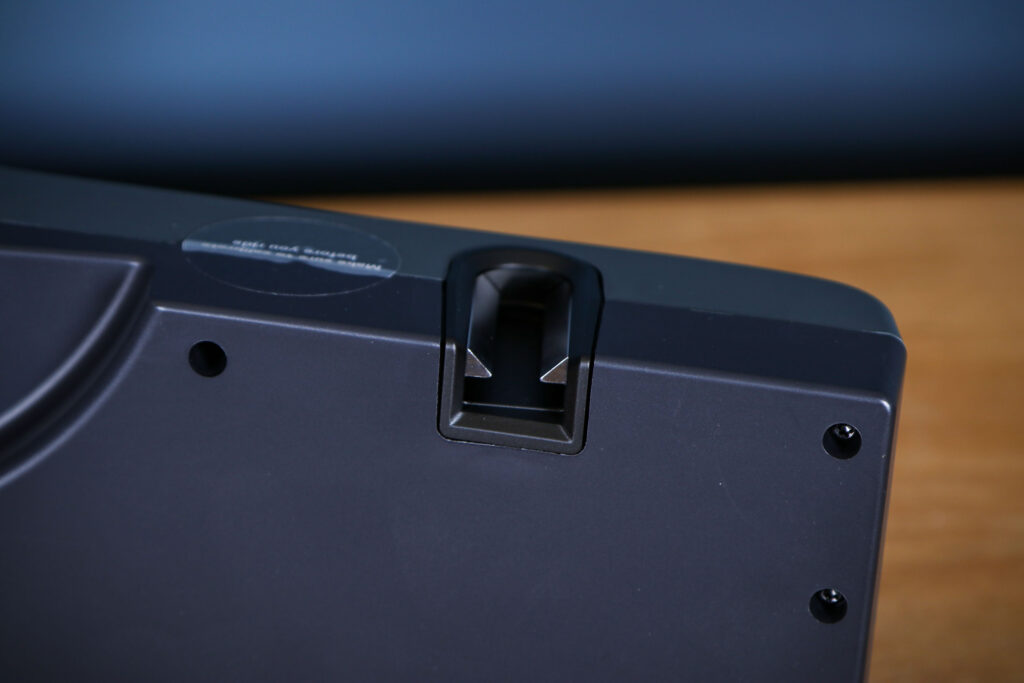
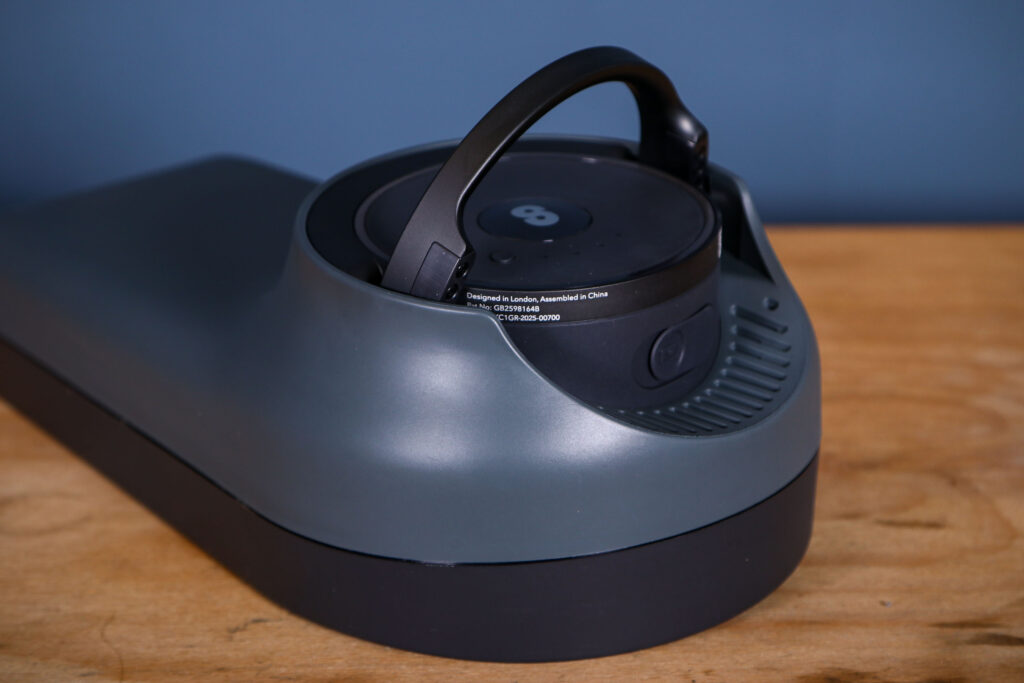
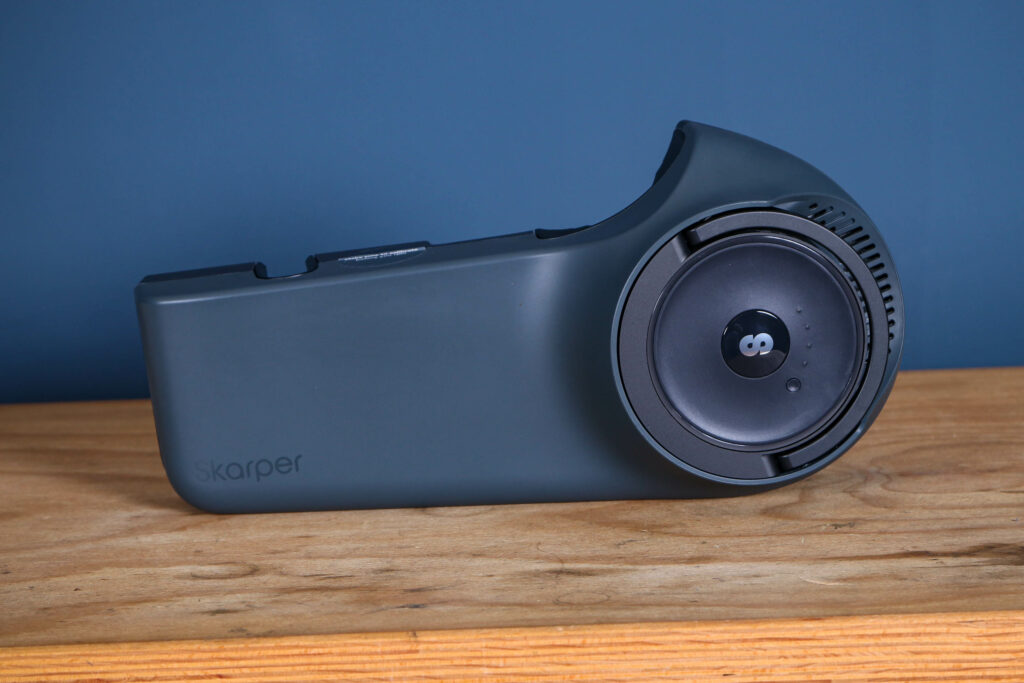
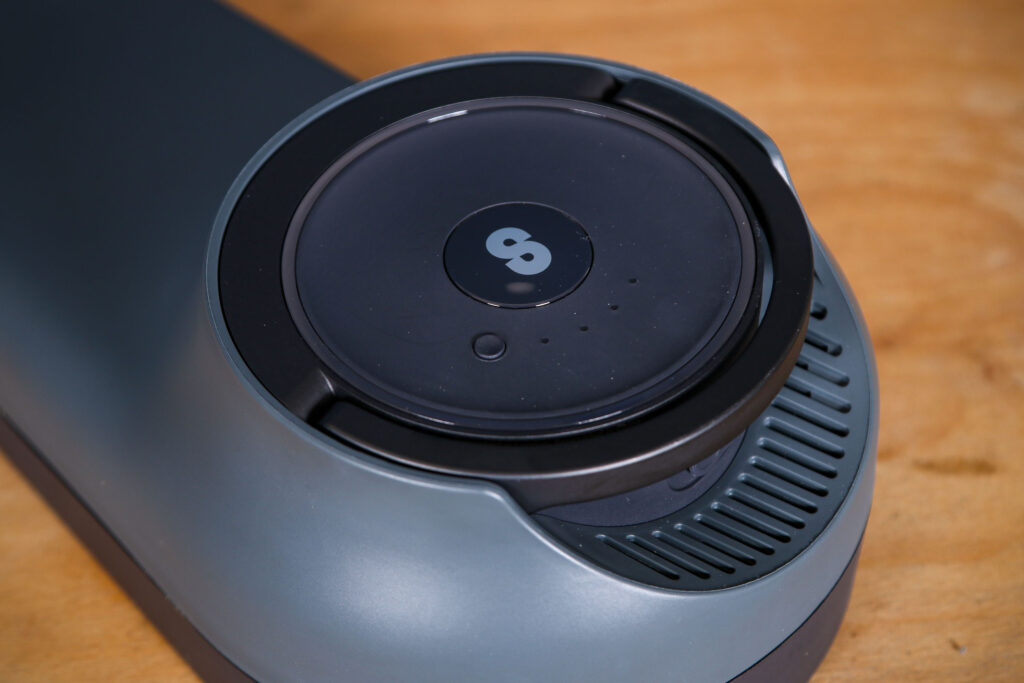
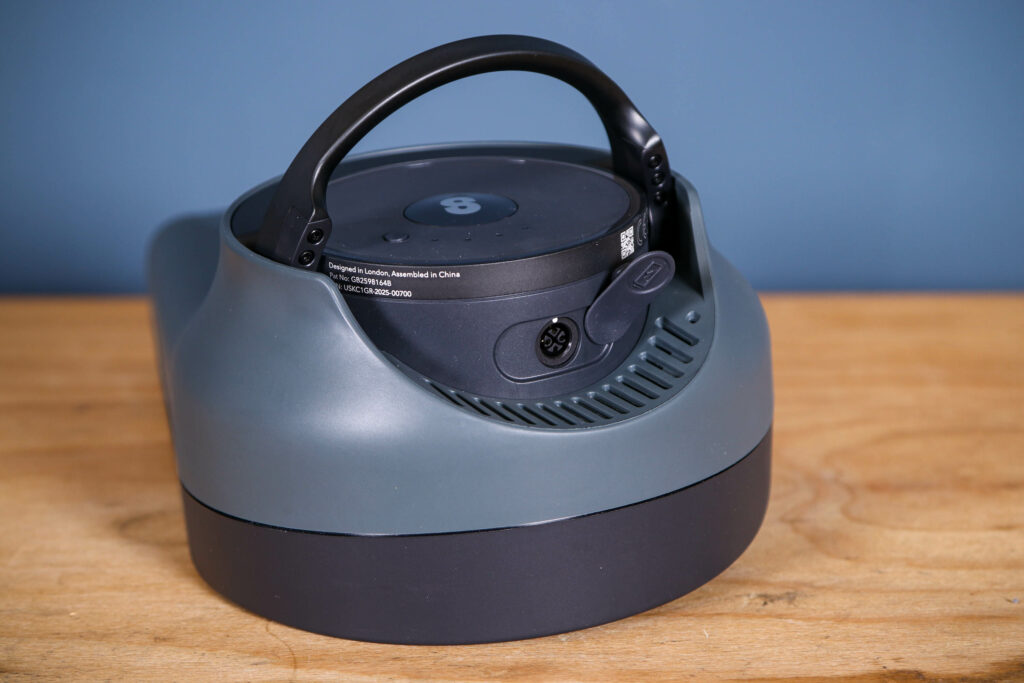
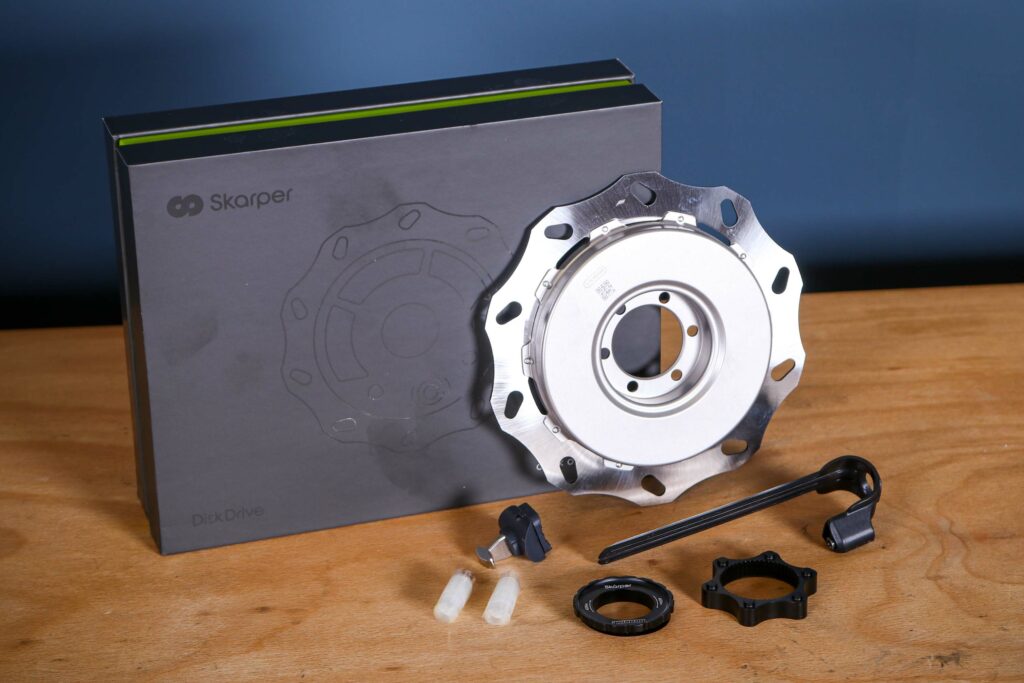
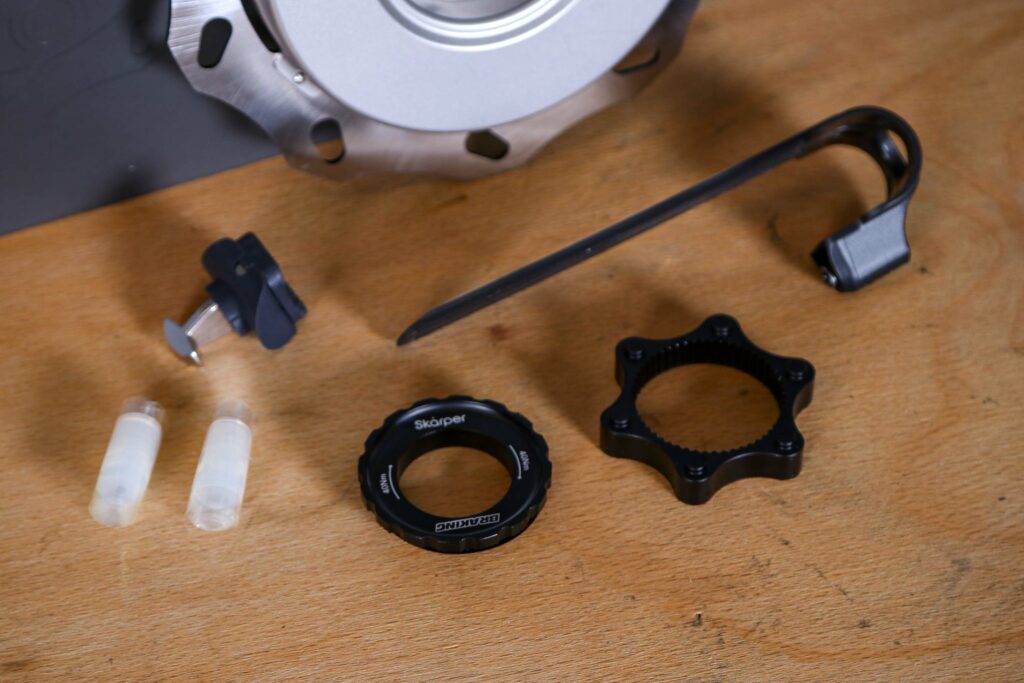
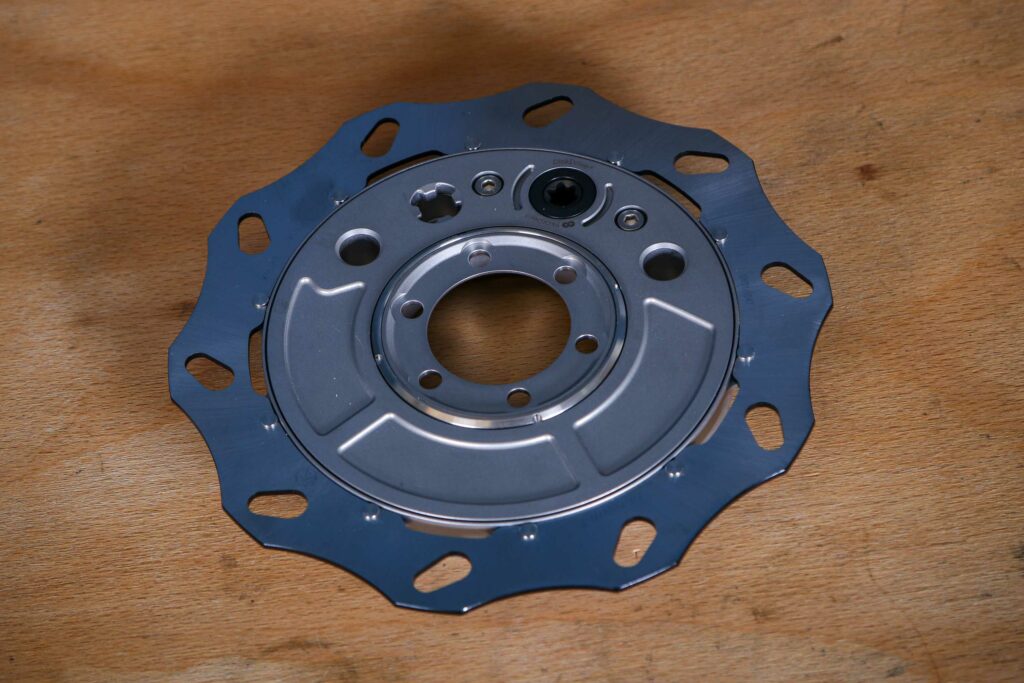
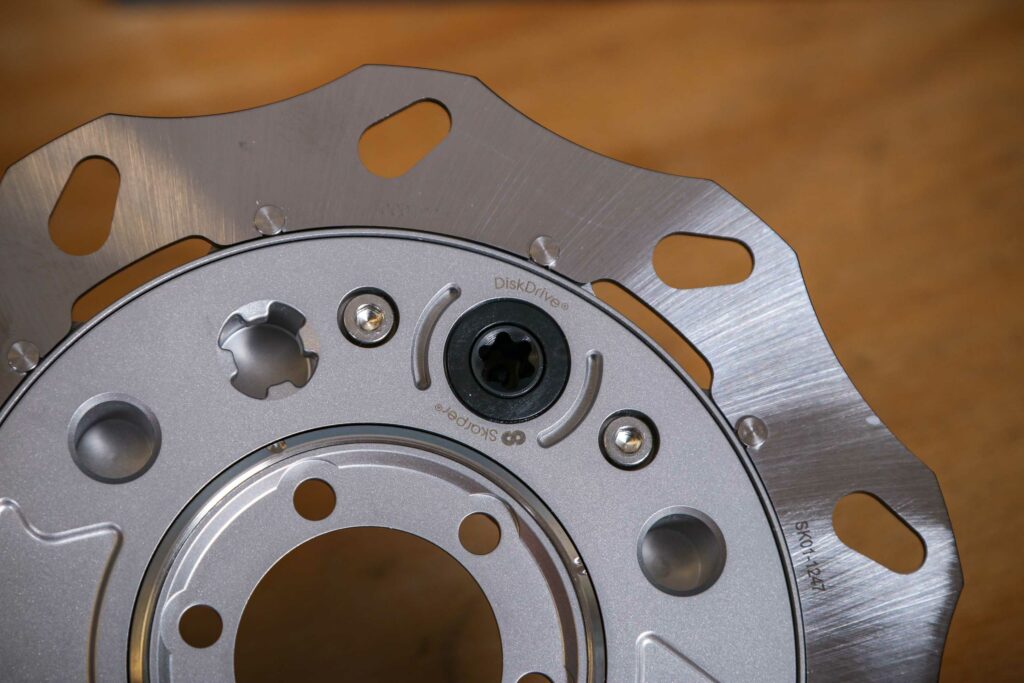
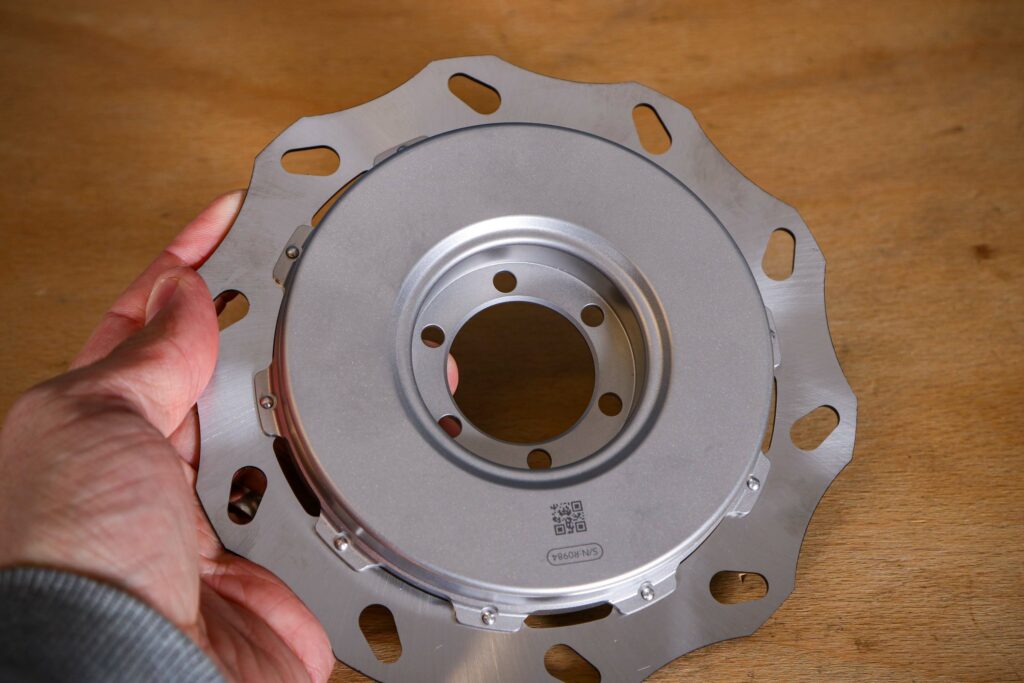
Overall the Skarper adds about 4.5kg to your bike, but when the drive unit is removed the only weight penalty is the extra heft in the disc, which is about 600g more than a standard one. You really can take the motor off easily and ride the bike without it, with barely any penalty. The disc just acts as a disc, so there are no mechanical losses like you’d get with a hub motor or a lightweight mid motor if you weren’t riding under power.
Skarper only has a 160mm rotor currently, but that’ll work with the vast majority of disc brake bikes. If you’re running 140mm at the back, you’ll need an adaptor, but they’re cheap.
If it’s a bigger rotor on your bike then you’re out of luck – but that’s unlikely. Skarper doesn’t recommend this system for, “full-suspension bikes, or riding in extreme downhill or cross-country mountain biking,” which is most of the big-rotor market. There is a system in development for those bikes though.
The drive unit has two locating pins and the drive wheel, and also a locking pin that rotates and clamps into the disc to secure everything. The chainstay mount is just there to stop the motor rotating around the drive axis, as far as I can tell: it’s only held on with a plastic band and isn’t a tight fit, so the real work is done at the disc.
So is it secure? Well, I’ve got it fitted to a gravel bike and I’ve not been holding back with the riding I’ve subjected it to: plenty of off-road sections including rocky and rooty bits that have bucked the bike about plenty. So far, no issues at all. The locking pin uses a cam to close it and it’s stayed tight, with no play. It’s IP55 rated for dust and water ingress, so you should stop short of riding through a ford with it attached, but normal wet conditions will be fine.
Does all that weight on one side of the bike make it feel odd? Skarper says that, “The weight of the Skarper is similar to the drive chain system on the right hand side of the bike,” but I’d say that’s only true if you’ve got a crankset made out of Tungsten or something. There’s no way a normal bike drivetrain is anything like as heavy as this motor. That being said, I didn’t feel like the bike was unbalanced at any point. The weight is nice and low, and although it obviously makes the bike heavier, you never feel like you’re going to tip over.
Skarper eBike Drive System – in use
Skarper claims a maximum torque of 76Nm for the motor, and in terms of raw numbers that would put it in the same league as something like the Bosch Performance Line mid-motor, and a fair bit above most hub motors, which tend to be in the 40-55Nm range.
There are three levels of power available in the system – Eco, Cruise and Turbo – and so you’ll only get the big numbers with the highest setting. It’s not a set amount of power: Skarper makes big play of its DynamicClimb® Pedal Sensor which, it says, “Reads pedalling effort, terrain gradient, and performance thousands of times per second,” although I think (and it would make sense) that the inclinometers are in the (static) motor, not the (constantly moving) cadence sensor.
Certainly the cadence sensing is very effective and there’s near-zero lag in the system when you’re setting off. And you do feel the amount of assistance ramping up when you’re slowing down on the steeper sections of a climb. There’s no way for the components to empirically tell how hard you’re trying, so pedalling effort is inferred rather than measured, but it’s a likeable system that does a good job of giving you the amount of assistance you need.
I did the same gravel loop on the same bike a couple of days apart, once with the Skarper and once without, and my average speed was about 7km/h faster with the assistance, for a lower overall effort. So there’s no doubt it helps. A lot.
You can move through the power levels (or turn assistance off) either by using the controls on the face of the drive unit, or by connecting the Skarper to its companion app and using that.
If you like to mount your phone on your bars, that means you can access all the modes easily. I don’t like to do that, at all, and so any change of mode requires me to fumble with my phone, or stop. This system is crying out for a simple, cheap, Bluetooth remote, or maybe an IQ app for a Garmin head unit, or ideally both. It would be considerably more usable then.
I didn’t find I wanted to change from one mode to another as much as I do with some other systems, but I think that’s more down to the fact that it was a bit of a pain, not because there’s inherently less need.
So is it actually as powerful as a Bosch Performance Line mid-motor out on the roads and trails? No. It might be in terms of raw numbers, but the Skarper Unit, although it’s not a hub motor, is still driving the hub through a fixed ratio connection, which means that it’s subject to one of the same restraints of motor power: it’s more limited when you’re moving more slowly.
With a mid-motor system you can use the gears to keep the motor moving more quickly in relation to the wheel, which is good for lower-speed climbing: higher RPM means more power for a given torque, and it is also generally more efficient. With the Skarper (and any hub motor), the motor speed and wheel speed are directly related. If one drops, so does the other, so the available power will diminish as the wheel speed does.
I think that the positioning of the motor and the way it drives the wheel means it can be geared to spin more quickly than a hub motor though, and I found at lower speeds it was more effective than most hub motors I’ve tried.
How about noise? Well, it’s objectively not as quiet as most hub motors, many of which are functionally silent. And plenty of mid-motors are pretty quiet too these days. The Skarper is definitely noisier than the aforementioned Bosch Performance Line motor, for example, and is probably on a par with the noisier Bosch CX. It’s not like it’s a huge problem, but it’s worth knowing. It’s the kind of noise you’d expect: a kind of mechanical whirr. It’s not unpleasant.
Skarper eBike Drive System – range
With a 240Wh battery, you wouldn’t expect the Skarper system to have an enormous range, and Skarper doesn’t claim one: 50km in Eco mode about town, and 90km in Eco if you’re doing longer-form riding out of the city.
Why the difference? Well, like any EU/UK-compliant ebike system, the Skarper cuts out at 25km/h, and when you’re cruising along on a reasonably light road bike, that’s not a speed it’s too difficult to attain, so a fair bit of the time you’ll be under your own steam. The cut-out of the motor is well-judged and it’s not jerky when it stops or starts.
One of the first rides I did on a Skarper-equipped Sonder was out to tech editor Mat’s house, about 30km from Bath. I stuck the drive unit in Cruise mode, the middle one of the three, and headed off. It’s certainly not a flat ride, but neither is it especially challenging – at least for round here: about 300m of climbing. By the time I arrived, I’d used around 60 per cent of the battery, which meant that I had to play it pretty safe on the way home, with the biggest climb by far coming right at the end.
I turned the Skarper off entirely for the flat sections, and used it in the lowest mode (Eco) for most of the rest, saving enough battery to stick it back in Cruise mode for the final grind back into Bath. The battery died about 500m from my house, so it was pretty well-judged on my part. I say died: at 5 per cent, the Skarper system decides it’s time to recharge, and switches off. You can’t ever use that last 5 per cent, so why even display it? You’d be better off having 5 per cent battery as your zero point. As it was, I couldn’t understand why I hadn’t made it home until I looked at the app.
On another occasion, I took the Skarper out for a 30km gravel loop that includes a lot of climbing (about 750m), with most of that ascent on off-road sections. I was reasonably careful with the motor assistance, mostly using Eco, but I did have the motor on for nearly all of the ride. The battery lasted well enough that I was able to slap it in Turbo for the final climb back to my house, and I finished on 6 per cent, after learning my lesson the first time.
Like every range estimate on every e-bike since the dawn of time, Skarper’s are optimistic, and I’d say overall that the range is going to be a bit of a limiting factor to the appeal, especially as there’s no way to extend it like there is with some other lightweight systems. If your rides are under a couple of hours, or you want it to help with a commute or general town riding, it’s going to be fine though, and that’s probably the core market.
Skarper eBike Drive System – value and overall
£1,495 is a lot of money for a retrofit system, but it’s half of what you’d pay for even an entry-level e-road or e-gravel bike. So if you already have a bike you like then there’s a lot to be said for going down this route rather than going for a whole new steed.
If you have multiple bikes then £295 gets you a second bike system (rotor, chainstay mount, sensor) so you can electrify your whole stable if you want. You can only ride one at a time, after all, and you won’t have to adjust anything: the motor is just click and go.
It’s not as tidy as a dedicated e-road bike, and it’s probably not as quiet either, so your assistance won’t be as stealthy, but in terms of the actual power at the wheels, it’ll be at least as good as a hub motor system, and likely better.
There are plenty of other conversion kits out there. The Cytronex kit is light and pretty stealthy, but these days, by the time you’ve specced it up for a road bike, with a built wheel and a charger, it’s at least as expensive as the Skarper, and it’s a one-bike solution. Also, if you’re running fancy carbon rims, you’ll end up with mismatched wheels unless you’re going to go to the expense of getting a matching motor wheel built.
The Swytch system we’ve reviewed in a bunch of different configurations over the years, and it’s pretty good performance-wise, and pretty good value too. It’s a bit messy to fit though, and even though you can remove the battery and ride the bike without power, all of the hardware stays on the bike, including the hub motor, which adds a reasonable slug of weight. Again, because it’s a full-wheel solution, you’ll have to accept mismatched rims, or get a specific wheel built.
Given all that, the Skarper system doesn’t seem like bad value. I really like the ease of use of the system as a whole, especially how simple it is to fit and remove, and it provides genuinely useful power. The range isn’t huge, and it really needs better control options for anyone not happy with their phone on their bars, but overall I’ve enjoyed using it.
If you want the option of riding an e-bike, but you don’t want to ride an e-bike all the time – say, for example, you have a long commute and you can’t face it every day under leg power alone – then the Skarper is an ideal companion: there when you need it, simple to remove when you don’t.
> Best e-bike conversion kits 2025 – motorise the bike you already have
Test Report
What does the manufacturer say about this product?:
Transform your bike into a high-performance e-bike in seconds.
Skarper’s award-winning click-on drive gives you instant electric power when you want it, and your regular bike when you don’t. Lightweight, fast-charging, and engineered with Red Bull Advanced Technologies – this is freedom on two wheels.
Co-Developed with Red Bull Advanced Technologies
The team behind championship-winning F1 cars helped us engineer Skarper: a removable, high-performance e-bike motor that doesn’t change your bike. 5 years of development, 76Nm of motorsport-grade torque in one sleek unit. Click it on for hills, headwinds and new routes. Click it off for pure cycling. No frame modifications, no permanent conversion. This is F1 engineering for the bike you already own.
Tell us some more about the technical aspects of this product:
Specification
Removable: 4.5kg detachable drive unit
Smooth: 76 Nm top torque for smooth, hill-friendly assistance
App: Multiple assist modes via app
Ride Longer: Human Power + Up to 50km pedal assist
Power: 250W assist with natural ride feel
Quick Charge: 240Wh; 80% charge in ~30 min; full charge ~2.5 h
Protection: IP55-rated for British weather; remove unit for security
Compliance: UK/EU compliant (25 km/h limit)
How does the price compare to that of similar products in the market, including ones recently tested?:
More expensive than a Swytch system, cheaper than a Cytronex system. More top-end than bottom, but decent value.
Did you enjoy using the product? Yes
Would you consider buying the product? Yes
Would you recommend the product to a friend? Yes
Use this box to explain your overall score
Very good overall. It’s a really clean system that works well and the USP is the ease of attatching and detaching it, so you can easily go from acoustic to electric.
About the tester
Age: 53Height: 189cmWeight: 104kg
I usually ride: whatever I’m testing…My best bike is: Dward Design Custom Audax, Lauf Úthald, Cannondale Topstone
I’ve been riding for: Over 20 yearsI ride: Every dayI would class myself as: Expert
I regularly do the following types of riding: Road racing, Gravel riding, Indoor riding, Indoor racing, Bikepacking, Commuting, Touring, Club riding, Audax, Fitness riding, Leisure riding

2 thoughts on “Skarper eBike Drive System”
A drivetrain seems to typically be about 2-3 kg. If you’re adding 4.5 kg to the other side, that will shift the balance* to 1.5-2.5 kg more on the non-drive side**, which is similar to (or less than) the drivetrain on its own.
[* Although it’s not really that simple, because you’re not working with a perfectly symmetrical system before you add either.]
[** Except they’re both now the drive side. 🤔]
It occurred to me that this could be fitted to an older rim brake bike as well but it would involve for example building a new rear wheel with a disc hub and rim brake rim.