



If you’re a lover of ornate lugs and highly decorated classic bikes, then this Rotrax Concours from the early 1950s should appeal enormously. There is barely a surface that hasn’t been engraved with the classic fleur-de-lis motif. Resplendent in its deep blue livery, the chrome, and red and white detailing stand out clearly, especially on a beautiful spring day when I was lucky enough to meet the owner of this lovely machine.
Rotrax cycles was founded in 1945, when Freddy Prince bought an existing bike shop that specialised in lightweight bikes. The name was a contraction of road and track, the bikes that were commonly used at the time by club riders and racers. Fixed wheel track bikes were often used in time trials until around the 60s, and sometimes beyond then. The shop was based at 132 Shirley Road, Southampton.
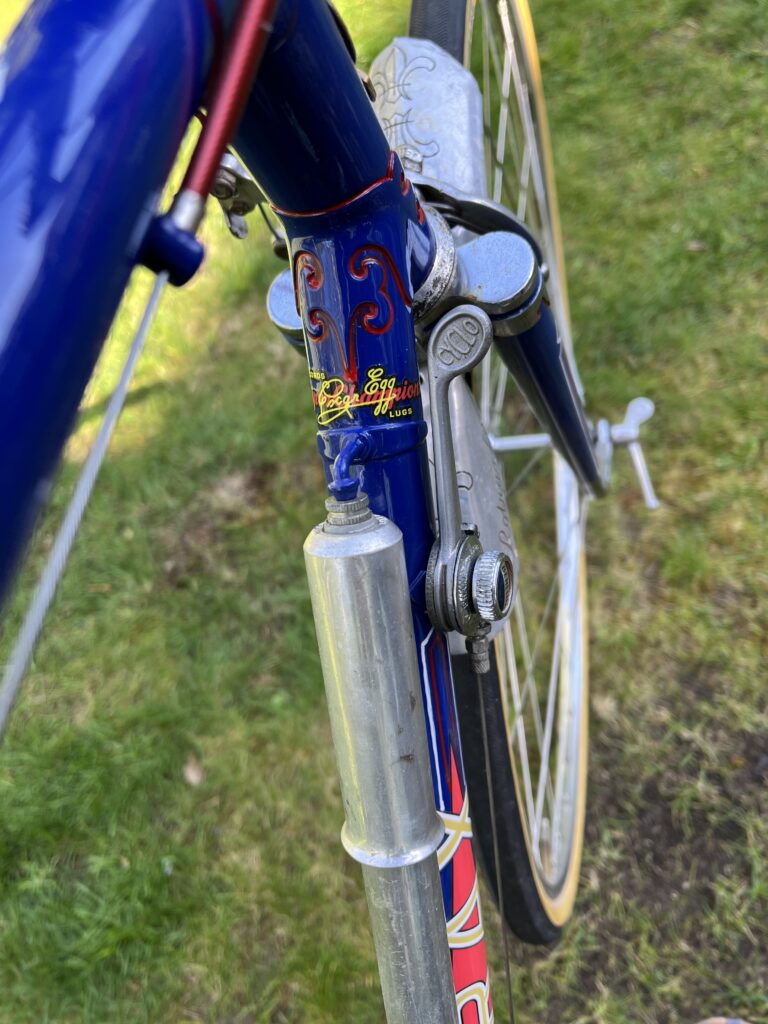
The spear-pointed Oscar Egg lugs, present here, were often used on top-tier French and European racing bicycles between the 1930s-1950s.
Oscar Egg (1890-1961) was a noted developer of lugs and derailleurs, as well as fork crowns, hubs, brakes, cranks and frames. Although he was Swiss, he owned a bike shop and workshop in Paris, which he started after retiring from racing. As well as winning stages in the Tour de France and Giro d’Italia, he was also a notable track rider. He swapped the Hour Record title with Marcel Berthet three times between 1907 and 1914. The next three-time Hour Record holder was none other than Chris Boardman.
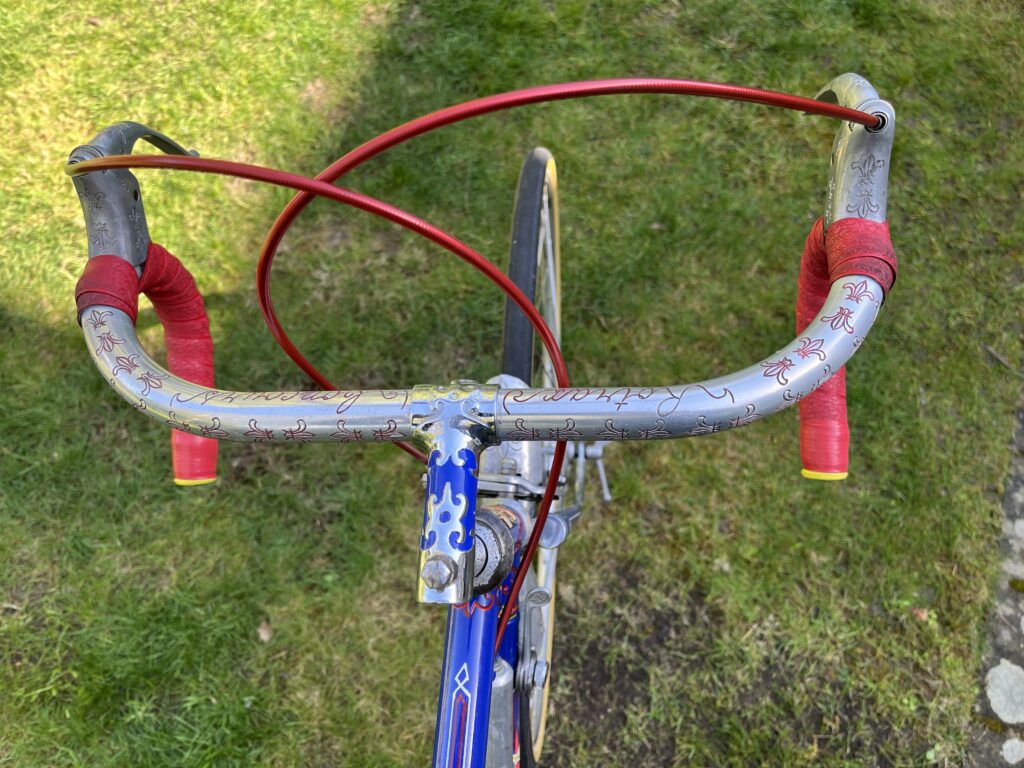
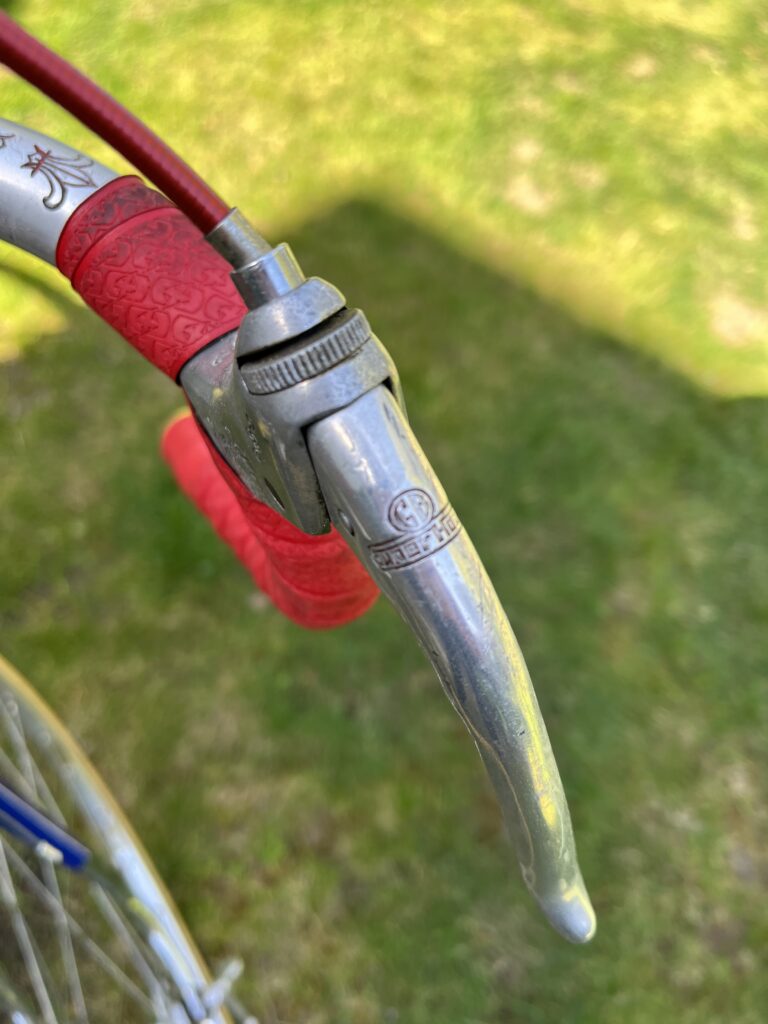
GB Super Hoods were a popular choice of brake lever among club cyclists in the 1950s. These are paired with GB Coureur brake callipers. These components were British-made in aluminium, but note the French word coureur (racer) is prominently stamped on the calliper arm – continental style and association was important in this era. I particularly like the knurled adjuster wheel that sits above the lever. Another lovely detail!
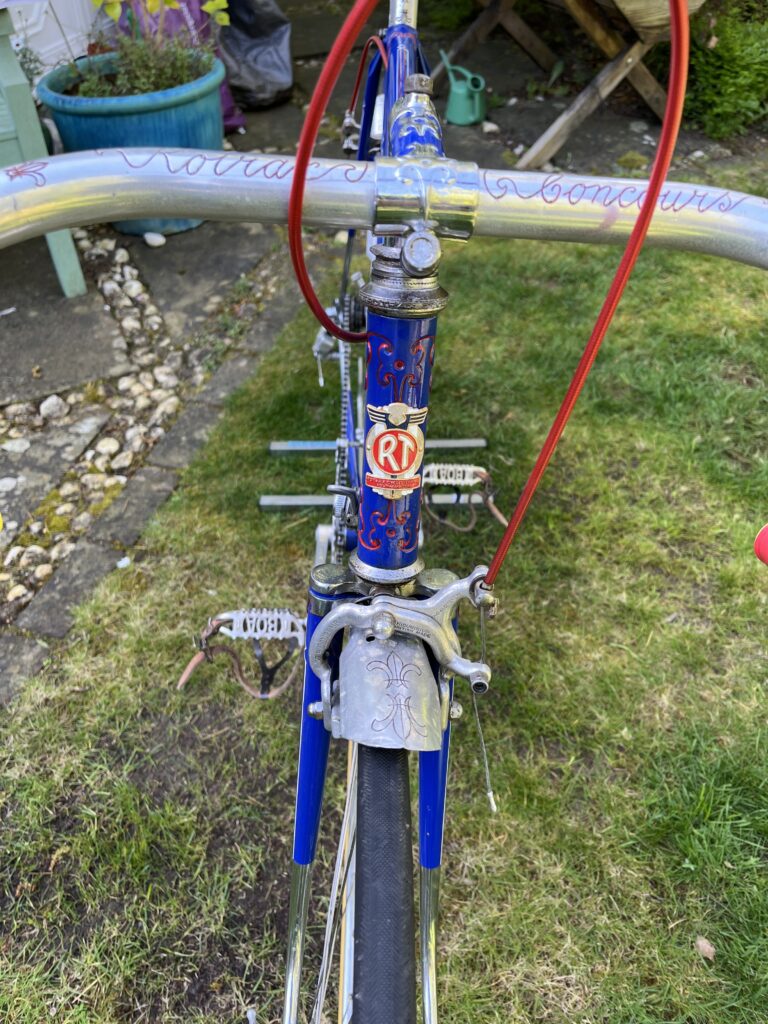
Normally a head badge stands out with its decorative flair on a frame. It is almost redundant here, such is the abundance of detailing. Even the aluminium short mudguards have etching on them!
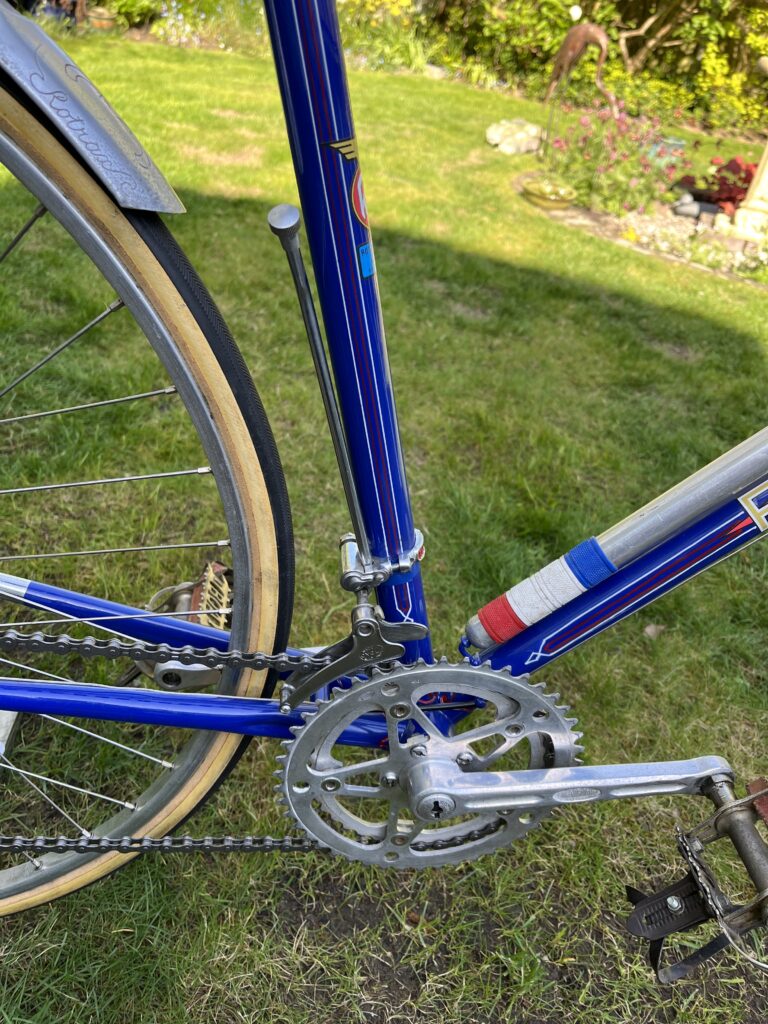
The Cyclo Benelux gear system uses a friction shifter, mounted on the down tube, to change the rear gears. There is no front derailleur shifter, as the change is made by rotating the rod located next to the seat tube. These were often known as ‘suicide shifters’, due to the hand needing to be close to the wheel to make the shift. It does apparently shift well, although a more modern shifter would be much safer in operation!
The nutted rear hub keeps the wheel from twisting in the horizontal dropouts, if excessive torque is applied by the rider. The front wheel uses GB-branded wing nuts to secure it, but apparently they are difficult to keep tight enough on the rear. The ‘bacon slicer’ high flange hubs are another lovely period detail. These are thought to be GB too, but no obvious branding was visible.
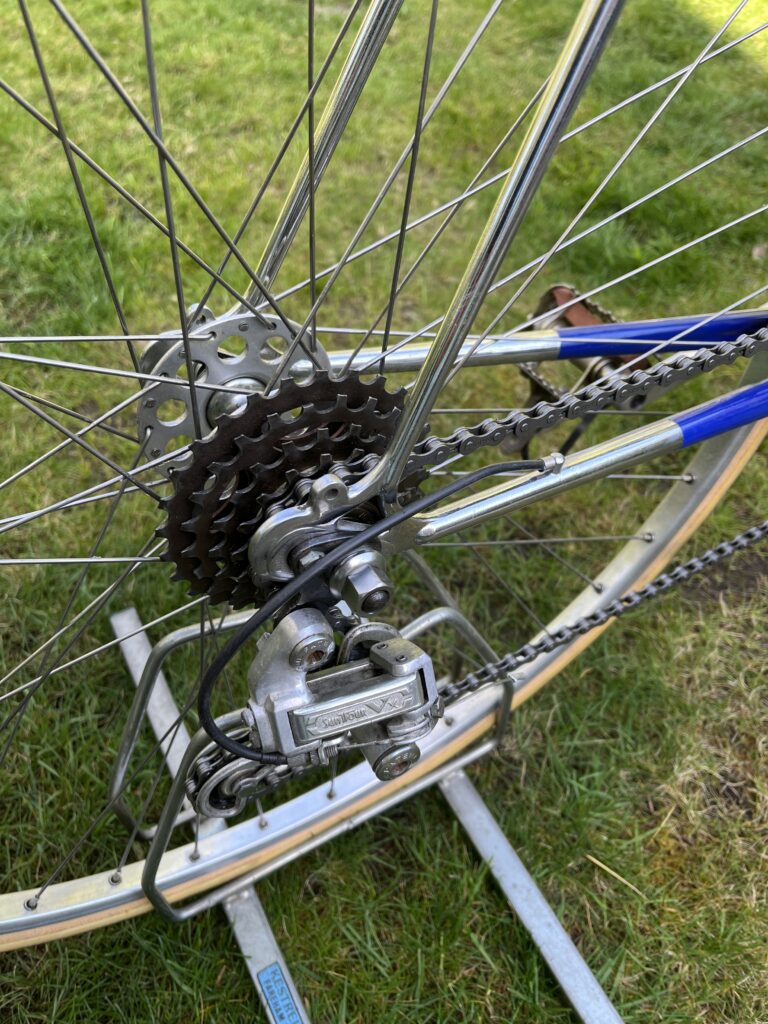
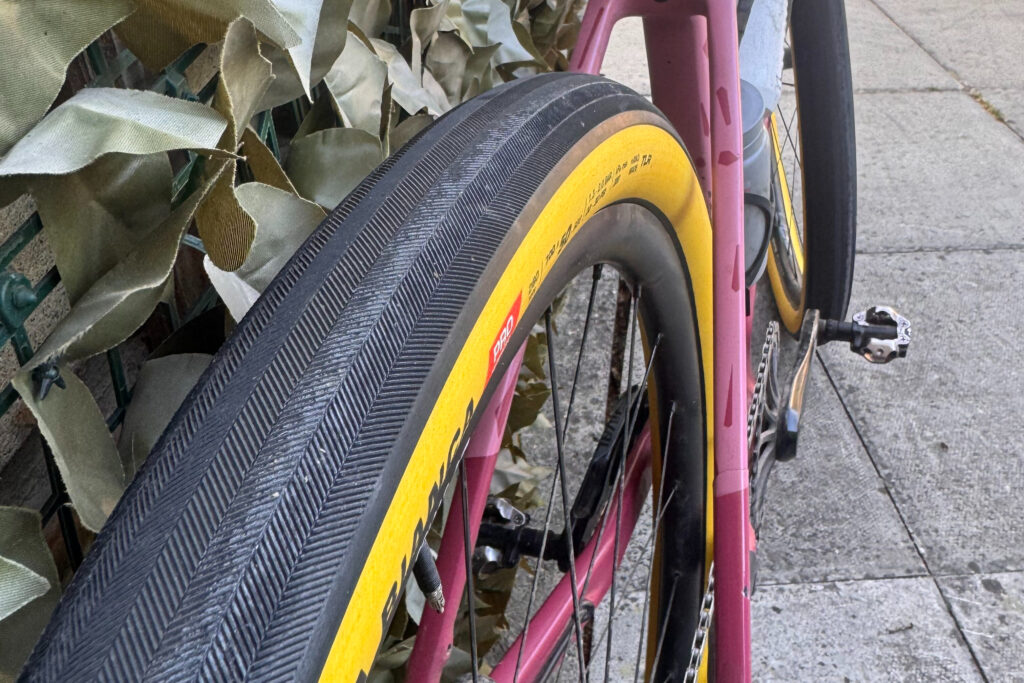
One of the very few changes that has been made to this bike from its original specifications is the Suntour Vx rear derailleur. This is to make it easier to ride, the owner tells me. Overall it “rides like a vintage steel bike”, so I’m told, which is to say that it is a comfortable and smooth road bike. The Vittoria Rally tubular tyres will also help in this regard. With a 220 tpi cotton casing, they should be really supple to ride on.
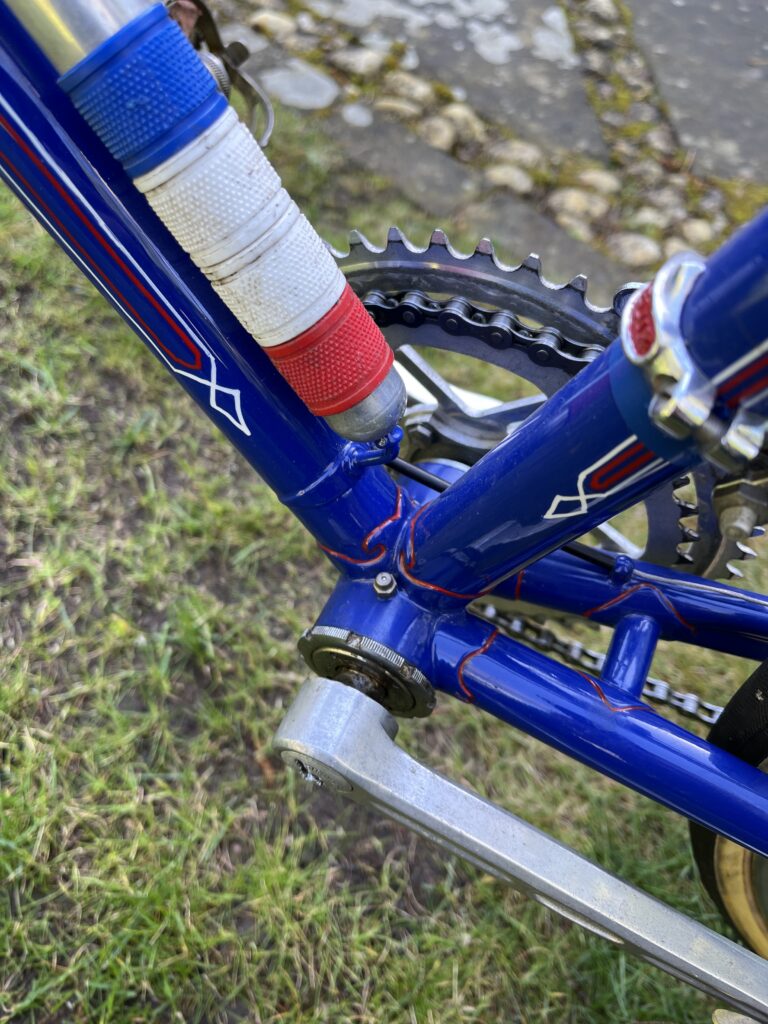
The presence of an oil port on the bottom bracket shell is lovely period detail. At the time you would inject some light oil regularly through the port to keep everything lubricated and running sweetly. Grease packed, low maintenance, sealed bearing bottom brackets were still a few decades away!
This bike also has square taper cranks, which are period correct, although many bikes from this era still used cotter pin cranks.
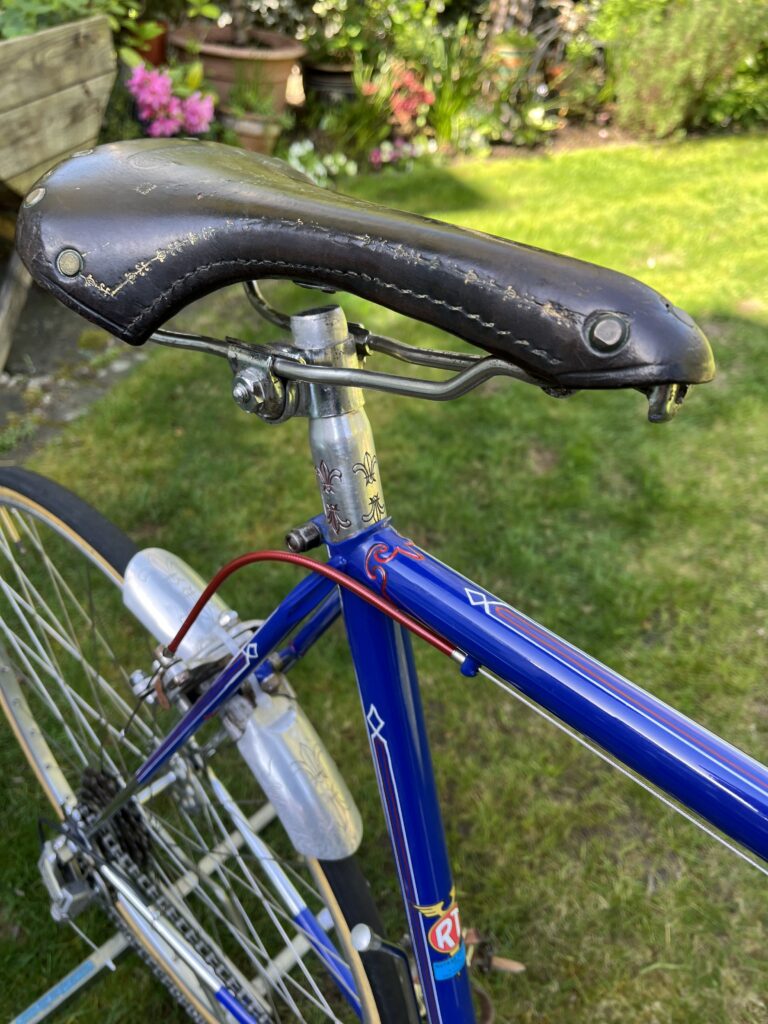
If you’ve not had enough of detailing, then how about an etched seatpost! Even the Brooks Swallow leather saddle has been embossed with a fleur-de-lis on top, and a line and arrow motif around the base. All this has then been filled in with gold leaf.
So overall, a really pretty and ornate bike from the height of the lightweight boom in the 1950s. And best of all, it is still being ridden!
My thanks to the owner for showing me this lovely and detailed bike. A great example of the art of ornamentation from frame builders of that era.










5 thoughts on “Get a load of the luscious lugs on this gorgeous 1952 Rotrax Concours”
“The shop was based at 132 Shirley Road, Southampton.”
I used to live five minutes from here, it’s now a fried chicken shop. Great to see a bit of local history.
That front shifter looks considerably better than my system of the moment: right foot to top, SPD disengaged, kick front mech inwards for small ring, clip back in. Must get the cable sorted out.
That’s a very pretty bike. It’s good to see it’s been preserved so well.
Proper bike. The stem and bars are fab.
Droolworthy machine. Thank you both for sharing. Cheers.