2026 best trail bikes cover
2026 best trail bikes cover (Image Credit: Farrelly Atkinson)

Best trail mountain bikes 2026: Versatile MTBs for all kinds of rides

Tue, Mar 17, 2026 14:00
0
This article contains links to retailers. Purchases made after clicking on those links may help support road.cc by earning us a commission but all of our reviews are fully independent. Find out more about road.cc buyer’s guides.

Trail is the broadest genre of mountain biking. Built to take on a little bit of everything, trail MTBs have become the go-to for the vast majority. But with such a wide choice of bikes on the market, picking the best one for you is no easy feat, so here are the very best trail mountain bikes we’ve ridden.

What is a trail mountain bike?

Trail mountain bikes can be many things. They can be hardtails with only a suspension fork, or full suspension (suspension at both the front and rear). The amount of suspension that they’re equipped with can vary greatly from 120mm up to 150mm or even 160mm, so they can edge towards cross-country mountain bikes at one end of the spectrum, and enduro mountain bikes at the other. However, trail mountain bikes are more about their geometries, with 66 to 64-degree head angles being commonplace, and longer reach measurements separating them from those of cross-country bikes.

Importantly, a trail mountain bike is designed to be versatile. While they may not specialise in certain areas, like climbing or descending, they’re built to be more than capable of both, but without being as easy going up a hill as a cross-country bike, or as all-out capable as an enduro option.

As there’s such a vast array of trail mountain bikes out there, the wheel sizes vary a lot. Full 650b mountain bikes in general are becoming rare, so expect mixed-wheel or 29-inch wheel setups, with the former often found on more aggressive options, and the latter on bikes that are built to cover more ground. As trail mountain bikes are built to appeal to a range of budgets, expect to see both carbon, aluminium, and steel frames, as well as titanium in rarer cases. With that, overall bike weights fluctuate quite a lot from 11kg on very light bikes, to 16, or 17kg in some cases.

What do I need to look for when buying a trail mountain bike?

When shopping for your first or next trail mountain bike, consider the terrain that you ride the most often. If you’re suffering up a lot of steep climbs and your descents are a little more mellow, a shorter travel trail bike will be more efficient while pedalling, making the climbs easier while sacrificing some performance downhill. Trail mountain bikes with more suspension travel will be heavier, so harder to get up a hill, but they’ll be more capable and composed when descending more demanding trails.

Bikes equipped with a full 29″ wheel setup will be smoother to ride, faster when up to speed and more composed in general. Mixed wheel setups then blend the confidence of a 29in wheel at the front, with a more fun and lively 650b wheel at the rear end, at the expense of some smoothness.

With all of that said, a lot of this is purely down to personal preference. You may prefer a rowdier, more feedback rich charecter on the descents, so choosing a shorter travel machine will provide exactly that. On the other hand, you might want something that’ll be easier to descend, so a bike with more suspension travel would be a better choice.
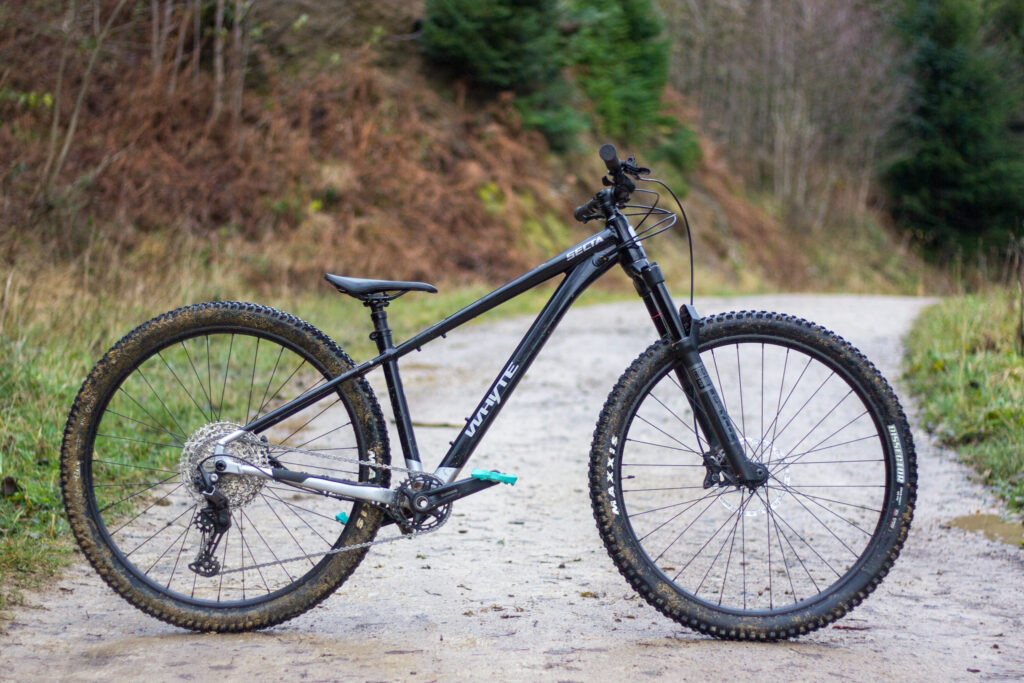
 

Whyte Secta RS hardtail mountain bike review
Whyte Secta RS (Image Credit: Farrelly Atkinson)

Whyte Secta RS

Really good value

Handling is spot on

Component choice great for price

Paint job could be more inspiring

Wheels not as high spec as the rest of the bike

Whyte is very well known for producing some of the best trail hardtail mountain bikes, and at £1,499, the Whyte Secta RS has an awful lot to give for its relatively low asking price. With a pair of 29″ wheels and 130mm of suspension travel up front, bolted to a 6061-T6 aluminium frame, the Secta RS is nothing short of modern, and primed for hardtail trail fun.

Speaking of modern, it’s brimming with all of the features you would expect, including UDH compatibility, Boost hub spacing and plenty of space for a long travel dropper post. As for the geometry, in true Whyte style, the Secta RS pushes boundaries a bit with a 63.5-degree head angle and a 76-degree seat tube angle. There are four sizes to choose from, too.

It’s wisely specced with a RockShox Psylo Gold fork, Shimano’s Deore 1×11 drivetrain and MT420 brakes, and a slew of Whyte-branded kit rounds off the componentry. That’s not to forget the Maxxis Dissector and Rekon tyres.

As for the ride, the seat tube angle throws weight towards the front end, which results in easy-to-come-by front wheel traction, and our tester found it to be super nimble. There’s a lot of stiffness within its alloy frame, which makes for efficient pedalling but also a super lively but confident ride, thanks to Whyte’s well-designed geometry.

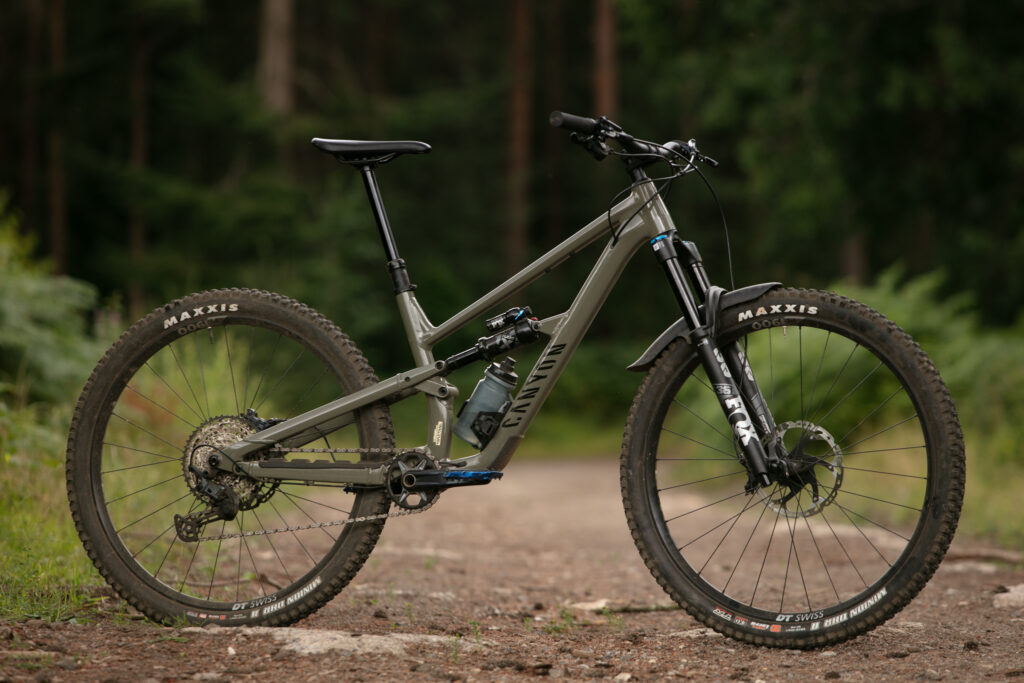
Canyon Spectral AL 6 mountain bike review
Canyon Spectral AL 6 (Image Credit: Liam Mercer)

Canyon Spectral AL 6

Excellent ride charecter from alloy frame

Can’t argue with the componentry

The value

Can feel a little harsh at higher speeds

Quality of a couple of fittings could be improved

Coming a year or so after its updated carbon range-mate, the Canyon Spectral AL 6 takes all of the good bits, and bins the things you don’t exactly need. As such, it’s a simple trail mountain bike that simply performs, and at its asking price, it’s a bit of a belter that doesn’t ask for any upgrades.

With 150mm of suspension up front and 140mm at the rear, the Spectral AL rolls on a pair of 29-inch wheels, gets a threaded bottom bracket, and UDH compatibility. With space in the front triangle for a bottle cage and internal cable routing, there’s not much else here to mention.

Although it’s built from aluminium rather than carbon, the Spectral AL successfully takes what makes the carbon bike so great, and simply makes it more affordable. It pedals uphill remarkably well for its weight, and it’s able to attack the descents with poise and composure. However, that aluminium frame adds a level of liveliness and unpredictability that made me like it more than the Spectral CF that we’ll talk about in a little bit. It’s sizing is rather generous, however, so double-check that before you buy.

Trek Top Fuel 8 Gen 4 mountain bike review
Trek Top Fuel 8 Gen 4 (Image Credit: Farrelly Atkinson)

Trek Top Fuel 8 Gen 4

Stellar pedalling performance

New Mino-Link opens up adjustment opportunities

Super predictable and dependable ride charecter

Suspension isn’t as lively and engaging as expected of a bike of this travel

Rhythm-level fork needs extra attention to achieve best performance

It would be improved with a longer dropper post as standard

The latest model of Trek’s Top Fuel turns adjustability up to 11. With a new Mino-Link, the progression of the bike’s 120mm of rear travel can be tweaked to be more progressive or more linear, opening up the opportunity for some trail-tailoring. But that’s not all, as with a new shock and fork, the bike’s suspension travel can be boosted from 120mm at the rear and 130mm at the front to 130mm and 140mm respectively, priming it for all kinds of trail shenanigans. Additionally, although there is a pair of 29in wheels as standard, the Top Fuel can be tweaked to run a mixed wheel setup.

There’s a lot to talk about here, so I’ll just get onto the ride, and it’s impressively versatile, as its raft of adjustments would suggest. Although the Top Fuel commands a more cross-country-esque riding position, it’s a capable descender. Its rear suspension is a little muted for a short travel trail bike, but that results in a remarkably predictable ride with a lot of headroom for more demanding tracks. It’s a keen pedaller, too, making short work of tough climbs.

Merida Big.Trail 600 mountain bike review – Simple, affordable and ridiculously capable
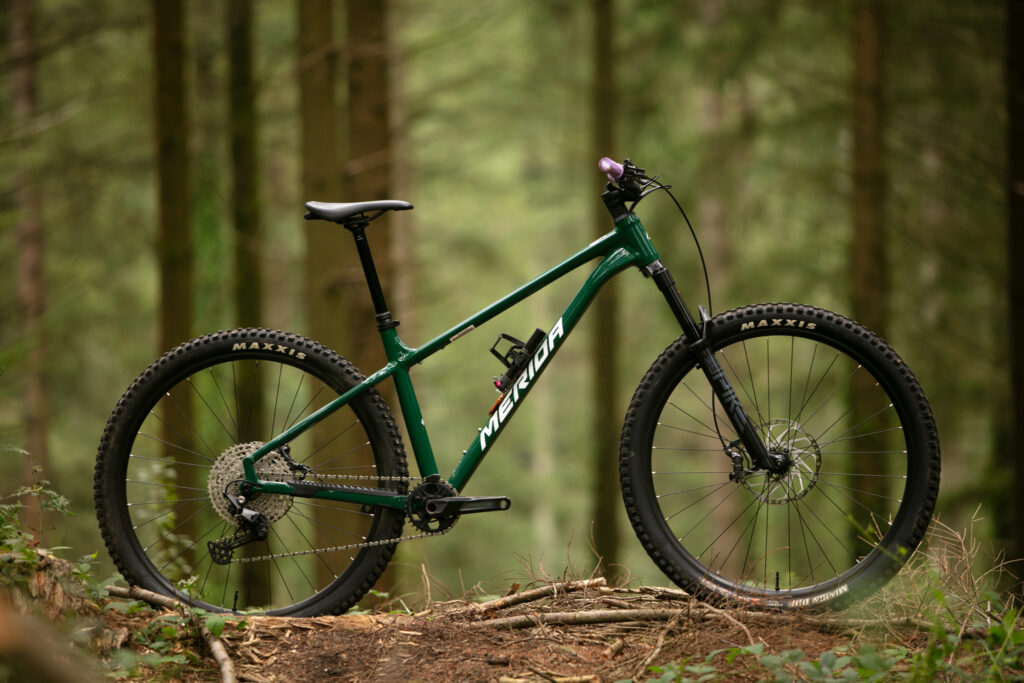
Merida Big (Image Credit: Farrelly Atkinson)

Merida Big.Trail 600

Can’t fault the build kit

Well rounded geometry encourages hell for leather descending and easy climbing

Great to see well protected tyres and good sized brake rotors

Headset cable routing isn’t the most welcoming feature for new riders

Paint is easy to scuff – get a frame protection kit

The second hardtail to make it into our pick of the best trail MTBs is Merida’s Big.Trail 600. The Big.Trail has been a long standing favourite between off.road.cc staffers, but its latest iteration comes close to trail hardtail perfection. As all hardtails should be, the Big.Trail is simple but big on capability. It gets all of the bits and pieces we expect from any trail bike, including a threaded bottom bracket and UDH compatibility, but one downside is that its internal cable routing runs through the headset.

With 130mm of suspension up front, and 29-inch wheels on an alloy frame, the Big.Trail 600 is an affordable ripper that had us coming back for more. Its steep seat tube promotes efficient pedalling while its slack, long and low geometry encourages impressive confidence for a hardtail MTB. Although its alloy frame is rather stiff, the fat tyres take the sting out of the trail, while its slack head angle and long front end make aggressive riding more than doable.

Canyon Spectral CF 9 mountain bike review – Top trail performance meets excellent value
Canyon Spectral CF 9 (Image Credit: Farrelly Atkinson)

Canyon Spectral CF 9

A more accessible bike that’s capable over a greater range of trails

New storage solutions are a great touch

Cracking value for money

K.I.S adds another level of adjustment

You’ll need some volume spacers on hand

Sizing is longer than expected – needs better communication

Following a direct-to-consumer business model, Canyon has a knack for offering great value in its bike range, and that goes for the carbon-framed Spectral CF 9. Separating itself from the alloy bike, this one is rammed full of features, such as geometry and wheelsize adjustment, so it can run 29″ and mixed wheel sizes, but most interestingly, it gets Canyon’s K.I.S, or Keep It Stable system. This is a steering stabiliser that helps keep the front wheel running straight through technical terrain.

As the Spectral CF is an almost literal carbon copy of the AL model, it’s the same bike for the most part, but as it’s built from carbon, the brand has tuned some compliance into the bike’s rear triangle for a smooth and composed ride, with its ‘linearly progressive’ suspension kinematic aiding the cause. With that, it absorbs bumps commendably, making the bike more capable than you would expect of 140mm of rear wheel travel. However, we found that adding a volume token to the shock added a well-needed bit of progression.

Like the Spectral AL, sizing is generous on this bike with a 500mm reach on a large, so double-check what size works best for you.

Deviate Highlander II Pro Build 0 – High pivot goodness meets all-round radness
Deviate Highlander II Pro Build 0 (Image Credit: Liam Mercer)

Deviate Highlander II Pro Build 0

Well equipped for the cash

Sensible geometry results in a manageable ride over a range of trail grades

Super calm and forgiving when the going gets rough

Chain stay growth requires learning to get the best from the bike

Requires a good heft of muscle for agile cornering

Head angle may be a touch on the steep side for more aggressive riders

Equipped with a high pivot suspension layout and idler pulley, the Deviate Highlander II is the most different bike in this lineup. And note that the specification has changed after Deviate rearranged its offering. It’s a 29in-wheeled bike with 160mm of travel at the font and 145mm at the rear. It’s also sorted with a threaded bottom bracket, UDH compatibility and grease injection ports for ease of service.

Sorted with a bunch of features that make it primed for riding the UK’s varied trails, we’ve found the Highlander II to be mega versatile. It pedals well, making tough climbs as breezy as they can get, but thanks to its very rearward axle path, it’s seriously capable beyond what its 145mm of rear suspension travel suggests. In fact, it does an excellent job of smoothing harsh terrain, making tricky trails a doddle to tackle.

However, the Highlander II takes some time to get used to, owing to its very rearward axle path.

Merida One-Forty 6000 review
Merida One-Forty 6000 review (Image Credit: Farrelly Atkinson)

Merida One-Forty 6000 review

Geometry is unique but welcoming

Intergrated tools and Fidlock mount are big plusses

Agilometer sizing is a great and useful concept

Stem is a bit lengthy

Head angle may be a little steep

Coming after one hell of a shake-up, the Merida One-Forty 6000 receives a very different look and concept from its predecessor. Following Merida’s recent Agilometer sizing concept, all sizes get low standovers and stacks to allow shorter riders to fit on longer bikes, and taller riders to fit on shorter bikes, all to help the customer achieve the ride that they’re after.

Like many of the other bikes in this round-up, the One-Forty receives a threaded bottom bracket and UDH compatibility and a set of 29-inch wheels, although if mullet is your flavour, you can sling a 650b wheel in the rear thanks to a flip chip. As for suspension travel, there’s 150mm up front, and yep, you’ve guessed it, 140mm at the rear.

Although the One-Forty’s geometry is certainly progressive, we found it to be very accommodating, feeling like a regular bike once sat on it. It shifts on the pedals thanks to a well-designed suspension kinematic, and it balances capability with a responsive front end. Although we’d have liked a slightly slacker head tube.

Rockrider Feel 900S mountain bike review
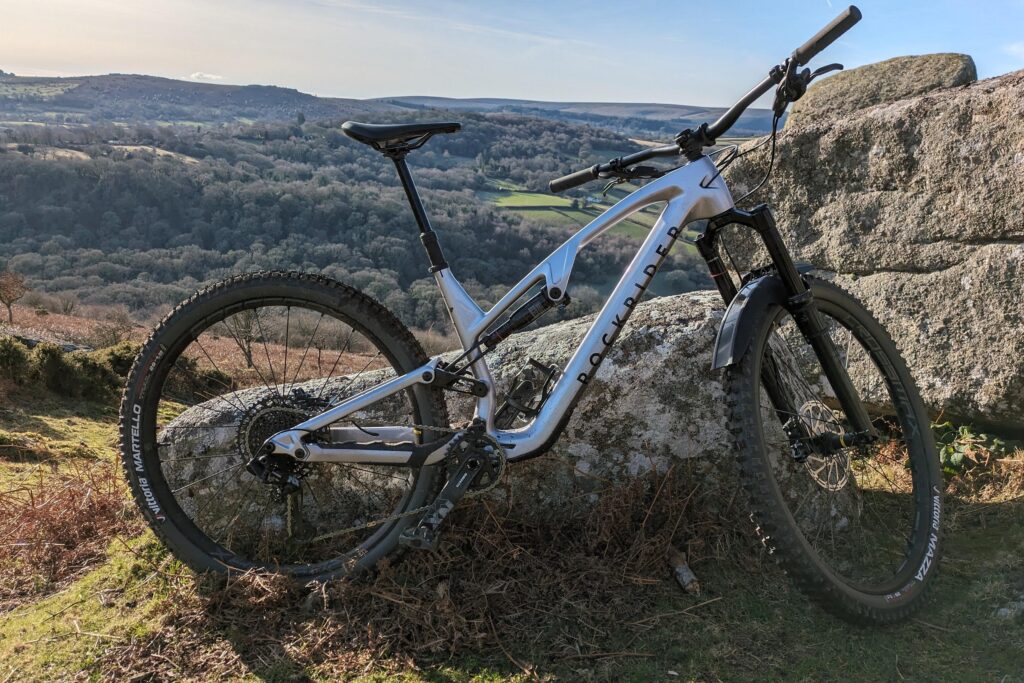
Rockrider Feel 900S (Image Credit: Farrelly Atkinson)

Rockrider Feel 900S

Great value for money

Agile descender

Posh wheels

Pressfit BB

Limited chainstay mud clearance for bigger tyres

Flexy rear end

Under Decathlon’s vast brand umbrella is Rockrider, known for producing plenty of affordable bikes, the Feel 900S being one of them. For such a low asking price, you’re getting an awful lot of bike, including a carbon frame, 130mm of rear suspension, and 140mm up front. It’s well sorted with the right features, too, such as UDH compatibility, but this bike gets a press-fit bottom bracket, so BB maintenance isn’t quite as straightforward.

But the proof is in the ride, and the Feel 900S delivers. With excellent bang for buck comes impressive versatility, excellent looks, and a geometry that makes for a nimble and fun ride to a point where it’s really hard to knock. That said, a damper upgrade would boost capability, and the rear end is a little flexy.

off.road.cc’s Managing Editor, Liam, is all about everything off-road cycling. Whether it’s riding enduro e-mountain bikes as quickly as his skills would allow, or more chilled gravel expeditions, if it’s on two wheels and on dirt, he’s happy. While he loves an aggressive trail mountain bike, he has a penchant for anything steel or with exotic frame materials. When not riding bikes, he’s tinkering with them to learn the ins and outs of what makes everything tick. He’s been contributing to the site for over six years now, and has worked his way up from freelancer to Staff Writer and Tech Editor to where he finds himself today, with hundreds of reviews of mountain and gravel bikes, and all kinds of parts and accessories under his belt.

No Comments

Leave a Comment


Read more...

Read more...

Read more...