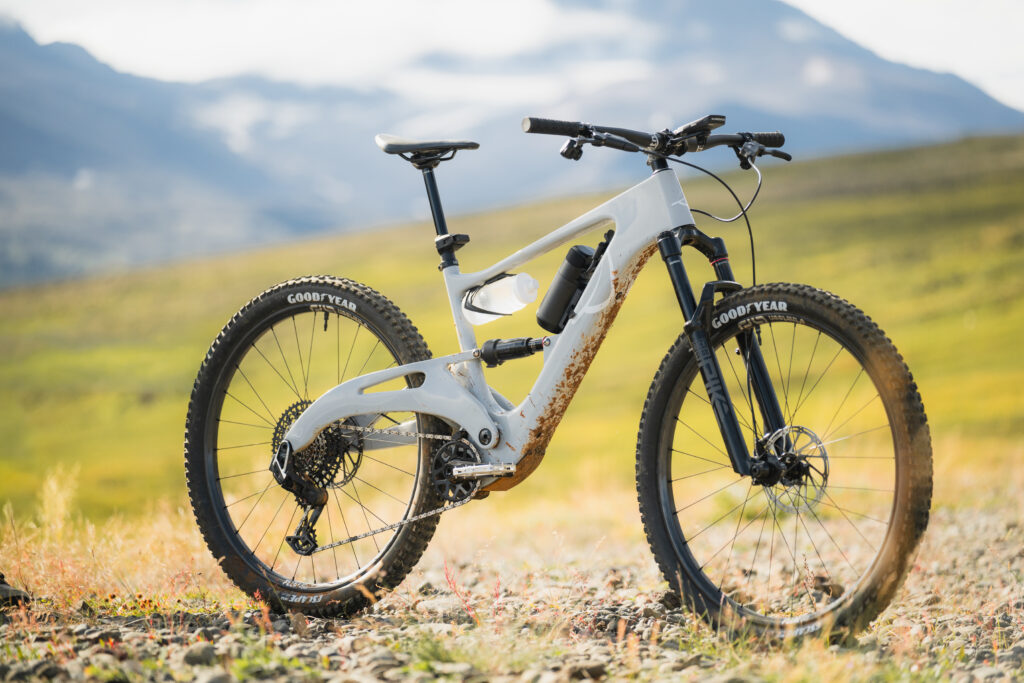

Blasting onto the market with its first-ever mountain bike, the unforgivingly envelope-pushing Elja, a couple of years ago, Lauf has entered the e-MTB market with the e-Elja. Lauf’s debut into the world of pedal-assist takes the polarising ethos of its regular mountain bike, but ups the travel, bolts on TQ’s HPR60 drive system and is claimed to weigh a measly 16.6kg. I headed out to Iceland last year to give it a whirl.
- The Elja is Lauf’s first MTB and it runs 2.8in tyres
- Lauf files patent for freehub that offers thousands of engagement points
- 10 things I learnt while racing my first-ever multi-day stage race
One thing’s for sure when it comes to the Elja, it’s simple. In fact, it threw a middle finger up to modern cross-country bike design, coming equipped with a single pivot, space for very large volume tyres and two bottom brackets for ease of maintenance.
The e-Elja follows that very same intention, and the bike itself is as similar as the regular mountain bike as the difference in their names. It’s an Elja, but electric.
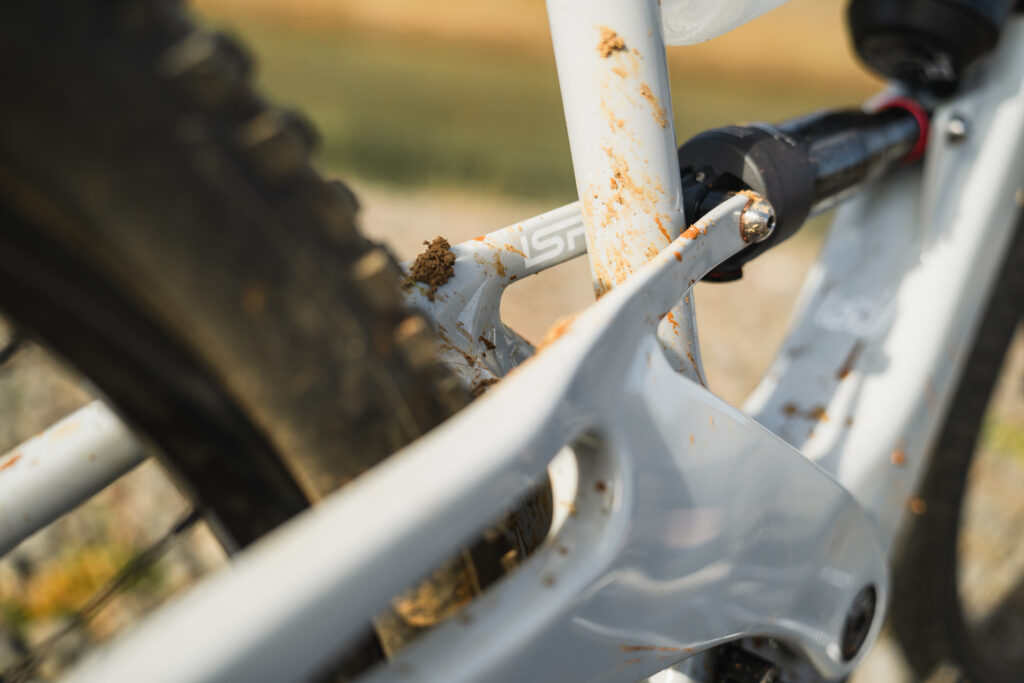
To start with the similarities, it’s mostly identical to its non-e counterpart. There’s the Marmite silhouette and Lauf’s LSP suspension design. This layout uses a DUB bottom bracket as its pivot bearings and focuses on weight savings. The choice to go single pivot graces the bike with the ability to run up to 29×3.0” tyres, too.
Things do change a bit when it comes to the e-Elja’s geometry. It gets a slightly shorter reach with a large frame donning a 475mm measurement, rather than 480, and its head angle is slacker, at 65.1 degrees, rather than 66. There’s a 75.7-degree seat tube angle as opposed to the Elja’s 76.2-degrees and there’s a longer 448mm chainstay, in which a bit of magic happens.
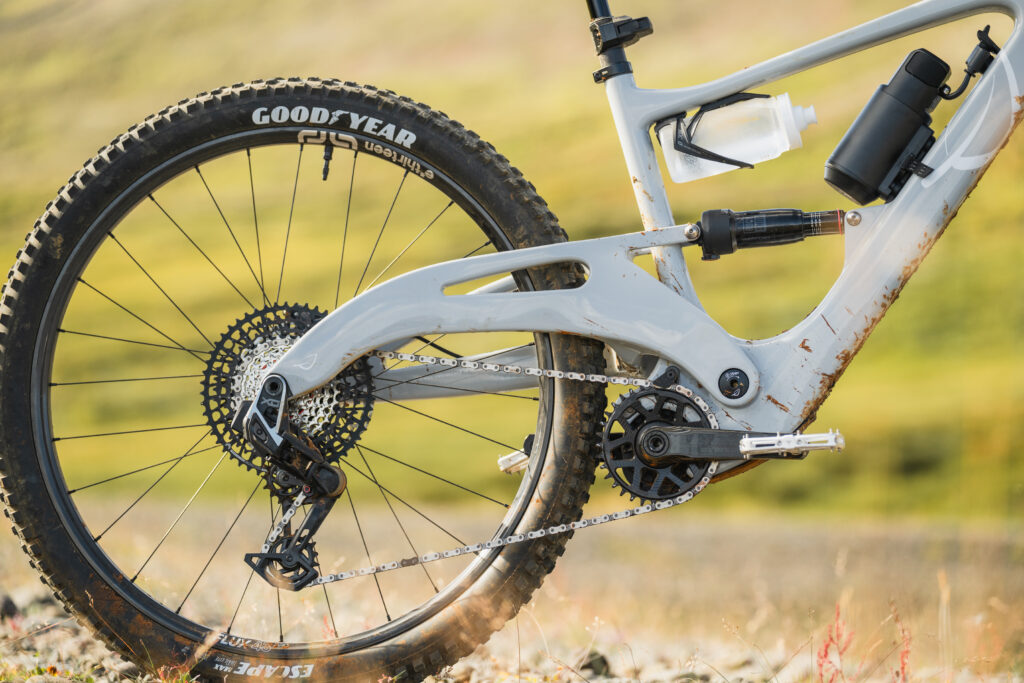
Where the Elja is a cross-country bike, the e-Elja sits firmly in the trail category as it gets 130mm of rear suspension combined with 140mm up front, which is to credit for the slacker angles, and shorter reach. But that boost in rear wheel travel hasn’t come from a difference in shock stroke length; rather, the longer chainstay has opened up space for more travel.
Things get very interesting when it comes to Lauf’s drive system choice. The brand has gone for TQ’s super natural HPR60 motor, but has combined the bike with a small 360Wh battery. The battery choice does help the bike weigh impressively little (for an e-MTB), but the bike is designed to be more of an extension of the rider to complement the effort, where other options can do all of the work for you. Though Lauf claims that this setup can achieve 1,400m of ascent at 100% assistance. Throw on the range extender, and it could do up to 2,000m.
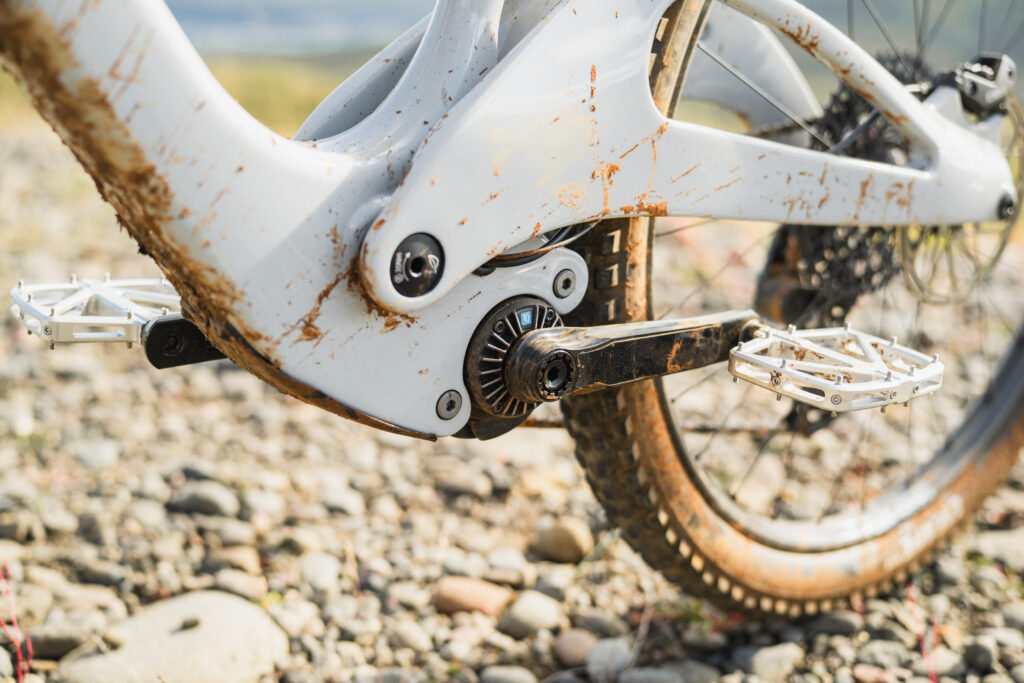
Lauf reckons that the e-Elja rocks the tidiest cockpit ever seen on an e-MTB, and I agree. Rather than big displays and all of the buttons, the bike relies on SRAM’s POD shifters to scroll through power modes. There’s then a minuscule LED-based display that shows the battery level via lights, and what mode the bike is in, via the colour of those lights. Apparently, this is the same display you can find on drop-bar bikes equipped with a TQ motor, but sat on the top tube.
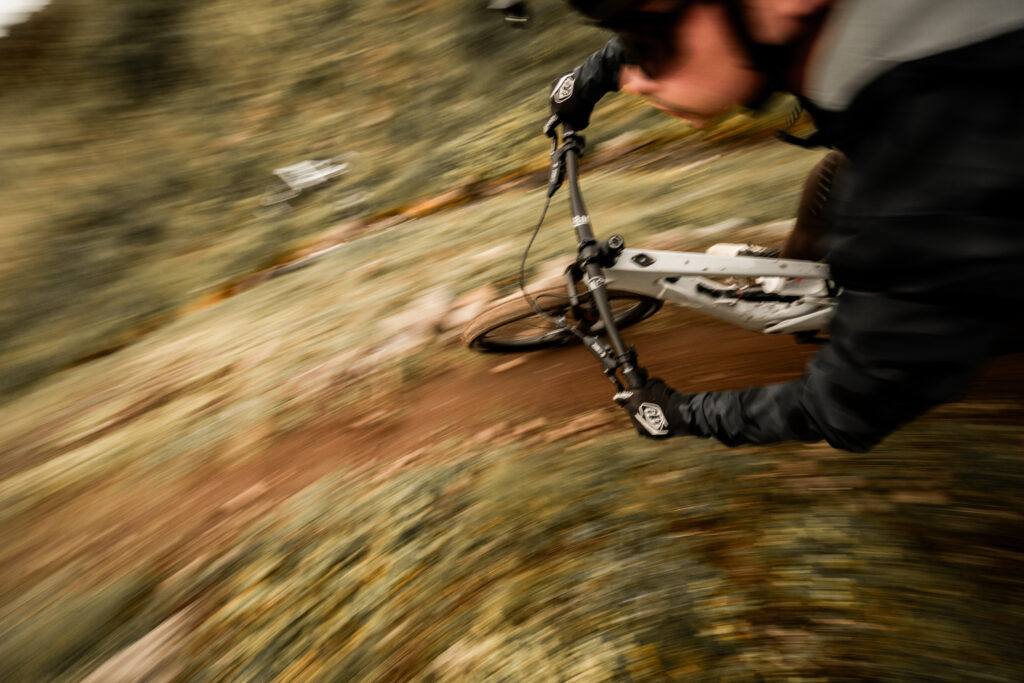
Other details are that the full IRM carbon frame rolls on 29in wheels and the rear brake hose is routed through the frame. And as a result of Lauf’s reliance on the POD shifters, there are no cables to route, so it’s wireless drivetrains only.
The e-Elja is available in two builds with prices at $6,990 for the Weekend Warrior build and $8,490 for the Race bike.
Lauf e-Elja – Componentry
For my brief time with the e-Elja, ahead of the RiftMTB race, Lauf sorted me out with a bike that was a bit of a mish-mash between the Weekend Warrior and Race builds. However, Weekend Warrior builds will get RockShox’s Pike fork and Deluxe Select shock, SRAM GX T-Type shifting, SRAM DB8 brakes, and DT Swiss’s M1900 Spline alloy wheels.
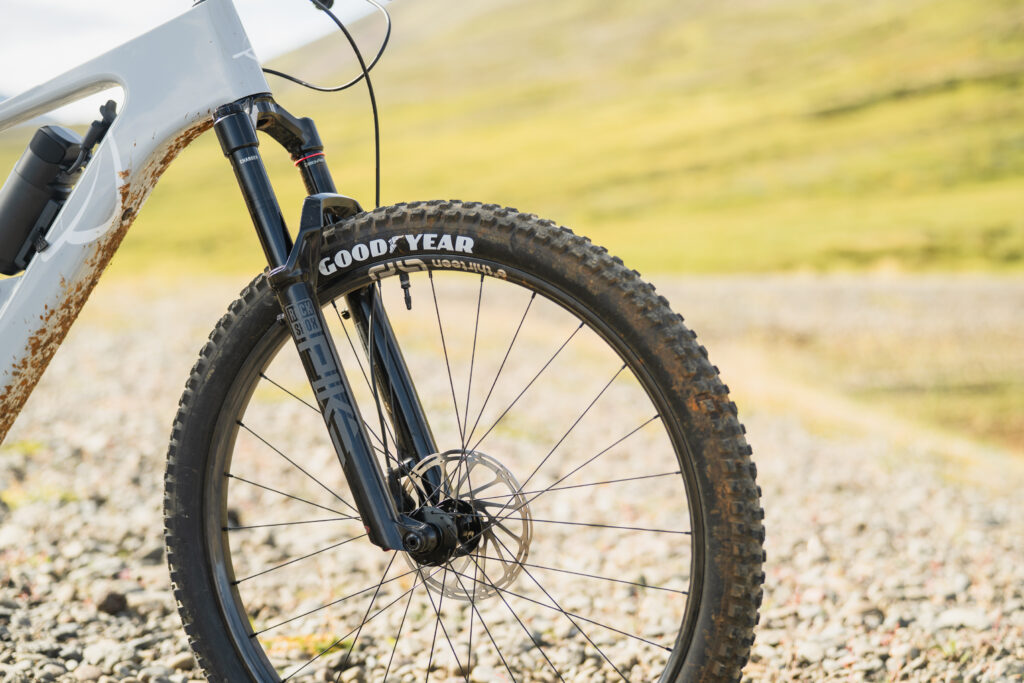
The Race build features upgraded Select+ versions of the Pike and Deluxe suspension bits, SRAM’s X0 T-Type drivetrain, but e*thirteen’s Sidekick-equipped Optimus Carbon wheels.
Both bikes are wrapped up with Lauf’s Mtn carbon handlebar, and, exclusive to Lauf, 2.6in Escape Max Trail Lite tyres from Goodyear.
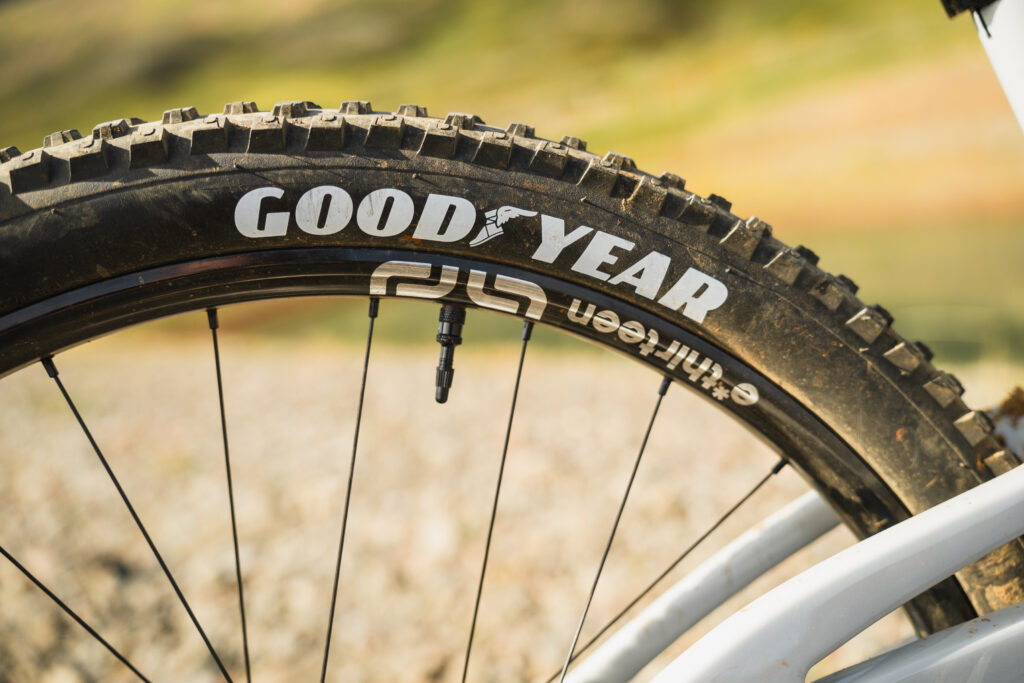
Complaints with these builds are incredibly few, but some may find themselves wanting something equipped with fancier suspension components. That said, this level of RockShox kit is far from bad. It’s simple, easy to live with, and it worked well during my time with the bike.
Lauf e-Elja – Ride impressions
In the minds of many, an e-MTB can sink or swim depending on its power and range, and the e-Elja will raise plenty of eyebrows in that respect. While the TQ HPR60 knocks out decent power for a lightweight e-mountain bike, it gets the brand’s smallest battery, which, in the grand scheme of things, can be a bit limiting. I won’t lie, battery anxiety during my couple of days with the e-Elja was very real. That said, I dispatched north of 20km and 1,383m of vertical on a little more than a single charge (after a brief lunchtime top-up).
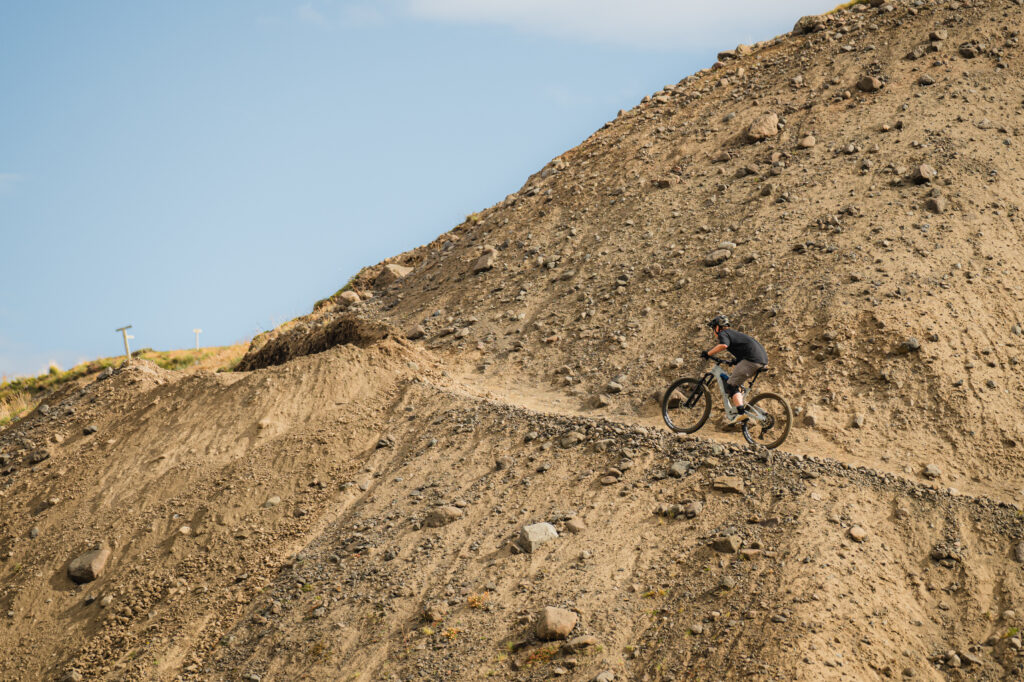
But Lauf’s emphasis on low weight translates the feel and general character of the Elja XC bike, but without the overencumbrance of a sizey motor, a big battery and a build kit that would usually come with such a bike. It’s very well-rounded, though, rustling up a predictable and calm manner when pedalling up a hill, where the longer chainstay compensates for the slightly slacker seat tube, keeping the front wheel planted.
Complimented by the HPR60 motor, the e-Elja’s character is engaging and impressively natural. Its weight isn’t too far from burlier enduro bikes, so it rides and handles very much how you would expect most bikes to. Its angles are more reserved, so it’s a fairly responsive machine, owing itself well to a more agile feel but without becoming a total mess when the speeds ramp up.
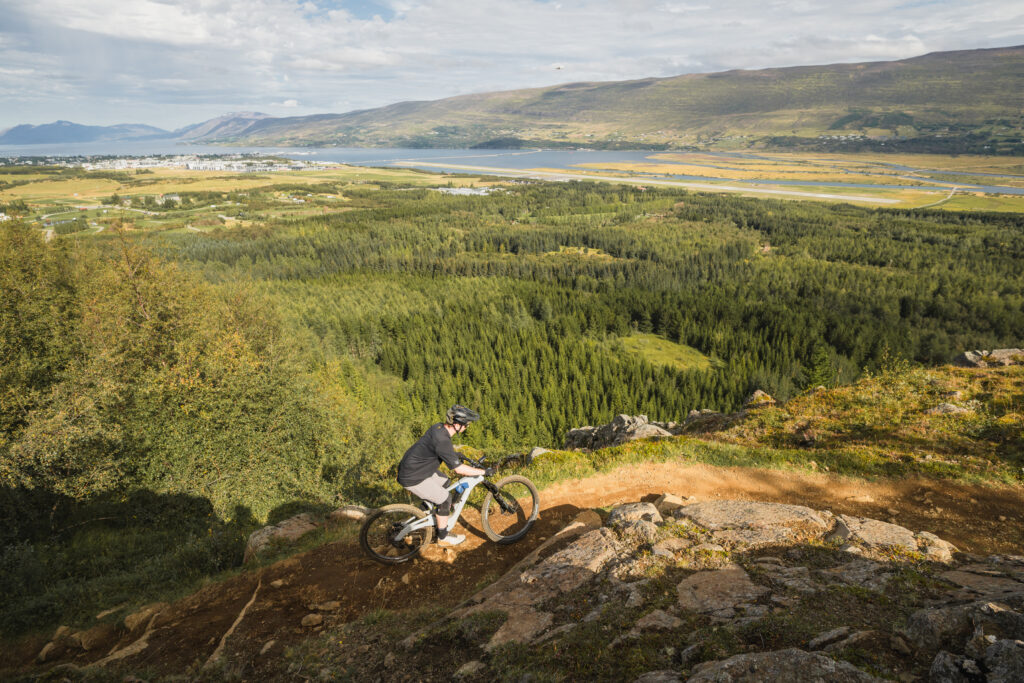
Where the eElja departs from its leg-powered sibling is in the tyre choice. It still runs fat tyres, but they’re much more aggressive, and for an e-bike that’s notably heavier than the XC bike, it’s necessary. It also opens up the bike to a much wider range of riding while boosting overall confidence through a wider variety of terrain.
Although rocking a very simple single-pivot design, the bike’s rear end is super smooth. The extra travel doesn’t go unnoticed, adding some headroom to the bike, but without completely steamrolling what the Elja is all about – efficiency and simplicity. The suspension is very smooth at the start of the stroke, which is no doubt aided by the Sidekick system built into the rear hub. Progression is impressive too, providing a solid platform when compressing the bike hard. And surprisingly, for a single-pivot bike, pedalling is solid. The shock doesn’t move all that much under pedalling loads. Lauf has hit a great balance.
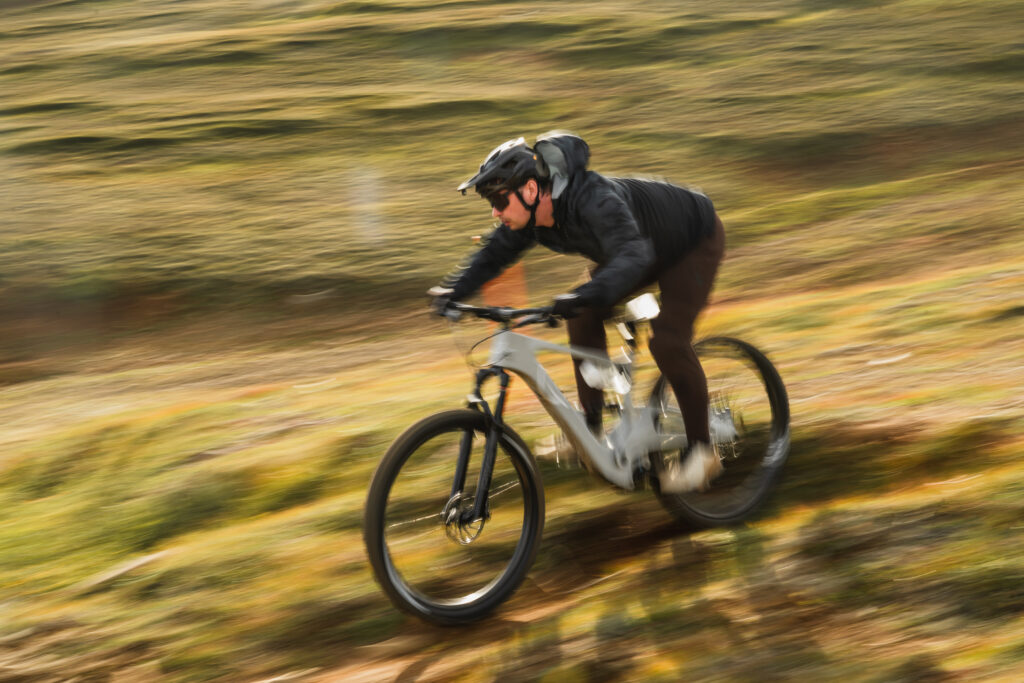
With that, it’s certainly an accomplished descender. Like when pointed up a hill, it’s consistent and predictable. Then, with that cleverly designed rear end, the e-Elja was surprisingly composed, even when rattling through the more technical sections of North East Iceland’s riding. With its smaller travel figures, it’s not going to be as willing to tackle more demanding enduro-type adventures, but there’s plenty of headroom here, and with the bike’s slightly more progressive geo (compared to the Elja), it’s welcoming, easy to ride, and it is capable beyond its means.
Then, because it’s so light, for an e-MTB, the e-Elja doesn’t pose that weighty and lethargic feel to its handling that more regular e-MTBs do. Instead, it’s familiar and seriously lively. It’s a rewarding ride that’s rich in the right kind of feedback. Tipping the bike into corners comes naturally, and generally, it’s a fun bit of kit to be over, providing plenty of response in the turns, and plenty of pep.
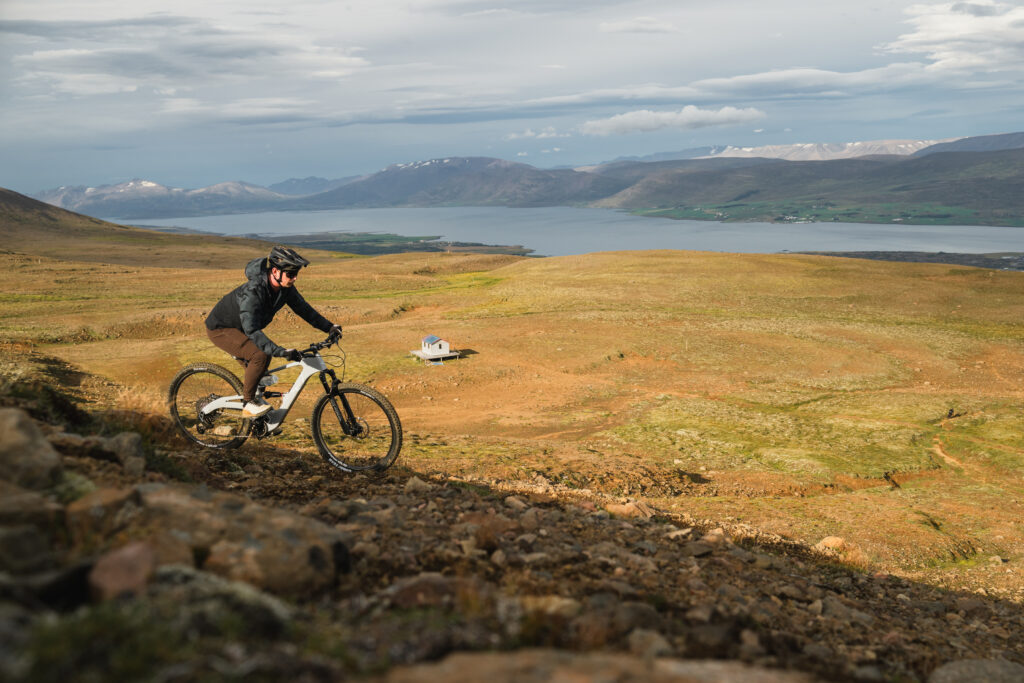
I had no issues with pedal kickback or weird forces through the pedals on the regular Elja, but with a little more travel comes more opportunity for such things to arise. But the e-Elja manages to fend off kickback, and I did ride a Sidekick-equipped bike, which definitely does some work here. Though, as this is an e-bike, it doesn’t suffer from the odd feeling under pedalling that the greater deadband produces on regular bikes. That’ll be because the motor is putting more torque through the system, more consistently.
Although much of the bike’s ride is definitely positive, there are a couple of downsides. Larger rotors wouldn’t go amiss. This is still an e-MTB afterall and it goes without saying that there’s more weight to slow, despite its comparative lack of it. When riding steeper, more technical and more brake-intensive sections, the 180mm rotors equipped required a little more pre-planning before braking efforts. As there’s a motor providing assistance, there’s no harm in bolting on a 200mm rotor, which would complement the riding that the e-Elja is perfectly capable of a bit better.
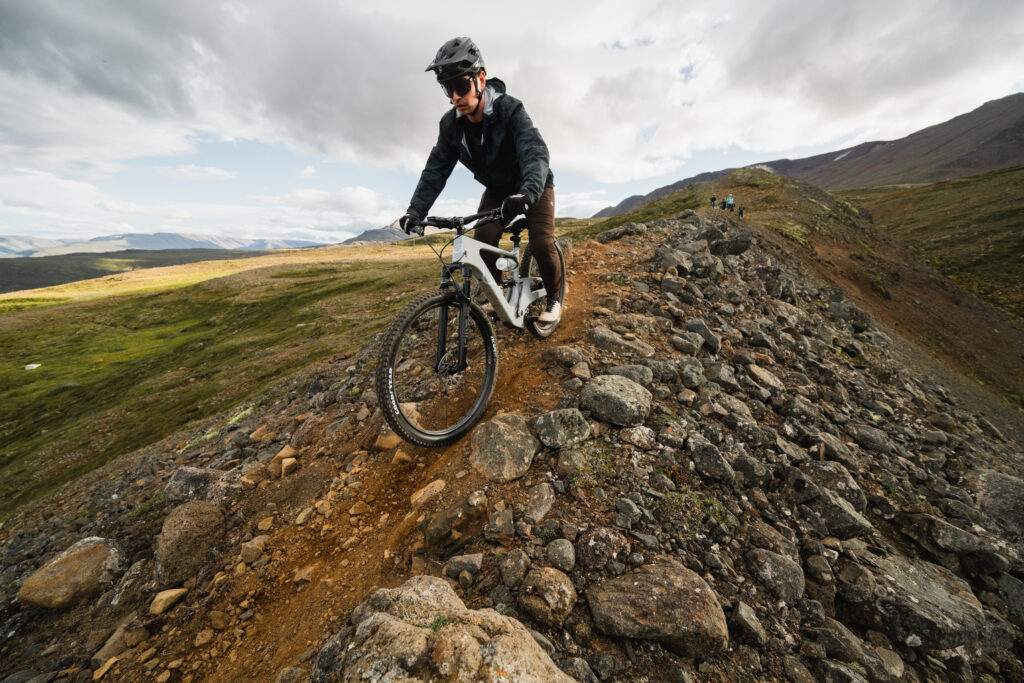
By choosing a smaller battery, Lauf does have a bit of an uphill battle on its hands. Where brands are throwing on larger batteries, even onto SL e-bikes, the e-Elja is comparatively limited, almost forcing riders to part ways with a bit more cash for the range extender. Though I’d say that the bike isn’t all about riding in turbo 100% of the time and effortless shuttle runs. Rather, it’s just meant to provide an extra bit of assistance to make nasty climbs more tolerable and to achieve a ride that’s not too dissimilar from regular mountain bikes. You’ll just have to put a bit more work in.
Lauf e-Elja – Early verdict
With its lower battery capacity, the e-Elja will no doubt be a tougher sell. But if you’re looking for an e-bike that does the ‘e’ thing as little as possible, lending just a helping hand rather than taking over completely, that’s exactly what the e-Elja is all about.
But with potential range aside, Lauf’s done a great job here. True to classic Lauf form, it’s a polarising machine but one that makes the hard parts that bit easier, without detracting from its engaging, lively and natural ride. And at £6,367.25 (converted), it’s not eye-wateringly expensive. Some may find themselves wanting fancier suspension, however.