



Speaking to leaders from across a wide range of brands, in this article we’ll explore everything from waterproofing, to breathability, chamois pads, 3D printing, carbon fibre, graphene, recycled fabrics and coming technologies. This is the bleeding edge of the present, and the future of cycling clothing.
This feature has been one of the most interesting deep-dives I’ve done. When I started, I knew little about the cycling clothing I wear, or the space-age textile technology behind keeping me warm, cool, dry, comfortable, and aerodynamic. Simultaneously, some of the fabrics must be wind and waterproof from one side, but permeable to both from the other side. All this whilst the chemical technology has taken a half-step backwards, with the abolition of PFAS chemicals.
A brief catch-up on PFAS
An exhaustive amount has been written on PFAS chemicals, and this piece isn’t exclusively about them, but it has been a (hopefully only) once in a lifetime shift in the landscape of sportswear production, so we shouldn’t pass by without taking stock. Here’s a refresher to bring you up to speed.
PFAS (Per- and Polyfluorinated Alkyl Substances) are a group of highly fluorinated chemicals, and it’s fluorine’s incredibly strong bond with carbon that’s both its power and its problem: It repels water, fat, oils and dirt very effectively, but breaking that bond is tricky, hence the nickname ‘forever chemicals.’ Great if you want the waterproofing on your jacket to last the lifetime of the jacket, awful after that, as the nasty chemicals accumulate in the biosphere. Regrettably, and to embrace a pun, in terms of performance there’s nothing to touch PFAS chemistry.
How waterproofing works
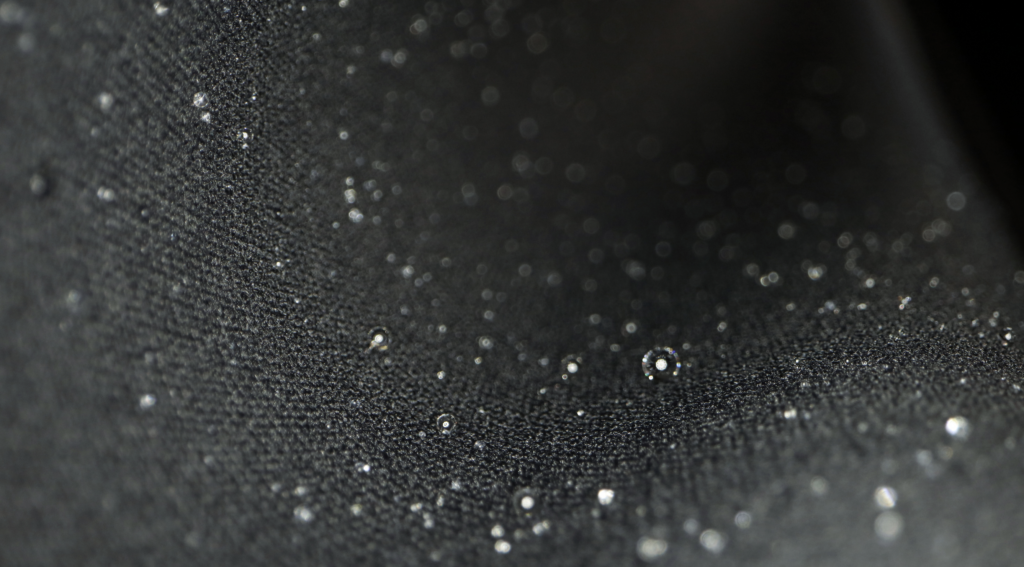
Typical 3-layer fabrics work by sandwiching a waterproof membrane between two other materials. But if the membrane itself is waterproof, why do waterproof jackets also have a DWR coating I hear you ask. Great question: It’s the working in tandem of a waterproof membrane, and a water-repellent face material/coating that makes the finished garment not just waterproof, but breathable, and therefore wearable.
Waterproofing something is easy but being waterproof without being ‘breathable’ is borderline useless if there’s a likelihood of sweating. In short, if the moist air can’t get out, you get wet anyway. Hence the pivotal job of DWR coatings is keeping the pores open, and allowing the movement of air through. Finding a PFAS-free DWR that’s as good and as durable as yesteryear’s, is proving challenging.
The Zenith

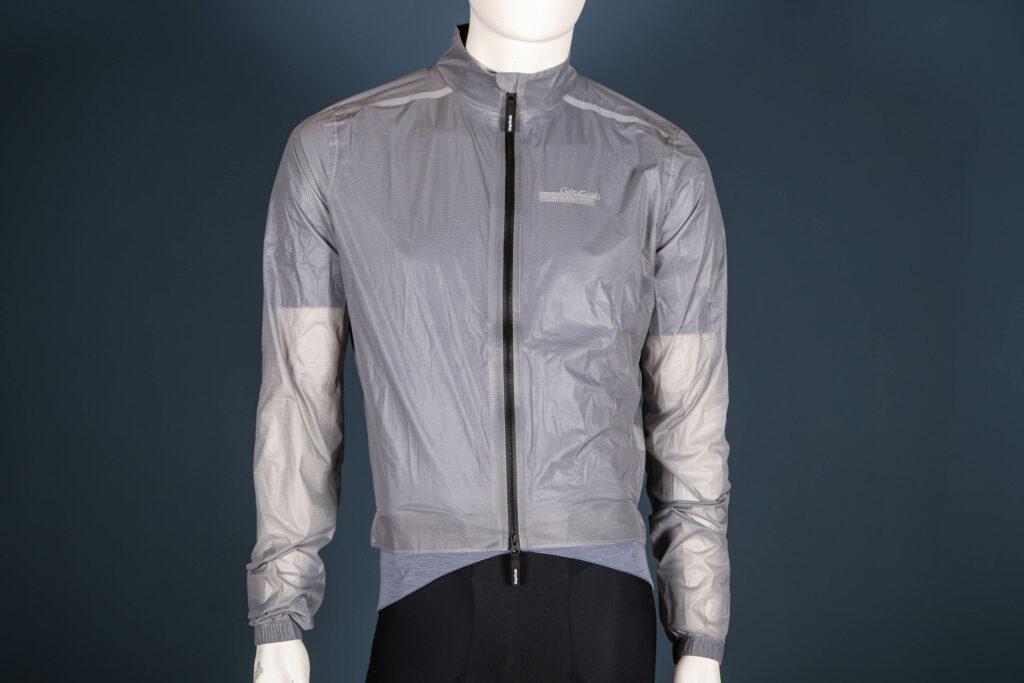
Gore’s now discontinued ‘Shakedry’ was perhaps the pinnacle of waterproof-breathable fabrics: incredibly light, made from ePTFE (expanded Teflon), with the membrane on the outside so air could move freely. It was perhaps the zenith of waterproof and breathable, in a mind-bendingly light and thin fabric. I watched myriad people’s mouths fall open as they touched it for the first time at a bike show many years ago.
This brings us to now: the PFAS ban has hit some brands harder than others. Gore fabrics was built upon this chemical technology, and it pervaded practically every product, so this was an existential shift for them. Polartec has been PFAS-free since the end of 2022, and brands like POC and Rapha have launched PFAS-free alternatives, but the zenith of wet weather performance is probably behind us. Until the new chemistry catches up.
So what now?
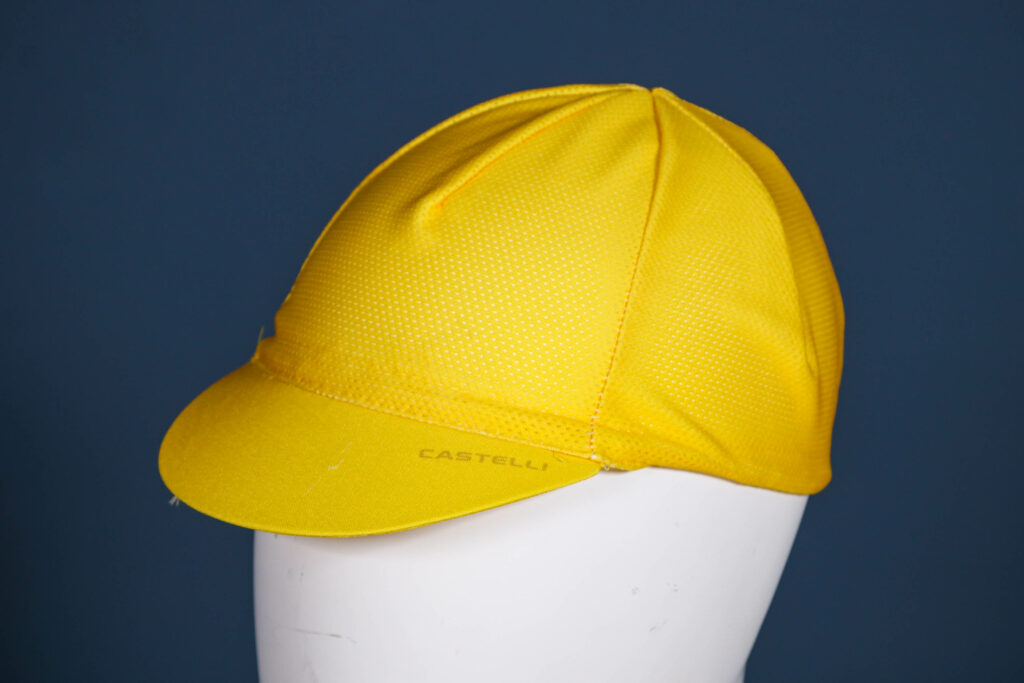
As one of the giants in this near duopoly, Polartec has launched their new AirCore fabric, co-developed with Castelli and used in the latest Perfetto RoS 3 jacket. Their research suggests there’s a declining need for highly waterproof cycling clothing, with fewer rain events and better forecasting allowing riders to schedule their rides around rain, or they can ‘ride/train’ indoors.
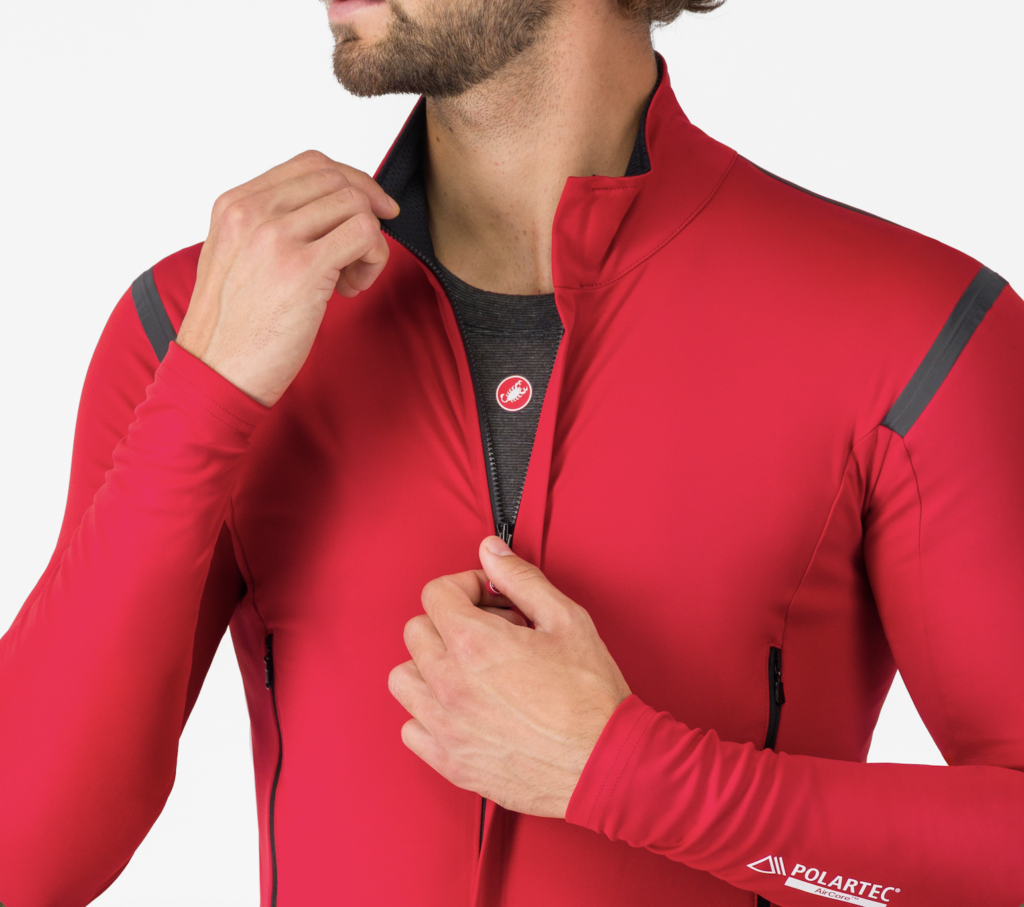
As a result, AirCore prioritises breathability over extreme waterproofing, offering a 5,000mm hydrostatic head while allowing 0.7 CFM of air to pass through it. “Most rain falls at about 800mm pressure, heavy rain at about 2,000mm”, says Castelli’s Steve Smith. So it’s more than double the waterproofness required for even heavy rain. All this whilst being made “with recycled face, back and non-PFAS layers, membrane and DWR”.
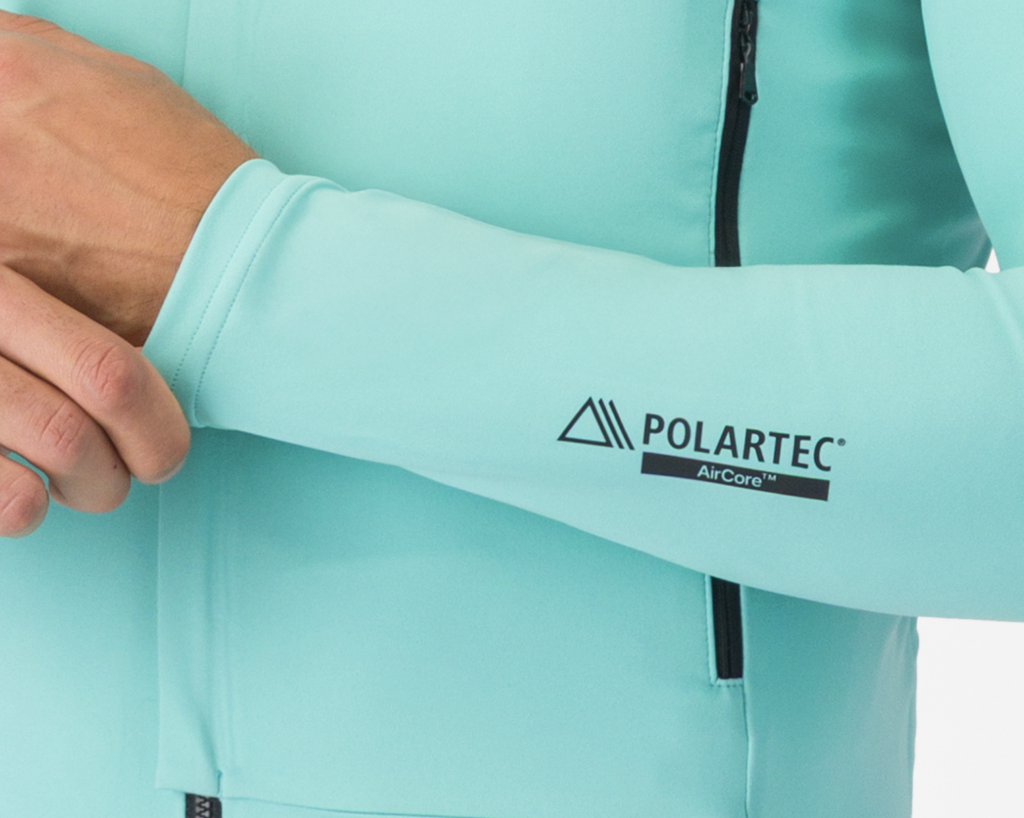
New waterproof fabrics are hugely costly developmentally, but very lucrative if you get them right. AirCore, from my brief time with a Perfetto, is a disarmingly soft and comfortable fabric that doesn’t ‘feel’ like a waterproof jacket and there’s no plastic rustling sound; it feels more like a cosy mid layer. The Polartec logo on the outside means there’s a Polartec membrane inside… which brings us to:
Intel Inside
Who makes the iPhone? Well, we think, Samsung or LG makes the screen, Corning make the glass, Qualcomm makes the modems, ATL (amongst others) makes the batteries, LG Innotek makes the camera modules, Sony makes the sensors and it’s all assembled by Foxconn… but we still think of it as an Apple product.
For cycling clothing, sometimes suppliers are advertised, and sometimes they’re concealed, and there’s a nuance to this I haven’t fully got my arms around. Castelli puts the Polartec logo in a big font on their jackets, & Gore-Tex jackets are also advertised. At what point does a company get so good at what they do, that promoting that your product contains their product, actually increases value and desirability? Which brings me to
Elastic Interface & Rubber N’Road
Elastic Interface is a large Italian B2B company that (probably) makes the pads inside your bib shorts. It’s a specialist endeavour, and they sell “about 4 million” pads per year (to bib-making brands) says their brand manager Guido Zago. That’s a surprising amount right?
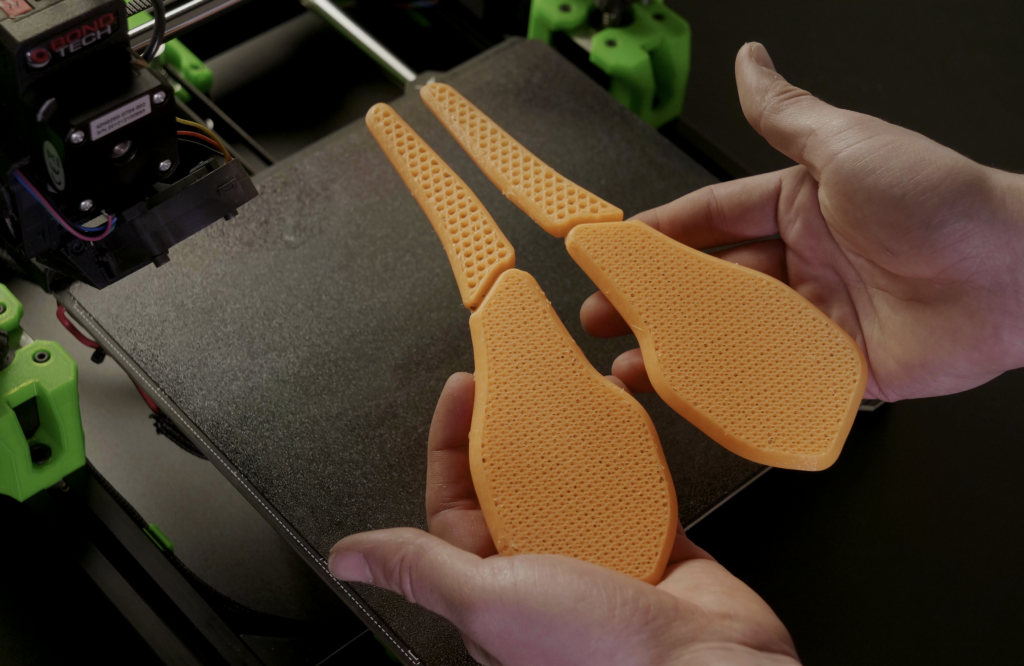
New(ish) to their portfolio of chamois is a 3D printed pad particularly for long days in the saddle. Foam compresses, and loses its elasticity and support over time, especially as it becomes wet. Elastic Interface’s 3D printed N3X is “not foam, so it doesn’t absorb sweat” says Guido, so its performance is not changed or denigrated by sweat or water. Furthermore, the “3D printed material has no problem in terms of washing, – so it has a really long-lasting performance, durability and breathability”. More breathable than foam, indifferent to moisture, longer lasting through repeated washes, with performance unchanged by conditions or duration, this sounds like a perfect advancement.
New York-based Rubber N’Road, makes high calibre cycling gear, “for people riding 15-20 hours a week”, says co-founder Gil Lavi. They use a version of this 3D printed technology in their Control 3D bibs, (a pair of which has just arrived at road.cc, and are perhaps the most expensive pair of bibs we’ve tried). In terms of pads, he says, “for racing- there is nothing as good as foam because of its elasticity and malleability,” and they use a highly customised Elastic Interface foam pad (at great cost, all-stitched rather than glued together to improve breathability), but “foam tends to compress over time.”
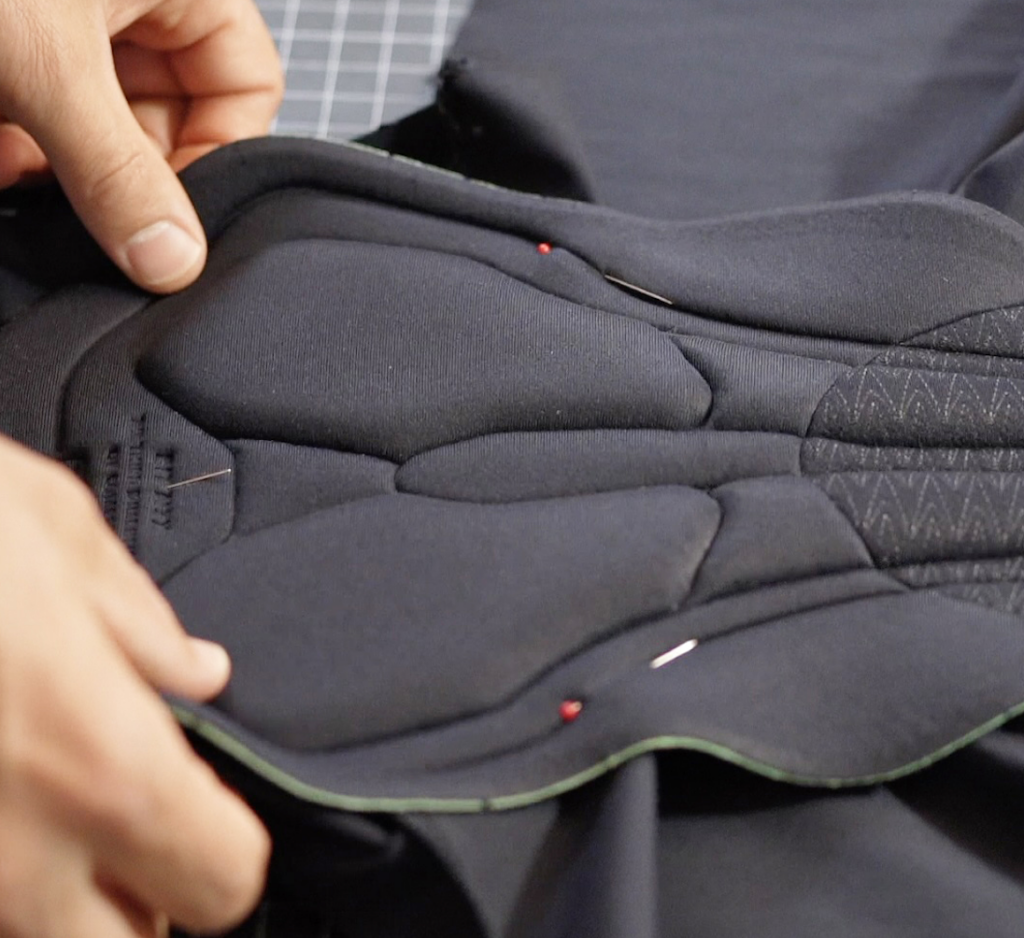
So, for Endurance applications, they use Elastic Interface’s 3D printed insert. “Is it the best chamois in the world [for everything]? No, but where it’s brilliant is how comfortable it is at the third, fourth, fifth, sixth hour – because there’s very little compression, and because of the breathability and lack of water retention in the polymer, it’s an open cell”. So they produce horses for courses, a range of 3D-printed, and a range of foam chamois bibs. For the future, Gil was excited that the next generation “…will be second to none”.
So, how does an Elastic Interface pad end up in your favourite shorts? There are two ways: you can either buy off-the-shelf pads, or you can work with them to create something bespoke. Pads (sold to brands) start at €3.50 each and go up to about €22 (for the 3D printed), and making a custom pad means the brand must bear the sizeable expense of making a custom mould. Brands like Assos create custom pads with Elastic Interface, while others like Van Rysel reserve custom pads for their premium shorts and use stock pads to keep costs down in other ranges.

Given Elastic Interface’s dominance, and market-leading technology, how long can it be before we see Elastic Interface tags on bib shorts? Just like Polartec, they’ll be seen as a barometer of quality inside. As Guido says, “dear cyclist, select your favourite brand, but look for the Elastic Interface inside”.
Elastic Interface is also pushing sustainability, with its new Eco Airtech, a proprietary lamination (made from “recycled polyester, elastane, and polyamide”) that allows foam-less pads, just with the fabric covering “and the 3D insert”. Where foam is still required in non-3D-printed pads, they’ve now developed bio-based polyols that have a far lower environmental impact. And of course, 3D printing is a zero-waste technology… no offcuts, no over-production, no material wastage. Which brings us nicely to…
Kostüme
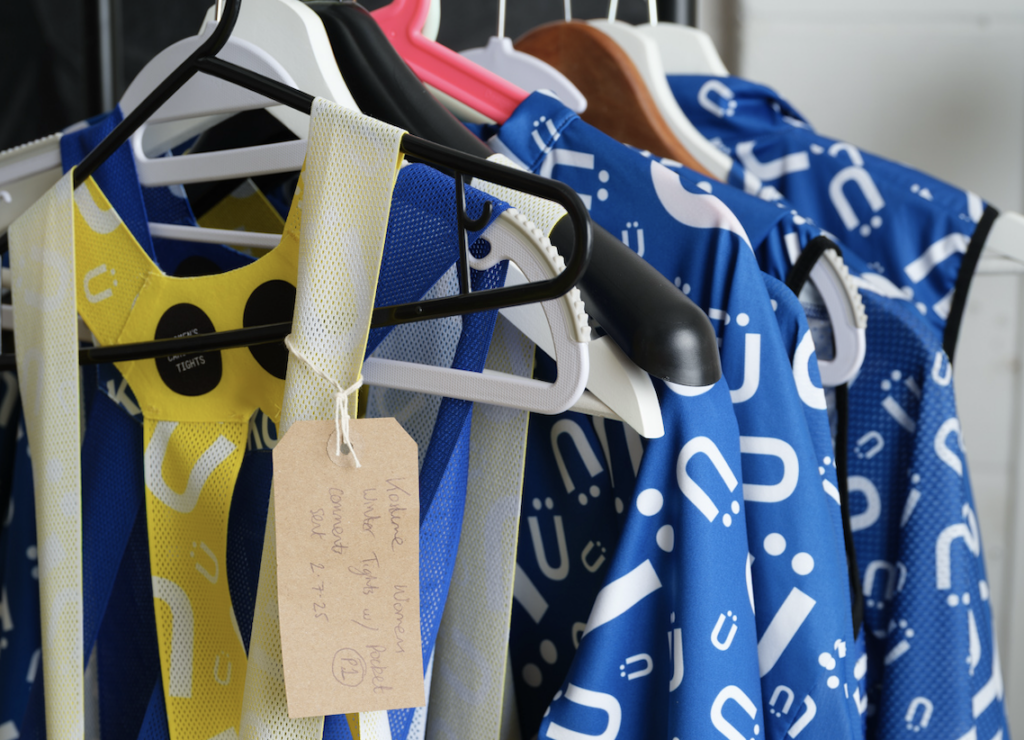
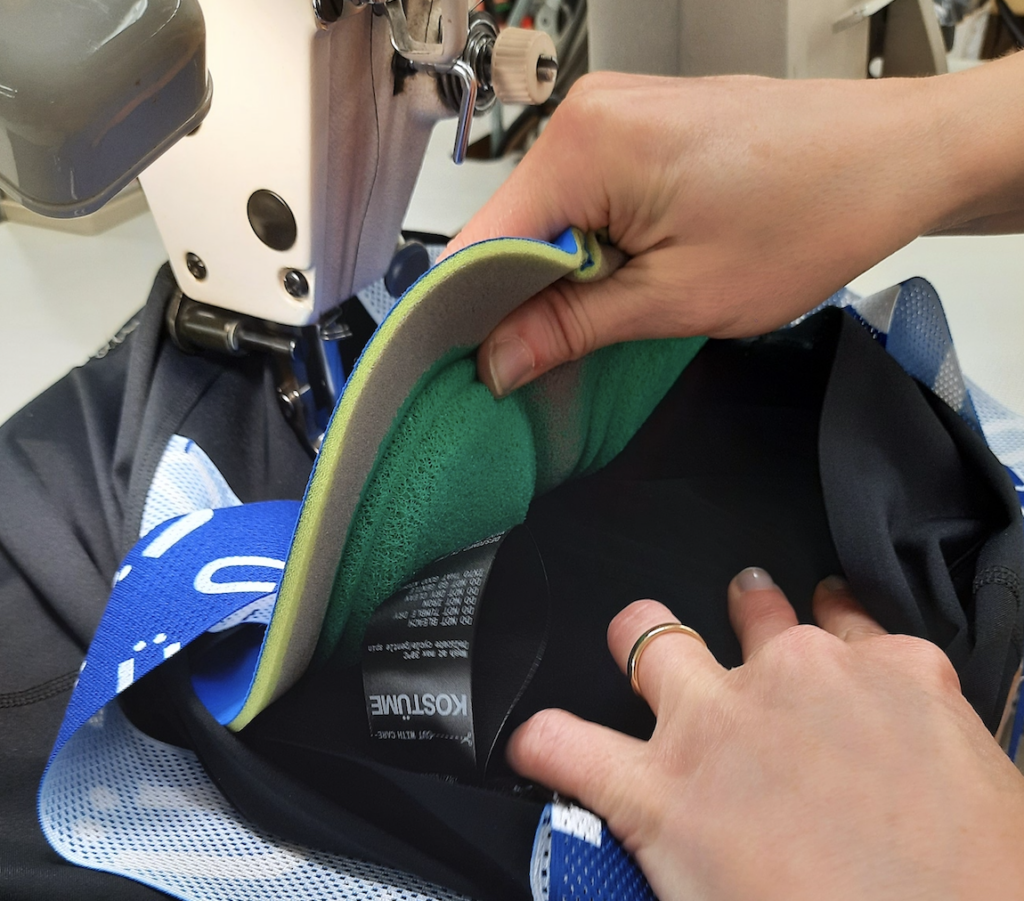
Kostüme has a uniquely environmentally friendly way of making garments. We love their bib shorts here at road.cc, where they’ve earned a rare perfect 10 review. The pad combines three densities of memory foam with a microfibre top layer infused with nano-level Aloe, says founder Ed Bartlett.
They accept pre-orders for a 10-day window, and then fulfil those orders in the correct numbers and sizes. This drastically reduces their costs; there is no waste, overstock or discounting to be priced in. They’re also a small, effectively 2-person team. Consequently, much more of your money goes into the materials that physically make the shorts. This means that a £180 pair of Kostüme’s bibs can really compete in terms of quality, with any other pair of shorts from any other brand at any price.
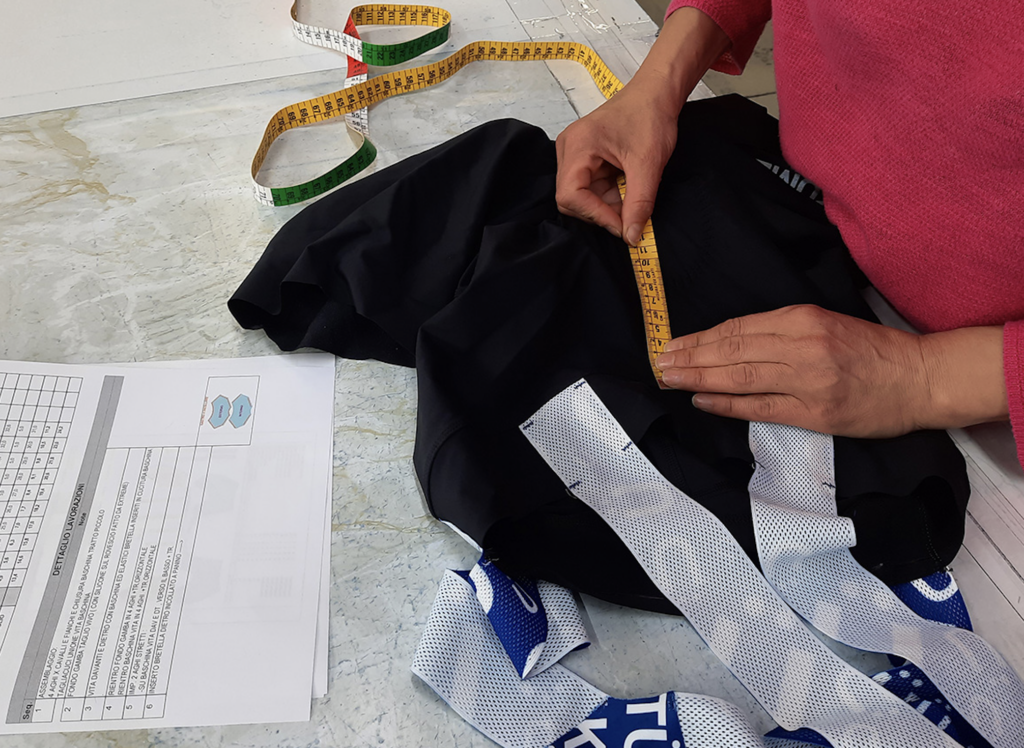
Though they’re far from cheap, I think this manufacturing ‘technology/methodology’ benefit (ancillary to their green credentials) is in delivering comparatively good value. And finally, the agility of small batch manufacture means you can “tweak and iterate” between batches, multiple times per year if needed, “meaning we can test, adapt and refine many times faster than with traditional seasonal mass-production”, says Ed. The secret of Kostüme’s pad construction and production is one that Ed guards closely. It’s great, but it’s not made by Elastic Interface… which brings us nicely to Assos.
Assos
Assos are the antithesis, and the differences between them and Kostüme, or Rubber N’Road, show there are many ways to skin a cat, or clothe a cyclist. I asked Luca Zanasca, Assos’ senior manager of development what it takes to design a new pair of bib shorts the Assos way. Assos’ broader R&D team, numbers “about 20 people”, and comprises a core development team, pattern makers, a dedicated textiles department, and designers focused on R&D projects, and according to Luca, it would be “quite difficult” to have a new pair of shorts ready for next year.
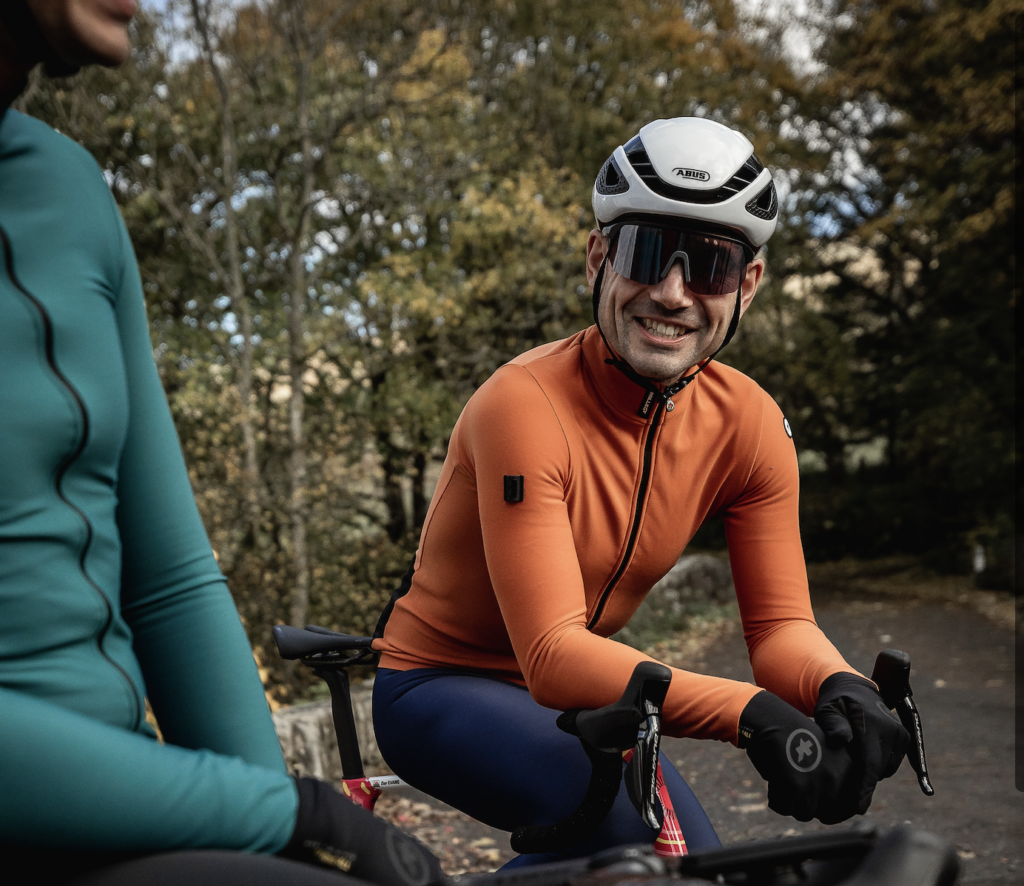
Price is considered early to avoid wasted effort, and the focus is on the insert, which is “the most important touch point on the bike”. While Elastic Interface supplies the base materials, Assos engineers each insert exclusively, patenting their construction.
“Assos isn’t driven to be the first”, said Luca, it is much more important to them to get things “perfect”. The philosophy is to work hard, innovate, and embrace making mistakes as a necessary part of the development cycle to discover the best solutions and maintain technical excellence, but there’s no rush to market for an unready product. “We need to be on the top of the industry, not only with the quality… but also with some out-of-the-box products”, he continues. Yes they’re expensive at the top end, but I love that the frontiers are being pushed, and it all trickles down.
For example, the new Equipe RS Shell jersey, which to be frank I didn’t ‘get’ when the concept was first explained. It’s a gilet…with sleeves. It’s very lightweight and thin (packable) and lined with their proprietary wind-proof / waterproof “Diamond Ultra membrane” across the front, with open mesh at the back, and no pockets. The sleeves are there because they make the ‘gilet’ much more comfortable and aerodynamic (a development born out of their testing with the Tudor racing team).
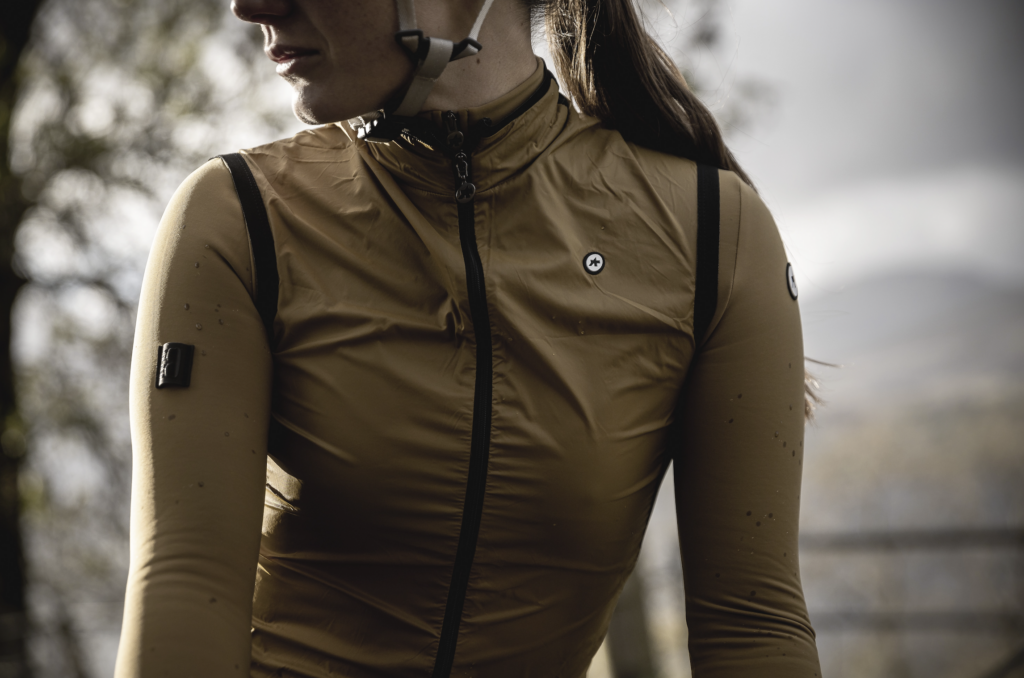
Turns out Assos knows what they’re doing, and I have no future in garment development. I can’t explain it, but this has become one of my favourite garments in the few times I used it. The fit is exemplary, the comfort is wonderful and it kept me cool and warm. Various other brands I spoke to for this piece praised Assos with one brand calling this collection “their most exciting for many years”.
Another key part of the Assos way is to avoid the use of “big-name” membranes, and Luca explains why. It’s all about being strategic and different: Everything Assos is unique to Assos. Gore-Tex is so huge, and everyone uses it, so they want to avoid the thinking that you have a Gore-Tex jacket, rather than an Assos jacket. “Rapha has Gore-Tex, Castelli has Gore-Tex, so you purchase a Gore-Tex not a Castelli,” says Luca.
Besides, Gore-Tex has its limitations; the old fabric was “not elastic, no four-way stretch and it doesn’t breathe.” Being Assos has its advantages, Luca says they find themselves at the top of textile manufacturer’s lists when they have a new ground-breaking fabric. So they craft their own membranes, designed more around their specific needs (which they patent, protect, and guard as exclusives), and judging by their Diamond Ultra in their shell jersey, they’re absolutely winning.
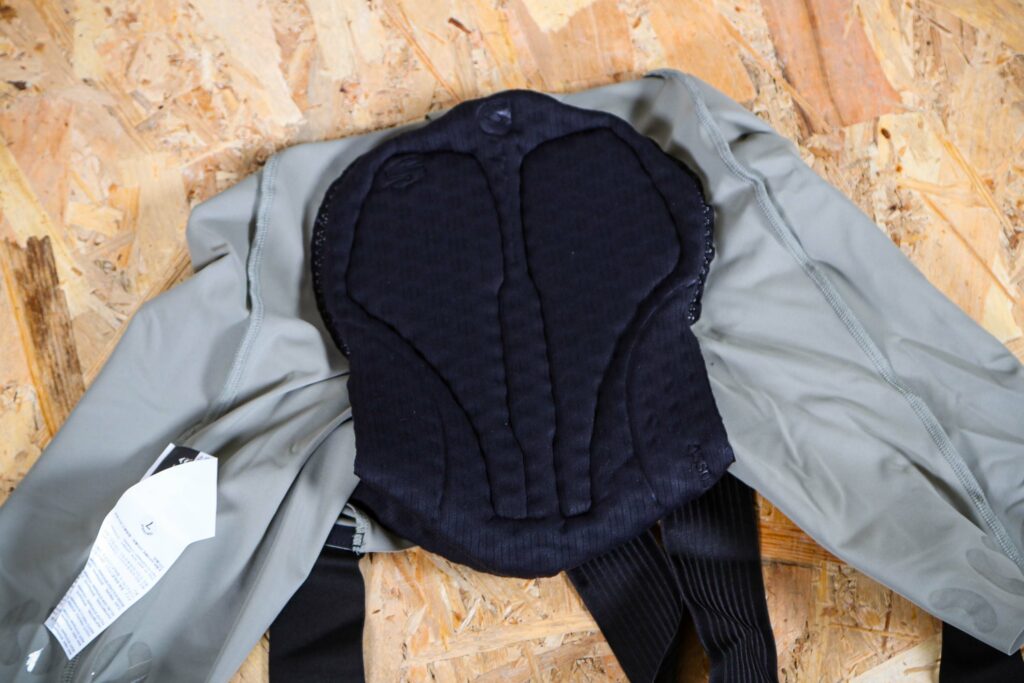
So what’s on the horizon for Assos? They have been experimenting with Elastic Interface’s 3D printing technology for bib-shorts, for the last three or four years. They haven’t perfected their version yet, but “when we’re ready in the mid to long term, we’re going to launch something very very cool”.
It was nice to hear some reciprocated respect from Assos too, directed towards our next brand:
Pas Normal Studios
Being different is a core ideology of Pas Normal that’s enshrined in the name. I spoke to Patrick Boje Andreassen, their second employee, and Linden Mallory, to ask about their unique way of doing things. Where Assos use 22 different proprietary chamois pads across their various ranges, Pas Normal uses only one. For their Mechanism bib shorts, their best-selling product for the last 10 years, consistency is key: “we’ve made small updates to it over the last 10 years but tried to keep it mostly the same”. Says Patrick, “we switched to recycled fibres 3 or 4 years ago, we updated the elastics in the legs and the straps, and we use new ways of knitting it, and slightly new compositions,” but change is subtle.
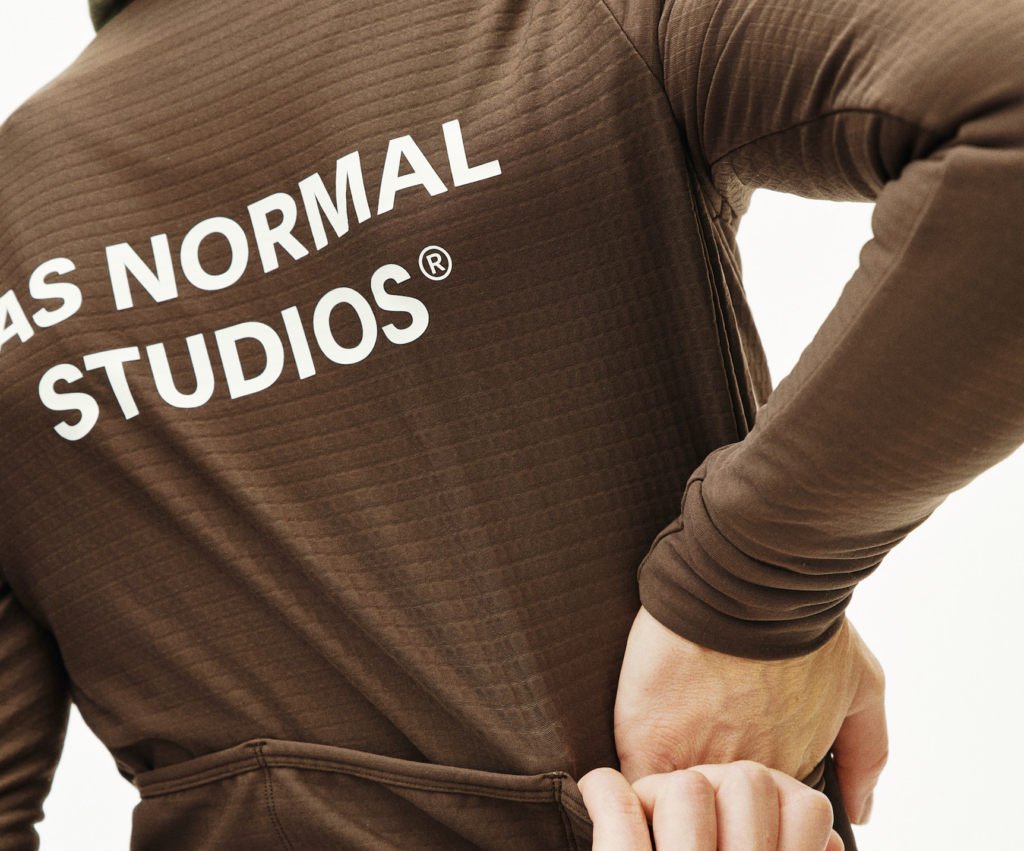
Going PFAS free was, as Patrick puts it, a “monumental” shift for textile technology. Linden, agreed, (though offered an impassioned counterpoint, which we’ll come to later).
Patrick highlighted the pivotal relationship between brand and supplier; “material suppliers are having to onboard entirely new supply chains, it starts with just a small amount. So, often prioritisation has a little bit more to do with being able to scale” – they can say “we’re going to get you fabric, but we’re not sure when, and pricing is a little bit uncertain”. Again, being PNS and at the top of most supplier’s call-sheets is helpful if you want early access.
Once you have the designs and cutting-edge fabrics, you need to manufacture garments at scale. Enter LTP, a Scandinavian B2B company. They specialise in the manufacture of cycling clothing, are Bluesign approved, and certified by at least 14 other trade, environmental, employment and regulatory bodies. They work with cycling brands to manufacture their designs at scale. Unless you’re a fashion-house roughly the size of Dior, you don’t own your own factories. So brands work with ‘factories/producers/partners’ like LTP.
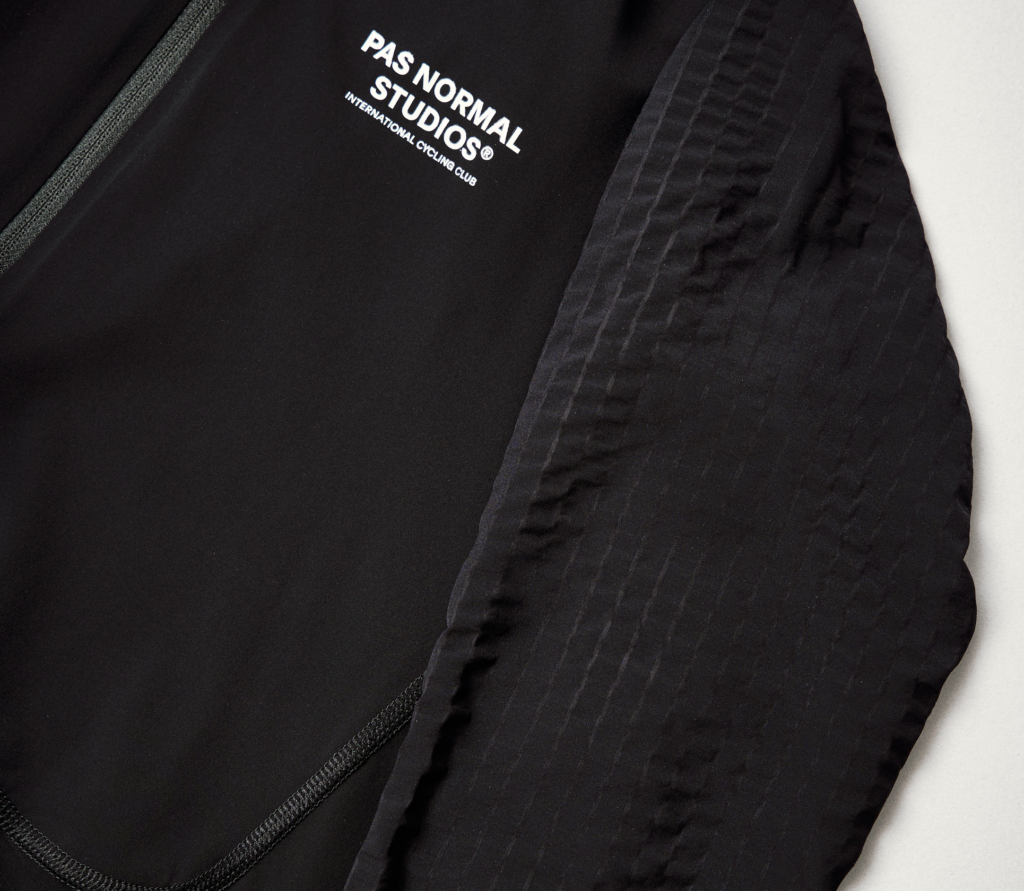
“LTP are the craftsmen, they have expert knowledge of the machines. They know how production works best”, says Patrick, and though we have a “full design team here…we get input from them”. There’ll be a little back and forth, handing over two or three versions of the ‘prototype’ till everything’s finalised. Of course, there are NDAs in place, so sometimes LTP can only say something like “we know this technique doesn’t work”. Perhaps because they’ve tried it with one of their other partners. (They also work with MAAP, Universal Colours and Isadore for example). So brands can slipstream from LTP’s collected knowledge.
For the future, Patrick called back to their roots “the only thing we might not choose is [to be] cheap”, he said, but “if you pay a large amount of money for our products, we want you to know that they’ll last”. He talked proudly of their Mechanism Pro range, “we always have, and still like to go fast” he said. Their race-focused jersey for example, is made from a stretch-woven fabric. It’s less breathable than knitted fabrics, though lighter, and more durable. But “are working” on an update to improve breathability. “You can use dissolving yarns to make a mesh-like fabric, so you actually have a physical hole in the fabrics, by design, of course”. But “it’s pricey and it’s harder to work with and it’s harder to fit, so it requires a lot more from us. But again, this is also our pinnacle piece”.
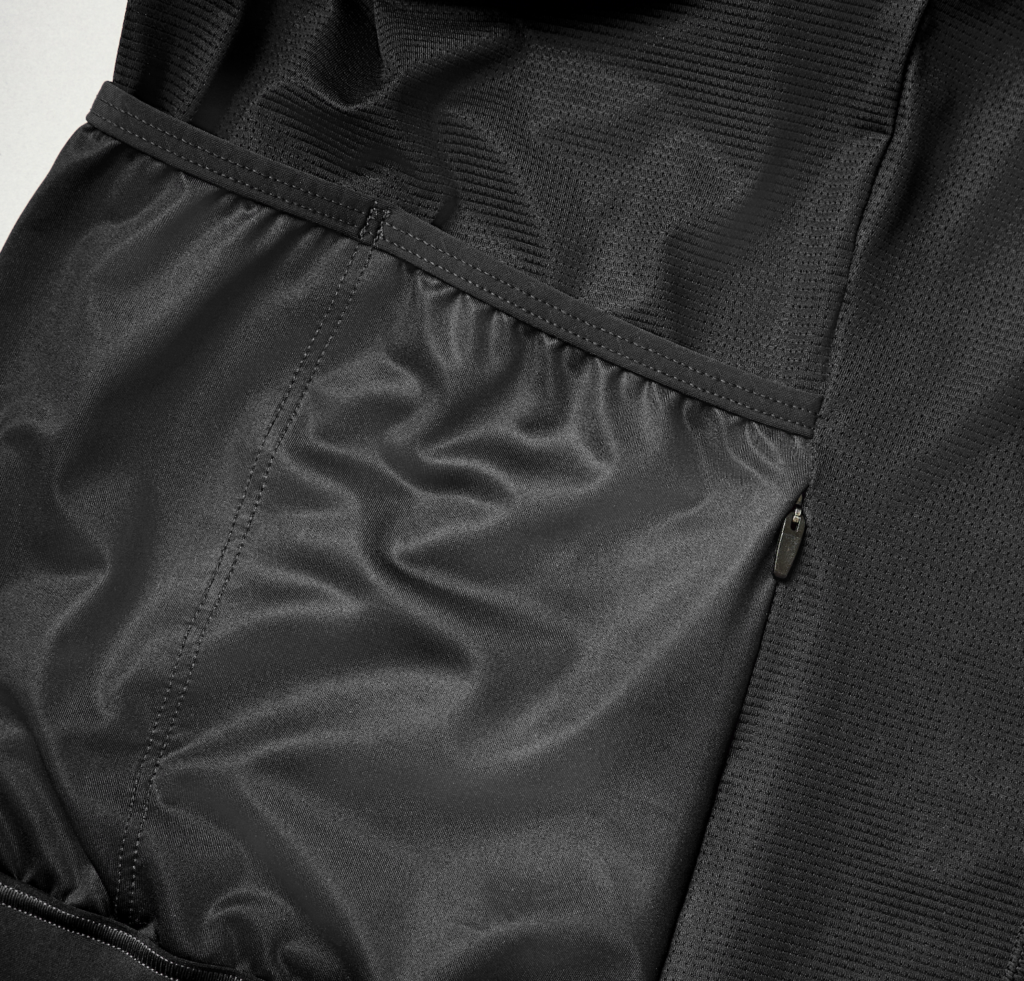
Balancing gentle refinements amongst popular garments, and pushing the envelope of product development simultaneously, it’s little wonder this brand has grown so prodigiously in the last decade. They’re Scandi-cool, highly performative, highly desirable, ethical and with a unique and admirable philosophy. The brand seems to have captured lightning in a bottle. Super-lightweight clothing brings us nicely to
BONT Cycling
Speaking to Alex Malone at Bont Cycling, put me in mind of a modified ‘Bontrager triangle’ (Strong, light, cheap; pick two) which is a heuristic I use frequently. Though with Bont, I suspect the variables should be ‘comfortable, light, stiff; maximise for all 3.’ Bont’s design philosophy can be mistaken for catering principally to people with wide feet, however, the Bont difference “lies not so much in the width, it’s in the shaping of the last”, says Alex.
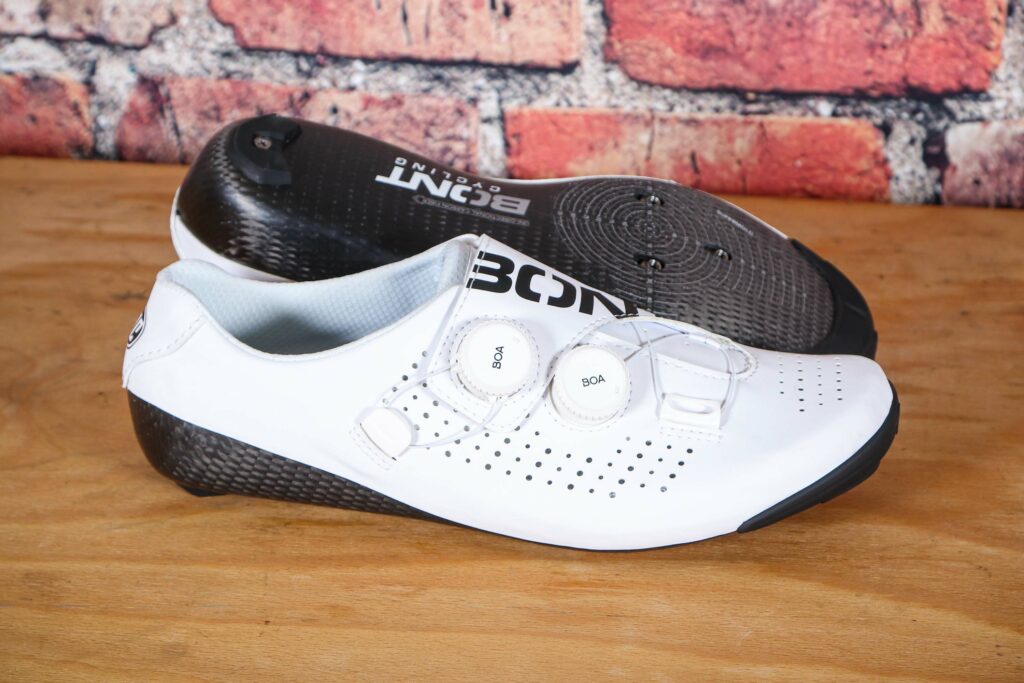
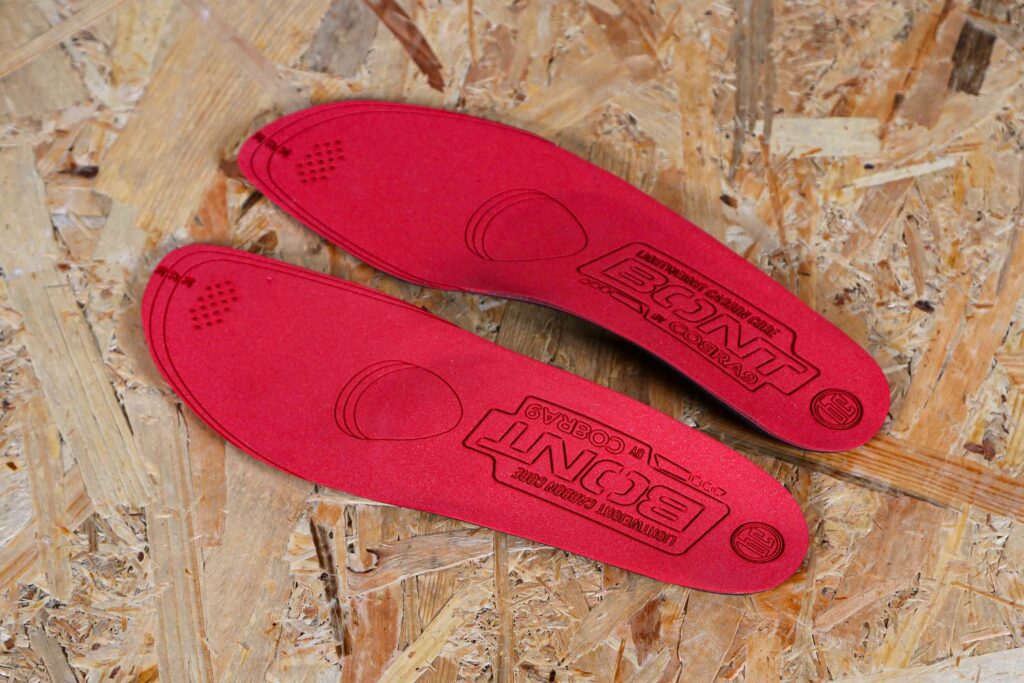
Bont’s various lasts are designed to more closely match the actual shapes of human feet. “Bont is for every rider, every foot shape, every foot type, every foot size”, says Alex. To really make sure your shoes are comfortable, they offer off-the shelf, semi-custom and fully custom shoes. Semi-custom allows some minor alterations of their standard lasts, based on tracings of your foot, different left and right shoe sizing, and aesthetic choices, and fully custom insoles taking a casting of your foot and making your own last, and from there, your own shoe. For the 1% who have highly unusual feet, or an injury, and have no other choice, “It can change their cycling life’, says Alex.
Casting is tricky, as the foot is dynamic, not static. Alex sees promise in 3D scanning, though current tech can’t fully account for toe-lift. Soon, a scan could be sent digitally to custom manufacturing, simplifying and reducing the cost of bespoke shoes.
Next comes the light and the stiff. Cyclefit’s Julian Wall commented that people underestimate the value of a light shoe, “you have to lift it with each pedal-stroke”. Bont’s Vaypor G shoes are 200g per shoe lighter than my long-serving Lakes they replaced, saving 400g per pair. At my cadence of 81rpm, 33cm a time (twice the distance of my crank length) makes a considerable difference, equating to just under two watts saved in pedal stroke rotations on a flat road, this number only increases with gradient.
The light and the stiff, is obviously a function and result of the Bont’s carbon fibre tubs your feet sit in, very very light for sure, and no-one’s ever written a review of a pair of Vaypor shoes without using the words “very stiff” almost immediately. In the future, Alex had hopes that “injection-moulded bases, with short-strand carbon fibre would allow us potentially to reach a lower price point” – though for the moment, “high quality carbon” remains the best option.
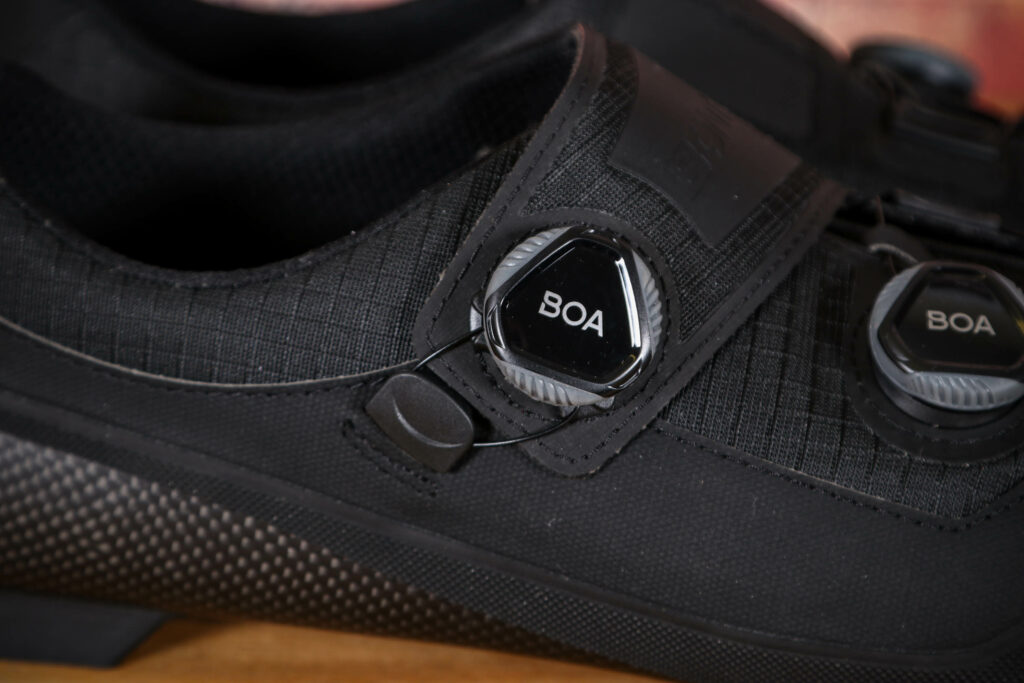
Finally, also on the horizon “knitted fabrics will become more popular for sure, really nice knitted materials, you can do a lot with, you can make it give in some ways, you can make it tight in other ways.” Knitted fabrics rule high-end running shoes and are clearly destined to dominate top-spec cycling shoes too. Finally, Boa’s Li2 closures are the pinnacle of present technology, and perfected both skiing and cycling comfort for me.
Kask
To represent the future of helmet design and technology, I spoke to Kask, and their R&D director, Alessandro Cernicchi. Kask are by any measure of these things, a leader at the pinnacle of design and technical implementation, and Jamie loved their Elemento; it’s stunningly light for the amount of tech they’re packing in, and unsurprisingly, it’s expensive, though commensurate for a pro-level range-topper. “We have complete control over every step of our helmet development process”, says Alessandro. “Safety is always our top priority, but we also put a strong focus on comfort, ventilation, and aerodynamics.”
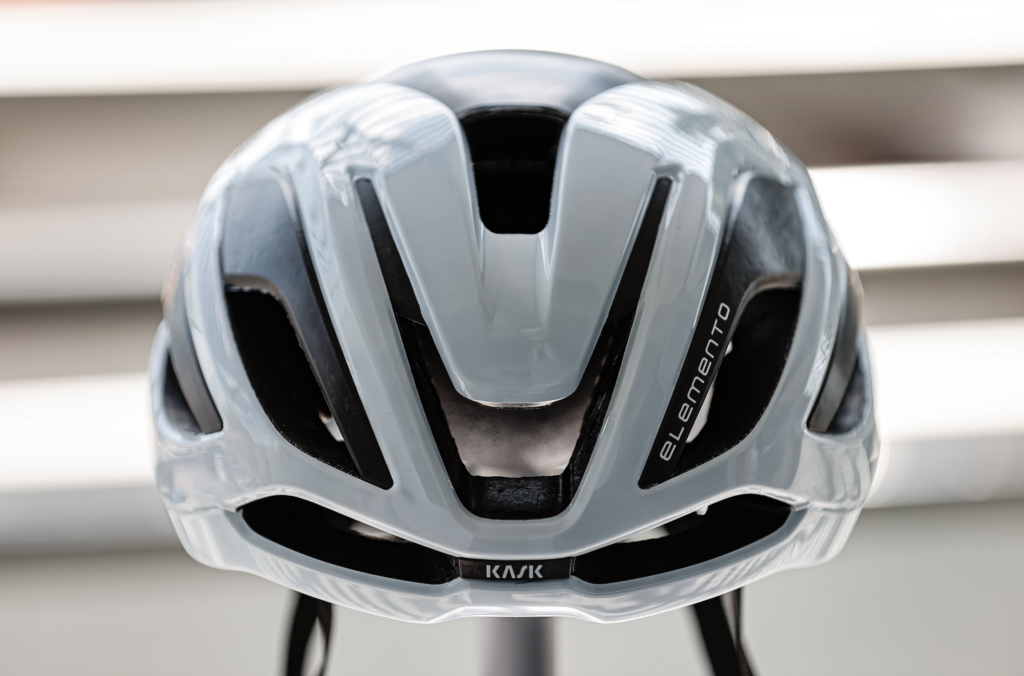
“Proprietary materials” were recurring themes across all brands, and the drive to develop more performative compounds and fabrics is usually a collaborative affair, between chemical and textile companies, and performance-hungry brands. “We’re not a materials company, but we’re deeply involved in researching new materials that can push the performance of our products” continues Alessandro.
This is one of the most active areas of research, and it has led to innovations like Kask’s “Fluid Carbon 12” (a composite technopolymer that “absorbs more energy from an impact, and distributes the force generated more evenly across the entire helmet”) and “Multipod” (a comfortable and impact absorbing 3D printed elastomer material) that replaces traditional foam padding. As in Chamois-tech, the elastomer doesn’t absorb sweat like foam does.
Kask, like many other brands, uses natural merino wool for its thermoregulating, soft, and antibacterial properties.
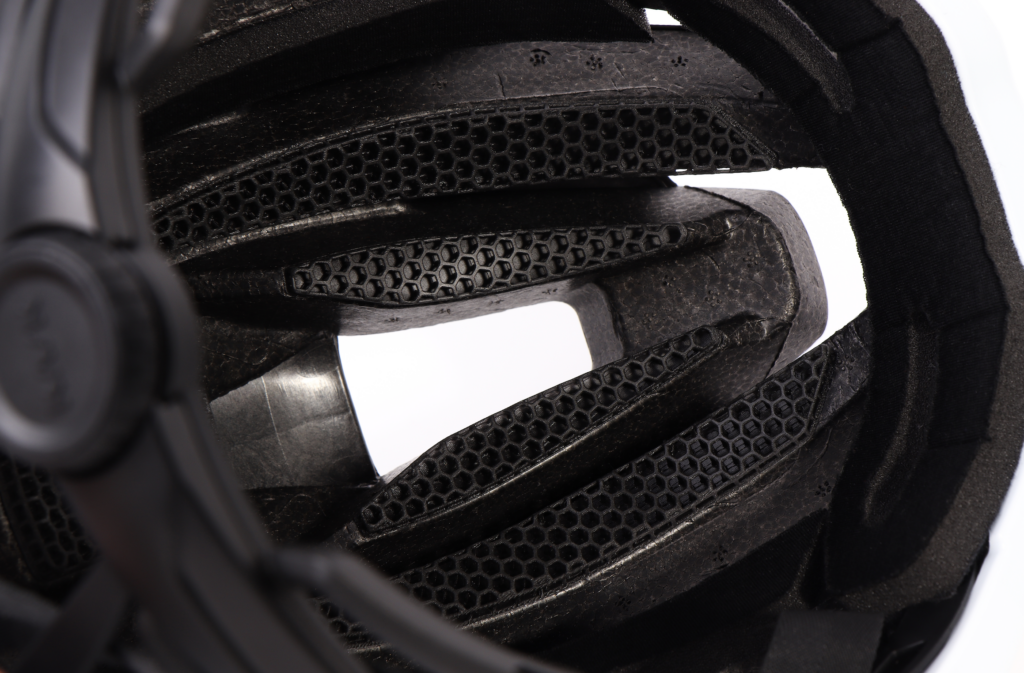
EPS (expanded polystyrene) foam constitutes about “80% of the safety performance of a helmet and it is very good at it. So, finding alternatives is risky and difficult”, says Alessandro. That being said, Kask were the first to switch to Ccycled® EPS, a BASF-produced, non-fossil foam made from waste via pyrolysis, cutting helmet carbon footprints by roughly 90%.
Graphene
“Graphene is one of the advanced materials we’re exploring, and it offers multiple potential benefits, from improved strength-to-weight ratios to enhanced durability.”
Graphene of course, is on everyone’s radar. It’s a hexagonal arrangement of carbon atoms just one atom thick. It is the lightest, strongest, most conductive material ever discovered, a million times thinner than a hair and 200 times stronger than steel. It’s so light that a sheet the size of football pitch would weigh less than a gram, and it regulates body heat better than any other material on Earth. Graphene brings us nicely to
Q36.5
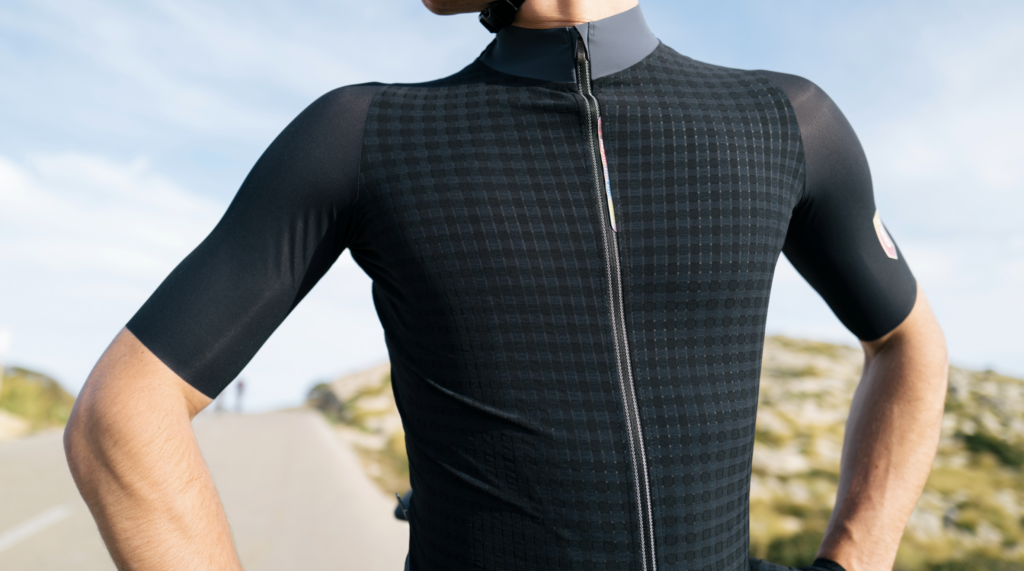
In terms of aerodynamics in race clothing, “everyone’s at roughly the same level”, says Q36.5’s Lodovico Pignatti Morano, “the new battleground is thermoregulation”. It’s so central to the company, it’s named after the principal: “Q” (Quarere) meaning research in Latin, and 36.5 being the ‘ideal’ body temperature. Graphene is one constituent part of their toolkit to keep riders centred around that magic number. Their Dottore jersey that Michael loved is a graphene infused thermo-regulating marvel that elicited wows of ‘wonder’ and intrigue. He was surprised at how it kept him both warm and cool by turns.
Graphene is integrated into the yarn by mixing “graphene powder with polyester and polyamide” during spinning, rather than being “printed on the surface,” says Q36.5 CEO Luigi Bergamo. This preserves “conductivity, stretch, and wash durability, as printed graphene can break down with washing and stretching.” They even made a graphene skinsuit for the Vuelta aiming to better merge aerodynamics and heat control. Q36.5 also uses fine silver yarn, which enhances heat dissipation and offers anti-static, antimagnetic effects to “shield muscles.”
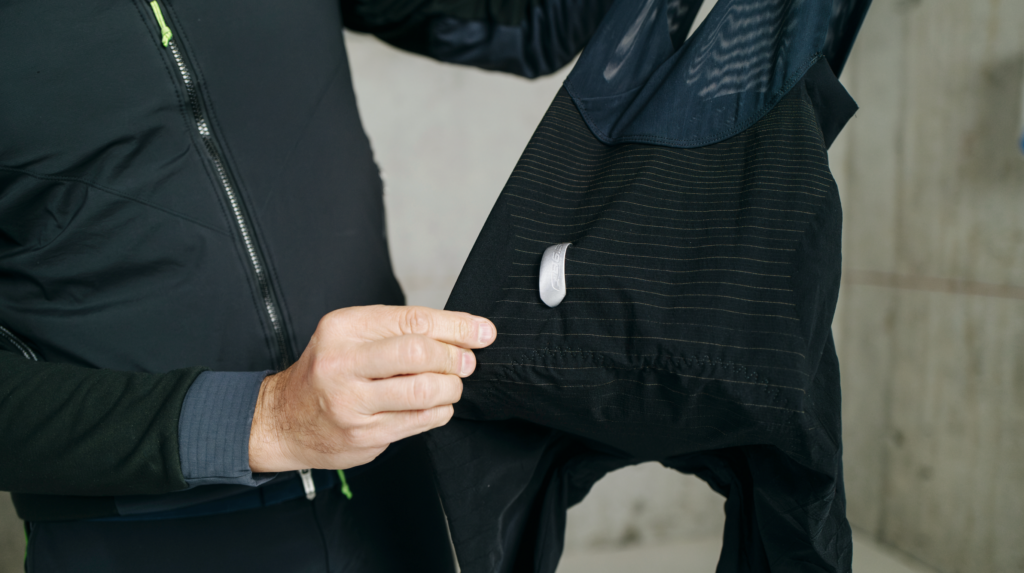
At the bleeding edge of their experimentation, Luigi mentions something that sounds straight out of science fiction. “In terms of fabric, we are working with a paraffin element, that reacts and changes in nature, to become liquid or to become solid, dependent on the temperature.” Wow. “I can say the first experiment didn’t work, but we continue to work hard with producers, because theoretically, it works.”
In terms of PFAS free, and the future for that, Luigi was a little more circumspect; the PFAS free “DWR (zero) doesn’t work as well as the old C6 (shortchain) or C8 (longchain) DWR- it works well for the first or second time” and then its performance can be diminished by aggressive detergents. Luigi says their pros are currently trialling experimental fabrics that, like Shakedry, have the membrane on the outside. But “they’re just so delicate.” What they’re finding is that new DWR treated garments need better care, ‘better’ less aggressive washing detergents, and to have their DWR “renewed” more frequently.
Where PFAS doors are closing, windows are being opened by innovative young brands and new philosophies.
Universal Colours
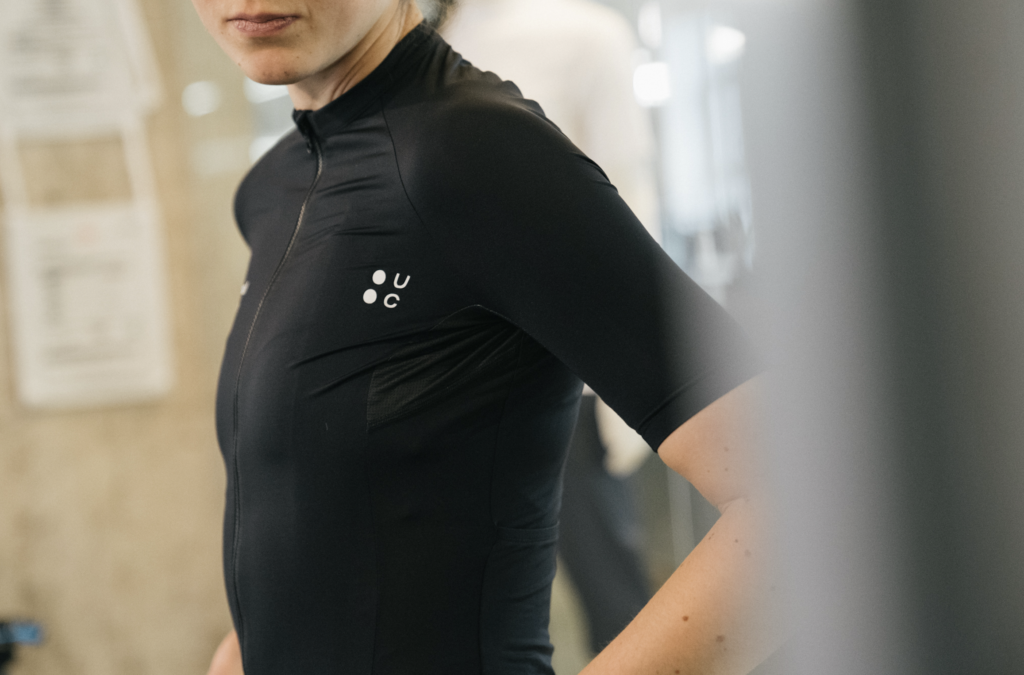
Universal Colours launched in 2020 with redoubtable ethical and sustainable credentials. “1% of our annual revenue goes to charitable causes”, says Callum Clarke, and their head of development Sophie Household said that being PFAS-free had been a tenet of their foundation.
They’re partnered with LTP, so their superb garments quite literally come out of the same factory as PNS, and the future for them is about delivering performative gear in highly sustainable and affordable ways. “We’re working hard to make our kit as accessible as possible” continues Callum, and we avoid “virgin fossil fuel materials wherever possible, and prefer bio-based materials or finishes.” To U.C., whatever the delta between the old PFAS chemistry and the new raft of compounds coming through isn’t worth the compromise. “PFAS are toxic, [which] is not a price to pay for marginal gains”, concludes Household.
Similarly, Le Col’s Product Director Jen Choi, sees sustainability “becoming an increasingly critical focus within the supply chain.” Le Col’s new ARC lightweight rain jacket reflects this. “Developed in close collaboration with our fabric partner Pertex®, we spent over 12 months rigorously testing more than 20 fabric options to ensure the perfect balance of protection, breathability, handfeel, and weight.” Their Endurance DWR is integrated into the fabric, as a result, it isn’t washed or worn off.
Conclusion
Technology marches on, and there’s a metric ton of it shoehorned into your cycling clothing and accessories. Thermoregulation has joined aerodynamics as the metric to (dually) optimise for, and like other aspects of cycling, the development time and expense chasing the marginal gains is astonishing. Though we commenced by lamenting a backwards step in the loss of PFAS, it seems the industry is well on track to equal and eventually supersede its performance.

To conclude, I’ll return to PNS’ Linden Mallory, who toed the party line that the new chemistry isn’t quite equal to the hideously permanent PFAS chemistry, but he made an impassioned speech I’d love to quote verbatim if only space allowed. He essentially reminded us this:
“You have [people] spending £15,000 pounds on a bike, and they will spend hours taking care of the chain but they won’t take care of their clothes, [and we have] a responsibility to educate them… particularly when it has such global consequences. Which is why I’m passionate about it.”
He said there was a marketing perpetuated fallacy that “when your face textile is waterlogged, the breathability of the membrane may be compromised, but it’s bulls***.”
“What I mean by that is the scale of breathability of a waterproof breathable membrane is, really waterproof … and not that breathable. More breathable than a plastic bag… but, what I’m trying to say is, the wet out of your face fabric isn’t going to make this jacket any less breathable than it already is.”
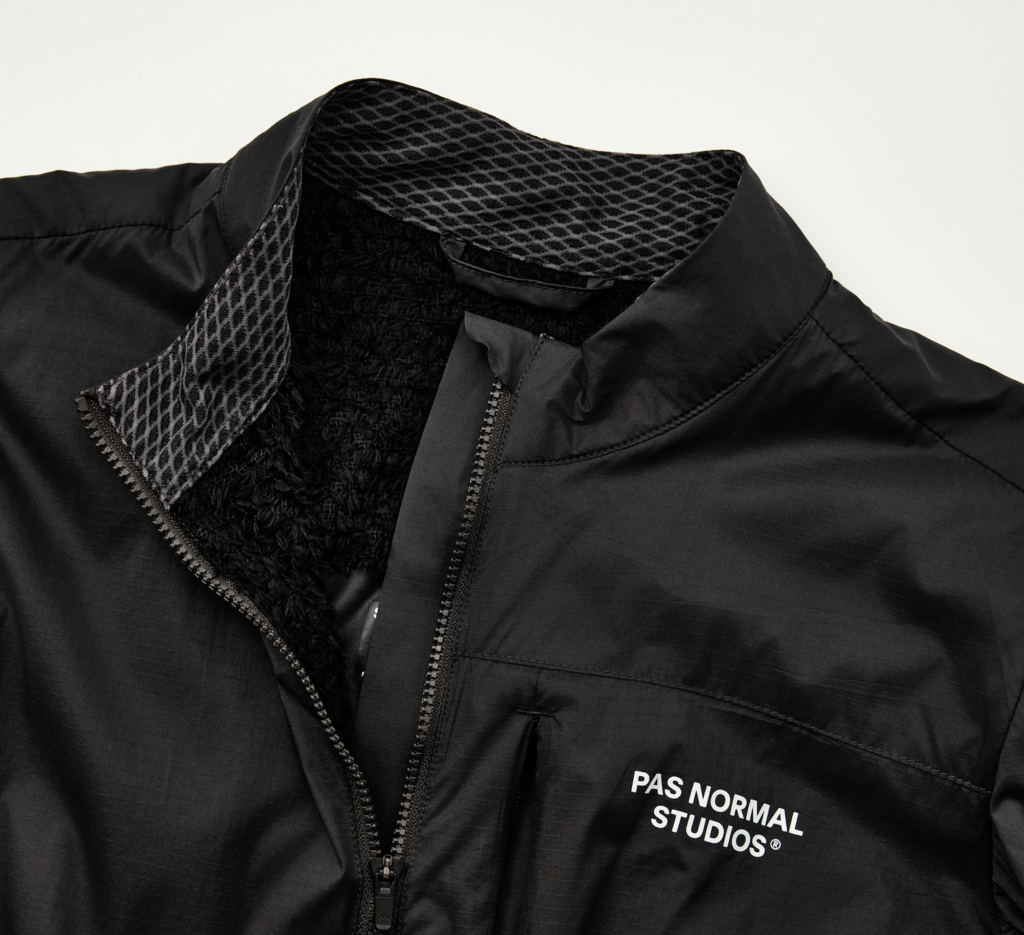
“Many of the technologies are impressive but they’re requiring us as consumers to take care of our products better; we need to teach our customers that they need to wash their jackets more often. There’s a large cultural perception around if I wash my waterproof jacket I might damage it; nothing could be further from the truth. If you wash your jacket you clear the oils, the contaminants, the dirt off that face fabric and you’ll get better performance. I think it’s really important not to say we have lost this, golden age of products because of environmentalism, if anything we’re getting more interesting technical innovation happening”.
Luigi and Linden are on the same page there. You heard it here first. Look after your new clothes, and with everyone doing that, now’s the time to buy shares in Nikwax…












1 thought on “The present and future of cutting-edge cycling clothing — from waterproofing to 3D-printing, here’s everything you need to know about your gear in 2026 and beyond”
I would argue this isn’t a
.