


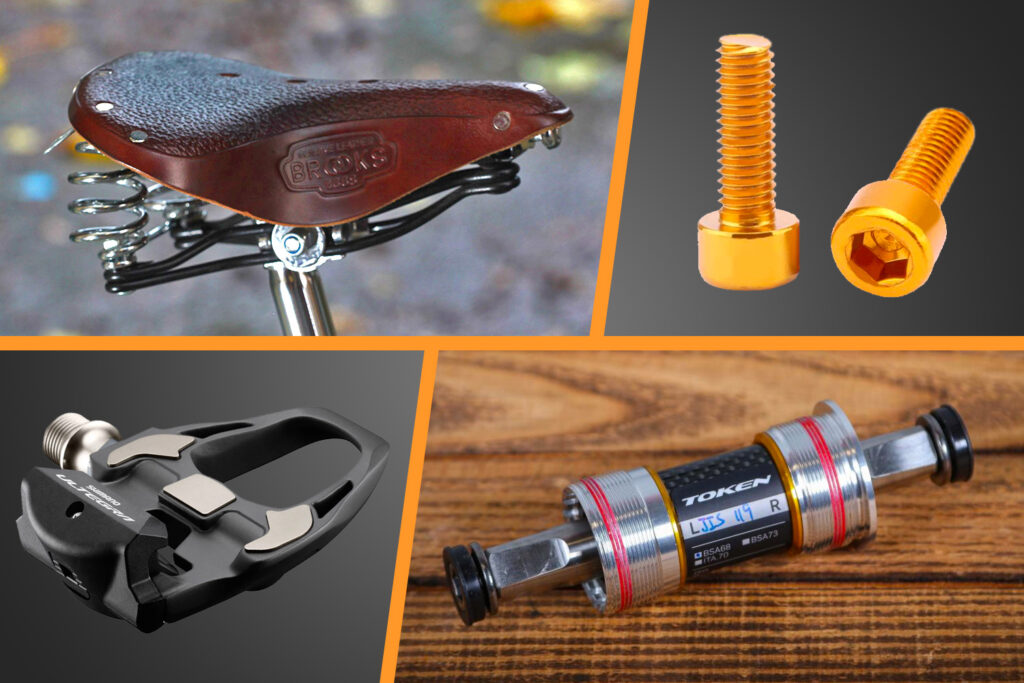

There are some odd, and sometimes inaccurate terms used in the cycling world that whilst we usually know what they mean, don’t always make proper engineering sense. I’m not sure that anyone will change their word usage after reading this, so ingrained are these terms in cycling, but it may cause a moment for reflection, and even an ‘ahhh, I didn’t know that!’ moment.
Screws or bolts?
So my first question is, how many bolts are there on your bike? On my entirely normal 2×10 speed road bike I count seven bolts! However there are plenty of machine screws.
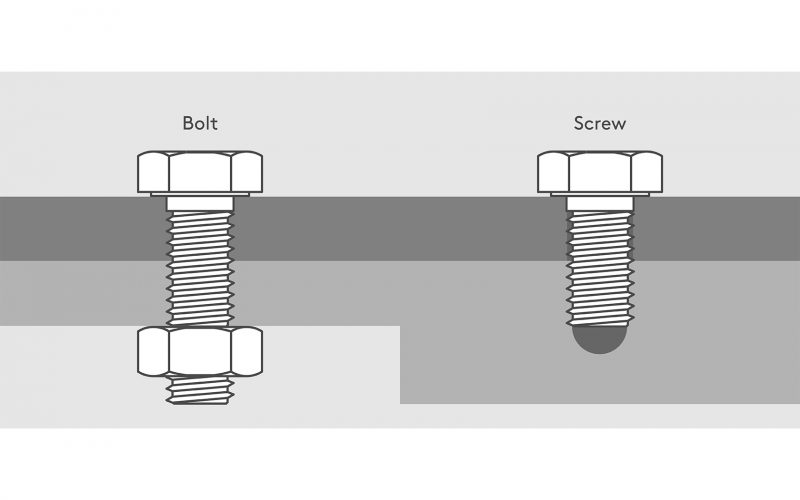
In engineering terms a bolt tightens together two items by using a nut. My front derailleur band on clamp has this arrangement, as does my seatclamp, add to that five chainring bolts. Everything else is a screw, as they have a threaded section that the machine screw turns into! For example, Shimano uses the term adjusting screws for the top and bottom limiting screws on a rear derailleur to stop the chain jumping over the top or bottom sprocket on a cassette. As nearly every screw on a bike is turned into an already threaded hole, there are very few nuts and bolts on a bike any more.
The bottom bracket
Which leads me onto probably the most terminologically confused part of the bike, the bottom bracket.
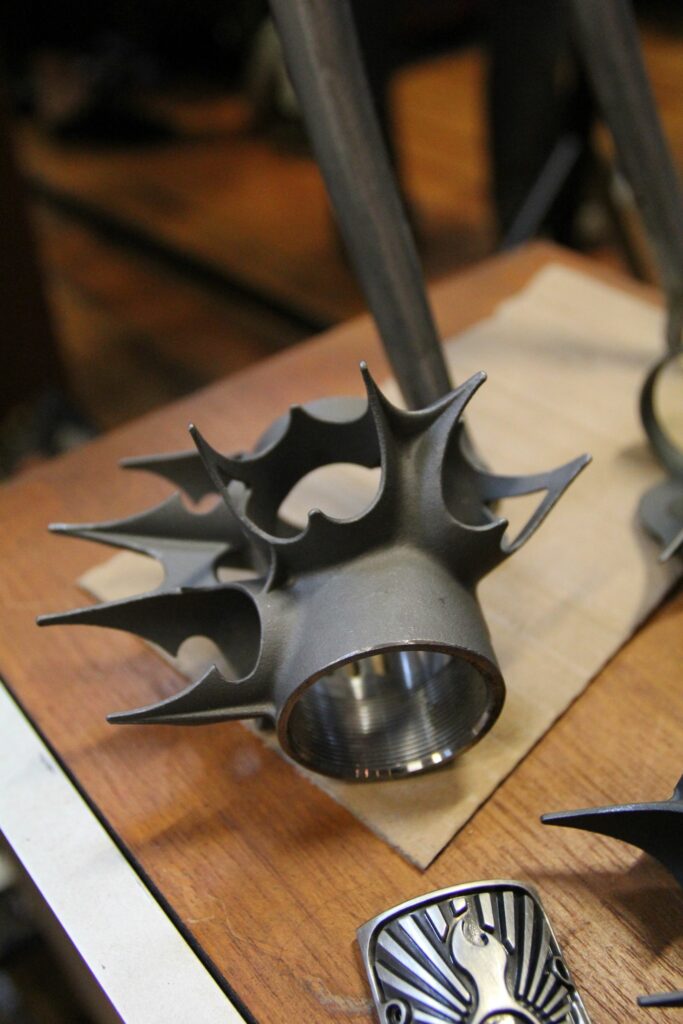
Firstly it refers to both the area on the bike tube-wise, and secondly to the actual bearings, casing and axle (another problematic term). Leafing through Archibald Sharp’s Treatise on the design of bicycles from 1896, I found that he refers to this frame section as the ‘crank-bracket’. This feature was found on ‘safety’ bicycles of the time, and this style of building a frame has remained dominant ever since. An ‘ordinary’ or ‘Penny Farthing’, which preceded the ‘safety’ had no need for this feature as its cranks drove the wheel directly.
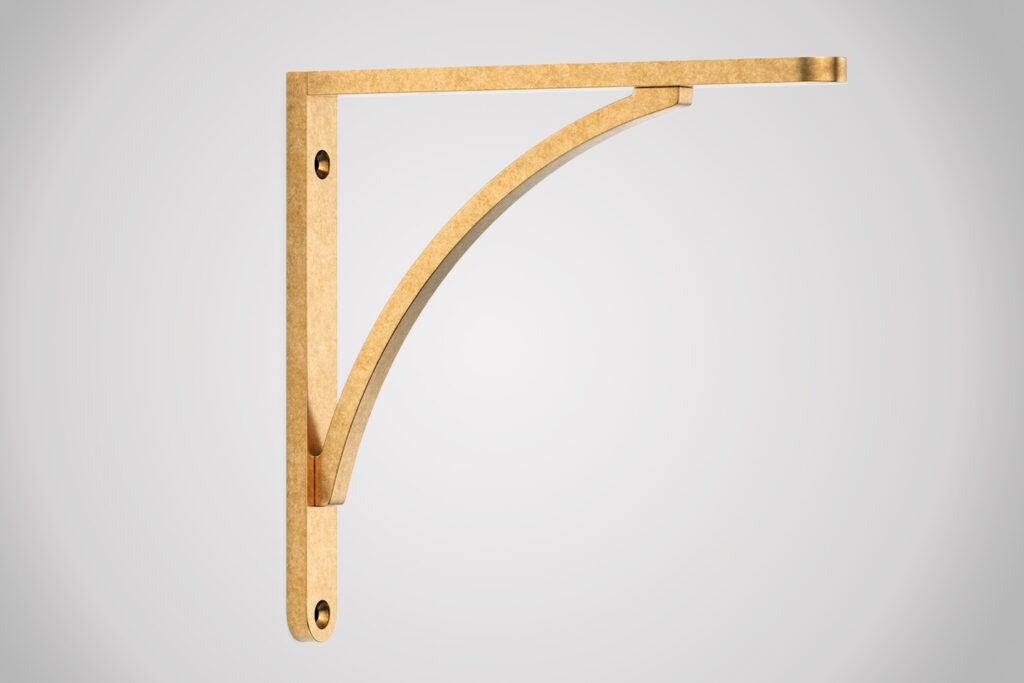
The term bracket, when used architecturally, means a curved section used to strengthen an angle. The early safeties often had a curved downtube. This was before the adoption of the straight tube format that we know now. So we have established the origin of ‘bracket’, ‘bottom’ doesn’t need a huge leap of imagination to work out, what with it being placed low down on the frame.
The bottom bracket, part II
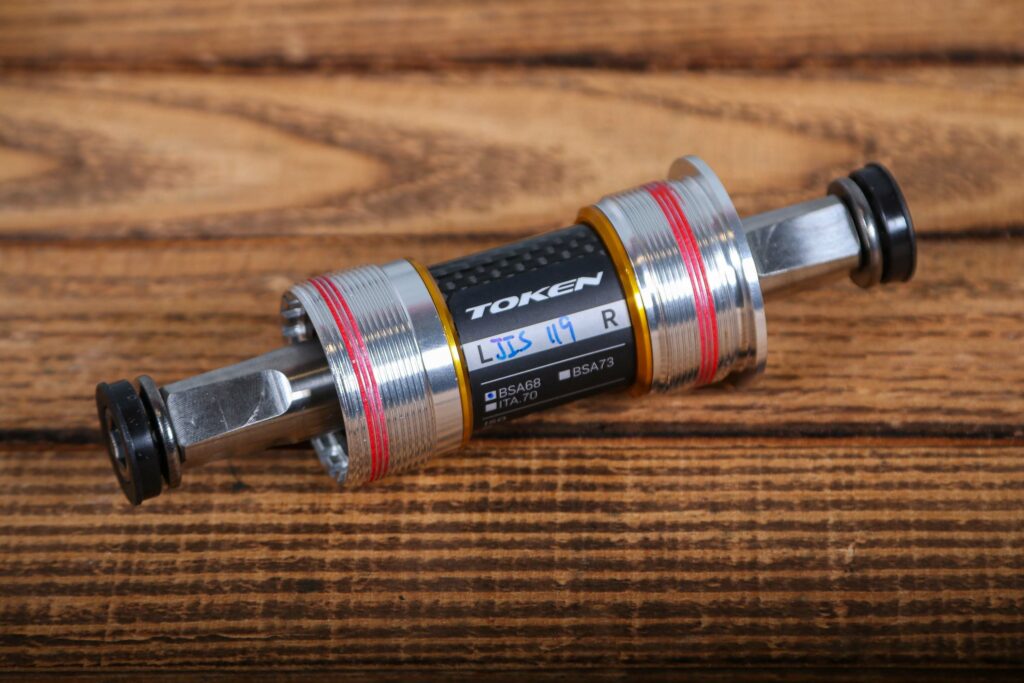
Next is the bottom bracket. Haven’t we already discussed that? I’m now talking about innards of the bottom bracket; the bearings, cups and axle part. I suppose that ‘cartridge that contains bearings, and possibly an axle (we’ll come back to that) that I wish to fit to the bottom bracket on my bicycle frame’ is a bit of a mouthful, and it’s been shortened for convenience…
Anyway, bottom bracket bearings and bearing cups are entirely reasonable terminology; however, ‘axle’ is not. An axle is a fixed section around which something moves. Think of your wheel. The hub rotates, as do the bearings inside it. But the axle is static, held in place by a quick release skewer or a tightened thru-axle. Sheldon Brown often uses the term spindle, but shaft is probably the most accurate engineering term, particularly as it is joined to the cranks. Many will know the term ‘crankshaft’ in relation to car engines. If we use the definition that ‘a spindle is a rod in a machine, around which another part of the machine turns’ then that doesn’t quite work for the ‘bottom bracket axle’ but fits nicely for the pedals’ ‘axle’ or pedal spindle.
The road.cc guide to bottom brackets, or as we now know them ‘bearing systems that fit in a bottom bracket shell’, is here.
‘Clipless’ pedals
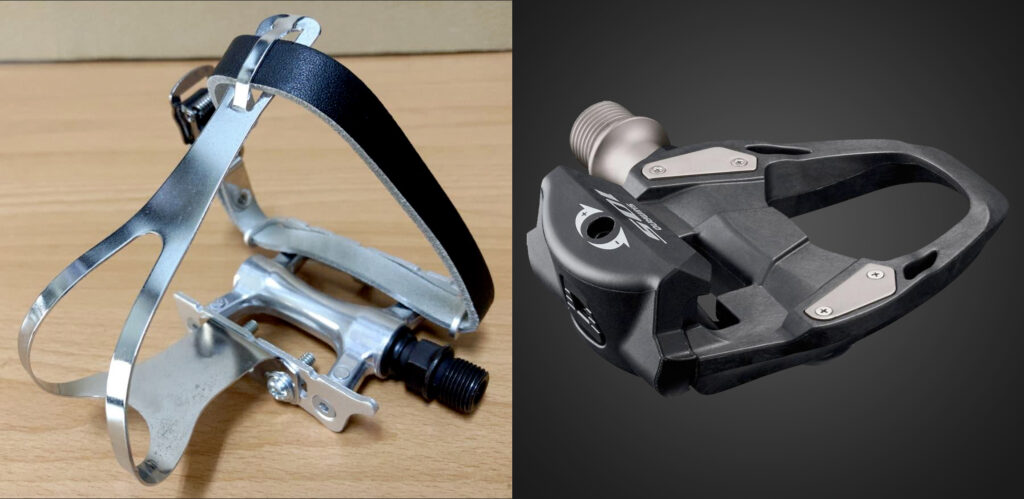
Now for a little light relief: clipless pedals that you clip into and out of.
The name ‘clipless’ just means that you don’t have toeclips and a strap to hold your shoe in place on an otherwise flat pedal. Clipless pedals were originally developed from ski bindings, where you would push your foot into the bindings to hold your boot in place, and they would release the foot with pressure in a certain direction. The same methodology is used in modern pedal systems.
Interestingly Shimano mainly use the terms SPD and SPD-SL (Shimano Pedalling Dynamics – Super Light) to describe their system, but occasionally ‘clipless’ will creep into their literature. So the term is not wrong, but it can be confusing.
The road.cc guide to all the pedal systems is here.
The saddle… that is attached to a seatpost
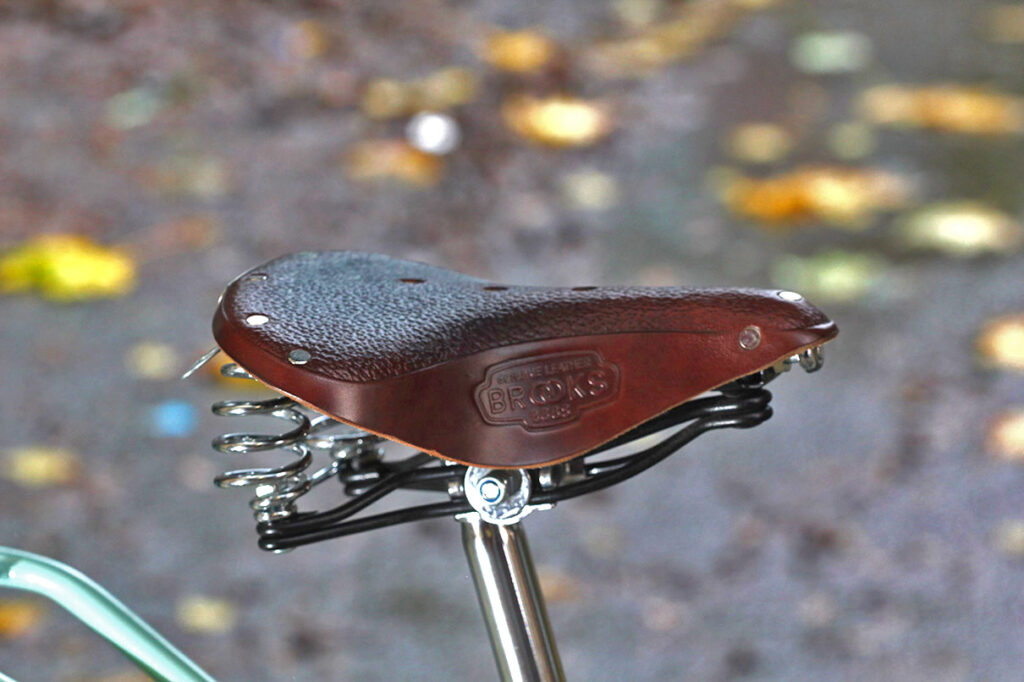
Next, more of a curiosity than a wrong’un. We (generally) ride on a saddle, yet it’s held up by a seatpost, which in turn is clamped in position by a seat clamp in the seat tube. However even in 1819 ‘Ackermann’s Magazine’ when describing the Von Drais Dandy-horse (a bicycle ancestor) says: “The riding seat or saddle is fixed upon a perch on two short wheels running after each other.”
If, after 200 years, we still haven’t quite decided whether it’s a seat or a saddle, maybe we never will!
Whether it’s a saddle or a seat, our guide to choosing the right one for you is here.
Shifters and brake levers
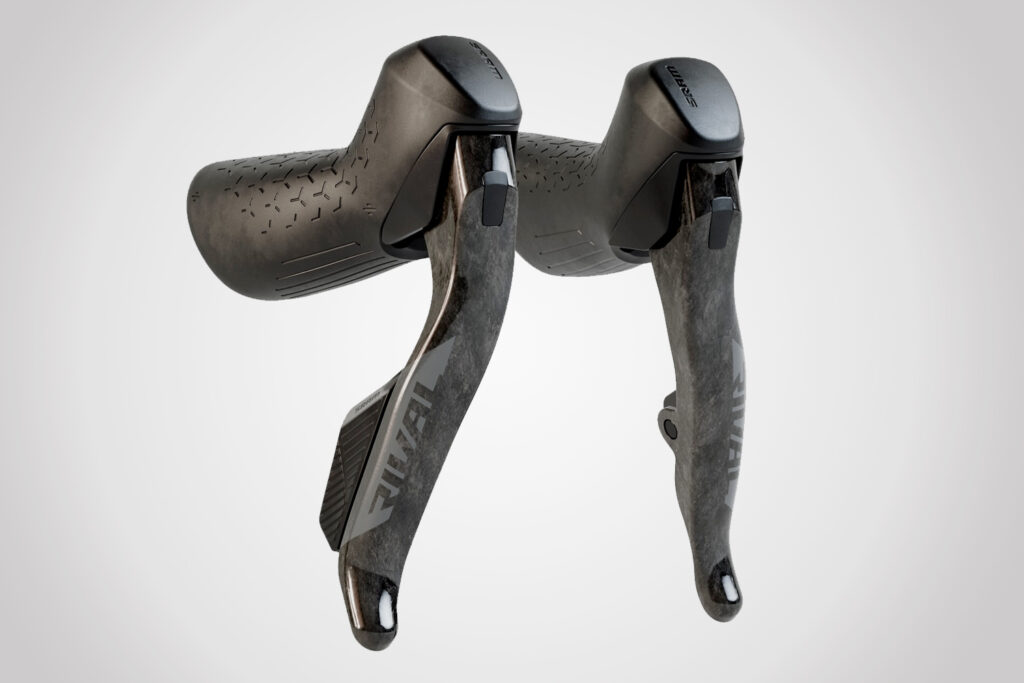
Finally, a section to which I have no answers, only a question: can we collectively come up with a single, elegant term to describe brake levers and shifters, when the functions are combined into a single unit? ‘Brifter’ is banned, by the way. It’s an ugly word. Simply No!
Campagnolo use ‘Ergopower Controls’, Shimano use either ‘Dual Control Lever’ or ‘Shifting/Brake Lever’, and SRAM refer to theirs as a ‘Shift-Brake System’. So maybe Shift-Brake Lever could be answer, or Brake-Shift Lever?
Is there any terminology that you’ve questioned over the years that, whilst we know what it means, doesn’t really make sense? Feel free to add them in below, and if you can come up with a better name for the ‘brifter’ I’m sure we’d all be eternally grateful…



















40 thoughts on “Bottom brackets with no brackets, clipping into clipless pedals, and saddles held up by seatposts: the mysterious world of bike part naming”
Door mirror
Door mirror
the little onion wrote:
No, DOOR MIRROR!
Wingnuts
Wingnuts
lesterama wrote:
That’s a cross between chicken wings and doughnuts, right?
Yes and they’re used to
Yes and they’re used to quickrelease bodyshape
Although it’s not widely used
Although it’s not widely used, I increasingly think of combo brake/shift levers as “control levers.”
They don’t just have levers.
They don’t just have levers. Some have buttons, e.g. Campag and all electronic shifting. They are combined bike brake & gear controls but that is also a mouthful. There doesn’t seem to be a succinct way of saying what they do.
Shimano uses “integration” instead of combination, combined, combo etc. hence the unfortunate acronym STI, not to be confused with the other kind of STI which has not a lot to do with cycling.
Pub bike wrote:
How about brifter, despite what he thinks Paul isn’t in charge of the English language 😉
Backladder wrote:
It sounds like a cross between grifter and something else. And the old Raleigh bike aside, grifter has a very negative connotation. So like Paul I avoid it. Braïfter doesn’t really work either though does it?
I think brifter is a clunky
I think brifter is a clunky word whether it has negative connotations or not.
How coud people come up with “brifter”, when “shake” is right there for the taking?!
Pub bike wrote:
Both involve riding.
Haluaisin vain mainita, että
Haluaisin vain mainita, että “cycling world”iin kuuluu myös muita kieliä ja sen edustajia kuin englanti. Täten esimerkiksi tämän artikkelin erikoisuudet ovat monelle epärelevantteja, ja toisaalta niiden joukosta löytyy omat outoutensa.
We used to have one but
We used to have one but someone lost the adapter.
Have you looked under the
Have you looked under the sofa cushions?
In engineering terms a bolt
In engineering terms a bolt tightens together two items by using a nut.
I stopped reading the article after that early statement!
No it does not!! A Bolt is simply a machine screw with a partial thread (as opposed to being fully threaded). Under your ‘definition’ one can change to the other by altering the way it is used. Please, please, please, if you are going to pass comment on technical matters get educated in them, or at the very least check your facts.
Joe Bloggs wrote:
Unless it’s a lag bolt, which isn’t a machine screw ?
‘Alloy = aluminium’ Steel is
‘Alloy = aluminium’ 🙁 Steel is an alloy, with titanium & aluminium just having elements added for enhanced properties.
Injection moulded plastic (nylon etc) with a small percentage of short carbon fibres included, isn’t ‘carbon fibre’ even if they provide increased stiffness etc.
Bearing balls are used in ball bearings, as rollers are used in roller bearings.
I love my bike wrote:
Why do you think other elements are added to iron to make steel if it is not to enhance its properties?
Backladder wrote:
Is it like the food or tobacco industry and the additives are cheaper? Do they make the iron more addictive? Should we be buying natural iron, without any nasty chemicals in it?
chrisonabike wrote:
I always insist on pure iron – I don’t want any of that irony stuff
Gonna do some searching later
Gonna do some searching later to see if I’m actually right, but I’ve always followed a different logic to differentiate between a bolt ad a screw.
A bolt has the same diameter for its full length, a thread that is made to fit a counterthread of the same size (whether that’s a threaded hole or a nut or something else), and both the bolt and the nuts/threaded holes are typically made from metal (though bolts/buts from plastic and other materials exist of course. They are usually tightened/loosened by wrenches or allen/torx keys.
A screw on the other hand typically has a tapered end, and a thread that is designed to penetrate softer materials like wood or plastic (plugs for example). The are typically tightened/loosened by a screwdriver (though other types exist.
Am i alone in this distinction?
By the way, I do know of course that there are many examples of screws/bolts that have aspects of both, making everything even more confusing.
Sredlums wrote:
unless it is a machine screw.
I didn’t know that term (it’s
I didn’t know that term (it’s not used where I live), but I looked them up, and yes, that’s an example of the confusing ones I mentioned.
Both of the examples in the
Both of the examples in the article are set screws, one has a nut on. A bolt isn’t fully threaded.
I agree with your definitions
I agree with your definitions of bolts and screws but they are used in strange ways on bikes, disk brake caliper bolts are actually screws yet they could benefit from being bolts as they can be subject to shear loads and chainring bolts are also screws with the specially designed nut actually resisting the shear loads of that application.
The definitions provided for
The definitions provided for bolts and screws are (at least to an Engineer) incorrect. The difference is that a Bolt has a partial thread, i.e. it is not full length, whereas a Screw has a full length thread. It is no more complicated than that.
Please see replies below for
Please see replies below for the difference between a Bolt and a Screw. There is nothing complicated or confusing about it once you know.
During my time as a LBS
During my time as a LBS mechanic I got used to having to specifically ask customers which part of the bike they exactly refer to.
Tubes are genereally named rods, rims or tires can be entire wheels and nuts are screws(which led to the obvious non pc jokes). In Germany you will also meet cyclists who don’t know the difference between “Nabe” (hub) and “Narbe” (scar). And when you’re looking for some brakes on eBay you’re in serious trouble as you will only find breaks…
Just remember, if you are
Just remember, if you are replacing your Shimano “brifter” hoods, the official term for those is “bracket cover.”
I was always told that a
I was always told that a screw had the thread extending right up to the head, whereas a bolt had an unthreaded portion below the head, where it would pass through the item being ‘bolted’ to something else.
And don’t get me started on disc brake ‘rotors’. Why are they called disc brakes? Because a major component of that type of brake is in the form of a disc. And if I want to replace said disc-shaped object? I ask for a ‘rotor’ (disc-shaped) to fit on my disc brake. Ludicrous.
Try taking a car in to have the equivalent items replaced and ask for the garage to replace the front brake rotors. “Oh, you mean the components that have been called brake discs ever since the E-Type Jaguar brought them to the mass market in 1961.” (Not sure ‘mass-market’ is quite the right term to use when referring to the E-Type.)
W12 Hatter wrote:
Ahem…the 1955 Citroen DS would like a word…
W12 Hatter wrote:
The term “rotor” is a US import, if you took your car to a garage in the US (I think they call that “the shop” m’lud) and asked for brake discs, they’d most likely say “do you mean rotors?” – that seems to have made its way over to here in Europe, probably via the MTB community.
To be fair to the learned
To be fair to the learned gentleman overseas, the garage was originally a shelter, wheras the (work)shop is a workshop.
Brilliant artical! A history
Brilliant artical! A history & engineering lesson in one go!! More of this stuff please – I love it!
PS – I notice that Shimano refer to the Brake/Shifter hoods as “Bracket covers”
I’ve never once heard my
I’ve never once heard my spokes say anything.
You missed their spokesman?
You missed their spokesman?
Apparently if you tighten them enough they sing, but I never heard that either; I couldn’t stand the tension.
If you pluck them they play a
If you pluck them they play a note. Kind of useful for wheel truing.
They rarely need plucking –
Mine rarely need plucking – hardly a hair to be seen.
Cyclists and bike mechanics
Cyclists and bike mechanics seem to know nothing about engineering. Very annoying
Even more annoying – there
Even more annoying – there are loads of engineers out there who know next to nothing about cycling.