



We were all beginners once and we all made mistakes. In the hope of helping new riders avoid the biggest errors, here’s a baker’s dozen blunders that you should steer clear of.
Wrong saddle height
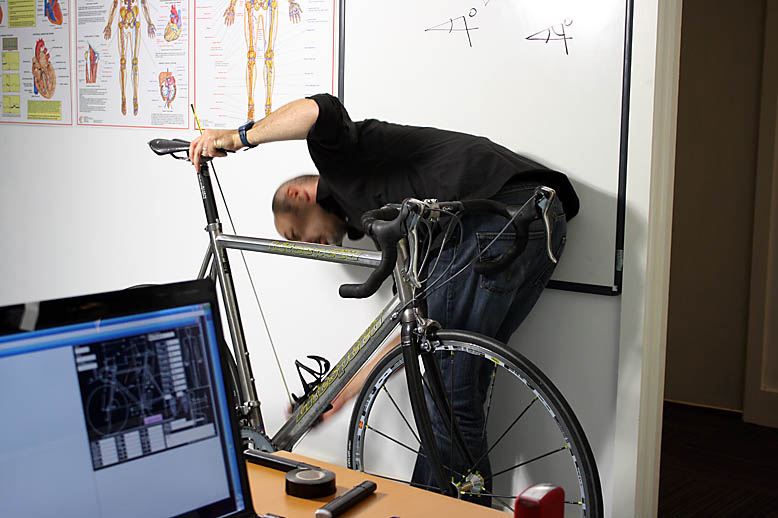
If your saddle’s too low you’ll be uncomfortable and less efficient. If it’s too high, you risk tendon and joint injury, and rocking from side to side to pedal will chafe. There are a number of ways to determine saddle height, but the most useful rule of thumb is that your knee should be 25-35° from straight when the pedal is at the bottom of the stroke.
>>Read more: How to set your saddle height
Not using the gears
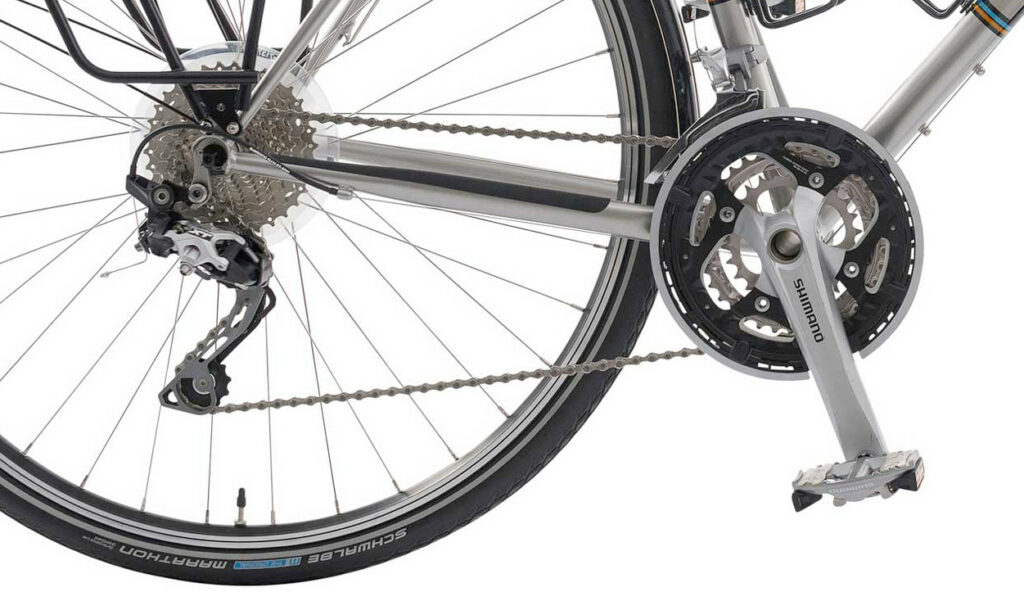
We often see newbies grinding along in their bike’s highest gear, and walking up the gentlest slopes. More rarely, a rider will have legs spinning furiously as they potter along at 5mph because the bike’s in low gear and, apparently, staying there.
You’d think people would be used to gears, but with sometimes four levers to operate, a bike’s gears are that much more complicated than a car’s, and it’s far from obvious what all those levers do.
Beginners flummoxed by gears should do two things: ask, and play.
Ask your bike shop how to use the gears. Get them to show you which are the easiest gears that will get you up hills, which are the fast gears for speed on the flat and downhill, and how to shift into them.
Play with the gears. Go somewhere quiet, like back streets or a car park when the supermarket’s closed and ride around, changing gear. Change between the chainrings, using the shift levers on the left hand side of the bar and feel how it’s harder to pedal in the big ring, easier in the small. Click between the rear gears, using the right hand levers. You’ll notice that the differences are smaller than with the front, which allows you to fine-tune the gear you’re using.
>> Read more: Beginner’s guide to understanding gears
Buying a bike with too-high gears
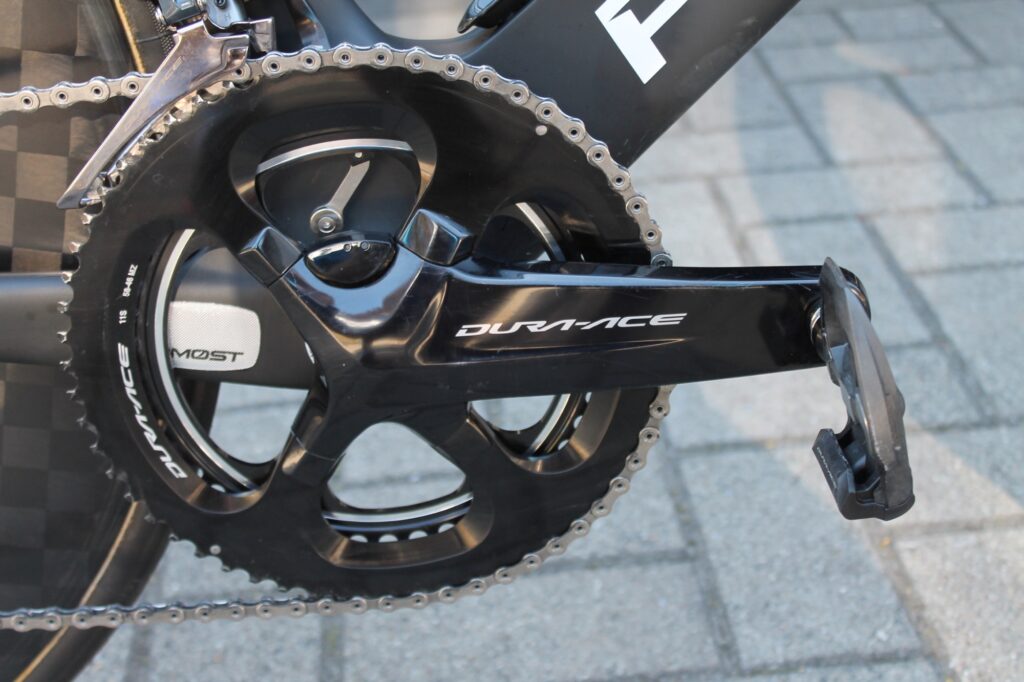
The popularity of ‘compact’ chainsets, with smaller gears than those used by racers, means this is less of a problem than it used to be, but it bears mentioning anyway. Some road bikes come with high gear ranges because they are specifically intended for racing. Unless you live in the Fens, or are intending to race, you want a bike with lower gears so you can more easily ride up hills.
The tell-tale feature to avoid is a chainset with 53 and 39-tooth chainrings. Instead, go for a compact, with 50- and 34-tooth chainrings.
Take a look at the rear sprockets too. A sprocket set with a range from 11 to 23 teeth is for racing or flat country. Look for a largest sprocket with 28, 30 or 32 teeth which will give you a low bottom gear so you can spin more easily up hills.
Not using the 30-day service/check
Most shops offer a free service 30 days after you buy the bike. This gives the shop a chance to make sure the gears and brakes are working properly after the cables have had a chance to bed in, and to check the wheels are true.
A surprising number of people don’t take their bikes in for this free check, though. That’s a shame because as well as the useful mechanical check, it’s a great chance to chat with your bike shop folks and get answers to any cycling questions that might be bugging you.
Neglecting your bike shop
-1024x768.jpg)
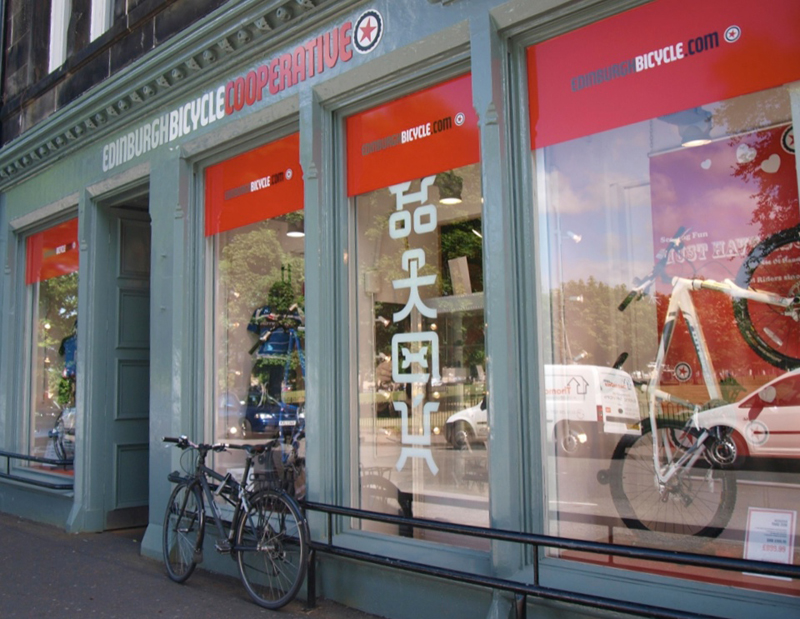
Yes, you can get amazing prices for bike stuff on line, but for a beginner it’s really worth cultivating a relationship your a good bike shop. As well as offering knowledgeable technical advice, a bike shop is often the centre of a cycling community, whether it’s dedicated to club riding, triathlon, racing or mountain biking. Finding the right bike shop for you, and spending money there, is a great way to tap into the local scene and advance your riding.
Wearing the wrong clothes
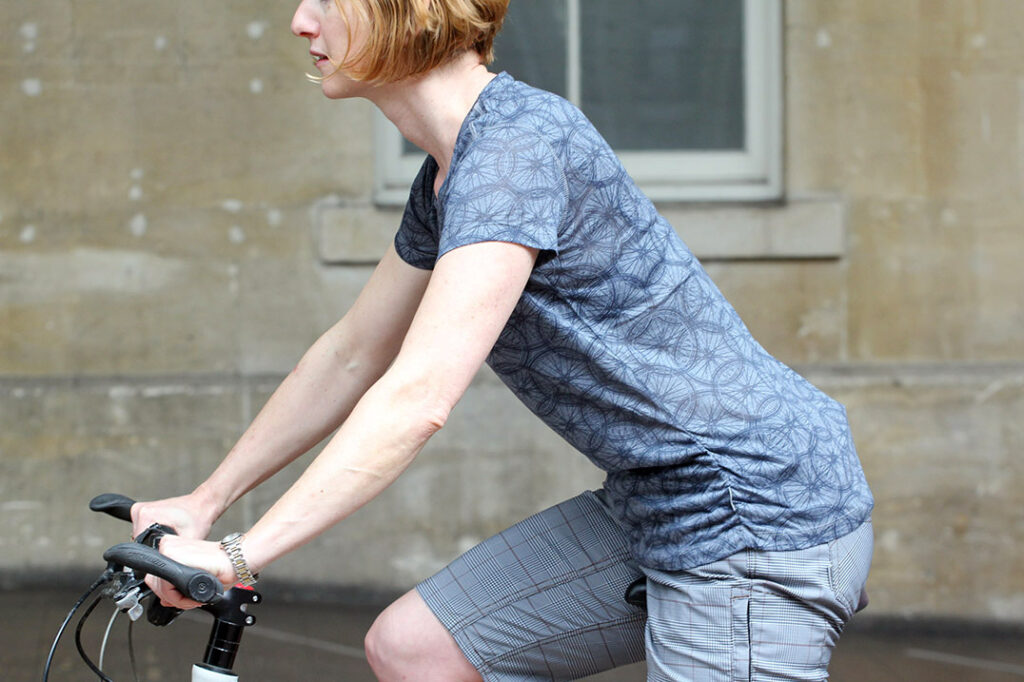
You don’t have to dress like a member of Team Sky to ride a bike (even to deliver lunch) but certain clothes really don’t work well for more than popping to the shops.
Jeans, for example, have seams in all the wrong places, and being cotton will get very cold, heavy and clingy if it rains.
Similarly that classic wardrobe staple the cotton t-shirt is fine for gently pootling around on a summer’s day, but a very bad idea if the weather’s cold. I once had to treat a cycling companion for mild exposure because she had got very cold thanks to a cotton T under a waterproof jacket absorbing sweat and keeping it there.
Read more: Beginner’s guide to cycling clothing — do you really need all that Lycra?
Wearing undies under shorts
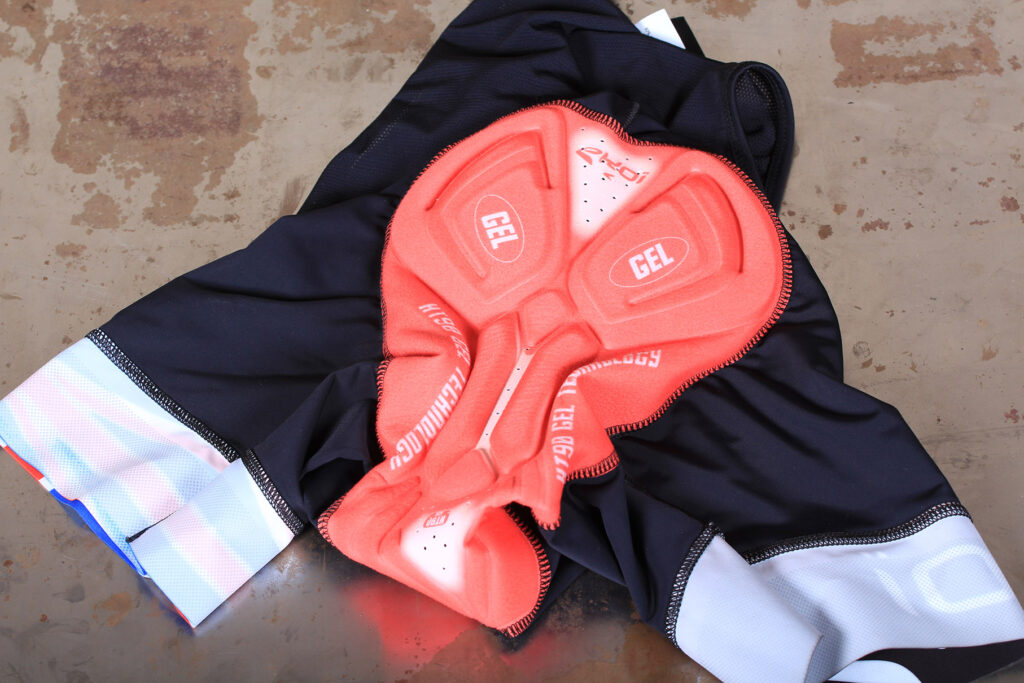
Underwear with cycling shorts is a bad combination, and not just because you’ll have a terrible VPL. The point of cycling shorts is that the Lycra shell moves with your body as you pedal and the pad sits against your skin to protect you from chafing. Underwear of any sort interferes with that, adding seams and bunching in places where you really don’t want them.
Just go commando under your Lycra and if you’re too modest for that, take a look at mountain bike shorts that have a loose-fitting outer shell over a snug inner with a pad.
Attacking hills
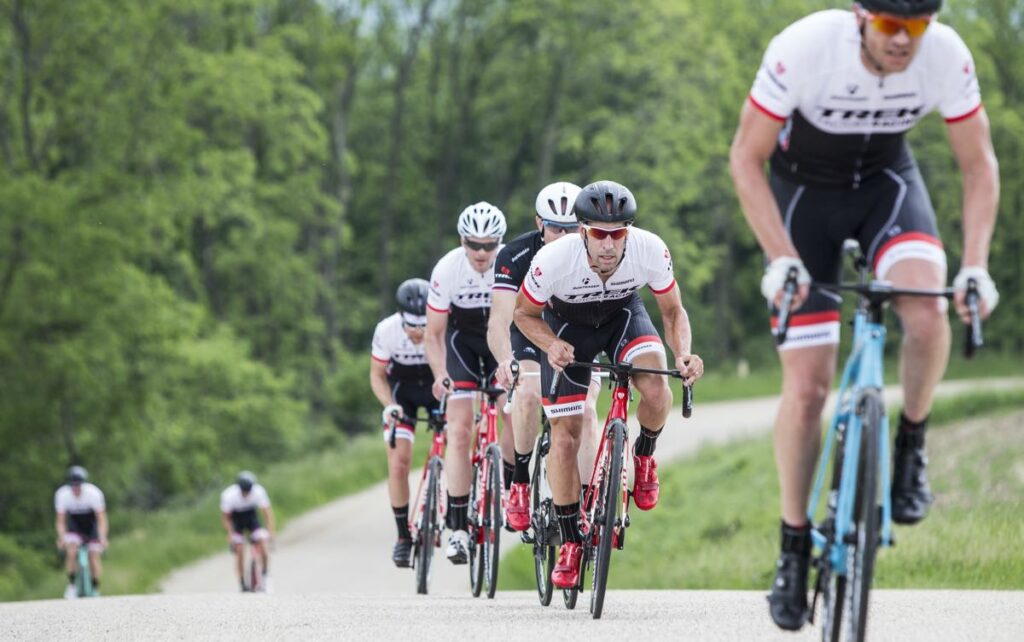
It’s a classic rookie error: the road goes upward and you attack it with gusto, only to turn the second corner and find a) there’s a lot more hill than you expected and b) your legs and lungs are already screaming. You’ve depleted your reserves, put yourself into oxygen debt and your body’s saying “Basta! Enough!” If you’re lucky, you’ll have a gear low enough to let you recover; if not, may find yourself roadside, having a little rest.
The trick to hills is pacing. Sure, once you’re supremely fit you can go flying up them, but even Chris Froome has to meter out his effort so that his supreme physiological engine gets him to the summit without faltering.
For beginners, the first step in learning to pace yourself is to start in a low gear, perhaps even your lowest. Spin easily, breathing steadily and find a rhythm you feel you could sustain all day. When you’re sure you’re completely comfortable, then it’s time to click up a gear and pick up the pace. A heart rate monitor can be a very useful tool for measuring your level of effort.
Read more: Buyer’s guide to heart rate monitors
Eating wrongly
Cycling needs fuel and your body doesn’t have a limitless store of it. After riding for a couple of hours or so you will have used up the glycogen in your muscles and liver. That can lead to the dreaded ‘bonk’, where you get light-headed and wobbly and have to stop for food.
Best not let things get to that stage, by eating little and often while you ride. How you take on fuel is up to you. There’s a whole sport nutrition industry ready to sell you energy gels, drinks and bars, or you can eat Actual FoodTM, as provided by cafes on the way, or dried fruit, sandwiches and like that.
But it’s just as important not to overdo it. A big meal straight before a ride can leave you feeling nauseous when you put in any effort, or just make you sluggish. The combination of cooling down and a full belly after a mid-ride meal can produce ‘post lunch syndrome’, where you just feel you can’t get going again. If you like a big lunch, don’t stop for it immediately before a big hill.
Over-reaching
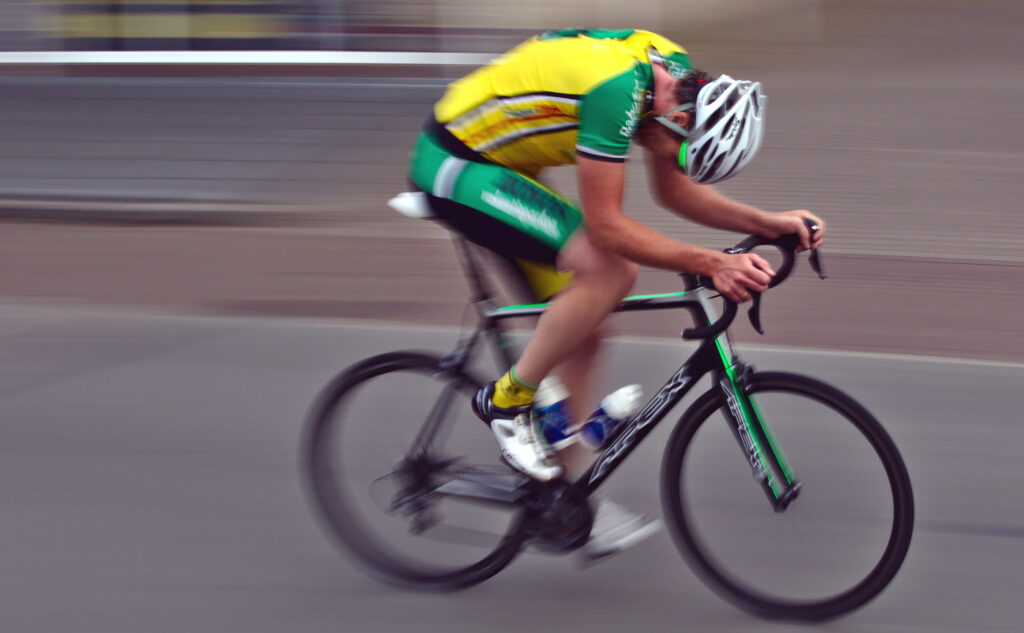
If you’re fit from another sport it’s tempting to throw yourself in at the cycling deep end, bashing out mega miles. But fitness is activity-specific and even if your heart and lungs are in good shape from, say, running, your pedalling muscles won’t be.
Getting straight into pounding out big distances means you risk over-use injuries and fatigue, so build up gradually. With a little patience you’ll soon be knocking out centuries.
Forgetting spares
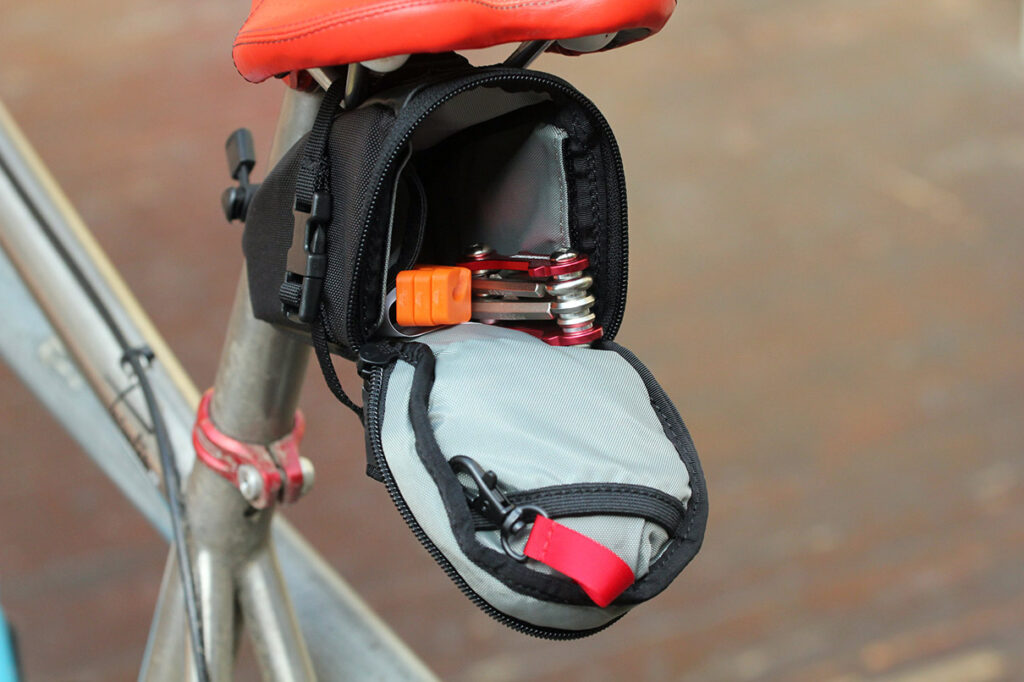
You don’t need much to get yourself out of mechanical trouble on the road, but without the bare minimum you’re walking if some things go wrong. The absolute essentials are a couple of spare tubes, a pump and tyre levers, all of which will get you out of the most common problem, a flat tyre. Add a multi-tool and you’ll be able to tighten most things that might come loose as you ride.
Not using sun cream
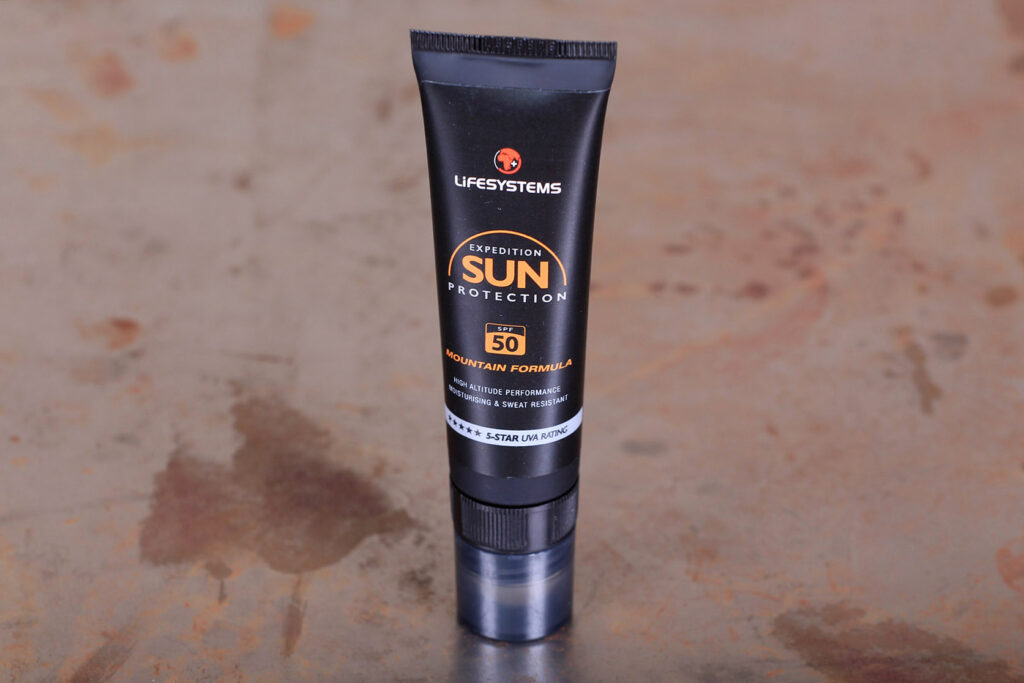
Even if it’s cloudy there can be plenty of ultra-violet getting through to damage your skin. With the breeze on your skin you won’t feel yourself burning until it’s far too late, and it’s easy to be out on the bike for long enough to get very badly burned.
The answer is sun cream with a Sun Protection Factor of at least 30, and preferably 50. Apply it liberally 20 minutes before a ride to give it time to key to your skin and top it up ever couple of hours as sweat can wash it off. Make sure you get plenty on areas that are more exposed than usual, like the back of your neck, the tops of your knees and so on.
>>Read more: Cycling survival — how to avoid sunburn & stay comfortable
Thinking it’ll be easy on the front because it’s easy in the bunch
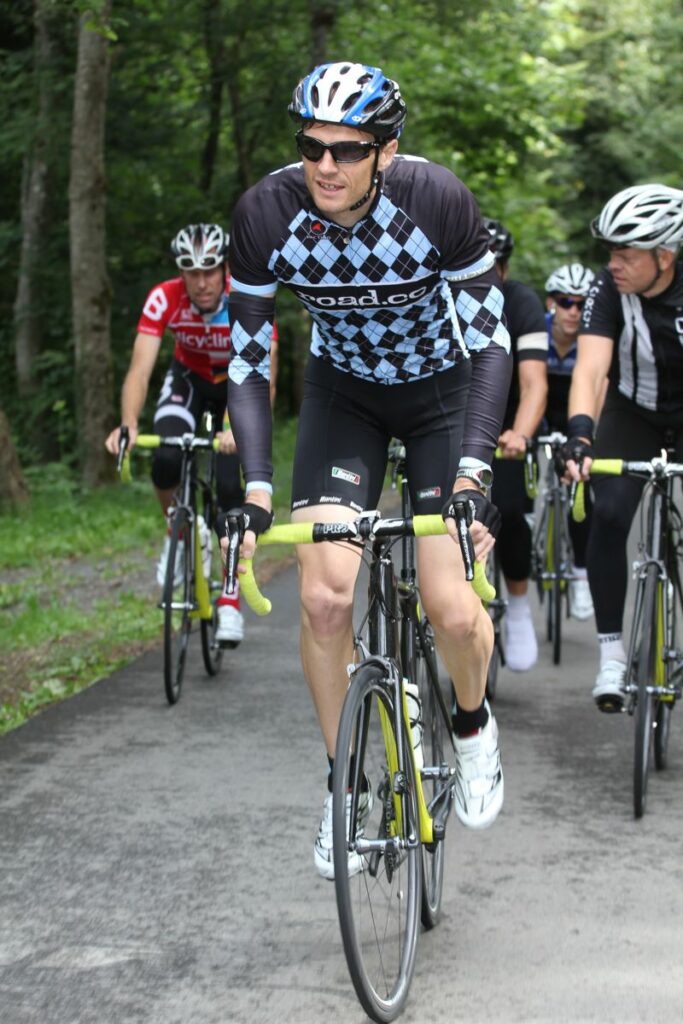
If you’ve just joined a club or started riding with a group you have a lot to learn about positioning and moving in a line of riders. One of the most common mistakes is thinking that taking a turn on the front will be easy because you’re not having to work very hard.
Thing is, the draft from the riders in front gives you a big advantage. You do up to 40% less work than the rider out front, depending on the conditions. You can be cheerfully pootling along while the rider up front is going flat out.
Nobody is going to think ill of a newbie who doesn’t take long, hard turns on the front, so don’t bury yourself trying to do your ‘share’ before you’re fit enough to comfortably finish a 100km club run.
Another common bunch-riding error is to hang around at the back of the group trying to stay out of the way of more experienced riders. The problem with this is that anything that stretches the group out has a far greater effect on the riders at the back than those near the front; you can waste a lot of energy getting back in contact every time. Far better to ride near the front, in second or third wheel, where you can more easily respond if the pace picks up — and ask for mercy if it picks up too much!
Made or encountered any other rookie errors? Tell us about them in the comments.













68 thoughts on “Cycling survival — 13 beginner mistakes to avoid”
14: If you’re new to a bike
14: If you’re new to a bike with drop bars, resist the temptation to lock your elbows with your arms straight. Make a deliberate effort to keep your elbows out slightly, they’ll thank you for it eventually.
guyrwood wrote:
Good advice, although I would put it more like this – Elbows, shoulders and wrists relaxed with a relaxed but firm grip on the bars. If anything, elbows down, not out.
guyrwood wrote:
definately bend elbows a little – outwards to look like Chris Froome, twist you arms and bend elbows slightly downwards if you want to look a little tidier (and begin working towards being naturally more aero).
Eating wrongly. I remember 30
Eating wrongly. I remember 30 years ago when I started riding as an adult. I’d been slowly increasing mileage week by week. I knew about drinking and took bottles. Then the longest ride to date into an area I didn’t know quite as well as I thought. My first bonk, before Id even heard the term. I just wanted to get off and cry. Eventually found a little store. A couple Cokes and a couple of Mars bars saved the day.
My advise to any newbies. As you build up towards rides of 2 hours plus either head where you’ll be able to buy grub but in reality stick a couple of muselli bars/bananas in your pockets.
That first bonk was very unsettling.
1961BikiE wrote:
My advice is to always carry one of those small packs of dextrose/glucose tablets. They don’t weigh much and last for ages unless they get damp. If you run out of steam, crunching a few of those will usually get you home.
1961BikiE wrote:
Everyone remembers their first bonk.
Duncann wrote:
Everyone remembers their first bonk.— 1961BikiE
Until the next year, by which time I’ve forgotten until it happens again 😀
You’re right though… being borderline unable to pedal along on the flat in my 34×32 bottom gear, unable to stop groaning and seeing stars… it’s a right of passage.
Talking of which: 18. Get clip-in pedals. You will fall over like a div at some point. We’ve all done it.
Duncann wrote:
Everyone remembers their first bonk.
— 1961BikiE You ain’t kidding! Riding back to London, on a (solo) London-Brighton-London at age 17, the legs (and brain) suddenly stopped working, 20 miles from home. What the—! ah, this must be the dreaded BONK I’d heard the big lads speak of. Walked (lurched!) 50 yards to a sweet-shop—remember them?—wolfed a Mars Bar and I swear energy flooded back, via me young metabolism, within about a minute. Doesn’t sound likely, but it’s true, and there’s one mistake I never made again. Well, not often anyway.
Duncann wrote:
Everyone remembers their first bonk.— 1961BikiE
Ahhhh!! Now I know what Mick Jagger was doing with that Mars bar.
Duncann wrote:
Everyone remembers their first bonk.— 1961BikiE
I had several until I learned the right way of feeding.
Lajos Egervölgyi wrote:
People who eat a lot, bonk less.
Quote:
This makes no sense.
The bike shop in my town is run by a bunch of nice people but they’re pretty unprofessional when it comes to booking stuff in & giving you any sort of estimate as to when something will be fixed.
Because of this I learned how to do all maintenance myself from books/videos and have benefited knowledge wise and financially.
I don’t buy into the support your local business thing when they have a limited range of stuff often from a single manufacturer at ridiculously high prices.
bike_food wrote:
This makes no sense.
The bike shop in my town is run by a bunch of nice people but they’re pretty unprofessional when it comes to booking stuff in & giving you any sort of estimate as to when something will be fixed.
Because of this I learned how to do all maintenance myself from books/videos and have benefited knowledge wise and financially.
I don’t buy into the support your local business thing when they have a limited range of stuff often from a single manufacturer at ridiculously high prices.
Tell me about it. My LBS is usually 30% more expensive than online and I can’t shop local at such differences.
Yorkshire wallet wrote:
That’s your experience but this is still good advice for beginners. Many bike shops will be better organised, hold a good choice of products and be proactive and supportive.
My LBS staff treat regular and casual customers equally well. They get LEJOG riders who turn up just before closing in need of an urgent repair, someone will stay late to get it done. It’s an attitude that has made it very popular (and busy). I do buy some stuff online such as chains & cassettes that I fit myself but try to support the shop as often as a can.
Yorkshire wallet wrote:
This makes no sense.
The bike shop in my town is run by a bunch of nice people but they’re pretty unprofessional when it comes to booking stuff in & giving you any sort of estimate as to when something will be fixed.
Because of this I learned how to do all maintenance myself from books/videos and have benefited knowledge wise and financially.
I don’t buy into the support your local business thing when they have a limited range of stuff often from a single manufacturer at ridiculously high prices.
— bike_food Tell me about it. My LBS is usually 30% more expensive than online and I can’t shop local at such differences.
Yep. I used to believe in the LBS aaproach because it worked when I was a kid. So when a new LBS opened in town I went on down there keen to encourage them. As it happens I’d just got back from hols where my son had been tasked with putting my pedals back on after they were removed to make it easier to get all the bikes on the bike rack. He’d managed to line it up wrong then spanner it in and messed up the threads. So I actually needed a new chainset and thought I’d go 105 and very simple but different Shimano BB.
The price of the chainset was a lot more than online so asked about a discount. Nothing doing. I showed him the online price I didn’t expect him to match it but perhaps make an effort. His response was to claim that half the stuff online was counterfeit and his was genuine. Ok I thought, well maybe he will throw fitting it in with the price and take the edge off. That’s when he sucked hard on his teeth then gave me a load of old larup about facing the BB shell and special tooling and yadda yadda yadda. The upshot was a quote of £50 to fit. Total was just under £200.
So I went home bought the chainset and an external BB for under £100. Paid a tenner for a bb tool and fitted it all myself in less than half an hour.
I just couldn’t get over what a poor businessman that guy was. He turned me from a would be willing and enthusiatic customer ready to pay that little extra for the LBS service and advice into a downright – hope he goes out of business and doesn’t rip off too many cyclists before he does so kind of guy.
Yorkshire wallet wrote:
This makes no sense.
The bike shop in my town is run by a bunch of nice people but they’re pretty unprofessional when it comes to booking stuff in & giving you any sort of estimate as to when something will be fixed.
Because of this I learned how to do all maintenance myself from books/videos and have benefited knowledge wise and financially.
I don’t buy into the support your local business thing when they have a limited range of stuff often from a single manufacturer at ridiculously high prices.
— bike_food Tell me about it. My LBS is usually 30% more expensive than online and I can’t shop local at such differences.
LBS are not there to give the best offer on the market. But if you plan your Sunday ride on Saturday morning and find that somthing is broken or needs to be replaced this is when they come in handy!
Mine really does have a very broad amount of road bike spare parts on offer even it is not a specialized road bike shop. Therefore sometimes I even skip the online shop to support them, since I want them to stay 🙂
bike_food wrote:
This makes no sense.
It makes perfect sense IF the local bike shop (or even the next to local one) is a good one. No-one should be expected to prop up businesses that aren’t good enough but we’d all be worse off without good local bike shops.
And that includes some, though sadly perhaps not all, branches of Evans.
JonSP wrote:
Though never, in my experience, Halfords
Made the mistake of eating
Made the mistake of eating too near a big climb earlier on the year. Total brain fade that saw me literally thinking I was going to throw up after I hit the bottom (20% at first) hard and then just couldn’t get the heart rate in check for the shallower part. Had to get off and calm down for 5 minutes. Won’t make that mistake again.
I did think it was an urban myth but I actually saw someone in Leeds riding with helmet on backwards the other day.
The clothing thing probably
The clothing thing probably puts people off the most – it’s a huge leap to go skintight, with no underwear.
Bob Wheeler CX wrote:
Thats what brought me to it!
I’ll never get the clothes
I’ll never get the clothes thing. I’ve been riding in just bib shorts and a t-shirt for the last couple of months and I still see people cycling dressed like it’s the middle of winter.
guyrwood wrote:
That’s becaus bar a couple of days it’s been bloody cold. Hottest day of the year and I left the arm warmers off, kept the Gabba on mind… 🙂
16. Smiling and nodding and waving at every cylist they pass. How much energy are they wasting.
17. Not looking at the bike manufacturer or groupset before deeming their fellow cyclist good enough to talk to.
don simon wrote:
Oooh, you grumpy git I don’t wave, smile and nod at every cyclist. Sometimes I only wave and nod. After wiping the snot from nose and attempting to look as fresh as a daisy, of course.
Biggest mistake thinking that
Biggest mistake thinking that buying “Aero Bike” will make you significantly faster
Comfort = Speed
15: Buying the full SKY kit
15: Buying the full SKY kit as an essential part of cycling.
16: changing tube too fast
16: changing tube too fast after a puncture and getting a blowout shortly after.
unconstituted wrote:
It can be done as fast as you like as long as the offending item that caused the puncture is removed the from the tyre before the new innertube is inserted.
Pub bike wrote:
Nope. Blowouts happen when you’re generally annoyed at life and forget to check that the innertube lies completely within the tyre beads before pumping it. If you’re not enough of a boy scout to have packed an extra tyre (that’s about 99% of us), then you’re soon going to find yourself wistfully looking back at the time whe you were only dealing with having to change a tube in the rain. Oh, the good life.
Carton wrote:
It can be done as fast as you like as long as the offending item that caused the puncture is removed the from the tyre before the new innertube is inserted.
— Pub bike Nope. Blowouts happen when you’re generally annoyed at life and forget to check that the innertube lies completely within the tyre beads before pumping it. If you’re not enough of a boy scout to have packed an extra tyre (that’s about 99% of us), then you’re soon going to find yourself wistfully looking back at the time whe you were only dealing with having to change a tube in the rain. Oh, the good life.— unconstituted
I don’t think I’ve ever changed a tube in the dry. I’m convinced that rainclouds are dark because of all the P-fairies flying around in them, so I try not to ride under such a cloud if at all possible.
17: Ignoring people who have
17: Ignoring people who have been there, done that.
Need to add
Need to add
14. Underinflated tyres
Keeping tyres inflated to the correct pressure makes cycling easier due to less road drag. It also helps guard against punctures, both from sharp stuff and “snakebites” where the tube is pinched against the rim & tyre.
15. Unlubed chains and mechs
Keeping chains and mechs lubricated helps protect against wear and makes pedalling and gear changing easier than when they become a red rusty squeaking mess
Need to add
14. Underinflated tyres
Keeping tyres inflated to the correct pressure makes cycling easier due to less road drag. It also helps guard against punctures, both from sharp stuff and “snakebites” where the tube is pinched against the rim & tyre.
[/quote]
or over inflated tyres, meaning the ride is way harsher than it needs to be and they have less grip.
or over lubed chains, or putting on the next bit of lube before cleaning off the old stuff – either way resulting in dirt sticking to everything and ending up with the the inability to see any of the drivetrain as a result of it all being covered in a black gungy grinding paste.
Not letting your loved ones
Not letting your loved ones know where you’re going before you head out. Doh!
mingmong wrote:
I tell my cat, Floyd, but I don’t really think he’s that arsed.
mingmong wrote:
I don’t always know!
mingmong wrote:
Why?
Given the rate of serious injuries and deaths I would hope that if you go out for a drink at the weekend/go for a walk/drive out somewhere you’ll let your loved ones know where you are going, you know, just in case?
You’ve fallen into the classic ‘cycling is dangerous’ thought process, it really isn’t. I haven’t told anyone where I’m going since I was a kid when cycling unless it was a casual reference. Unless I need my wallet for something specific like going to the shops I never carry ID with me, it’s usually the front door key, a couple of quid and some tools/spares. then again I go out plenty of times with just the front door key and nowt else, no spares, nothing, back in the 70s we’d walk to the park about 1.5 miles away when we were 8/9 years of age, occasionally we might have told our parents were we were going.
Maybe it’s a generational thing
My biggest rookie mistake was
My biggest rookie mistake was not learning to unclip automatically in anticipation of coming to a stop. This resulted in several embarrassing and painful tumbles.
I used to get a brain freeze and just topple over in, what seemed like, slow motion.
” I’ll never get the clothes
” I’ll never get the clothes thing. I’ve been riding in just bib shorts and a t-shirt for the last couple of months and I still see people cycling dressed like it’s the middle of winter.”
There’s an old club saying : You’re not going fast enough for me to be warm
bigmel wrote:
There’s a matching response:
“You should have said. The front’s up that end – off you go and get warm. I’ll let you know when I’m getting chilly”. :oP
Buying your own spares; don’t
Buying your own spares; don’t. I’m a bike mechanic and I’ve lost count of the number of times I’ve been called in to fit something that the owner has bought, and it is the wrong part. Latest is someone who bought a new rear wheel, but couldn’t get it to fit because they had bought a screw on freewheel type, not the cassette type.
And when you have a problem, don’t diagnose it yourself and tell the mechanic what needs replacing, because you’ll probably be wrong.
burtthebike wrote:
Yep….. had the same….. plus the usual “my gears seem not to be working properly”….then you as if they have fiddled with them….they usually say “My Dad took a look”…. grrr… I usually and politely say “you tube”…the answer is usually “yes”…….. I then advise to call me instead if there are any more troubles….. they always do and another customer is added.
Dont forget to take your
Dont forget to take your phone the main two reasons are, firstly you can take nice pictures of your bike in various posers angainst stunning scenary. Secondly use your phone to contact your support vehicle (the mrs) to pick you up when anytning drastic happends.
17. Upon seeing another
17. Upon seeing another roadie coming up the road towards you, immediately change up a gear, sit up and then slow your breathing momentarily until they’ve passed.
This: “Not using sun cream”
This: “Not using sun cream”
I completely forgot the cream on my 1st Big Ride (155km) last weekend and now I look like the Austrian flag…
I’d estimate at least a fifth
I’d estimate at least a fifth of commuters I see on my ride to work are permanently stuck in the smallest cog at the front and the smallest at the rear. Clearly they clicked the levers when they got the bike, with the spring taking it easily to the smaller sprockets, and then they never pushed the lever the ‘hard’ way to move it back up the block. So they’re typically riding in 34 x 12, chain fully crossed. I see them straining as we set off a the lights, straining up hills, both men and women, all ages. Usually riding cheapish bikes.
It makes me wonder whether anyone in the bike shop ever actually explained the gears to them. or why they sold them a bike with gears rather than a single speed. Not the best argument for their LBS.
matthewn5 wrote:
The cheaper groupsets that most commuters are on don’t help. It can be pretty tough to get it on the big ring. Some may even think it’s broken.
Missus had this problem with her Sora. Had to show her to really force the lever in, hold it at the sweet spot, to get it to shift.
Then I had to moan at her for months to make her actually shift up and down on the front.
Now she does it naturally and even chooses which ring to use depending on how she feels – like if she wants a big of a workout etc.
New riders do need a bit of help. Learning curve is shorter with a riding partner.
unconstituted wrote:
Not to derrail (no pun intended) the thread, but part of this has to do with the huge big rings on many bikes. A 50 is a huge gear for sedentary novice, never mind a 52.
In any case, I agree with Unconstituted. Help out newbies, and remember that some things you take for granted aren’t quite as simple. I lent a mountain biking friend my road bike, coming of a longish ride (metric century with a little dirt), just so he could test it out, and assumed he knew what’s what. Maybe 10 miles later we crossed a short but punchy step-up into an overpass and he was wincing his way up. As we went down, he didn’t keep up either, which was even stranger. I then realized he hadn’t shifted out of the 13t sprocket I’d left the bike in. We switched bikes at the end of a downhill, and he had figured out how to shift down to the small ring but 71″ was still to steep for him on the way up and a little small on the way down, as he didn’t know how to use the STIs. I assume he didn’t ask because he didn’t want to be embarrassed, and it had been alright so far as we were going at a cafe pace. So be mindful of rookies, even fairly fit rookies how might be new to road cycling.
matthewn5 wrote:
Doubtful, most (chain) bike shops are too busy selling commuters the wrong type of bike.
I don’t think we’ll see hub gears become common in the UK for average Joe, but I think 1x gearing could become the norm for most bikes within a few years.
Get a bike fit, preferably
Get a bike fit, preferably not from a shop but somebody who also knows about body mechanics and doesn’t try to fit you into predefined measurements, everybody is different.
the most useful rule of thumb
“the most useful rule of thumb is that your knee should be 25-35° from straight when the pedal is at the bottom of the stroke”
Maybe I’m not very good at angles but that sounds like too bent a knee (although perhaps OK for complete beginners?). An earlier road.cc article had what I thought was a better rough guide:
“The general consensus on the level of leg extension, is that when your foot is on the pedal and the crank arm is in the six o’clock position the leg should be what is referred to as ‘naturally cocked’. To feel what that looks and feels like, sit on the saddle and let your leg hang under its own weight. It will not naturally hang fully locked out (to its maximum length), but instead hold itself in a slightly cocked position. This is the ball park angle you should find the leg in, when the foot is on the pedal, with the crank arm in the six o’clock position.”
Riding out on a subtle
Riding out on a subtle tailwind feeling very pleased at how fit you have become, then you turn into the wind to come home.
My first proper bike had 52*42 and something like14-26 five speed. That was ok then, I now have a triple.
18. Before overtaking another
18. Before overtaking another rider, have a short rest to make sure that your breathing is calm as you glide past, not forgetting to tense everything in your core as you breeze past.
Then grimace as you go full gas to build a gap.
N.B. Make sure there is a left turn a few hundred yards ahead before attempting the above.
When overtaken by club riders
When overtaken by club riders, cheerily ask if you can tag on to the back for a bit of a draft, and lose 100m to them over the next 200m. Pretend you haven’t seen them before when you puff into the next town where they are eating cake.
Unless you are a budding Froome, other people will be faster than you, and that is just fine.
If you’re a youngster joining
If you’re a youngster joining a club ride for the first time, don’t tear off the front up the hills and drop all those of a certain age. 40 miles later, it will come back and haunt you as you suddenly find yourself going backwards and realise that stamina is an important ingredient.
When someone pulls you over and fills you with water and jelly babies, remember the lesson and do the same for someone else in future years.
I passed someone at the
I passed someone at the weekend. He seemed to be wearing brightly coloured swimming trunks underneath his unpadded lycra. No idea why.
fenix wrote:
Kinda hot, admit it
Sadly, in most cases it takes
Sadly, in most cases it takes years of experience to realise how useless your average LBS is…
I have seen guys counting sprockets on my cassette because they didn’t believe that 11sp groupsets existed when I asked for 11sp chain…
Quote:
Twaddle. In the days before granny rings and compact chainsets, beginners managed just fine. I’m not saying compact chainsets are no good, just that a standard road chainset is not a thing for beginners “to avoid”, nor is it a “common mistake” to start with one. I grew up on 53/39 in the hills and mountains around Scotland, and never suffered for lack of a compact inner chainring.
Getting hung up on Strava
Getting hung up on Strava segment times.
Sure, track your improvements, but it’s about the ride, not times or computers.
Resist the temptation to buy
Resist the temptation to buy a Garmin. Bug ridden piece of crap.
Just bad luck, I guess. I’ve
Just bad luck, I guess. I’ve had no problems.
Reading a cycling article and
Reading a cycling article and thinking that it’s new.
assuming you need clipless
assuming you need clipless pedals and specific shoes to ride a bike
Most of that advice seems
Most of that advice seems quite appropriate to experienced riders too.
If you are new to cycle
If you are new to cycle commuting/riding, but have watched the pros drafting off each other, please don’t try it with perfect strangers in these coronavirus days. Particularly not if you don’t ask permission first. I had to put up with this on my first day out on the bike after ten weeks’ complete lock-down. I hadn’t a clue whether this guy trailing me was competent or whether he might bring me crashing down. So I shouted to him to back off. Hospital is the last place we want to be right now, so keep your distance and save the wheel sucking techniques for “afterwards” when you’ve learned to practise with a club.
New riders also should
New riders also should consult various bicycling forums and read answers written on various subjects, and ask questions and get answers from the more experience people to learn from.
A new rider can get frustrated when they go to a bike store and need something only to find out the stuff is expensive, by asking questions about buying something they can then search the internet to buy the item for usually a lot less money than the store and therefore become less frustrated at the expenses.
Best rookie advice I ever had
Best rookie advice I ever had was change down gears BEFORE the hill. If your making your first change on it it’s usually too late and your cadence is already dropping.
The other very basic one that some rookies don’t know is look ahead not down and your body will unconsciously take care of most of the steering for you. Especially important on off roads or fast flowing downhills.