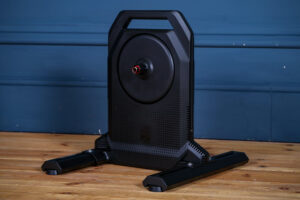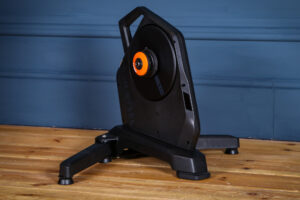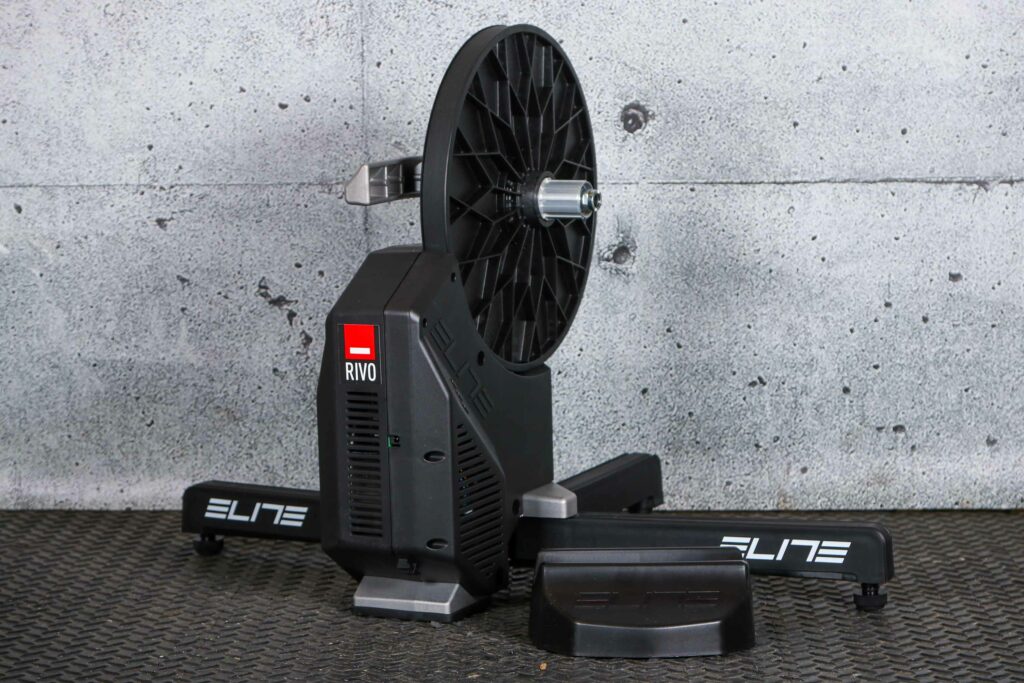

The Elite Rivo is a lightweight, well-finished and quietly capable smart trainer that prioritises ease of use and portability over outright ride realism. It is not the heaviest, nor the most immersive trainer on the market, but if you want a reliable, compact and fuss-free indoor setup, it delivers a very polished experience.
Indoor trainers are no longer just winter torture devices. They are warm-up tools, race prep companions, and, for many, a year-round training staple. The Rivo interactive trainer enters this crowded space with a clear brief: make something that is easy to live with, easy to move, and easy to trust.
Setting up
One of the Rivo’s biggest strengths is how straightforward it is to set up. From box to pedalling takes only a few minutes, and the adjustable feet make levelling on uneven floors quick and intuitive.
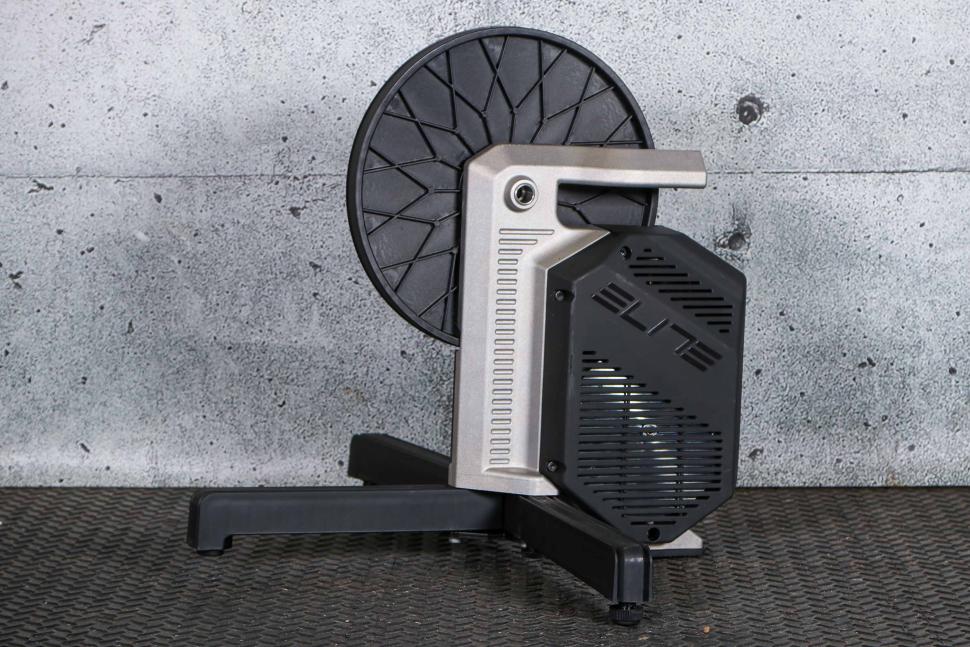
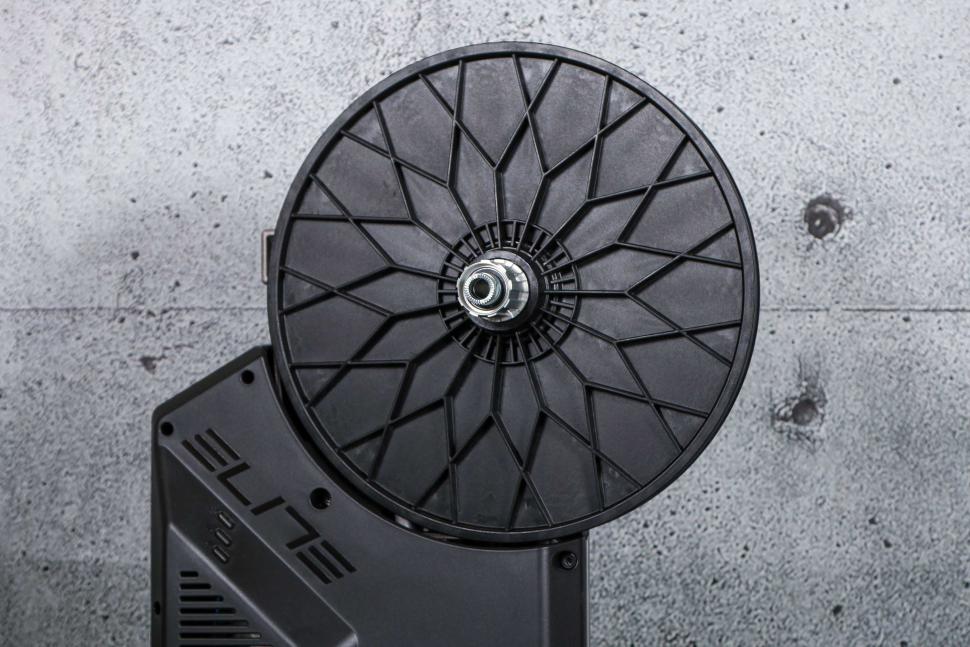
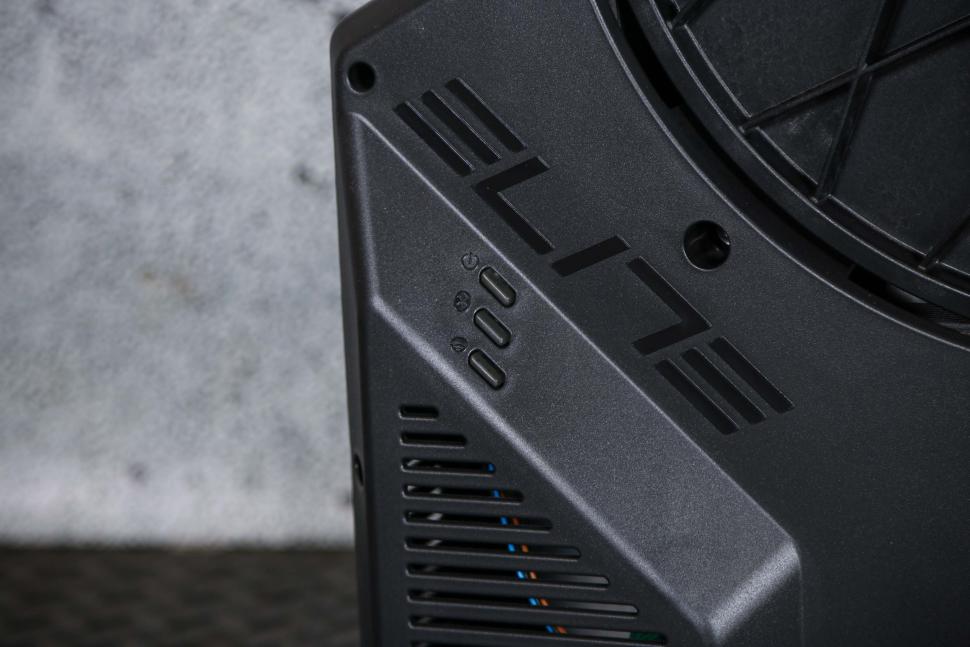
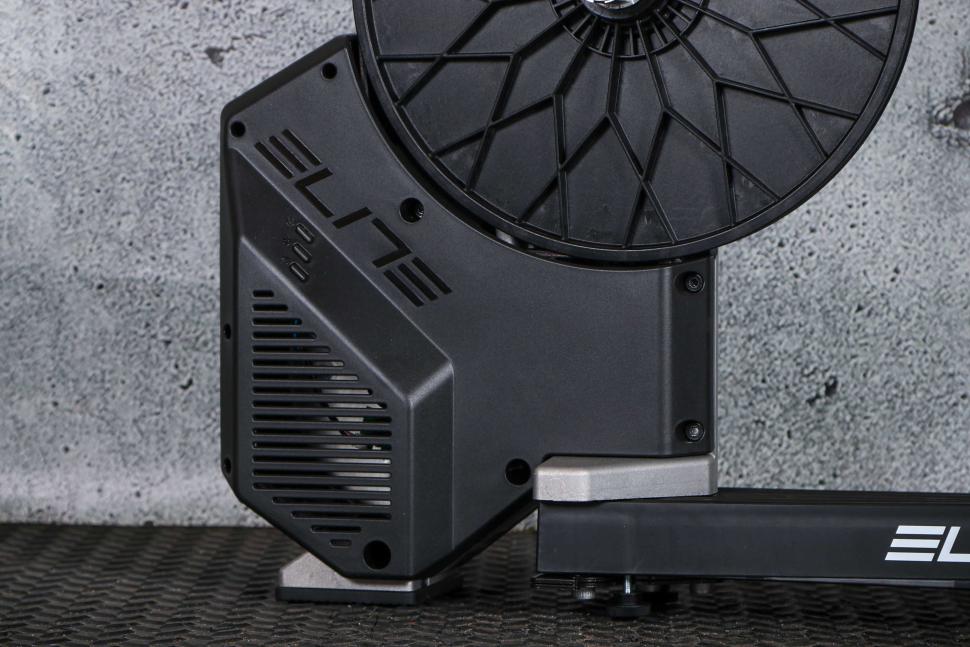
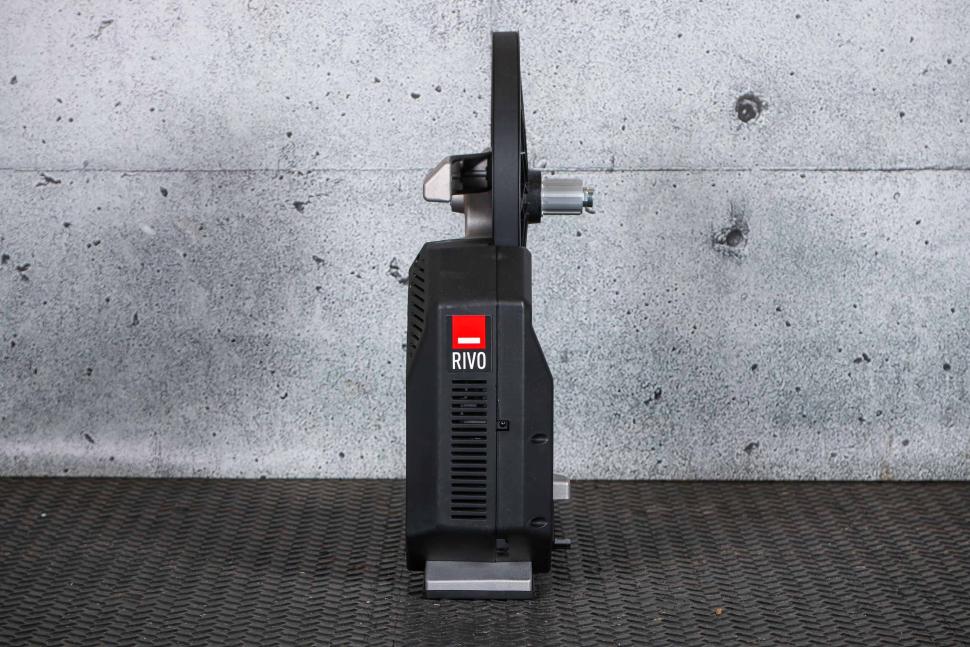
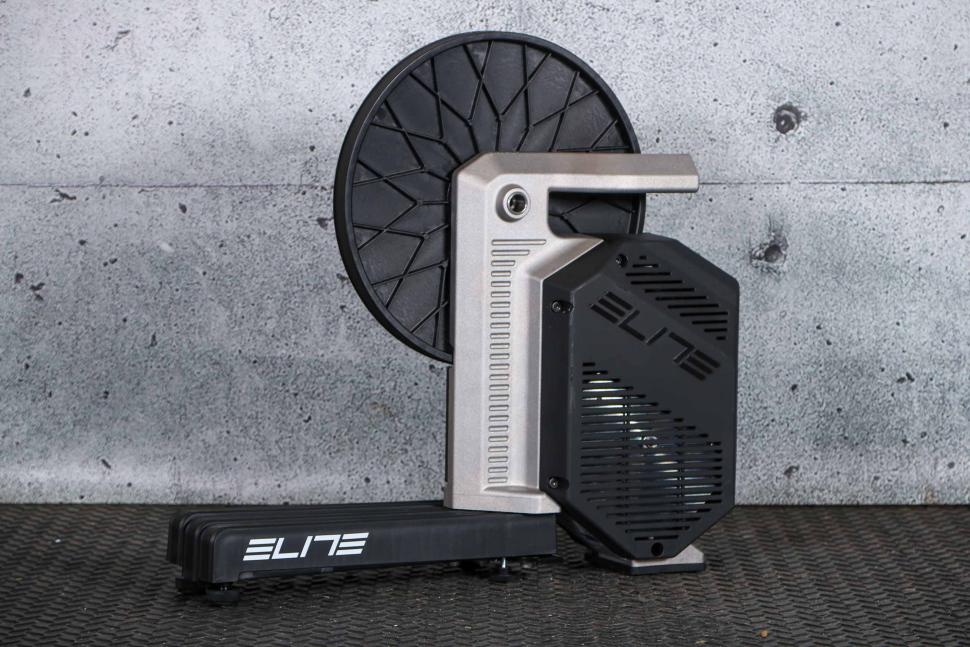
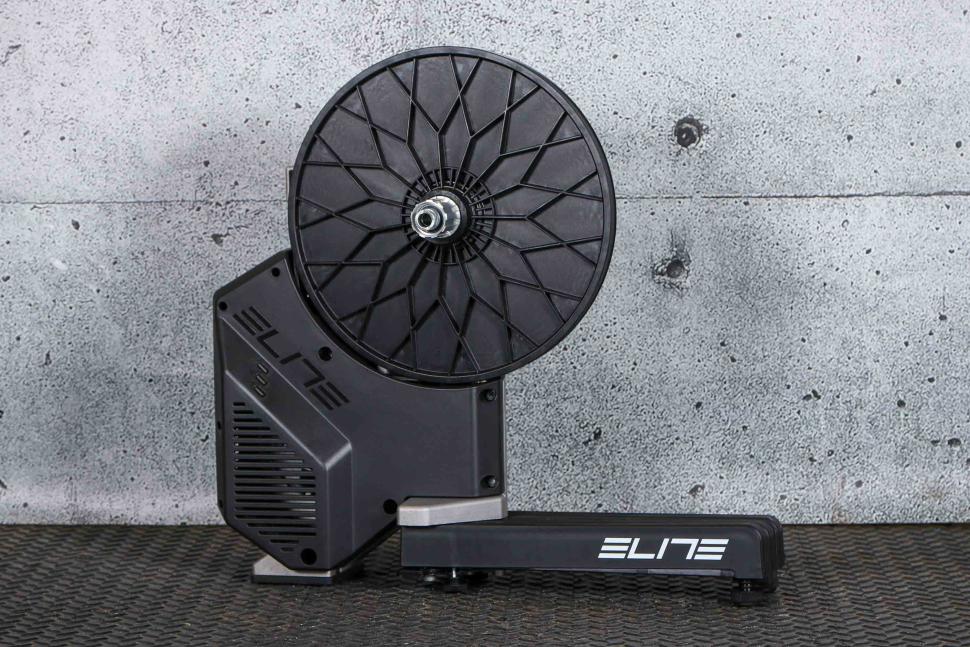
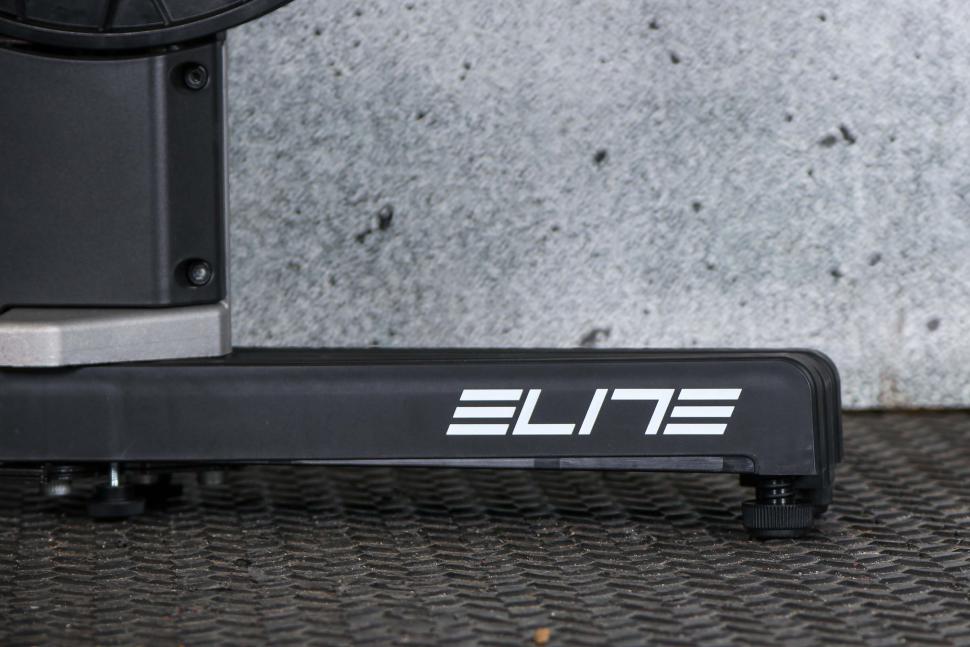
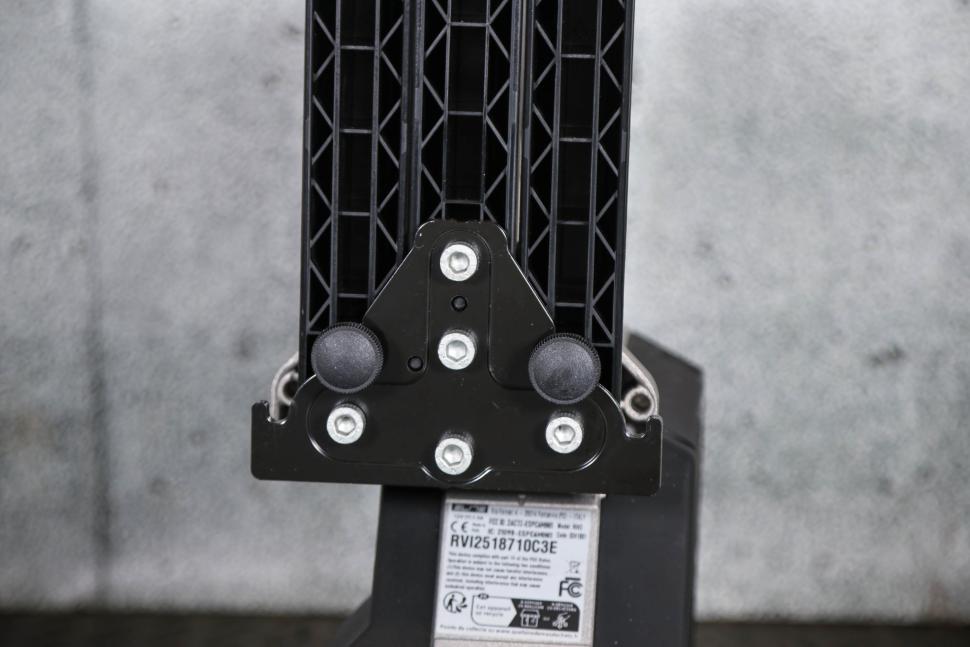
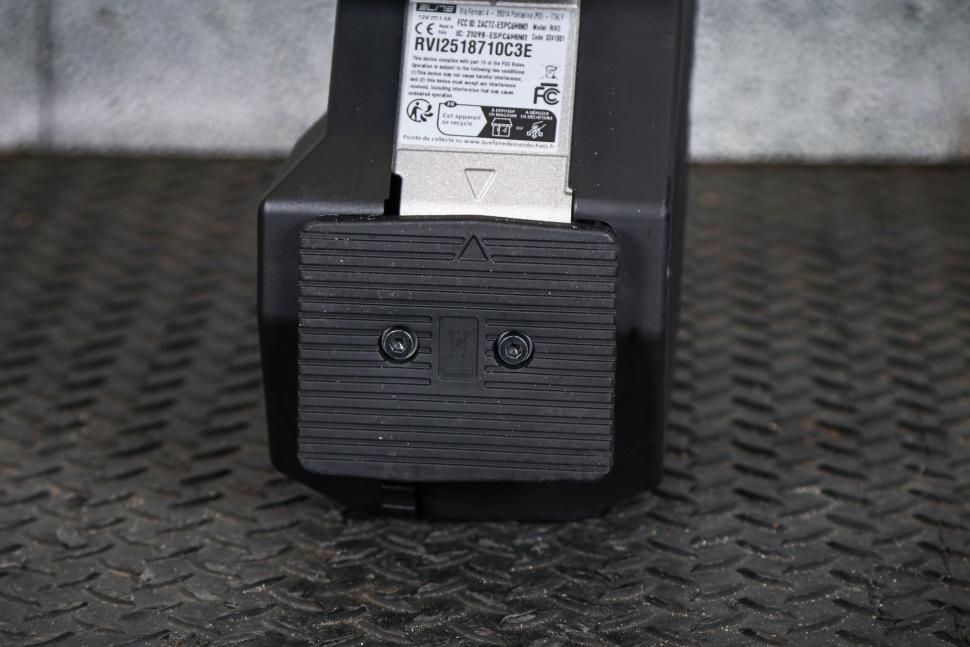
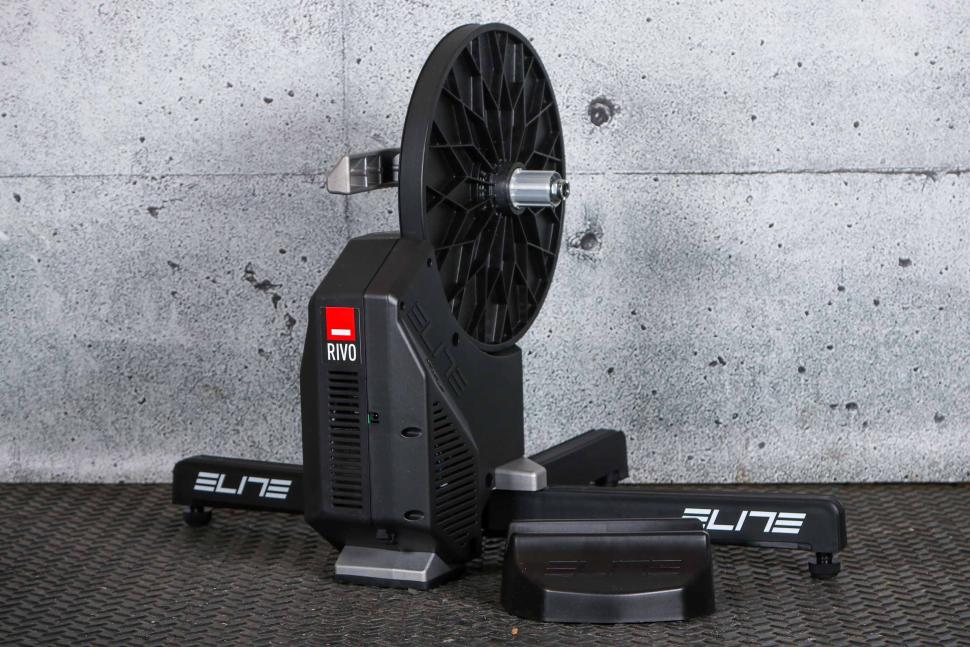
At just 10kg, it is light enough to move easily, which is a real benefit if you are space constrained and need to store it between sessions, or you plan to take it to events for warm-ups, though some like the solidity of a heavier design, especially if you don’t have to put it away after use.
Despite the low weight, the overall finish feels high quality. The casing has nicely rounded edges and a solid, well-assembled feel, with none of the hollow plasticky resonance you sometimes get with budget trainers. It also earns points for sustainability, with Elite stating that 22 per cent of the Rivo’s plastic parts are made from pre-consumer recycled materials. It is not a headline feature, but it is good to see it considered.
Elite includes fittings for both thru-axle and quick-release bikes, and both worked flawlessly during testing. A front wheel riser block was included with our test trainer, which saved me from hunting around for a stack of books to level my bars, but this isn’t included as standard (they’re available for £24.99 or £16.99 for the ‘travel’ version).
Noise and ride environment
Noise levels were impressively low. Using an unscientific iPhone measurement, the trainer registered around 62dB, most of which appeared to be drivetrain noise rather than the trainer itself. In practice, this is largely academic, as my large cooling fan easily drowned everything out at around 75dB once the intervals got serious.
The takeaway is simple: the Rivo is quiet enough that it will never be the loudest thing in the room, even during harder efforts.
Power accuracy, stability and training performance
Elite claims a power accuracy of 2.5 per cent, which puts the Rivo slightly behind its closest competitors on paper, such as the JetBlack Victory and Wahoo Kickr Core, both rated at 2 per cent. In real terms, this is splitting hairs.
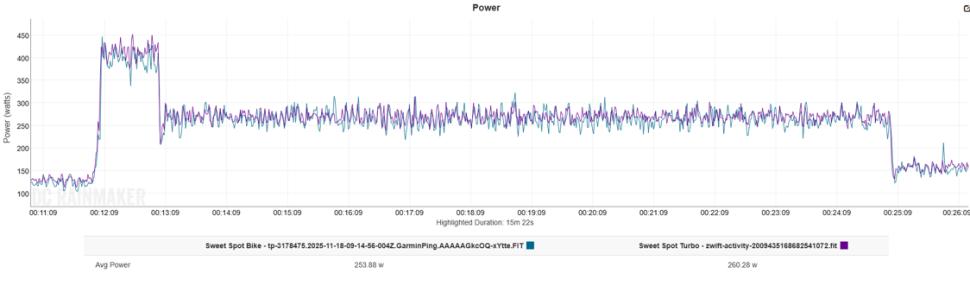
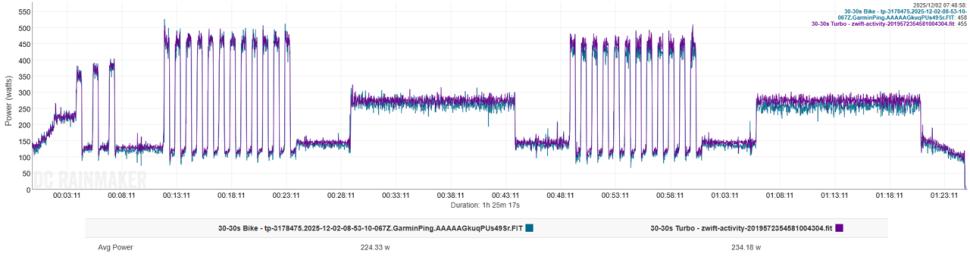
During testing, ERG mode performance was excellent. The trainer responded quickly and smoothly to sharp power changes during 30-second intervals, stepping up and down without overshooting or drifting. On longer steady efforts, particularly sweet spot blocks, power delivery was stable and consistent with no erratic spikes or drops, both in Zwift and on my Garmin head unit.
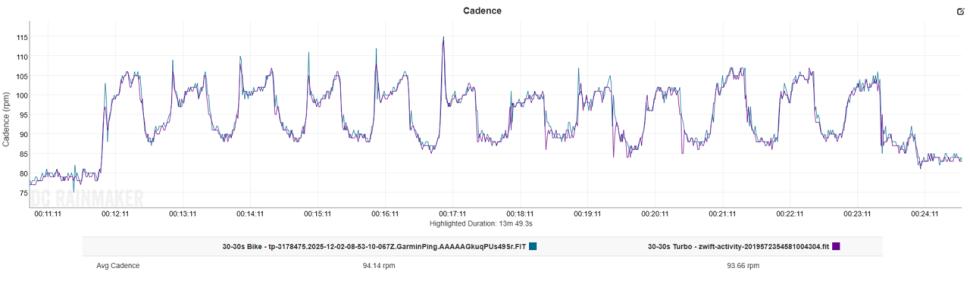
Cadence tracking also compared very well against my Shimano Stages crank-based power meter, even during deliberately erratic 30-on, 30-off efforts where cadence tends to fluctuate most. Readings remained closely aligned throughout, which inspires confidence when using the Rivo for structured interval work.
Importantly, there was no sign of drive belt slippage, even when I did my best impression of Robert Förstemann during short maximal efforts. While my own peak topped out at a modest 1,300 watts, comfortably below the Rivo’s quoted 2,000-watt maximum, the trainer remained rock solid and composed throughout, with no audible protest or loss of resistance.
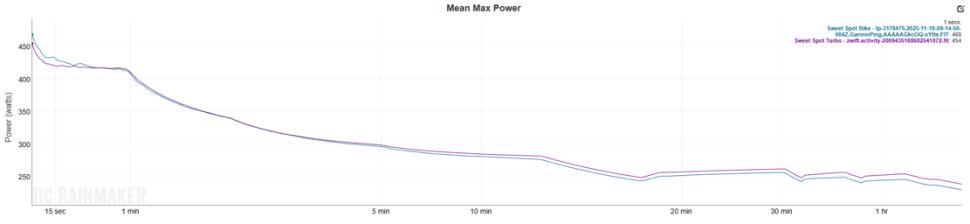
However, when reviewing ride files, I consistently noticed that average power from the Rivo was around 4 per cent higher than my crank-based Shimano Stages. While this technically sits within the combined tolerances of both devices, it is slightly unexpected. Typically, trainer power reads marginally lower due to drivetrain losses rather than higher. Manual calibration through the Elite app made little difference, and while the discrepancy was small, it was persistent enough to be mildly annoying.
This is unlikely to be an issue if you’re training exclusively indoors, but it is something to be aware of if you are closely comparing indoor and outdoor power data.
Ride feel and Zwift performance
The Rivo can simulate gradients up to 18 per cent, which comfortably covers the vast majority of climbs on Zwift. Resistance changes during climbs felt smooth and well controlled, but the low flywheel weight was immediately noticeable when compared with heavier trainers such as my Wahoo Kickr V5.
As soon as you stop pedalling, inertia drops off quickly, and the sensation of freewheeling feels less realistic. This is the trade-off for a lighter, more portable unit. Riders who value maximum road-like inertia may prefer a heavier trainer, while those prioritising portability and ease of use will appreciate the Rivo’s approach.
Connectivity and smart features
Bluetooth connectivity was rock solid throughout testing, with no dropouts over several weeks of use on Zwift. Read our feature, How to get started with Zwift, if you’re new to all this.
A particularly useful feature is the ability to pair additional sensors directly to the trainer, allowing it to relay heart rate data through a single Bluetooth connection. This neatly sidesteps Apple TV’s two-device Bluetooth limit, and once set up the trainer remembers the configuration.
Another standout feature is the fixed resistance mode. Using the Elite app, you can select resistance levels from 1 to 10, and the trainer will maintain that resistance even when unplugged. This makes the Rivo an excellent pre-race warm-up tool, particularly for time trials or events where power sockets are scarce and rollers feel like a liability.
Resistance ranges from barely noticeable to genuinely brutal, covering everything from gentle spinning to leg-destroying efforts.
What’s missing
There are a couple of notable omissions. The Rivo does not offer auto calibration, meaning you need to manually calibrate if you want to be thorough. It also lacks a race mode, which some riders value for maximising responsiveness during all-out efforts. Neither is a deal-breaker, but both are worth noting, given the competition.
Value
And at £499, the Elite Rivo finds itself in a competitive and unforgiving part of the market. In terms of performance and features, its closest real rivals are the JetBlack Victory Smart Trainer and the Wahoo Kickr Core 2 (the updated version of the Kickr Core we reviewed last year).
The JetBlack Victory, when available, undercuts the Rivo significantly at £399 while offering slightly better claimed accuracy. The Kickr Core 2 matches the Rivo on price, £499.99, but it offers a better ride feel through increased flywheel weight and a greater level of virtual immersion with the inclusion of Zwift Cog and Click, enabling virtual shifting and full control of Zwift at your fingertips: steer, navigate menus and give Ride Ons.
Where the Rivo differentiates itself is in portability, ease of setup, and an unplugged resistance mode. Availability issues with some rivals may also tip the scales in Elite’s favour.
Check out our guide to the best indoor cycling accessories – everything you need to get started.
Conclusion
The Elite Rivo is a thoughtfully designed and easy-to-live-with smart trainer that excels in ERG mode stability, connectivity, and portability. It is quiet, well built, and packed with genuinely useful features, particularly for riders who value flexibility and ease of transport.
Its lighter flywheel and slightly optimistic power readings mean it cannot quite match the ride feel of heavier premium trainers, and the absence of auto calibration or race mode feels like a missed opportunity. But as a versatile, reliable and user-friendly smart trainer, the Rivo delivers a polished experience that will suit many riders perfectly.
Verdict
Light, quiet and well connected smart trainer with excellent ERG performance and portability, trading ultimate ride realism for everyday practicality
All the deals displayed on our review pages are pulled from a constantly updating database feed of the best affiliate deals available. The criteria for deciding on what are the best deals is who is offering the lowest, delivered price. In most cases we will be showing the very best deal available online, but sometimes you may be able to find an item cheaper. If you can please feel free to post a link in the comments box below. To find out more about affiliate links on road.cc click here.
road.cc test report
Make and model: Elite Rivo Interactive Trainer
Size tested: n/a
Tell us what the product is for and who it’s aimed at. What do the manufacturers say about it? How does that compare to your own feelings about it?
Elite says:
Rivo is Elite’s new smart trainer, designed to offer premium features in a compact and accessible format – ideal for those new to indoor cycling who want to keep ease of use and advanced performance at the center of their experience.
Rivo is a smart trainer that delivers it all in terms of precision and connectivity: it’s quiet and connects to all the most-used cycling training apps via Bluetooth®, Wi-Fi, and Zwift Protocol BLE, with automatic resistance control on climbs up to 18%.
It provides calculated power with an accuracy of +/-2.5%, and with Wi-Fi connectivity, it automatically searches for and installs firmware updates.
Elite’s new entry-level trainer is born from a simple idea: making indoor cycling easy at every stage of training.
Rivo is lightweight, compact, and easy to carry and store, with foldable legs and a convenient integrated handle to make every move simpler.
To get started right away, you get 12 months of free access to Elite’s My E-Training app, so you can get the most out of every workout and train like a pro.
Tell us some more about the technical aspects of the product?
Elite lists the following:
HOME TRAINER TYPE Smart direct transmission home trainer
SPROCKET CASSETTE Not included
POWER METER No
ACCURACY +/-2,5%
WIRELESS COMMUNICATION Wireless: Bluetooth® (Zwift Protocol, FTMS, Power, Speed&Cadence),
WiFi (2.4GHz Direct Connect Protocol)
MAX SLOPE SIMULATED 18%
AUTOMATIC CALIBRATION No
FIRMWARE UPDATE CAPABILITY Yes
RIZER COMPATIBLE Yes
MAX POWER 920 Watt (20km/h) – 2000 Watt (40km/h)
CONTROL VIA Smartphone, tablet, bike computer, sports watches, Windows and Mac.
COMPATIBLE WITH My E-Training software & app Zwift, Trainer Road, Kinomap and more
PEDAL ANALYSIS No
OUTPUT Power, speed and cadence
FLYWHEEL 3,5 kg / 7,7 lbs
FRONT WHEEL SUPPORT Not included
BIKE COMPATIBILITY Road bikes, gravel bikes, mountain bikes, and city bikes.
Compatible with Elite’s Square smart frame and Zwift Ride (when using the Zwift Cog).
Included adapters for:
Quick release Ø 5×130-135
Thru-axle Ø 12×142
Adapters available* for:
Thru-axle Ø 10×135-12×135 (cod. 1014306)
Specialized SCS Ø 12×135 (cod. 1014087)
Boost Ø 12×148 (cod. 1014303)
Super Boost Ø 12×157 (cod. 1014346)
*available on www.shopelite-it.com
CASSETTE COMPATIBILITY
(freehub included)
Shimano®/SRAM 9/10/11 speed
Shimano® 12 speed road
SRAM SX 12 speed
SRAM NX 12 speed
Zwift Cog (Replace your cassette with the Zwift Cog to unlock virtual shifting features enabled by the Zwift Click)
FREEHUBS AVAILABLE Shimano Micro Spline (cod. 1014315)
Campagnolo (cod. 1014233)
SRAM XD/XDR (cod. 1014279)
*available on www.shopelite-it.com
INCLUDES 12-month free subscription to My E-Training software & app.
SPECIFICATIONS
POWER SUPPLY DATA Input 100-240 volt 50-60 hz – Output 12 volt 1,5A
OPEN SIZE (L x W x H) 523.5 mm x 698 mm x 493 mm / 20,61′ x 27,48′ x 19,40′
CLOSED (L x W x H) 523.5 mm x 164 mm x 493 mm / 20,61′ x 6,46′ x 19,40′
WEIGHT 10 kg / 22,05 lbs
MAX LOAD 110 kg / 242,50 lbs
The Rivo feels very well put together, made with plenty of metal and high-quality plastic that feel like they’ll last for many years.
A mixed bag, with some strong aspects like max peak power capability, portability and easy of use, but its small flywheel and dropout connection let it down at times.
No issues while testing; the plastic legs don’t feel quite as reassuringly study as metal alternatives on more premium trainers, but that’s the trade-off for both cost and lightweight portability.
At just 10kg it’s significantly lighter than its main competition of the JetBlack Victory Smart Trainer (16kg) and the Wahoo Kickr Core (18kg) – although that’s not particularly relevant if you don’t intend to move it around much, and some would argue more weight is a good thing when you’re giving it the beans… In my opinion a wide footprint and grippy feet are what really stops a turbo trainer setup from moving.
Only as comfortable as the bike mounted to it, but there weren’t any unexpected noises or vibrations.
Tell us how the product performed overall when used for its designed purpose
It performed well, particularly as it’s marketed as “compact and accessible format – ideal for those new to indoor cycling”, it was a doddle to setup and I was Zwifting in a matter of minutes.
Tell us what you particularly liked about the product
Ability to use at a pre-chosen resistance when unplugged – this will be great for layby-stricken time trial warm-ups.
Tell us what you particularly disliked about the product
Its lightweight flywheel means it loses inertia quickly, which detracts from real ride feel on Zwift.
How does the price compare to that of similar products in the market, including ones recently tested on road.cc?
Hands down beaten by the excellent JetBlack Victory Smart Trainer (£399), and the Wahoo Kickr Core 2 is the same price, with similar features, but has a better ride feel.
Did you enjoy using the product? Yes
Would you consider buying the product? Maybe
Would you recommend the product to a friend? Maybe – but only if they were struggling to find a JetBlack Victory Smart Trainer.
Use this box to explain your overall score
It’s good overall: an excellent piece of engineering providing premium features in a lightweight, sturdy and affordable package, but the ride feel doesn’t match the competition, and it lacks auto calibration.
About the tester
Age: 33 Height: 190cm Weight: 94kg
I usually ride: Santa Cruz Stigmata My best bike is: Factor One Disc
I’ve been riding for: 10-20 years I ride: Most days I would class myself as: Expert
I regularly do the following types of riding: road racing, time trialling, cyclo cross, touring, club rides, general fitness riding, Gravel, Track and Zwifting