
DT Swiss’s Degrees of Freedom is pretty much what it says on the tin. By adding a bit of free movement directly into a DEG freehub, DF brings greater suspension sensitivity and smoothness in an easy-to-install, widely adjustable, and frighteningly simple package. However, despite being cheaper than nearly all other systems, its feel is a little agricultural in comparison, and it can be tricky to adjust.
- What is pedal kickback and how can it be minimised?
- Danny Hart’s prototype Norco, Ronan Dunne’s Hardline winning Mondraker Summum and more — all the best bikes from Ard Rock 2025
- 500g of added weight and 160mm cranks: Laurie Greenland tells all about his custom Santa Cruz V10 downhill superbike
DT Swiss Degrees of Freedom – Technical details
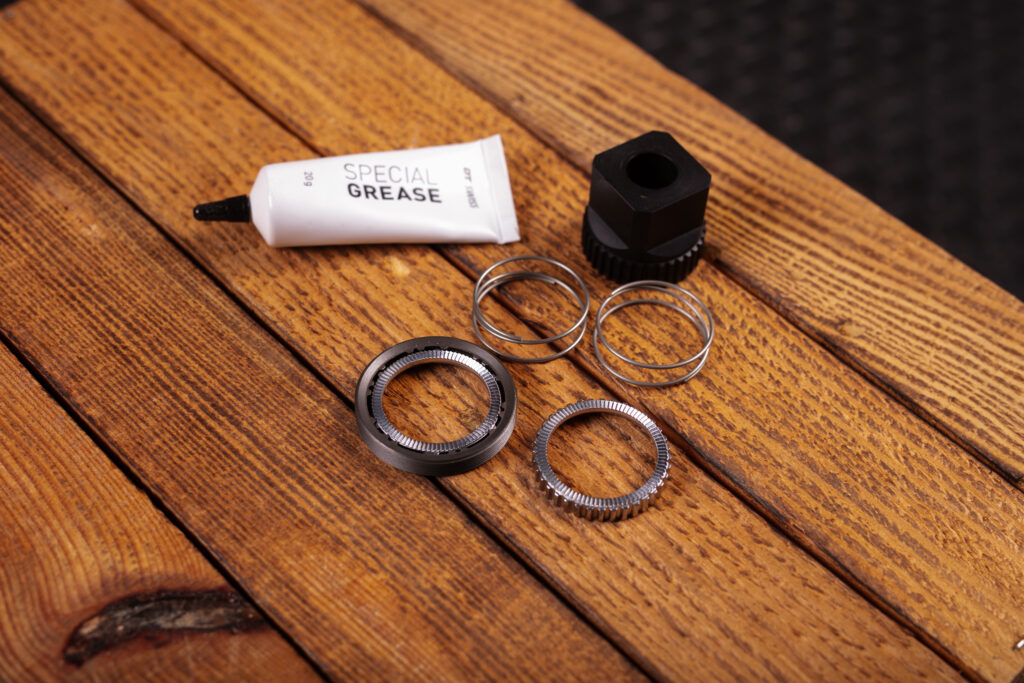
Degrees of Freedom is an incredibly simple method of adding a hint of pedal kickback reduction into your freehub. You’ll need one of DT Swiss’s most recent DEG freehubs, but the system replaces the freehub internals with a new ring nut and a new 90T ratchet. The way DF works is by decoupling the freehub from the suspension movement as it compresses by delaying how quickly the freehub can engage.
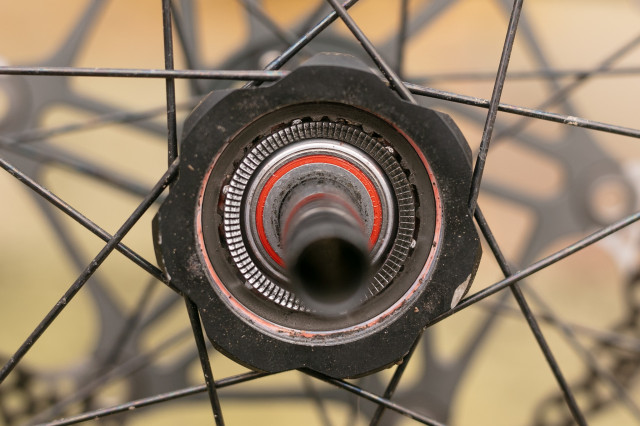
The main difference between Degrees of Freedom (or DF for short) and a regular DT Swiss ratchet freehub is that the ring nut features a range of notches spaced at three varying distances, and the innermost ratchet has notches that fill the space in the outer ring. How you’ve got your inner ratchet arranged dictates how much free movement the system can offer.
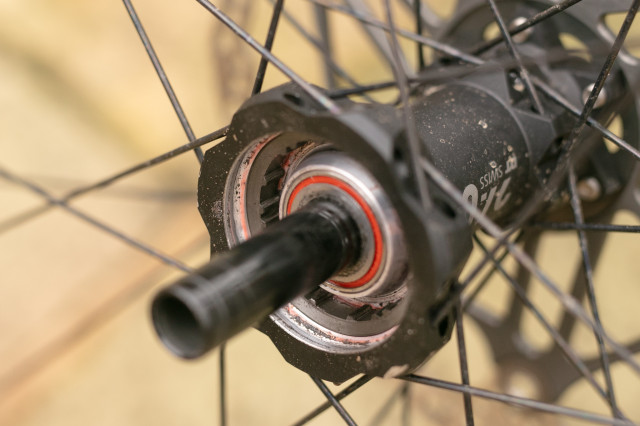
And there’s a fairly large range of adjustment on offer, which makes it rather unique compared to other anti-pedal kickback products. Notably, that’s the ability to effectively turn the system off. In this setting, there’s no kickback reduction and zero degrees of free movement, but it does enable the user to make full use of that 90T engagement.
There are then two other options – 10 degrees of ‘freedom’, or 20 degrees. Where the zero-degree setting is recommended for cross-country. DT Swiss says that 10 degrees may be preferred by all-mountain riders, and 20 degrees would be better suited for enduro and downhill riding. Of course, there’s room for experimentation here.
DT Swiss claims that DF adds no weight to a freehub, and I weighed it to be 18.2g, 3.1g lighter than the standard DEG 90 setup on the DT Swiss 1501 Spline One wheelset I tested it on.
The upgrade kit itself is then available with or without the ring nut tool, but either way, it comes with all of the fresh internals and a tube of Special Grease.
DT Swiss Degrees of Freedom – Performance
Before diving into how DF rides, let’s glance over installation, and it’s super easy, as long as you’ve got a solidly installed table vice. It’s a simple task of clamping the ring nut tool into a vice and using the whole wheel as a lever to free the ring nut. Then you just replace the old internals with the DF gubbins and pop the ratchet in your desired setting, and you’re off to the races.
For my test with DF, I ran it on both a 150mm trail/all-mountain bike and a 170mm enduro rig just to see how much of a difference it made, and the results were rather interesting. On the 150mm trail bike, its benefits were much clearer. It made the suspension noticeably smoother throughout the travel, while increasing small bump sensitivity and reducing harsh feedback during bigger hits.
On the bigger enduro bike, the Orbea Rallon, its benefits were more subtle. It’s a bike that already excels at small bump sensitivity; rather, DF’s effects came clearer when tackling harder, heavier, and more travel-intensive impacts. Regardless of the bike I was riding, it’s a system that works very well.
DF does bring a weird pedalling character to the bike as it slows down the freehub’s engagement speed. The 20-degree setting was the most clear, where the 10-degree setting posed less free movement before the freehub engaged. As such, there is a bit of a knock to performance through technical, ratchety climbs, but that’s where a bit of experimentation pays off, and if it were really an issue, DF can be set to provide zero degrees of float. I found that the 10-degree setting resulted in a good balance of kickback elimination and pedalling performance.
However, DF really came into its own when tackling extended rough sections, where it brought a sprinkling of extra composure to the bike. With it in its 10-degree settling, it helped the bike settle down through rough sections, erasing harsh feedback and making it feel like I’ve bolted more suspension travel to the bike. Reducing that feedback made the bike generally more comfortable and easier to push that bit harder with little compromise. There was also a subtle boost in rear wheel traction, thanks to the newfound suppleness of the suspension.
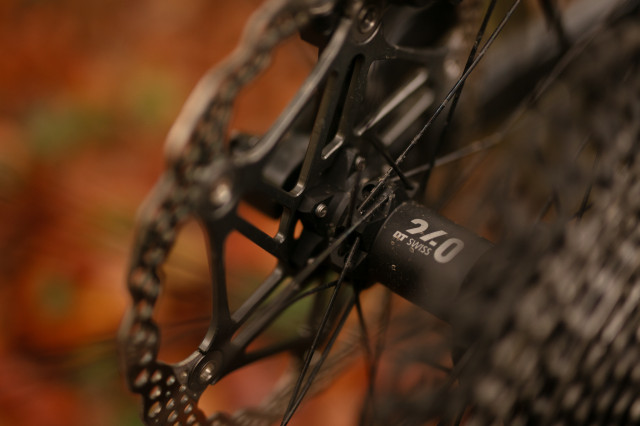
Other disadvantages are that it’s a little tricky to adjust. It’s far from impossible, as all you’ll need to do is pull off the freehub with the cassette attached and fish out the ratchets. It’s just removing the ratchets and putting them back in the correct place that can become a bit of a juggling act. Ideally, you’d do this in a workshop and with a pick, but it can be done trailside with a bit of care.
The other drawback, which in the grand scheme of things isn’t terrible, is that as DF engages under pedalling while in one of the freedom modes, it lets out a hell of a clunk. It’s not quite like e*thirteen’s Sidekick system, which is slightly damped as it engages, which takes a good dose of sting out of the system when hard on the pedals.
That said, Degrees of Freedom offers a pedal kickback reduction system that’s compatible with a freehub that you might already have. While not yet widely spread, the DT Swiss DEG freehubs are equipped on a bunch of modern mountain bikes, meaning that all you’ll need to do is upgrade the internals to grant yourself such a system. If you do already have a DEG freehub, upgrading to DF is a no-brainer in my books, as it’ll bring all of the benefits, but if they’re not to your taste, it can be turned off without any major fettling.
DT Swiss Degrees of Freedom – Verdict
If you’ve already got a DEG freehub, DF is a comparatively inexpensive investment. If not, it’s still not as pricy as e*thirteen’s Sidekick system. For example, a 350 hub from DT Swiss can be picked up for £230, and a DF upgrade kit is £145, so that’s a DF-equipped hub for £375. The e*thirteen Sidekick up will set you back at least £470.
However, Sidekick is more refined. As I said before, its engagement is damped thanks to its sprung pawls. So as the pawls dig into the teeth under heavy pedalling loads, it’s more comfortable and less clangy. But Sidekick’s range of adjustment isn’t as wide, ranging from 12 to 18 degrees, and it can’t be set to a zero-degree setting. It’s a more complicated system with more parts, but it is easier to adjust.
If we look towards other pedal kickback reduction solutions, there’s Rimpact’s Chain Damper. While this addresses the chain’s forces as it slaps around, it brings a heft of smoothness to a bike’s ride. It is pricier than the DF upgrade kit at £280, and it can pose clearance issues on some bikes. But it’s cheaper than buying a whole new hub and upgrade kit, and then shelling out for a wheel build, if you need to. It’s not adjustable, however.
If you’ve already got a DEG freehub and you’re curious about what Degrees of Freedom can bring to your bike, the upgrade is a no-brainer. It grants the bike increased smoothness and composure through rough terrain while helping it manage heavier hits that bit better. Its zero-degree setting is excellent if you’re looking to prioritise pedalling performance, too. However, it’s tricky to adjust, and if you don’t already have a DEG hub to upgrade, it’s a more considerable investment.
You might also like:
- The daily driver of the UK’s most exciting DH World Cup rider — we speak to Phoebe Gale about her new Orbea Rallon
- Confused by Shimano’s huge range of mountain bike drivetrains? From CUES to XTR, here’s everything you need to know about Shimano MTB components
- “Why worry about your wheels when you could be going really fast instead?”: Amy Henchoz explains her prototype Carbon Wasp XC bike with mix-and-match wheels and super light frame
Product purpose:
Build extra:
Product construction
Product construction extra:
Product performance
Product performance extra:
Product weight
Product weight extra:
Product comfort
Product comfort extra:
product value
All the deals displayed on our review pages are pulled from a constantly updating database feed of the best affiliate deals available. The criteria for deciding on what are the best deals is who is offering the lowest, delivered price. In most cases we will be showing the very best deal available online, but sometimes you may be able to find an item cheaper. If you can please feel free to post a link in the comments box below. To find out more about affiliate links on road.cc click here.