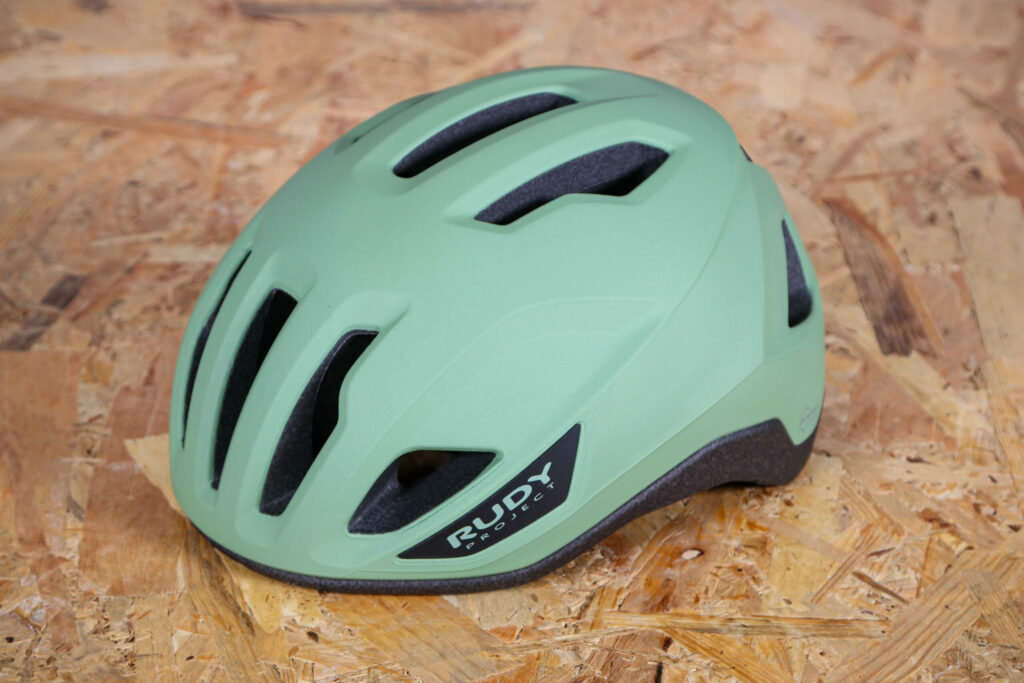
The Rudy Project Sinergy is aimed urban and gravel riders looking for a light and very eco-conscious helmet, and in one of those aspects it delivers. It’s largely made from a single material and designed to be dismantled easily for recycling, and while it’s odd to see a sales pitch that’s all about throwing your new purchase away, I kind of understand – with its odd fit, mediocre venting and easily-marked outer, you might not keep it that long anyway.
Usually we’d focus on the actual helmet, but Rudy Project itself doesn’t do that – all the bumf about this lid concerns its eco-credentials, which seem to be the main selling point. So let’s start with those.
The helmet is claimed to be more than 60% recyclable material. However, while Rudy Project promises paper and cardboard packaging, it arrived in a plastic bag (albeit a partly recycled one) inside a standard cardboard box.






An included QR code links to a video explaining how the helmet can be recycled. The straps and inner tensioner are easily removed and made from materials that can go into most UK recycling bins.
That leaves the main shell. Rudy Project claims that making the inner and outer from the same material makes recycling easier, which is nice. But this is polystyrene.
The included recycling guide lists the shell as PS6, which recyclenow.com classifies as a plastic resin that’s difficult to recycle. Londonrecycles.co.uk actually calls it ‘notoriously difficult’, while wastemission.com says only 12% of polystyrene is recycled in the UK, with just 1% of councils accepting it and the rest going straight into landfill.
In reality then, that eco sales pitch is pretty irrelevant for UK riders. However, we at road.cc are not to be deterred by something as piffling at the UK recycling system, so we have a solution. Rudy Project is based in Treviso, Italy, where a little googling and some GCSE Italian (Grade C) suggest small amounts of polystyrene are accepted in kerbside collections. So if your Sinergy reaches the end of its life, simply enjoy a scenic 1,000-mile cross-Alpine ride and recycle it there in person. Problem solved.
Having exhausted the recycling story, let’s talk about what really matters: how it works as a helmet.
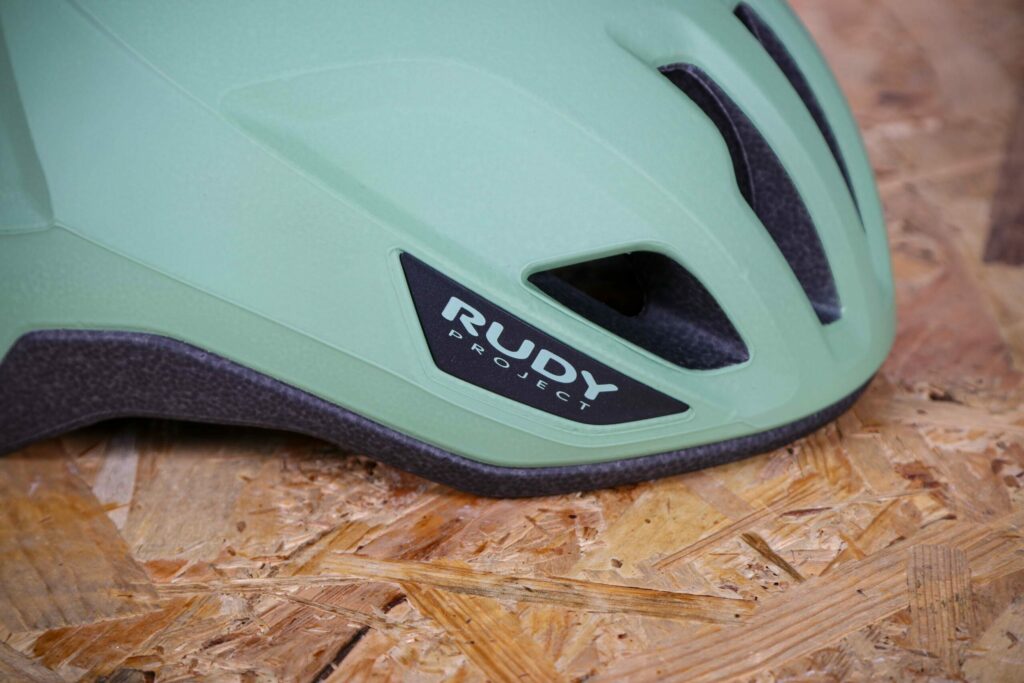
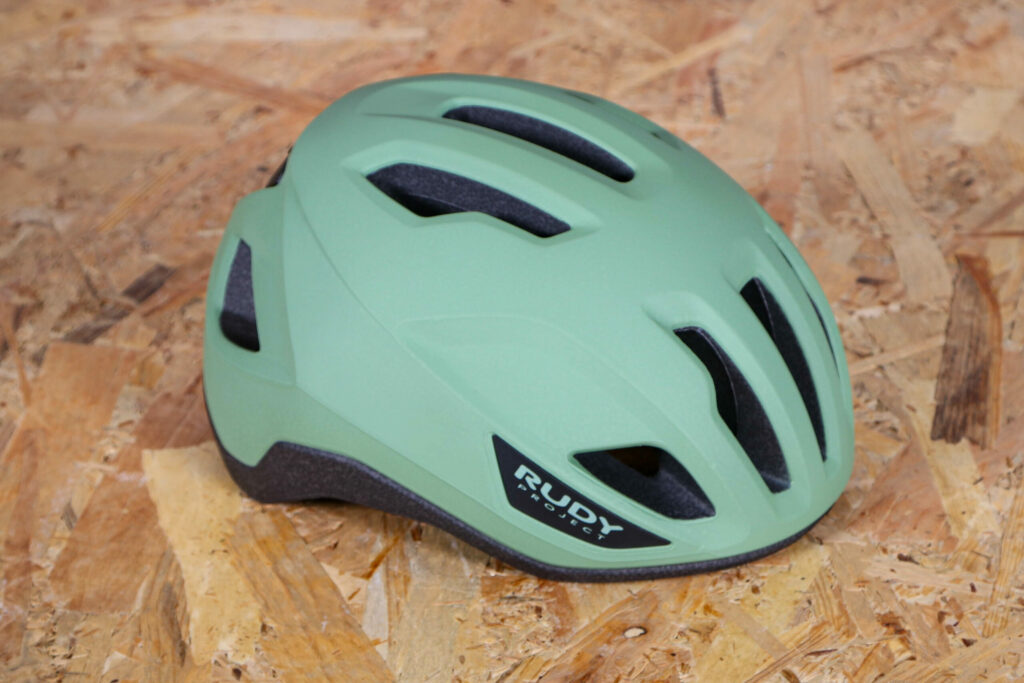
The Sinergy is aimed at urban and gravel riding, and the matt finish gives it a distinctly city-ready look. It weighed 254g on the road.cc scales against a claimed 250g, and it’s comfortably light for year-round use. It’s pleasingly light for the price, too.
There’s no MIPS, KinetiCore or similarly-familiar rotational impact system with a name, but official UK distributor Saddleback lists the Sinergy as ‘WG11 accredited and rotational impact tested’. The WG11 test was created by helmet maker Kask, and concerns ‘invisible’ designs that don’t use obvious separate layers. Rudy Project also makes vague claims about it passing its own internal tests.
All helmets sold here must also meet the European CE/EN 1078 standard. I tested the S/M, rated for 55–59cm (or 54–59cm, depending on which bit of paperwork you read). On my 55–56cm head, though, the fit never quite felt right, so riders at the smaller end should take note. Separate small and medium sizes would have made more sense. The large is listed for 59–61cm.
Adjustment is via dial, but once on my head it sat halfway into the shell, making fine-tuning fiddlier than it needs to be. I’ve used plenty of better systems, and here the Sinergy feels very much ‘entry level.’ The chin straps weren’t much better: tightening led to a stubbornly asymmetric setup that was frustrating to realign, thanks to the way the straps feed through the shell.
The internal plastic cradle is impressively light, bordering on flimsy. Despite repeated tweaking I never quite achieved a properly secure fit. The cost-cutting shows elsewhere too; there’s no chin strap cover, for example, which slightly dents comfort.
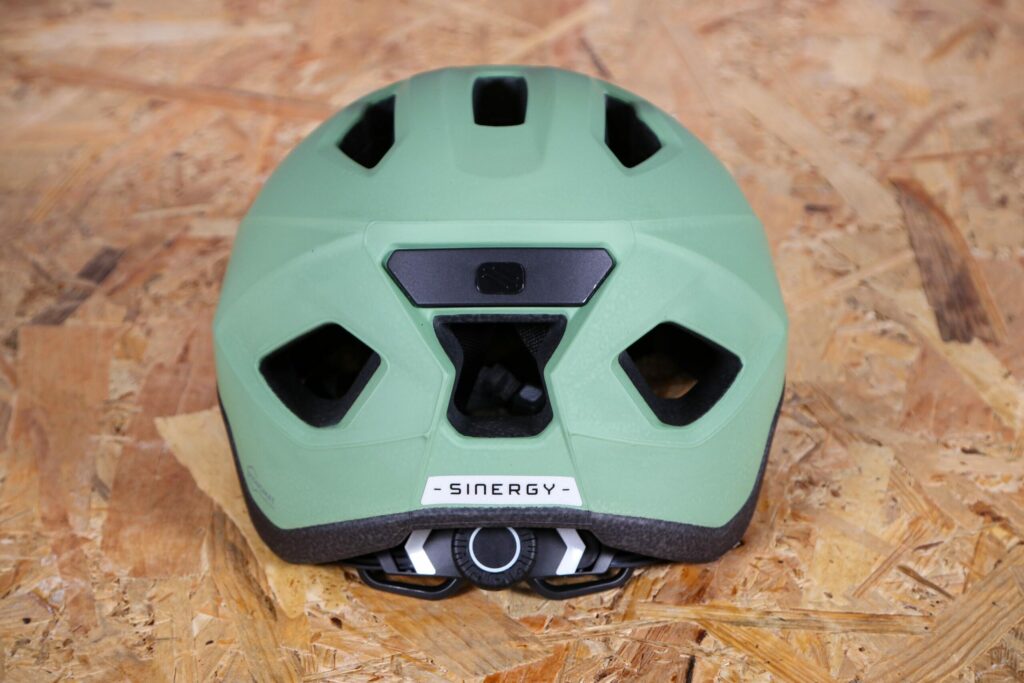
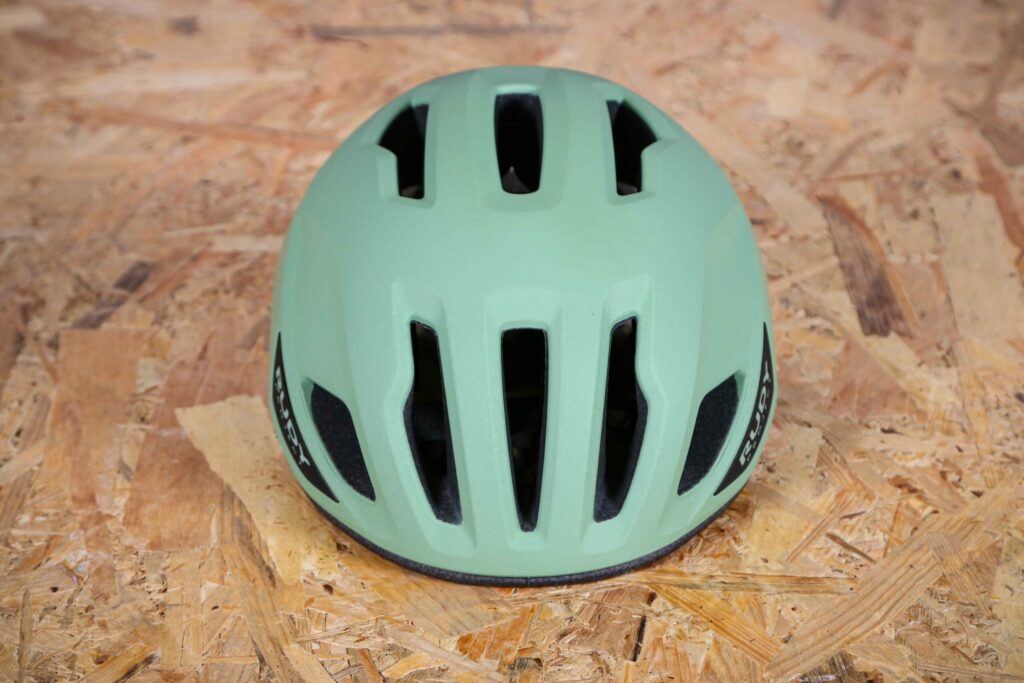
The 11 vents proved perfectly adequate in winter testing and should suit the gentle urban riding this lid targets, but rivals offer more airflow for the same money: the Lazer Tonic KinetiCore has 18 vents, while the Van Rysel road helmet has 15, larger and better positioned.
The pads are thin but perfectly serviceable and, with a helmet this light, anything chunkier would feel unnecessary.
The Sinergy comes in six matt colours: black, blue, yellow, red, white with doodles, and the tested green. The matt finish scuffs fairly quickly, but it suits the understated urban aesthetic better than glossy alternatives. That said, style is subjective, and the shape wasn’t admired in the comments on Emily’s preview article. As suggested back then, it’s a bit mushroom-like and not especially flattering. Low ponytail: fine. High bun: forget it.
Value
This is decent value for a very light helmet, and I’d probably feel warmer towards it if the Lazer Tonic KinetiCore didn’t exist, as it offers better ventilation and a few grams less weight for the same £59.99 price.
For another tenner you could get the Rockrider XC Mountain Bike Helmet Race Mips, and while it’s a good bit heavier at 330g it vents well, feels sturdier and is better suited to more serious use.
Overall
Still, if you want a lightweight around-town lid with green intentions, the Sinergy remains a reasonable option, especially if a cycling recycling holiday to Italy appeals. Just don’t fly there, though.
Rudy Project response
A spokesperson for Rudy Project said: “Sustainability is a journey where each step counts, and the brand developed Sinergy with this approach in mind. It is the first helmet of its kind and it is developed by applying principles of ecodesign: the outer shell and the internal protection are made of the same material (Monomat Technology) and it can be fully disassembled.
“It wasn’t an easy journey, as the company had to find a solution that met ecodesign principles, but that also met safety standards. The Sinergy integrates Rudy Project’s proprietary RP Rotational Impact system, an in-house solution with a proprietary protocol developed by the brand itself. It assesses performance and safety against oblique impacts, ensuring that the helmet provides reliable protection in real-world crash scenarios. The RP Rotational Impact system meets and exceeds international safety standards.”
Test Report
What does the manufacturer say about this product?:
Rudy Project says: “Developed with Monomat technology and an eco-design approach, each component is made from a single material and easily disassembled. Unlike traditional helmets that combine multiple, hard-to-recycle materials, Sinergy simplifies resource recovery and reduces waste. A tangible step toward high-performance protection with respect for the environment.”
It’s ‘ideal for’ urban and gravel riding.
Tell us some more about the technical aspects of this product:
RP’s UK distributor Saddleback lists:
Monomat recyclable EPS and PS shell, for safety with more efficient recycling
WG11 accredited and rotational impact tested
Made with over 60% recyclable materials, designed to be easily disassembled
Durable construction for an extended lifespan
RSR Disc Adjustable Retention System to dial in the fit, 360° comfort fit
11 vents allow air to flow through helmet, for cooling and moisture management
Interchangeable comfort padding included
With Divider Pro side buckles, Fastex system closure buckle
Just 250g for M size helmet
How does the price compare to that of similar products in the market, including ones recently tested?:
It’s what’s considered entry level for a decent helmet.
What protection standards does the helmet conform to?:
WG11 accredited and rotational impact tested
EN 1078
Does the helmet incorporate any rotational injury protection? If so, what?:
Rudy Project doesn’t name any rotational impact design, but this helmet has passed Kask’s WG11 test.
RP also speaks of its own internal ‘RP Rotational Impact Test’ and says this helmet passes it. It also claims the Sinergy ‘meets and exceeds international safety standards,’ but does not say which ones or by how much.
Any further comments about fit?:
The shaping might work for some, but it really didn’t work for me.
Does the helmet size up especially big, or small?:
With only two shell sizes and contradictory numbers about what they fit, sizing is not great.
Any further comments about ventilation?:
Not terrible, but not great either.
Does the manufacturer make any specific aero claims about the helmet?:
No, it’s too busy stressing how responsibly it can be thrown away.
Is the helmet easy to care for? Are the pads removable and washable?:
No issues.
Any issues with durability?:
No significant issues, though the matt finish was prone to showing scuffs and the exposed EPS got a little dented in use.
Did you enjoy using the product?
It was fine
Would you consider buying the product?
No, as the fit didn’t work for me at all
Would you recommend the product to a friend?
Not unless they were super eco-conscious
Use this box to explain your overall score
The lightweight shell is a plus at this price, but for UK users the key selling point – the helmet’s recyclability – isn’t even applicable. That and the issues with fit were dealbreakers for me.
About the tester
Age: 48Height: 167cmWeight: 60kg
I usually ride: Trek 7.5 WSDMy best bike is: Turquoise Cruiser
I’ve been riding for: Under 5 yearsI ride: A few times a weekI would class myself as: Experienced
I regularly do the following types of riding: Commuting, Fitness riding, Leisure riding