



The Ribble CGR AL 105 is part of the company’s ‘do-a-bit-of-everything’ range of road/all-road/gravel type bikes, and with some generous tyre clearances and a load of mounting points it certainly is a versatile machine at a decent price. However, it does follow Ribble’s latest trend of frame design which doesn’t do anything for the ride quality.
Ribble CGR AL 105: Ride
The CGR has been in Ribble’s catalogue for the best part of 10 years now (I reviewed the first model back in 2017) and while it has slightly evolved over time with the latest technologies and fashions, it largely remains the same: a capable road bike with a rough and tumble personality. It was doing all-road well before that was a thing.
The biggest change compared to the last model I rode – the carbon fibre CGR SL Sport a few years ago – is to the geometry. A medium back then had a 545mm top tube and a 150mm head tube sitting at 71.5 degrees, while this medium here has a 570mm top tube and 145mm head tube, though the angle remains the same. That previous model came with an 80mm stem as standard, while this one has a 90mm version.

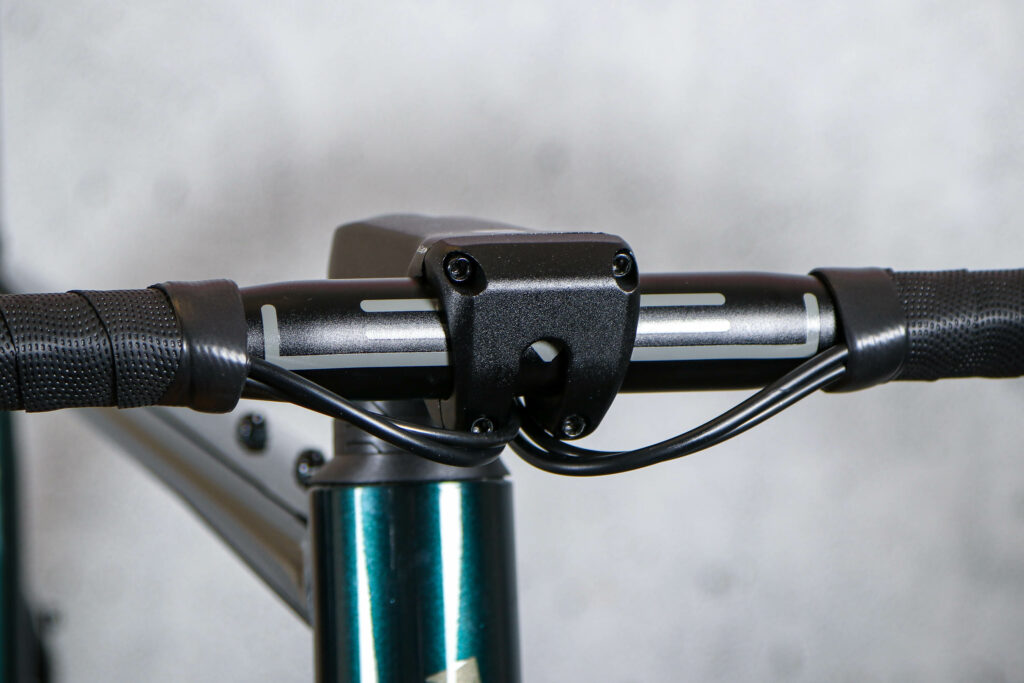
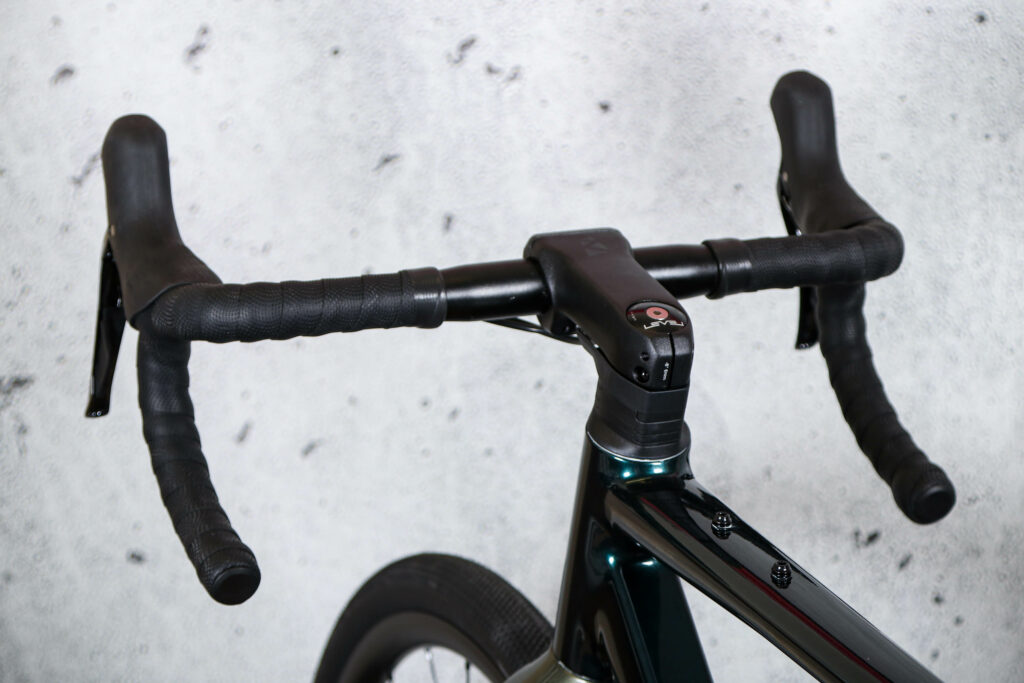

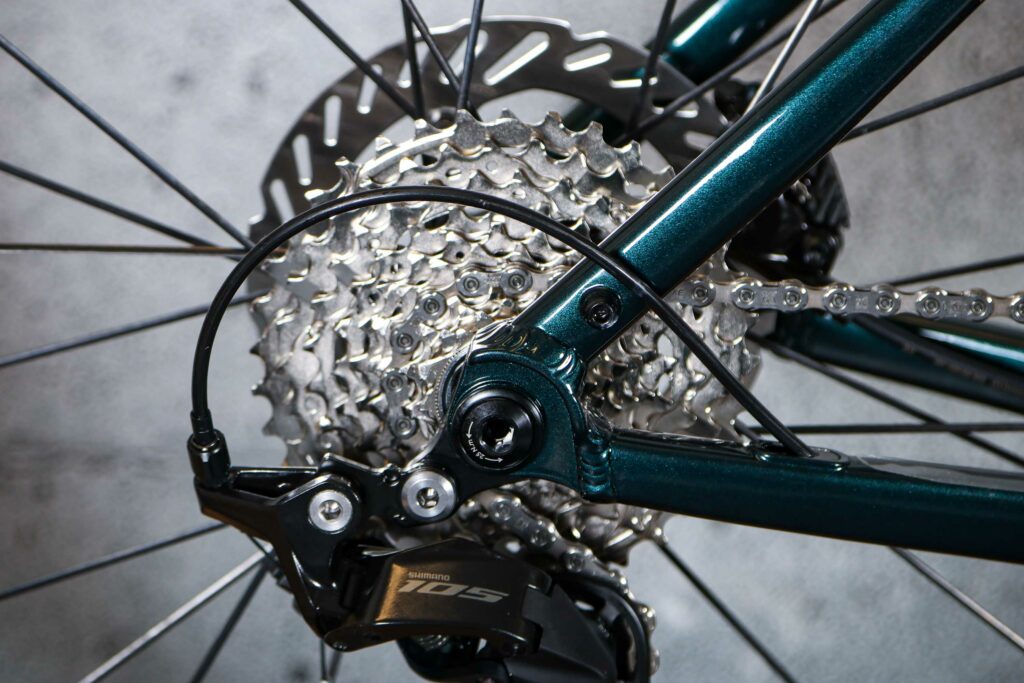
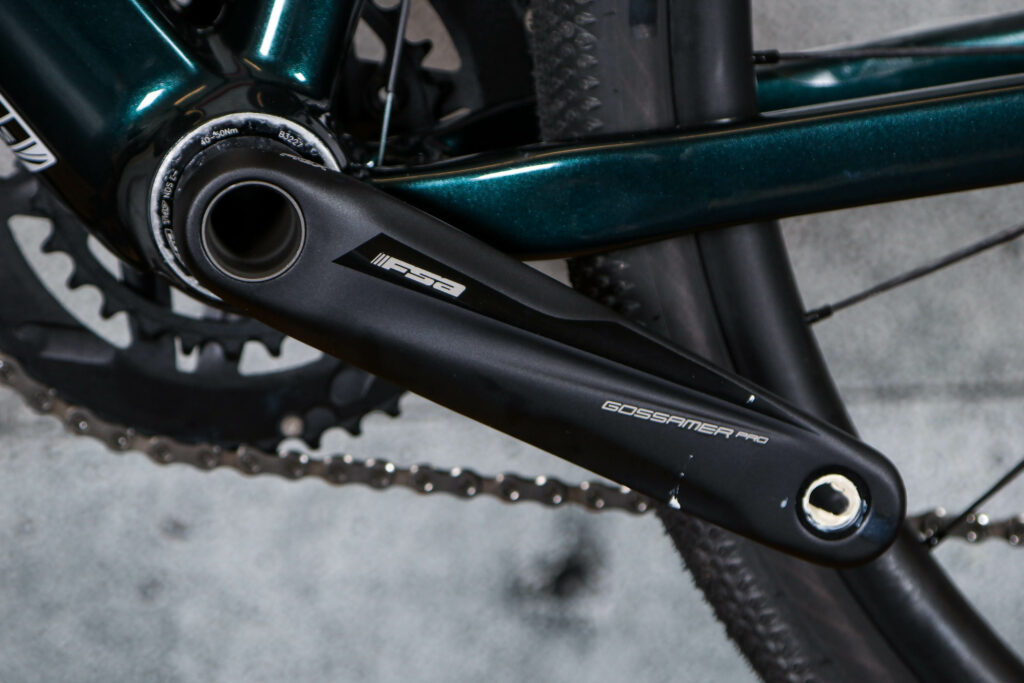




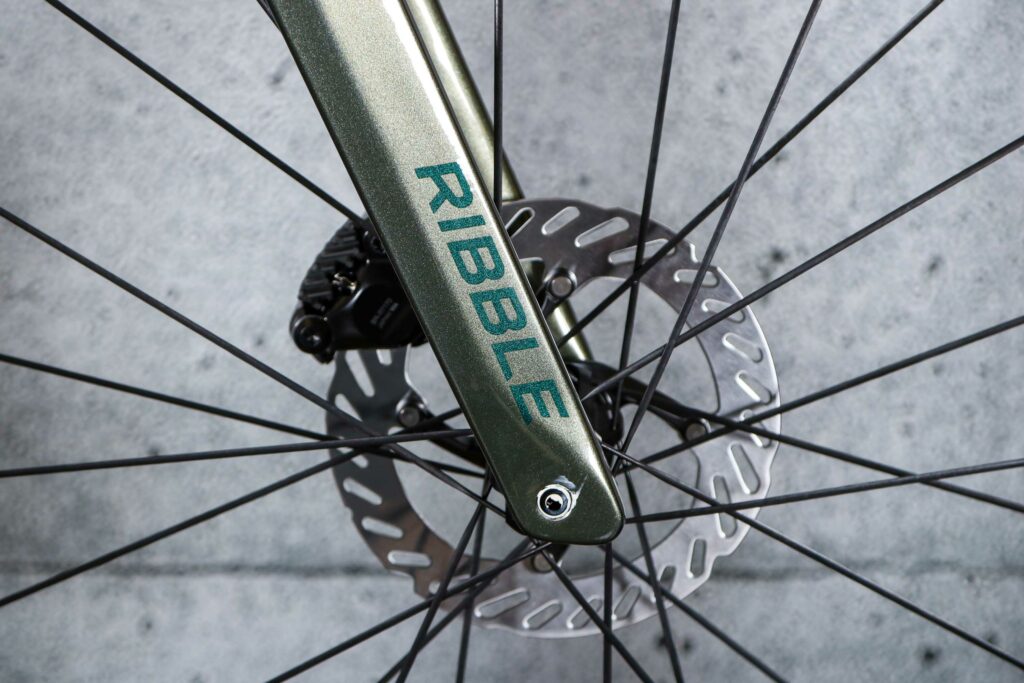

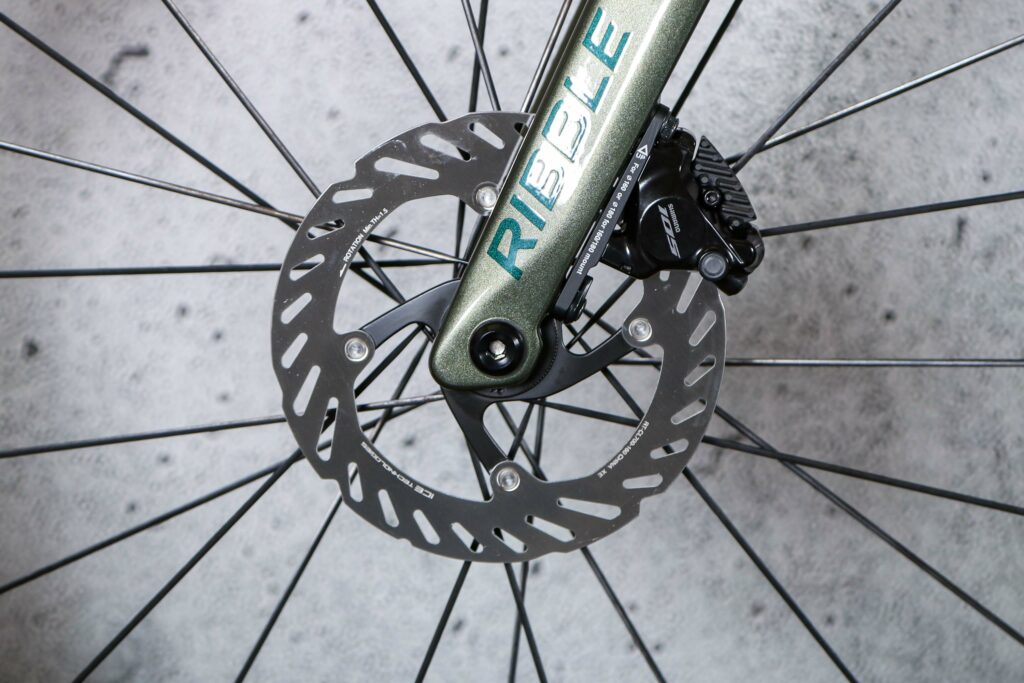
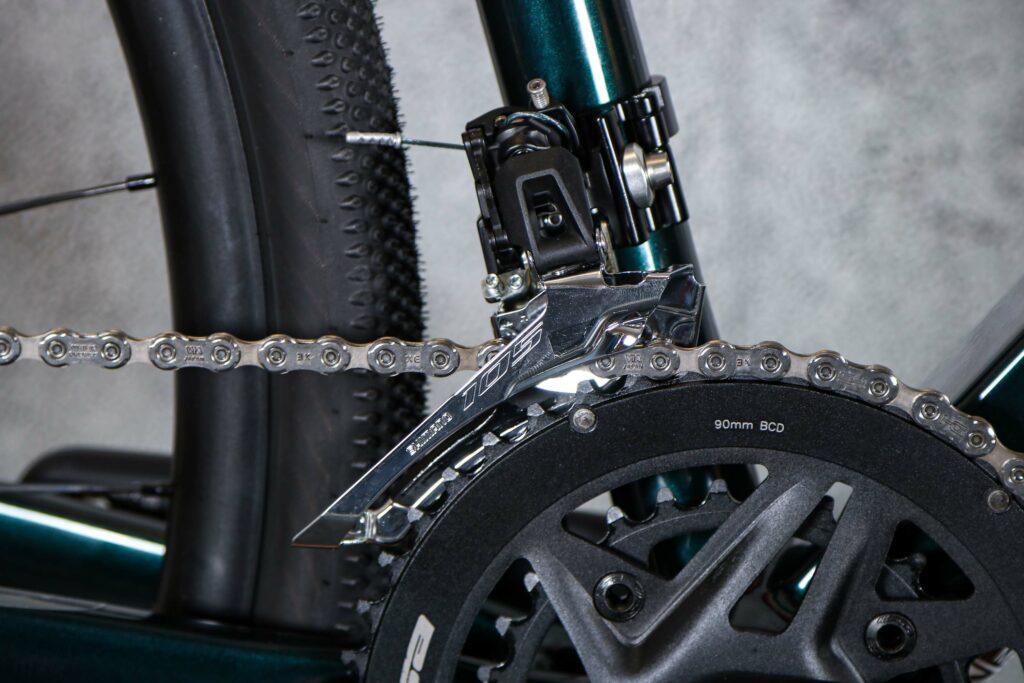
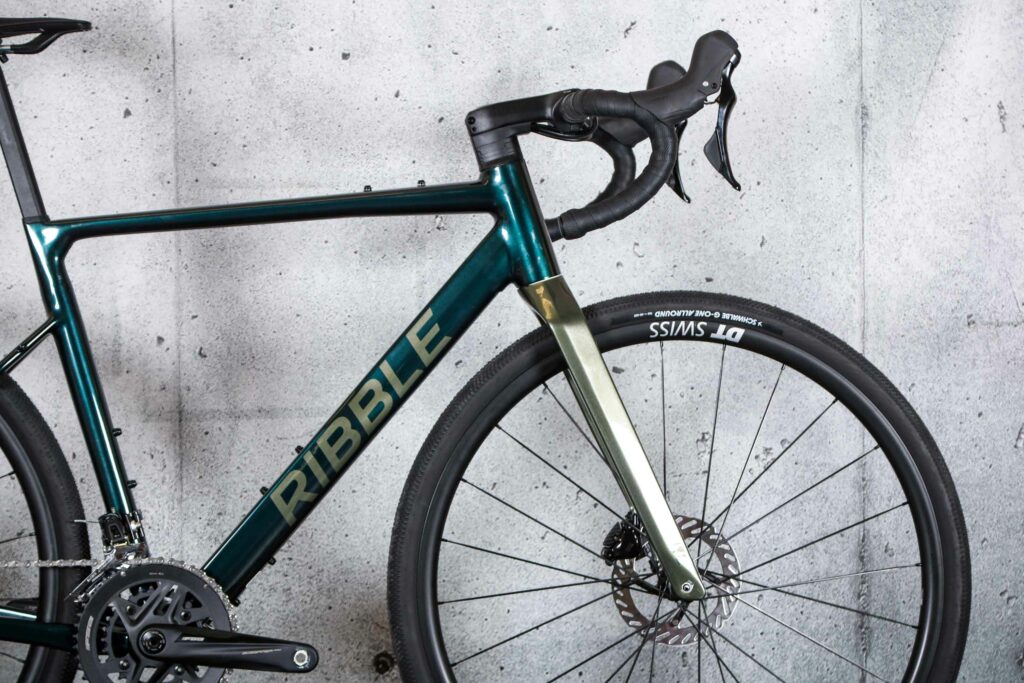






I will admit at this point that I didn’t check the geo of the new model, so ordered this CGR with a 100mm stem which made the position too stretched out for me. Luckily, I still had their Ultra-Grit gravel model in the lock up, so I nicked the 90mm stem off of that.
Regardless of stem length though the difference this new geometry makes to the reach figure is quite substantial with the 379mm of the older bike extended to 404mm on this model. Add on an extra 10mm of stem length compared to the old CGR and you have a very lengthy ride position indeed. The stack figures are near identical though at 561mm/562mm.
For comparison, something like Mason’s Bokeh, which offers similar tyre clearance and ride intentions, has a top tube of 551mm and a 145mm head tube in what I’d consider a medium (54cm). Its stack and reach figures are 568mm and 376mm respectively.
Or the Fairlight Secan 2.5 which I use as an all-road/gravel winter trainer and commuter. The 54R has a 553mm top tube and a 150mm head tube sitting at 71.5 degrees. This gives stack and reach figures of 589mm and 383mm.
CGR stands for Commute-Gravel-Road, but I found my position to be too stretched out for the first two riding styles, and borderline for the latter as it is not exactly designed to be a flat-out racer.
I could have gone for a smaller frame size, but then the stack measurement would drop to 545mm which is on the low side for this kind of bike for me and would require more spacers. Or, I could maybe switch to an 80mm stem, but it’d still be a long bike.
It’s worth pointing out that a bike’s measurements aren’t massively critical for me. I can jump on most bikes and adapt quite quickly, even with top tubes ranging between 25mm to 30mm in length or switching between medium and large frames. The key thing though is that the geometry needs to be in proportion, and on this new CGR I don’t consider it to be.
Merida do the long top tube thing on their Silex gravel bikes, but they pair that with a tall, slack head tube which keeps the stack and reach in harmony.
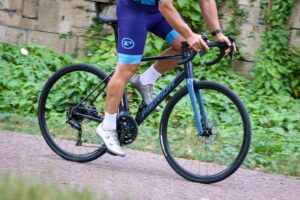
So I preferred the position of the older model, but once I’d got accustomed to this one as best I could, I found it to be a relatively easy bike to live with. The handling delivers neutrality which in turn gives the CGR a stable feeling off-road, and on wet, mud and grit strewn roads it’ll give you no surprises.
It’s not the most dynamic or involving bike I’ve ridden, but for the audience it is aimed at I’d say that’s a good thing. If your commute takes you through urban areas, the CGR’s predictability is a benefit on traffic laden roads and loading the bike up with a bike-packing style saddle pack and a bar bag, the extra weight doesn’t affect the handling in a detrimental way.
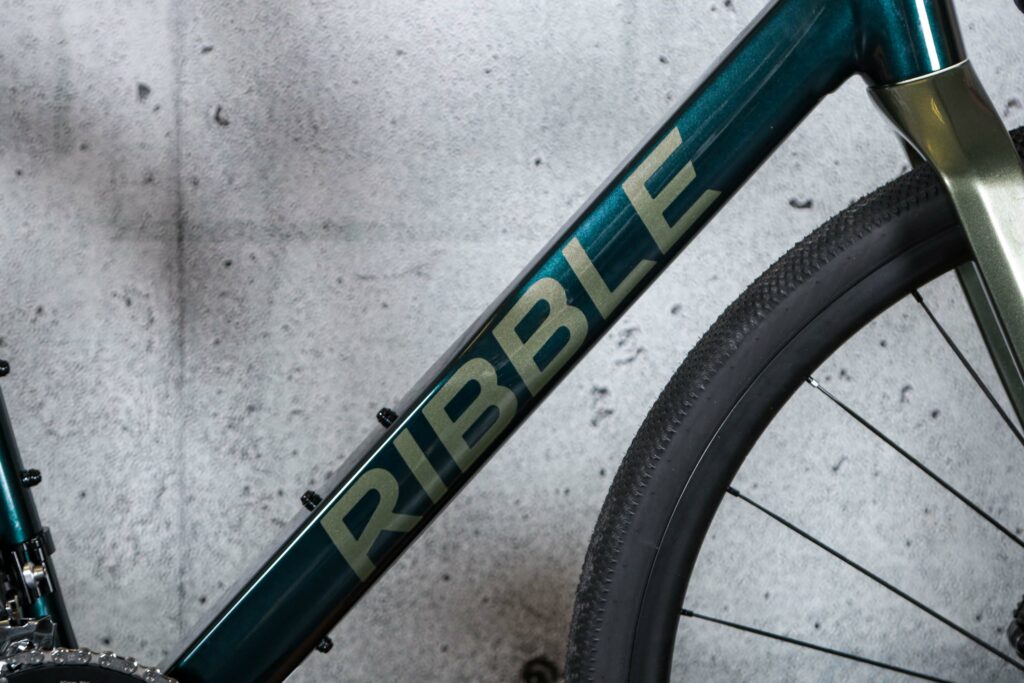
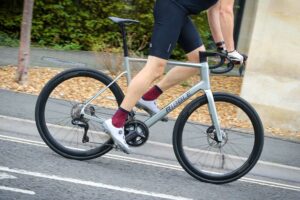
The new CGR AL follows the theme of other Ribble bikes like the Allroad and the Ultra-Grit in terms of the frame design. That means a huge volume down tube reminiscent of when aluminium alloy tubing needed to be oversized to match other materials’ strength and stiffness, and lots of other shaped tube profiles.
It looks kind of cool, but it does sacrifice the overall ride quality. In terms of frame design, aluminium alloy has come a long way, and many brands are creating some stunning frames in terms of how they behave on the road, or anywhere else in fact.
This CGR isn’t taking any awards on that front. It’s not harsh, but its firm nature does mean it lacks in ride feel and overall comfort. The comfort to a certain degree can be overcome by the use of wider tyres at lower pressures, but as I’ve said before – tyres can’t mask an uninspiring ride quality.
Another thing the CGR lacks is rider involvement. I didn’t feel it that forthcoming in terms of feedback, which does detract a lot for me when I’m riding a bike.
Overall, this might sound like I’m having a massive downer on the CGR, but while it’s never going to make any of my top tens, what it offers in terms of performance and rideability is decent enough, as long as you can get on with the fit.
And that’s the key point really. If you can get on with the geometry then as a road bike the CGR shines as a winter trainer or longer distance commuter where you want something dependable, and I’d say it is here that I found it best suited. There is plenty of stiffness on offer, so you can give it a little dig on the climbs and, as I mentioned above, you’ll get no surprises regardless of what condition the road surface is in.
As a gravel bike, again it is decent without being anything spectacular, and to be fair that is what I’d expect from a bike that is a crossover. For me, if my riding was predominantly on the road with a small excursion on to gravel byways and the like then I think the CGR would make a good choice – especially if you want an entry level machine to get you from A to B.
If on the other hand I mostly rode gravel with the odd crossover to the road, I’d probably go for a gravel specific bike over the CGR, and press that into road use when needed.
At around 10kg, it’s not light, but in the right ballpark for a bike at this price point, so things like climbing and acceleration are on a par with what I’d expect. It’s responsive enough when you ask it to be and sitting in the saddle knocking out a long climb never feels a drag.
Ribble CGR AL 105: Frame and fork
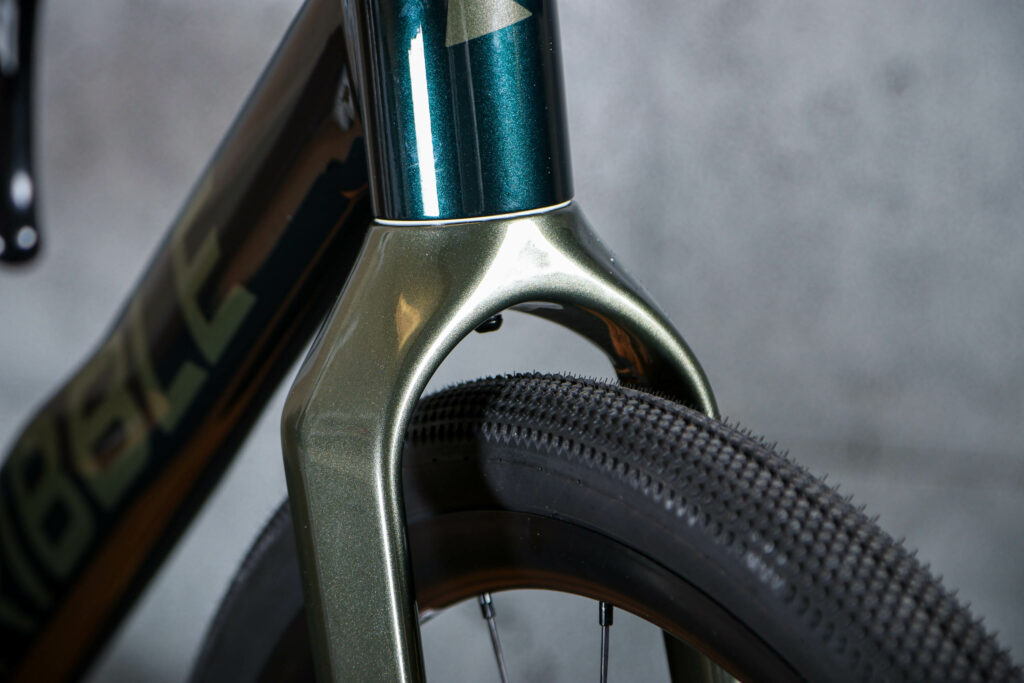
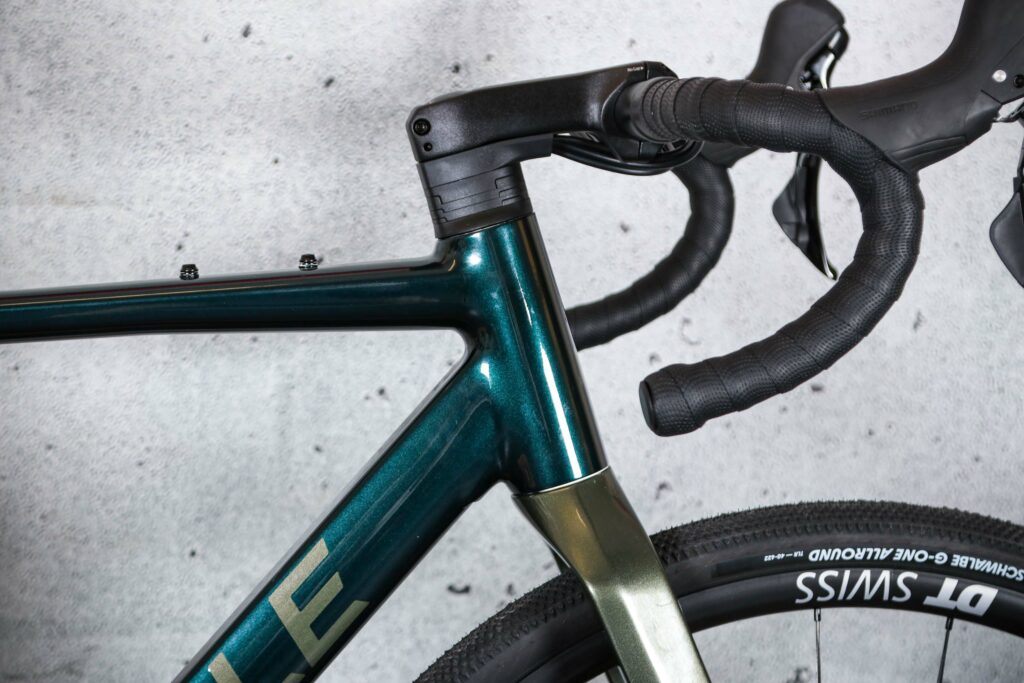
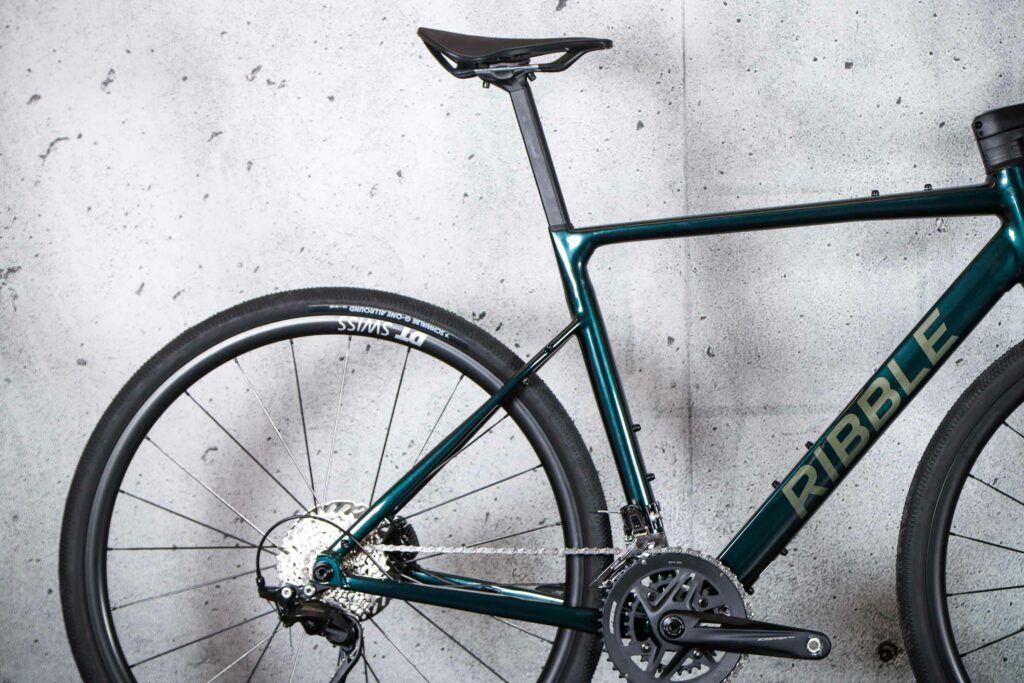
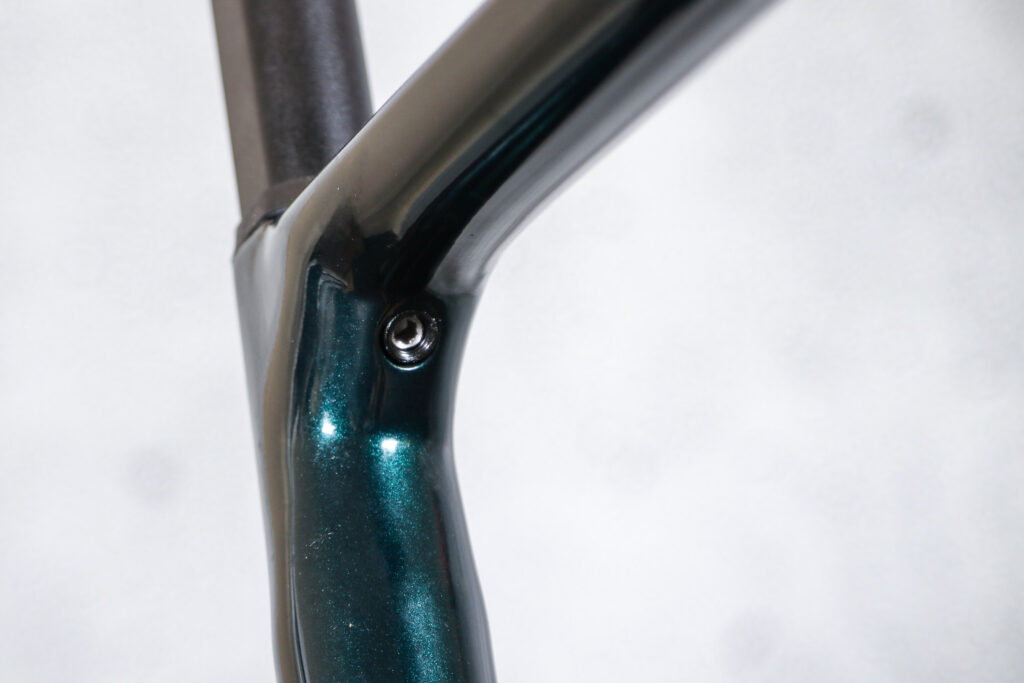
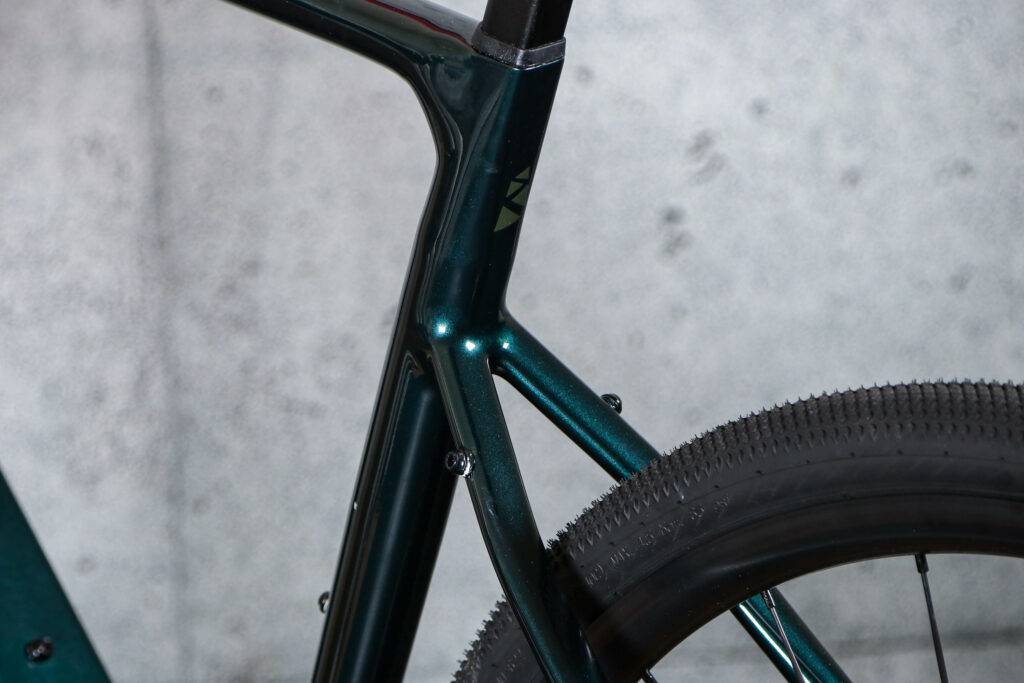
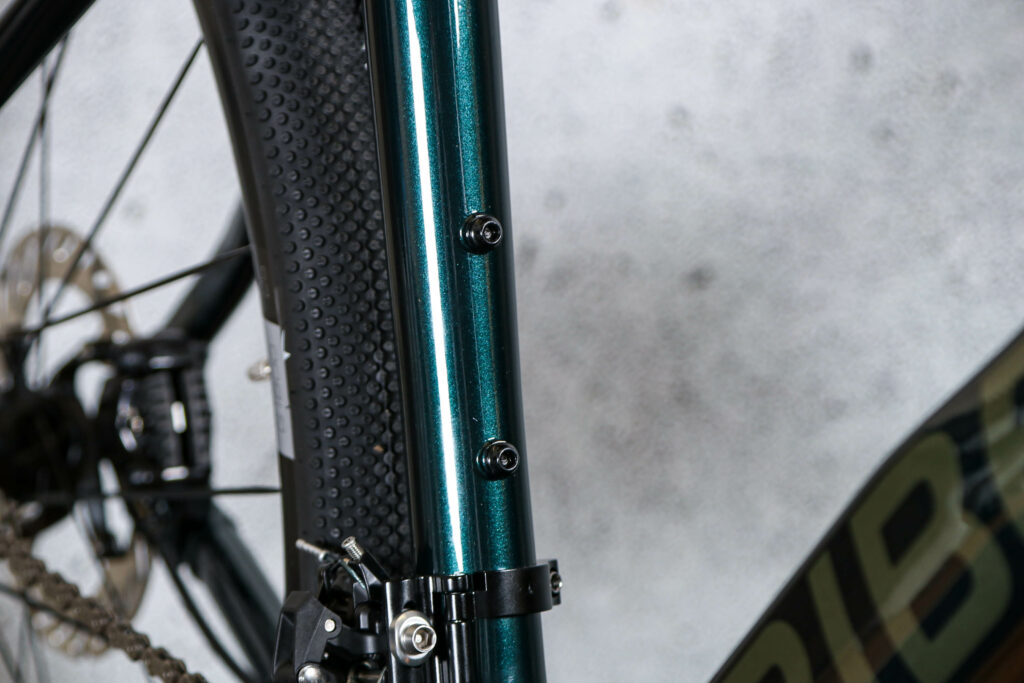
The CGR uses the 7005-grade of aluminium alloy for its frame which is hydroformed to create all of the elaborate shapes. It’s a clean looking machine with fully internal cable/hose routing and much of the welding has been smoothed beneath the paint to give a near carbon fibre looking finish.
Things like the seatpost clamp have also been placed internally and there are plenty of mounting points on offer too.
Full mudguard mounting is possible, although you will need to purchase the attachable seatstay bridge to allow that to happen. With guards fitted, tyre clearance is reduced from 50mm to 45mm, so still pretty impressive.
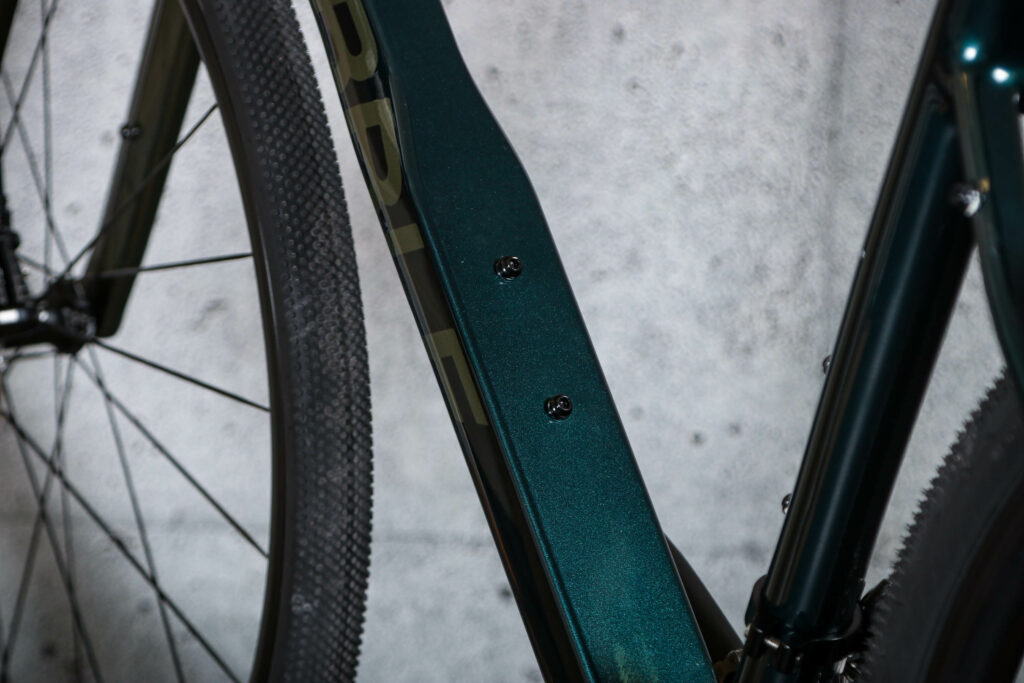
As you can see from the photos there are two mounting points for bottle cages in the traditional positions, plus another underneath the down tube. You’ll also find a couple of bolts on the upper face of the top tube which is ideal for a bento bag or similar. Fitting a rear rack is also possible.
For the bottom bracket, Ribble has specced a T47 model, which in a nutshell provides the oversized diameter of a pressfit system, but with the simplicity of a threaded application when it comes to BB and frame tolerances.
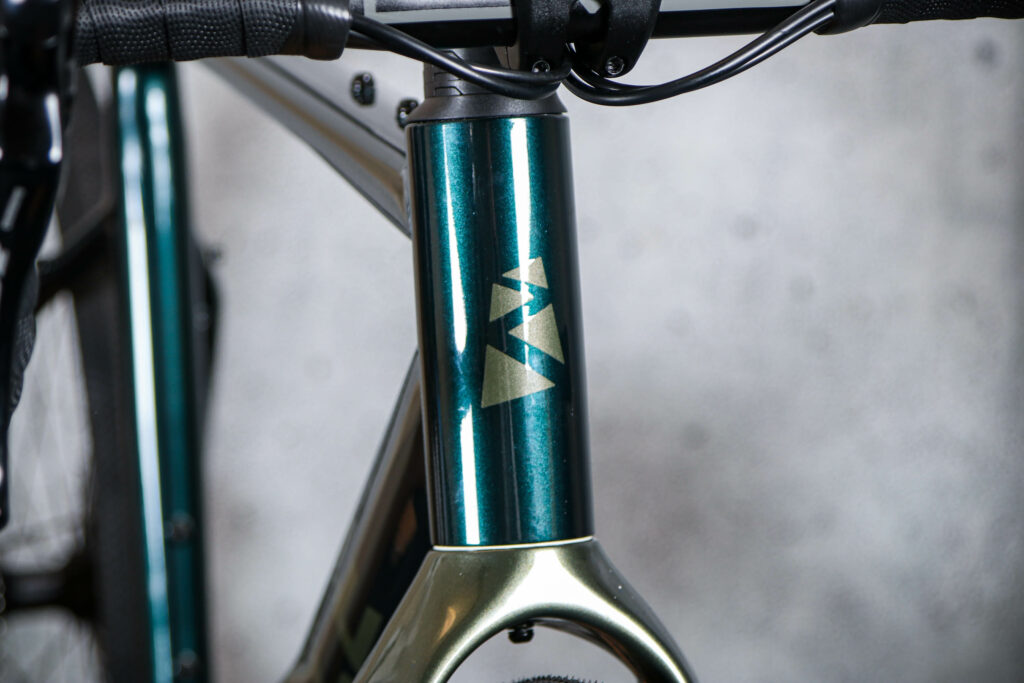
All models in the range come in this Racing Green paintjob which I think looks very classy, and makes the CGR look a little pricier than it is. Ribble also offers custom paintjobs from £350.
In terms of sizing there are five on offer with the extra small for riders from 5ft 3in up to the extra large for people up to 6ft 4in.
I mentioned some of the geometry measurements earlier, but to add a bit more to that, this medium has a BB drop of 65mm, wheelbase of 1,052mm, 50mm of fork rake and a seat angle of 73.5 degrees.
Ribble CGR AL 105: Finishing kit and prices
There are three models in the CGR AL line-up with the flat bar Sportfit option costing £1,649, the same as the Tiagra drop bar offering. This 105 bike has an RRP of £1,799.
The Sportfit comes with SRAM’s APEX XPLR 1x mechanical groupset, whereas the other two use Shimano’s road groupsets, albeit with different chainsets.
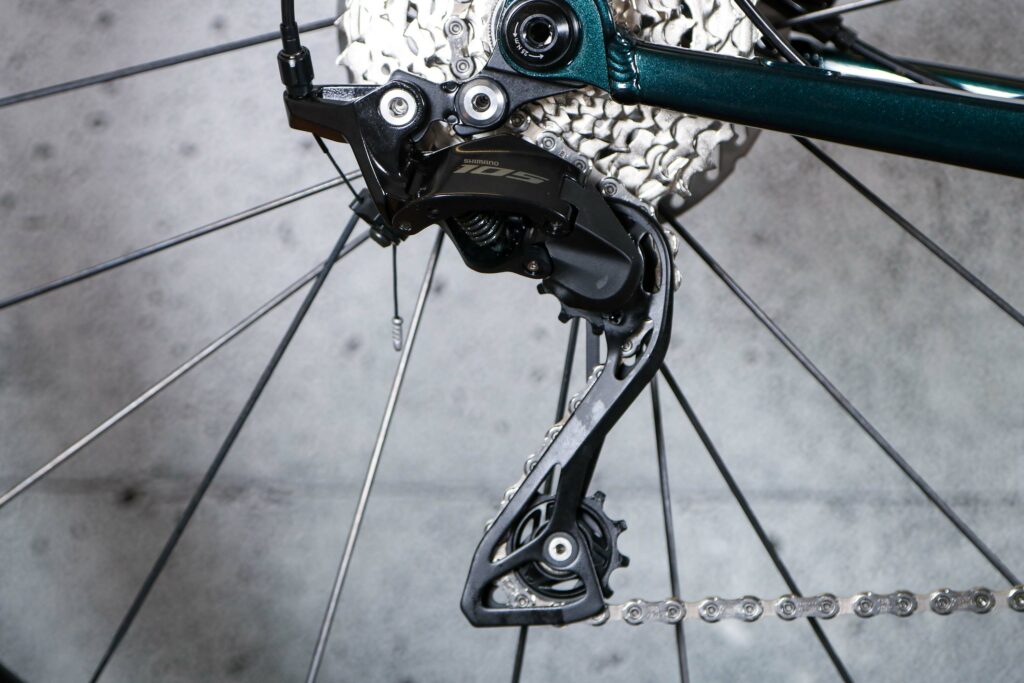
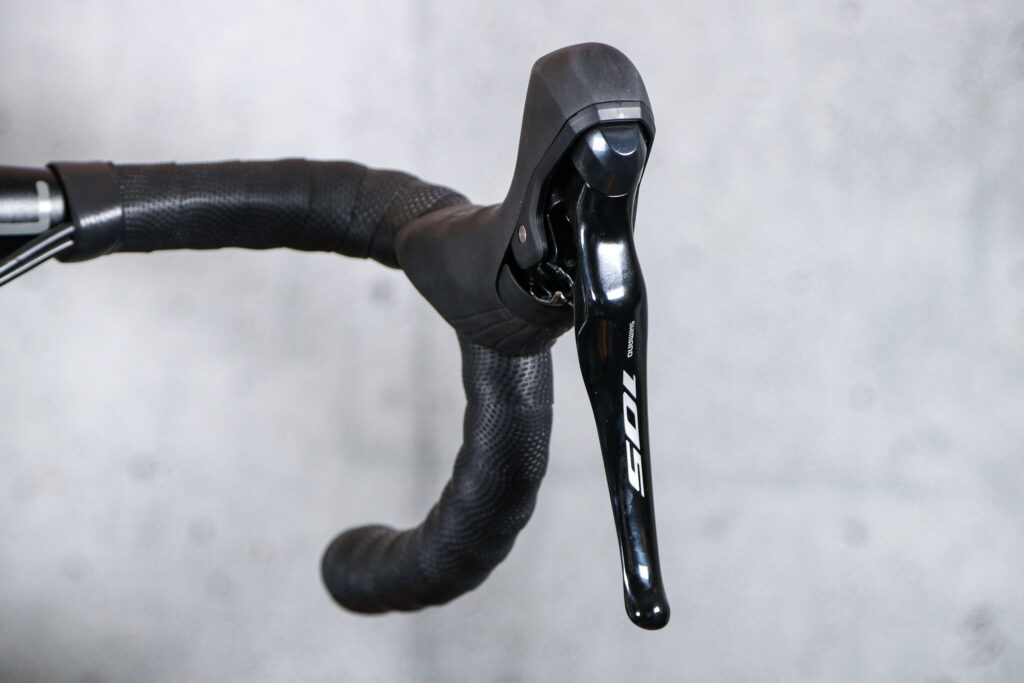
The 105 model here uses the latest 12-speed version of Shimano’s mid-range groupset, but with an AGX+ Gossamer Pro chainset with 46/30T chainrings, which makes sense on this kind of bike. The smallest 105 chainset you can get uses 50/34 which is a bit large for gravel riding.
It’s a good looking chainset though – arguably nicer than the 105 offering I’d say – and the shifting is comparable with Shimano’s. At the back end there is an 11-36T cassette which again gives a decent spread of gears without the ratios having large jumps in between them.
For bang per buck 105 is one of the best groupsets out there and works really well for what the CGR is designed to do. The performance is good, and the parts aren’t ridiculously expensive to replace.
If you are interested, I’ve written a full review on 12-speed 105 here.
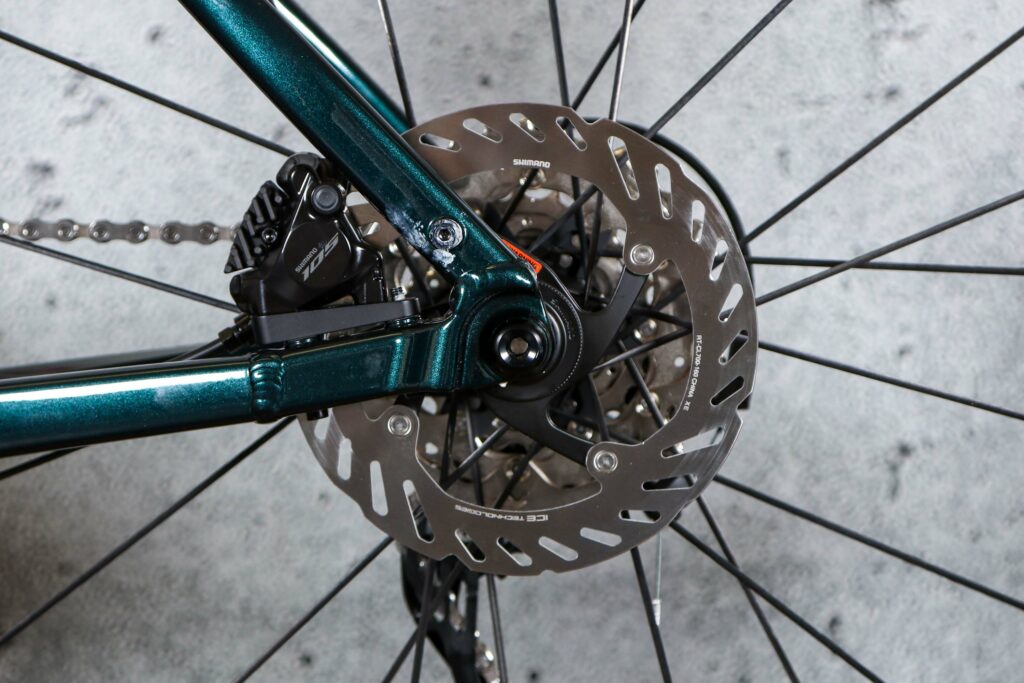
The CGR uses 160mm rotors front and rear, offering loads of stopping power.
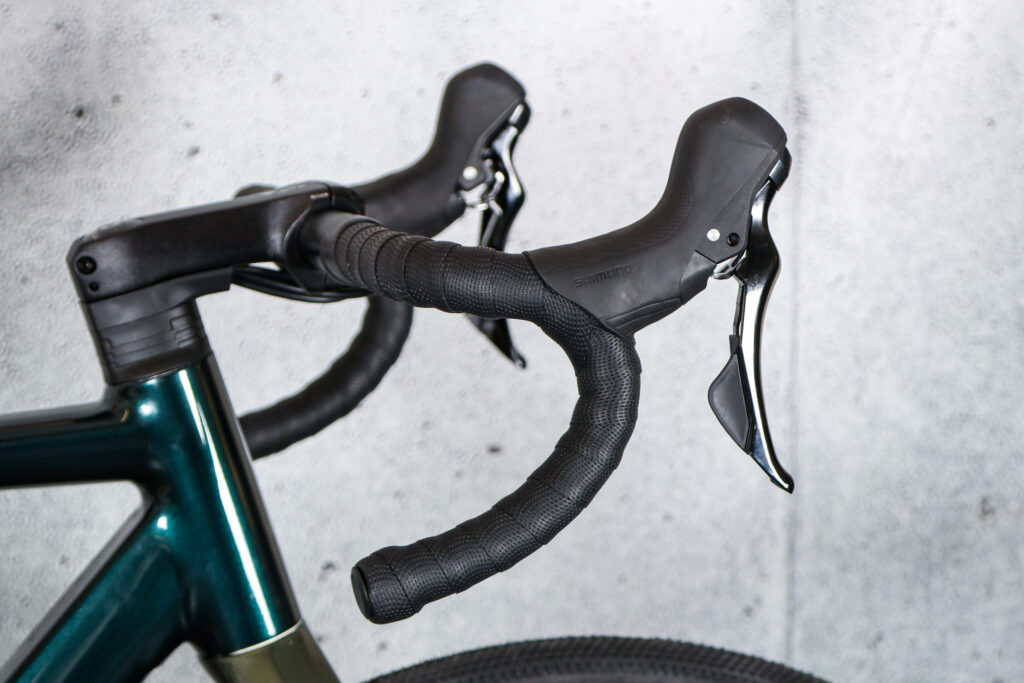
Moving to the cockpit, you’ll find a Level handlebar, which is Ribble’s in-house component brand. It’s an aluminium offering with a 74mm reach and 121mm of drop, but if you want something with a flare at the drops for gravel riding then you can opt for a bar that has a 16-degree flare and 10 degrees of outsweep for no additional cost.
In fact, every component can be swapped from a drop-down list when you order the bike – a nice touch which allows for a bit more personalisation.
The stem is also aluminium and is designed to run the cables and hoses from the handlebar down into the frame via the inside of the head tube.
As standard, you get a Selle Italia Model X saddle, which is a basic model, but comfortable, and that is attached to a carbon fibre seatpost. It’s D-shaped and fits well in the frame, but a minor quibble for me is that nearly all rear light mounts are designed for round posts, so they won’t fit perfectly on the Ribble. On a bike used for commuting, I’d run a rear light all of the time, and it got a bit annoying when I had to keep adjusting my Exposure and Hope lights as they’d spin around on the seatpost.
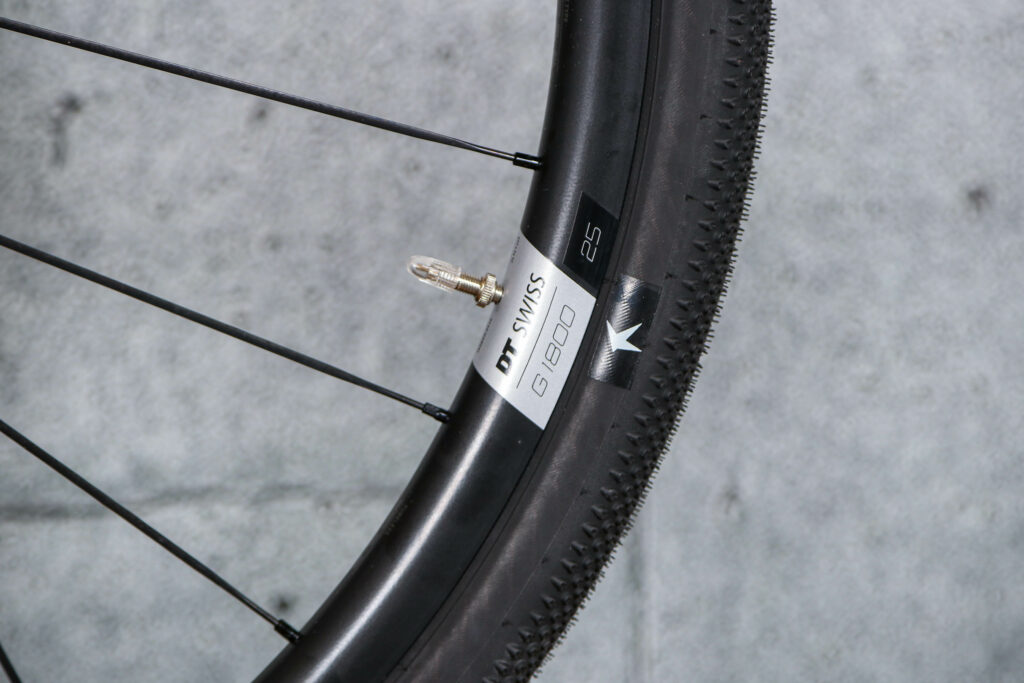
For the wheels, Ribble has specced DT Swiss’s G1800s which I have always found to be reliable and decent all-round performers. They have a 25mm deep aluminium rim which is 24mm wide internally, making them ideal for wider tyres.
You get 24 spokes front and rear – DT Aero Comps to be precise – and DT Swiss’s 37P hubs.
I found them to offer decent lateral stiffness, and they coped with everything I threw at them, both on the road and the gravel.
The tyres are Schwalbe’s G-One Allround which basically do exactly as their name suggests. They have a very light dimpled tread which gives a bit of bite on hardpacked gravel or dry mud, while still rolling well enough on the tarmac.
They are entry to mid-range tyres, but offer good grip with a decent ride quality. They are tubeless ready and in this 40mm size weigh around 485g each.
Like the wheels, they stood up to all of the conditions I encountered, and I wouldn’t be in a rush to change them.
Ribble CGR AL 105: Competition
At £1,799 (currently reduced to £1,699) the CGR AL 105 is reasonably priced, although not as good a deal as the Merida Silex 400 I mentioned earlier in the review at £1,650. The Silex comes with an aluminium frame, 2x Shimano GRX groupset and Merida finishing kit, and while I’d say the CGR is a better road bike, the Silex is a more capable gravel machine and has a better ride quality than the CGR. It has 45mm tyre clearance, or 42mm with mudguards. The fork has mounting points for carrying extra loads too.
Sonder’s owner Alpkit may have had a financial wobble lately, but thankfully they were saved at the eleventh hour, which is great news when you consider how good their bikes are. Their Camino AL is a good crossover gravel machine with 50mm tyre clearances, and plenty of mounting points for adventure. When Mike reviewed the frameset a few years back he was incredibly impressed, describing it as, “An excellent base on which to build a commuting, gravel or bikepacking bike.” The 12-speed mechanical 105 version is priced at £1,599.
Dolan’s GXA is their aluminium framed gravel bike, and it is similar to the CGR in that John said its road styled geometry made it best for whizzing around on dirt roads as opposed to anything too technical.
I’ve ridden the carbon fibre and titanium options, and they do make for great commuting, wide tyred all-road bikes. The GXA will accept 45mm tyres, and has plenty of mounting points for mudguards etc. A 2x 12-speed mechanical GRX option has an asking price of £1,499.99, but with an upgrade to some similar tyres to the CGR, it comes in at £1,549.97.
Whyte’s Verro gravel bike scored very well indeed when Matt reviewed it for our sister site a few months back. Its frame is shared with their Tourus though, which Whyte describes as a light gravel, all-road commuting, touring and utility bike.
It has a hydroformed 6061 T6 hydroformed frame and an aluminium fork, a GRX 10-speed transmission with 46/30 x 11-34T gearing and 50mm tyre clearance. True, the spec is a little lower than that of the Ribble, but it is priced at just £1,299.99.
If you want a crossover road/gravel machine and aren’t bothered about tyre clearance over 42mm then I’d recommend taking a look at the Boardman ADV range which offers both aluminium and carbon models.
The ADV 8.9 Carbon comes with a 2x GRX RX400 groupset for £1,750, while the aluminium framed 8.9 gets the same spec for just £1,200. If a 1x groupset works for you then the alloy 9.2 comes with Apex XPLR AXS gearing for £1,750. I reviewed the ADV 9.2 Carbon here.
Ribble CGR AL 105: Conclusion
Let’s kick off with some positives.
The CGR’s frame is well finished, and I think it is a relatively good-looking bike, plus that large tyre clearance makes it a more capable gravel bike than the previous version. If the fit works for you, you’ll also find yourself with something that is easy to ride on multiple terrains.
For me though, that’s where the good things end and, as you’ve read above, most of that comes down to the new geometry. It just doesn’t work, and in my mind brings too many compromises. It’s lost the do-a-bit-of-everything quality of its predecessor and lacks a decent ride quality too.
Overall, it misses on too many counts for me to recommend it, especially when you look at the prices of some of the competition.
Test Report
What does the manufacturer say about this product?:
Ribble says: “From commutes to café stop rides and gravel spins, the CGR AL delivers comfort, confidence and control across mixed terrain. It pairs a 7005 series hydroformed aluminium frame with Shimano’s 105 12-speed groupset for precision performance, durable DT Swiss G 1800 alloy wheels, and Schwalbe G-One Allround tyres. Finished with a Selle Italia Model X saddle, its the do it all bike that keeps on delivering mile after mile.”
Tell us some more about the technical aspects of this product:
7005 aluminium alloy frame
Carbon fibre fork
50mm tyre clearance
Full mudguard mounts
12-speed Shimano 105 groupset
How does the price compare to that of similar products in the market, including ones recently tested?:
The competitors I’ve mentioned in the main review are generally lower in price when compared to the equivalent CGR AL.
List the components used to build up the bike:
Wheelset: DT Swiss G1800
Tyres: Schwalbe G-One Allround Raceguard 40mm
Handlebar: Level Alloy
Seatpost: Level Carbon
Chainset: FSA AGX+ Gossamer 165mm, 46-30T
Cassette: 12-speed, 11-36T
Shifters: Shimano 105 R7100
Derailleurs: Shimano 105 R7100
Brake calipers: Shimano 105 R7100
Rotors: CL-700 160mm F&R
Bottom bracket: T47 85.5mm
Saddle: Selle Italia Model X Light
Tell us what the bike is for and who it’s aimed at. What do the manufacturers say about it?:
Ribble says: “From commutes to café stop rides and gravel spins, the CGR AL delivers comfort, confidence and control across mixed terrain.”
I think it is designed for versatility, which it does offer, but there are similar bikes out there with better ride quality and geometry.
Where does this model sit in the range? Tell us briefly about the cheaper options and the more expensive options:
This is the range topper. A Tiagra model costs £1,649, as does a SRAM Apex XPLR 12-speed flat barred offering.
Tell us about the build quality and finish of the frame and fork:
The build quality and finish is to a very good standard.
Tell us about the materials used in the frame and fork:
The frame is 7005 grade aluminium alloy while the fork is full carbon fibre.
Tell us about the geometry of the frame and fork:
The geometry is typical gravel in terms of angles, but it has a lengthy top tube which leads to a longer reach than many bikes of this size.
How was the bike in terms of stack and reach? How did it compare to other bikes of the same stated size?:
The stack measurement is typical for this size of bike, but the reach is around 20mm longer.
Was the bike comfortable to ride? Tell us how you felt about the ride quality:
The oversized tube profiles make for quite a harsh ride feel.
Did the bike feel stiff in the right places? Did any part of the bike feel too stiff or too flexible?:
Stiffness is good from a performance point of view in areas around the bottom bracket and head tube junctions.
Was there any toe overlap with the front wheel? If so, was it a problem?:
No.
How would you describe the steering? Was it lively, neutral or unresponsive?:
Neutral.
Tell us some more about the handling. How did the bike feel overall? Did it do particular things well or badly?:
The handling is very neutral on all surfaces, which makes it easy to live with.
Which components had the most effect (good or bad) on the bike’s performance? Would you recommend any changes?:
The tyres do a good job of offering grip on gravel routes while not being too sluggish on the road.
Tell us some more about the drivetrain. Anything you particularly did or didn’t like? Any components which didn’t work well together?:
The drivetrain worked well and it is good to see the FSA chainset specced which gives lower chainring sizes than is offered by the 105 models.
Tell us some more about the wheels. Did they work well in the conditions you encountered? Would you change the wheels? If so, what for?:
Good quality wheels on a budget.
Tell us some more about the tyres. Did they work well in the conditions you encountered? Would you change the tyres? If so, what for?:
A good tyre choice offering decent suppleness for grip and ride feel.
Tell us some more about the brakes. Did they work well in the conditions you encountered? Would you change anything? If so, why?:
Plenty of modulation and power.
Tell us some more about the controls. Any particularly good or bad components? How would the controls work for larger or smaller riders?:
Entry level kit that does a decent job.
Did you enjoy using the product?
Not especially.
Would you consider buying the product? No.
Would you recommend the product to a friend? No.
Use this box to explain your overall score
On paper the CGR offers a lot for a one-bike-does-all kind of thing, but in reality it has a poorer ride quality and a higher price than many competitors, plus I found the geometry to be slightly odd.
About the tester
Age: 46Height: 180cmWeight: 76kg
I usually ride: This month’s test bikeMy best bike is: B’Twin Ultra CF draped in the latest bling test components
I’ve been riding for: Over 20 yearsI ride: Every dayI would class myself as: Expert
I regularly do the following types of riding: Time trialling, Commuting, Club riding, Sportives

1 thought on “Ribble CGR AL”
I own the blue/bronze 725 version and my partner has the older (than the article green) red/black model. Both with 105 2*12. The 725 is my favorite and most used bike in my stable. I run 45c cinturatos and it is comfy as all hell, it is great in epping forest and all over london.
The alu cgr is her 2nd road bike and she is delighted by it.
They’re absolutely great