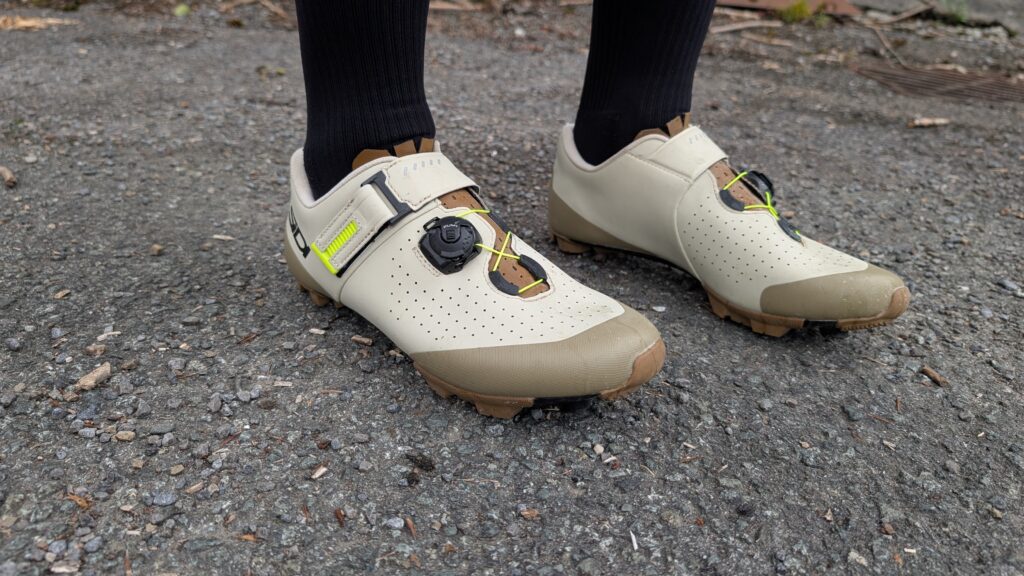

Sidi’s Physis is built for all terrains and endless adventures, from fast-paced cross-country riding to rugged gravel terrain. With a stiff carbon sole that refuses to flex, you’d best keep the action on the pedals, not your feet. If you thought Sidi shoes were only for narrow-footed racers, think again. This pair shatters that stereotype.
- Lake MX332 shoes review
- Northwave Rebel 3 Epic Series clipless shoe review
- Sidi Dust MTB shoes review
Sidi Physis shoe – Technical Details
Sidi is for people with narrow feet, right? Not necessarily. Let’s clear up that assumption straight away. If, like me, you’ve always believed that Sidi’s shoes were best suited to narrow feet, the introduction of the Millennium fit changes things.
Traditionally, Sidi has had a narrow, Italian-style fit. While the MEGA option has been available with extra width and volume, it was limited to certain models. The Physis, however, uses the Millennium fit. This is a different last altogether. Shoes with this fit come in a single width, which is generally wider and roomier than the standard Sidi shape for a given size.
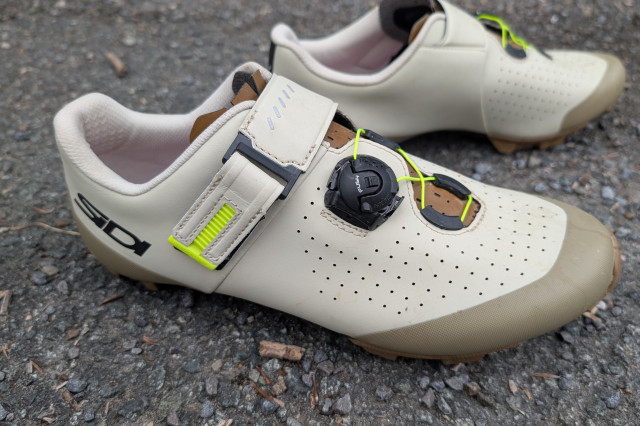
At £300, the Physis is the most expensive off-road shoe to use the Millennium fit. It’s aimed at cross-country and gravel riders and comes in three colour options. The sand version tested here is joined by violet, myrtus, and plain black. Sizes range from 36 to 50, with half sizes from 39.5 to 45.5, so there’s plenty of choice.
Picking the right size is straightforward. I found the size guide accurate, and there was no need to size up to accommodate a wider foot, something I’ve had to do with previous Sidimodels.
A pair in size 41 weighs 666g without cleats, which is light compared to most off-road shoes. Some top-end models from Shimano or Specialized may dip under 600g, but this is still competitive.
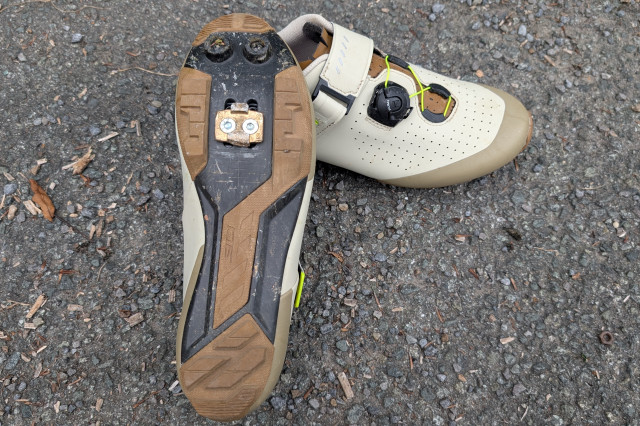
As expected for a shoe of this type, the sole is full carbon with a stiffness rating of 11 on Sidi’s scale, which tops out at 12.
Sidi Physis shoe – Performance
I’ve long dismissed Sidi, assuming its shoes would be too narrow for my wider feet. So I was surprised by how generous the fit felt in the Physis. The toebox is both wide and tall, creating a roomy feel at the front. The insole is basic, offering no added support for arches or pressure points, although Sidi does produce various optional insoles, including some built with memory foam.
Cleat adjustment is reasonable but quite far forward, which may be a drawback for those who prefer a more midfoot cleat position.
Despite the spacious toebox, the upper allows for plenty of adjustment. It accommodates higher insteps or can be pulled snug using the Plustrap closure, which combines Velcro with a ridged plastic section to lock it in place. However, I found the fit across the top of the foot quite narrow. The tongue is slim and short, and the strap has a hard edge that becomes uncomfortable on some rides. Moving the cleats forward helped reduce the pressure, though it’s not my preferred position.
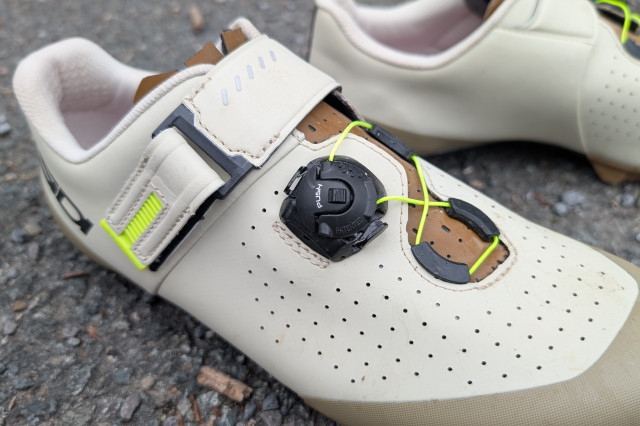
On one ride, I had to remove the strap completely. While not ideal, it showed how effective the dial system and heel hold were on their own.
SIDI developed its dial system back in 1988, long before Boa gained popularity. I found it intuitive to use. Pressing a small button lifts half the dial, allowing you to twist and tighten it. To release, you press two buttons on the outer edge. It’s easy to adjust one-handed, with fine control over tension. The buttons are quite small, which could be tricky with thick winter gloves. Pat had some issues with mud and grass clogging the dial when testing the SIDI Dust, though I haven’t experienced that myself. Compared to other systems, it offers more adjustability than the Boa L6, but it’s not as intuitive or refined as the Boa Li2. Replacement dials and spares are available if needed.
While Sidi’s stiffness scale goes to 12, it’s hard to imagine anything stiffer than the Physis. The sole has zero flex, no matter how hard you sprint or try to twist it. The upper is much more forgiving, with a minimal number of panels creating a smooth, pressure-free interior. The location of the dial and strap, combined with tongue padding, further reduces hotspots.
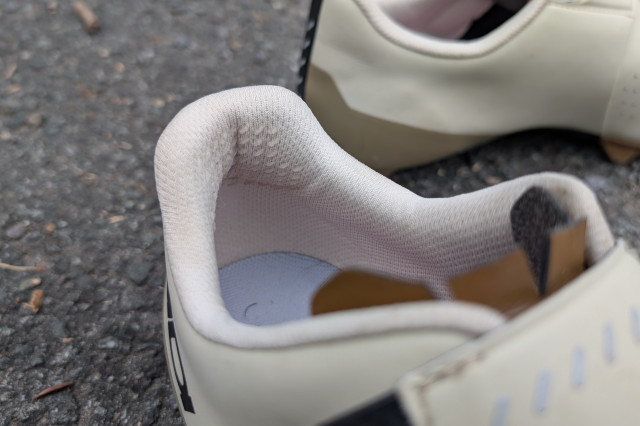
Grip from the sole is decent, with threaded inserts for toe studs. The tread isn’t replaceable, unlike on some other Sidi models, but unless you’re planning to do a lot of walking, it shouldn’t be a concern. With such a stiff sole, walking isn’t exactly appealing anyway.
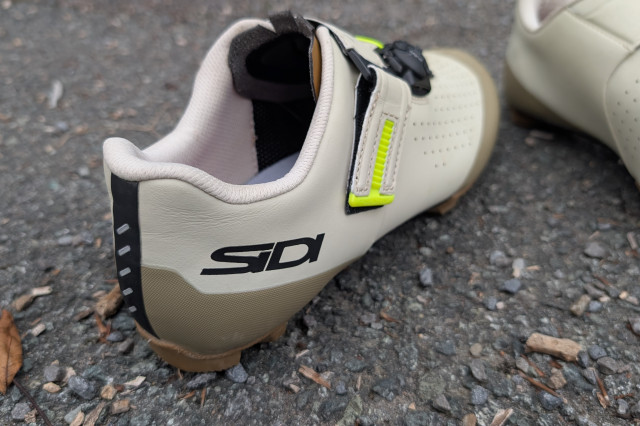
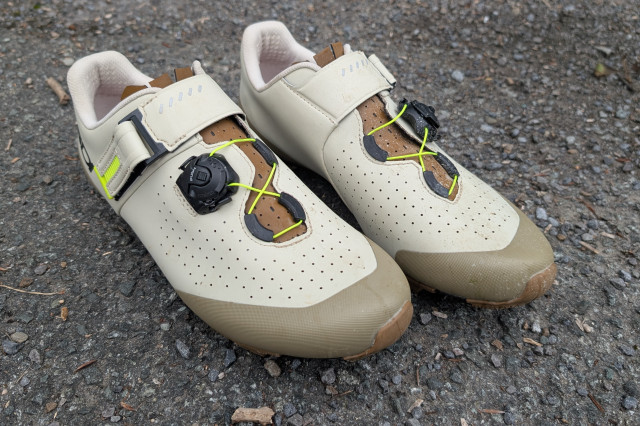
The sand colour might seem impractical for off-road use, but the synthetic upper, with reinforced toe and heel sections, cleans up easily. The materials are thin, so they dry quickly. Despite limited perforations, I’ve found the shoes remain cool even in hot weather, and the upper also fends off water splashes quite well.
SIDI Physis shoe – Verdict
While Sidi doesn’t market the Physis as a race shoe, the ultra-stiff sole certainly feels like one. It’s not something I’d choose for rides with any planned walking. The upper is comfortable, and the combination of dial and strap offers a secure fit, although the short tongue and sharp-edged strap caused me some discomfort.
Fit and feel are highly personal, and for me, the Physis didn’t quite hit the mark. The toebox is wide but also tall, and I found it oversized. Still, while it didn’t suit me, the new Millennium fit shows that Sidi is no longer a brand only for narrow-footed riders.
At £300, the Physis sits among some of the top-tier off-road shoes. The Specialized Recon S-Works and Shimano S-Phyre both cost £350, offering impressive stiffness and low weight. The Lake MX333, the successor to the MX332, is priced at £395 and comes in three widths, with added Thermaform Carbon around the heel.
The Physis has helped challenge some long-standing assumptions about Sidi. The Millennium fit offers noticeably more room in the toebox, which could be ideal for riders who’ve struggled with SIDI’s traditional fit. It’s an incredibly stiff shoe and a strong contender for racing, but at this price, some elements, particularly the thin insole, feel a little underwhelming.
You might also like:
- Best gravel shoes you can buy – tried and tested
- Best mountain bike pedals
- Mountain Bike Icons – the Evie Richards story
Product purpose:
The shoe for unlimited adventures, Physis is designed to deliver all the freedom to top performance. The total carbon stiffness 11 sole with gripping rubber inserts meets Ergofeel anatomical sole design to preserve the foot’s natural functionality. Matched by a premium welded upper, the shoes deliver the greatest balance of comfort and lightness so that fatigue comes at last. The foot is solidly stabilized with Tension-Strap, a technology that Sidi patented to eliminate straps’ tension loss during performances. With all its features, Physis is ready to perform at the top in every ride.
Build extra:
– Dual layer upper construction
– Heel counter
– Anatomical tongue
– Impact protectors
– Dial system with Dyneema® cable
– Tension strap closure
– Ergo-feel sole
– X2FC carbon sole
Fit – 8/10
Stiffness – 11/12
Product construction
Product construction extra:
Product performance
Product performance extra:
Product durability
Product durability extra:
Product weight
Product weight extra:
Product comfort
Product comfort extra:
product value
All the deals displayed on our review pages are pulled from a constantly updating database feed of the best affiliate deals available. The criteria for deciding on what are the best deals is who is offering the lowest, delivered price. In most cases we will be showing the very best deal available online, but sometimes you may be able to find an item cheaper. If you can please feel free to post a link in the comments box below. To find out more about affiliate links on road.cc click here.