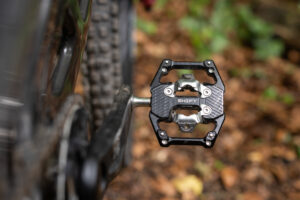
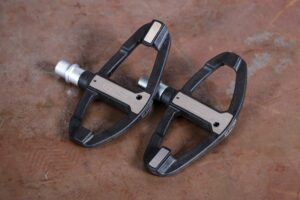
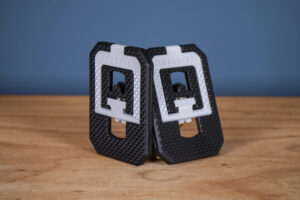
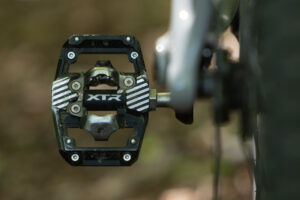
Back in 2022, PNW Components announced its entry into the pedal market with the Loam Pedals. Three years on, and the brand has given its Loam Pedals a well-deserved facelift, using feedback to deliver improvements. And improved, they are as they balance exceptional grip with shed loads of pedal feel. They look great, too, but the move to the rather unique Tectonic pins won’t please everyone.
- Best mountain bike pedals 2025 – the best options from XC to Enduro
- Renthal Revo-F flat pedal review
- Are flat pedals worth it?
PNW Components Loam Pedals Gen 2 – Technical details
Although they look like rather humble pedals, there’s an awful lot going on under the Loam Pedal’s hood. Perhaps the most noticeable is its pins, as the brand has joined forces with Tectonic to utilise its interesting pin technology. Rather than the usual threaded-in pins that we’re used to seeing on almost every flat pedal on the market, the stainless steel Tectonic pins are a single-piece pin that offers traction to both faces of the pedal.
They don’t thread in as you would expect, either, as they bolt in through the sides or edges of the pedals. This means easy removal should a pin become damaged, but it also means that you would effectively have to replace two pins if one end were to break. There are 10 pins per side.

Moving onto the platform, PNW has put a lot of work into the new shape. While it follows a familiar silhouette, it’s less tapered, which is great to see, as it was a qualm I had with the first-generation offering. Additionally, the brand has cut an interesting profile into the platform. As we’re seeing become common on flat pedals, the Loam Pedals are convex and concave. It’s a tricky thing to explain, but thanks to two raised portions above the axle, they produce a convex profile in the fore and aft plane, and a concave profile horizontally. We’re told that this helps achieve a locked-in feel, while still providing a platform that’s easy to move and reposition the foot over. It’s also a fully CNC’d pedal, this time around.

As for internals, it’s a sealed cartridge bearing affair that uses just two bearings. PNW promises that the pedals are user serviceable using regular tools. The pedals are also EFBE Category 5 certified and covered by a lifetime warranty.
PNW claims that the second-generation pedals are 25g lighter than the first at a claimed 445g. I weighed the Gen 2 pedals at 422g.
PNW Components Loam Pedals Gen 2 – Performance
PNW’s second bash at a premium aluminium pedal poses a serious improvement in the looks department. The CNC machining is a clear step up that helps them look worth their cash. But of course, there’s a lot more to a decent pair of pedals than their machining.
The biggest change from the old pedal is the second-gen pedal’s shape. Where the first was heavily tapered with a narrower outside edge and a large inside, the new pedal follows a similar form, but the taper is much more subtle. This right away solves one of the problems I had with the first-generation model. Overall, the pedal is a lot more supportive to the whole of the foot and accommodating of poor foot placement.
Support is a big draw of the Loam Pedal Gen 2 in that it provides tonnes of it. Although the brand has put work into developing a concave and convex platform, it’s very subtle, again, and as a result, it feels like a much flatter pedal than it looks. It’s tough to say whether or not the concave/convex design of the platform is effective in the way that PNW aimed for, but it delivers huge support and excellent contact with a shoe’s sole regardless.

I rode these pedals with both Five Ten’s Freerider Pro Boa shoes and Ride Concepts’ Hellion, and performance was very consistent, but traction was much more plentiful with the Five Ten’s comparatively flatter tread. With the Hellion, I could move my feet over the pedals with a little more freedom, but with the Freerider Pro, the Loam Pedals provided a totally locked-in feel. So, although the brand promises easy foot maneuverability, it’s very much dependent on the shoe you’re using.
However, that heft of traction comes solely from the Tectonic pins. It’s an interesting design that directly addresses the issues that can arise when a traditional pin bends – it can get very difficult to remove, especially if it’s a bottom-loading pin that requires an allen key. Once bent, you’ll have to get handy with a saw to free the pin. However, Tectonic’s design makes each pin easily accessible regardless of how it’s broken. Simply release the pin with the side-mounted bolt, and the whole thing slides through.

These pins are shorter than what PNW included on the old pedals, and that’s a great thing. They help achieve the second-gen Loam Pedal’s excellent feel, but without sacrificing all-out traction. The pin heads are threaded, too, and while it might not seem like such a benefit, the threads mesh even better with a shoe’s rubber, resulting in even more grip.
That said, while the Tectonic pins bring their own benefits, they’re not without some qualms. First off, their height isn’t adjustable. You get what you get, but given the traction and pedal feel they conjure, I’ll bet that few people would want longer or shorter pins. Where people may find more of an issue is that a Tectonic pin kit will set you back £15. It comes with enough pins to service a whole pedal, but against regular pins, it requires a little more of an investment. A pin kit for Race Face’s Atlas and Aeffect pedals will set you back £12, and you can get a pack of 40 pins for HT pedals for £4. £15 will service Burgtech’s B-Rage pedals, but you get enough for both in that pack.
PNW Components Loam Pedals Gen 2 – Verdict
The Loam Pedals Gen 2 are a more premium offering from PNW Components, and their £147 price tag proves as such. At this price point, there’s a lot of competition, but the Loam Pedals still hold their own. OneUp Components’ Wave Pedals are £150, and while their unique shape brings a lot of good things, the traction on offer isn’t quite as serious as that of PNW’s latest offering. However, OneUp’s pin kits are even pricier at £21. The brand’s aluminium pedals, however, come in at £140 and are well worth a look if you can forgo the Tectonic pins.
Pembree’s D2A pedals RRP at £150, but I found PNW’s platform to be a little broader and more supportive.
Funn’s Python pedals then come at around £120, depending on where you look, and while their pins are easy to replace, and they’re plenty grippy enough, reliability isn’t as strong, and you’ll need special tooling to achieve a full service.
PNW Components’ Loam Pedal Gen 2 brings Tectonic’s interesting pin design to a mass market, where they bring easy serviceability and all the traction you’ll ever need. The pedals look great, are super durable, and deliver competitive value in the premium pedal space, but if you’re after an adjustable pin height, you’ll have to look elsewhere, and the brand’s claims of quick maneuverability are very much shoe dependent.
All the deals displayed on our review pages are pulled from a constantly updating database feed of the best affiliate deals available. The criteria for deciding on what are the best deals is who is offering the lowest, delivered price. In most cases we will be showing the very best deal available online, but sometimes you may be able to find an item cheaper. If you can please feel free to post a link in the comments box below. To find out more about affiliate links on road.cc click here.