


- This topic has 18 replies, 10 voices, and was last updated 4 years, 1 month ago by
ChasP.
-
CreatorTopic
-
September 2, 2022 at 1:10 pm #32254
DJHarris
I’ve just bought a set of all carbon road wheels that have a maximum tyre running pressure of 6 bar. How can I find out the running pressures of clincher tyres before I buy as they don’t appear on any suppiers website (only on the tyres themselves)?
-
CreatorTopic
-
AuthorReplies
-
They tell you the ideal
They tell you the ideal pressure for any tyres of the width you input. Depending on the variables you may need a wider tyre to be under the pressure limit although 6 bar quite high nowadays. hawkinspeter
I just tried to find the max
I just tried to find the max tyre pressure for Prime rims and can’t see the info anywhere. Nowadays, I run tubeless 28mm at around 70psi and haven’t had any problems with them.
IanMSpencer
hawkinspeter wrote:Is that true? I would have thought that rims would be stronger than that as otherwise people would be destroying rims by inflating to the tyre max pressure.The bit I find interesting is my Hunt wheels referenced below, where they show a steep declining maximum pressure based on tyre size. Now, thinking physics, how is the wheel affected by tyre size? I can only think that is the leverage that the bead can apply to the hook, because obviously the pressure on the bed of the rim is not changed by changing the tyre size. So I presume the maximum pressures are to do with the strength of the sidewall retention structure. I would then add the observation that some wheelmakers have got keen on hookless rims because that simplifies the rim stricture and allows for a stronger, lighter rim.
Going back to tyre size, presumably a bigger tyre can produce a significantly greater sideways force on the rim (looking back to my Hunt specs, it is quite a dramatic change in permitted maximums). Increasing tyre pressure presumably also affects that force (a softer tyre can deform more easily).
Regardless, these numbers can only possibly be guides due to the different structures and profiles used by different manufacturers – think radial vs cross-ply with cars (if you are old enough to remember them!).
Perhaps the sensible answer is to ask the supplier what the recommended tyres are for the wheel.
HoarseMann
I’m just going off the wheels
I’m just going off the wheels I’ve had in the past, most rims have had a lower rating than the tyres. But I suspect there’s a healthly safety margin in there.
edit: here’s a good spec sheet from DT Swiss, definately rims less than tyres I’d say from that. 28mm contis reckon 120psi max, the swiss rims are 113 for hooked and 73 for hookless with a tube.
https://www.dtswiss.com/pmt/00/00/00/00/00/00/00/10/00/00/00/86/6/MAN_WXD10000000866S_WEB_ZZ_001.pdf
 Miller
If the wheel m/f says max
If the wheel m/f says max pressure 6 bar, I’d respect that. As for tyres, run them at any pressure you like. There are many good remarks here giving pointers. The tyre sidewall legend shows a range, not a specific pressure, so not really that much help.
lol, clearly needed more
lol, clearly needed more sleep (or should have waited until the first coffee had taken effect)!
But the key is the max pressure the rim can take will vary depending on tyre width.
hawkinspeter
HoarseMann wrote:I’d first check what the max pressure limit is on your carbon rims. It will vary depending on tyre width.Generally, tyres tend to have a higher max than the rims can take.
Is that true? I would have thought that rims would be stronger than that as otherwise people would be destroying rims by inflating to the tyre max pressure.
Sriracha
HoarseMann wrote:
HoarseMann wrote:I’d first check what the max pressure limit is on your carbon rims. It will vary depending on tyre width.
Generally, tyres tend to have a higher max than the rims can take.
From the OP:
[I]”I’ve just bought a set of all carbon road wheels that have a maximum tyre running pressure of 6 bar.”[/i]I’d first check what the max
I’d first check what the max pressure limit is on your carbon rims. It will vary depending on tyre width.
Generally, tyres tend to have a higher max than the rims can take.
 Simon E
You haven’t said what qualities (long life, puncture proofing, rolling resistance etc) you want from your tyres so it’s hard to recommend individual tyre models.DJHarris wrote:I’m looking for clincher tyres that run with up to 6 barFor a standard road bike on 25mm tyres my starting point is Front: rider weight in psi. Rear: add 10 psi.
Narrower tyres should be run at higher pressures than wider ones to avoid pinch punctures. For 23mm I’d add 10 psi to those numbers, for 28mm I’d subtract 10 psi.
Divide by 15 to get bar (or 14.5 if you’re picky) though I find psi easier to remember.
Then try running 5-10 psi less and then more in each tyre to establish your personal preference. Don’t take tyre sidewall numbers or others’ opinion as gospel.
WTB show their tyre pressures
WTB show their tyre pressures too…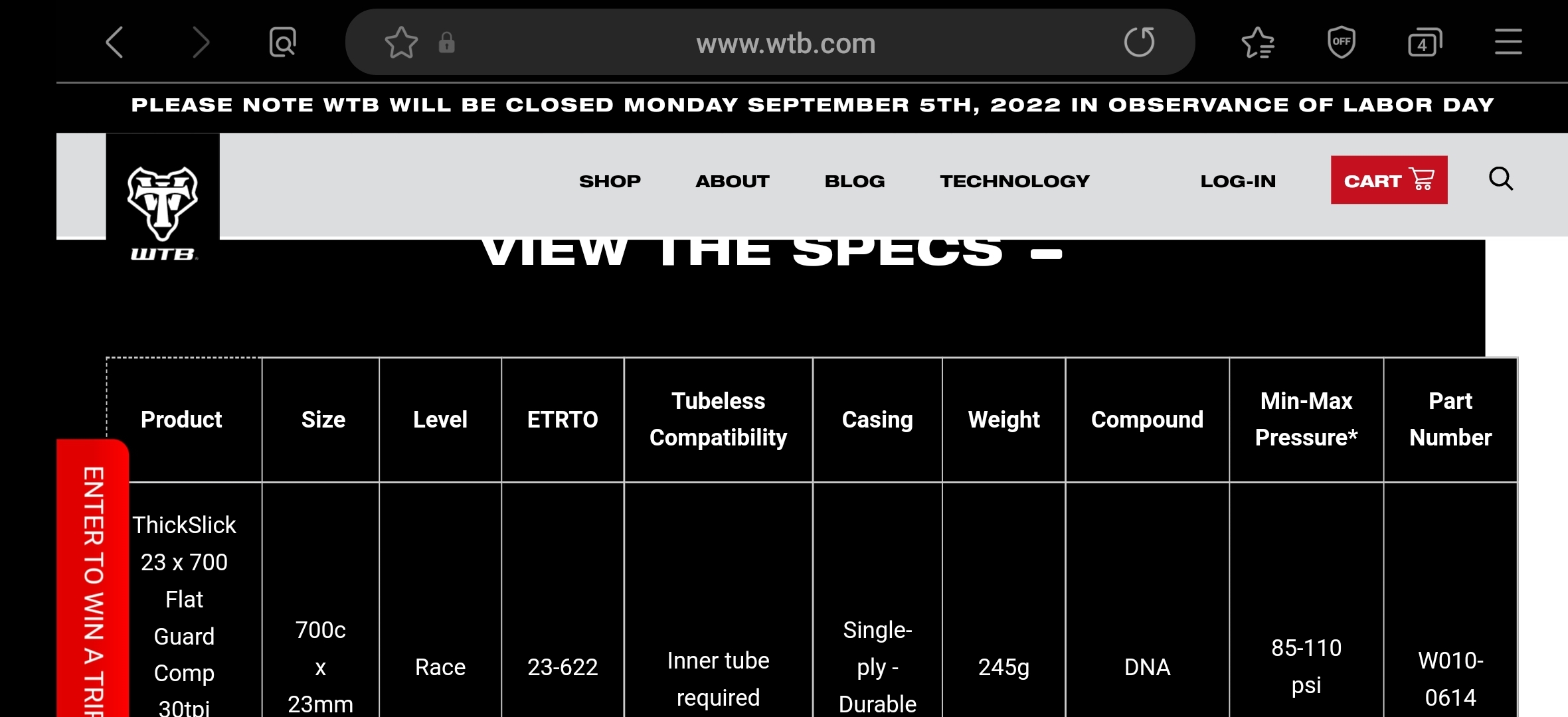
Michelin show the tyre
Michelin show the tyre pressures on their website.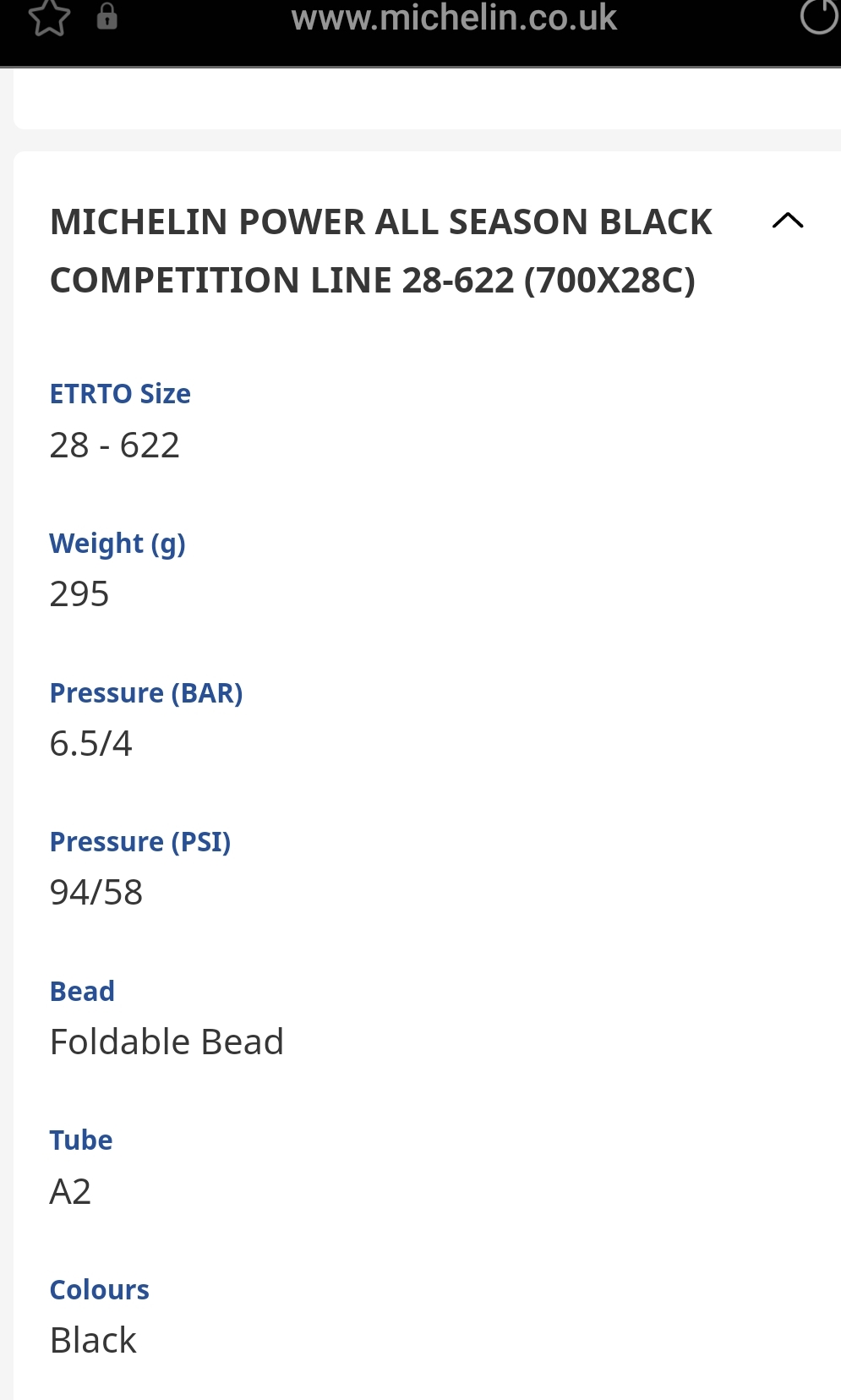
What brand are the wheels and
What brand are the wheels and what are their intended purpose? What is the minimum tyre width recommended for the rims?
Marked sidewall pressures are often themselves maximums, not the required pressures. So for example, you probably would find that Continental 28mm have a maximum of say 120psi with no useful markings for recommendations on the sidewall. If you look up these for example:
https://conti-tyres.co.uk/road-and-track/clinchers/grand-prix
They are saying recommended pressure of 95psi – which is 6.5 bar – which doesn’t help?
I have some Hunt carbon wheels which have quite a strange range of rapidly declining pressures with increasing width which don’t quite make sense to me (my 32mm tyres in principle cannot be used at their recommended pressure, 50-75psi, but I run below that anyway, my risk).
(see https://www.huntbikewheels.com/products/hunt-30carbon-gravel-disc-road-wheelset-1469g-30deep-27wide-999) but they do allow for 100psi on narrower tyres which is more than hard enough these days.
In the end the right pressure depends on your weight, and the riding you are doing. Also factor in whether tubeless or not – I would run tubeless softer as you don’t need to worry about snake bite punctures – with pressures lower than recommended, the problem is undue flex in the sidewall, and with tubeless, going too low can lead to the tyre not being firmly enough seated so could be pulled off in extreme situations, but that’s more an offroad problem in the main. Below a certain pressure, valves tend to get leaky too as they are not held firmly shut.
In the end, manufacturers aren’t very helpful because the right answer needs a calculator and knowledge of the rim design.
 mark1a
Your ideal pressure will
Your ideal pressure will depend on a number of things, including total weight of bike & rider, internal rim width, tyre width, whether rims are hookless or not, whether you’re going tubeless or not. Probably more but that’s off the top of my head.
I’m looking for clincher
I’m looking for clincher tyres that run with up to 6 bar
-
AuthorReplies
- You must be logged in to reply to this topic.