Repeated broken rear spokes on Trek District 4 Equipped

  • Creator
    Topic
  • #32792
    andystow

    I have about 4000 miles now on the Trek District 4 Equipped I bought new last year, and I think I’ve now had five or six broken rear spokes. It has a Shimano Alfine 8 rear hub laced to a Bontrager rim with 32 straight gauge spokes, and has 700C x 40 mm tyres.

    The shop has been great at replacing them under warranty, and last time they even got Trek to give me a new rear wheel on the theory that maybe it was built wrong. Well, that was less than six months and 1500 miles ago, and I’ve just dropped it off again when I found another broken one. They all break at or just inside the nipple, with a few threads left on the spoke.

    I bought the bike in late March of 2023, so I have about six weeks of warranty left. I am well, well under the weight limit for the bike at about 165 lb / 75 kg, have never used it for heavy loads, and about the roughest thing I do to it is slow rides up or down 6″ dropped kerbs. I also don’t put out massive power, especially when I ride this bike, which is mainly my commuter. Any thoughts? I’m not looking to return the bike. My thought was once it’s out of warranty I’ll just rebuild it myself with quality double butted spokes and upgrade to brass nipples, probably $50 (£40) per wheel if I do the labour myself. I told the shop owner that, and he assured me they “won’t let it get that far.”

    My intent with this bike, with its belt drive, internal gears, and generator lights, is it would be an unstoppable 100% reliable pub bike to get me home at night without any mechanical issues, and to be fair it has been. Even with two broken spokes there was enough chain stay clearance to handle the wobble.

    Any theories as to what the cause might be other than “maybe the spokes aren’t strong enough?”

Viewing 12 replies - 16 through 27 (of 27 total)
  • Author
    Replies
  • #1020359
    0
    HoarseMann

    I still can’t work out if it

    I still can’t work out if it’s a 2-cross or 3-cross lacing, but it’s something to check. The angles of some of those spokes do look like they are bending quite a bit at the nipple.

    https://www.purecycles.com/blogs/bicycle-news/156387911-speaking-of-spokes-spoke-patterns

    #1020357
    0
    don simon fbpe

    They’re unlikely to be extra

    They’re unlikely to be extra tight, you’d have a particularly hard ride and potentially many punctures, unless short spokes have been used and we go back to their QC dept. Again the wheel being true radially and axially doesn’t really mean that much if the spoke tension isn’t within tolerance. I’ll assume that when spokes have been added that attention has also been paid to other spokes across the wheel.

    First port of call for me would be checking spoke tension.

    It’d do no harm to strip it down and rebuild it, if Trek can’t sort it out under warranty, there’s nothing to lose.

    #1020355
    0
    andystow

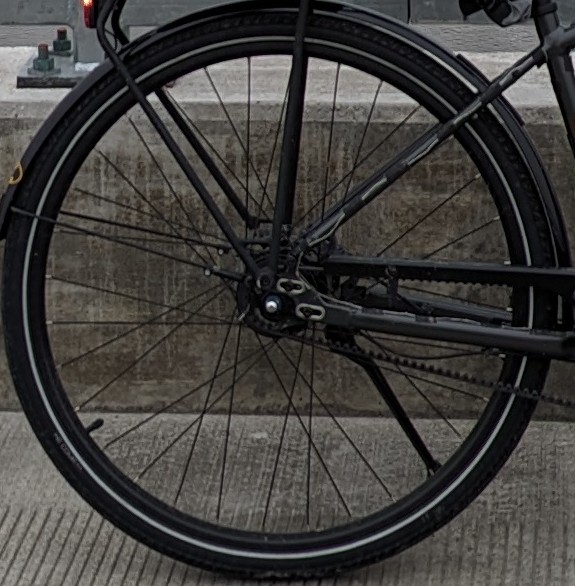
    Here’s a recent photo of my

    Here’s a recent photo of my actual rear wheel. I haven’t kept track of which spokes broke, but the first time it was definitely one of the two adjacent to the valve.

    https://cdn.road.cc/wp-content/uploads/roadcc/PXL_20240101_215215692~2.jpg

    #1020353
    0
    andystow
    HoarseMann wrote:
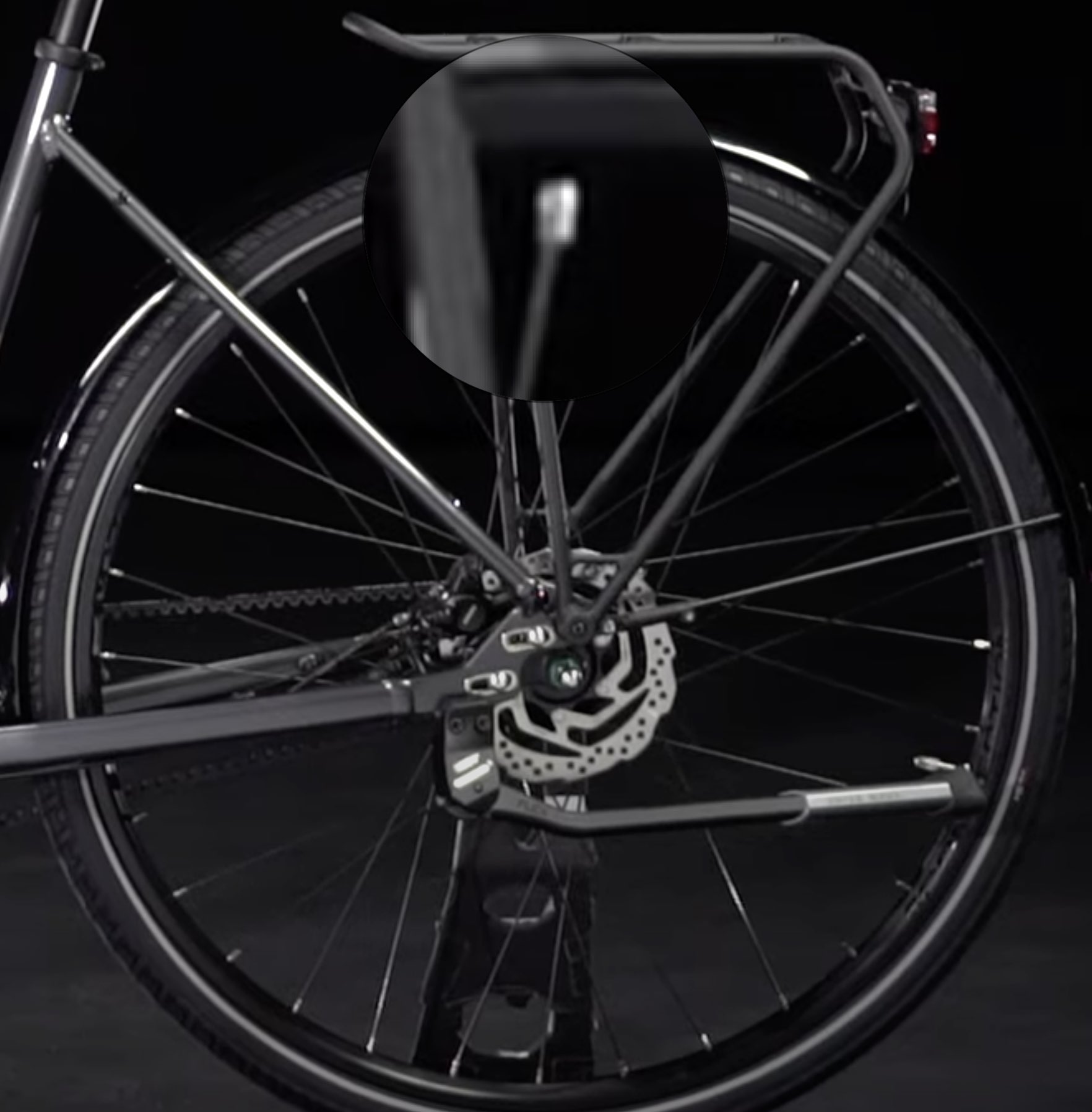
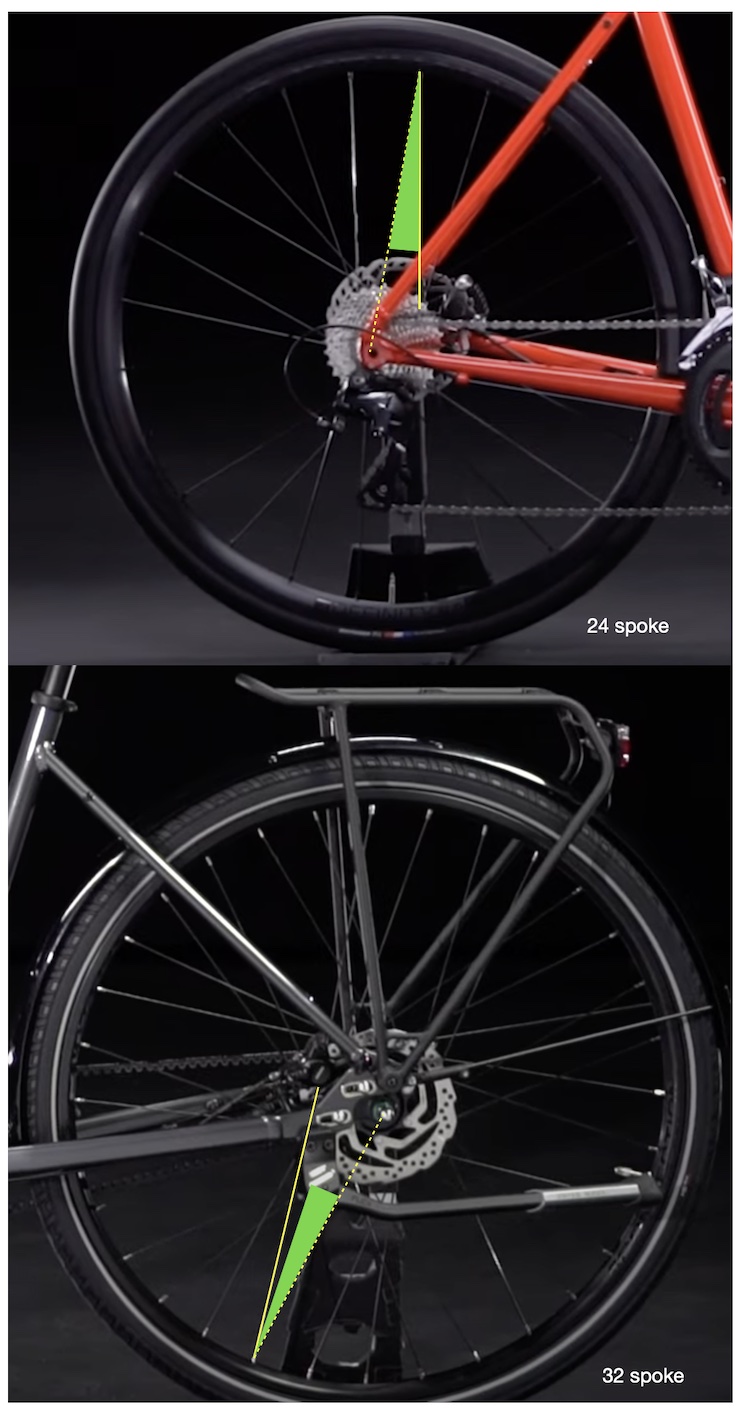
    Looking at the photos on the Trek website, the angle that some of the spokes are leaving the nipple is quite extreme. I think Trek have made a mistake using a 2-cross pattern on a 32-hole hub – especially an internal geared hub that has wide flanges. (edit: if it is a 2-cross pattern, in some photos it looks like it might be 3-cross!).

    On lower spoke count wheels with a smaller flange hub, the spoke angle is less. See below a rough example, the green triangle is the same size, you can see how much greater the spoke angle is on the 32 spoke wheel of the District 4 compared to a 24 spoke Domane.

    I’d ask them to rebuild the wheels (or at least the rear) in a 3-cross pattern.

    Thanks, good point. I see what you mean about the angles. The only other bike I’ve broken spokes on was my cheap Chinese Bickerton folder, and due to the short spoke length it had some very extreme angles. They also always broke at the nipple.

    #1020351
    0
    andystow
    don simon fbpe wrote:
    Given you have the ability to build a wheel, have you (or even the shop) put it in a stand to check out the build quality/spoke tension? Even if just to eliminate that.

    I’ve never built one from scratch, but I’ve replaced spokes before and have access to a truing stand (I sometimes volunteer at the local bike Co-Op.) The spokes on this wheel have always seemed extra tight to me by feel, and they are really thin (I’ll measure them when I get it back this time.) At some point the tensiometer at the Co-Op walked off, unfortunately, but the mechanics at the Trek store are the most competent in town, so I imagine they’ve checked the obvious.

    The wheel is very true both radially and axially when all the spokes are there.

    #1020349
    0
    HoarseMann

    I might be wrong about it

    I might be wrong about it being 2-cross, but the spoke angles do look quite high, this one in particular:

    https://road.cc/wp-content/uploads/roadcc/nipple angle.jpg

    #1020347
    0
    don simon fbpe

    I would guess that multiple

    I would guess that multiple recorded failures would point at design flaws and one or two instances of failure pointing at manufacturing or QC failure (spoke tension).

    #1020345
    0
    hawkinspeter
    HoarseMann wrote:
    Looking at the photos on the Trek website, the angle that some of the spokes are leaving the nipple is quite extreme. I think Trek have made a mistake using a 2-cross pattern on a 32-hole hub – especially an internal geared hub that has wide flanges. (edit: if it is a 2-cross pattern, in some photos it looks like it might be 3-cross!).

    On lower spoke count wheels with a smaller flange hub, the spoke angle is less. See below a rough example, the green triangle is the same size, you can see how much greater the spoke angle is on the 32 spoke wheel of the District 4 compared to a 24 spoke Domane.

    I’d ask them to rebuild the wheels (or at least the rear) in a 3-cross pattern.

    Interesting – I wouldn’t normally think that 2-cross vs 3-cross would make much difference to the spoke angles. Also, I would expect the nipple to deform slightly to accomodate that if they (more likely the nipple flanges) aren’t sitting flush with the rim. I’d say that 3-cross would be stronger than 2-cross, but mainly for resisting sideways forces on the wheel (including the forces when braking/pedalling).

    A rebuild to 3-cross is a good idea though as it’ll force them to use a different set of spokes due to the longer length required.

    #1020343
    0
    HoarseMann

    Looking at the photos on the

    Looking at the photos on the Trek website, the angle that some of the spokes are leaving the nipple is quite extreme. I think Trek have made a mistake using a 2-cross pattern on a 32-hole hub – especially an internal geared hub that has wide flanges. (edit: if it is a 2-cross pattern, in some photos it looks like it might be 3-cross!).

    On lower spoke count wheels with a smaller flange hub, the spoke angle is less. See below a rough example, the green triangle is the same size, you can see how much greater the spoke angle is on the 32 spoke wheel of the District 4 compared to a 24 spoke Domane.

    I’d ask them to rebuild the wheels (or at least the rear) in a 3-cross pattern.

    https://road.cc/wp-content/uploads/roadcc/spoke angles.jpg

    #1020341
    0
    hawkinspeter

    I had a similar issue years

    I had a similar issue years ago when I bought my first road bike – a Cannondale Synapse. However, I had rear wheel spoke breakages at the usual place where the spoke bends near the hub and it’s unusual to get spokes breaking near the nipple as that’s a stronger part of the spoke. The bike shop replaced the factory supplied rear wheel with one that they considered to be an upgrade to fix the issue, but that was even worse and noticeably went out of true after a short ride.

    The shop kept trying to fix the wheel and it kept going wonky, so I got bored of leaving my bike with the shop to fix, so I tried to true the wheel myself and found that the rim was distorted and so the spokes had to be very uneven in tension to make the wheel round. Once I realised the rim was unusable, I built up my own wheel instead (the shop hadn’t agreed to me trying to true the wheel as they thought I’d been tinkering with it previously and had caused the problem).

    With your problem, I wonder if maybe the spokes were under tensioned so that some of them were becoming unloaded during a revolution and that could explain the breaking near the nipple end.

    #1020339
    0
    don simon fbpe

    Given you have the ability to

    Given you have the ability to build a wheel, have you (or even the shop) put it in a stand to check out the build quality/spoke tension? Even if just to eliminate that.

    #1020337
    0
    andystow

    I will add that I’ve never

    I will add that I’ve never had a broken spoke, or even had to true, my Mason X Hunt 650B Adventure Dynamo Disc Wheelset. I ride it much harder and over chonky gravel, and have nearly 15,000 miles (24,000 km) on them. They do have a slight advantage with supple 48 mm tyres vs. fairly harsh Bontrager 40 mm, but they also only have 28 spokes per wheel, and since they use a cassette I’d imagine they have a steeper driveside angle than those on the Alfine 8.

    Per Hunt:

    • J-bend cold drawn.
    • Made from high grade T302 (18/10) stainless steel wire by Sapim.
    • Triple butted 2.0-1.6-2.0 (then 2.2 at the head for the patented Pillar Spoke Re-enforcement).
    • 28 spokes laced 2-cross front and rear.
    • Black stainless treatment.
Viewing 12 replies - 16 through 27 (of 27 total)
  • You must be logged in to reply to this topic.