


- This topic has 30 replies, 13 voices, and was last updated 3 years, 8 months ago by
ShutTheFrontDawes.
-
CreatorTopic
-
January 24, 2023 at 9:59 am #32421
mikeramseyer
I have just read the account of the cyclist who hit a pot hole in Twickenham and his resultant NHS experience. I was hit by a car in Italy last September. My beloved Colnago C60 was destroyed. Every part of it was broken. Now note my order of priorities in mentioning the bike first! I hit the car windscreen, was carried forward 30 meters and dumped back in the road. An ambulance arrived with 10 minutes, possibly quicker. Once in the ambulance the female paramedic jumped back out and, unasked, retrieved my Garmin Edge 830! In hospital I had CT scans to my head and legs and was kept in all day for observation. Luckily I had no long term damage
Luckily because 4 people have been killed at the junction where I had my accident. In fact I was able to race in the Prosecco GF 10 days later on another bike. More importantly my treatment was immediate, of the highest standard of professionalism, care and expertise, and finally, the hospital did not charge me. We sometimes joke about the chaos of Italy but my experience tells a different story. Unfortunately after many years of underspending by the Government on our fantastic NHS, the result of that underspending is coming home to roost. -
CreatorTopic
-
AuthorReplies
-
mark1a wrote:
mark1a wrote:Here’s a question that has not been answered – the OP says that the paramedic thought to retrieve a Garmin Edge 830 from the damaged bike. Did she stop and save the current ride activity, and make sure it went to Strava?
If she didn’t keep it running so that they could pick up some KOMs on the ambulance ride to the hospital, I would give the customer service a 3/10 at best.
Rich_cb
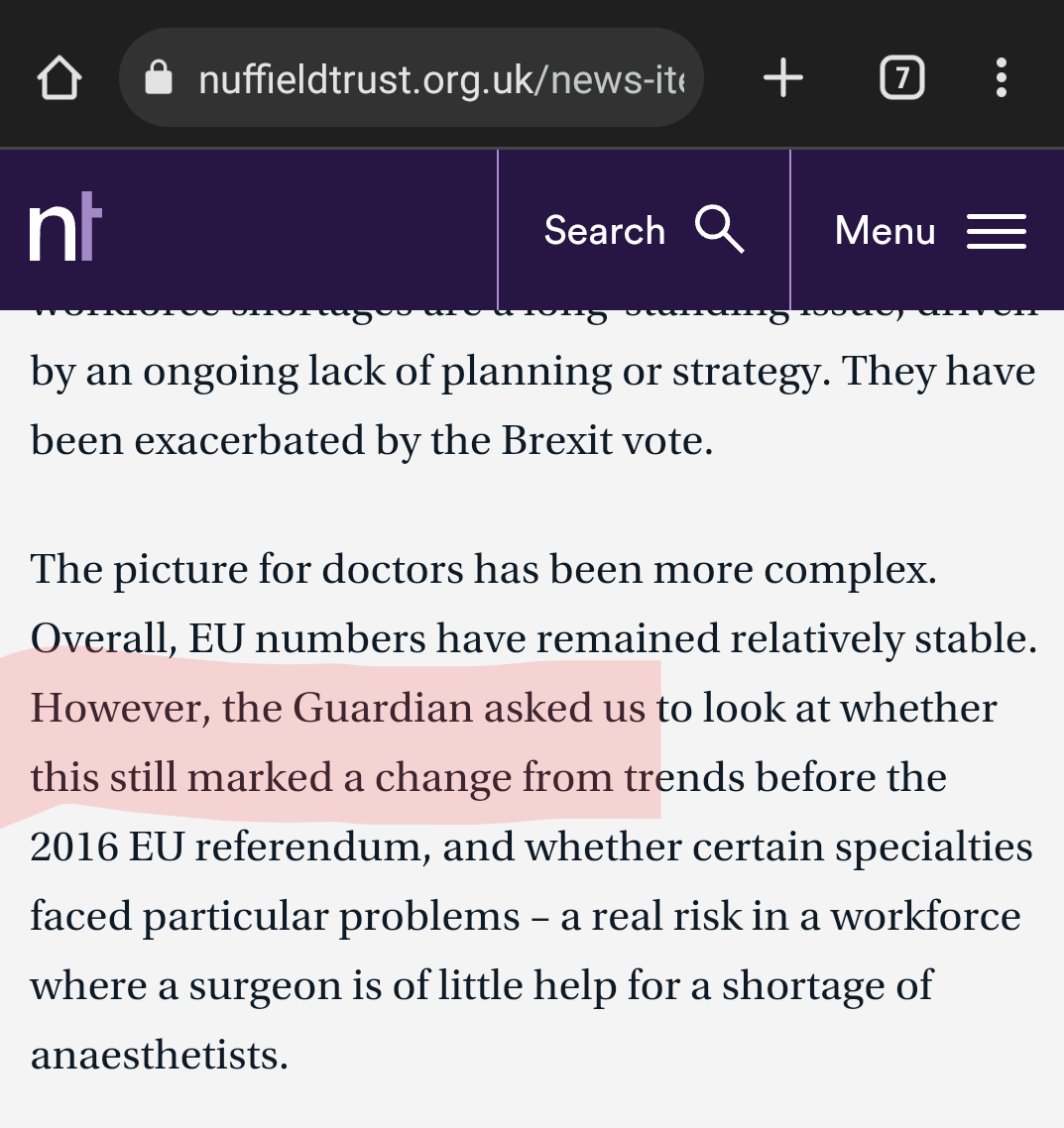
No I think the guardian asked
No I think the guardian asked them to look at a very narrow question. They answered this narrow question honestly but given the narrow remit the answer is itself misleading.The guardian knew this would be the case and they spun the report into an attack article.
The reality is that EU applicants used to be able to apply for NHS jobs as soon as they were advertised. They only had to compete with UK applicants. Now EU applicants are only invited to apply if there are no suitable UK applicants and then they have to compete with the rest of the world.
They are now subject to increased competition and they aren’t always succeeding against the increased competition as the numbers clearly show.
The NHS now has access to a wider pool of potential candidates and the best applicants seem to increasingly be from Asia and Africa rather than Europe.
Ironically, in other circumstances I’m sure the Guardian would be applauding merit based appointments leading to increased diversity in the workforce.
 hawkinspeter
Rich_cb wrote:
Rich_cb wrote:Commissioned by the guardian. EU applicants have to compete with global applicants post brexit. The decrease in EU recruitment merely reflects this added competition.So you think that Nuffield Trust have misrepresented the numbers and/or are lying? Just because an organisation asks a question, it doesn’t mean that the answer is necessarily compromised.
It seems fairly obvious to me that introducing extra paperwork and hurdles for EU staff is going to reduce that number. Whether or not those numbers can equally well be replaced from elsewhere is another question and it certainly appears that the NHS is facing staff shortages despite what you claim.
Commissioned by the guardian.
Commissioned by the guardian.EU applicants have to compete with global applicants post brexit.
The decrease in EU recruitment merely reflects this added competition.
 mark1a
Here’s a question that has
Here’s a question that has not been answered – the OP says that the paramedic thought to retrieve a Garmin Edge 830 from the damaged bike. Did she stop and save the current ride activity, and make sure it went to Strava?
hawkinspeter
Rich_cb wrote:
Rich_cb wrote:Don’t believe the guardian report. They commissioned a report to find the results they wanted.The report is from Nuffield Trust: https://www.nuffieldtrust.org.uk/news-item/has-brexit-affected-the-uk-s-medical-workforce
Don’t believe the guardian
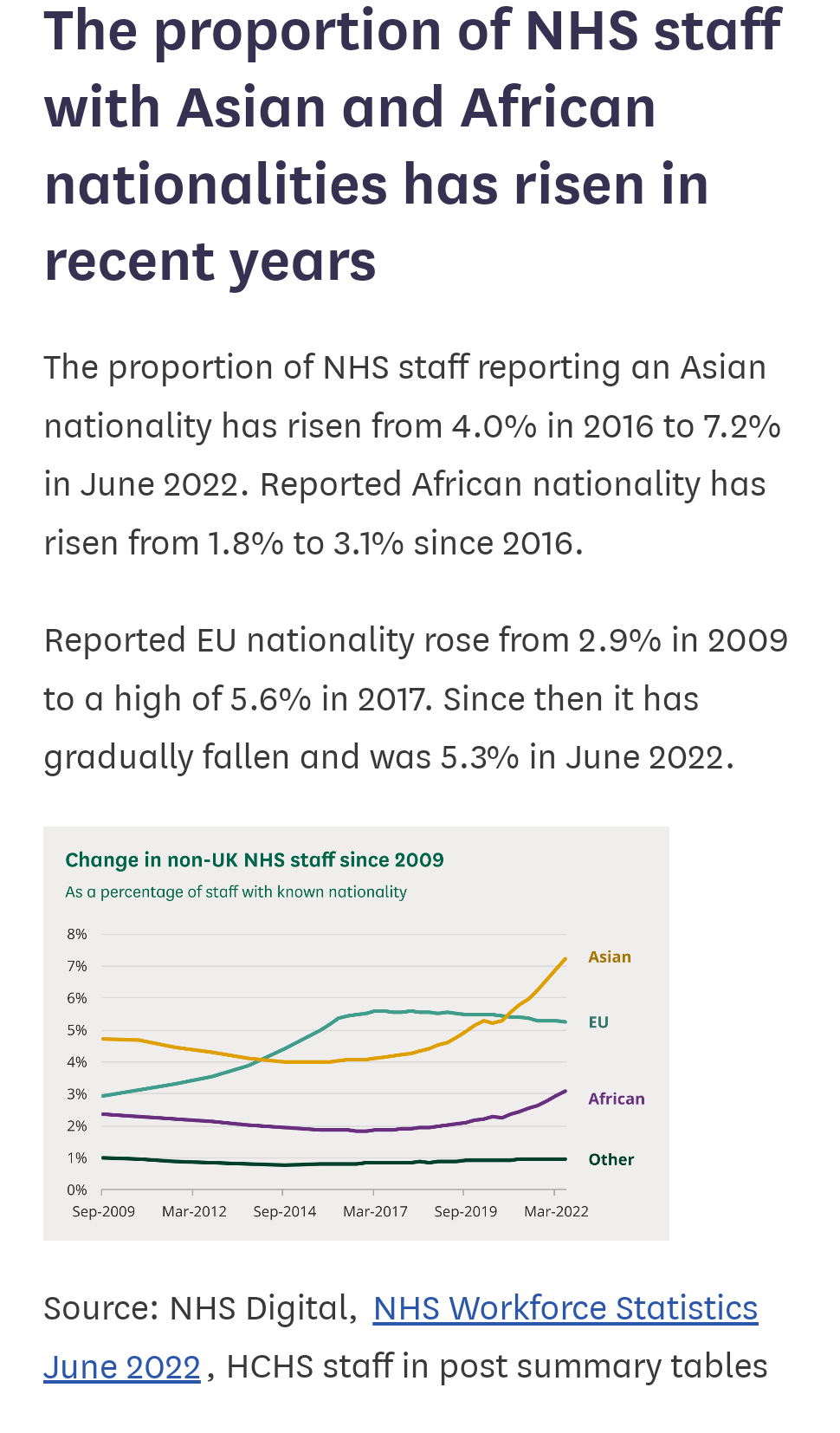
Don’t believe the guardian report. They commissioned a report to find the results they wanted.In reality there’s been barely any change in EU staff numbers. There has been a big increase in non-EU staff which is not surprising as Brexit removes any requisite to favour EU staff. EU applicants now have to compete with applicants from all over the world and, as you would expect, this has led to more recruitment from outside the EU and a commensurate drop in EU recruitment.
Post Brexit we’re recruiting more foreign trained staff not less.
 hawkinspeter
Rich_cb wrote:
Rich_cb wrote:I’d argue that the inflexible, one size fits all, NHS staffing contracts are to blame for the agency staff issue. Staff who want to work flexibly cannot do so easily within an NHS contract. If you want flexibility or to.fit work around childcare an agency is your best bet. It’s also worth noting that agency staff aren’t entitled to an NHS pension so the NHS saves the 20% employer contribution which goes some way to mitigating the additional costs of the agency staff. As a final note, in my experience, very few NHS staff are from the EU (excluding Ireland), most staff who trained abroad are from India, Pakistan and the Philippines. Given the huge number of steps required to recruit somebody who qualified abroad whether EU or non-EU (I was recently told it costs £15000 per nurse) I doubt Brexit will have any significant impact on recruitment.There’s a nice graph available here: https://www.theguardian.com/society/2022/nov/27/brexit-worsened-shortage-nhs-doctors-eu
Also a study reported on here: https://www.nursinginpractice.com/community-nursing/nhs-staff-crisis-most-pressing-concern-post-brexit-report-finds/
Rendel Harris
Rich_cb wrote:
Rich_cb wrote:As a final note, in my experience, very few NHS staff are from the EU (excluding Ireland), most staff who trained abroad are from India, Pakistan and the Philippines.5.3% of NHS staff are EU nationals (71,000 people) and 7.3% are nationals of Asian countries. “In my experience” meaning “what I want to see that supports what I want to believe.”
I’d argue that the inflexible
I’d argue that the inflexible, one size fits all, NHS staffing contracts are to blame for the agency staff issue.Staff who want to work flexibly cannot do so easily within an NHS contract. If you want flexibility or to.fit work around childcare an agency is your best bet.
It’s also worth noting that agency staff aren’t entitled to an NHS pension so the NHS saves the 20% employer contribution which goes some way to mitigating the additional costs of the agency staff.
As a final note, in my experience, very few NHS staff are from the EU (excluding Ireland), most staff who trained abroad are from India, Pakistan and the Philippines.
Given the huge number of steps required to recruit somebody who qualified abroad whether EU or non-EU (I was recently told it costs £15000 per nurse) I doubt Brexit will have any significant impact on recruitment.
The NHS is the worst
The NHS is the worst performing universal healthcare system in terms of healthcare outcomes. To put it simply if you get ill here you’re far less likely to be successfully treated.Instead of trying to emulate the best performing systems you suggest we try a few tweaks here and there.
The NHS model has failed. No other advanced country uses it for very good reason. It simply doesn’t work. Our health care outcomes have been awful for decades regardless of the political party in power.
Let’s try a model that does work.
chrisonabike
hawkinspeter wrote:
hawkinspeter wrote:
.. but why would people want to work for the NHS when they’re not being paid enough?
As a communist shurely that is simple – people should be inspired by the cause, Comrade! Perhaps your communism is misdirecting you though – after all under capitalism the idea is to motivate lower-wage workers by paying them *less*! (You just need to increase the competition / make them more easily replaceable).hawkinspeter
Simon E wrote:Ah, privatisation! That wonderful treatment that has worked miracles with our energy supplies, water and sewage treatment systems, trains, bus services, social housing, care sector and more… at least it has for the fat cat shareholder. But not for the staff, the end users or the country as a whole.Perhaps instead of merely trying to emulate another country’s apparent performance, however you care to measure it, we look at what can be improved. The increasing use of agency staff, for instance. Instead of consultants and privatisation hawks we ask people who work/have worked in the system. It’s an old-fashioned idea but one that invariably works better than being ripped off by snakes in suits who borrow your watch to tell you the time.
I’d consider the staffing/agency staff problem should be given a higher priority to fix as it’s surely a huge waste of money. The NHS has been hit very hard with a combination of COVID burn-out of staff and also the Brexit shenanigans (a sizable proportion of NHS employees were from other countries), so in order to provide their mandated staffing levels, they have to pay for expensive agency staff. That money is essentially wasted as ideally the staff would be compensated sufficiently that there’s a big enough pool of employees to draw from, but why would people want to work for the NHS when they’re not being paid enough? (For the record, Mrs HawkinsPeter is an NHS employee).
 mattw
mattw
Yay – a political bunfight.
Yay – a political bunfight.
Just back from the Urgent Treatment Centre as a walk-in, having managed to trip over a crisper box I had taken out of the fridge for a wash, ripped a door off a cupboard, smashed a couple of plates, and ended up sitting on my Rs (in the Groniad presumably called Ss) having smashed said crisper tray with a buttock opened like a modest joint of ham. I am sadly about to be £££ poorer now since it is a Liebherr fridge.
Trip to Minor Injuries Unit, 40 minute wait as a walk-in, drops kecks, “Superficial, keep it clean, should heal in 2 weeks, here are some dressings”. Returns home.
Excellent service, as ever.
Anybody who thinks rail and water privatisation is a failure clearly hasn’t lived in the era of British Rail or the Water Board, or studied the tiny profit margins of the companies, the massively increased investment, the performance stats or the safety record. Or for that matter the massively improved performance of the UK system relative our European peers.
My most surreal recent experience in these arenas was a Green Councillor who sincerely believed that it was a positive debating point for her that we have not built any reservoirs for 3 decades, which we have achieved by investment in reducing leaks in the system.
Apparently not concreting over the countryside for reservoirs for some years is against green goals! Great stuff.
I’ll gently point out that 2011 was just after the time when Gordon Brown had fiddled the national accounts by raising £60bn to spend on PFI projects by handing his childrens’ generation and his grandchildrens’ generation £300bn of repayments to fund – which we are now paying. Just as he did similar with laying an egg of unfunded defence spending.
Until the evil Tories consolidated this into national debt my NHS Trust was spending 15-20% on PFI repayments.
I’ll also gently point out that the Commonwealth Fund work is as much an opinion poll as it is an evaluation of outcomes, and in the most recent one the NHS did quite well.
 Simon E
Rich_cb wrote:
Ah, privatisation! That wonderful treatment that has worked miracles with our energy supplies, water and sewage treatment systems, trains, bus services, social housing, care sector and more… at least it has for the fat cat shareholder. But not for the staff, the end users or the country as a whole.Rich_cb wrote:If we want to see an improvement in our health service we need to look at those countries which are significantly outperforming and emulate their systems.That means a far greater role for the private sector.
Perhaps instead of merely trying to emulate another country’s apparent performance, however you care to measure it, we look at what can be improved. The increasing use of agency staff, for instance. Instead of consultants and privatisation hawks we ask people who work/have worked in the system. It’s an old-fashioned idea but one that invariably works better than being ripped off by snakes in suits who borrow your watch to tell you the time.
-
AuthorReplies
- You must be logged in to reply to this topic.