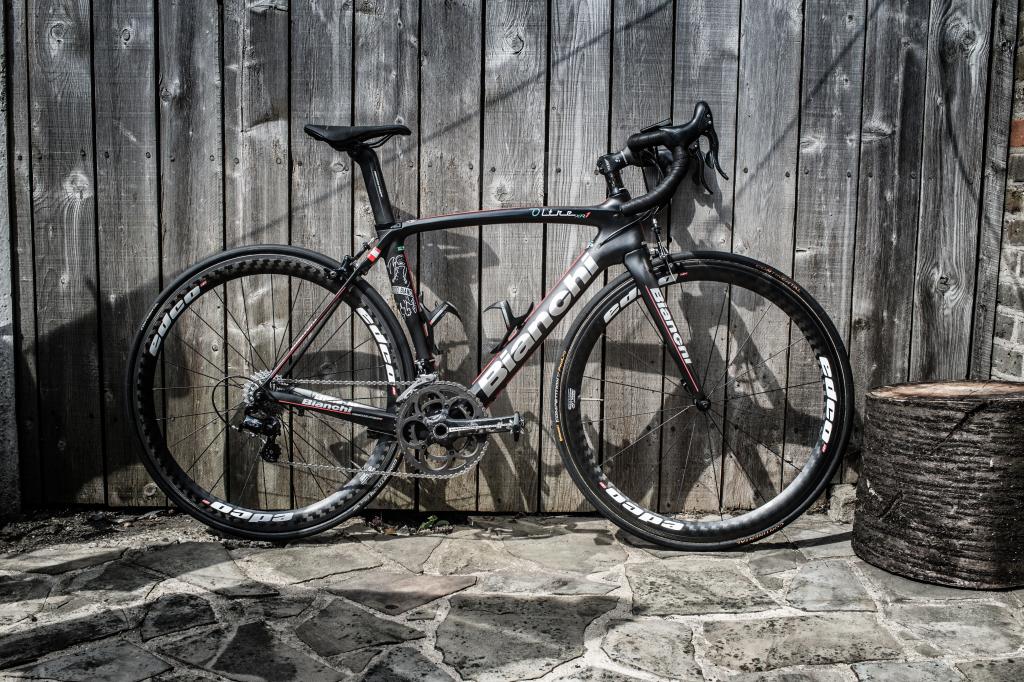
Madfiber Clincher Delamination

  • This topic has 3 replies, 3 voices, and was last updated 6 years ago by Chris Hayes.
  • Creator
    Topic
  • #30806
    kamrankhan

    Hi all,

    Struggling to find someone who would be willing to repair my delaminated Madfiber rear wheel. I can understand why, but is there anyone who would be able to fix this?

    This is a common issue with these wheels (clincher model). Happens due to the excessive heat from braking on the carbon braking surface, which then softens the bonding glue on the alloy (especially when going downhill).

    If there’s no hope, I’ll probably leave it to rust in my shed 🙁

Viewing 3 replies - 1 through 3 (of 3 total)
  • Author
    Replies
  • #960303
    0
    Chris Hayes

    Time to let it go.  

    Time to let it go.  

    #960301
    0
    Pilot Pete

    Should have added, it is

    Should have added, it is different to repairing a cracked frame – with a cracked frame they can wrap the broken part in a new piece of carbon fibre mat, bridging the  crack and in effect making that part of the frame stronger due to an extra layer of carbon bonded completely to the original ‘tube’.

    You can’t wrap a wheel brake track. The heat causes the carbon fibre layers to delaminate – the resin bonds have failed – you end up with separated layers, bulging, uneven surface. The integrity of the brake track is completely compromised, you can’t just put a bit over the top and bond it on – and you can’t remove a section and bond in a new section. It’s a brake track, subject to a lot of forces and heat, its integrity is paramount for safe operation.

    PP

    #960299
    0
    Pilot Pete

    Nobody will repair it as it

    Nobody will repair it as it is unrepairable. Also, the liability issue is too prevalent – repairing a brake track, you assuming it is like new again, it failing and the repairer being sued.

    Sadly, you only have one place to go and that’s the local tip. I had a wheel fail like that many years ago, as did three of my mates – all different brands, including top end. The problem, which the manufacturers would never admit, but which the industry recognised, is that the resins used in the manufacture couldn’t handle the heat build up in the rim from braking. Conveniently they would say it was the user’s incorrect braking technique causing the heat build up.

    This was one of the major deciding factors for me going for disc brakes back in 2016 with carbon clinchers. A perfect match. I now have three disc braked road bikes, all on various depth carbon clinchers and all perform flawlessly.

    PP

Viewing 3 replies - 1 through 3 (of 3 total)
  • You must be logged in to reply to this topic.