How do you top up air in an inflated tubeless wheel?

  • Creator
    Topic
  • #32594
    HeadDown

    Hello all

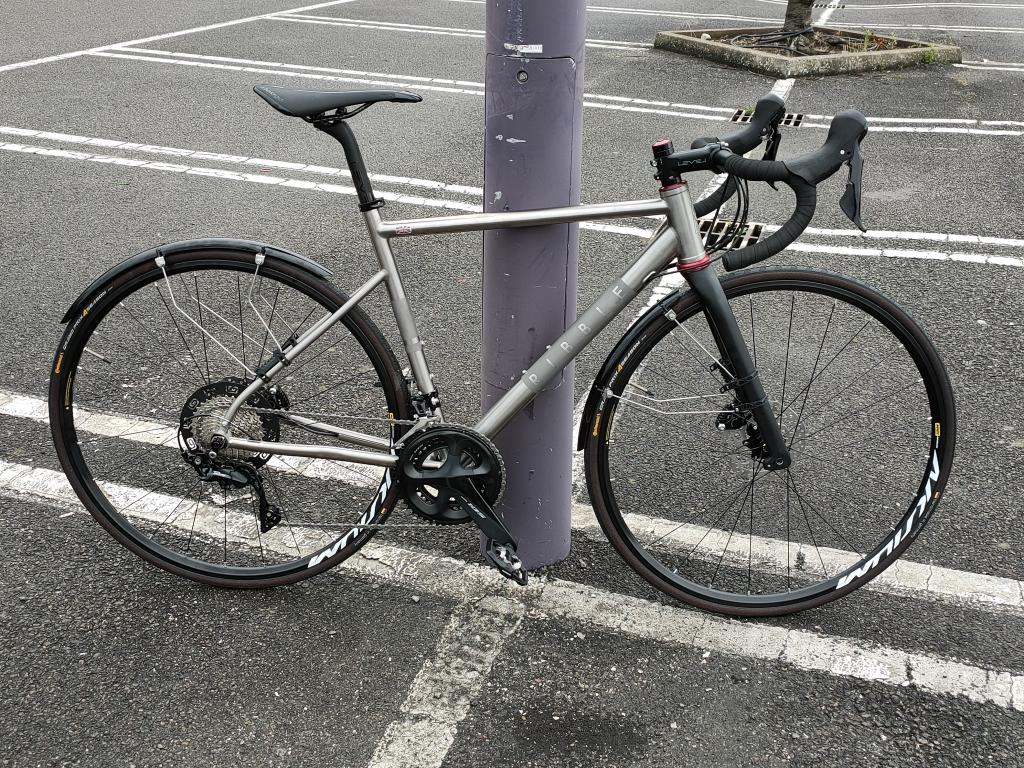
    Lucky enough to have taken delivery of a new steed, set up tubeless – my first such experience.

    – How do I top-up the air? Can’t find any vids or articles about it, they all address inflating from flat upon set-up. Any air escaping means sealant comes with it, right, and I always get a whoosh of pressurised air when I take my track pump off the Presta valve on other non-tubeless wheels. I suppose whether the tyre was flat to begin with or not is irrelevant really, either way you’re facing the same problem of taking the pump off under pressure and some air escaping.

    An additional factor is the novel (to me) concept on these rims, with detachable valves that you only put on for inflating and which otherwise stay tucked inside a valve tool (with the resulting hole in the rim covered by a click-on cover). I’d imagine that screwing and unscrewing them when inserting them will also result in sealant being shot out?

    Any tips or ideas gratefully received, thank you.

    They are Newmen Streem Advanced R50.
    Don’t know if I can add YouTube links here but their website has a video about set-up, and it skips taking the pump on and off the valve (and also inflated it from empty, meaning you don’t have the problem of screwing in the valve when it’s under pressure and with sealant already in).

Viewing 15 replies - 1 through 15 (of 27 total)
  • Author
    Replies
  • #1014191
    0
    HeadDown

    UPDATE for those wot are
    UPDATE for those wot are “interested”
    – kept the valve at 12 o’clock for some hours, screwed in the detachable valve (momentary hiss of air but no sealant), dabbed valve (hiss of air but no sealant), inflated per usual, took Presta head of pump off to usual whoosh of air but no sealant, screwed detachable valve off (mere trace of sealant in detachable valve interface).
    Result!

    #1014187
    0
    wycombewheeler

    Quote:

    Any air escaping means sealant comes with it, right, and I always get a whoosh of pressurised air when I take my track pump off the Presta valve on other non-tubeless wheels

    most likely this is air from within the hose and track pump body, and not air leaving the inner tube as the presta valve is designed to prevent that.

    screwing or unscrewing the stem should not release air, otherwise as soon as you had them inflated and unscrewed the stem the valves would go flat. certainly the plug cover will not hold air and you could not get it in place in time anyway. There must be a non return valve that remains within the rim.

    #1014189
    0
    Hirsute

    I’ve got Fillmore valves
    I’ve got Fillmore valves which seal and they are great and quick to inflate (although a little pricey).

    #1014185
    0
    wycombewheeler

    HeadDown wrote:

    HeadDown wrote:
    All about the aero, innit. Which of course is crucial to amateur riders, being as they generally are as aero as a garden shed.

    either that or some one has bought in hard to the rotaing mass is worth double argument and moving the valve stem from the wheel rim to the pocket is a saving due to less rotational mass.

    #1014183
    0
    AlsoSomniloquism

    HeadDown wrote:

    HeadDown wrote:
    Perfect, thanks So in summary:

    1) turn wheel so valve is at the top  BOTTOM. (nearest the floor)

    2) Leave for as long as possible to enable sealant to drain from inside of valve.

    2a) Rotate tyre so valve about horizontal.

    3) Blip valve to expel what little sealant remains in the inside of the valve.

    4) Use normal track pump. Agreed?

    Couple have changes in bold. 

    #1014181
    0
    HeadDown

    Thanks for taking the time to
    Thanks for taking the time to reply.

    #1014179
    0
    OnYerBike

    I’d never heard of those

    I’d never heard of those removeable valve stems before – that’s not normal for tubeless; it’s a particular quirk of the wheels you’ve got. With most tubeless wheels, the valve remains in place the whole time. So you’ve definitely made life a bit more complicated for yourself than a typical tubeless set up!

    Regarding your question, it helps to remember that the sealant is simply a liquid, and with as any liquid it will flow under gravity. When the wheel is stationary, this means the sealant will pool in the bottom of the tyre. If you’ve watched videos where sealant is added to the tyre directly prior to seating (cf. being added through the valve to an already seated tyre), you’ll see the amount of sealant that is typically present in a tyre – it forms a pool a few mm deep at the bottom of the tyre. 

    Most sealants are fairly viscous, and so even with your best efforts some sealant may remain in and around the valve area, and so it is somewhat inevitable that when you open the valve, a small amount of sealant may be present (and if you depress the valve briefly, you will notice this being shot out with the air). But if you have allowed the sealant time to drain away from the valve as per the other comments, this amount should be very small and should not cause any problems. 

    #1014177
    0
    hawkinspeter

    HeadDown wrote:

    HeadDown wrote:
    Thanks. I didn’t search that item specifically as you’ve got to know it’s a problem/search term initially, I guess! Don’t understand it though (hence not searched). How can turning the wheel so the valves are at the bottom drain out sealant – depends what it drains out of (presumably you want it drained out of the valve itself), and from the position it states for the wheel that can only be draining it out of the tyre entirely. Perhaps I’ve misunderstood, but it’s not suggesting surely that you drain your sealant out of the wheel just to add a few blasts of air (which I’ll probably do every week)?

    Turning the wheel so the valve is in the 6 o’clock position should allow any sealant that may be in the valve to drip out of it into the tyre. I don’t bother with that as there’s rarely any sealant in the valve, but that might be because I use MilkIt valves which have an extra seal.

    #1014175
    0
    HeadDown

    All about the aero, innit.
    All about the aero, innit.
    Which of course is crucial to amateur riders, being as they generally are as aero as a garden shed.

    #1014173
    0
    Secret_squirrel

    That detachable valve stem is

    That detachable valve stem is bonkers – a solution looking for a problem. 

    #1014171
    0
    HeadDown

    Perfect, thanks
    Perfect, thanks

    So in summary:
    1) turn wheel so valve is at the top.
    2) Leave for as long as possible to enable sealant to drain from inside of valve.
    3) Blip valve to expel what little sealant remains in the inside of the valve.
    4) Use normal track pump.

    Agreed?

    #1014169
    0
    HeadDown

    I think Steve K is referring
    I think Steve K is referring to the detachable nature of this valve and rim set-up, which valve is designed to be taken off in its entirety when not using a pump on them. I therefore have to take the valve and tool with me whenever I ride, separately. So yes, something I could easily misplace or forget.
    My understanding is that the more usual arrangement is that the valves are a permanent fixture once the wheel’s set up, although they can be unscrewed when taking the whole thing apart when the tyre’s off etc.

    #1014167
    0
    Anonymous

    But tubeless wouldn’t be
    But tubeless wouldn’t be possible without them.

    #1014165
    0
    Anonymous

    Presta takes more pressure…
    Presta takes more pressure…

    #1014163
    0
    Steve K

    I’d not heard of the
    I’d not heard of the detachable valves before. Sounds more hassle than it’s worth to me, in particular as it leaves you with something small to forget/lose.

Viewing 15 replies - 1 through 15 (of 27 total)
  • You must be logged in to reply to this topic.