


- This topic has 65 replies, 12 voices, and was last updated 4 years ago by
 ktache.
-
CreatorTopic
-
September 12, 2022 at 5:37 pm #32258
 hawkinspeter
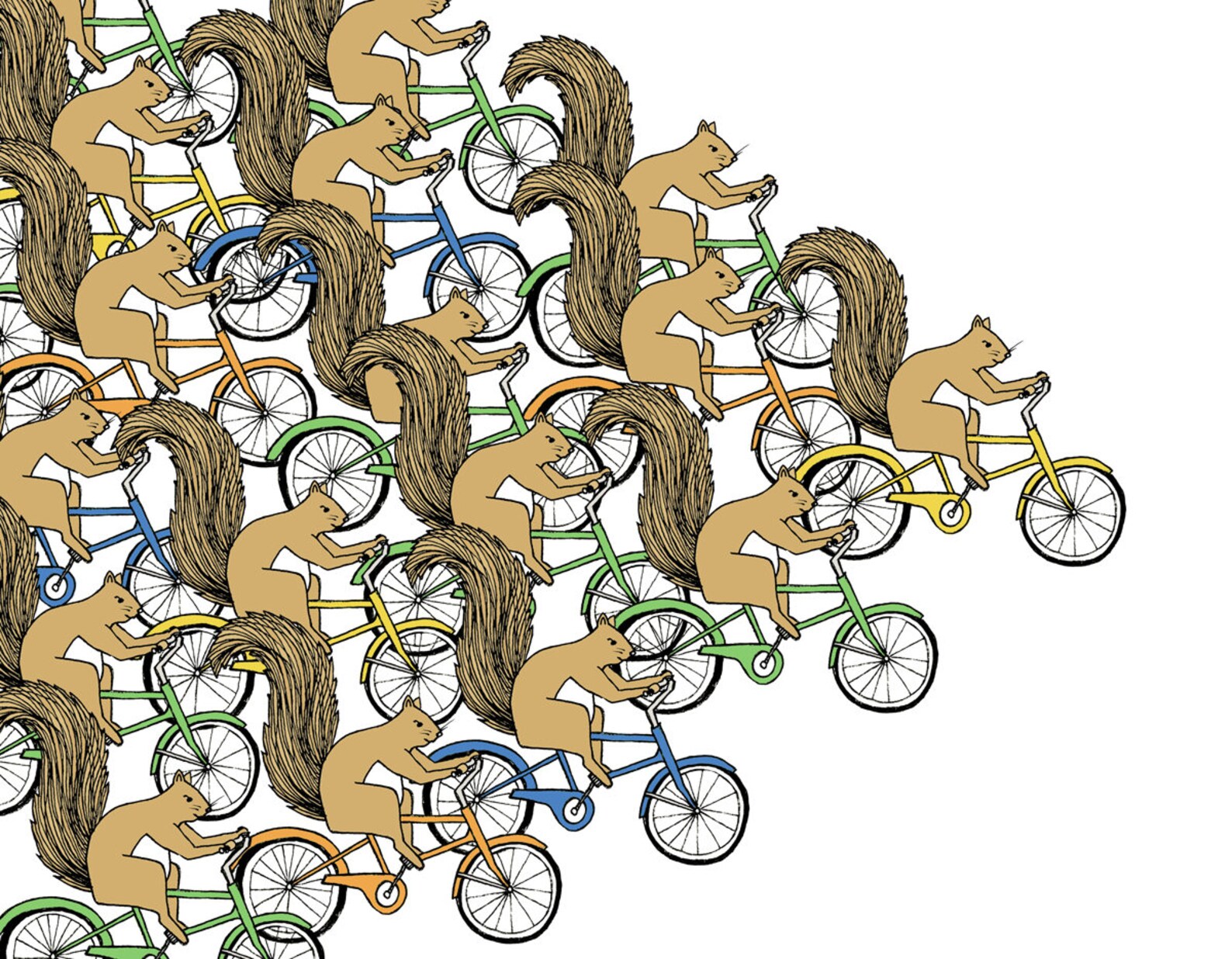
[quote]It took a whole lot of noise from activists and campaigners for bicycles to be taken seriously at last year’s COP26 summit in Glasgow, and for active travel to be added to the declaration on accelerating the decarbonisation of road transport.
Beyond the serious lobbying from automotive industries, there seems to be a psychological block that prevents the bicycle from being accepted as a central technology when imagining the future of cities.[/quote]
-
CreatorTopic
-
AuthorReplies
-
IanMSpencer
But that’s not quite true, is
But that’s not quite true, is it? Buses reduce capacity by reducing frequency, but also providing alternative off peak services (not that Nigel would approve of transport for the leisured masses), and you’ve skipped my point that you don’t get the reduction you hope for in autonomous vehicles because you are likely to run many at low occupancy due to the relative sparseness of journeys, yet the time demands will still be there, e.g. a lot of off peak travel will be attending at appointed times, whether it is for coffee with friends or for the dentist.Then there is the luggage problem on the Sainsbury’s pickup, where a single shopper will possibly expect to use at least the capacity of the boot to bring home the loot (assuming that online shopping remains a percentage of supermarket activity).
chrisonabike
What’s the solution to “I
What’s the solution to “I need to get to x by y time” if your “taxi” or “mini-bus” v.2 is subject to constant route change to accommodate other people’s journeys? It’s not quite the same as an existing taxi as that’s dedicated to you, nor a bus as that sticks to a route.I guess we should look at how this already works with more informal systems (see jeepney / songtaew)? People already accept some variability of course, and if you’re looking at eg. a commute it’s likely lots of people will have a reasonably regular pattern of travel so in some circumstances this could be fairly predictable although there might be the occasional substantial difference.
Thinking about my journeys – I always reach for the bike if I have to be somewhere in the city at a certain time (don’t currently own a car but likely wouldn’t choose to drive in the city much if I did). I’ve been delayed once or twice by mechanicals and much more often by roadworks / blocked roads but in general I believe the bike was more predictable (confident about time it will take) AND reliable (not unexpectedly taking twice the time) than bus or taxi. Commuting by train I was late there or back multiple times in the average year – couldn’t have regularly cycled that though (80+ miles round trip, yes I’m sure some do…)
Reiterating your capacity
Reiterating your capacity point: where there are bottlenecks in the system the efficiency of the vehicle for moving people is less relevant. Example: bus and tram systems held up by general motor traffic.Re-routing (by smart vehicles) won’t do much because we already have smart-ish drivers enhanced with routing software and now traffic data. (Not sure about some overall intelligence coordinating all movements in an area – however I can see some implementation difficulties outside the theory).
That’s why smaller, flexible, independent units (bikes, scooters etc) on at least partially dedicated infra can be so useful to increase capacity overall. And that’s only looking at efficiency of transport, not other benefits.
Again, not denying we may see *some* adoption of autonomous vehicles – because humans. So voluntary changes which make a few people stacks of money are more likely. And “shiny and new”.
Rich_cb
They’re not meaningless, they
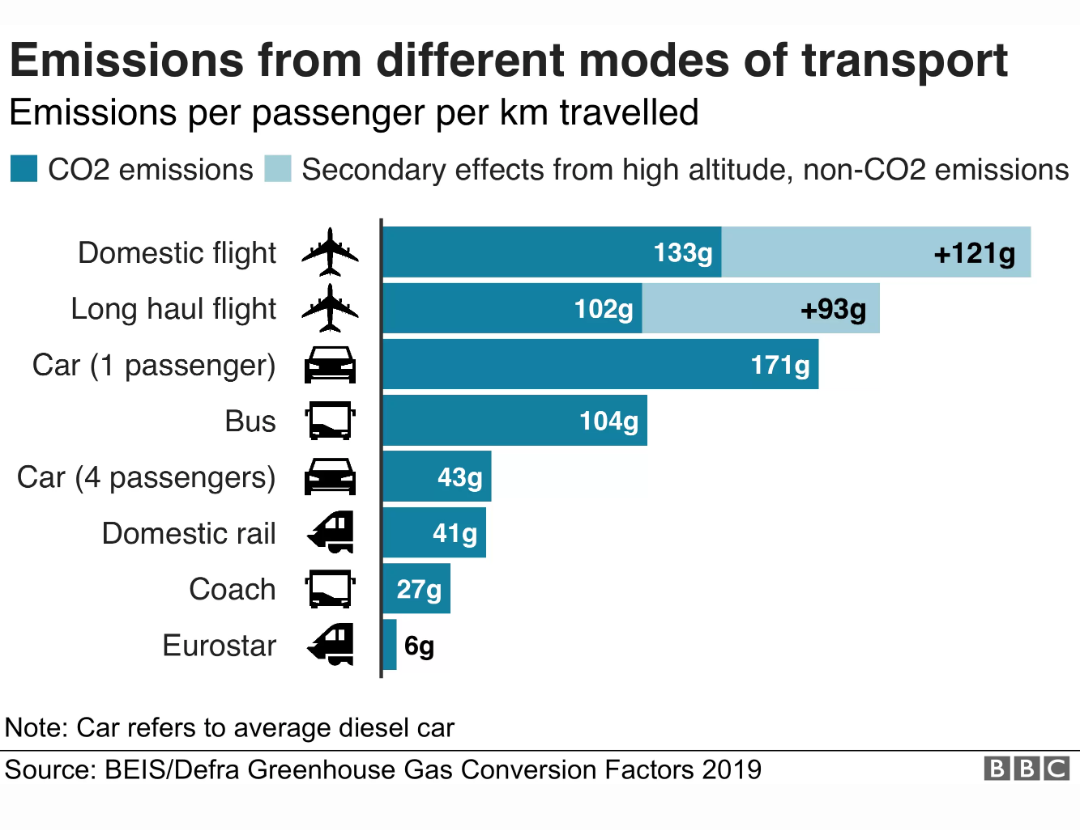
They’re not meaningless, they represent the average figures for each vehicle type. Of course not all journeys are average but the figures are still useful. I’ve seen estimates for urban car use at about 250g/km so just over 2 passengers would still be comparable to bus use.The difference between peak capacity with cars and buses is that cars can easily reduce their capacity whilst maintaining the service frequency. 10 cars running on a route at peak times, one car running off peak. Buses can’t do that so you have a lot of excess capacity and excess emissions at off peak times.
Cars with increased occupancy solve most of the current issues with urban mass transportation. If you can additionally reduce the time the car spends idle then you reduce congestion massively and free up road space previously used for parking. Autonomous vehicles offer both those possibilities.
So you confirm the point
So you confirm the point really, that the stats are meaningless as we don’t really know what they represent and they don’t represent what is possible. The four occupancy car figure is suspiously like the 1 divided by 4, but as we are discussing, an occupancy of 4 represents a different journey profile.
For example, even in 2019, bus travel in the UK is far less effective than in the best implementations, such as Germany with frictionless ticketing for the journey, reliable timetables and no snobbery about using public transport, so downgrading buses because they are empty some of the time when there are so many factors that lead to that that can be resolved. You end up with the same peak time problem with cars and buses, where you still need to build for maximum peak capacity rather than efficiency – after all, people aren’t going to use a system that will not guarantee to attempt to make the journey on time – and much of that spare capacity will no doubt still be in the form of empty seats being dragged around as off peak journeys are going to be less easy to aggregate.
Rich_cb wrote:
Rich_cb wrote:From a CO2 point of view ebikes are the best option but they aren’t comparable to cars or even buses in terms of comfort. Most people won’t accept cycling in the driving rain or freezing cold.I agree – in the UK currently – but just a POI: this is not an absolute, just another “less likely to”. People walk in those conditions currently. People – who almost certainly have access to cars – cycle in other places in colder weather. Likely less do but still more than in good weather in the UK!
Finnish winter: https://m.youtube.com/watch?v=Uhx-26GfCBU
I suspect the situation is
I suspect the situation is actually the converse. At rush hour a bus is travelling slowly and inefficiently but is probably close to full. 40 people in a slow moving bus will still have low CO2 footprint let head.Outside rush hour most of the buses that go past my house (I live on a fairly busy bus route about 1.5 miles from a city centre) have a handful of people on them. That’s never going to be as efficient as a car in CO2 terms.
The average car journey has an occupancy of 1.1 so 4 is definitely unusual but with autonomous cars 2-3 would, IMO, be far more common. It’s also far easier to titrate capacity to demand with a fleet of cars than with a smaller number of buses.
Once you limit the number of
Once you limit the number of drop off and pick up points then the autonomous bus becomes far less desirable than the autonomous car that will come to your door.4 people is obviously the maximum a segregated car sized vehicle could probably carry but it would only need to carry two on average to be about as CO2 efficient as a bus.
From a CO2 point of view ebikes are the best option but they aren’t comparable to cars or even buses in terms of comfort. Most people won’t accept cycling in the driving rain or freezing cold.
The trouble with those stats
The trouble with those stats is they are clearly not comparing similar journeys. A bus will come out relatively poorly because bus journeys are on urban roads, mainly at rush hour, and that is being compared with cars which have a different mix – and the flights are not a true measure of journey CO2 because the nature of a flight requires a significant journey to the point of departure and the CO2 consumption of the airport infrastructure for several hours.Similarly, how theoretical is that car with 4 passengers? A household will not use a car for a work journey, so then you have to consider the suboptimal journey of a shared use car which spends some unknown proportion of its journey ferrying people not in their intended direction, and operating under capacity at either end of the journey. In other words, for most cars, being fully loaded for a significant proportion of its mileage is an unlikely occurrence. If we consider school run mum sharing with other mums, she can still only achieve 50% of her journey fully loaded.
I’d be very dubious about drawing conclusions based on that table.
hawkinspeter
I’d’ve thought that
I’d’ve thought that autonomous bus services would have some kind of optimisation to have a limited number of stops and certainly hundreds of stops would imply that the bus would have hundreds of passengers all going to different locations which is not realistic. A bus is more likely to have approx thirty people going to maybe 5 separate locations and having about 5 pickup points.EVs each transporting their maximum capacity (4 people) is cherry-picking the best possible CO2 emissions. I suspect that a mixture of buses and cars would be more likely, but still e-bikes would be a better solution for high density cities.
Buses would essentially be
Buses would essentially be obsolete.In terms of CO2 emissions 4 people in a car already easily outperforms a bus. Even 2 people in a car is comparable.
If you had 4 people in an autonomous car with separate drop offs and pick ups it may only mean a handful of stops on your particular journey. With an autonomous bus it could be hundreds of stops making it largely impractical.
We will need enough cars to
We will need enough cars to meet rush hour demand but with increased occupancy that number will be lower than currently.If you consider the maximum number of cars on British roads at any one time currently, say a summer bank holiday weekend, that is, in theory the absolute maximum number of cars we’ll need.
All cars parked on those days, which is still millions of them, will be surplus to requirements.
I agree that the status symbol bit will be a big hurdle but I imagine most people will quickly ditch their, less prestigious, second and third cars so car numbers will drop quickly even if people hold on to their status symbols for a bit.
ktache
But won’t we still need lots
But won’t we still need lots of cars to satisfy rush hour demand?
The wfh thing hasn’t really lasted even to the end of the pandemic, slightly more flexible working, but nothing earth shattering.
And getting over the “status symbol” thing might be more of an ask than the practicalities.
It’s all reinventing the taxi
It’s all reinventing the taxi or the jeepney / songthaew etc.https://en.m.wikipedia.org/wiki/Jeepney
https://en.m.wikipedia.org/wiki/Songthaew
I know we’re extremely wealthy in the UK so want to go with high-tech luxury (personal privacy!) and cash-intensive “solutions”. This whole discussion presupposes change though. It’s also possible we may have less resources and thus more social change (doing more with less) than we imagine.
I think a bit of rich_bc’s vision is most likely. I just doubt it’ll all look like The Fifth Element, more a mish-mash of much of what we’ve got now and some new things. People have been being completely wrong about the future since history began though…
Hirsute
There has to be a trade off
There has to be a trade off though. With only 4 passengers, the extra time is not very much but with a bus, there will be a lot of extra time with these ad hoc stops.
Though you could have fast and slow lanes and junctions to prioritise multi occupants. -
AuthorReplies
- You must be logged in to reply to this topic.