


- This topic has 65 replies, 12 voices, and was last updated 4 years ago by
 ktache.
-
CreatorTopic
-
September 12, 2022 at 5:37 pm #32258
 hawkinspeter

[quote]It took a whole lot of noise from activists and campaigners for bicycles to be taken seriously at last year’s COP26 summit in Glasgow, and for active travel to be added to the declaration on accelerating the decarbonisation of road transport.
Beyond the serious lobbying from automotive industries, there seems to be a psychological block that prevents the bicycle from being accepted as a central technology when imagining the future of cities.[/quote]
-
CreatorTopic
-
AuthorReplies
-
ktache
Young Kirk in the first of
Young Kirk in the first of the new movies started in his step father’s ICE convertible.
hawkinspeter
IanMSpencer wrote:Hve you noticed that there are no cars in Star Trek* – they walk (or crawl in Jeffries tubes) have multi-dimensional lifts for long distance travel on the ship, and everything else is the transporter.I suspect we won’t evolve the transporter unless we manage to invent the nearly free energy we were promised with nuclear power – and don’t mind occasionally been turned into blobs of ooze. Still, worth it to avoid the parking problems of now.
*Excluding the obligatory time travel episode.
What amuses me is that the Star Trek transporters were invented to reduce the cost of making the programmes – no need for expensive space shuttle shots.
Anonymous
It beats me how very few
It beats me how very few people see that there’s absolutely no future for most of our current technology, let alone such completely wasteful and inefficient stuff like cars, electric or thermic or whatever.
Either because we suddenly become intelligent, see it for the planet-destroying folly that it is and put an end to it (thus being able to keep a few useful things like bikes). Or because the whole system will come crashing down around us, and that rather sooner than later, given the huge cracks already showing and getting bigger by the day. Then absolutely nothing will be left.
IanMSpencer
Hve you noticed that there
Hve you noticed that there are no cars in Star Trek* – they walk (or crawl in Jeffries tubes) have multi-dimensional lifts for long distance travel on the ship, and everything else is the transporter.
I suspect we won’t evolve the transporter unless we manage to invent the nearly free energy we were promised with nuclear power – and don’t mind occasionally been turned into blobs of ooze. Still, worth it to avoid the parking problems of now.
*Excluding the obligatory time travel episode.
chrisonabike
Good point – they could be
Good point – they could be “express” taxis. I wonder if a “standard” / “first class” distinction would help? (Turns out people are *really* reluctant to share the same space as those they consider lower status, even when those others aren’t there.)And more escalators /
And more escalators / travellators to encourage more journeys by leg.
People are quick to avoid
People are quick to avoid physical effort and money talks. So I suggest a massive subsidy of e-legs as a way of reducing our resource usage.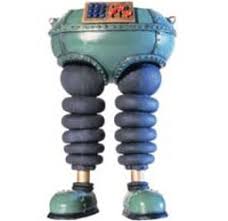 hawkinspeter
Rich_cb wrote:
Rich_cb wrote:And we’re nowhere near as bad as the US. I have some friends there and it’s genuinely impossible to get anywhere from their house without a car. That’s why I think self driving cars will be successful. They will enable our society to keep using most of our current car centric infrastructure. The cost of replacing that infrastructure would be enormous. The cost of implementing self driving cars will likely be negative overall. Money talks.The U.S. is truly terrible to get around unless you’re in a city.
It may play out that autonomous cars take off in the U.S. but I have my doubts about their power infrastructure being able to handle lots of EVs – our own power infrastructure is going to need serious work to enable it and we don’t suffer from all the brown-outs due to aging infrastructure that they do. There’s also the issue of lithium supply unless alternate battery tech is developed (quite possible).
I think it’s a mistake to keep current car-centric infrastructure as it doesn’t work well now with current traffic levels, so unless autonomous vehicles can significantly reduce traffic levels, there will be the same traffic jams featuring autonomous vehicles.
The best bet is to try to replace as many journeys as possible with two-wheelers/two-feeters and thus reduce the overall traffic load – eBikes will likely make a bigger impact than autonomous cars will.
Rich_cb
Dynamic pricing is usually
Dynamic pricing is usually only contentious when the service remains the same but the price varies.Most people don’t mind paying more for a better/faster service. Eg next day delivery.
If self driving cars offered fewer stops for a higher fee I think people would accept that.
Interestingly the marginal cost of deploying more cars at times of peak demand would be minimal so there should be no need for Uber-esque surge pricing.
And were nowhere near as bad
And we’re nowhere near as bad as the US.I have some friends there and it’s genuinely impossible to get anywhere from their house without a car.
That’s why I think self driving cars will be successful. They will enable our society to keep using most of our current car centric infrastructure.
The cost of replacing that infrastructure would be enormous. The cost of implementing self driving cars will likely be negative overall. Money talks.
Hirsute
Went for a walk Sunday
Went for a walk Sunday through a village. It’s just over 5 miles to the town centre, but the number of cars was ridiculous. 4 per house and 6 in one.
Then on Saturday went to a retail place which was massively car centric. We parked 5 minutes walk away to avoid the slow crawl of queuing traffic makiits way in and out of the retail area. Also you could only really walk shop to shop around the perimeter as there was almost no provision to walk directly.
It’s going to be a big change to make anyone give up their car when people are so enslaved by them.We already have the first, as
We already have the first, as I mentioned – although again you could postulate a city-wide control of transport which might do better. I guess that could occur by fiat (regulation or monopoly) or might come via companies coordinating. The latter is hard to see if they’re competing for same resources or market though.Dynamic pricing is interesting, has always existed and airlines / Uber etc. have used this. One issue is it tends to be resented by people due to our innate biases (eg. more money for “the same thing” is not fair).
From this little exploration of the topic it seems any implementation of this kind of system which isn’t roughly the same as existing bus or taxi services involves significant social / habit change. Maybe at least as much as would be needed for getting many more people to cycle more trips! Different pros and cons for “normal people”, to be sure.
Habit change and “less pleasant” is certainly not a hard barrier to success. If change is out of necessity (eg. huge increase in cost of motoring) I would forsee “jeepney”-style transport patterns arising (less private or direct), as that happens already in poorer places. Also worth noting the amounts people pay and other things required for the ability to drive already! Mass motoring did take a significant time (and giant promotional efforts at state level) to occur though. Many of the additional “burdens” arose after people were already wedded to the motor vehicle too.
My short-term bet is cars continue, just electric. Maybe slightly fewer, with car clubs / different travel patterns (less and more local – WFH and more local shopping / activities) picking up some slack. In a few places like some parts of London / Manchester a modest increase in cycling if they continue with the infra roll-out. Still a majority of increasingly grumpy “hard-pressed motorists”.
I was just pointing out that
I was just pointing out that buses aren’t as inflexible as you were suggesting in defence of the stats, in a well organised integrated transport system.I think that the RyanAir problem rears its head with luggage, if you want to use the whole boot, you potentially get a cost of up to 4x the original journey and people will do anything to avoid an extra cost.
The other problem of human behaviour is these cars would be like the old slam door Southern Region compartment trains (though without the ingrained smoking odour), where you are stuck with undesirable people. So you have to factor in social issues, like wealthier people deliberately booking the whole vehicle (which should still be cheaper than car ownership because it is still shared usage over the day) so you don’t achieve the gains you hope for.
I specifically mentioned
I specifically mentioned maintaining service frequency as an advantage for autonomous cars over buses so it’s a bit of a stretch to say I didn’t acknowledge that.If a bus runs on a service with 4 passengers then you can run an autonomous car on the same route fully loaded. You only need just over 2 passengers per car to best the bus in terms of CO2.
It’s simply more economical to run a smaller vehicle at less busy times and on less busy routes. This will more than offset the increased CO2 emissions at peak times as demonstrated by the average emissions.
It would be an unusual urban journey which didn’t have some overlap with another journey that would facilitate ride sharing an autonomous vehicle.
Luggage isn’t an issue, you simply book more space. If you want half the available space you just book 2/4 seats. No different to travelling in a group. I doubt there’ll even be a boot.
The solution is algorithmic
The solution is algorithmic driven route planning and dynamic pricing.If you want to get to X place by Y o’clock and that can only be done with no stops then you’ll pay more. You may still share the car though.
If you start your journey 10 mins earlier and can therefore accommodate some stops then you’ll pay less.
-
AuthorReplies
- You must be logged in to reply to this topic.