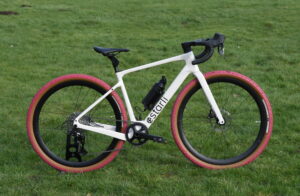
The Estarli G700 is a carbon fibre electric gravel bike that ticks many of the boxes in what is now an enduringly popular e-bike category. It’s pretty light and both its performance and the array of spec options Estarli offers is impressive.
The majority of e-gravel bikes feature a lightweight rear hub motor and the G700 is no exception. This is combined with an in-frame battery and an optional range extender.
Performance was efficient, resulting in good range. All in all I really enjoyed my time with the G700.
Specification
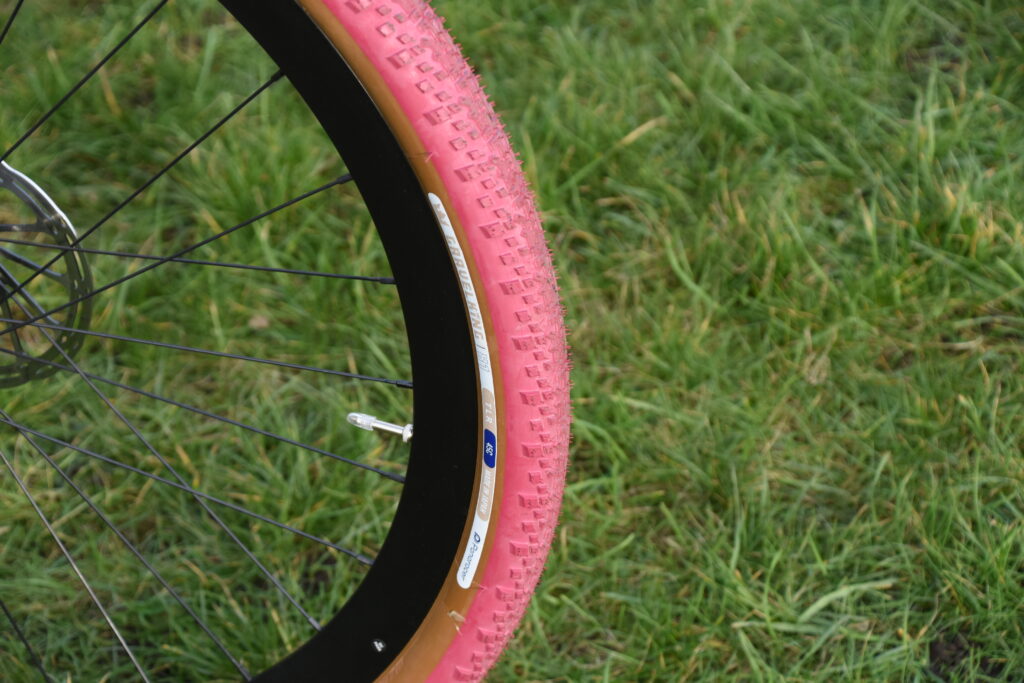
The G700 is a sleek looking e-gravel bike and my first impression was of a very high quality bike with great attention to detail. My test bike was in a fairly minimalist build quite close to the ‘base’ option but it did include the optional extras of a Redshift suspension seatpost, Panaracer Gravel King tyres (the bike comes with Continental Terra Speed as standard) and a 250Wh bottle style range extender battery.
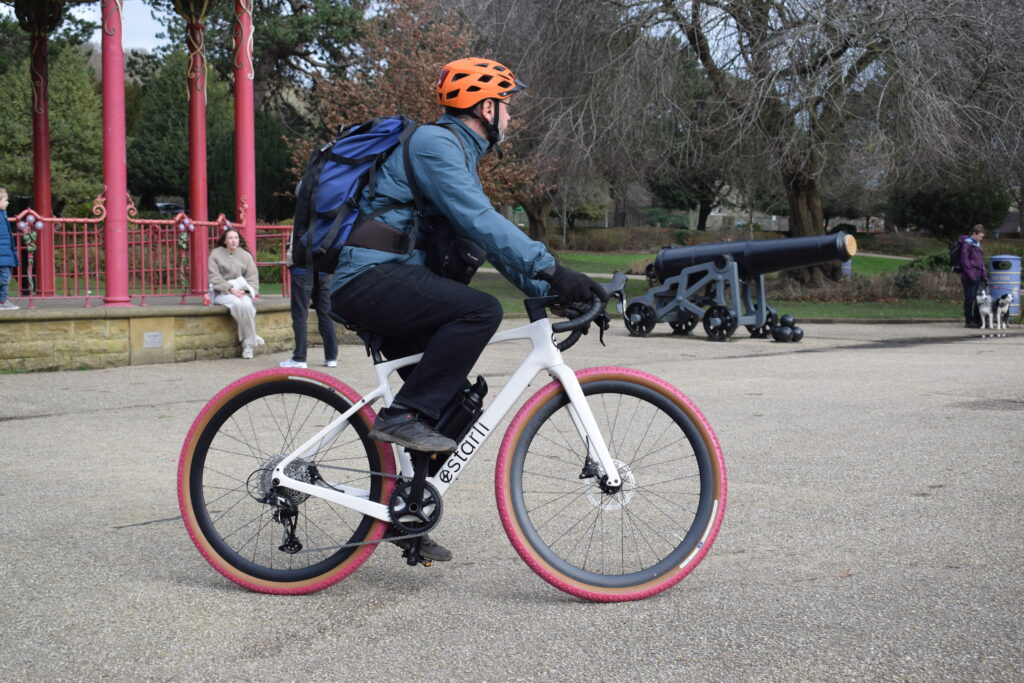
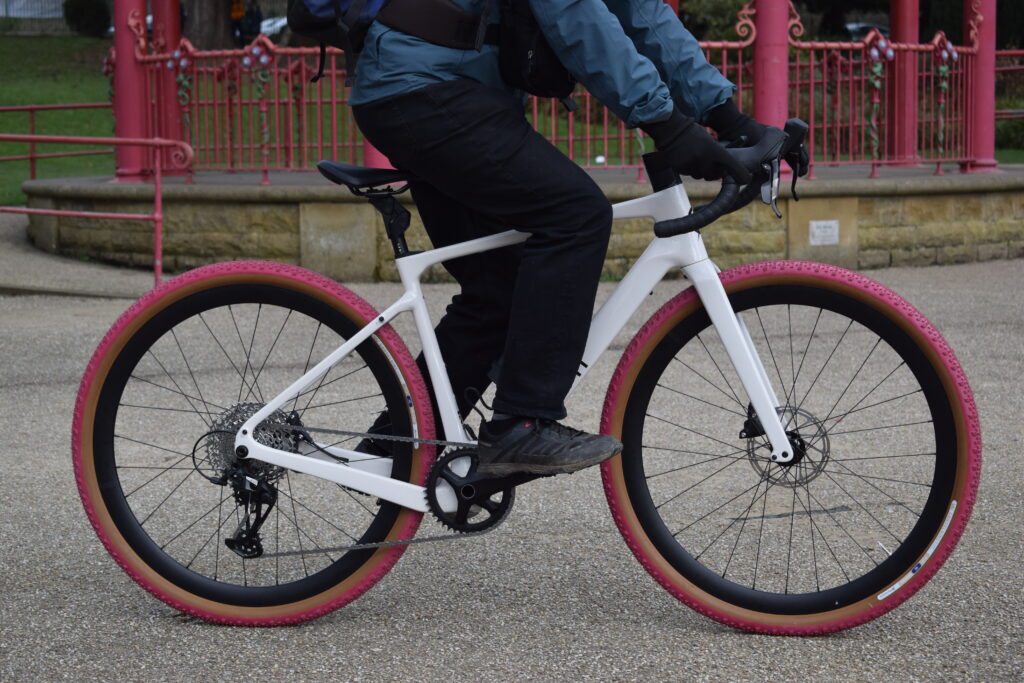
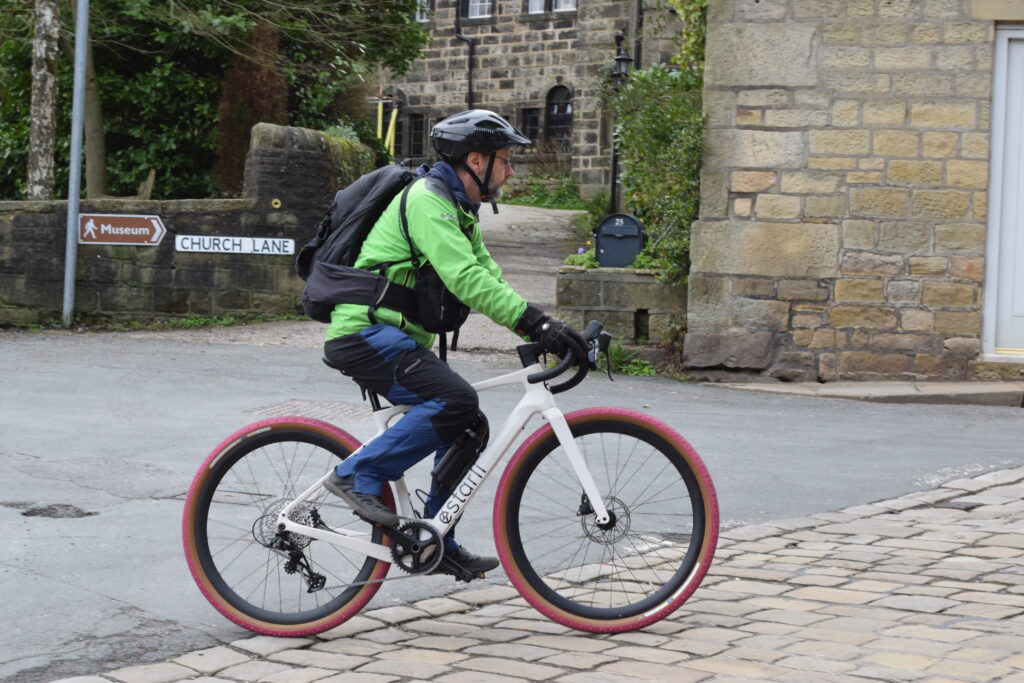
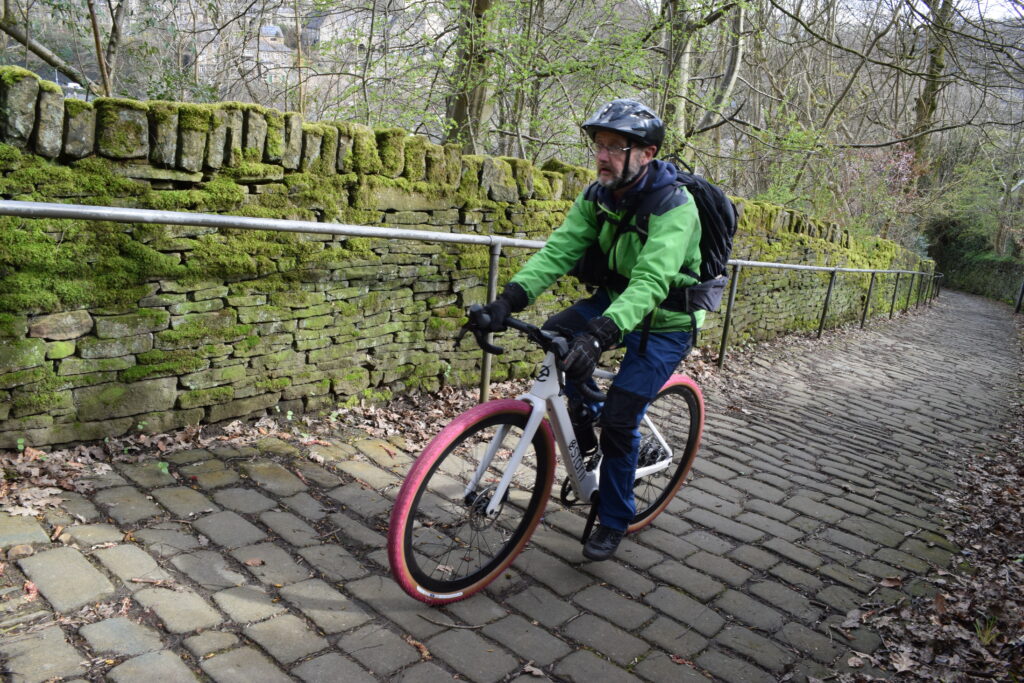
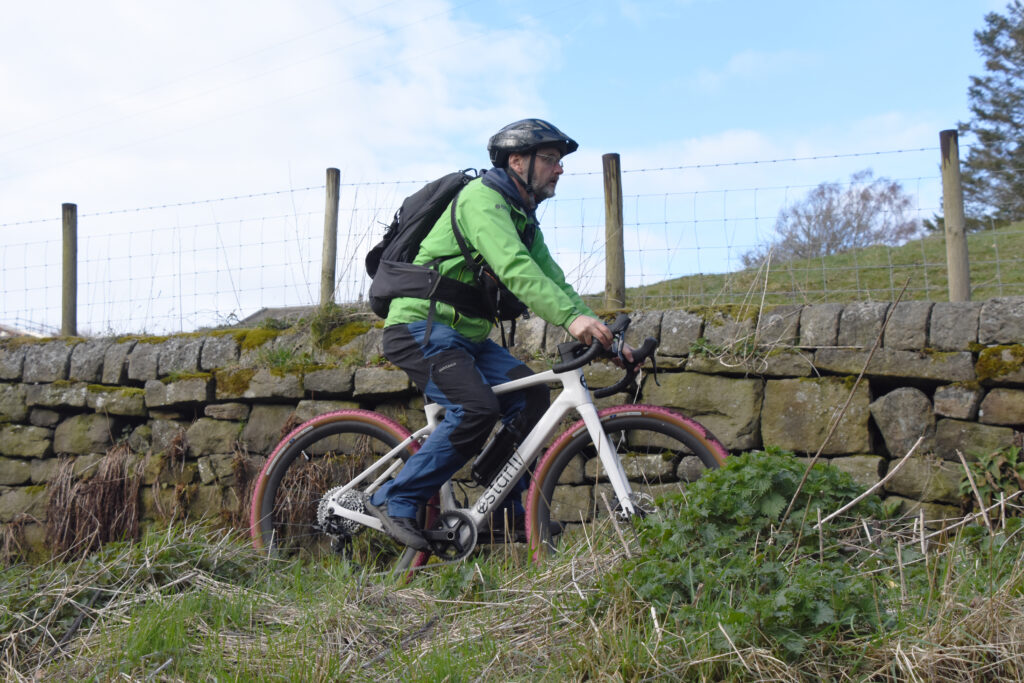
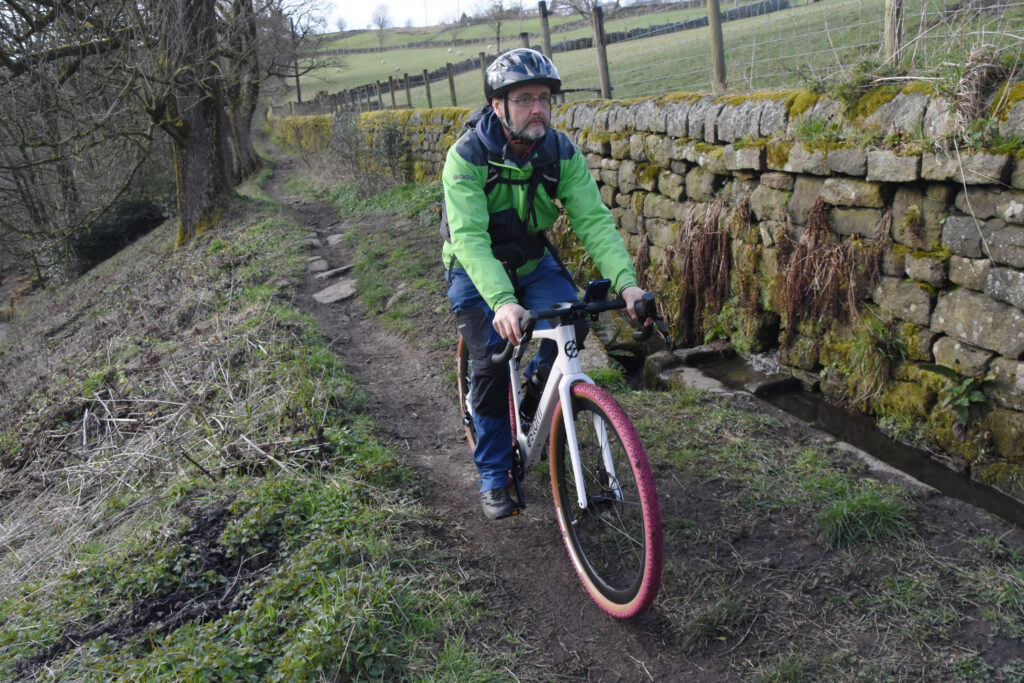
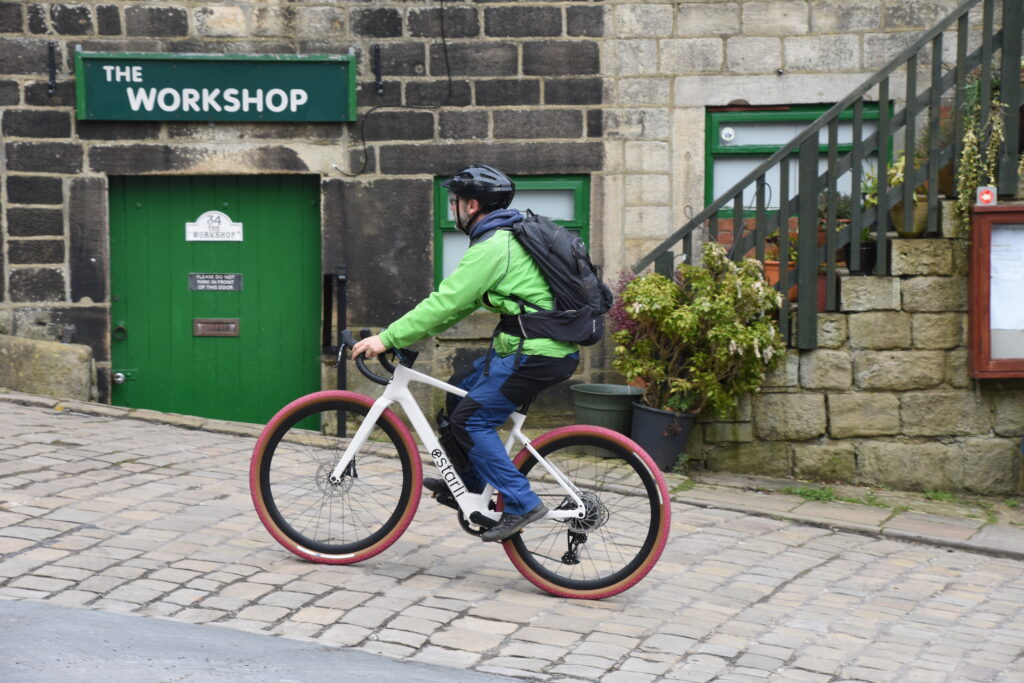
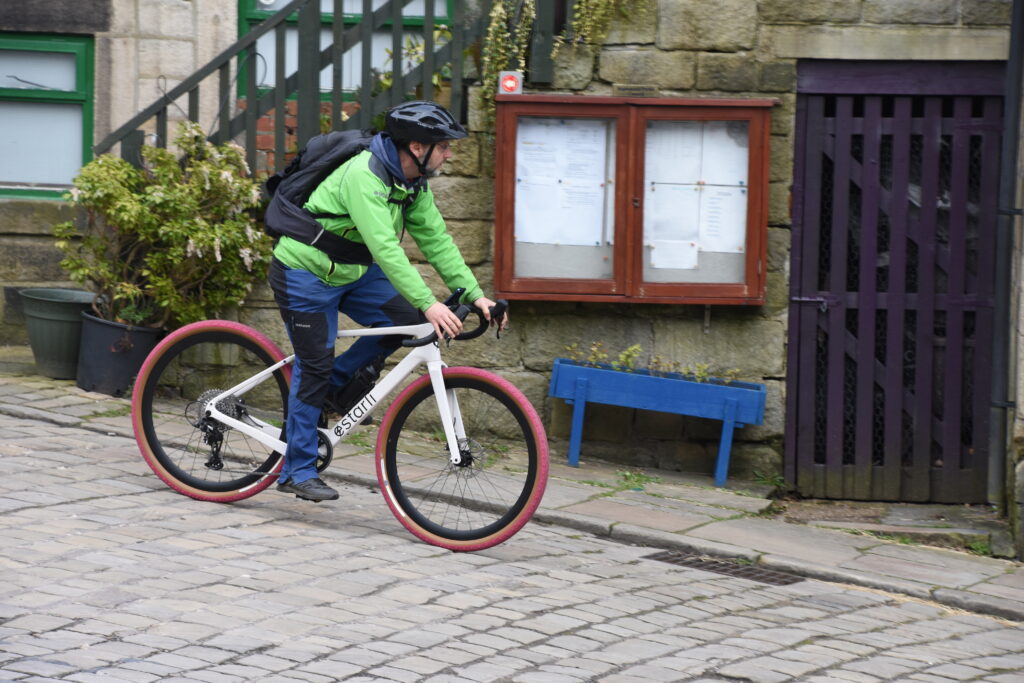
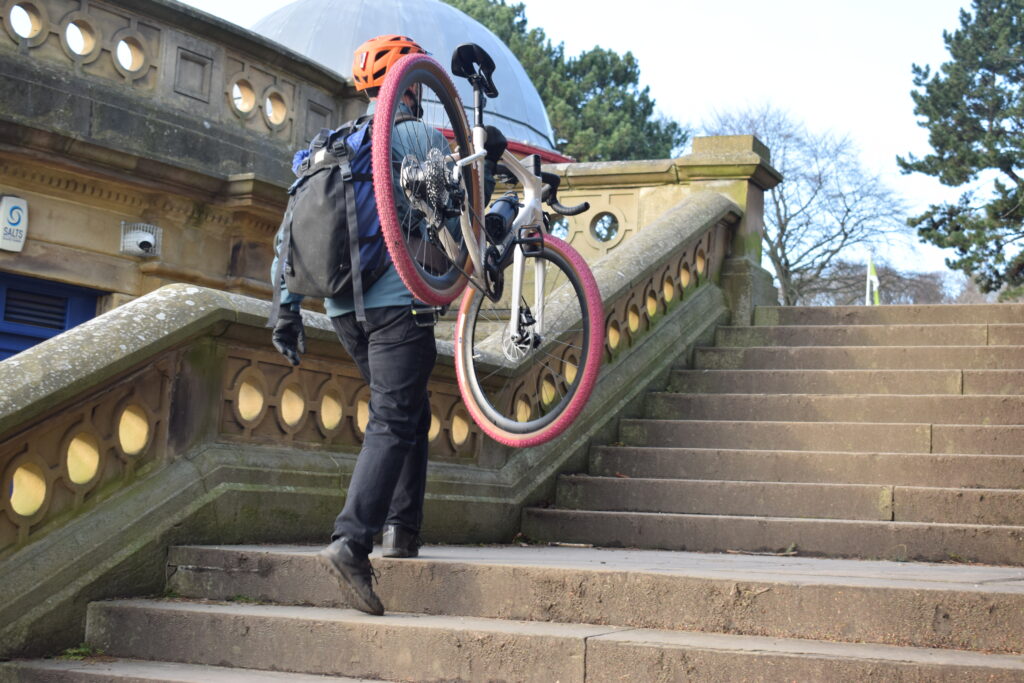
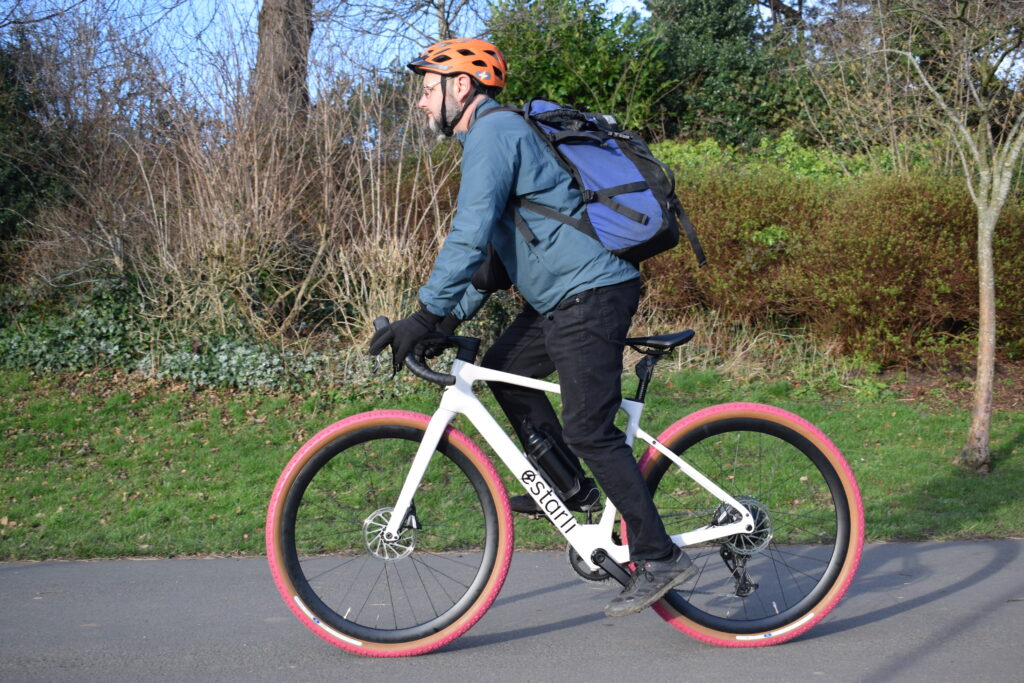
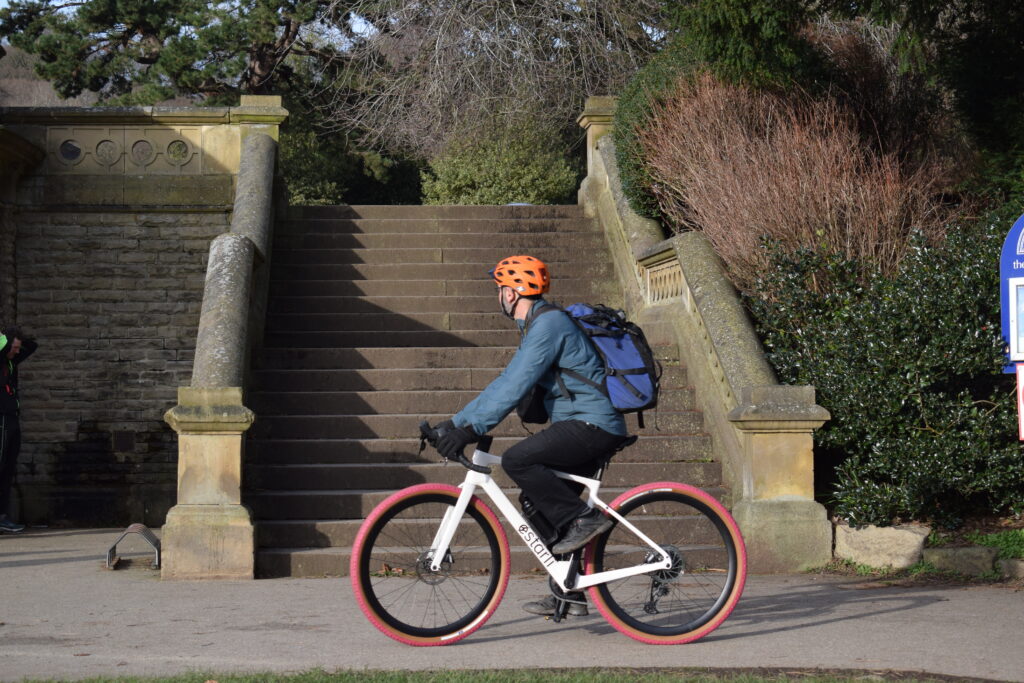
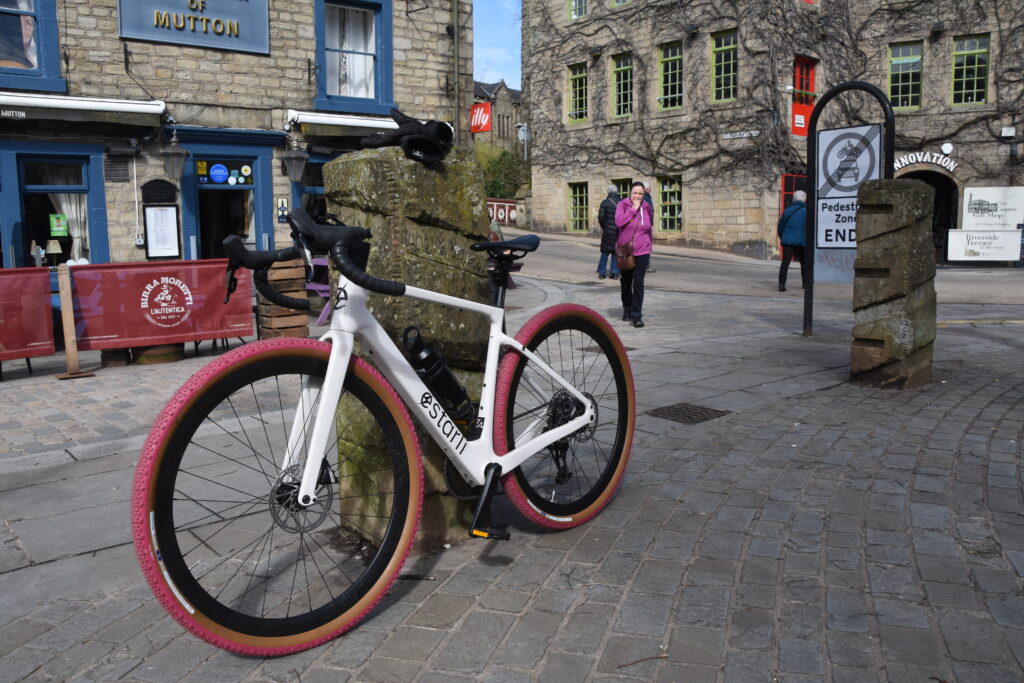
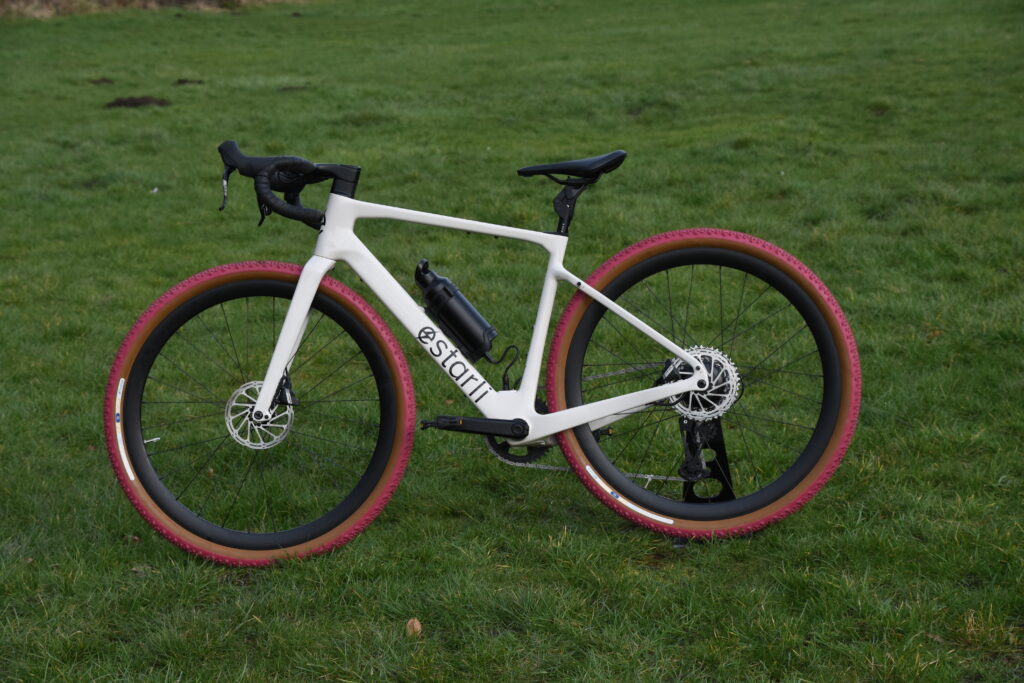

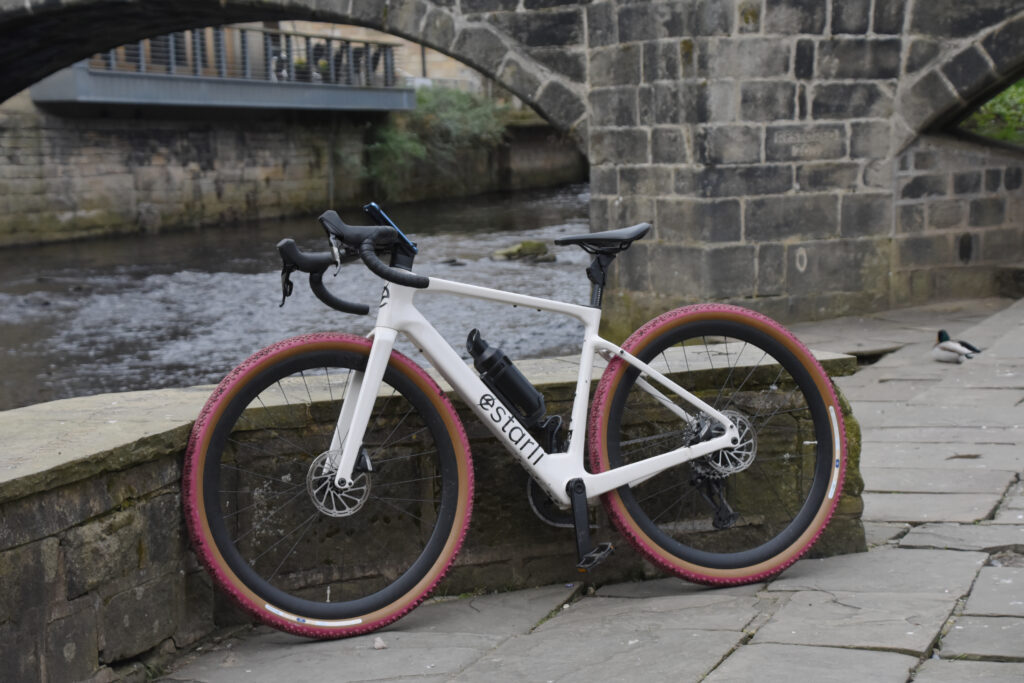
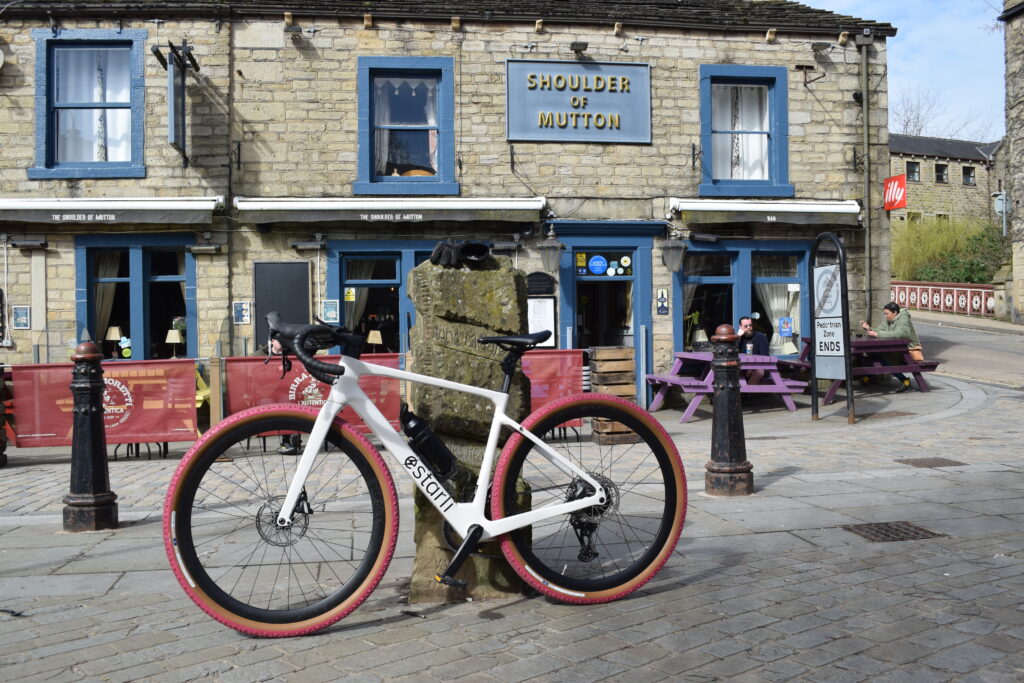
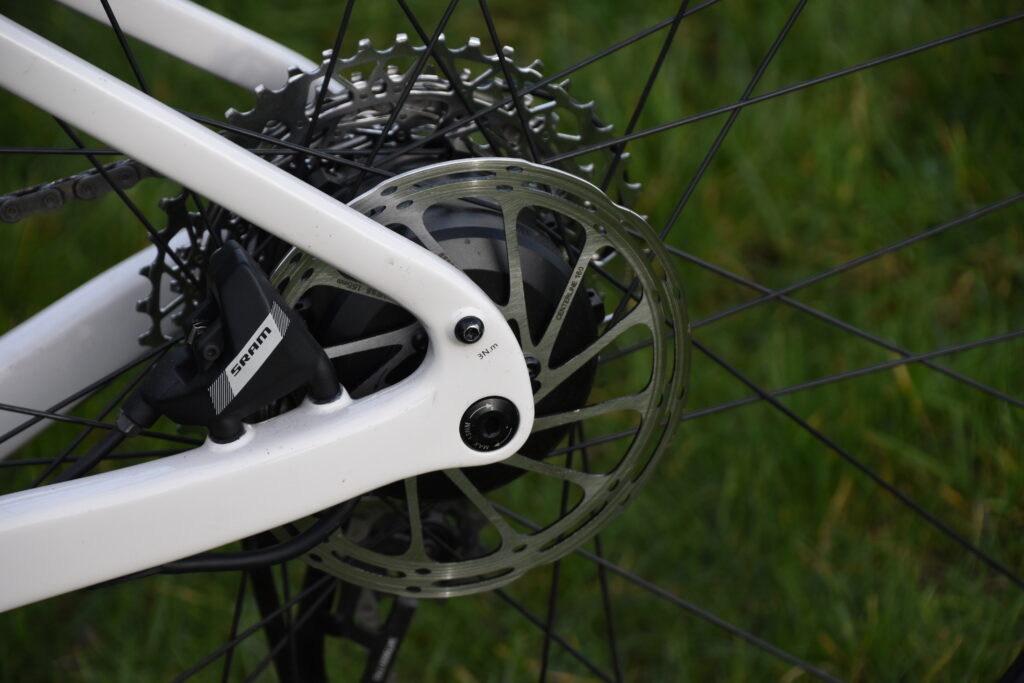
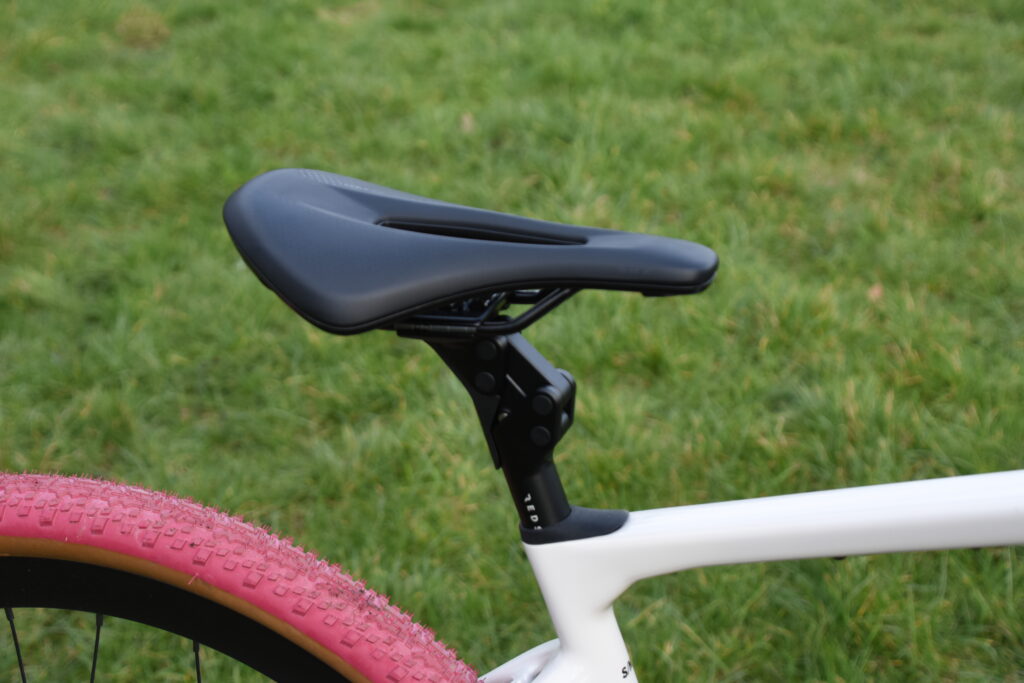
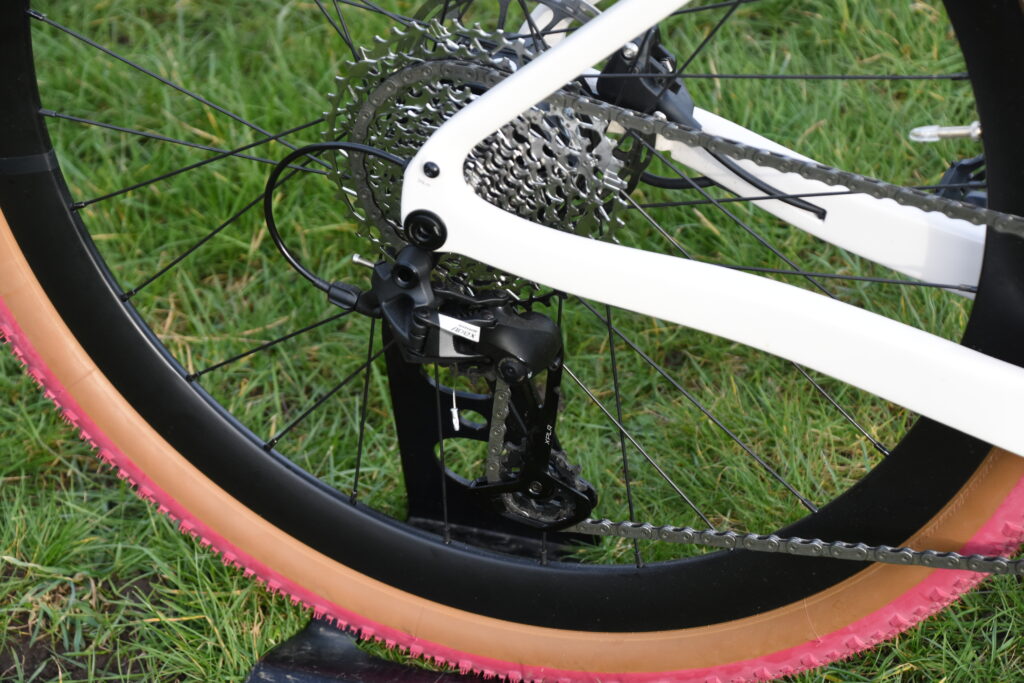
The carbon frameset is standard, as is the SRAM Apex 1×12 derailleur gearing, SRAM Apex hydraulic disc brakes, electric assist system (including display) and alloy aero rims.
Beyond this, there are plenty of options you can spec on ordering. These include flat bars (when the bike becomes an H700), an adjustable angle stem, front fork suspension, mudguards and a rear rack with an MIK plate adapter which then allows you to add the various compatible quick release carrying options out there. Estarli says hardwired lights will follow, probably around late summer.
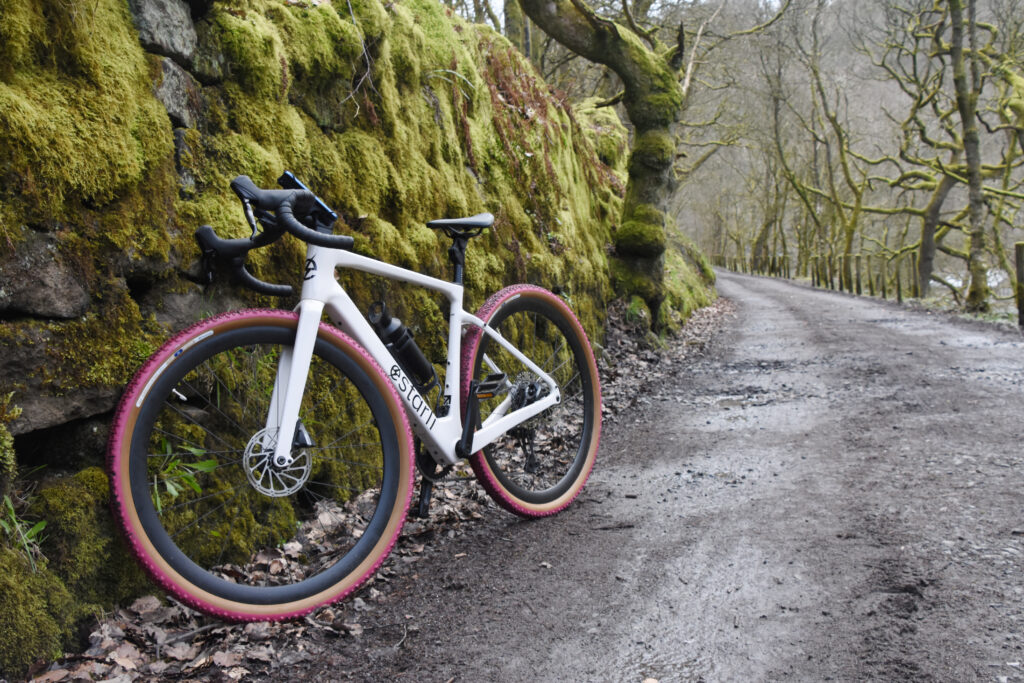
Frame geometry looks to be slanted towards the easy handling, touring end of the spectrum, which helps deliver commuting and leisure abilities in addition to great out and out gravel performance. The 45mm wide tyres with aggressive tread also aid stability and ensure the bike’s very comfortable even on fairly challenging off-road surfaces.
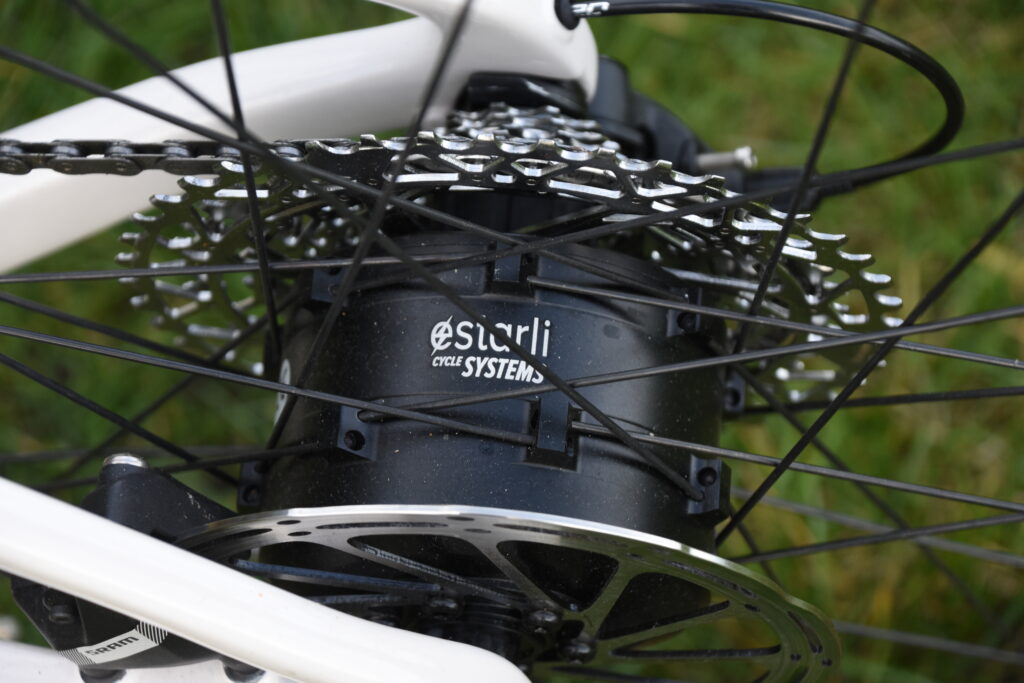
At the heart of the electric assist system is the Estarli Cycle Systems rear hub motor system (CSG4.0T), which is rated at a reasonable 40Nm and is combined with an integrated torque sensor. Notably, it has a thru axle, which is handy for quickly removing the rear wheel.
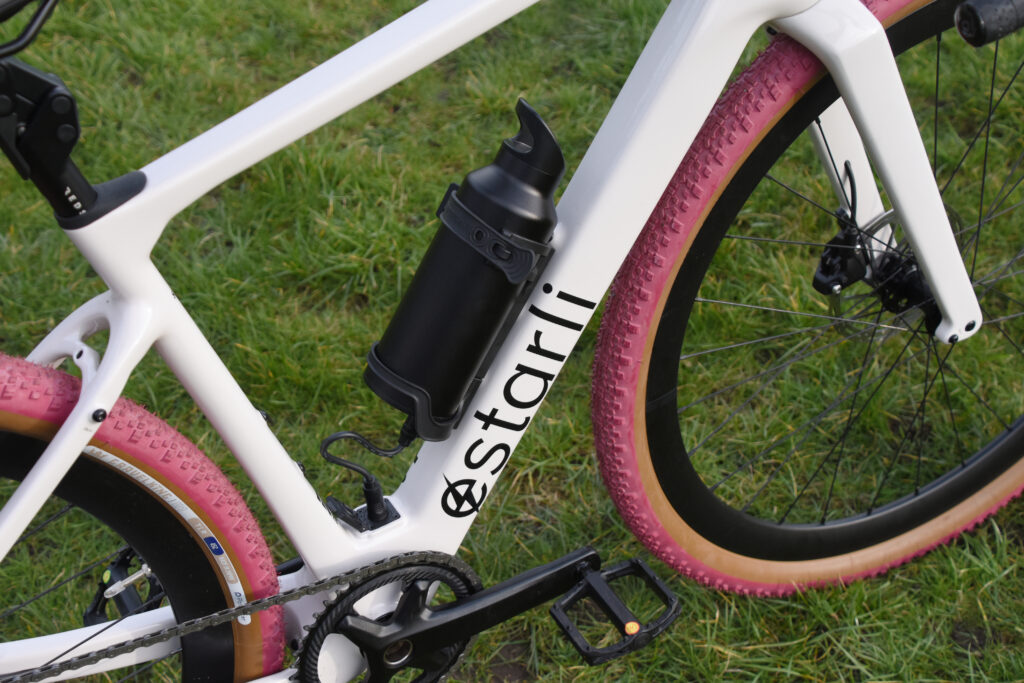
The 250Wh battery remains in the frame as far as the end user is concerned, so you need to take the bike to a charging point. The bottle style range extender battery that came with the test bike looks well made with a tough alloy case and the rubber mounting bottle cage and cable feed also look well made and kept the battery in place during some fairly tough off-road riding without any hint of rattling or bouncing around.
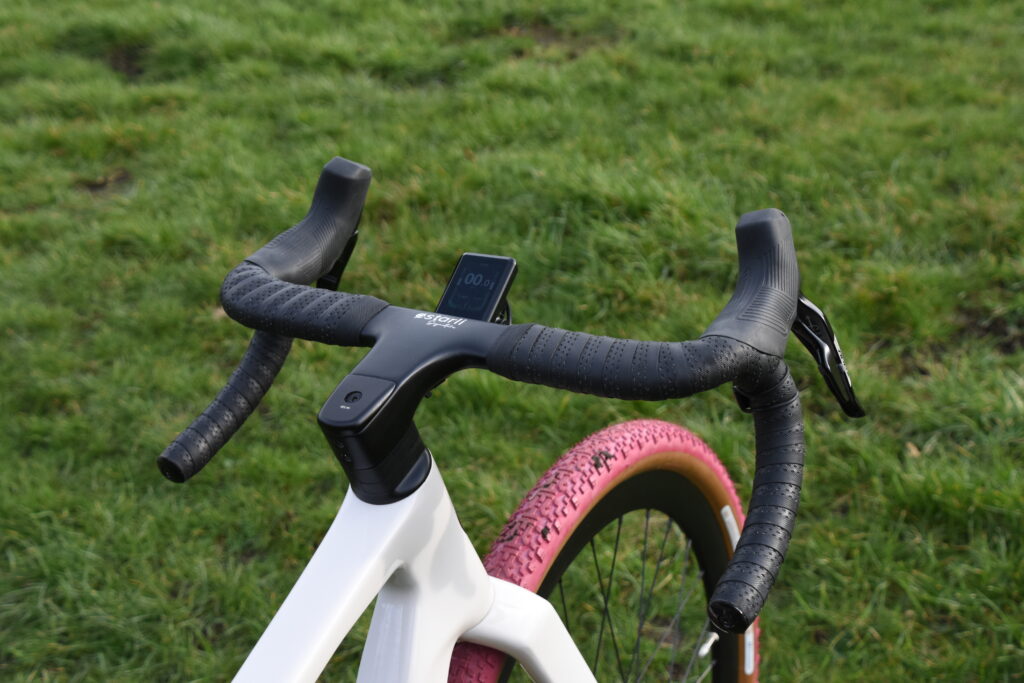
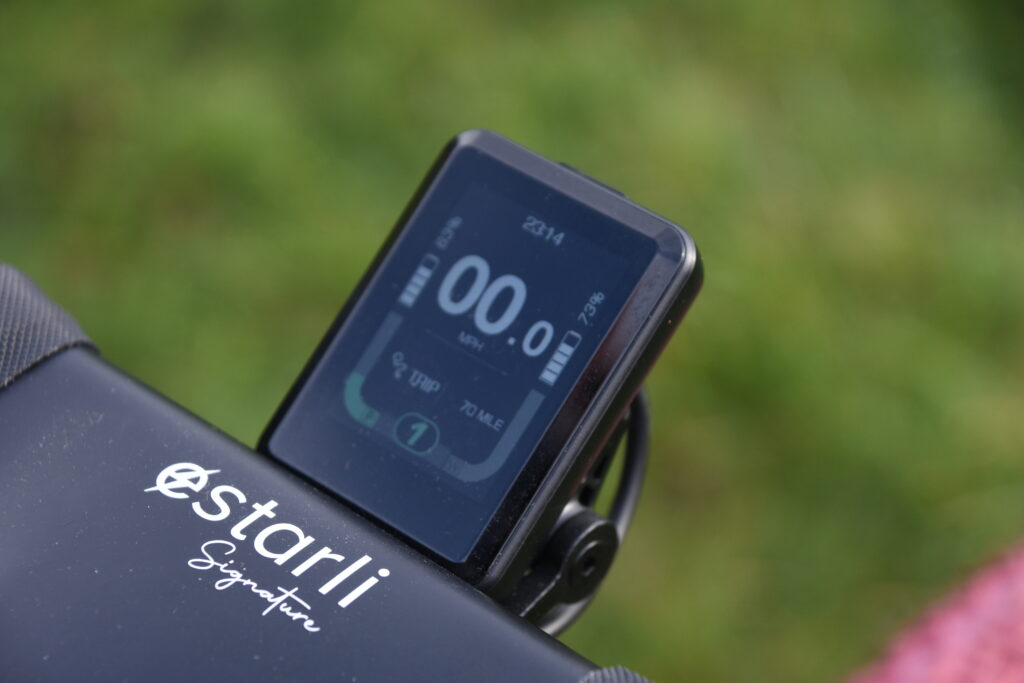
The drop bar brakes feature an integrated rear shifter on the right and wireless buttons for scrolling up and down the five power levels on opposite sides of the bars – I absolutely loved this setup, but more on that in the ride section. There is a central TFT display that shows speed and the relative battery percentages of both the main battery and the optional range extender battery if fitted – all very neat and tidy.
The spec of the motor system in particular caught my eye. It clearly wants to be included with the next generation of lightweight hub motors as it includes both an integrated torque sensor and a thru-axle, which puts it in the same company as the Mahle X30 – though that claims to offer up to 45Nm of torque against the Estarli’s 40Nm.
In terms of lightweight e-gravel bikes, the battery capacity offering is fairly generous as you can effectively double the in-frame 250Wh standard battery with the optional range extender battery meaning a 500Wh total. This is more than enough for all but the most heavy duty riders who could always purchase a second range extender. At 1.2kg a range extender would be easy to slip into a bag.
Talking of weight, my G700 build came in at 14.2kg (not including the 1.2kg range extender battery). This doesn’t perhaps look that light when compared to the recently-reviewed, alloy-framed Ribble Allgrit E AL’s 14kg – though do note my G700 featured a fairly hefty suspension seatpost and greater battery capacity. Certainly the use of carbon means the G700 is lighter than if Estarli had opted for an alloy frame.
Ride performance
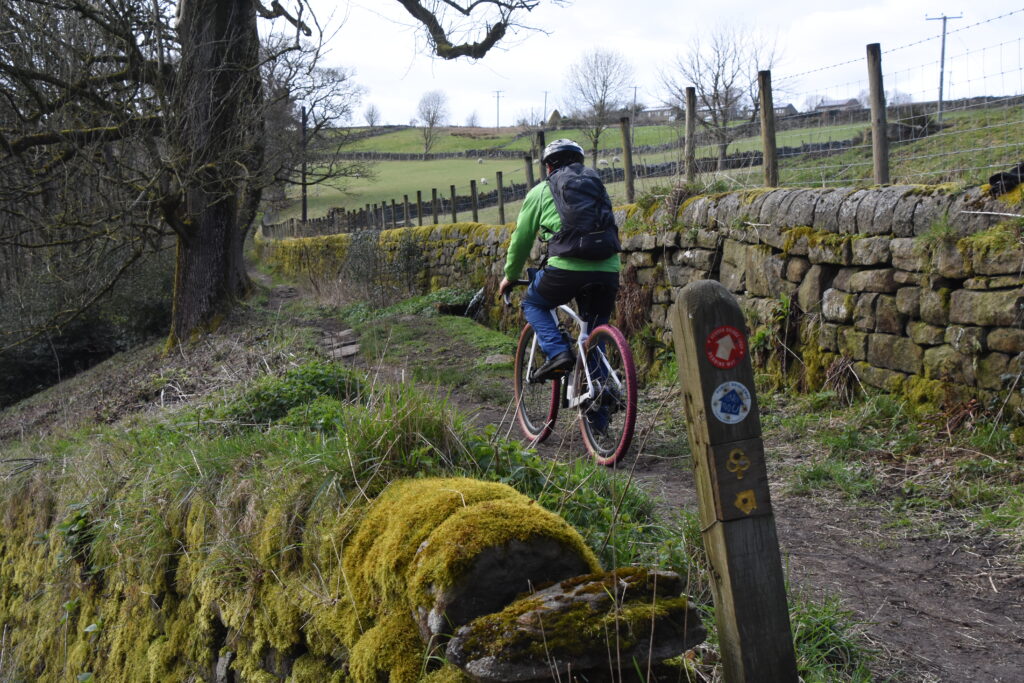
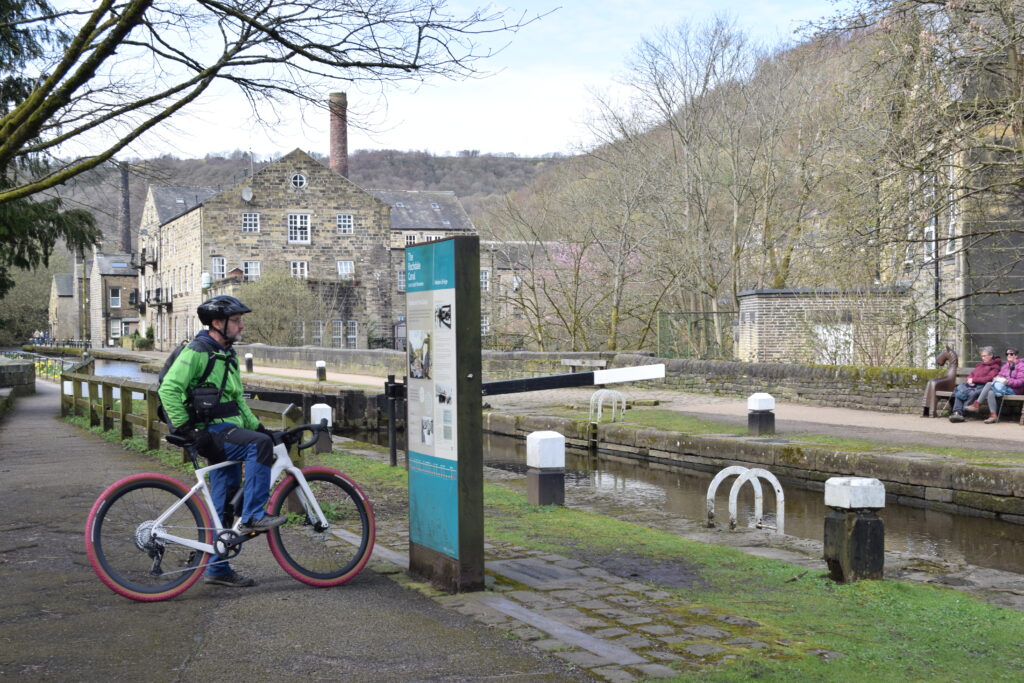
I did a short but very testing ride around Hebden Bridge where some of the steepest gradients in the UK are found. I also did some of the Trans Pennine Trail near Wakefield and some hillier Pennine hill riding. The latter two rides are probably more typical of the kind of thing the G700 would typically tackle. I tried to stick to unsurfaced tracks that are recognised off-road routes, but these are not always in the best state, featuring occasional deeper mud, stony sections and even sections where picking up the bike to navigate steps and the like might be useful.
I found the bike performed brilliantly overall. The only time it stuttered was trying to climb the bottom end of the infamous Buttress climb out of Hebden Bridge centre which required a short dismount – though this was perhaps due to the fact that I don’t tend to ride drop bar bikes over massive, uneven cobbles at gradients in excess of 30 per cent, so this was a test of my handling skills as well. Towards the top of the Buttress, where gradients are a mere 20 per cent, the motor, the 44-tooth bottom gear and a good dose of pedal power meant I made it to the top. The motor made considerably more noise than its usual quiet hum and was clearly straining to the max – but it never faltered.
Over testing but less savagely brutal terrain, the bike was fast when you wanted it to be and up there with some of the best e-bikes I’ve tried for riding with the power switched off. It was especially nice to have all the controls at your fingertips – brakes, gear changers and power buttons – with a nice clear central TFT display the icing on the cake. More than that, you can brake, change gears and power levels while barely moving your hands – impressive ergonomics indeed on a drop bar bike.
The range I achieved – around 50 miles, most of it off road – from 500Wh worth of battery is testament to how well the G700 rolls. It felt fast and efficient and the main metrics proved it.
As noted in other reviews, this style of riding on lightweight e-gravel and e-road bikes is a lot more subtle and it feels like you are contributing more compared to a heavy mid-drive machine – and that’s because you are.
I’d also say a word about comfort. This is not a full-on electric mountain bike, so I found myself throttling back my speed a bit on harder, bumpier surfaces, just as would on any such bike. There is a front fork suspension option though, which would have undoubtedly helped on some sections. Having said that, the Redshift suspension seatpost and the 45mm wide tyres meant the G700 glided over most of the terrain I put it up against.
Who the G700 would suit depends on how you choose to spec it. My build was great for fitness rides, on and off road, with the benefit of forgiving geometry and the comfort of the optional and very effective suspension seatpost. As well as riders looking for performance, I can see bikepackers and off-road inclined commuters enjoying this build if you added a rack and mudguards. The flat handlebar H700 build, which keeps the light, high performance frame, motor setup and gearing, is aimed more at leisure and utility riders while remaining sporty and capable off-road.
Competitors and value
Setting aside the company’s e-cargo longtail offering (with a powerful mid-drive and sophisticated Enviolo stepless gears), the G700/H700 range, starting at £3,195, is a big step up in price from Estarli’s other hub motor offerings, which are all under £2k. The extra price is not just due to the carbon frame but also the extra level of performance from all the other components, from gearing through to the display. This means that extra grand or so gets you a significantly lighter and sportier e-bike that can also be specced for more utilitarian purposes – not all other e-gravel bikes can.
The electric gravel market is however starting to get pretty crowded so the G700 has plenty of competition in the sub-15kg rear hub motor segment. We recently took a look at Ribble’s Allgrit E AL (£2,899) which ticks many of the same boxes at a similar price. It’s lightweight with a 1×12 drivetrain and again with flat bar and front suspension options, though the frame is alloy, not carbon. However, note the more modest battery capacity of the Allgrit – 237Wh in the frame and 173Wh from the optional range extender.
Despite recent financial difficulties, Alpkit remains operational and looks to be heading on to the path to success again, so it’s worth keeping the Sondor El Camino range on your radar, as well as Boardman’s ADV8.9E (£2,799) which is one of the lighter mid-drive’s out there.
> Hub motor v mid motor? What’s the difference?
I would have liked to have seen a longer frame guarantee than the two years offered on the G700, but that aside it represents an impressive debut in the performance e-bike stakes for a company that started out with a range of well-reviewed and keenly priced urban offerings.
It’s a bike that combines comfortable and speedy performance with a range of spec options that help it stand out from the crowd.
Test Report
What does the manufacturer say about this product?:
The ground-breaking, lightweight e-gravel that rides just as well with the power off.
Tell us some more about the technical aspects of this product:
Lightweight carbon frame, available in small medium and large
Fully integrated battery, removable in the workshop for servicing or renewal
Carbon chainring with SRAM 12-speed groupset
Estarli Cycle Systems clutched hub motor with integrated freehub torque sensor
Front and rear thru-axles
Press-fit bottom bracket
Fully integrated carbon cockpit
Continental Terra Trail standard tyre
Options:
Adjustable stem and drop or flat bar options
Choice of front or seatpost suspension (£150 / £250)
Range extender bottle battery (£350)
Commuter mudguards (£65)
Rear rack with MIK plate (£50)
How does the price compare to that of similar products in the market, including ones recently tested?:
Quality and performance is about what you would expect for the price.
Tell us what the bike is for and who it’s aimed at. What do the manufacturers say about it?:
It’s aimed not just at out and out gravel riders but those who want to combine gravel style off road paths with leisure rides, shopping and commuting.
Where does this model sit in the range? Tell us briefly about the cheaper options and the more expensive options:
The G700 tested here is the ‘base option’ except for the tyres and suspension seatpost. There are many more component options and as you add them to a chosen build they increase the price. The G700 sits near the top of Estarli’s price range, on a par with their longtail cargo offering.
Tell us about the build quality and finish of the frame and fork:
Carbon fibre.
Tell us about the materials used in the frame and fork:
Carbon fibre.
Tell us about the geometry of the frame and fork:
In gravel bike terms it’s a fairly relaxed geometry for comfort as well as sporty riding.
Was the bike comfortable to ride? Tell us how you felt about the ride quality:
A comfortable yet sporty ride position.
Did the bike feel stiff in the right places? Did any part of the bike feel too stiff or too flexible?:
Just about right.
Was there any toe overlap with the front wheel? If so, was it a problem?:
Yes there was – but not a problem once I had adjusted my ride technique to keep my feet back on the pedals a little.
How would you describe the steering? Was it lively, neutral or unresponsive?:
Neutral
Tell us some more about the handling. How did the bike feel overall? Did it do particular things well or badly?:
Felt assured yet fast, both on road and on gravel style trails.
Which components had the most effect (good or bad) on the bike’s performance? Would you recommend any changes?:
The combination of 1×12 gears and wireless power buttons was great for close control of power levels and gears. If a more leisurely or functional ride is required then Estarli offers lots of customisable options including a straight bar H700 option.
Any comments on drivetrain performance?:
Reliable smooth shifting
Any issues with drivetrain durability?:
No
Any issues with wheel durability?:
No
Any comments on tyre performance?:
Comfortable and fast
Any comments on brake performance?:
Needed bedding in a bit and front brake a bit squeaky at first.
Any issues with brake durability?:
No
Any comments on controls performance?:
Excellent
Any issues with controls durability?:
No
What kind of motor is it?:
An Estarli own-brand rear hub motor.
What are the stated motor system specs? (Torque/power/maximum assistance speed):
250W continuous power, 40Nm torque.
Tell us some more about the motor. How did it feel overall? Did it do particular things well or badly?:
It felt smooth and fairly powerful, though in common with many rear hub motors, it lacked low speed high torque up very steep slopes where mid-drives are more capable.
How did the motor perform at low speed? (e.g. on steeper climbs or setting off with heavy loads):
See above.
How did the motor perform at higher speed? Was it noisy? Did assistance cut out smoothly/abruptly at the 25km/h assistance limit?:
Extremely well. Smooth transition to no power at 16mph and good to ride above the cut out limit.
What type of battery is it? Is the manufacturer named?:
Lithium ion – manufacturer not named.
Where is the battery on the bike? Is it removable?:
Frame integral (non end-user removable).
What are the stated battery specs? (Capacity/voltage):
36V, 7Ah / 250Wh EN50604 / Samsung Cells
250Wh range extender battery also available
Tell us about charging the battery. What’s the charger like? How long does it take?:
2A charger takes around three hours to go from empty to full.
Tell us about the assistance levels. How many are there? Are they all useful?:
Five levels, nicely graduated.
What was your experience of the operational range of the bike?:
30-50 miles, depending on terrain.
Did you enjoy using the product? Yes
Would you consider buying the product? Yes
Would you recommend the product to a friend? Yes
Use this box to explain your overall score
A great blend of performance and ease of use with plenty of options meaning it can be so much more than a gravel bike.
About the tester
Age: 59Height: 172cmWeight: 70kg
I usually ride: E-bikes of any descriptionMy best bike is: Riese & Muller Homage
I’ve been riding for: Over 20 yearsI ride: Most daysI would class myself as: Experienced
I regularly do the following types of riding: Commuting, Touring, Fitness riding