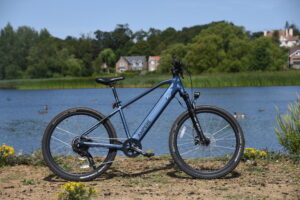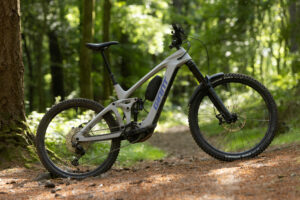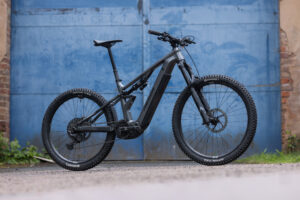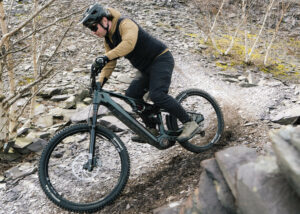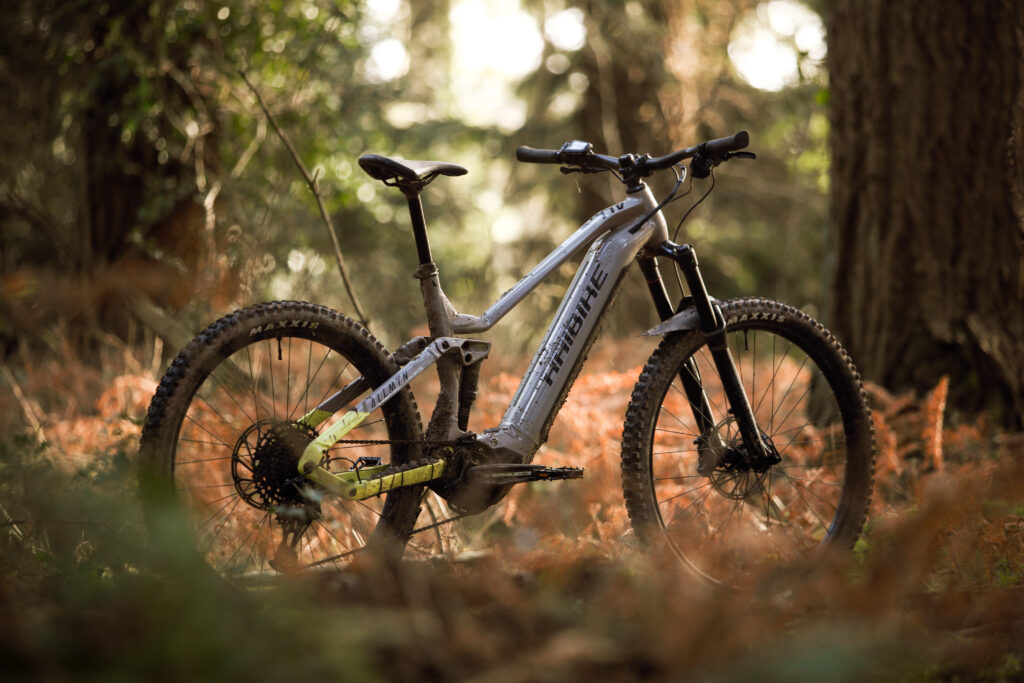

While its looks will surely divide opinion, the Haibike AllMtn 2 makes for a great first step into the world of e-MTB, thanks to a properly sorted and contemporary geometry. While its powerful Yamaha motor is a stand-out feature, its weight noticeably affects the handling and there are some question marks around certain spec choices.
- 2022 Vitus E-Sommet VRX review
- Opinion: A lightweight e-bike is in your future so you might as well get used to the idea now
- Opinion – E-bikes aren’t a menace, it’s all about trail etiquette
Haibike AllMtn2 e-MTB – Technical details
Haibike’s updated AllMtn platform is designed to be a do-it-all machine. This iteration of the bike gets a frame with a relaxed geometry and is finished in a budget friendly build kit that makes the AllMtn2 an achievable purchase.
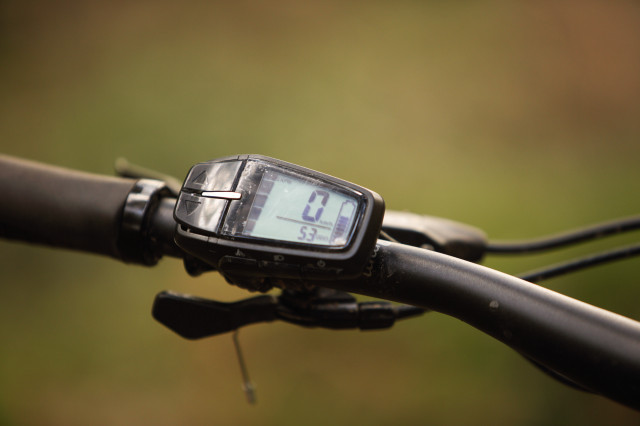
The star of the show is the AllMtn2’s Yamaha PW-X3 motor that rustles up a full 85Nm of torque. It is powered by an InTube 720Wh battery. Yamaha’s own 1.7-inch LCD display shows you a bunch of useful info including the motor’s seven power modes.
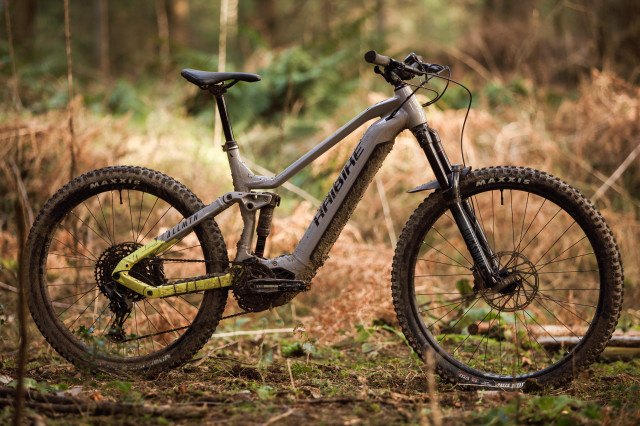
Living up to its name, the AllMtn comes with 160mm of travel at both ends with a RockShox Gold 35 RL supplying the front squish and a RockShox deluxe Select + sorting the rear.
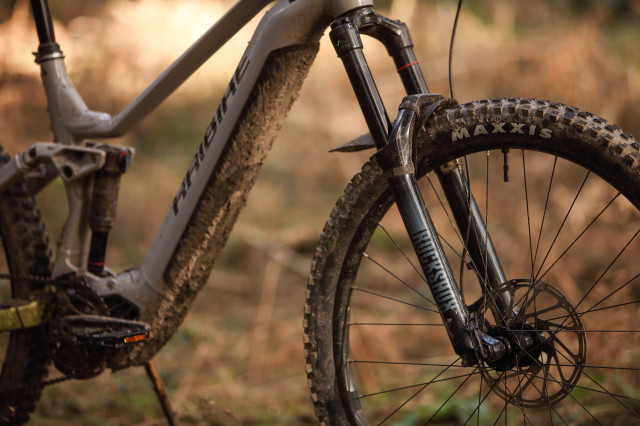
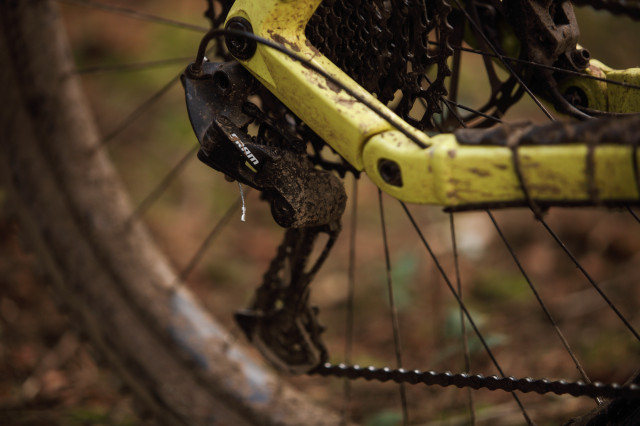
This bike benefits from SRAM’s SX Eagle drivetrain, so it’s got a full 12-gear spread from 11-50T sprockets that drive a pair of WTB STi rims laced to Haibike’s own hubs. The wheels are where some clever choices have been made as the front comes with a 30mm internal width and 2.5in Maxxis Minion DHF tyre while the rear gets a fatter 35mm internal rim width and chunkier 2.6in Maxxis Minion DHR II. Both of those tyres get EXO casings.
What makes this choice intriguing is that the rear wheel benefits from a larger contact patch, which results in more grip, especially when climbing. It also ups the tyre volume meaning riders can benefit from the extra grip of lower tyre pressures, and a bonus bit of cushioning when hitting the seriously rough stuff.
The Haibike AllMtn2 e-MTB rolls on mullet wheels: a 29-inch front and 650b rear. The benefits enable the designers to shorten the chain stays and increase agility but there’s also more clearance for that fatter tyre. This makes for a calm and manageable front end that doesn’t hook up on squarer trail obstacles.
The AllMtn2 calls upon a pair of SRAM DB8 four-piston brakes for stopping power and they’re combined with 203mm rotors at both ends. The bike is also specced with HaiBike’s own dropper post.
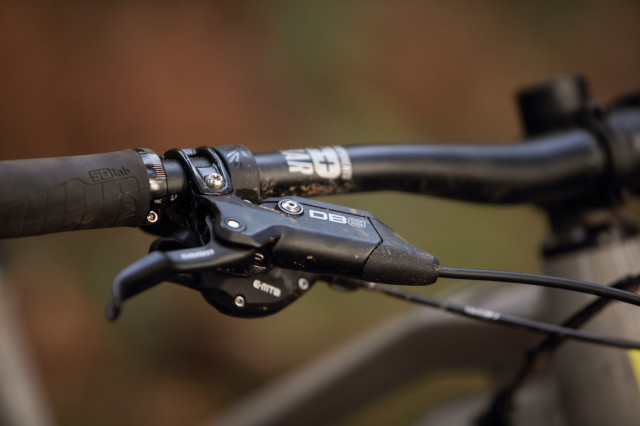
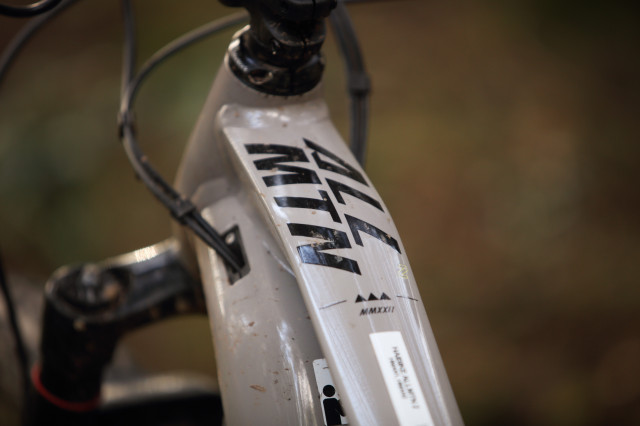
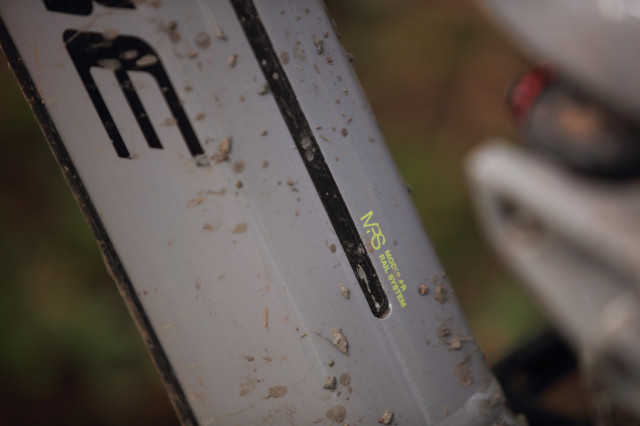
Elsewhere the AllMtn2 comes with internal cable routing for a tidy look and Haibike’s interesting Modular Rail System. The brand claims that this system makes bottle cage mounts obsolete. The MRS allows riders to fit a multitude of different accessories, such as bottle cages but also frame bags, range extenders and locks.
The bike weighs 27kg which, even for an e-bike, is pretty heavy.
Moving onto the bike’s geometry and there’s very little to complain about. This large frame comes with a 475mm reach, then all sizes take advantage of a 75-degree seat tube angle, a 64.5-degree head tube angle, and a 460mm chainstay length. Considering that Haibike has dubbed this as its ‘all-mountain e-bike’, those numbers are nothing to be sniffed at. It’s nice and low too with a -20mm bottom bracket drop.
Haibike AllMtn2 e-MTB – Ride impressions
While definitely at the budget end of the motor scale, the Yamaha PW-X3 is a really impressive bit of kit, which elevates the AllMtn2’s ride quality. It summons plenty of power to make even the steepest of gradients relatively simple to negotiate. It delivers its assistance very naturally, too, with every setting on the bar-mounted remote ramping up the power with the more effort you put in. It’s a feature that’s similar to the Trail mode on Shimano’s EP8 and one that I’m especially fond of. Having that on every mode is a big bonus. The motor, however, is not without its quirks.
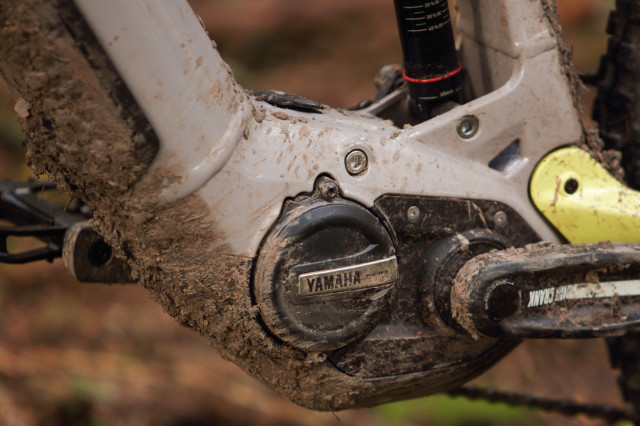
It gets seven assist modes ranging from the lowest eco and eco+ settings, right up to extreme, where it cranks out its full might. Having all of those settings is great as it lets you micro-tailor the assist level to how you’re riding. However, the motor isn’t without a smidge of drag, which is most noticeable at the lower three power levels. So when you’re looking to save precious battery life, it feels as if you’re working against the resistance of the motor’s drag.
Then, shifting the motor into the four more powerful modes, it really chews through its battery. Yes, it’s expected of a motor to use more battery with the more power it outputs but the PW-X3 is a hungry beast. This can introduce a bit of range anxiety when trying to balance drag-free pedaling with battery life.
It has been reliable though, as during my test period it’s not shown any sign of giving up. It has made a concerning orchestra of noise, especially when slightly out-cadencing it, however. It intermittently grinds, too, but again, this hasn’t come to any harm.
As the single touch point of the drive system, I can’t gloss over its remote and, compared to the rivals from Shimano and Bosch, Yamaha’s remote feels especially cheap. That’s thanks to the use of inexpensive plastics for the buttons. It does work though and, while I’ve accidentally changed modes a number of times, I’ve had little issue with it practically.
When pointed uphill, the AllMtn2 behaves pleasantly. While the motor is employed to do much of the work here, the rear suspension gives little movement to wasted energy. It’s well planted, showing no signs of front-end lift when cranked up even the steepest of climbs. This is credited to the bike’s upright 75-degree seat tube as it shifts weight rather evenly between the wheels. This almost automatically weights up the front and keeps it tracking along the ground when pedaling uphill.
Of course, an e-bike is more than the sum of its motor and it’s a bike I’ve adapted to very quickly – mostly due to its geometry. Its reach is stretched enough to help the bike remain stable when the speeds ramp up while the head tube angle keeps the front end positively supported when rolling through steep and techy sections.
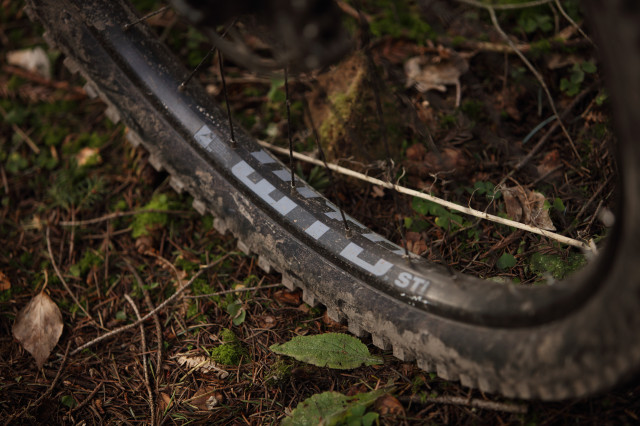
Its low bottom bracket is a huge bonus, too, as when combined with the bike’s overall weight, it’s incredibly stable when leaned into a corner. But that’s also an area where the AllMtn2’s extra few kilos put a bit of a dampener on the handling.
There’s no getting away from the effort the AllMtn2 requires to muscle into turns. The weight of the downtube-stored battery makes itself seriously known, no matter how hard that 650b rear wheel tries to regain some agility. Quick changes in direction require forethought and a show of willingness from the rider. But the combination of the bike’s weight and the mullet wheel configuration is that once pulled upright and a corner is initiated, the bike almost effortlessly slinks into its stable lean.
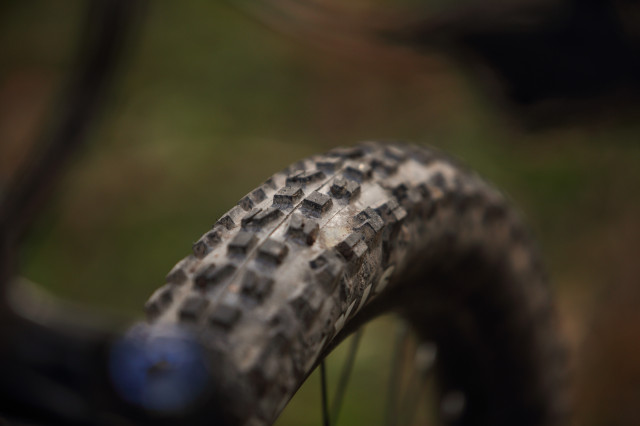
The mullet wheels help in other areas, too, with the most noticeable being when tackling steeper terrain. I’ve yet to spin the rear wheel out when launching the AllMtn2 up a hill and that’s thanks to that fat, 2.6in contact patch of the rear tyre. The small wheel also adds a hint of extra acceleration.
As for the tyres, the Minion DHF and DHR II are a killer combo. It’s a go-to for a vast range of bikes and brands – but Haibike has gone concerningly wrong here. Again, this is a solid tyre choice but, on this bike, it’s come in the lightweight EXO casing. On a leg-powered all-mountain bike, this could easily be forgiven but with the extra bulk of any e-bike, this casing isn’t strong enough. In fact, I’ve found that the rear especially can squirm on the rim and, while riding a fairly mellow loam trail, I’ve managed to cut a sidewall. While this choice is a clear effort to shed a few kilos, changing to some stronger-cased tyres will improve tyre stability and cut resistance.
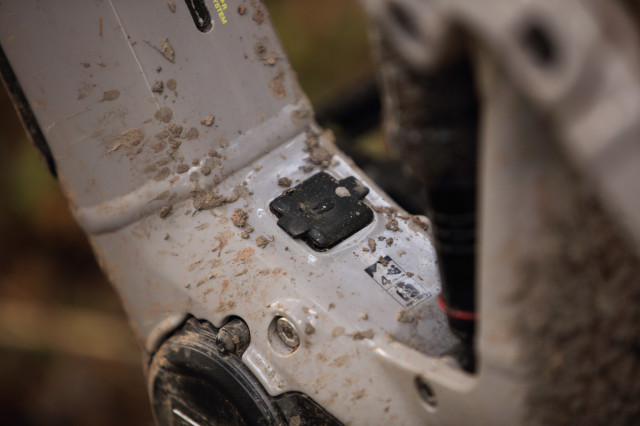
In terms of the bike’s weight, it’s not all bad as the 27kg results in huge momentum gain when pointed downhill. When in a straight line, the AllMtn2 is super fast and because of its respectfully progressive geometry, it’s reasonably well composed. But it does make its suspension work particularly hard.
The RockShox suspension bolted onto the AllMtn2 is an attributing factor in its low price but when the bike is being pushed, it can become quickly overwhelmed by the rough stuff. Even after fettling with its settings, the bike requires some serious supervision when rattling over chunky rock gardens. This can then suck confidence and slow you down. Not only is this due to the 35 Gold RL’s comparatively unsophisticated damping circuit, but it’s not the stiffest of forks to be bolted to the front of a weighty e-bike.
The rear end likes to hang about in its midstroke when cornering, making the rear of the bike feel vague and a bit sluggish. Although, adding bottomless tokens will easily remedy this issue.
Though, this is where the bike’s readiness for upgrades is a big advantage. If you caught the bug aboard the AllMtn2 and wanted to eke out as much performance as possible, it comes with a tapered head tube so it will accommodate most modern mid-high-end suspension forks.
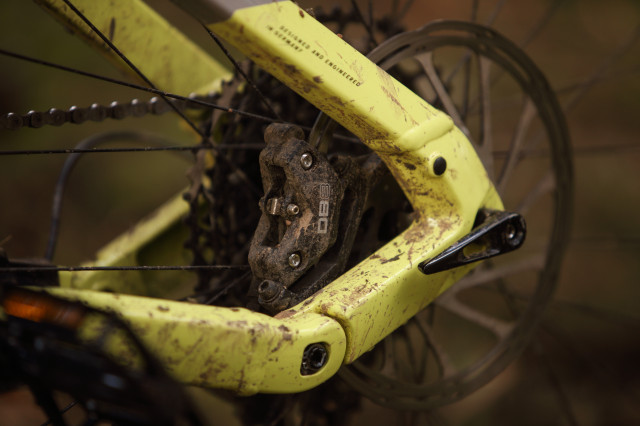
The SRAM DB8 brakes, while not bad by any means, are something I would also quickly upgrade. They do effectively stop the bike but when tackling steep, natural or just faster trails, they lack the overall bite during moments when urgent and sharp braking is imperative. Though, that’s likely down to the bike’s overall weight, again.
Haibike AllMtn2 e-MTB – Verdict
When compared to non-direct-consumer brands, the Haibike AllMtn2 shows good bang for buck, coming in around £100 cheaper than other equally specced bikes from bigger brands. Though direct-to-consumer brands such as Canyon or YT Industries don’t even offer an all-mountain-focused e-bike for less than £5k. So, as said before, it’ represents a viable (entry-level) step into e-mountain biking for new and experienced riders alike.
To compare, Trek’s Rail 5 625W Gen 2 is priced at £4,900. It’s £300 pricier but it gets similar componentry, such as the RockShox 35 Gold RL fork but it benefits from a posher Bosch Performance Line CX motor, which will be appreciated in the long run as the bike is upgraded thanks to its smoother performance and better build quality. Though, what makes the Haibike look even better value is that the Trek’s geometry is pretty similar.
The AllMtn2 poses good value against Giant’s Trance X E +3, too. Again, its specification is similar and its geometry isn’t too bad at all. It is £200 more expensive though. Then Specialized’s most entry-level Turbo Levo costs £5,500.
For £5,000, Canyon’s Spectral:ON gets a full carbon frame and RockShox Lyrik fork, and Shimano EP8 motor. While it’s definitely excellent value for money, if you’re on a budget the extra £400 may not be attainable.
Even though the AllMtn2 isn’t without its niggles, Haibike has done a commendable job in creating an all-mountain e-MTB complete with a reasonably friendly price tag. Its geometry is sure to please anyone who wants to push the boundary and it’s built with all of the modern standards, so it’s ready and waiting for upgrades when the time inevitably comes. What can’t be upgraded though, is its rather hefty weight.
You might also like:
- The best titanium mountain bikes you can buy
- Best MTB’s that you can get shipped straight to your door
- Five reasons why you should have a hardtail
About the bike
Tell us what the bike is for, and who it’s aimed at. What do the manufacturers say about it? How does that compare to your own :
State the frame material and method of construction. List the components used to build up the bike.:
Alloy frame.
-
-
ENGINE
Yamaha, PW-X3, 250 W, 85 Nm
-
DISPLAY
Yamaha, Side Switch, 1.7″ LCD, 7 functions
-
BATTERY
InTube, 720 Wh
-
FRAME FAMILY
Haibike, AllMtn PW-X3, Aluminium
-
FORK
RockShox, 35 Gold RL, Air, 160 mm travel, Aluminium steerer tube 1 1/8″ – 1 1/2″ tapered, 15 x 110mm thru-axle Boost
-
DAMPER
RockShox, Deluxe Select Plus, Air, Trunnion Mount
-
CRANK ARM
Haibike Components, The Crank ++, Aluminium
-
BRAKE (FRONT)
TRP, Slate T4, Hydraulic disc brakes
-
BRAKE (REAR)
TRP, Slate T4, Hydraulic disc brakes
-
TUBE
Presta valve
-
RIM
WTB, ST i30 TCS, Double Wall
-
CLAMPING RING
Internal hexagon, 38.1 mm
-
REAR DERAILLEUR
Sram, SX Eagle
-
SHIFT LEVER
Sram, SX Eagle, Trigger switch
-
BOTTOM BRACKET
integrated in the motor
-
SPROCKET
Sram, Eagle PG1210, 11 – 50 teeth
-
CHAIN
Sram, SX Eagle
-
CHAINRING
Sram, 38 teeth
-
CHAIN GUIDE
Nylon directmount
-
BRAKE LEVER
TRP, Slate T4, Aluminium
-
BRAKE DISC (FRONT)
Tektro, TR203, 203 mm
-
BRAKE DISC (REAR)
Tektro, TR203, 203 mm
-
TYRE
Maxxis, Minion DHF II, 63-622, 29 x 2.5 inch
-
FRONT WHEEL HUB
Haibike Components, The Hub ++, 6-bolt standard
-
REAR WHEEL HUB
Haibike Components, TheHub ++ Thru axle 12×148, 6-bolt standard
-
SPOKES
Sapim, Race
-
HANDLEBAR
Haibike Components, TheBar +++, 780 mm
-
GRIPS
Haibike, MTB grips
-
STEM
Haibike Components, TheStem +++, 31.8 mm
-
HEADSET
Acros, BlockLock, Aluminium
-
SADDLE
Selle Royal, Vivo
-
SEAT POST
Haibike Components, Dropper-Post Remote 34.9, Aluminium, Telescope, 34.9 mm
-
PEDALS
Freeridepedal, Aluminium, with Reflector
-
PERMITTED TOTAL WEIGHT
150.0 kg
-
TYRE (REAR)
Maxxis, Minion DHR II, 66-584, 27.5 x 2.6 inch
-
RIM (REAR)
WTB, ST i35 TCS, Double Wall
-
Frame & Fork
How much suspension travel does the fork have?:
Was the bike comfortable to ride? Tell us how you felt about the ride quality.:
How was the bike in terms of sizing and angles? How did it compare to other bikes of the same stated size and intent?:
Overall rating for frame
How much suspension travel does the rear end have?:
Did the bike feel stiff in the right places? Did any part of the bike feel too stiff or too flexible?:
Tell us about the build quality and finish of the frame:
Tell us about the geometry of the frame:
Tell us about the materials used in the frame:
Riding
How did the bike transfer power? Did it feel efficient?:
How would you describe the steering? Was it lively, neutral or unresponsive?:
Tell us some more about the handling. How did the bike feel overall? Did it do particular things well or badly?:
Rate the bike for sprinting:
Any comments on sprinting?:
Rate the bike for high speed descending
Any comments on high speed descending?:
Rate the bike for technical descending:
Any comments on technical descending?:
Rate the bike for flat cornering:
Any comments on flat cornering?:
Rate the bike for technical climbing:
Any comments on technical climbing?:
Rate the bike for agility:
Any comments on agility?:
Suspension
Rate the fork for performance:
Any comments on fork performance?:
Rate the fork for value:
Any comments on fork value?:
Rate the rear suspension for performance:
Any comments on rear suspension performance?:
Any comments on rear shock value?:
Rate the balance and performance of the suspension overall:
Any comments on the balance and performance of the suspension overall?:
Drivetrain
Rate the drivetrain for performance:
Any comments on drivetrain performance?:
Rate the drivetrain for value:
Any comments on drivetrain value?:
Wheels & tyres
Rate the wheels for performance:
Any comments on wheel performance?:
Rate the wheels for value:
Any comments on wheel value?:
Rate the tyres for performance:
Any comments on tyre performance?:
Rate the tyres for durability:
Any comments on tyre durability?:
Controls
Rate the controls for performance:
Any comments on controls performance?:
Anything else you want to say about the componentry? Comment on any other components (good or bad):
Summary
Did you enjoy riding the bike?:
Would you consider buying the bike?:
Which components had the most effect (good or bad) on the bike’s performance? would you recommend any changes?:
Would you recommend the bike to a friend?:
Rate the bike overall for performance:
Rate the bike overall for value:
Use this box to explain your score:
All the deals displayed on our review pages are pulled from a constantly updating database feed of the best affiliate deals available. The criteria for deciding on what are the best deals is who is offering the lowest, delivered price. In most cases we will be showing the very best deal available online, but sometimes you may be able to find an item cheaper. If you can please feel free to post a link in the comments box below. To find out more about affiliate links on road.cc click here.