



If you’re thinking of investing in a power meter, it means you’re ready to take your cycling to the next level by using watts to track and inform your progress on the bike. In an ideal world, adding a power meter would give you all of those benefits with absolutely zero added weight, no change to your set-up, and a near-identical cycling experience to your pre-power meter rides. In Favero’s new Assioma PRO RS power meter pedals, all those boxes are now very much ticked.

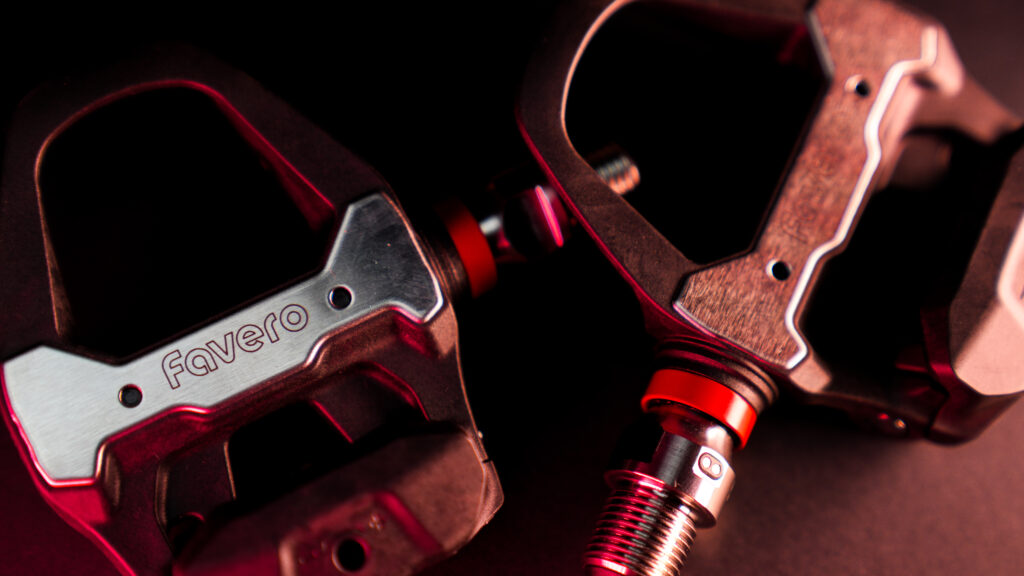
For those who missed it the first time around, Favero launched the highly-anticipated PRO RS power meter pedals back in June 2025. Weighing just 124.8g each side, with a reduced stack height of 10.5mm, Favero’s market-leading power accuracy and reliability is now matched by a design that delivers fundamentally the same ride experience as a regular Shimano SPD-SL pedal.
That low stack height means power transfer and cornering have been fully optimised, giving you all the benefits of a high-end, non-instrumental pedal, but with a highly accurate power meter built in.
When it comes to weight and pedal stance, there is less than 1g in difference between the PRO RS pedal and a regular Shimano Ultegra R8000 model, both effectively weighing 124g, and both have a distance of 53mm between the centre of the pedal body and the spindle – the difference being that the PRO RS is housing everything you need to accurately measure your power within that spindle, for up to 60 hours at a time before you need to recharge.
Q-factor – or technically ‘stance width’ when we’re referring to pedals specifically – is rarely discussed when we talk about bike fit. While the distance between your feet on the pedals may not be as crucial as other common measurements like cleat position or saddle height, you’ll likely notice any subtle changes, so it makes sense to keep things consistent and familiar if you’re moving over from standard pedals to power meter versions.
One of Favero’s primary goals with the PRO RS pedals was to ensure riders’ stance width would be identical to their stance when using non-instrumental Shimano pedals. Favero has achieved this with the 53mm width of the PRO RS, and coupled with that super low 10.5mm stack height for optimal power transfer and efficiency, you can be guaranteed the same levels of stability and confidence when making the switch.
Favero’s Federico Santarossa commented: “It’s something people are really appreciating, because it gives a much more natural feeling on the pedals. There’s no compromise compared to non-instrumental Shimano pedals.”

There are other power meters out there that pack all the tech into a set of pedals that are of similar width and appearance to regular ones, of course; however, none of those feature Favero’s IAV Power System, the Italian company’s pioneering technology that ensures the most accurate power meter readings by measuring the force and angular velocity of each pedal stroke.
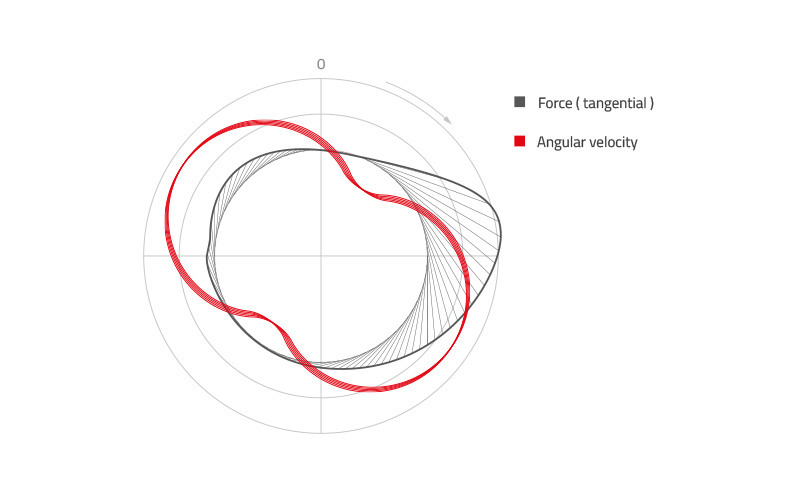
No one’s pedal stroke is perfectly smooth, and power meters that simply calculate the average angular velocity of a pedal stroke assume this in their readings, which could lead to inaccuracies of up to +/-4.5% according to Favero’s research.
The Assioma’s proprietary three-axis gyroscope detects the true angular velocity of the pedal stroke, and factors this into the power calculation. It’s this – paired with Favero’s Automatic Temperature Compensation technology – that means the Assioma PRO RS is always shown to be accurate to the tune of +/-1%, whether you’re riding indoors or out training in the depths of winter.
It’s because of the renowned accuracy and precision of its technology that Favero’s power meter pedals have long being seen as a benchmark, including in a number of road.cc reviews of other power meters to assess their accuracy. Thanks to the IAV Power System, Assioma pedals never miss a beat.
All this, and the PRO RS pedals are still priced lower than their closest competitors in terms of specification and build quality: you’re paying £649 for the PRO RS-2 (double-sided power measurement) or £399 for the PRO RS-1 (single-side measurement), compared to £929.99 for the doubled-sided Garmin Rally RS200, and £549.99 for the single-sided Garmin Rally RS100 – Garmin’s power meter pedals are also heavier than the PRO RS.
With the money saved, you could perhaps invest in a professional bike fit, just to make sure you’re getting the maximum benefit out of your new power meter pedals!
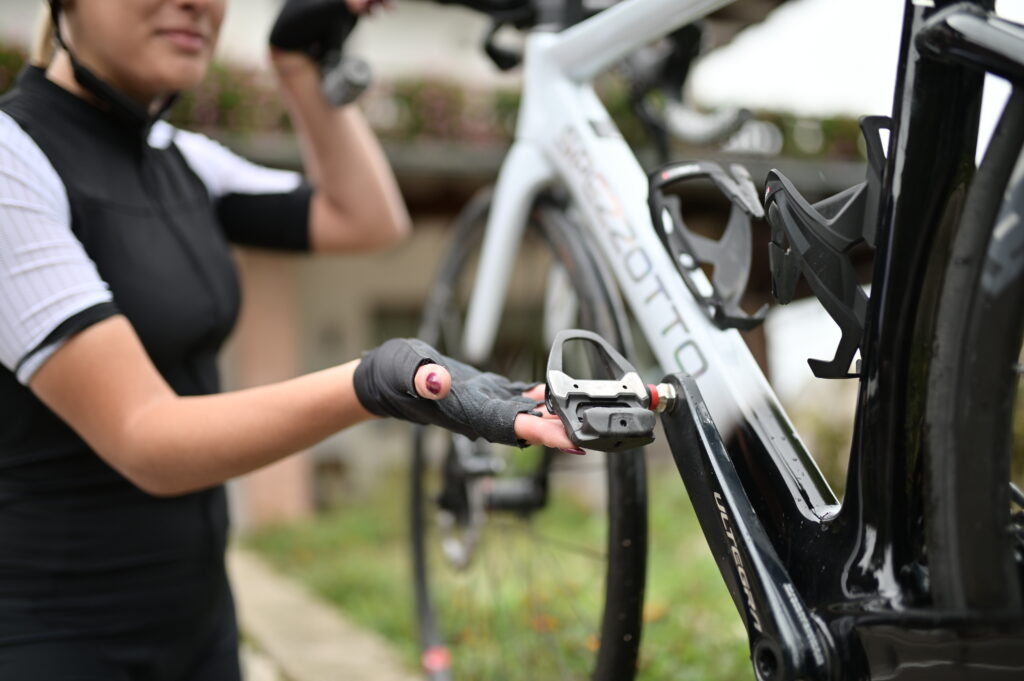
With the Favero Assioma PRO RS, riders who want to accurately measure their data no longer need to compromise. You’re getting the familiarity of a regular Shimano SPD-SL pedal, industry-leading accuracy and Italian manufacturing quality, all at a fair price.
To find out more about Favero’s new Assioma PRO RS pedals and order yours today, head to the Favero website







3 thoughts on “Stance width and Q-factor may not be the most crucial bike fit measurements: but consistency and familiarity are key”
Sadly, this advertorial is
Sadly, this advertorial is Favero’s response to its lack of choice in ‘stance width’. Their pedals aren’t available in a long-axel version (unlike SPD-SLs, which Shimano offers in a long-axel option).
I’d reach for my Mastercard immediately if Favero were to offer long-axel pedals – there’s a gap in the market. However, will Favero listen to this customer feedback?
Buy their old version with
Buy their old version with the pod, they had a ridiculously long q-factor that everyone was always complaining about. But now they have normal q-factors someone manages to complain about that too…
Super design and nice
Super design and nice evolution.