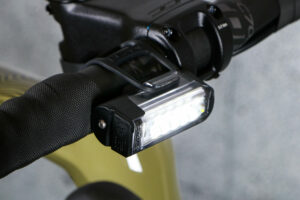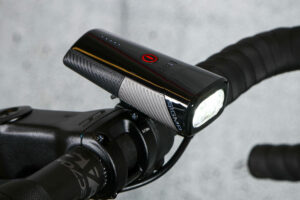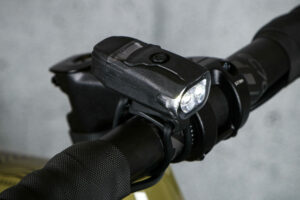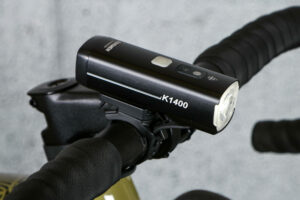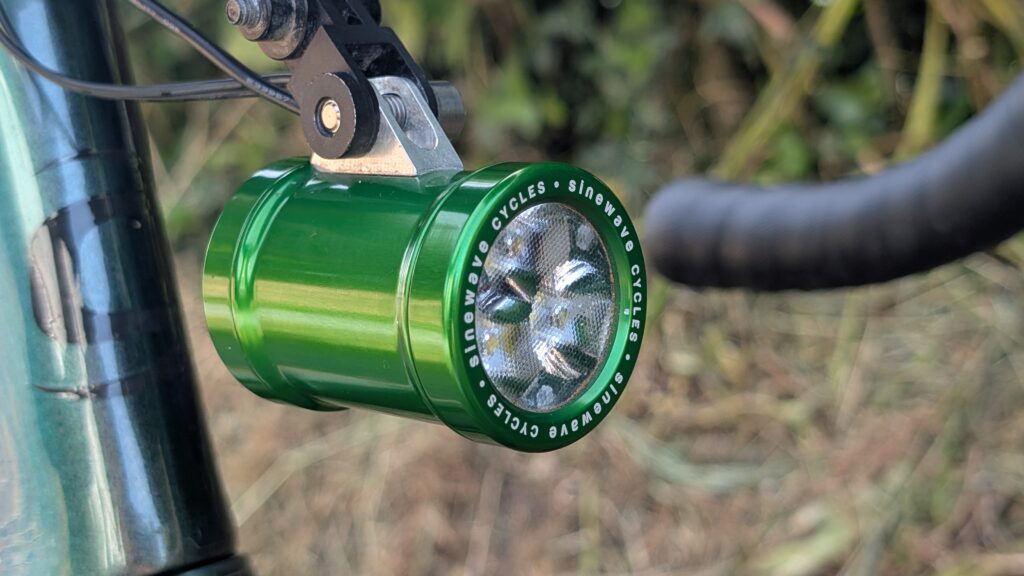

The Sinewave Beacon 2 is a compact dynamo-powered front light that delivers impressive illumination and the added benefit of device charging. A rear-mounted switch allows for easy adjustment between brightness modes, offering a degree of versatility. However, it doesn’t entirely sidestep the common drawbacks associated with dynamo lighting systems.
- Igaro C1 Dynamo Light and USB Power Converter review
- Hunt Proven Carbon XC Dynamo wheelset review
- How to go bikepacking: a beginner’s guide to getting started
Sinewave Beacon 2 Dynamo Light – Technical details
Sinewave Cycles has become synonymous with dynamo-powered lighting and charging solutions, offering products such as the Reaction and the Plug, which enable battery charging while riding. The Beacon 2 is the brand’s latest lighting option, boasting a claimed output of 750 lumens alongside the ability to charge devices, all within a remarkably compact form.
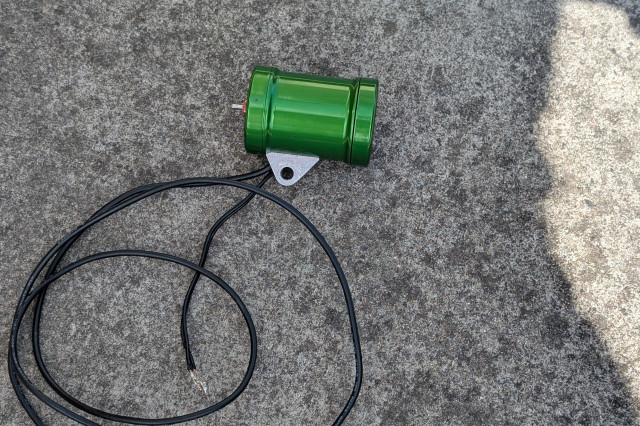
Weighing just 115g, including the 90cm uncut hub connection cable, the Beacon 2 is lightweight yet requires some basic wiring, as is typical of most dynamo lights. Sinewave offers customisation with a choice of colours for three sections of the anodised aluminium housing, although for UK buyers, this won’t be as simple due to the brand’s US-based operation, and only a limited number of colours will be imported.
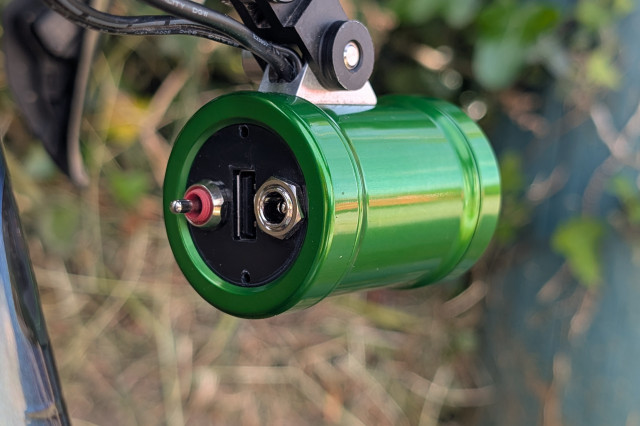
The light employs three LEDs to produce a wide, symmetrical beam with a cool white colour. The symmetrical design means it can be mounted either way up, enhancing flexibility, though it does prevent the light from meeting legal requirements in countries with strict bicycle lighting regulations, such as Germany.
Mounting is with the 10mm fixing, in line with many other dynamo lights. However, compatibility with inexpensive and widely available GoPro-style adapters enhances versatility and is likely to be the go-to mounting option for many riders.
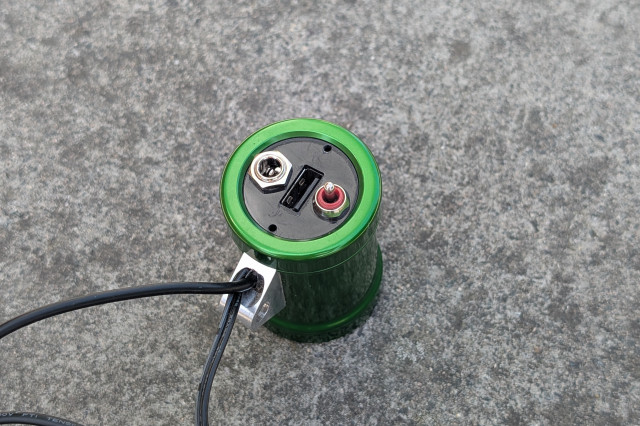
Cables for both hub and optional rear light connections exit from the unit, just behind the mount. The rear light connector remains fixed in place, whether or not a rear dynamo light is used.
Located behind the light body is a small switch that controls both brightness and lighting modes, alongside a USB-A port for device or battery charging, and a DC input for connecting an external battery pack. This output allows the light to be powered in low-speed situations where consistent lighting is still needed, or simply powered by a battery without a dynamo connected. Sinewave also provides a selection of common connectors and adapters, including right-angle USB plugs and DC-to-USB converters, to enhance compatibility.
The Beacon 2 is fully weatherproof, featuring multiple seals to prevent water ingress, epoxy-potted electronics for added durability, and gold-plated connections to resist corrosion. Sinewave backs the unit with a three-year warranty.
Sinewave Beacon 2 Dynamo Light – Performance
To thoroughly test and compare dynamo lights, I carried out real-world riding and a controlled outdoor setup. For the latter, the bike was mounted on a set of rollers and with a stationary camera placed to record the beam pattern and brightness. This allowed for a consistent and repeatable environment to assess performance for this light, and was performed alongside the Igaro C1 and kLite Ultra dynamo system. I pedalled at set speeds – 10, 15, 20, and 30kph – to reflect typical riding conditions and to observe how each light responded as speed (and therefore power output) increased.
The bikes I used to test the Beacon 2 didn’t have a 10mm mount, so I opted for a simple 10mm-to-GoPro adapter—an easy and widely available solution that isn’t specific to this light. One limitation worth noting is that the hub connection cables are permanently attached to the unit. This presents a challenge for bikes with internal wiring: you either have to forgo internal routing and run the cables externally, or wire the light into the bike and leave it attached permanently. That won’t suit everyone, particularly those wanting to share the light between multiple bikes.
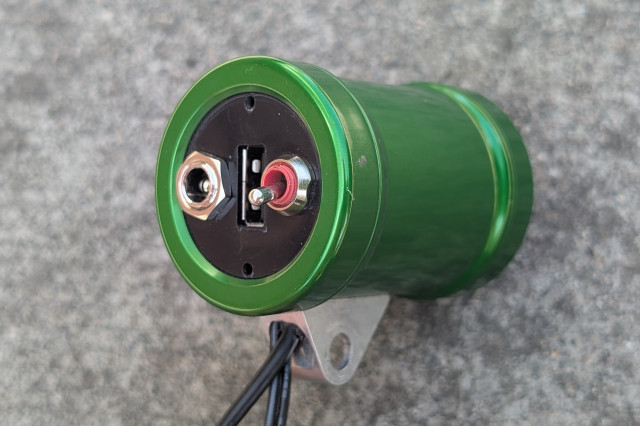
It’s possible to cut the cable and install quick-release connectors, which would allow easy swapping between bikes. While this isn’t especially difficult, especially for those comfortable with a soldering iron, it’s not a factory option, unlike other dynamo lights on the market.
Thanks to its compact form, the Beacon 2 is flexible in terms of mounting location and requires minimal space. The symmetrical beam pattern means it can be mounted either way up, which further adds to its versatility. That said, if space behind the unit is tight, such as when mounting near the fork crown, a right-angled USB plug may be necessary, though this mounting position will also make the rear switch harder to access.
In use, the Beacon 2 impresses with a wide and bright beam in high-power mode. The quoted 750 lumens seems accurate and comparable to battery-powered alternatives. The beam spans close to 90 degrees with consistent coverage across the spread, though it lacks the depth of some competitors, such as the Igaro C1. The Beacon 2 punches what looks like maximum power from approximately 15kph riding speeds, making it ideal for slower speed riding.




On-road use in full-power mode can be problematic. I was flashed by several drivers, suggesting the beam was too intense for oncoming traffic. In these scenarios, the ability to reach the switch easily is important, or alternatively, sticking to the low-power mode is more appropriate. However, the switch itself is very small and navigating through the modes requires passing through the ‘off’ setting, which causes a brief blackout, something less than ideal when riding in darkness. If there were a remote switch option, it would significantly improve usability for road riding.
The low-power mode delivers 125 lumens, which is a substantial drop from full power. While it’s useful for urban or slower-speed riding, it doesn’t provide sufficient light for faster descents or twisty off-road trails. Still, the option to switch between modes is a rare and welcome feature among dynamo lights. There is no noticeable difference in the power output beyond 10kph, regardless of how fast you are riding.


One of the Beacon 2’s standout features is the ability to run directly off a battery. Connecting a power bank to the DC port enables consistent output at lower speeds, drawing 800mA on high and 200mA on low. For context, a 10,000mAh battery would provide around 10 hours of full-power runtime. The light is able to switch between dynamo and battery input based on speed and power output. When a battery is connected, it also unlocks a flashing mode, which can be toggled by moving the switch from low to off.
Charging devices via the USB-A port is possible when the light is in the ‘off’ (middle) position or in low mode. However, charging performance isn’t as quick as the Igaro C1, and the Beacon 2 suffers from the usual limitations of dynamo charging: inconsistent current and slower speeds. As with most such systems, it’s recommended to charge a power bank rather than devices directly.
A possible setup for longer rides would be to carry two batteries—one charging while the other powers the light at lower speeds. This flexibility might raise the question: why not just use a battery-powered light in the first place? For some, that’s a fair point. But for long-distance adventure riders and bikepackers, the ability to generate power on the move and charge devices is essential. The option to run the light from a battery is simply a valuable bonus.
Sinewave Beacon 2 Dynamo Light – Verdict
Packing such a powerful dynamo-driven light into such a compact form is undeniably impressive. The Beacon 2 is smaller than many lights that don’t offer any charging capabilities, yet it manages to deliver strong illumination and versatile electronics. That said, this performance and compact design come at a cost—the Beacon 2 retails in the UK for £380.
At this price point, it faces stiff competition. The Igaro C1, also priced at £380, offers more advanced electronics, including app-based controls and customisation. Meanwhile, the kLite Ultra V2 system presents another option. Although modular—with the light, switch, charger, and mounts sold separately—the full setup ends up in a similar price range.
Having tested all three lights side by side, the Sinewave Beacon 2 stands out for its brightness and beam spread. It offers a broad, consistent beam with minimal flicker at low speeds, although a slight pulsing is noticeable on climbs. For pure off-road use, the Beacon 2 has an edge over the Igaro C1 thanks to its beam pattern, which provides better trail coverage. However, for even short spells of road use, the full-power mode feels too bright, often dazzling oncoming traffic, and the symmetrical beam cannot be angled or shaped to reduce glare. The ability to switch between brightness modes is certainly useful, but the switch itself is very small and awkward to use on the move and if it had a remote switch, similar to the kLite Ultra, it would be a welcome addition.
Sinewave has clearly prioritised off-road performance with the Beacon 2. Its strong, flicker-free lighting at lower speeds makes it particularly well suited to trail riding and bikepacking. The inclusion of a DC input to run directly off a battery—even without a dynamo hub—adds a level of versatility that few other systems can match. Charging while riding, or even powering the light from a battery while simultaneously charging another device, is something no other light currently offers in such a compact package.
However, despite the impressive lighting, the lack of a factory-fitted quick-release option for the hub cable is a limitation. Unless you’re comfortable cutting and modifying the cable yourself, you’re left with a more fixed installation. This may put off riders hoping to share the light between multiple bikes.
For those focused on off-road adventures and long-distance bikepacking, the Beacon 2’s combination of simplicity, versatility, and sheer brightness is likely to appeal. While not perfect, its unique features and compact design make it one of the most capable dynamo lights currently available.
All the deals displayed on our review pages are pulled from a constantly updating database feed of the best affiliate deals available. The criteria for deciding on what are the best deals is who is offering the lowest, delivered price. In most cases we will be showing the very best deal available online, but sometimes you may be able to find an item cheaper. If you can please feel free to post a link in the comments box below. To find out more about affiliate links on road.cc click here.