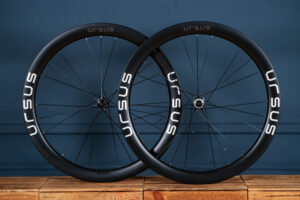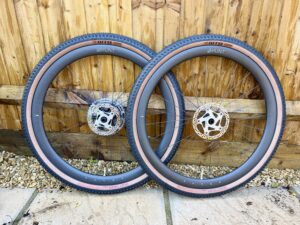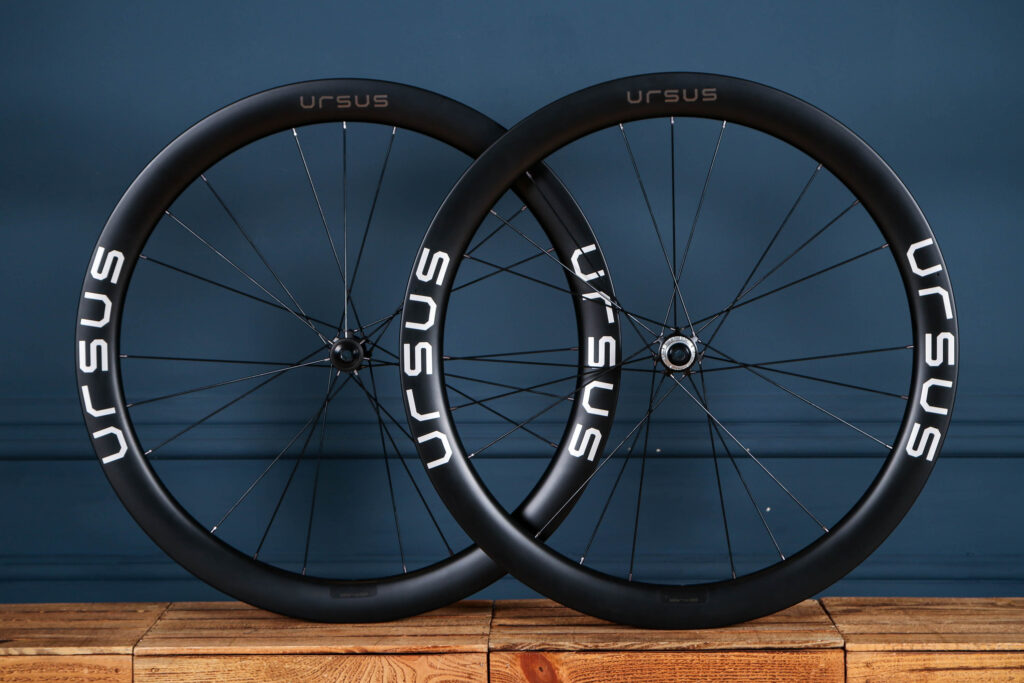

The Ursus Arya G 50 wheelset is the Italian brand’s top-end gravel option, offering a tantalising combination of a modern, wide rim and a very competitive weight. They’re among the first wheels on the market to use the new Sapim RC-1 spokes and those account for some of the weight saved here. We’ll look at them more in a bit, as they are quite interesting.
You may not have heard of Ursus, but the brand has been around for a while – in fact it’ll celebrate its 60th birthday next year. Having started out with a quick release seat clamp as its first product, the company has diversified somewhat, but still offers a modest selection – mostly wheels and city bike kickstands.
The Picnic PostNL team use Ursus wheels – most notably when Oscar Onley rode to fourth place in the 2025 Tour de France. However, I’ve been testing the gravel wheels. These have also seen use by the team in the cobbled classics and with a weight of 1,334g (744g rear and 590g front, without valves) and boasting impressive toughness, it’s not hard to see why.
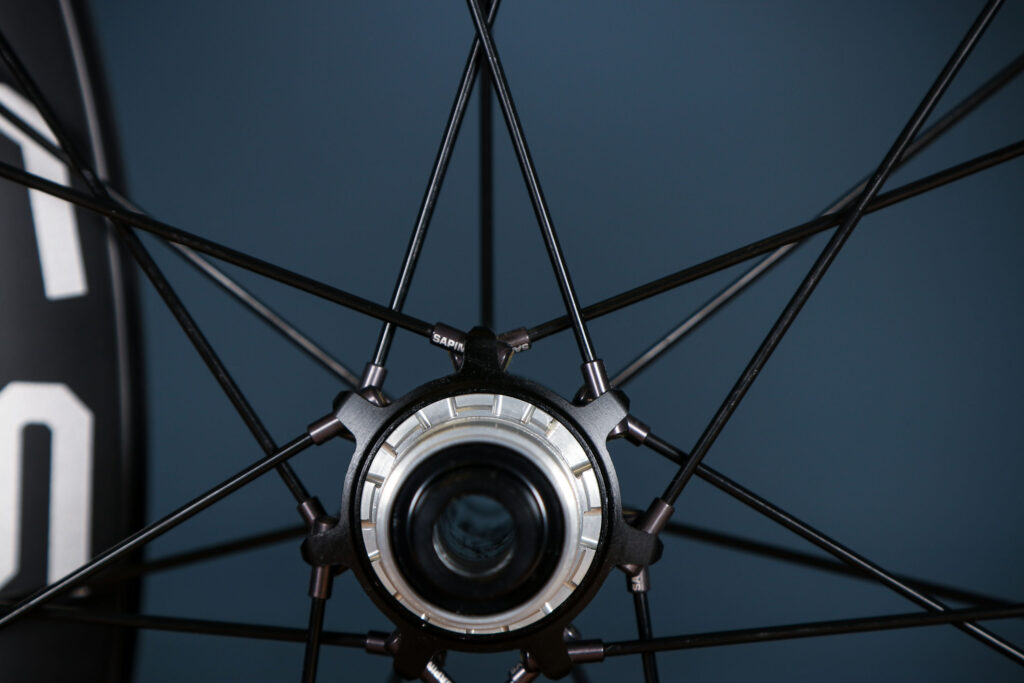
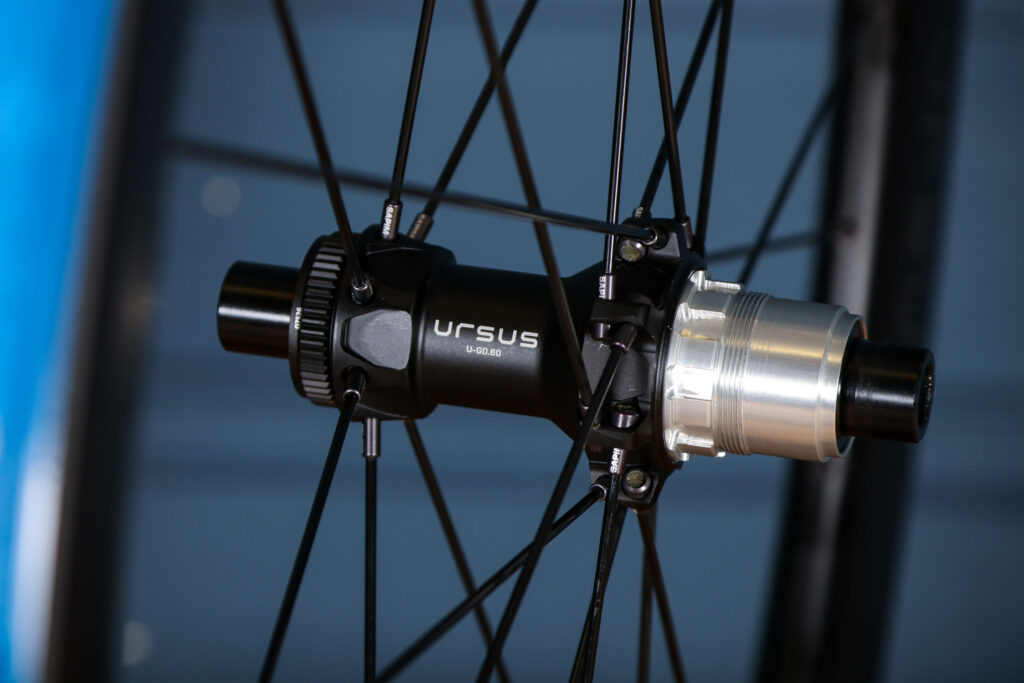
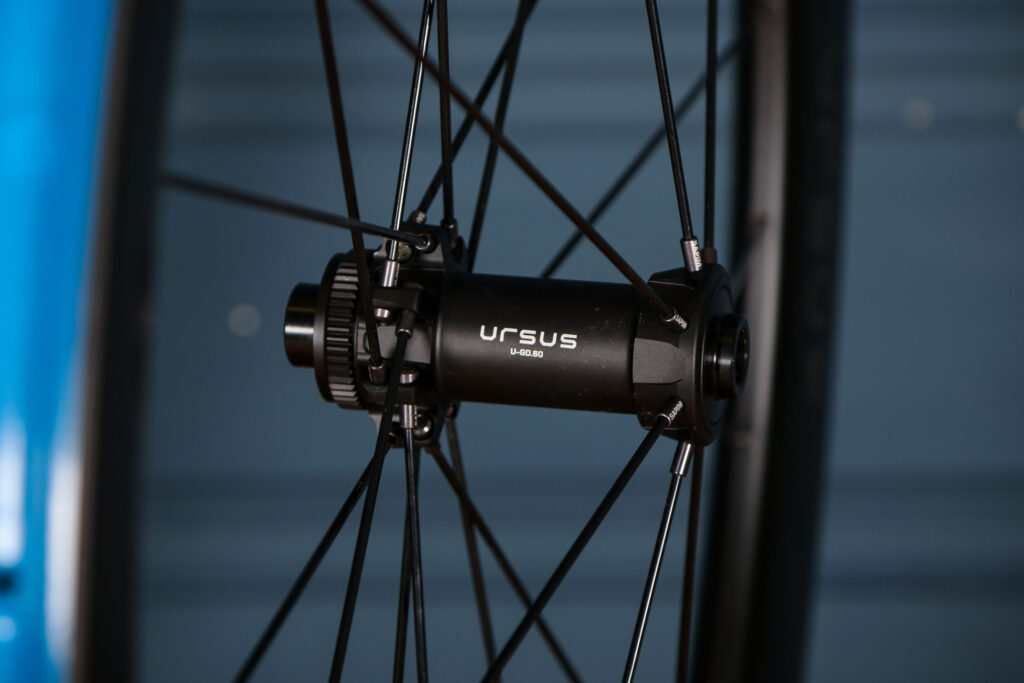
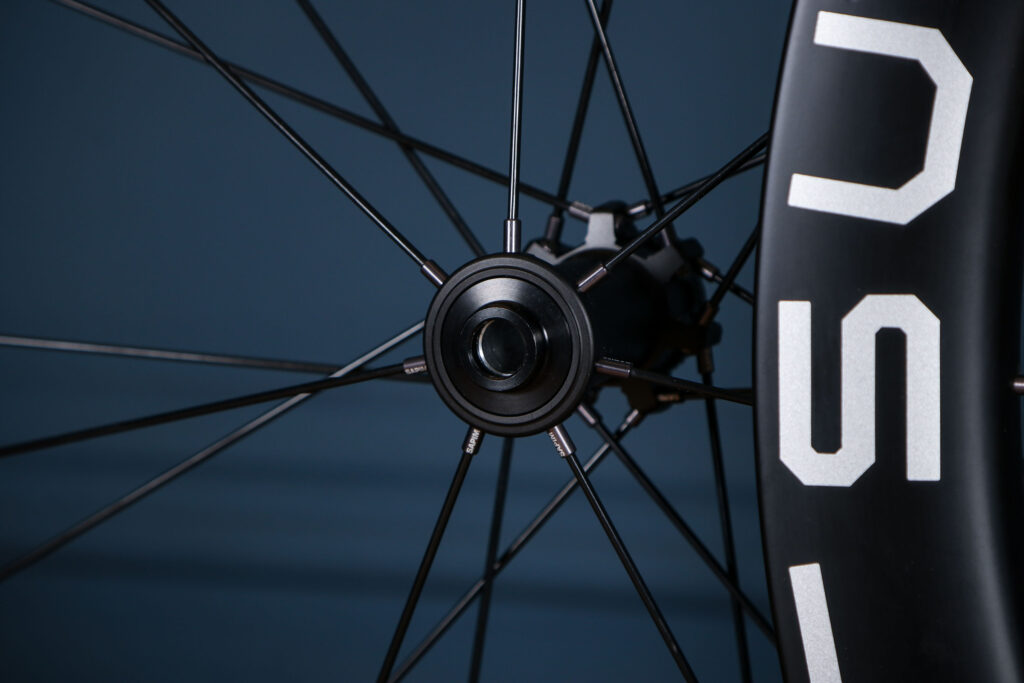
Ursus’s route into wheel making started with hubs, and these are produced in its factory in Italy. The U-GD.60 hubs used here are designed specifically for use with the RC-1 spokes.
Ursus quotes a weight of 355g for the pair of hubs, which is decent but not class-leading (for example, the Oquo wheels I tested recently had hubs that weighed just 279g). Ursus’s website describes them as being fitted with “super smooth bearings” which sounds sensible. I’m interpreting that as meaning steel bearings rather than ceramic.
So what of the spokes then? Sapim is a major player in the spoke market, and the RC-1 spokes are made of PBO (poly(p-phenylene-2,6-benzobisoxazole)), a first for Sapim.
PBO is stiffer than steel (in tension) and stronger than Kevlar. Of course, things being what they are, anything ostensibly new has in fact probably been done before, and Spinergy Wheels has been using its proprietary PBO spokes since the 1990s in wheels for cycling and wheelchairs.
Sapim says that RC-1 spokes allow you to save 100g per wheelset compared to “the best stainless steel aero spokes” and that they are 50g lighter per wheelset than carbon spokes.
RC-1 spokes are also [drum-roll…] bendy! That’s right – when they’re not being pulled tight in a wheel, they are pretty flexible.
PBO has a wide range of applications where its strength and low weight is beneficial, from the wheel tethers on Formula 1 cars to yacht rigging, spacecraft parachute lines and loudspeakers. It was for a time used in body armour until its protective performance was found to degrade dramatically over time, resulting in a police fatality in the US.
Modern usage needs to be designed with protection from the environmental factors that cause this degradation – chiefly exposure to ultraviolet light.
I asked Ursus whether the Sapim spokes are adequately protected, and they confirmed that a Rilsan coating (a type of polyamide) is used to provide UV protection to the spoke fibres and that their testing has shown that the RC-1 spokes should yield “excellent fatigue performance”.
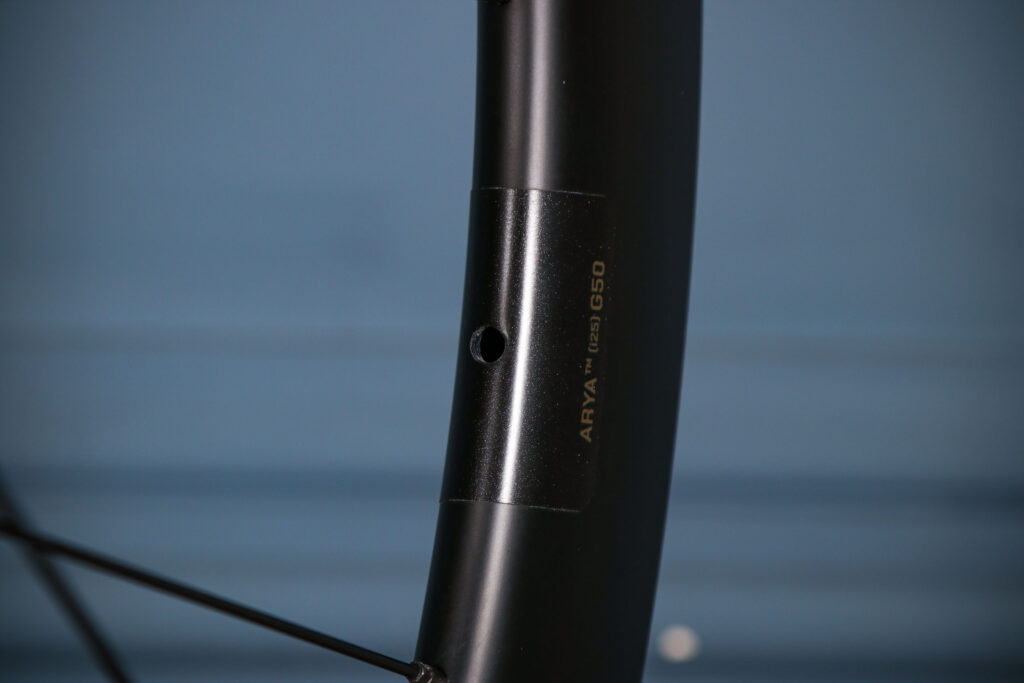
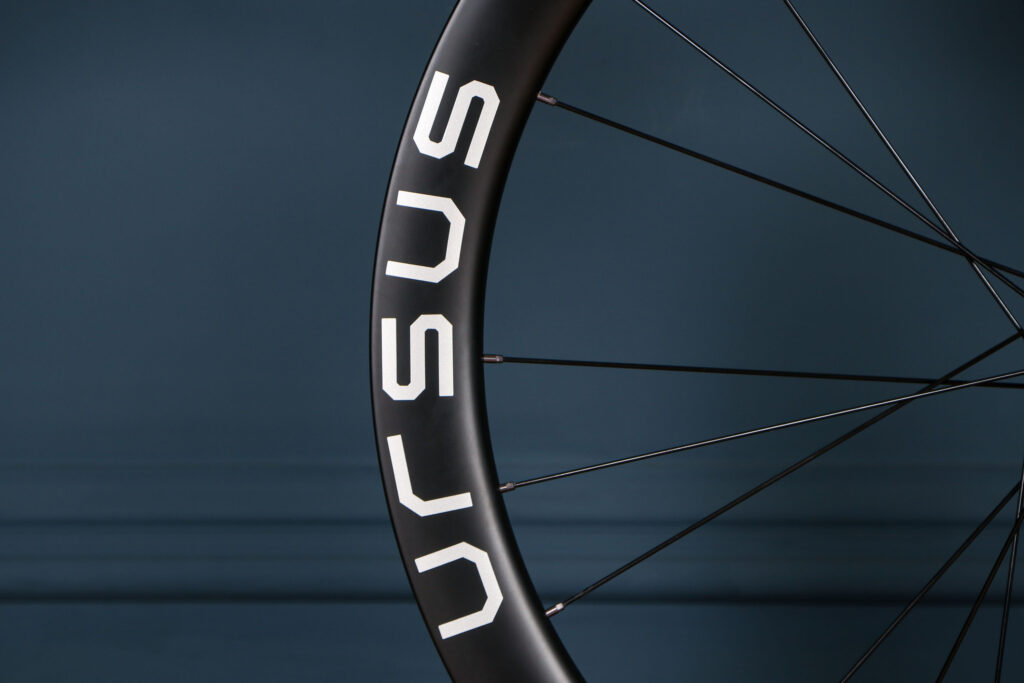
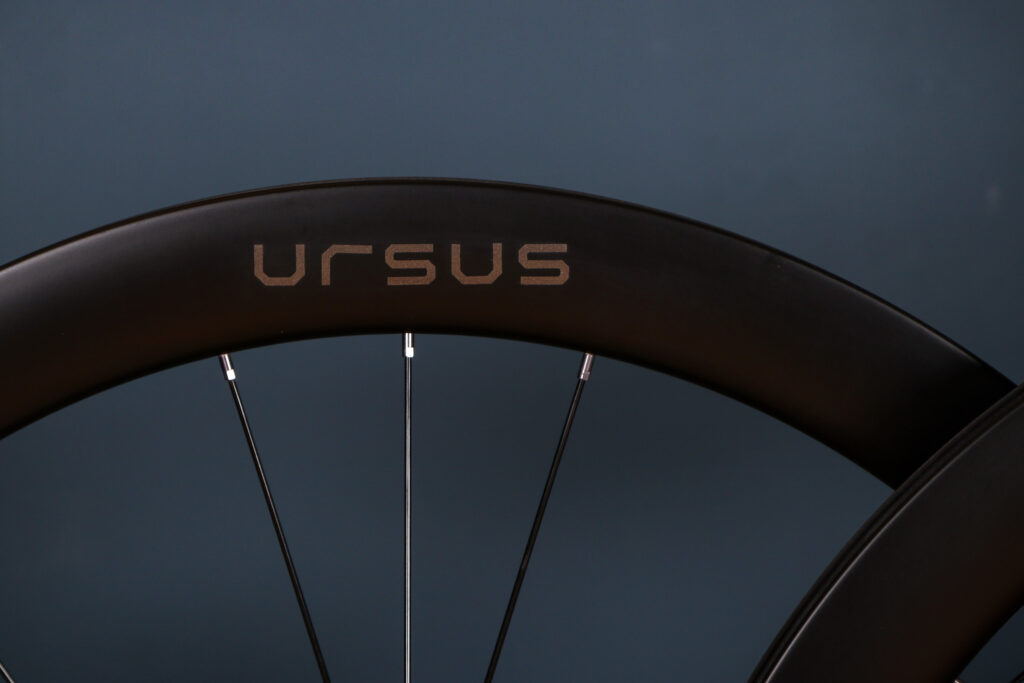
The rims are (by comparison) relatively conventional, although with a 25mm internal width they are well-aligned with the current movement towards wider rims and tyres. With a depth of 50mm, they offer aerodynamic benefits, although I couldn’t find any data from Ursus on this.
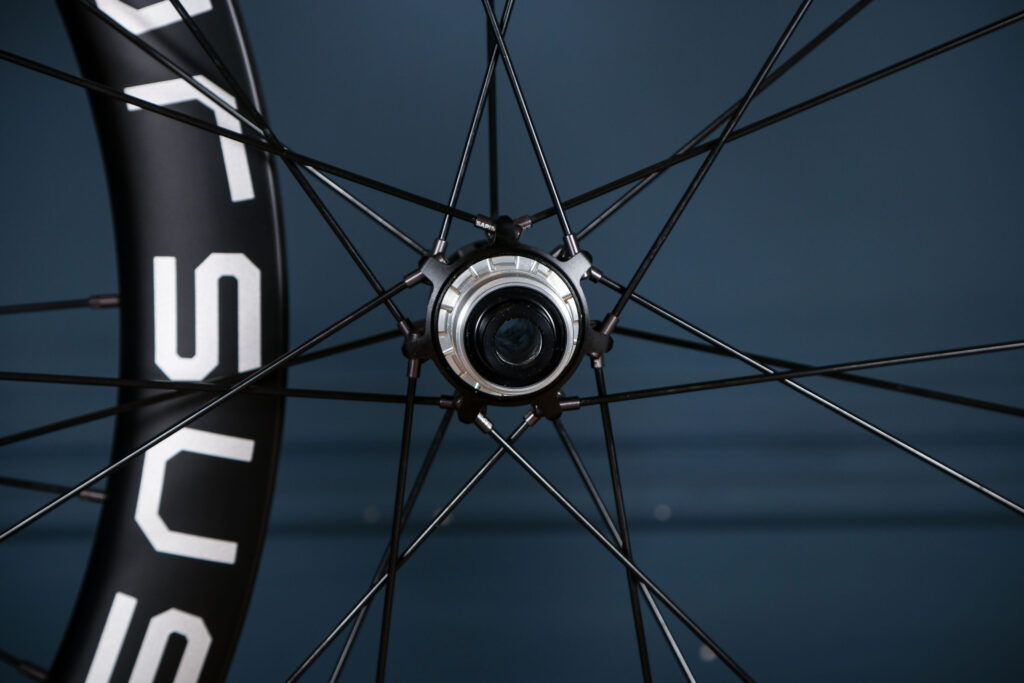
The wheels are built using Ursus’s “Y-Stars” lacing arrangement where the spokes are grouped in threes. This supposedly allows fewer spokes to be used without compromising strength.
The pattern employs radial spokes on one side of the wheel and twice as many tangentially arranged spokes on the other – a bit like the classic Campagnolo G3 arrangement. The hub design means no spoke is in contact with another, which I’d say is desirable to avoid any abrasion to their coating.
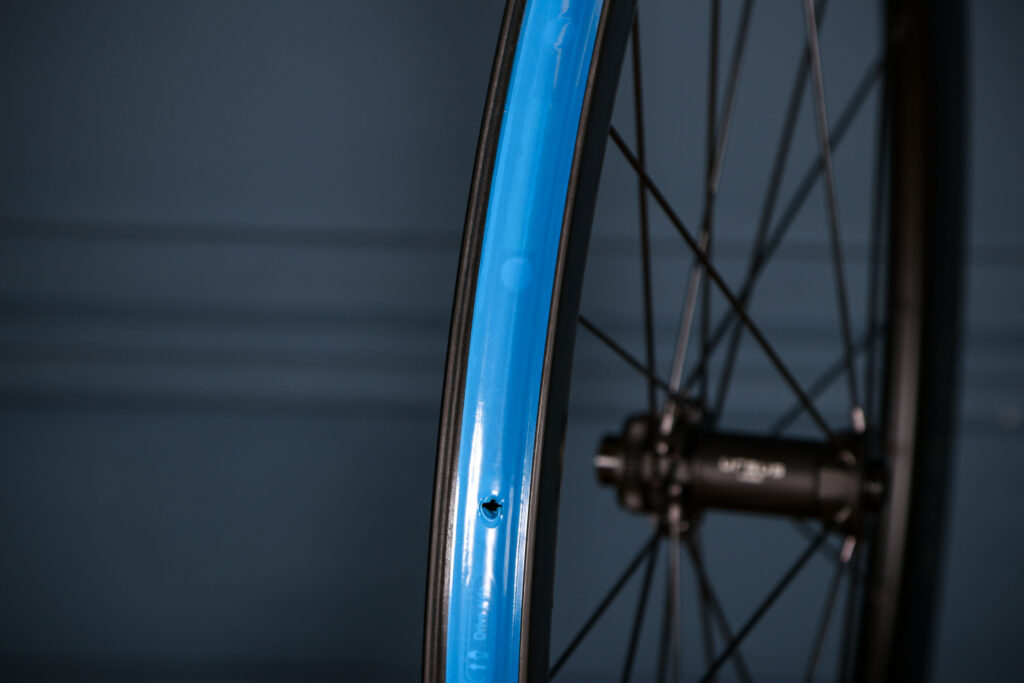
I mostly used the wheels on my gravel bike with the excellent Panaracer Gravel King X1 tyres, but I also ran them on the road with Pirelli Cinturato Evo tyres. Seating and inflation was unproblematic, with both tyres holding pressure well against the hooked rim.
It’s worth noting that ETRTO standards give a tyre width range of 37-62mm for a rim with internal width of 25mm, so the Pirellis I used are well below this. Ursus’s website specifies a maximum tyre pressure of 8.5 bar (123psi!) but I didn’t get anywhere near this.
Ursus markets the Arya G50 as being especially well suited to poor road surfaces and gravel thanks to the vibration damping properties of the fibre spokes. It is true that this type of fibre performs a bit less like a perfect spring than a steel spoke, but in my opinion the effect of this is orders of magnitude less significant than the contribution of your tyres, even at road pressures. To be clear, I’m happy to believe that there are lab-detectable differences in how high frequency vibrations are transmitted, but not that this is something you can perceive on the road.
The weight saving is real though, and at 1,334g for the set, these are the lightest gravel wheels I’ve used. That translates to snappy accelerations and great climbing performance, on and off the road.
They don’t feel flimsy, however, even with a fairly low spoke count (21 per wheel), and I’ve hammered them on some “gravel” that 10 years ago I’d have wanted a mountain bike to ride. When my son wanted to build a 20cm high wooden ramp, these were the wheels that I used to make sure it wasn’t about to collapse, and they survived that unscathed too.
On-road manners were good too, with ample cornering stiffness and no particular issues with crosswinds. The combination of a 50mm deep rim and so little weight is a pretty attractive one, and I’d be very happy running these as my best wheels on my road bike.
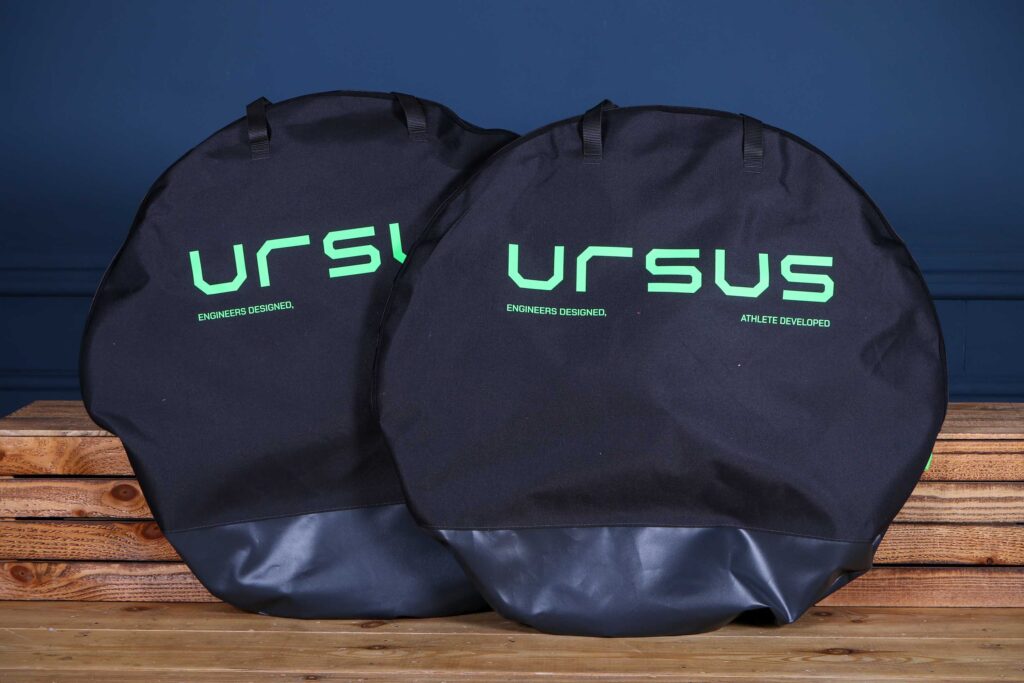
Ursus supplies these wheels taped and with ordinary tubeless valves and unpadded wheel bags. It doesn’t include spare spokes.
Given that the bendy spokes are new and unusual and something your local bike shop is very unlikely to have in stock, I would have liked to have seen spares included. Ursus told me that they are available via Sapim and that most bike shops should be able to source them. I found a retailer in the EU listing the RC-1 spokes at €11 a pop, so three or four times the price of decent steel spokes.
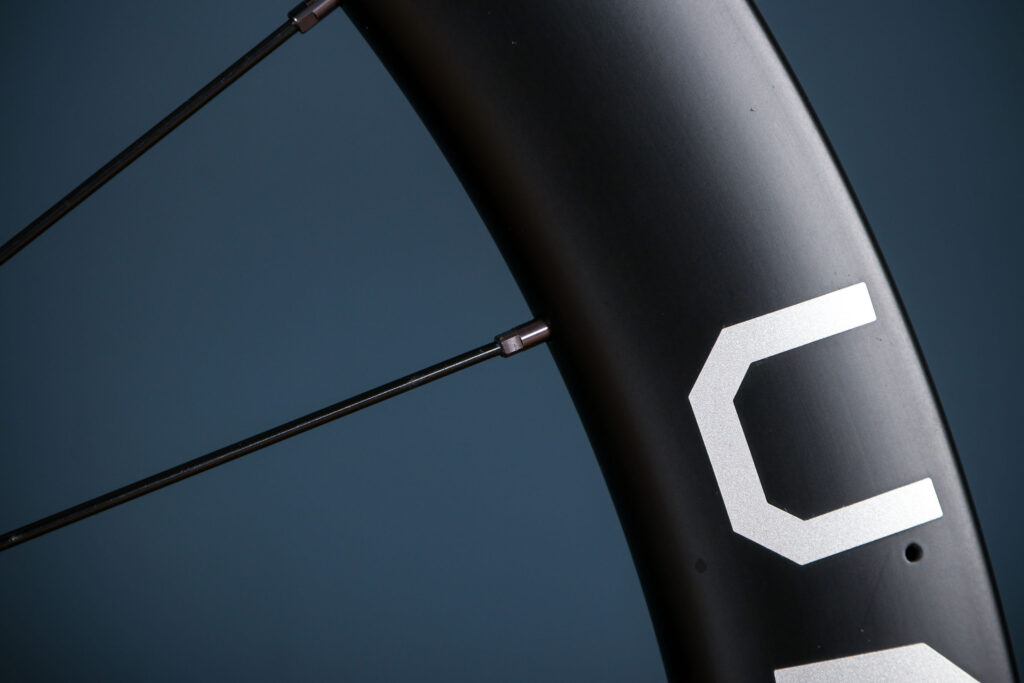
The graphics on our test set aren’t quite the same as is shown on Ursus’s website. They are also – somewhat unusually at this end of the market – simply stickers, with no clearcoat protection. I found a couple of edges starting to lift off during the test period, and if I’d spent this much on some posh wheels I would be disappointed by that.
Value
Looking at other gravel wheelsets we’ve had in, the Hunt 40 Limitless Gravel Aero wheels are a similar weight thanks to the use of carbon spokes, and marginally wider. They’re 10mm shallower though, so the aero benefit is likely a little less. At £1,849, they’re a couple of hundred pounds cheaper than the Ursus wheels at €2,500.
DT Swiss is also at the party, although perhaps not quite on the pace. Its GRC 1100 Dicut wheels are about £2,400 and the same 50mm depth, but they’re quite a bit heavier at 1,600g.
More recently, both Specialized and Giant have launched primo gravel race wheels which play in the same ballpark. The Roval Terra Aero CLX are a similar weight and depth, and even wider (and even more expensive at £3,000).
The Cadex Max GXR is also a 50mm deep, 25mm (internal) wide gravel wheelset and a similar weight again, but even more expensive at £3,500.
Overall
My reservations about the G 50 gravel wheelset are pretty minor and could also be easily addressed by Ursus. Setting them aside, I was really impressed with these wheels. They’re a premium product, but deliver exemplary performance through a combination of aerodynamics, toughness and feathery weight.
Test Report
What does the manufacturer say about this product?:
A new chapter for fast gravel performance.
ARYA G introduces an advanced wheel concept built around the innovative Sapim RC1 spoke, made with the world’s strongest man-made fibres, redefining the relationship between weight, stiffness and responsiveness in off-road racing environments.
This configuration marks the first fast gravel wheelset in the world to integrate this technology, delivering exceptional power transfer and structural precision.
Already proven! Used at the highest level, ARYA G has been selected by our WorldTour team for the demanding cobbled Classics of Northern Europe, where efficiency, control and reliability are pushed to their limits. Engineered for riders who move fast across unpredictable terrain, the system combines aerodynamic rim architecture with the unique vibration-damping properties of fibre spokes.
The result is a wheelset that maintains speed over rough sectors while preserving stability, traction and rider confidence during high-intensity racing situations.
Tell us some more about the technical aspects of this product:
50mm uni-directional carbon rims with “mini hook”. 25mm inner width, 31mm external width. 21 Sapim RC-1 fibre spokes.
How does the price compare to that of similar products in the market, including ones recently tested?:
I’ve only found two comparable gravel race wheelsets, one from Giant and one from Specialized. They’re £1,000 and £500 more expensive respectively.
Any further comments on comfort?:
There is at least in theory some damping benefit from the fibre spokes.
Any issues with durability?:
The spokes should be pretty durable based on their design and arrangement. The only issues noticed during testing was the stickers didn’t seem super durable – I think Ursus should rethink how they’re doing decals.
Did the wheels stay true? Any issues with spoke tension?:
Yes, perfectly, no issues.
How were the wheels in windy conditions?:
Well behaved as we’ve come to expect from a modern rim profile.
How easy did you find it to fit tyres? If you used them tubeless, how easy were they to seal?:
No issues – I only ran them tubeless.
How did any wheel extras (if supplied) perform?:
Wheelbags feel a bit cheap at the price. Valves are bog standard – no fancy high-flow ones here.
Did you enjoy using the product? Yes
Would you consider buying the product? Yes
Would you recommend the product to a friend? Yes
Use this box to explain your overall score
Near faultless performance from this super wheelset. The only real competitors I found are more expensive. I was really impressed.
About the tester
Age: 48Height: 188cmWeight: 85kg
I usually ride: On-One BishBashBoshMy best bike is: Cervélo Caledonia-5
I’ve been riding for: Over 20 yearsI ride: Most daysI would class myself as: Expert
I regularly do the following types of riding: Gravel riding, Commuting, Touring, Club riding, Audax, Leisure riding